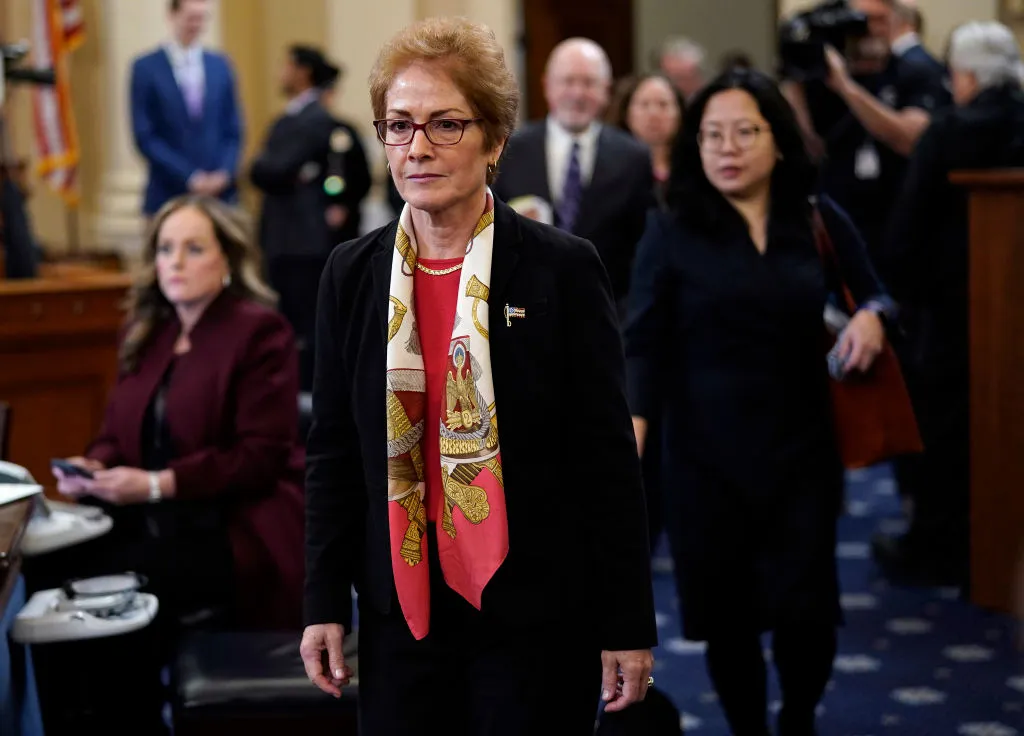
Russian disinformation network reportedly helped smear ex-Ukraine ambassador
A free daily email with the biggest news stories of the day – and the best features from TheWeek.com
You are now subscribed
Your newsletter sign-up was successful
Some things never change.
The social media analysis firm Graphika determined that a Russian disinformation network contributed to an impeachment-centric smear campaign against former U.S. Ambassador to Ukraine Marie Yovanovitch that was also pushed by President Trump's personal lawyer Rudy Giuliani and eventually led to her ouster. The Washington Post describes Graphika's findings as the "first evidence" that a Russian network responsible for spreading disinformation in the 2016 presidential election may also be influencing events at the heart of Trump's impeachment proceedings.
Back in March, journalist John Solomon wrote an article published by The Hill in which Ukraine's former General Prosecutor Yuriy Lutsenko said Yovanovitch gave him a "list of people whom we should not prosecute" in Ukrainian corruption investigations, per the Post. Yovanovitch has dismissed the accusation, the State Department said the list never existed, and even Lutsenko tried to walk back his comments, but the smear campaign still made its mark — five days after Solomon's interview was published, an image of the purported list appeared on Medium and quickly spread around the web.
Article continues belowThe Week
Escape your echo chamber. Get the facts behind the news, plus analysis from multiple perspectives.
Sign up for The Week's Free Newsletters
From our morning news briefing to a weekly Good News Newsletter, get the best of The Week delivered directly to your inbox.
Graphika was able to trace the post's origins to a Russian disinformation campaign. It couldn't be determined who exactly in Russia was behind the post's circulation, but it appears to be the same operation that tried to blame the United Kingdom for interfering in the 2016 election, as well as numerous other stories between October 2016 and October 2019 that were "demonstrably false" and "based on forged documents or non-existent interviews." Read more at The Washington Post.
A free daily email with the biggest news stories of the day – and the best features from TheWeek.com
Tim is a staff writer at The Week and has contributed to Bedford and Bowery and The New York Transatlantic. He is a graduate of Occidental College and NYU's journalism school. Tim enjoys writing about baseball, Europe, and extinct megafauna. He lives in New York City.