Sign up to get Today’s Best Articles in your inbox
Join 350,000+ subscribers and keep yourself informed with a selection of
The Week’s most interesting, enlightening and entertaining stories - plus daily puzzles.
You are now subscribed
Your newsletter sign-up was successful
Want to add more newsletters?
An account already exists for this email address, please log in.
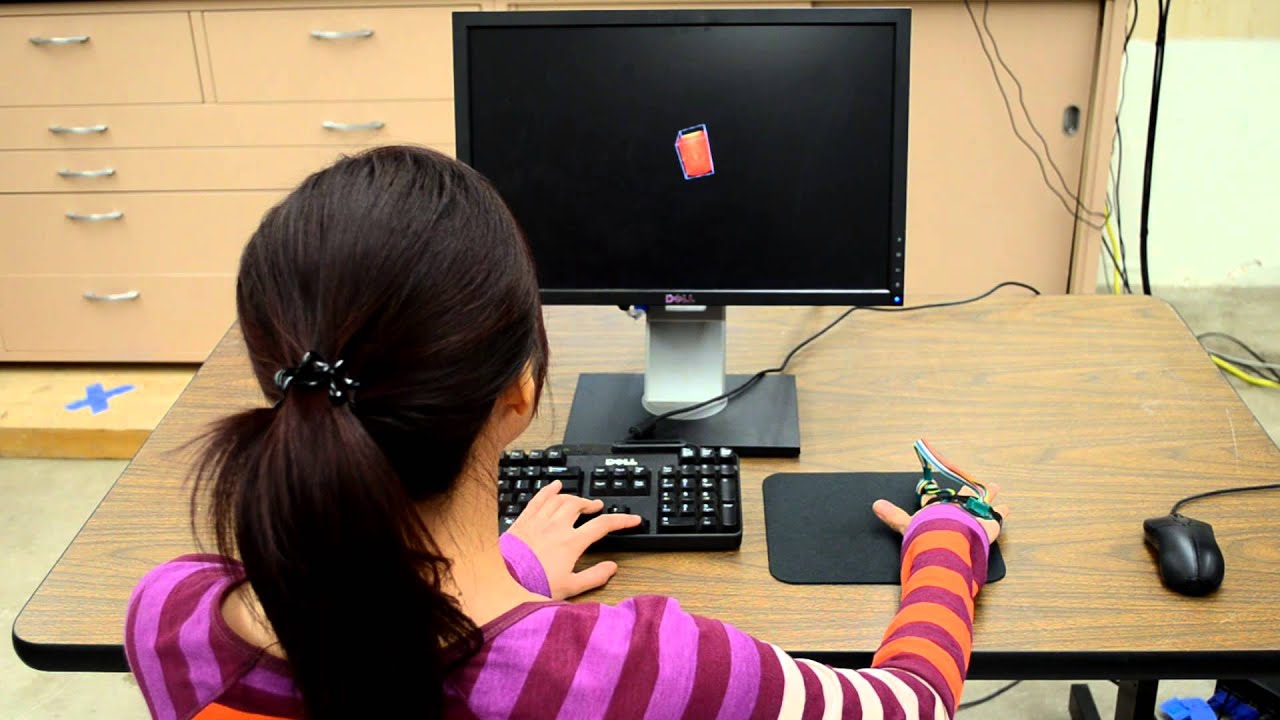
3DTouch 'smart thimble' could replace mouse – video
Finger-mounted 3DTouch device uses accelerometer and gyroscope to control computer
A device that lets users interact with their computers just by moving a finger could replace the mouse, some experts believe.
The prototype, created by Anh Nguyen and Amy Banic from the University of Wyoming in Laramie, works with a 3D accelerometer, magnetometer and gyroscope, similar to those found in smartphones.
Named 3DTouch, the invention looks something like a thimble with wires that stretch along the index finger and around the palm. By bringing the thimble into contact with any surface a user can click or select elements onscreen.
The Week
Escape your echo chamber. Get the facts behind the news, plus analysis from multiple perspectives.
Join more than 350,000 subscribers and keep yourself informed with a selection of The Week’s most interesting, enlightening and entertaining stories - plus daily puzzles.
Join more than 350,000 subscribers and keep yourself informed with a selection of The Week’s most interesting, enlightening and entertaining stories - plus daily puzzles.
The device is compatible with a range of programs, including games, word processors and web browsers.
A button on the surface of the forefinger replaces the left-click function of a traditional mouse, the Daily Mail notes, and the device uses "optical flow" sensors to track movement against any flat surface.
3DTouch connects to an Arduino controller – a small, simple computer which sends information about a user's movements to a laptop or desktop PC.
"3DTouch enables users to use their fingers or thumb as a 3D input device with the capability of performing 3D selection, translation and rotation," the researchers explained in a short video posted on YouTube.
Sign up to get Today’s Best Articles in your inbox
A free daily email with the day’s biggest news and analysis – and the best features from TheWeek.com
"[It] is designed to fill the missing gap of a 3D input device that is self-contained, mobile and universally working across various 3D platforms," they said. "With 3DTouch, we attempted to bring 3D interaction and applications a step closer to users in everyday life."