The Week The Week
flag of US
US
flag of UK
UK
https://cdn.mos.cms.futurecdn.net/skoGBi9qKFoUtnNWkovjJQ.jpg

SUBSCRIBE

Try 6 Free Issues

Sign in
  • View Profile
  • Sign out
  • The Explainer
  • Talking Points
  • The Week Recommends
  • Podcasts
  • Newsletters
  • From the Magazine
  • The Week Junior
  • More
    • Politics
    • World News
    • Business
    • Health
    • Science
    • Food & Drink
    • Travel
    • Culture
    • History
    • Personal Finance
    • Puzzles
    • Photos
    • The Blend
    • All Categories
  • Newsletter sign up Newsletter
  • The Week Evening Review
    Europe gets tough, the fight against HIV, and coupled-up cringe

     
    TODAY’S BIG QUESTION

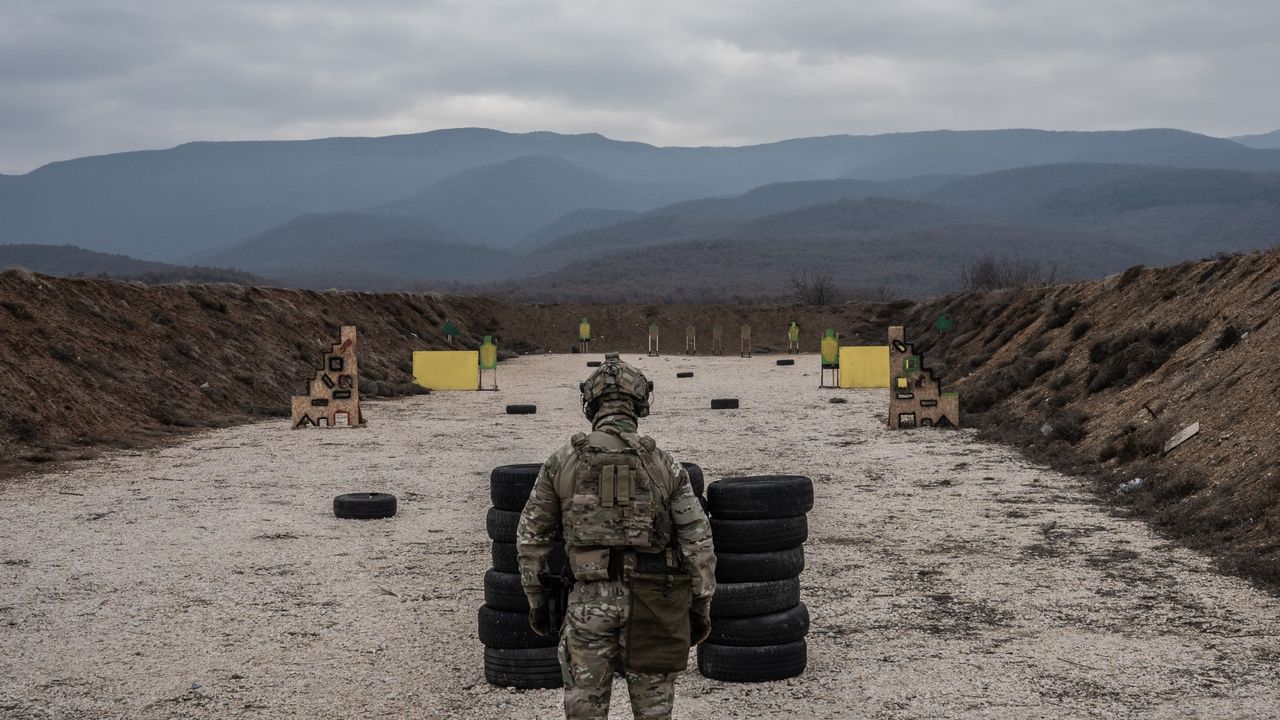
    Is Europe finally taking the war to Russia?

    In the face of Russia’s increasingly aggressive hybrid war, Europe is “doing what would have seemed outlandish just a few years ago”, said Politico. It’s “planning how to hit back”.

    Russian GPS jamming, drone-buzzing, election interference and boundary incursions have been going on for years, “but the sheer scale and frequency” of it now is “unprecedented”. Such aggressive testing of Europe’s limits has prompted calls to hit back with moves ranging from “joint offensive cyber operations” to “surprise Nato-led military exercises”.

    What did the commentators say?
    Many diplomats, “particularly those from Eastern European countries”, have “urged Nato to stop being merely reactive” to Russian sabotage and provocation, said Richard Milne in the Financial Times. We are thinking of “being more aggressive or more proactive”, Nato Military Committee chair Giuseppe Cavo Dragone told Milne. “A pre-emptive strike” could even be considered a “defensive action”.

    Russia’s Foreign Ministry said Dragone’s comments were “extremely irresponsible” and a sign that Nato is “moving towards escalation”. Putin has dismissed warnings that Russia could attack Europe as “laughable”, but it’s “no laughing matter to a host of European political and military leaders”, said Laura Tingle on ABC News. It’s clear that “something has now been unleashed in Europe which is going to be hard to put back in the bottle”.

    Putin “may see the EU and Nato as rivals or even enemies” but Europe “does not want war with a nuclear-armed Russia”, said Victor Jack and Laura Kayali on Politico. “It has to figure out how to respond in a way that deters Moscow but does not cross any Kremlin red lines that could lead to open warfare.”

    What next?
    Publicly, Europe’s rearmament drive has “moved into overdrive”, but the reality is “more uneven”, said Anna Conkling in The Parliament Magazine. Some states are powering ahead, while others – “constrained by years of underinvestment and fiscal fragility” – “drag their feet”. This “two-speed defence model“ could leave Europe “dangerously exposed”, and means that “the buy-in of the largest countries” is “all the more important for Europe’s defence to reach a critical mass”.


    THE EXPLAINER

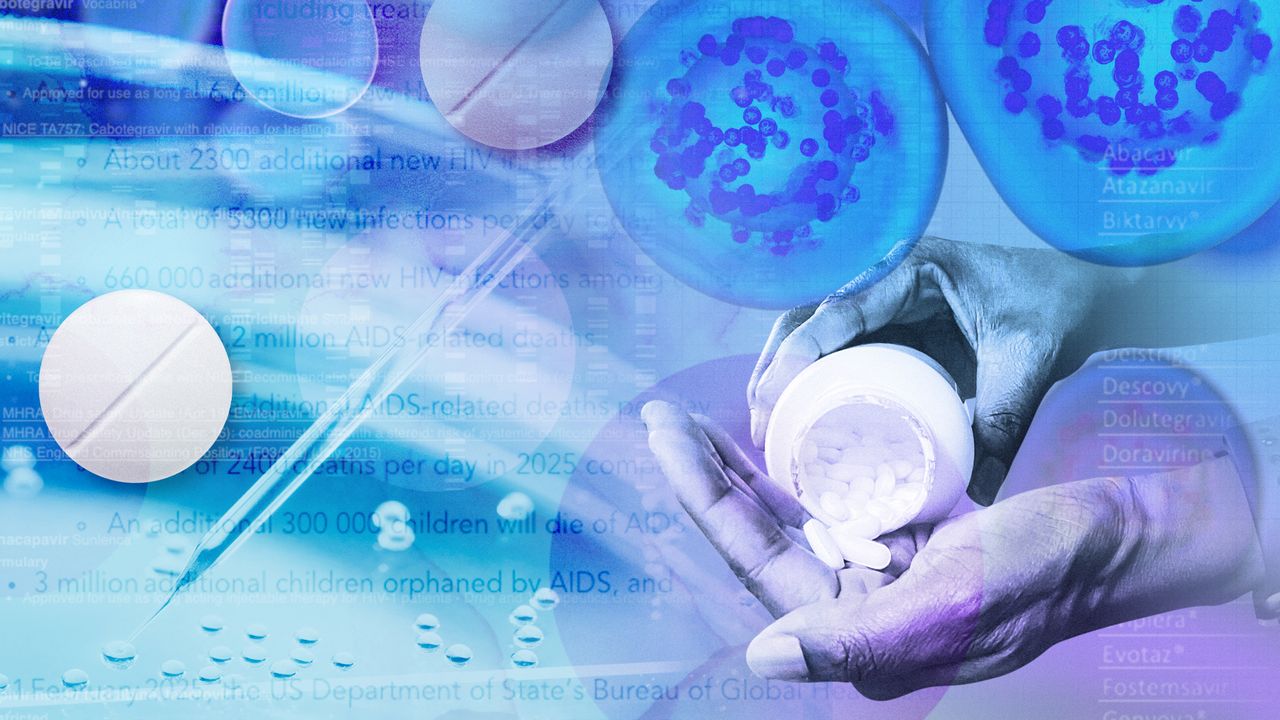
    The stalled fight against HIV

    A man has been declared HIV-free in a case that “upends our understanding of what’s required” for a cure, said The New Scientist.

    He was the seventh patient found to be clear of the virus after receiving a stem cell transplant – and, significantly, the second of the seven to receive stem cells that were not actually HIV-resistant. If HIV-resistant cells aren’t necessary to destroy the virus, scientists have greater options in their search for an effective but less risky cure.

    Yet even as medics make such leaps forward in HIV/Aids treatment, access to both preventive care and medicine for infected patients “remains far from universal”, said The Guardian.

    How close is a cure?
    The signs are increasingly positive. In addition to the stem-cell study, a separate study published in Nature “shows a glimmer of hope” for controlling HIV without the current daily regimen of pills, said The Washington Post. A small group of patients were given “experimental immunotherapies” and then taken off their pills; the majority were able to keep the virus “at a low level for months” afterwards.

    The standard daily antiretroviral therapy has had a “transformative” effect on managing HIV since its nadir of the 1980s. It works by preventing the virus from multiplying in the body. For many people with HIV, their “viral load” becomes so low as to be undetectable, hugely lowering the risk of them transmitting the virus to somebody else. But although antiretrovirals can keep the disease in check, it is not a cure.

    How have aid cuts impacted HIV/Aids treatment?
    Multiple nations are cutting foreign aid funding, on which many lower-income countries depend to deliver health services. This has had a “devastating” impact in the fight against the disease, and on the accessibility of medication, said a UNAids report published to mark World Aids Day, on 1 December. 

    The cuts made by the US, in particular, have “disrupted HIV/Aids care in many parts of the world”, said NPR. Since Donald Trump began his second presidential term and took an “America First approach”, his administration has slashed international aid programmes. This year was also the first that the US did not formally commemorate World Aids Day.


    QUOTE OF THE DAY

    “It’s become quite a messy and toxic situation.”

    Eurovision expert Paul Jordan on a crunch meeting today at which song contest bosses will debate whether to allow Israel to participate next year. Several countries are threatening to boycott the event if Israel competes, while Germany may pull out if it is excluded.


    Poll watch

    Young conservatives in the US are significantly more likely to identify as racist than older right-wingers, according to a survey of 2,295 Republican voters by conservative think-tank Manhattan Institute. Almost a quarter of those aged 18 to 29 said they openly express racist views, compared with 3% of over-65s.


    Talking Point

    How coupling up became cringe

    Having a boyfriend or husband is no longer a goal for a growing number of young women. Over the past 30 years, the share of US high-school girls who say they are likely to “choose to get married” has dropped by more than 20%, while the proportion of young men who hope to wed has remained steady, according to Pew Research Center data.

    For “single and partnered women alike”, choosing to couple up with a man increasingly feels like “an almost guilty thing to do”, said Chanté Joseph in Vogue. “It’s become more of a flex to pronounce yourself single.”

    No ‘obvious rewards’
    The “script is shifting”, said Joseph. On social media – once a space to flaunt significant others – women are opting for "subtler signs” of their relationship status. At the more extreme end, “you have faces blurred out of wedding pictures or entire professionally edited videos with the fiancé conveniently cropped out of all shots”. Having a partner “doesn’t affirm your womanhood anymore”, marking another “nail in the coffin” of a “heterosexual fairy-tale that never really benefited women to begin with”.

    For young women brought up to “live their best lives”, said Lara Brown in The Spectator, marriage is a “hindrance because it requires compromise”. Having to “build a life around someone else” is a challenge for an “increasingly transactional generation”, when marriage “doesn’t bring obvious rewards”.

    Old-fashioned love
    Some feminist thinkers believe that “women still value marriage”, said the Institute for Family Studies, but that “they just can’t find enough marriageable men”. Many men are “floundering on many fronts”, ranging “from education to employment”, in a way that is “unappealing to the opposite sex”.

    But, more broadly, “something has happened along the way to make care seem undesirable,” said Gabriella Bennett in The Times. “Loving and wanting to be loved feels like a hangover from old-fashioned times.” But I want “to see my friends happy”. That doesn’t necessarily mean having a “romantic partner” – I just “want to know there’s someone making them sausage pasta after a rough day”.


    Good day 💷

    … for Reform UK, which has received the largest donation from a living person in UK political history. New official figures show that Thai-based businessman and former Tory backer Christopher Harborne has given £9 million to Nigel Farage’s party, beating the record set by David Sainsbury’s £8 million donation to the Liberal Democrats in 2019.


    Bad day 🗳️

    … for devolution, as the government delays four regional mayoral elections owing to “technical” complications. Voters in Greater Essex, Norfolk and Suffolk, Hampshire and the Solent, and Sussex and Brighton were due to elect their first mayors next year, but will now have to wait until 2028.


    picture of the day

    Pick and mix

    A sweet seller shows off his sugary selection in the streets of Cairo, during celebrations commemorating the birth of Islamic scholar Sayyida Nafisa. Born in Mecca in the eighth century, Nafisa spent her final years in Egypt’s modern-day capital.

    Ahmed Mosaad / NurPhoto / Getty Images


    Puzzles

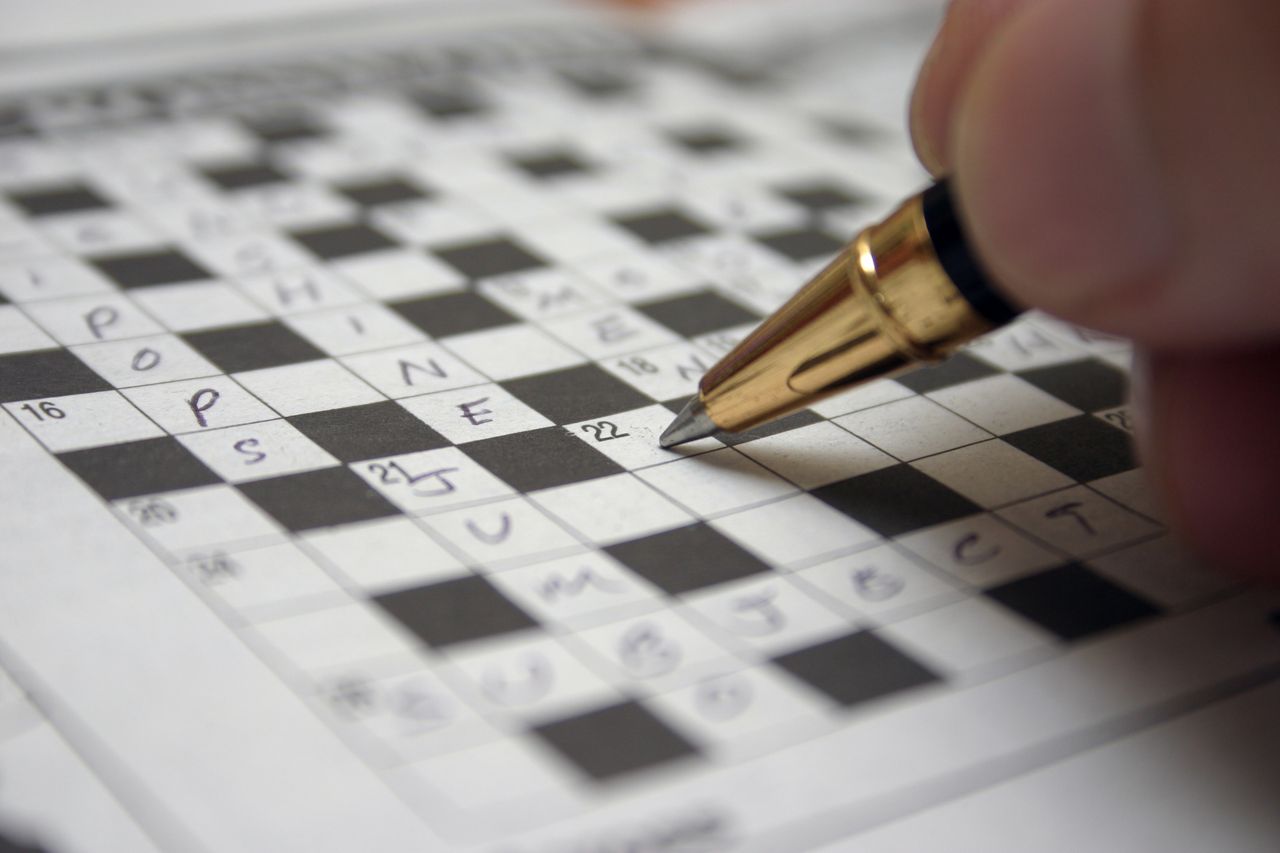
    Daily crossword

    Test your general knowledge with The Week’s daily crossword, part of our puzzles section, which also includes sudoku and codewords

    Play here


    THE WEEK RECOMMENDS

    London’s best ice-skating rinks


    The Christmas lights are up and London’s outdoor ice rinks have reopened. Here are some of the top spots for getting your skates on this festive season:

    Skate at Somerset House
    The ice rink at Somerset House (pictured above), with its “enormous Christmas tree”, has been a festive fixture for more than two decades, said Rebecca McCulloch on MyLondon. The “beautifully lit 18th-century courtyard” is an “unrivalled backdrop” for the skating and the food and drink stalls.

    Glide At Battersea Power Station
    Overlooked by the power station’s iconic chimneys, Glide is one of the city’s “most atmospheric open-air rinks”, said David Ellis in London’s The Standard. It also has a new skate trail that “offers the best views of the Thames”, as well as live music, private igloos for hire, a helter-skelter slide and a covered bar.

    ICE at Bussey Rooftop Bar
    This Peckham rooftop bar transforms into a “festive haven” from mid-November, said Olivia Emily in Country & Town House. Next to the ice rink, there’s a heated bar with “plenty of on-theme tipples” including boozy hot chocolate and “zesty winter spritzes”. But best of all are the “360-degree views of London’s showstopping skyline”.

    The Queen’s House Ice Rink
    “South London’s only outdoor ice rink” is a spectacular option, said Amy Houghton in Time Out. It’s right in front of Greenwich’s “grand” Queen’s House, “one of London’s prettiest Unesco World Heritage Sites”. After your session, you can warm up with seasonal food and drink at the Zero Degrees restaurant.


    Statistic of the day

    6,382: The number of people who visited A&E for a stuffy nose last winter, according to newly published NHS England data. A total of more than 200,000 patients attended A&E for non-emergency conditions, including hiccups, sore throats and ingrown nails, between November 2024 and February 2025.


    instant opinion

    Today’s best commentary

    Gen Z and Millennial House Buyers Aren’t Having a Fantastic Time
    Lara Williams on Bloomberg
    Prospective first-time home buyers are “about to be squeezed” by the Budget, writes Lara Williams. They’ll need “more cash to rent rather than squirrelling it away for a deposit”, and graduates will be “whacked with a freeze on the salary threshold” for paying back a student loan. Meanwhile, the “benefits” of Labour’s housebuilding programme won’t be felt for years. “Many young people wanting to put down roots still don’t have a way to do it.”

    We have nothing to fear from Putin’s nukes
    Con Coughlin in The Telegraph
    Whenever Vladimir Putin “finds himself in a fix”, he threatens the West with “doomsday scenarios”, writes Con Coughlin. He’s even authorised Russia’s strategic nuclear forces to conduct drills “solely for the purpose of intimidating Western leaders”. But Nato “unquestionably” has “the upper hand”, possessing “overall firepower” that is far superior to that of the Russians. Donald Trump and his European allies mustn’t “fall into the same trap” as Joe Biden “and take Putin’s outlandish threats at face value”.

    I’m sick of parent smugness towards people who don’t have kids
    Kate Lister in The i Paper
    The phrase “as a parent…” is “like nails down a blackboard to me”, writes Kate Lister. “It leverages a faux moral superiority over us childless monsters” and is “part of a much wider narrative: that people don’t have children because they don’t like them” and “must be selfish and narcissistic”. “Of all the stigmas” about childlessness, “this is the one that upsets me the most”. It’s a “cheap shot” and “unbelievably condescending”.


    word of the day

    Chess

    Amid allegations that she misled the public over the Budget, Rachel Reeves is also being accused of embellishing her chess credentials. The chancellor claims to have been Britain’s under-14 girls’ champion, but former national junior team player Alex Edmans told Sky News that she only won a “more minor title”.


    Evening Review was written and edited by Rebecca Messina, Jamie Timson, Will Barker, Abby Wilson, Chas Newkey-Burden, Alex Kerr, Irenie Forshaw, David Edwards, Helen Brown and Kari Wilkin, with illustrations from Stephen Kelly.

    Image credits, from top: Hristo Rusev / Getty Images; illustration by Stephen Kelly / Getty Images; Camerique / Getty Images; Ahmed Mosaad / NurPhoto / Getty Images; Design Pics Editorial / Getty Images

    Morning Report and Evening Review were named Newsletter of the Year at the Publisher Newsletter Awards 2025
     

    Recent editions

    • Morning Report

      Streeting orders review into mental health overdiagnosis

    • Evening Review

      The chances of a Reform-Tory pact

    • Morning Report

      Putin says Russia is ready for war if Europe wants it

    VIEW ALL
    TheWeek
    • About Us
    • Contact Future's experts
    • Terms and Conditions
    • Privacy Policy
    • Cookie Policy
    • Advertise With Us
    • FAQ
    Add as a preferred source on Google

    The Week UK is part of Future plc, an international media group and leading digital publisher. Visit our corporate site.

    © Future Publishing Limited Quay House, The Ambury, Bath BA1 1UA. All rights reserved. England and Wales company registration number 2008885.