The Week The Week
flag of US
US
flag of UK
UK
https://cdn.mos.cms.futurecdn.net/skoGBi9qKFoUtnNWkovjJQ.jpg

SUBSCRIBE

Try 6 Free Issues

Sign in
  • View Profile
  • Sign out
  • The Explainer
  • Talking Points
  • The Week Recommends
  • Podcasts
  • Newsletters
  • From the Magazine
  • The Week Junior
  • More
    • Politics
    • World News
    • Business
    • Health
    • Science
    • Food & Drink
    • Travel
    • Culture
    • History
    • Personal Finance
    • Puzzles
    • Photos
    • The Blend
    • All Categories
  • Newsletter sign up Newsletter
  • The Week Evening Review
    Maternity care failings, the new ‘K’ flu strain, and ‘The Liz Truss Show’

     
    TODAY’S BIG QUESTION

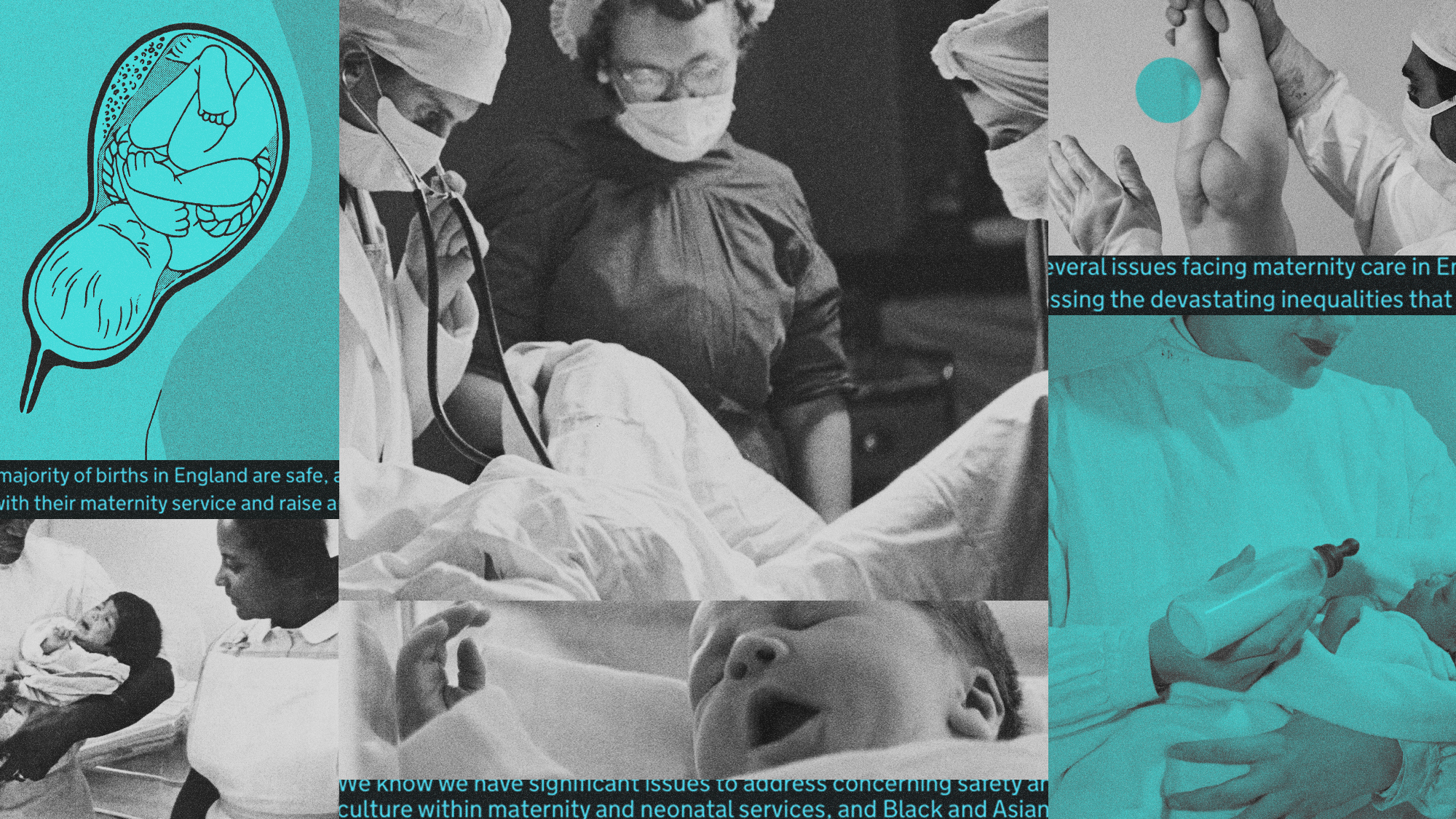
    How did NHS maternity care get into such a state?

    A series of high-profile scandals and independent reviews has painted a bleak picture of NHS maternity services. But Baroness Amos, who is leading the National Maternity and Neonatal Investigation into 12 NHS trusts, said “nothing” prepared her for the “unacceptable care” that families were receiving.

    A “staggering” 748 recommendations have been made about maternity services in recent years, she said in an interim report. Yet England is “still struggling to provide safe, reliable maternity and neonatal care everywhere in the country”.

    What did the commentators say?
    In her initial findings, Amos found common themes: women being “disregarded” when they raised concerns, or not given the right information to make informed choices, as well as “discrimination against women of colour”, leading to far higher rates of maternal deaths, and similar prejudice against working-class and younger parents.

    The problem is “systemic”, said Hannah Barnes in The New Statesman. The Care Quality Commission found last year that 65% of England’s maternity units required improvement or were inadequate. There is “something bigger going on – something unique that cannot simply be explained by staff shortages, low morale or a lack of funding”. Many hospitals with inadequate maternity units provide good care in other departments. “This is a problem of culture.”

    One hospital under investigation for poor maternity care spent a decade pursuing a “normal birth” ideology, said The Sunday Times. Leeds Teaching Hospitals Trust’s maternity strategy directed services to “actively promote” vaginal births, with “minimal medical interventions”. This has been “repeatedly blamed for contributing to poor care”, with staff waiting “too long to intervene”.

    Public inquiries have “repeatedly exposed systemic issues such as poor communication, a reluctance to learn from mistakes and knee-jerk defensiveness”, said lawyer Sara Stanger in The Times. In my experience as health secretary, said Jeremy Hunt in The Guardian, “the biggest barrier to safer care in the NHS” was “a blame culture that stopped people being open about mistakes”. 

    What next?
    Amos is due to publish her full report in the spring. Some victims are worried that it will amount to “recommendations but no teeth”, family campaigner Rebecca Matthews told Sky News. “We need some mechanisms that are going to hold people and systems to account.”


    THE EXPLAINER

    The ‘K’ strain super-flu

    Cases of the new “subclade K” super-flu are “ballooning” in the UK, NHS England has warned. Latest figures show that the number of flu patients admitted to hospital is up by 50% on the same period last year, and 10 times higher than in 2023.

    What exactly is subclade K?
    This “troublesome mutant” flu virus is a variant of influenza A H3N2, said London’s The Standard. H3N2 generally tends to cause more severe illness and hospital admissions than influenza A H1N1, which has been more dominant in the UK in recent years. Subclade K of H3N2 is now the predominant flu virus in the UK and Japan, and samples taken in the US and Canada suggest a similar pattern there.

    Subclade K is part of the H3N2 flu virus “family”, but it has undergone several mutations that have caused a distinct “genetic drift”. So it’s “differentiated” from the reference strain of H3N2 chosen for use in this season’s flu vaccine – and could have “changed sufficiently to escape the immunity that has been built up from previous infections and vaccinations”, said Antonia Ho, a consultant in infectious diseases at Glasgow University, on VaccinesWork.

    Why the rise in cases?
    H3N2 flu waves are “always hotter and nastier” than those caused by other strains, said The Telegraph’s science correspondent Joe Pinkstone. H3N2 is “inherently more severe and infectious than other types of flu, owing to more potent genes and a bigger ‘R rate’ – the number of people one infected person will pass the virus on to, on average”. And since subclade K of H3N2 is different from previous strains and from the strain in the flu vaccine, our herd immunity and the NHS vaccine may offer us less protection than usual. With fewer people, especially children, getting flu in the past few years, our bodies are now more vulnerable to the virus.

    What should you do?
    NHS bosses have cautioned about a “tidal wave of flu” in the run-up to Christmas and are encouraging everyone who is eligible to get the free NHS flu vaccine, including children (who can take it in the form of a nasal spray). People who don’t qualify for a free vaccine may be able to pay to get it at high-street pharmacies.


    QUOTE OF THE DAY

    “The prostitutes would be empresses in their own kingdom.”

    Jean-Philippe Tanguy, a senior MP in Marine Le Pen’s National Rally, calls for France to reopen regulated brothels to improve the security of sex workers. The party will submit a bill to reverse the 1946 ban on maisons closes, he told French media.


    Poll watch

    Amid reports that the Home Office is reviewing Prince Harry’s UK security arrangements, YouGov polling suggests only 17% of Brits think the state should pay for his police protection. The survey of 8,022 adults found that 39% thought the estranged royal should pay for his own police protection, while 28% thought he should not be entitled to any.


    TALKING POINT

    The Liz Truss Show: a ‘coping mechanism’ for former PM

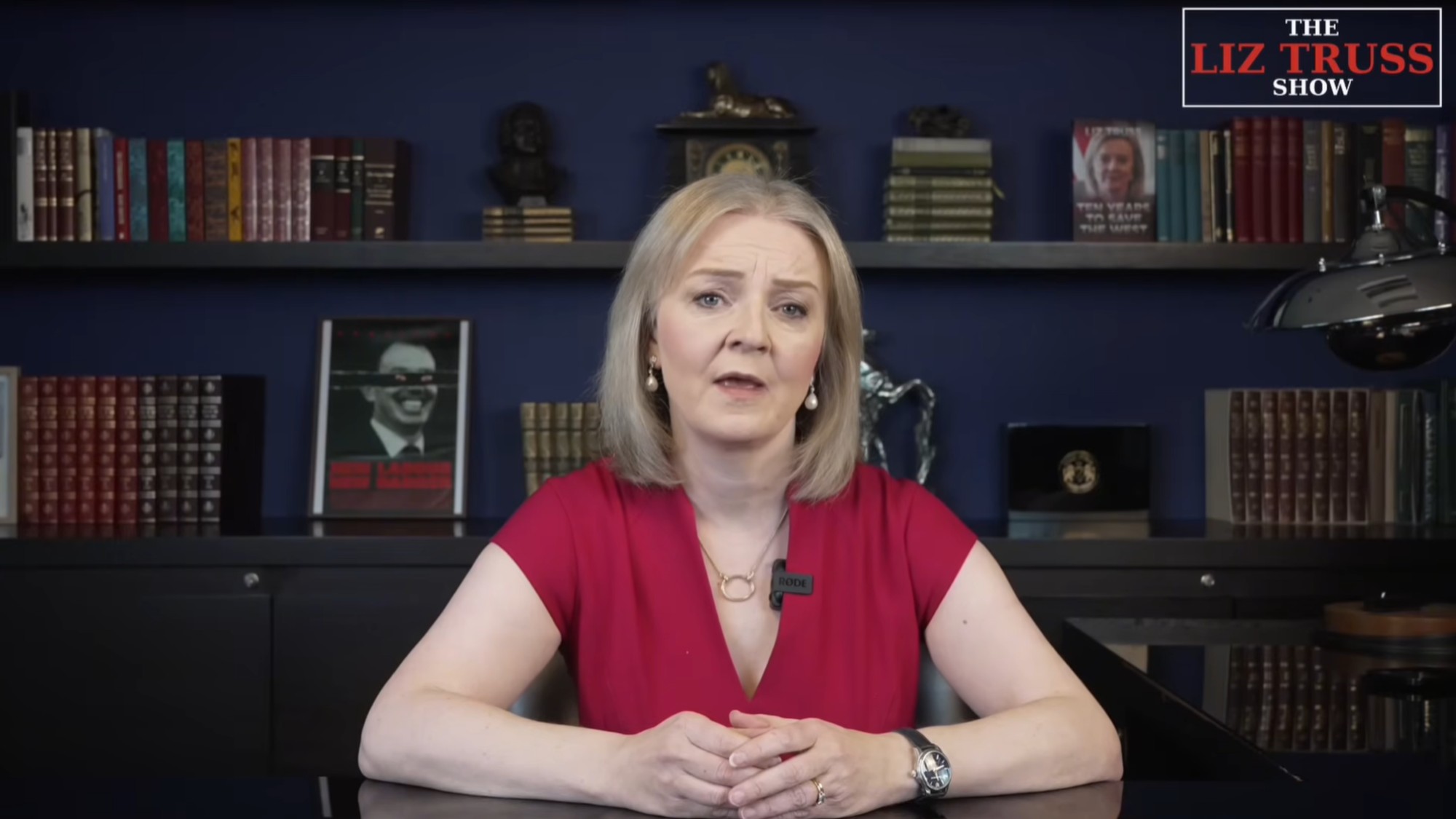
    More than three years have passed since Liz Truss’ disastrous 49-day premiership. Now, she’s back with her own weekly streaming show, pitched as the “home of the counter-revolution”.

    In the first episode of “The Liz Truss Show”, which appeared on YouTube at the weekend, the former Tory PM declared that “Britain is going to hell in a handcart”, laid into the “fake news BBC” and claimed the “steel towns, mill towns and car towns” of middle England “are being killed off by eco zealots”.

    ‘Rewriting the story’
    “The show started an hour late because Liz forgot to put her watch back in October”, and things didn’t get much better from there, said John Crace in The Guardian. Despite her omnipresence on the lucrative right-wing speaking circuit and her ex-prime ministerial allowance, the show appeared to have been filmed in a “makeshift studio”, with editing reminiscent of “a 12-year-old intern doped up on ketamine”. Viewers were treated to a “deranged diatribe” on “the deep state”, “Islamists” and the “governing elite”, all of whom were more to blame for her downfall than Truss herself, apparently. “It’s almost painful to watch someone so lacking in any self-awareness.”

    The show is “less about charting a new redemptive path than it is about rewriting the story of her humiliation”, said Tom Jones on UnHerd. A figure “defined entirely by her public fall from grace”, this is “more about providing her with a coping mechanism than her viewers with thought-provoking content”.

    ‘Liz lectures’
    “The Liz Truss Show” should be understood not just as the “classic conspiracy theorist’s yearning to make their bonkers views heard”, but also as “an audiovisual cover letter addressed to Donald Trump”, said Imogen West-Knights in The Independent. Yet despite her calls for Britain to undergo a Trump-style revolution, it seems “highly unlikely” that Truss’ latest venture “is going to have a wide appeal among Maga types on either side of the Atlantic”.

    So far, her guests have “agreed with everything she said”, making the show feel more like a “bank holiday book-club or a gripe session at Wetherspoons”, said Lloyd Evans in The Spectator. The “emotional theme is ‘Liz lectures’ rather than ‘Liz learns’”. If only the former PM “were to embrace her foes with an open mind, she may win over a few recruits”.


    Good day 🥐

    … for sniffing pastry, as Lidl launches an “Eau de Croissant” perfume in the US. Packaged in a croissant-shaped bottle, the “warm, buttery” limited-edition scent was developed with perfumer Sarah McCartney and is available only through an Instagram contest run by the supermarket.


    Bad day 🏝️

    … for real-life reality TV stars, as “Non Player Combat” – marketed as the “world’s first 100% AI-generated reality TV show” – comes to YouTube. Created by filmmaker Tom Paton, it features virtual contestants hunting one another on a simulated island.


    picture of the day

    ‘Lights & Ice’

    An abseiler descends at the opening of an ice cave in New Zealand’s Aoraki/Mount Cook National Park. The image, captured by Tori Harp, is among the 25 winners of the 2025 Northern Lights Photographer of the Year competition, published on the Capture the Atlas blog.

    Tori Harp / Northern Lights Photographer of the Year


    Puzzles

    Daily crossword

    Test your general knowledge with The Week’s daily crossword, part of our puzzles section, which also includes sudoku and codewords

    Play here


    THE WEEK RECOMMENDS

    Jane Austen lives on at these timeless hotels

    This month marks the 250th anniversary of Jane Austen’s birth, and these boutique hotels are celebrating her life and legacy.

    The Queensberry Hotel, Bath
    The “Pride and Prejudice” author called Bath home from 1801 to 1806, and the city still celebrates its most famous resident with events including the annual Grand Regency Costumed Promenade (pictured above). Comprising four Georgian townhouses, The Queensberry Hotel, just down the road from the Jane Austen Centre, is in the middle of the action.

    Henry’s Townhouse, Marylebone, London
    This “charming” Georgian townhouse once belonged to Austen’s brother Henry, and it “played a pivotal role” in Jane’s life, said Elle Decor. She spent the night there during visits to London, and now you can too, following its transformation into a six-bedroom boutique hotel. Each room is named in honour of an Austen relative and “designed as a glamorous reimagining of the Regency period”.

    Oakley Hall Hotel, Hampshire
    This Hampshire countryside escape was built in 1795 by Austen’s friend Wither Bramston, and the writer would detail her visits to the home in letters to her sister Cassandra. Legend also has it that Lady Bertram in “Mansfield Park” was based on Bramston’s wife, Mary. It’s easy to see why Austen enjoyed coming over: the manor is set on 315 acres of beautiful lawn and gardens and boasts original features including parquet wooden floors and big fireplaces. Oakley Hall Hotel is also close to many other sites, including Jane Austen’s House in Chawton, where she penned “Pride and Prejudice”; Steventon, the village where she lived as a child; and Winchester Cathedral, her burial site.


    Statistic of the day

    6.6 million: The estimated number of TikTok videos featuring Jess Glynne’s “Hold My Hand”. The 2015 hit single has been picked as the platform’s song of the year, after its use in the “Nothing beats a Jet2 holiday” advertising campaign sparked a viral trend of spoof clips of travel fails, soundtracked by the upbeat audio.


    instant opinion

    Today’s best commentary

    Women are required not to be angry. But we are raging
    Lucy Mangan in The i Paper
    Your typical rage-room customer, apparently, is “early 40s, woman, couple of kids, good job”, writes Lucy Mangan, and “this surprises me… not a jot”. Women are thoroughly “trained not to show any negative emotions” and it usually takes us decades “to realise what has been done to us, and even longer to unlearn the impulse to suppress”. Yet this impulse is “unsustainable”: “there are lots of reasons for women to be angry” and “we should be”.

    Tommy Robinson is a cynical Christian
    Giles Fraser on UnHerd
    “Outsiders welcome” is the message on Church of England Christmas posters, but “I don’t expect the same capaciousness will be on offer” at Tommy Robinson’s upcoming carol service, writes vicar Giles Fraser. The newly converted far-right influencer may have “weaponised Christian symbols” but the Nativity story “offers little comfort” to nationalists. A Jewish family from the Middle East seeking asylum in Egypt sounds “a lot more like” modern-day refugees than “Robinson and his angry gym-bunny friends”.

    Keir Starmer, you’re too old for TikTok – but if you must use it …
    Simon Mills in The Times
    “My heart sank” on hearing that Keir Starmer has joined TikTok, writes Simon Mills. The PM is “about 40 years too old” for that “shallow and mind-numbingly ephemeral” platform. But it does make political sense to connect with the “approximately 23 million” other Brits on it. As to what he should post, I’m thinking “England football shirt action during the World Cup”, plus “more stuff with” his family. But I’m not sure his catchphrase “delivery, delivery, delivery” will ever go viral.


    word of the day

    Chromoblastomycosis

    A chronic fungal skin disease that may have been the cause of Louis XIV’s death, according to a study in the journal Annales Pharmaceutiques Françaises. When the French king died in 1715, doctors believed he had gangrene. But “high-tech analysis” of a piece of his “mummified heart” found “fungal material rather than the bacterial agents in gangrene”, said The Times – suggesting he suffered from chromoblastomycosis that spread to his internal organs.


    Evening Review was written and edited by Hollie Clemence, Rebecca Messina, Harriet Marsden, Chas Newkey-Burden, Catherine Garcia, David Edwards, Helen Brown and Kari Wilkin, with illustrations from Stephen Kelly.

    Image credits, from top: illustration by Stephen Kelly / Getty Images; Olha Danylenko / Getty Images; The Liz Truss Show; Tori Harp / Northern Lights Photographer of the Year; Matt Cardy / Getty Images

    Morning Report and Evening Review were named Newsletter of the Year at the Publisher Newsletter Awards 2025
     

    Recent editions

    • Morning Report

      Europe rallies around Ukraine at ‘critical moment’

    • Evening Review

      Did Trump just end the US-Europe alliance?

    • Morning Report

      Farage referred to police over ‘election fraud’

    VIEW ALL
    TheWeek
    • About Us
    • Contact Future's experts
    • Terms and Conditions
    • Privacy Policy
    • Cookie Policy
    • Advertise With Us
    • FAQ
    Add as a preferred source on Google

    The Week UK is part of Future plc, an international media group and leading digital publisher. Visit our corporate site.

    © Future Publishing Limited Quay House, The Ambury, Bath BA1 1UA. All rights reserved. England and Wales company registration number 2008885.