The Week The Week
flag of US
US
flag of UK
UK
https://cdn.mos.cms.futurecdn.net/flexiimages/jzblygzdxr1769609154.gif

SUBSCRIBE

Try 6 weeks free

Sign in
  • View Profile
  • Sign out
  • The Explainer
  • Talking Points
  • The Week Recommends
  • Podcasts
  • Newsletters
  • From the Magazine
  • The Week Junior
  • More
    • Politics
    • World News
    • Business
    • Health
    • Science
    • Food & Drink
    • Travel
    • Culture
    • History
    • Personal Finance
    • Puzzles
    • Photos
    • The Blend
    • All Categories
  • Newsletter sign up Newsletter
  • The Week Evening Review
    Chagos deal in doubt, humanoid robots, and the fragile NHS supply chain

     
    TODAY’S BIG QUESTION

    Can Keir Starmer save the Chagos deal?

    Keir Starmer’s plan to hand the Chagos Islands to Mauritius is on the brink of collapse amid fresh opposition from the US. Donald Trump originally backed the deal, under which the UK would relinquish sovereignty of the archipelago in return for a 99-year lease on the crucial US-UK Diego Garcia military base. But now, perhaps irked by the UK’s refusal to let him use its base to launch potential strikes on Iran, Trump has said the deal would be “a big mistake”.

    UK critics of the prime minister’s plan are now “increasingly optimistic they can block” Parliament from voting it into law and “force Starmer into a U-turn”, said The i Paper’s deputy political editor Arj Singh.

    What did the commentators say?
    The amount of time, effort and political capital that Labour has invested in this deal may seem “odd”, said former Foreign Office special adviser Ben Judah in The Sunday Times. But “it was not human rights waffle or some misguided fantasy about pleasing the global south that brought us to this point”. Following a 2019 International Court of Justice “advisory opinion” against continued British ownership of Chagos, both the UK and US risked losing access to the strategically vital military base. The deal is actually “a piece of Realpolitik firmly grounded in geopolitical trade-offs”.

    Despite his latest attacks on Truth Social, Trump “hasn’t explicitly stated whether he will veto the Chagos agreement”, said Kamlesh Bhuckory and Ellen Milligan on Bloomberg. “The UK government is looking into whether he has the power to do so.”

    There are reports that Mauritius “may launch legal action for compensation” if the treaty is cancelled, said The Telegraph’s editorial board. But this just shows that “the financial aspect of this deal is far more important to Mauritius than the spurious claim to sovereignty under international law”. Trump’s “newfound antipathy” has offered Starmer “a way out of the hole he has dug for himself” and “he needs to take it”.

    What next?
    Starmer “has to get the treaty ratified before May or it fails”, said David Maddox in The Independent. The PM has been praised for “his international statesmanship”, if little else, but “now the Chagos nightmare suggests even that is unravelling for this ill-fated PM”.


    THE EXPLAINER

    China and the rise of humanoid robots

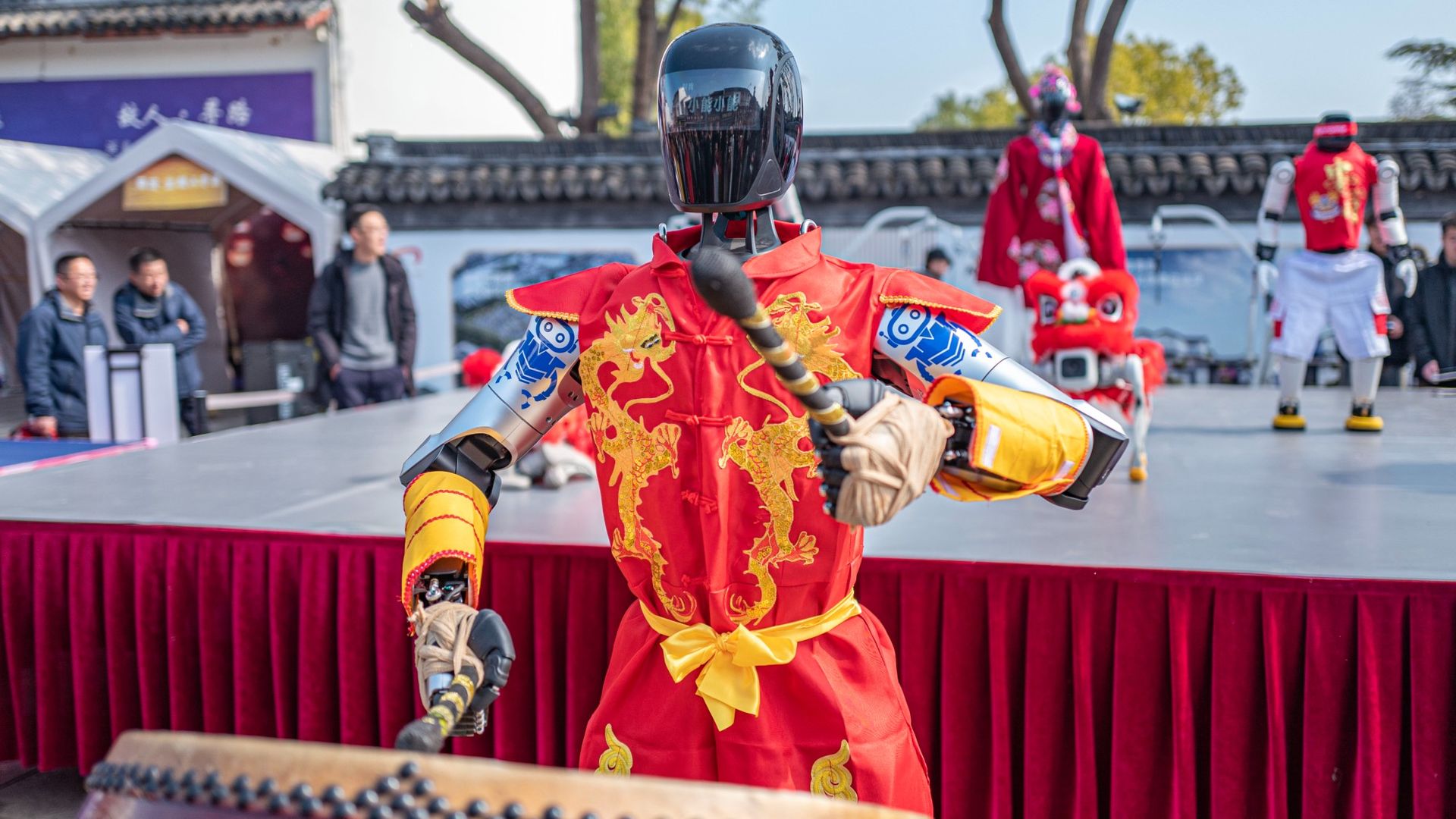
    Gone are the days when China’s humanoid robots were something of a joke. In a “dazzling” performance, said Futurism, humanoid robots took centre stage in China’s Spring Festival Gala, “showcasing how far the country’s robotics industry has come in a few short years”. With backflips and sophisticated choreography – including sparring with children using nunchucks – the performance was in stark contrast to the “awkwardly shuffling” humanoids that preceded them.

    Are humanoids a realistic goal?
    Machines with human likeness have appeared in “mythology and history for millennia”, yet the idea that they could become “practical consumer products” is entirely realistic, said social robotics researcher Eduardo B. Sandoval on The Conversation. Progress in other fields has helped the sector to develop rapidly. There have been major improvements to battery capacity, motors and sensors thanks to the electric vehicle industry, and the AI systems that control such hardware “have also become far more capable”.

    How invested is China in the technology?
    China’s “bustling” robotics industry is “home to the world’s deepest supply chain for humanoids”, said The Economist. According to research firm Omdia, more than 14,500 “automatons” were delivered globally last year, a near 400% rise on the year before. China’s two leading firms, Agibot and Unitree, “accounted for around three-quarters of the total”.

    The Chinese state will “probably remain the biggest source of demand for some time”. Though subsidies provide important financial platforms for expansion, the government’s “most important role by far is as a buyer”; it was the largest purchaser of humanoids last year.

    Should we be worried?
    In the not too distant future, there is “likely” to be room for “robots in the shape of humans and animals” for “military and security organisations”, Hans Liwång, from the Swedish Defence University, told Euronews.

    China’s robotics market rush is worrying some in the West, who believe that humanoids will “eventually become one of the largest industries in the world”, said The Economist.  But China’s latest displays of expertise should be viewed with caution, and at the very least “through a lens of state propaganda”, said The Guardian. The humanoids were programmed to enact a fixed routine “hundreds or thousands of times”, requiring very little “environmental perception”, an essential requirement for factory-grade development.


    QUOTE OF THE DAY

    “I am writing to confirm that my government would agree to any proposal to remove him from the line of royal succession.”

    Australia’s PM Anthony Albanese clarifies his stance on Andrew Mountbatten-Windsor following his arrest on suspicion of misconduct in public office, in a letter to Keir Starmer. The former prince, who denies any wrongdoing, remains eighth in line to the throne.


    Poll watch

    Fewer than one in 10 boys (9.8%) aged 14 to 16 read daily for pleasure. A National Literacy Trust survey of 80,000 young people in the UK found that while almost half (46.9%) of boys and girls aged eight to 11 enjoyed reading, only 28.6% of 14- to 16-year-olds felt the same.


    IN THE SPOTLIGHT

    NHS vulnerable to ‘fragile’ supply chains

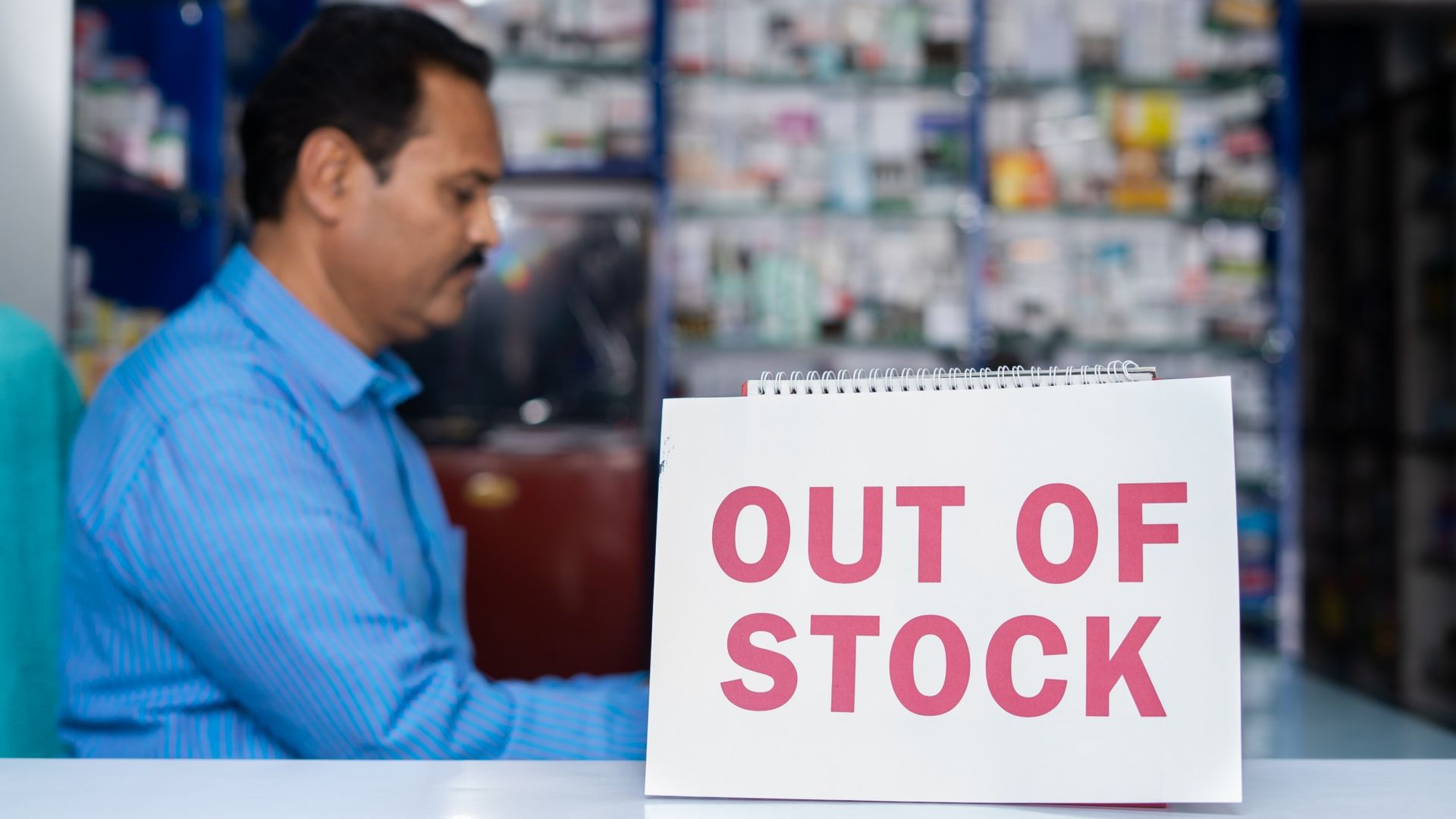
    The NHS has long grappled with staff shortages and funding shortfalls but another issue threatens to destabilise the health service: the vulnerability of its supply chain. Amid global tensions, tariffs and climate-related disasters, shortages of vital medicines and equipment are becoming more common.

    Painkillers, aspirin and bone cement
    A global shortage of bone cement, a synthetic biomaterial used in orthopaedic surgery, has led to the postponement of scheduled knee and hip replacement operations across the country. For people waiting in pain to make it “to the front of the orthopaedic surgery queue”, this is “a crushing blow”, Deborah Alsina of Arthritis UK told The Guardian.

    There is also a UK-wide shortage of aspirin, used to help prevent blood clots, strokes and heart attacks in high-risk patients. The highest prescription-strength form of the painkiller co-codamol is in short supply too. Co-codamol is most commonly manufactured in India, but the Indian government is “delaying the authorisation to import ingredients required to make the drug there”, said the BBC.  

    Even when drugs are available, the prices paid by the NHS “are so low that manufacturers often prioritise supplying other countries instead, leaving the UK pushed to the back of the queue”, Leyla Hannbeck of the Independent Pharmacies Association told PA Media. And if they can order stock, UK pharmacies may be left out of pocket: the aspirin shortage has pushed its price up to £3.90 per packet, but pharmacies are only reimbursed £2.18 per packet by the NHS. These are “signs of a fundamentally broken pharmacy contract”, said Olivier Picard of the National Pharmacy Association.

    ‘Critical pinch points’
    The UK depends on supply chains that are “highly brittle and vulnerable” for antibiotics, vaccines and diagnostic tests, the Centre for Long-Term Resilience think tank warned last year. These supply chains have “critical pinch points overseas”. With the NHS reliant on a small number of manufacturers, many based in China, in this time of “turning geopolitical tides”, the nation’s health service “has never looked more fragile”.

    The NHS supply chain is “exposed to vulnerabilities of unprecedented scale and complexity”, said global risk consultancy Marsh. Global tariffs have “introduced significant cost pressures on international trade flows” and the NHS has “felt these disruptions acutely”. There is an “urgent need to build a more resilient, agile and secure” supply chain.


    Good day ⚽

    … for football fans, as Fifa prepares to roll out new rules to tackle tempo disruption and time lost on the pitch. Players who receive treatment for an injury could be forced to stay off the field for one minute under measures expected to be rubber-stamped at a meeting of the International Football Association Board on Saturday.


    Bad day 🚗

    … for Mumbai’s light sleepers, who are being driven to despair by India’s first “musical road”. The 500-metre stretch of the city’s new Coastal Road expressway is intended to encourage safer driving by playing when vehicles move at lower speeds, but more than 650 local families have signed a complaint urging authorities to stop the “intrusive background noise”.


    picture of the day

    Drug war

    A cyclist photographs a burnt-out truck in Mexico’s Jalisco state as the killing of the country’s top drug lord sparks violence across the country. Cartels are striking back after Nemesio “El Mencho” Oseguera Cervantes was fatally injured yesterday during a US-backed military operation to capture him. 

    Ulises Ruiz / AFP / Getty Images


    Puzzles

    Guess the number

    Try The Week’s new daily number challenge in our puzzles and quizzes section

    Play here


    THE WEEK RECOMMENDS

    ‘Chic’ cabbages are having a moment

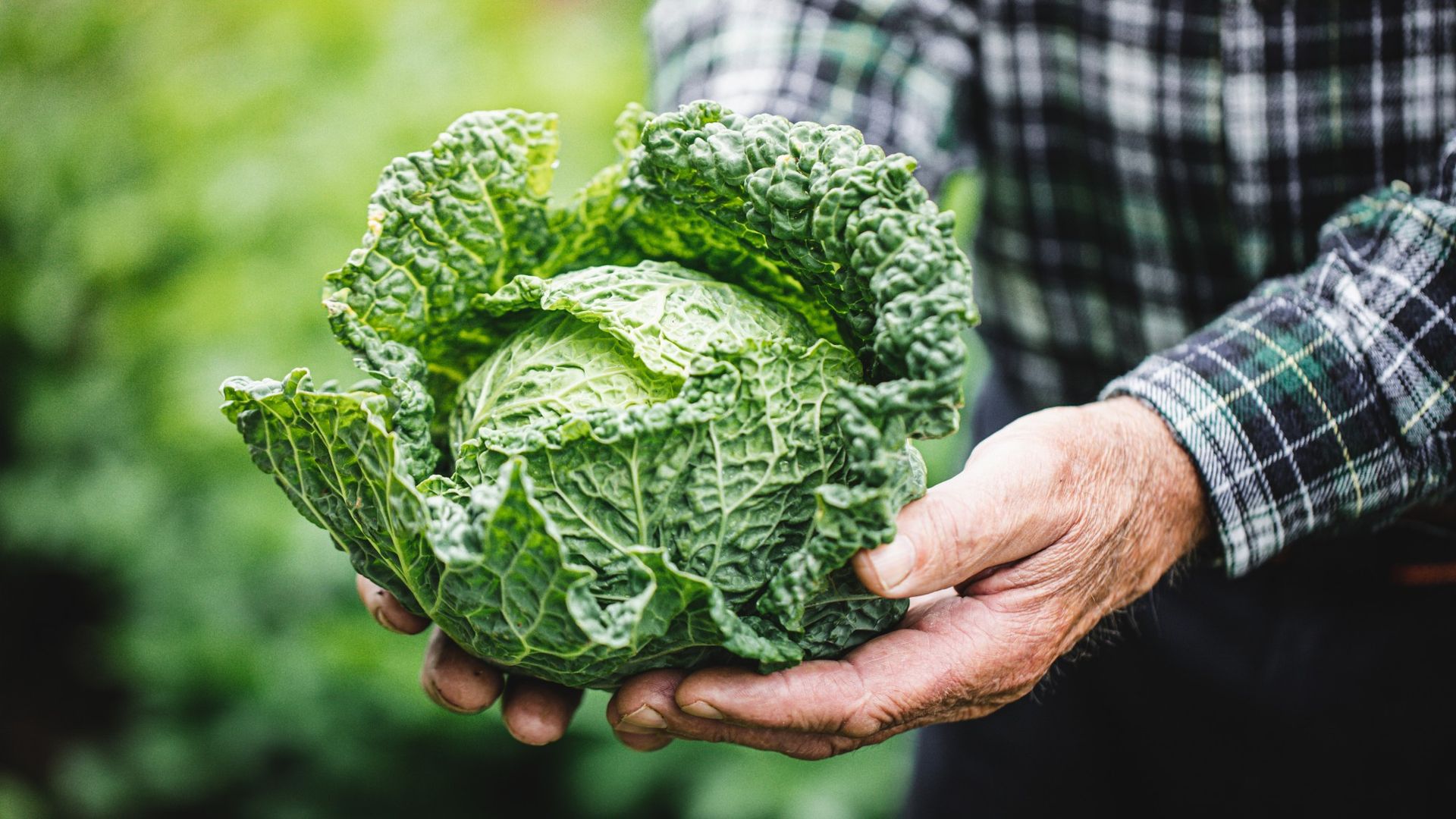
    “After decades of terrible PR”, said Business Insider, the humble cabbage is “quietly gaining cultural capital”. Sad memories of soggy “WWII boiled cabbage recipes” and the 1980s Cabbage Soup Diet fad are fading, and while some might claim the vegetable’s resurgence is a “recession indicator”, others are raving about its high-fibre and low-calorie content. Whatever the reason, cabbage is “having a moment”.

    With the “fibre-maxxing” movement in full swing, said nutritionist and food author Rob Hobson, fibre is on track to “overtake protein as the trendiest nutrient” this year. And cabbage “punches well above its weight” as a “rich source” of not only fibre but also vitamin C and K.

    Cabbage has “never enjoyed the glossy halo afforded to avocados, blueberries” and other sought-after superfoods, said Hannah Twiggs in The Independent. “It is the vegetable equivalent of sensible shoes: practical, reliable and almost aggressively uninterested in seduction.” Yet these green leaves have fed people of all backgrounds for thousands of years, as an ingredient in everything from soups in central Europe to kimchi in Korea. In Ireland, cabbage is “fused” into the “national psyche” alongside potatoes.

    Its “lack of glamour” may now be a key part of cabbage’s appeal, along with its low price tag and wide availability. Cabbage “asks little, delivers much and carries none of the aspirational baggage of trendier ingredients”. It is “not new”, just “newly appreciated”.


    Statistic of the day

    £4 billion: How much the government has pledged to invest over the next three years to support pupils with special educational needs and disabilities. The funding, outlined in a newly published white paper, includes £1.6 billion for Send support at England’s mainstream schools and colleges, and £1.8 billion to provide more access to specialists.


    instant opinion

    Today’s best commentary

    Why Trump will win the tariff war
    Wolfgang Munchau on UnHerd
    “Before we all start celebrating” the US Supreme Court’s tariffs ruling, we should stop, reflect and recognise that “nothing of substance will change”, writes Wolfgang Munchau. All the ruling did was “tell the President that he should have picked a different legal basis for his tariffs”. Donald Trump will “be able to get his way” using other laws, “and Congress will be unable to stop him”. His “economic bazooka” is still “pointing at the rest of us”.

    Don’t judge Churchill too harshly if he did sanction pornography
    Rowan Pelling in The Telegraph
    A new film explores the “racy” rumour that, during the Second World War, Winston Churchill gave “the thumbs up” to the secret filming of “blue movies” intended to “raise the pulse and fighting spirit of British armed forces”, writes Rowan Pelling. If that’s true, I think it makes him “even more admirable”. I can’t imagine “Keir Starmer sanctioning any such rapture” for today’s troops. “It takes a titan” like Churchill “to perk up a nation in its darkest hour”.

    Why Arsenal are the liberal establishment’s favourite team
    Joey D’Urso in The New Statesman
    It’s “not an accident” that any London “barrister, senior civil servant or media executive” is “likely to support Arsenal”, writes Joey D’Urso. The club broke away early from the “violence and decay” of 1980s English football and nurtured a “modern liberal identity”. Now, Mikel Arteta, the “human embodiment of a Ted Talk”, could take them to the Premier League title, provided they don’t “drown under the weight of their own neuroses” – which “would be a very liberal establishment thing to happen”.


    word of the day

    Myllokunmingids

    Our oldest known vertebrate ancestors and the subject of “an eye-popping discovery”, according to a report in the journal Nature. A study of fossils from China found that myllokunmingids, jawless fish that lived 518 million years ago, had four eyes, boosting their ability to spot predators. “It turns out our ancestors were visually sophisticated animals navigating a dangerous world,” said study co-author Jakob Vinther of Bristol University.


    Evening Review was written and edited by Jamie Timson, Will Barker, Chas Newkey-Burden, Harriet Marsden, Elliott Goat, Irenie Forshaw, David Edwards, Helen Brown and Kari Wilkin, with illustrations from Julia Wytrazek.

    Image credits, from top: illustration by Julia Wytrazek / Getty Images; VCG / Getty Images; Lakshmiprasad S / Getty Images; Ulises Ruiz / AFP / Getty Images; Elena Rui / Getty Images

    Morning Report and Evening Review were named Newsletter of the Year at the Publisher Newsletter Awards 2025
     

    Recent editions

    • Morning Report

      Officers kill armed intruder at Mar-a-Lago

    • Sunday Shortlist

      A ‘first-class’ Lord of the Flies adaptation

    • Saturday Wrap

      Labour’s local elections own goal

    VIEW ALL
    TheWeek
    • About Us
    • Contact Future's experts
    • Terms and Conditions
    • Privacy Policy
    • Cookie Policy
    • Advertise With Us
    • FAQ
    Add as a preferred source on Google

    The Week UK is part of Future plc, an international media group and leading digital publisher. Visit our corporate site.

    © Future Publishing Limited Quay House, The Ambury, Bath BA1 1UA. All rights reserved. England and Wales company registration number 2008885.