The Week The Week
flag of US
US
flag of UK
UK
https://cdn.mos.cms.futurecdn.net/flexiimages/jzblygzdxr1769609154.gif

SUBSCRIBE

Try 6 weeks free

Sign in
  • View Profile
  • Sign out
  • The Explainer
  • Talking Points
  • The Week Recommends
  • Podcasts
  • Newsletters
  • From the Magazine
  • The Week Junior
  • More
    • Politics
    • World News
    • Business
    • Health
    • Science
    • Food & Drink
    • Travel
    • Culture
    • History
    • Personal Finance
    • Puzzles
    • Photos
    • The Blend
    • All Categories
  • Newsletter sign up Newsletter
  • Saturday Wrap, from The Week
    Local elections, Malaysia Airlines mystery, and Cuban crisis

     
    controversy of the week

    Starmer U-turns again: local elections ‘yet another’ own goal for Labour

    Keir Starmer this week abandoned plans to delay local elections in England, following advice that they could be ruled unlawful by the courts. In January, ministers had announced that polls due to be held this May could be postponed until 2027, if councils wished, to free up “capacity” for a major reorganisation of local government. But the delay sparked anger from opposition parties, who complained that it would disenfranchise some 4.5 million voters; and following a legal challenge brought by Reform UK, the government backed down on Monday.

    The PM’s latest major U-turn – his 14th – came as he attempted to reset his Downing Street operation following a tumultuous period of leadership speculation. Last week, Chris Wormald became the latest senior figure to leave government, departing as cabinet secretary “by mutual consent”. And the woman chosen to replace him, Dame Antonia Romeo, faced revived accusations of bullying during her time as consul general in New York in 2016-2017.

    Thank goodness, said the Daily Mail: “Labour’s blatant attempt to trample over local democracy for base political motives has failed.” Ministers had sought to justify their plan to delay elections by arguing that it didn’t make sense to hold them for councils due to be scrapped by 2028, as part of a reorganisation of local government. A more likely reason, however, was that Labour faced being trounced by Reform or the Greens in many of the areas in question, and hoped to avoid a shellacking. Now, such hopes have been dashed – with Nigel Farage the chief beneficiary.

    “This latest U-turn smacks of incompetence rather than venality,” said The Independent. Still, by opening itself up to accusations that it was seeking to deny democracy, the government has scored “yet another” needless own goal. With voters in affected areas justifiably outraged by Labour’s attempts to disenfranchise them, May’s elections now look an even more daunting proposition for Starmer than they already were, said The Telegraph. A series of heavy defeats will increase pressure on the PM, who is clinging to power after successfully fending off the latest attacks on his leadership.

    So here we are, once again in “reset” territory for the government, said Nesrine Malik in The Guardian. The PM has bought some time. There has even been a “modest bounce” in his polling. But his reprieve will only be temporary: he is too unpopular to recover. His main problem is that he has no political constituency. The Labour Left loathes him for his stance on Gaza, and for his “feverish immigration rhetoric”. And even pragmatic centrists increasingly deplore his “incompetence and lurching from one debacle to the next”. Starmer may not be toast yet, said Janan Ganesh in the Financial Times. “John Major, Gordon Brown and Theresa May all governed the UK for years after the apparent collapse of their authority.” But he can only survive by pandering to Labour’s Left. If he goes, meanwhile, his likely successor will come from that same quarter. “Either way, Britain is about to get a government it did not and would not vote for.”

    The next key date for the PM is 26 February, when the Gorton and Denton by-election takes place in Greater Manchester. Polls suggest the race is a three-way tussle between Labour, Reform UK and the Greens.


    Briefing of the week

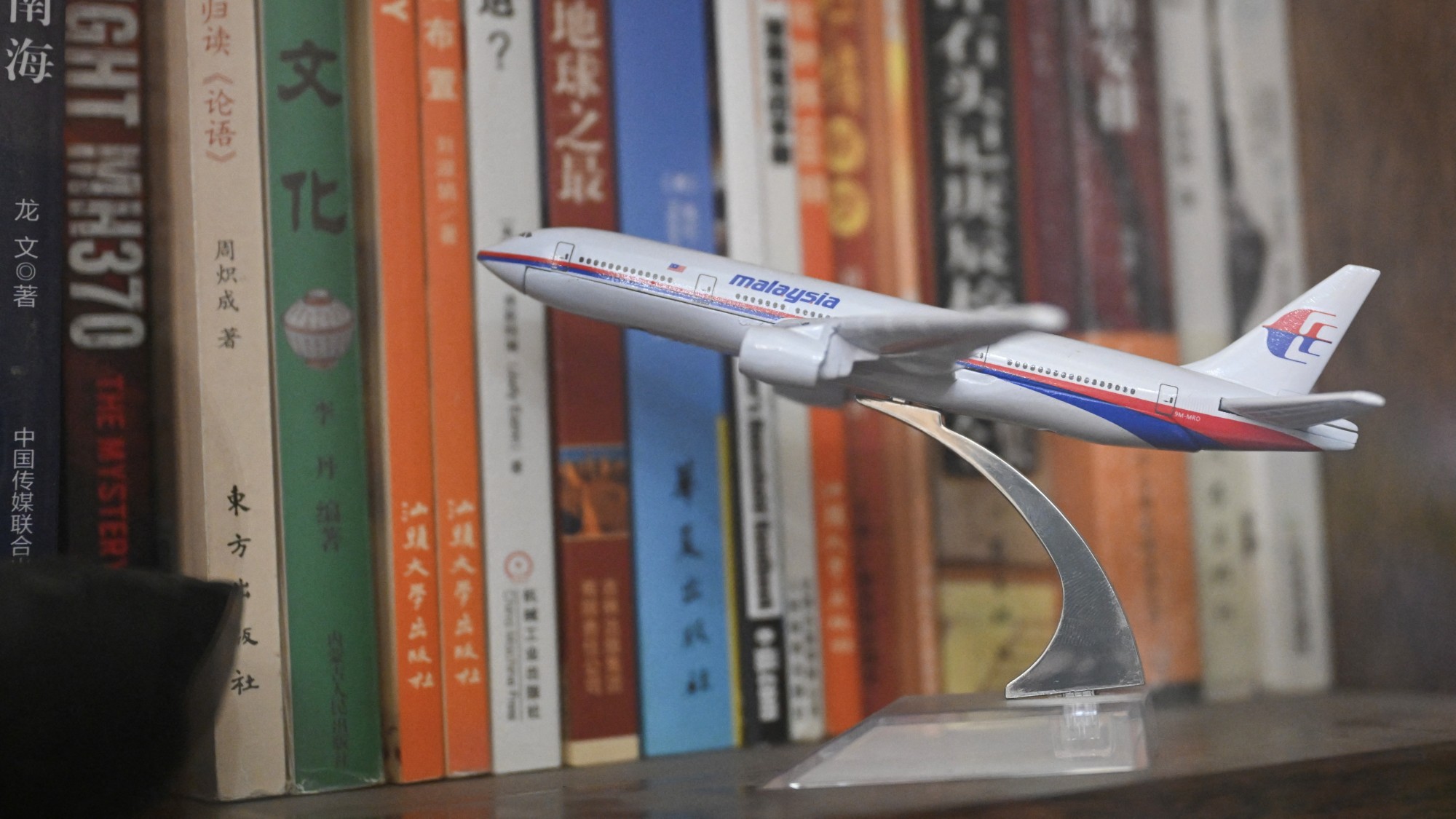
    The mystery of flight MH370

    In 2014, a Malaysia Airlines flight vanished without trace. Twelve years on, a new operation is under way to find the doomed airliner

    When did the plane disappear?
    At 12.41am local time on 8 March 2014, Malaysia Airlines flight MH370 set out from Kuala Lumpur, bound for Beijing. About 40 minutes after its departure, however, nearly all electronic communications from the Boeing 777 stopped: it disappeared from air traffic control radars; and by 2.22am, it had dropped off military radars, too. Half an hour later, the airline confirmed that it had lost contact with MH370. In the days that followed, a huge Malaysian, and later Australian-led, search operation was launched; but it soon became clear that all 239 people on board – 227 passengers and 12 crew, including 154 people from China and 50 from Malaysia – were likely to have died. More than a decade later, the fate of MH370 and its passengers is unresolved.

    What do we know about where it went?
    For more than seven hours after it dropped off flight radars, MH370 sent “handshakes”, routine communications with a satellite network, confirming that it was still flying – meaning the plane had not suffered some sudden catastrophic event. Data from Malaysian military radar suggests that it made a sharp left turn soon after entering Vietnamese airspace; it then headed southwest, back over the Malayan peninsula, before flying northwest up the Strait of Malacca between Indonesia and Malaysia. There, it was lost beyond radar range. Initially, the search operation centred on the South China Sea and the Strait of Malacca; but investigators later established (using satellite data, and a process of elimination) that MH370 turned sharply again and flew on for hours, to the southern Indian Ocean. There it descended steeply into the sea, presumably because it ran out of fuel. Underwater searches of that area have since covered more than 50,000 square miles of one of the world’s least-explored seafloors.

    What have these searches found?
    The official search involved nearly 60 ships and 50 aircraft from 26 nations, and lasted until January 2017. A private US company, Ocean Infinity, later resumed the search for five months in early 2018, working for the Malaysian government on a no-find, no-fee basis, and using underwater drones to scan the seabed. Nothing was found. The first physical proof that MH370 had indeed crashed into the Indian Ocean had turned up in July 2015, on the French island of Réunion – beach cleaners found a “flaperon”, a large wing component, which was later confirmed to be from the airliner. Another flap from its right wing was found on Pemba Island off Tanzania; Other debris almost certainly from the plane was found from Mauritius to Madagascar. But nobody has yet managed to track down the debris to its point of origin, nor have they found the plane’s black boxes.

    So what happened?
    There are scores of theories, some plausible, many preposterous. In the absence of any distress call, hijack seems unlikely. Even so, it has been suggested that the plane was hijacked and flown to Russia, or the US airbase on the island of Diego Garcia; others have said it could have been shot down. Less fanciful theories include a mass hypoxia event – in which everyone was knocked out owing to oxygen deprivation caused by a sudden cabin depressurisation, while the plane continued flying on autopilot until it ran out of fuel. The consensus among experts, however, is that the plane’s disappearance was probably the result of pilot suicide: either by the pilot, Captain Zaharie Ahmad Shah, or First Officer Fariq Abdul Hamid.

    What evidence supports the theory?
    The flight path, with its sharp turns, in no way resembles an autopilot flight plan; it is consistent with manual control. The turning off of all communications is more likely to have been a deliberate act than a total system failure. The circumstances suggest control was seized from within the cockpit, sometime between 1.01am and 1.21am, when the plane disappeared from radar. By this time – barring the unlikely event of two pilots acting in concert – one of the pilots must have either been dead, incapacitated or locked out of the cockpit. Experts hypothesise that MH370 was deliberately and rapidly depressurised, rendering passengers dead within minutes. Passenger oxygen masks provide 15 minutes of oxygen at best; pilots have access to several hours’ worth. This would have allowed a pilot to keep flying for hours, without disturbances.

    Do we know which pilot might have been to blame?
    No. However, an FBI investigation discovered that Captain Shah had practised flying a very similar southerly path over the Indian Ocean using a Microsoft flight simulator; he had then deleted the record. The Malaysian police investigation presented him as a respectable family man, but it was widely deemed inadequate and designed to minimise embarrassment. Shah was described by friends as sad and lonely: his wife had recently moved out. By contrast, Hamid, the first officer, was widely seen as an optimistic person, with no history of mental health problems.

    Who is leading the new search?
    It is again being conducted by Ocean Infinity, which will collect a £56 million reward from Malaysia if it finds the plane, but nothing if it fails. The seabed surveying company will target a 5,800-square-mile area it believes is most likely to contain the plane’s wreckage. Drones are using sonar, laser, optic and echo sound technology to look for debris on the ocean floor at depths of up to 6,000 metres. But the precise crash zone is impossible to pinpoint from satellite data. And even if the debris, and the black boxes, are found, aviation experts will only learn more about technical data from the flight. The cockpit voice recorder is on a self-erasing two-hour loop, so – unless a pilot chose to (and was able to) provide some explanation at the end of the flight – it may contain little more than the sound of alarms blaring on the plane’s final descent.

    Aircraft disasters: rare but terrifying
    Statistically, flying remains the safest way to travel. Globally, 12 million people board planes every day; yet over the past five years, an average of far fewer than one passenger per day has been killed. (By way of context, about 1,600 people in the UK die in car crashes per year.) That said, any aviation accident resulting in a high-speed collision with ground or sea usually has a terrible human cost. And though extremely rare, there have been at least seven other probable cases of pilot suicide on commercial flights. On Royal Air Maroc flight 630 in 1994, the captain deliberately crashed, killing 44 people. In 1997, 104 died when SilkAir flight 185 fell into water off Sumatra. Official investigations pointed to possible suicide by the pilot. In 2013, the captain of Mozambique Airlines flight 470 locked the cabin door and descended into the ground, killing 33. In the most famous recent case, Germanwings flight 9525 in 2015, co-pilot Andreas Lubitz likewise locked the door and deliberately crashed an Airbus in the French Alps, killing 150 people. Lubitz had a history of severe depression and had been declared unfit to fly by doctors. Investigations later discovered that he had studied closely the case of MH370’s disappearance.




    Spirit of the age

    Restaurants are catering to diners on fat jabs by offering “one-bite” desserts, The Telegraph reports. In London, Corenucopia offers a profiterole dessert featuring just one profiterole (though it has a mini profiterole inside it); while diners at Town can enjoy a regular-sized buttermilk pudding – or opt for a “half-pud” portion, priced at £6.


    VIEWPOINT

    Why Starmer is doomed

    “It is hard to see a way back for Keir Starmer. Journalists may seem peripheral to the rhythm of what’s about to happen to him. But – and I’m sorry to share secrets from the sausage factory – so many of us have publicly committed ourselves to the proposition that Starmer is doomed, that the idea takes on its own momentum. We don’t want to be proved wrong. So we – hacks, broadcasters, commentators of all kinds – find we have a vested interest in pushing the man out. It would be conspiratorial nonsense to blame Starmer’s plight on journalists. But we are also part of the conversation – or, if you like, the contamination.”

    Andrew Marr in The New Statesman


    talking point

    Crisis in Cuba: a ‘golden opportunity’ for Washington?

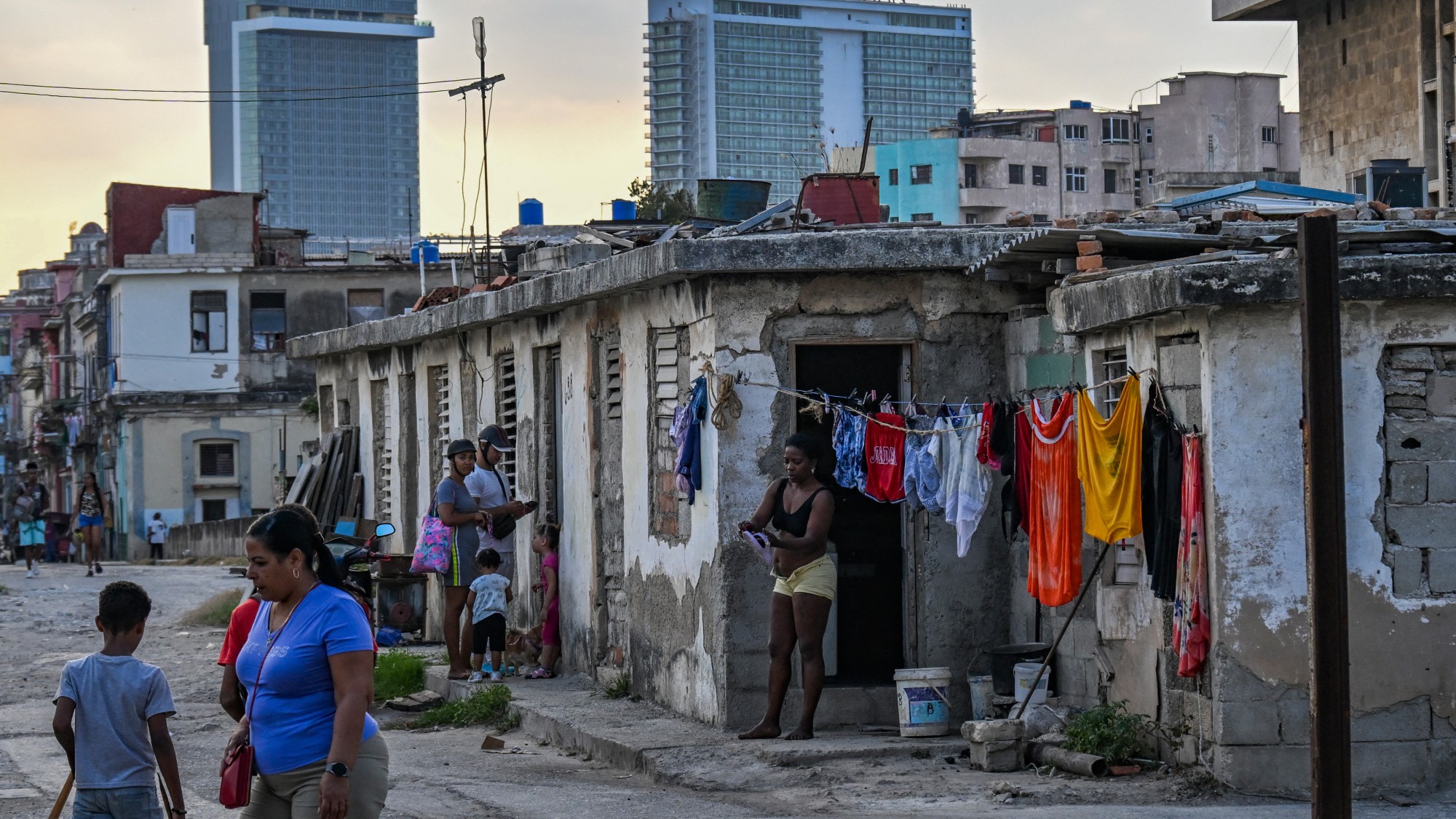
    In the face of intense pressure from the US, Cuba’s communist regime has proved remarkably resilient, said Ani Chkhikvadze in the Washington Examiner: it has survived the Bay of Pigs invasion, the Cuban Missile Crisis and the collapse of the Soviet Union. But the pressure currently being exerted by the Trump administration may prove more than it can bear. In recent years, Havana has relied heavily on subsidised oil from Venezuela, and that lifeline was cut last month, after the US seized Venezuela’s Nicolás Maduro. With Washington now threatening to impose tariffs on any other nation that supplies oil to Cuba, Havana’s stocks are fast running out. Airlines can no longer refuel in Cuba; petrol is rationed; tourist resorts have had to shut; rubbish is piling up because lorries lack the fuel to collect it; and power cuts are “omnipresent”. 

    Given Latin America’s recent swing to the Right, Havana has never looked so “politically isolated” or so short of public sympathy, said Juan Pablo Spinetto on Bloomberg. There have been no mass protests in São Paulo, Buenos Aires or Mexico City against “a renewed display of American colonialism”. Washington holds all the cards, and could make things yet harder for Havana by, for instance, restricting remittances. It should tread carefully, though. The US doesn’t want to create a humanitarian crisis in Cuba. It doesn’t want a new wave of refugees to start heading for the coast of Florida. And it should not underestimate the capacity of Cuba’s regime to “embrace self-destruction rather than yield” to its enemy. 

    This is a “golden opportunity” to push for change in Cuba, said Lizette Alvarez in The Washington Post. The communist leadership knows it’s out of options, and Donald Trump – who, unlike his Cuban-American secretary of state, Marco Rubio, is no “hardliner” on this issue – says he wants to “work a deal”. He seems, in other words, open to the kind of “go-slow regime change” the US is working on in Caracas. The US could lift the embargo on Cuba and offer aid in exchange for deadline-driven reforms: prisoner releases; the removal of barriers to private investment and free expression; and, eventually, the holding of open elections. Cuba is not oil-rich like Venezuela. But it has tourism potential and offers another, more tantalising prize for Trump: the chance to take credit for transforming an island that has “bedevilled the US since the Cold War into a free society”.


    It wasn’t all bad

    A nine-year-old from Northampton has become the first person in the UK to benefit from a pioneering surgery to extend one of his legs. Alfie Phillips was born with a rare condition that meant his right leg was more than an inch shorter than his left leg. He was operated on by surgeons at Alder Hey Children’s Hospital in Liverpool, who inserted a lengthening nail onto his right thigh bone, which was slowly pulled apart over time using magnets. His leg is now 3cm longer; his mother said that Alfie was finally “running around as normal”.


    People

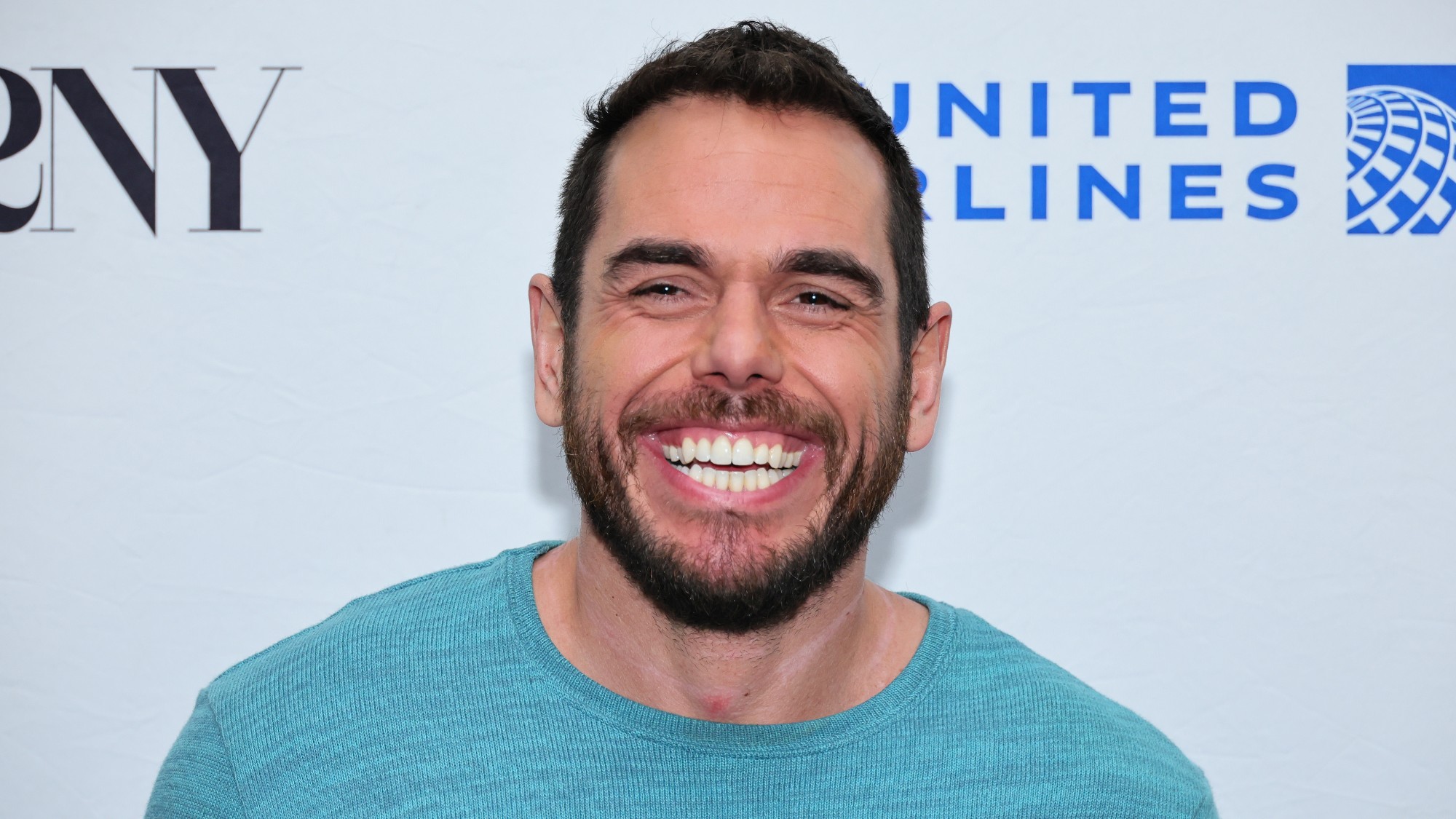
    Ross Edgley

    Ross Edgley doesn’t shy away from a challenge, says Chris Bennion in The Telegraph. He has swum 1,792 miles around the coast of Britain; repeatedly climbed a 20-metre rope until, 20 hours later, he had ascended the height of Everest; and run a marathon while pulling a car. 

    His biggest challenge, though, was swimming 1,000 miles around Iceland last year. He had prepared for it assiduously, but it was a shattering experience even so: swimming for six-hour stretches between six-hour rests on a boat, for four months, he battled hypothermia and seasickness; his tongue started to rot from the saltwater, and his muscle tissue started to break down. Added to that was the mental strain – some of which was the sheer boredom of it, often not being sure where he was or if he was making progress. But then, he says, something would happen. “Like swimming under the Northern Lights, with the phosphorescent algae around you. Or swimming with orcas or pilot whales. One of those moments gets you through another two weeks, another 200 miles.” Besides, it’s meant to be testing. 

    “I take inspiration from the heroic age of Antarctic exploration – Amundsen, Scott, Shackleton,” he says. “People look at me and say, ‘Oh wow, that’s incredible, Ross.’ Not really. Not compared to [those explorers]. I was in a neoprene wetsuit! Humans are much more resilient than we’ll allow ourselves to believe. We’re really good at suffering.”


    Image credits, from top: Matthew Horwood / Getty Images; Pedro Pardo / AFP / Getty Images; Yamil Lage / AFP / Getty Images; Theo Wargo / Getty Images
     

    Recent editions

    • Evening Review

      An end to ‘never complain, never explain’?

    • Morning Report

      Police release Andrew under investigation after arrest

    • Evening Review

      Is Europe right to sit out the Board of Peace?

    VIEW ALL
    TheWeek
    • About Us
    • Contact Future's experts
    • Terms and Conditions
    • Privacy Policy
    • Cookie Policy
    • Advertise With Us
    • FAQ
    Add as a preferred source on Google

    The Week UK is part of Future plc, an international media group and leading digital publisher. Visit our corporate site.

    © Future Publishing Limited Quay House, The Ambury, Bath BA1 1UA. All rights reserved. England and Wales company registration number 2008885.