The Week The Week
flag of US
US
flag of UK
UK
https://cdn.mos.cms.futurecdn.net/flexiimages/jzblygzdxr1769609154.gif

SUBSCRIBE

Try 6 weeks free

Sign in
  • View Profile
  • Sign out
  • The Explainer
  • Talking Points
  • The Week Recommends
  • Podcasts
  • Newsletters
  • From the Magazine
  • The Week Junior
  • More
    • Politics
    • World News
    • Business
    • Health
    • Science
    • Food & Drink
    • Travel
    • Culture
    • History
    • Personal Finance
    • Puzzles
    • Photos
    • The Blend
    • All Categories
  • Newsletter sign up Newsletter
  • The Week Evening Review
    Prince Andrew’s downfall, a new sepsis treatment, and pesky pigeons

     
    Today’s Big Question

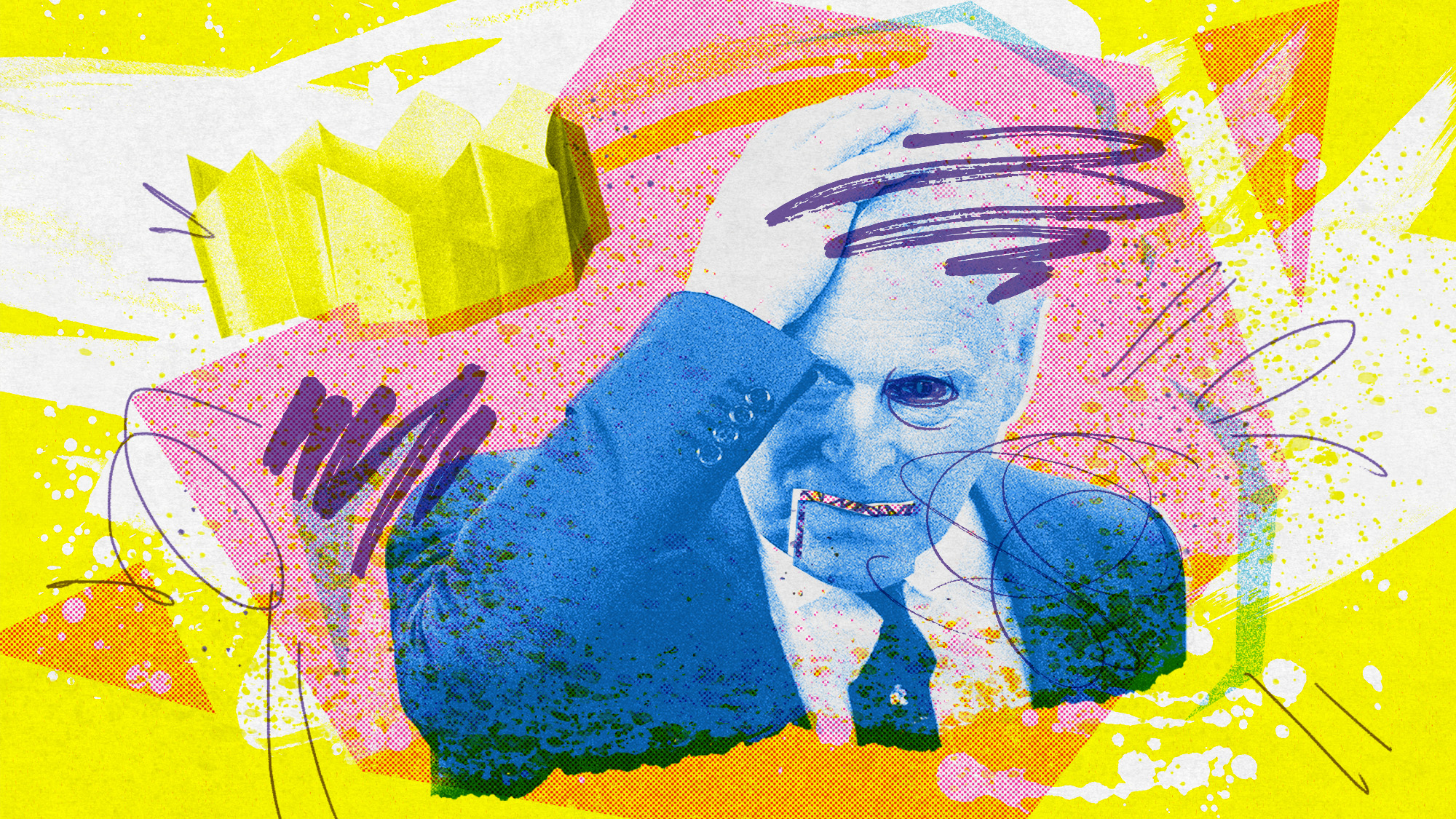
    Is Andrew’s arrest the end for the monarchy?

    The King has said that the authorities “have our full and wholehearted support and cooperation” in their investigation into his brother. Andrew Mountbatten-Windsor has consistently denied any wrongdoing related to Jeffrey Epstein, but his arrest yesterday has raised fresh questions about whether the royals have the support of the nation.

    What did the commentators say?
    Thursday’s arrest has prompted a “sliver of misty-eyed, ‘good on us Brits for actually clearing out the rot’ commentary” said Harry Cole in The Sun. Yet “that’s far eclipsed by discussions about the very future of the crown not heard since those dark days following the death of Princess Diana”.

    Some believe the royals have done enough to distance themselves from Andrew’s actions, said the BBC’s royal correspondent Jonny Dymond, but any distinction between him and the royals “is entirely lost on most people”. Yet his arrest doesn’t mean the monarchy has no future, said Jonathan Dimbleby, the King’s biographer and friend. “I don’t think that it damages the monarchy,” Dimbleby told the BBC. “I think we have to separate the notion of a family from the institution of the monarchy.”

    Republicans remain hopeful that “the scandal will lead to the collapse of the crown”, said The Economist. Even if it does “erode support for the institution”, that’s an “ambitious” sentiment. But if the royals’ “reputation sinks any lower”, said Tim Stanley in The Washington Post, “we might finally finally join the US and wipe them away in a fit of revolutionary disgust”.

    What next?
    A “change in culture is long overdue”, said The Times. “Under cover of royal deference and secrecy, far too little was done” to “rein in Mountbatten-Windsor’s behaviour.” Transparency is the only way to change public opinion, so “records should now be released”. 

    The royals “will be holding crisis talks today with a mixture of sorrow and panic”, said Alexander Larman in The Spectator. “It is now clear that far worse is almost certainly yet to come, and the question is what anyone can do about it.”


    The Explainer

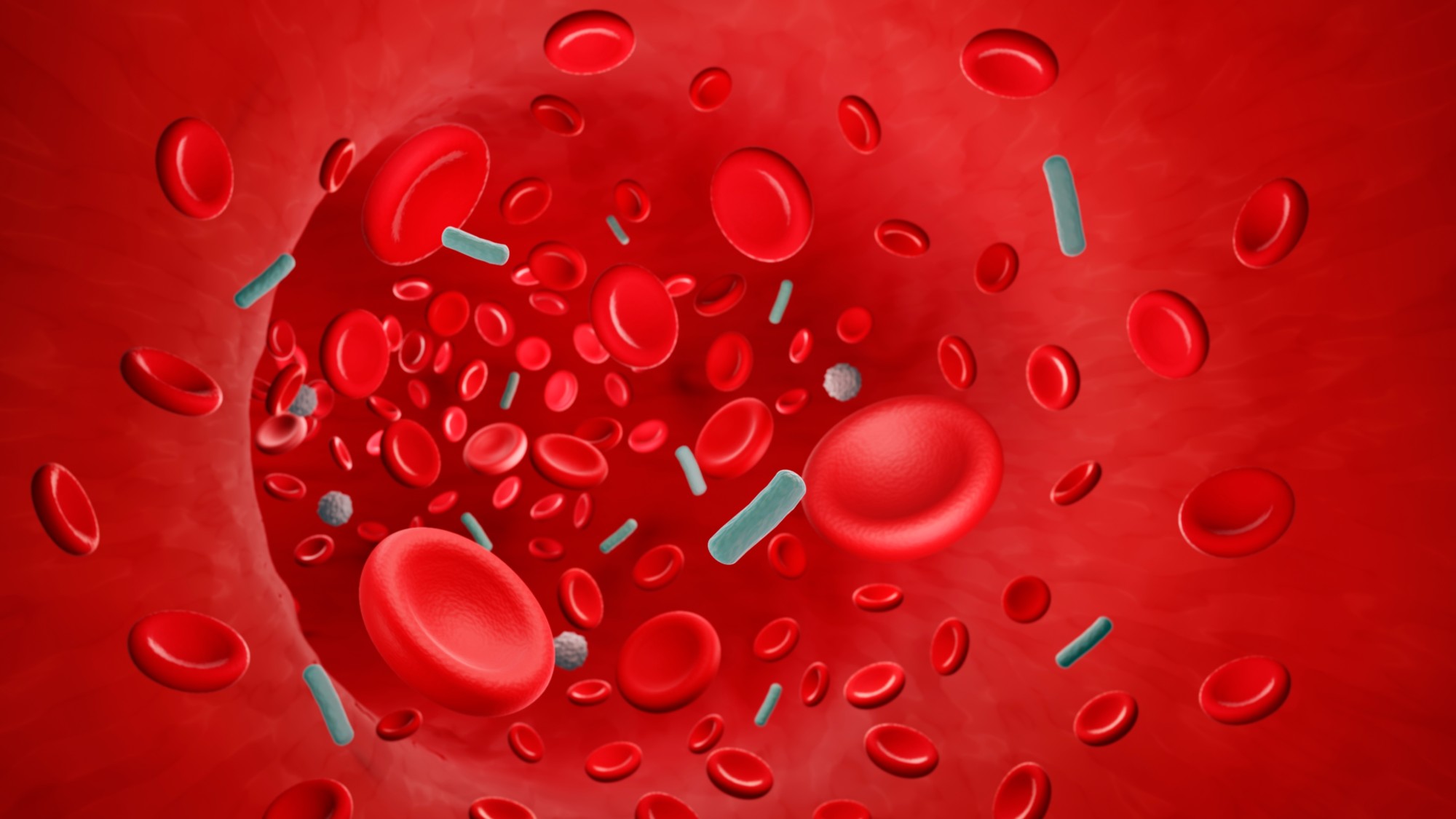
    Sepsis ‘breakthrough’: the first targeted treatment?

    One of the leading causes of death and disability worldwide, sepsis is notoriously difficult to diagnose in the early stages and to treat once it becomes life-threatening.

    Currently, broad-spectrum antibiotics are used to attack the pathogen causing the reaction. But there are an increasing number of antibiotic-resistant pathogens that can trigger sepsis. “This is the nightmare that keeps my colleagues working in public health awake at night,” one doctor told The Telegraph.

    Now, scientists at Australia’s Griffith University are close to unlocking the first specific sepsis treatment. A recent Phase II human clinical trial in China showed “promising results in reducing sepsis”, said Science Daily. This is “a major step forward”.

    What is sepsis?
    The body’s extreme response to an infection. The immune system overreacts, triggering inflammation that can damage tissues and organs. Untreated, sepsis can quickly lead to septic shock and multiple organ failure. Anyone can develop sepsis, but it’s most prevalent among the young, elderly, diabetic and immunocompromised and women who have recently given birth.

    If treated swiftly, the patient can make a full recovery. But the longer the wait for a diagnosis, the higher the risk. Sepsis causes more than 10 million deaths a year worldwide  – equivalent to one life lost every three seconds.

    How is it diagnosed?
    Sepsis is often called “the silent killer”, because it has widely varying symptoms. Warning signs in a child can mirror less serious conditions and include fever, chills, lethargy, fast heartbeat or breathing, blotchy skin and/or a rash that doesn’t fade. Adults may experience slurred speech or confusion, shivering, mottled skin, severe breathlessness and a feeling of doom.

    There is no single diagnostic test; multiple tests (that typically take hours) are needed to confirm the presence, and possibly the type, of infection.

    What is the new drug?
    Known as STC3141, it works by “calming” and counteracting the “major biological molecule release” that occurs during the body’s immune overreaction. This helps with “reversing the damage to organs rather than only managing symptoms”, said Science Daily.

    The research team behind the drug is now planning Phase III effectiveness trials. “It’s hoped we could see the treatment reach the market in a handful of years, potentially saving millions of lives,” said team leader Mark von Itzstein.


    Poll watch

    More than half (58%) of Brits think students who studied during the pandemic should get partial refunds from universities. Of 4,668 adults polled by YouGov, only 23% said the students should not be entitled to claim back some of their fees after missing out on in-person teaching and campus facilities, while 19% were undecided.


    Statistic of the day

    One minute 54.87 seconds: The record-breaking time in which Britain’s Keely Hodgkinson completed the indoor 800-metre race at a European Athletics event today in Lieven, France. The Olympic champion shaved almost a second off the previous record, set by Slovenia’s Jolanda Ceplak on 3 March 2002, the day that Hodgkinson was born. 


    IN THE SPOTLIGHT

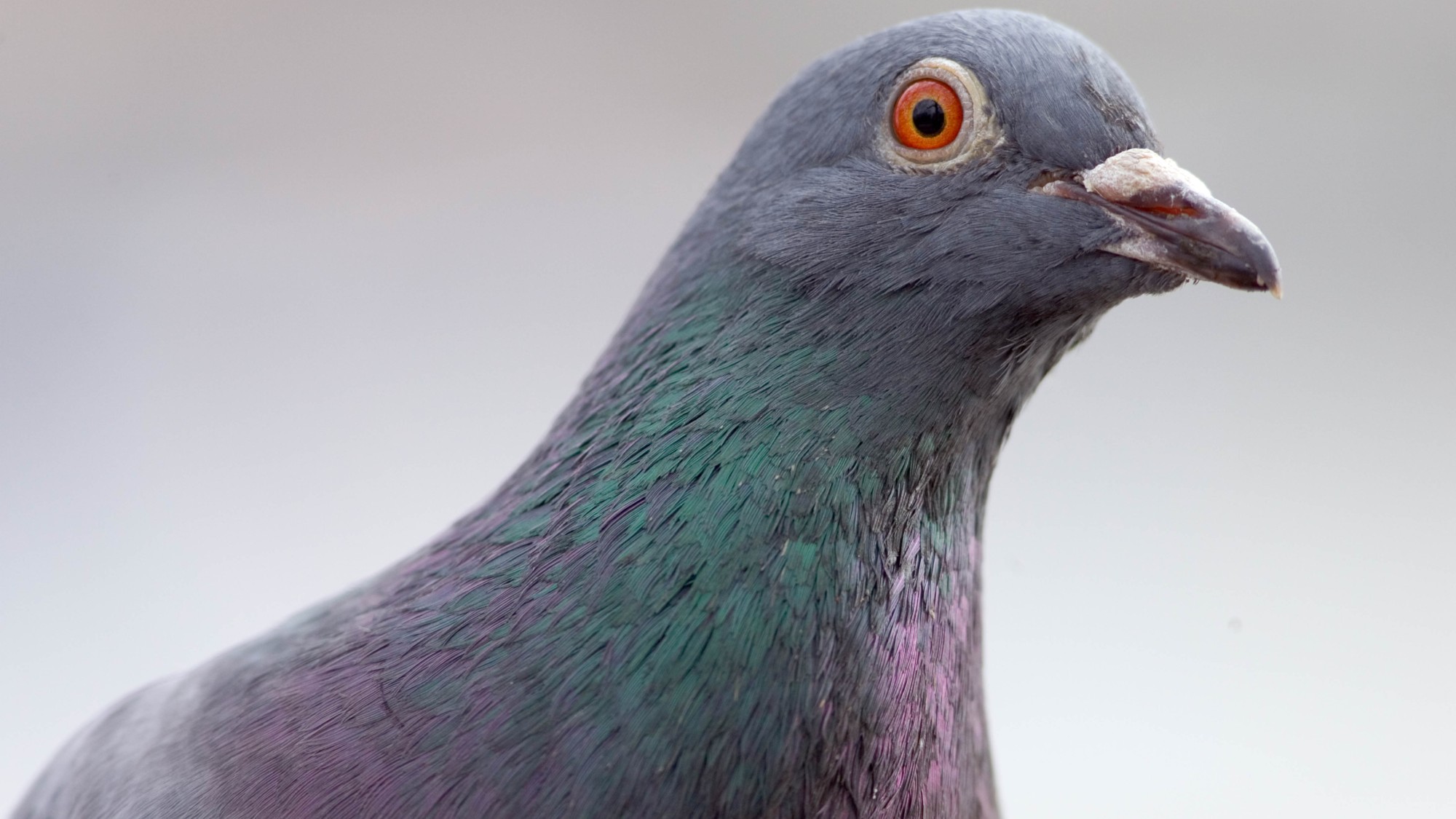
    Why are we in such a flap about pigeons?

    A Norwich market, a Manchester railway station and a London street have become battlefields in a new culture war. With flocks of pigeons swelling, concerns about hygiene and health are rising, but are humans to blame for this feathered friction?

    Ruffled feathers 
    “Pigeon wars” have erupted in Norwich, said The Guardian. The birds are appearing in higher numbers around the city’s open-air market, and critics claim they are are “creating a Hitchcockian nightmare” by “defecating, stealing and spreading disease”.

    Norwich City Council hoped to introduce a hawk to “ruffle some feathers and deter” pigeons from the market, said the BBC. But the project was scrapped because local bird feeders ignored calls for them not to feed the birds, rendering the “scare method pointless”. 

    Another feathery flashpoint came in Harrow, London, in January, when a woman feeding pigeons on a street was detained by a “group of at least six” police officers and council enforcement workers, said The Independent. A passer-by described the scene as “ridiculous”. 

    At Manchester Victoria railway station, “bungled” raids by “pest control marksmen” have left nearly 100 birds “dead or maimed”, said The Telegraph. A spokesperson for Northern Trains said the cull was ordered because pigeons were “posing a risk to colleagues and customers”.

    A former love 
    “We loved them, once,” said Joseph Earp in The Guardian. “We might not remember that, but pigeons do.” They are the victims of “rampant animal welfare crimes”, being “killed and maimed en masse”.  But as with “so many problems we face, pigeons are a ‘problem’ that we have caused”. Feral pigeons are “descendants of homing pigeons that we kept and domesticated”. They’re “naturally predisposed to want to be close to us”, so “they gather where we gather” and then root through our rubbish. If they’re “dirty or disgusting”, it’s only because “we are dirty and disgusting”. 

    Yes, feral pigeons can “carry disease”, Will Smith, an evolutionary biologist, told the BBC, but this is true of all wild animals, and pigeons are “very resistant” to avian influenza. They “get the quite nasty name of ‘rats with wings’”, but this is “not quite fair”.


    Good day💰

    … for police coffers, after Greater Manchester’s force was told it can keep £1.8 million worth of seized gold bars. A magistrates’ court awarded the 15kg haul to the police under the Proceeds of Crime Act, after hearing how officers found the gold in a suspect’s hand luggage at Manchester Airport following a money laundering investigation.


    Bad day 🤠

    ... for Woody, who is sporting a bald patch in the newly released trailer for “Toy Story 5”. The ageing cowboy, voiced by Tom Hanks, is teased by his pals after taking off his hat in the latest instalment of Pixar’s longest-running franchise. “Someone needs a brown marker,” says Trixie the Triceratops (Kristen Schaal).


    picture of the day

    Spinning for gold

    Team USA’s Alysa Liu delivers a winning performance in the women’s figure skating final at Milano Cortina 2026. The 20-year-old is the first American to claim an Olympic gold in the event in 24 years. 

    Antonin Thuillier / AFP / Getty Images


    PUZZLES AND QUIZZES

    Quiz of The Week

    Have you been paying attention to The Week’s news? Try our weekly quiz, part of our puzzles section, which also includes sudoku and crosswords 

    Play here


    THE WEEK RECOMMENDS

    Properties of the week: pretty thatched cottages 

    Norfolk: Poachers Cottage, Hempnall
    A charming and sensitively renovated Grade II cottage set in mature gardens. 3 beds, 2 baths, kitchen/dining room, 2 receps, garden, garage. £625,000; Sowerbys.

    Suffolk: Pound Farm Cottage, Milden
    An attractive Grade II timber-frame cottage nestled in mature gardens of approx. 0.40 of an acre, with an ornamental pond. 3 beds, 2 baths, kitchen/breakfast room, 4 receps, garden, workshop, parking. OIRO £425,000; Jackson-Stops.

    Dorset: Fosters Farm, Boys Hill
    A stone and thatch country house, set in 9 acres of gardens and land (with a private lake) in the heart of the Blackmore Vale. 4 beds, 3 baths, kitchen/ breakfast room, 2 receps, garden, stables, paddock, workshop, garage. £1.25 million; GTH.

    Dorset: Littlebrook Farm, Belchalwell
    This handsome Grade II 17th century farmhouse is situated in an idyllic rural location with far-reaching views to Blackmore Vale. 4 beds, 2 baths, kitchen, 2 receps, gardens and land (approx. 7.65 acres), stables, paddocks, garage. £995,000; Savills.

    Wiltshire: Totney House, Kingsdown
    Exceptional Arts & Crafts house in a tranquil, elevated setting with views across the countryside towards Bath. 4 beds, 3 baths, kitchen/ breakfast room, 4 receps, garden, outbuildings, garage. £1.4 million; Knight Frank.

    See more


    QUOTE OF THE DAY

    “I don’t see you as a cold-hearted man.”

    Austria’s Judge Norbert Hofer delivers his ruling to a climber whose girlfriend froze to death after he left her on the country’s highest mountain. The accused, identified only as Thomas P, was given a five-month suspended sentence and fined €9,600 after being convicted of gross negligence manslaughter.


    instant opinion

    Today’s best commentary

    Vladimir Putin is caught in a vice of his own making
    The Economist’s editorial board
    “After four bloody years”, the war in Ukraine should “have burnt itself out”, says The Economist. That it hasn’t is down to Vladimir Putin. Peace talks “are unlikely to give” the Russian president the territory that “he wants in order to claim victory”, and “peace itself could trigger a crisis” at home, amid questions about “the squandering of lives”. Yet the “more pain” he inflicts by fighting on, the “clearer it will be to Russians that he is bringing ruin upon them”.

    There is no way I am giving my life up to grandparent
    Yasmin Alibhai-Brown in The i Paper
    “I was lucky” that my mother loved looking after my child while I worked, writes Yasmin Alibhai-Brown. But I don’t have a duty “to sacrifice my career” to care for my grandchildren. “The word ‘duty’ chafes.” Older people, especially women, are guilt-tripped into feeling that “they owe this free service to their children”. But what about our “plans and dreams”? We “should be able to make key life decisions without being shamed”.

    Here’s What I Just Figured Out About the Way Trump Talks
    John McWhorter in The New York Times
    Donald Trump’s “speaking style has never been conventional”, writes US linguist John McWhorter. “Sometimes it’s so improvisatory”, you can hardly “call his addresses ‘speeches’ at all”. Recently, he’s been using direct quotation more, almost “performing a little skit” of conversations he’s had. He’s “verbally letting it all hang out”, which “feels consistent with his determination to say whatever he wants”. It’s “the linguistic equivalent of wearing his Mar-a-Lago golf togs to deliver” a speech to the nation.


    word of the day

    Atishoo

    A sound we may hear less often if a “universal vaccine” against coughs, colds and flu proves successful in clinical trials. Tests of the nasal spray on mice, reported in the journal Science, suggest it can “fend off” respiratory viruses “in warp speed time”, said lead researcher Bali Pulendran of Stanford University.


     Evening Review was written and edited by Irenie Forshaw, Jamie Timson, Harriet Marsden, Rebecca Messina, Chas Newkey-Burden, David Edward, Helen Brown, Adrienne Wyper and Kari Wilkin.

    Image credits, from top:  illustration by Julia Wytrazek / Getty Images; Artur Plawgo / Science Photo Library; Tim Graham / Getty; Antonin Thuillier / AFP / Getty Images; John Keeble / Getty Images; Sowerbys; Jackson-Stops; Savills; GTH
    Morning Report and Evening Review were named Newsletter of the Year at the Publisher Newsletter Awards 2025
     

    Recent editions

    • Morning Report

      Police release Andrew under investigation after arrest

    • Evening Review

      Is Europe right to sit out the Board of Peace?

    • Morning Report

      Trump turns on Starmer’s Chagos deal

    VIEW ALL
    TheWeek
    • About Us
    • Contact Future's experts
    • Terms and Conditions
    • Privacy Policy
    • Cookie Policy
    • Advertise With Us
    • FAQ
    Add as a preferred source on Google

    The Week UK is part of Future plc, an international media group and leading digital publisher. Visit our corporate site.

    © Future Publishing Limited Quay House, The Ambury, Bath BA1 1UA. All rights reserved. England and Wales company registration number 2008885.