The Week The Week
flag of US
US
flag of UK
UK
https://cdn.mos.cms.futurecdn.net/skoGBi9qKFoUtnNWkovjJQ.jpg

SUBSCRIBE

Try 6 Free Issues

Sign in
  • View Profile
  • Sign out
  • The Explainer
  • Talking Points
  • The Week Recommends
  • Podcasts
  • Newsletters
  • From the Magazine
  • The Week Junior
  • More
    • Politics
    • World News
    • Business
    • Health
    • Science
    • Food & Drink
    • Travel
    • Culture
    • History
    • Personal Finance
    • Puzzles
    • Photos
    • The Blend
    • All Categories
  • Newsletter sign up Newsletter
  • The Week Evening Review
    Social media, the Donroe Doctrine, and spied-on kids

     
    TODAY’S BIG QUESTION

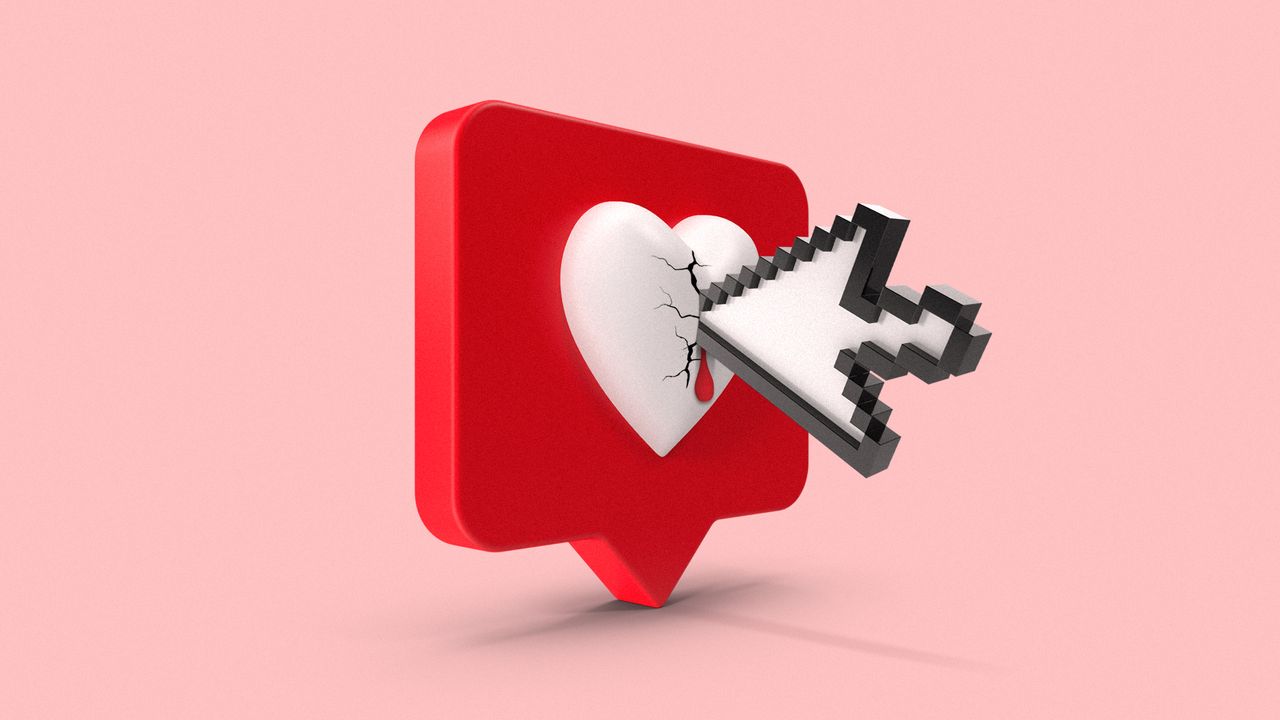
    Is social media over?

    Fears have long been growing over the impact of social media on our brains, political discourse and – ironically – social connections. A ban on social media for under-16s that came into force in Australia last month has sparked calls for similar legislation in the UK.

    But government action may not be necessary to curb the influence of the social media giants: recent polling suggests that nearly a third of social media users are posting less than they did a year ago.

    What did the commentators say?
    What is “killing social media more than the pile-ons and abuse” is that “it’s not social anymore”, said Sathnam Sanghera in The Times. I’m down to two Facebook posts a year, and my X account is “sleepier than a Sunday morning on Sark”. And “I’m not alone”. According to a Financial Times analysis of data on 250,000 adults in more than 50 countries, time spent on social media peaked in 2022 and has been steadily declining since.

    Instagram, Facebook and Twitter/X have become “a concentrated sludge of conspiracy theories, violence, porn, spam, trolls, scams and AI”, said Kristina Murkett on UnHerd. But on Reddit, which has just overtaken TikTok as Britain’s fourth most-visited social media platform, comments are confined to subreddits and there are “multiple layers of moderation” that make it feel safer than “the Wild West of Meta or X”. Reddit “still feels human” and its success is “a timely reminder” of what people want.

    The popularity of “slow social media” apps such as Strava, on which users share their exercise routes, and Airbuds, for sharing listening activity, reminds us that “the social in social network did once mean something” and people still crave genuine connection, said The Independent.

    What next?
    Twitter co-founder Biz Stone and Pinterest’s Evan Sharp have launched Tangle, an “intentional living” app pitched as an antidote to the “terrible devastation of the human mind and heart” wrought by social media, said the Financial Times. They are “among several Silicon Valley executives grappling with the side effects of the products and services that they built”.


    THE EXPLAINER

    Understanding the Donroe Doctrine

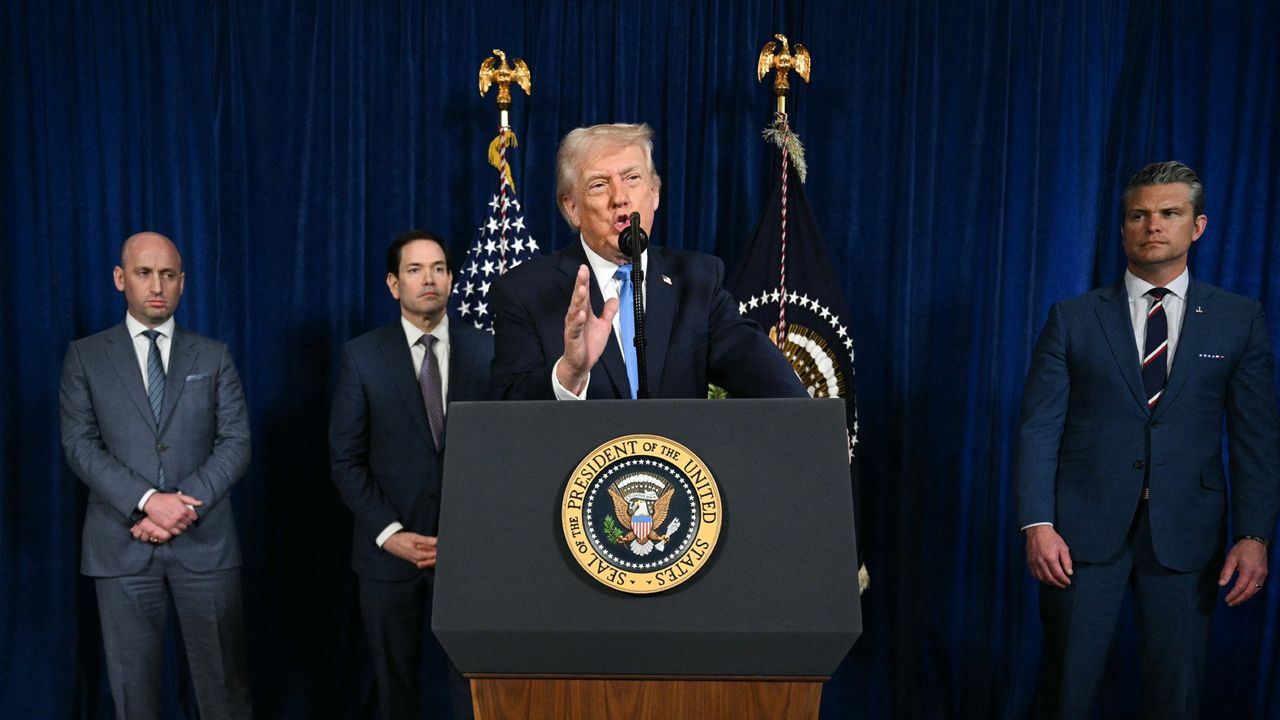
    “We have entered the era of the Donroe Doctrine,” said CNN’s Jake Tapper in the aftermath of the US abduction of Venezuela’s Nicolás Maduro. The Trumpian twist on the Monroe Doctrine, a US foreign policy principle established more than a century ago, ushers in a more assertive strategy that could have significant implications worldwide.

    What is the Monroe Doctrine?
    In December 1823, then-president James Monroe declared that the US was the dominant power in the Western Hemisphere and warned European powers against interference in its sphere of influence.

    The doctrine has since been used to justify US intervention in the Dominican Republic, Haiti and Nicaragua, and its role in the coups that overthrew Guatemala’s Jacobo Árbenz in 1954 and Chilean leader Salvador Allende in 1973. It was also invoked during the Second World War to make Greenland a de facto US protectorate after Denmark was invaded by Nazi Germany.

    What’s new about the Donroe Doctrine?
    In its latest national security strategy, the Trump administration declared an intention “to reassert and enforce the Monroe Doctrine”. But it also added a “Trump Corollary” to the doctrine, describing US aims to “expand our network in the region” and roll back “foreign influence”.

    “Donroe Doctrine” is not an official White House term (it seems to have been coined by the New York Post) but Trump “appears to have taken a liking” to it, “as with most things that bear his name”, said international politics expert Pablo Uchoa on The Conversation. Its “vision of geopolitics” justifies the aggressive pursuit of any resources that the US thinks are “beneficial to its interests, from Greenland’s minerals and strategic position to the Panama Canal and Venezuelan oil”.

    What does it mean for the rest of the world?
    The “absence of conspicuous military support for Maduro” from either Moscow or Beijing suggests that neither object to a doctrine “that appears to entitle powerful countries with the right of having spheres of influence”, said Uchoa.

    Six key areas have already been identified as potential targets for “further American expansion, intervention or annexation”, said CBS News: Greenland, Iran, Cuba, Colombia, Canada and the Panama Canal.


    QUOTE OF THE DAY

    “I don’t really care what colour a kid’s skin is – some deserve to be in poverty and some don’t? That makes me pretty angry.”

    Chancellor Rachel Reeves vents to The Guardian following Reform’s U-turn on scrapping the two-child benefit cap. Nigel Farage originally supported lifting the limit but yesterday announced his party would vote against the change, as it would “benefit huge numbers of foreign-born people”.


    Poll watch

    The majority (67%) of Brits oppose the use of public funds to help struggling professional football clubs, according to an Ipsos survey of 1,000 adults. Only 24% were in favour of the government providing financial aid to clubs in financial distress – although that rose to 34% among football fans.


    TALKING POINT

    Should parents stop tracking their kids?

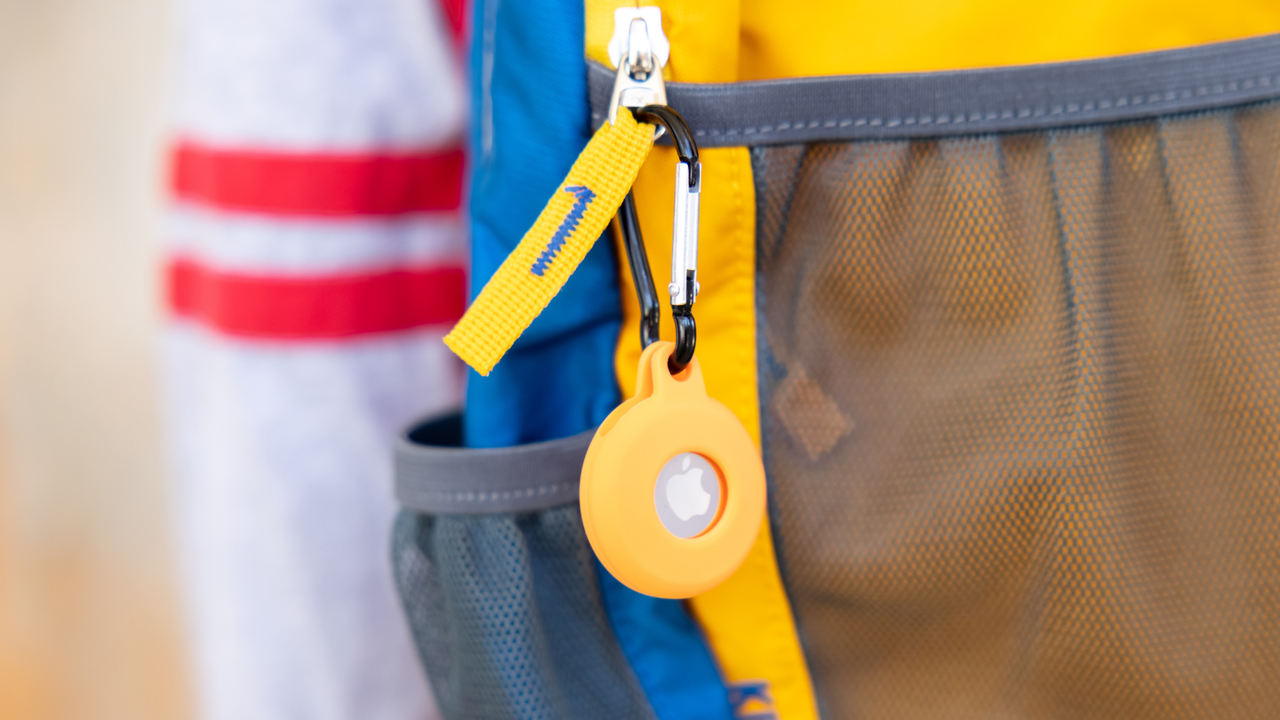
    Parents keeping tabs on their children with an AirTag or through an app like Find My Friends is now widespread – even after they fly the nest. A Unite Students survey in September of 1,027 parents of first-year university students found that 67% tracked their child’s location using an app. But does the practice offer safety and comfort, or has the rise in parental surveillance shifted into murkier ethical territory?

    ‘Peace of mind’
    When my son began getting the train to secondary school in London on his own, putting a “little disc in his blazer pocket” made the “nerve-racking journey slightly less intimidating”, said Naomi Greenaway in The Telegraph, both “for me and for him”. Watching my teenage daughter “wind her way into the centre of town on my phone screen” provides a similar “peace of mind”.

    “There are two kinds of child in this world,” said Esther Walker in The Times – the “ones who wander off and the ones who don’t”. If you have the latter, “your child probably rattles with AirTags”. We once briefly lost our four-year-old daughter at an adventure playground and it was “the longest 10 minutes of my life”. Now my children are at secondary school and “both schoolbags are tagged”. It’s the “closest thing I’ve got to Mrs Weasley’s magic clock”.

    ‘Excessive and exhausting’
    I thought tracking my kids would give me comfort, said Charlotte Cripps in The Independent, but instead it turned me into a “neurotic and paranoid mother”. If I couldn’t see them for a moment in the park, “I’d catastrophise it as a kidnapping, and ping the AirTag”. I had become “addicted to stalking my kids”.

    Micromanaging children’s movements can be “excessive and exhausting for both parent and child”, said Zing Tsjeng in The i Paper. “Of course, I understand the safety reason” for wanting to keep tabs on your child. “But at some point you have to ask yourself: when is enough enough? Do you trust your child to get themselves back home safe when they’re 19? What about when they’re 20? Or 21? Where does it end – and when can you let go?”


    Good day 🍓

    … for royal entrepreneurs, after leaked figures suggested that Meghan Markle has sold 860,000 jars of jam worth a total of almost £27 million. A glitch on the Duchess of Sussex’s As Ever lifestyle website revealed that 137,435 jars of her branded fruit spread, which retail for £31 each, were left from what sources said was an original stockpile of one million.


    Bad day ✍️

    … for Dylan Thomas, who has been exposed as a schoolboy plagiarist, more than seven decades after his death. Long before he became Wales’ most famous poet, Thomas’ submissions to his school’s magazine included “wholesale” theft from poems printed in the popular Boy’s Own Paper periodical, according to research by publisher Alessandro Gallenzi.


    picture of the day

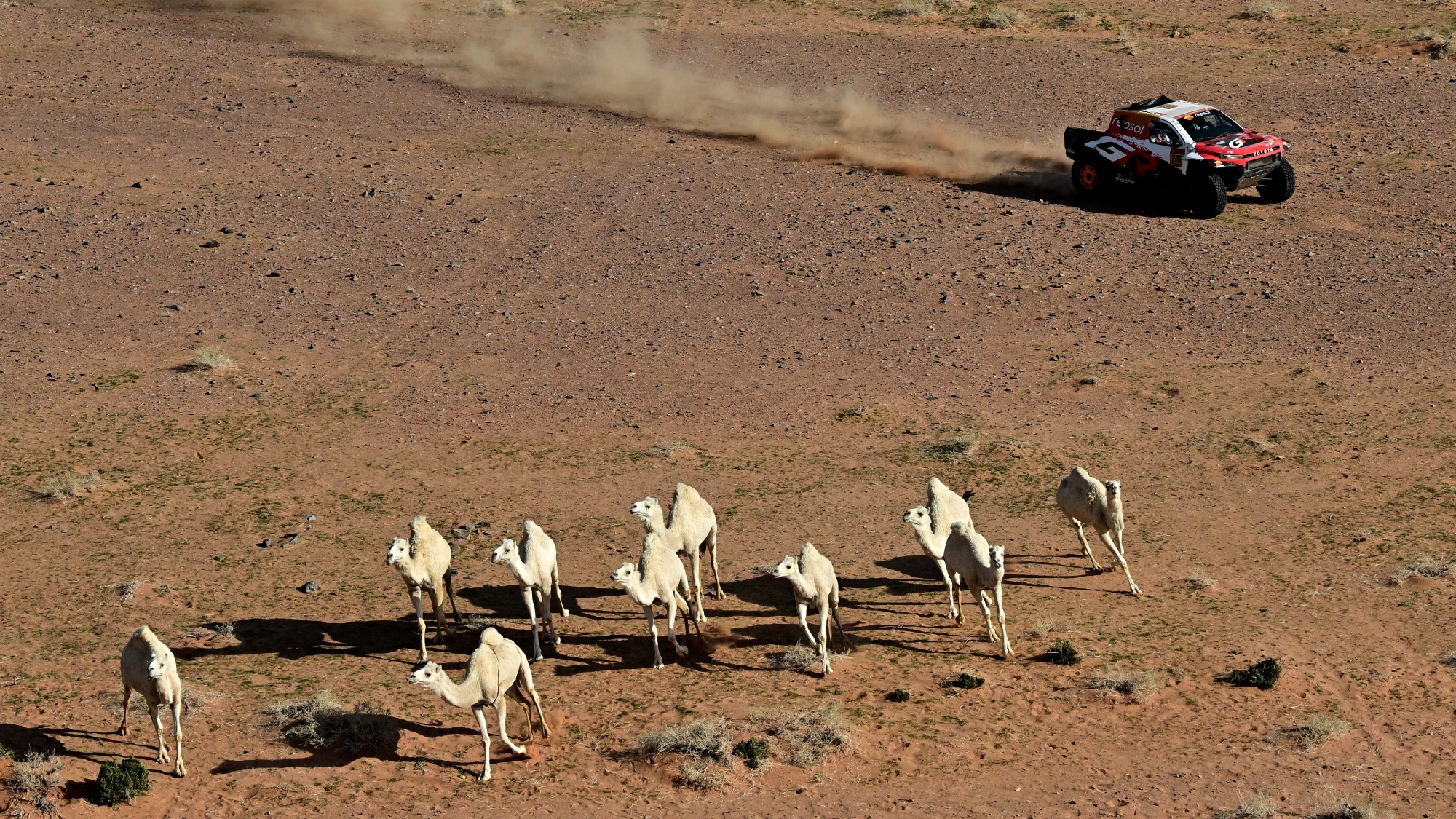
    Runners and riders

    Camels run away as South African driver Henk Lategan and co-pilot Brett Cummings speed through the desert in the Dakar Rally. Originally a race from Paris to the Senegalese capital, the off-road event has been held in Saudi Arabia since 2020.

    Giuseppe Cacace / AFP / Getty Images


    Puzzles

    Guess the number

    Try The Week’s new daily number challenge in our puzzles and quizzes section

    Play here


    THE WEEK RECOMMENDS

    The best art exhibitions to book in 2026

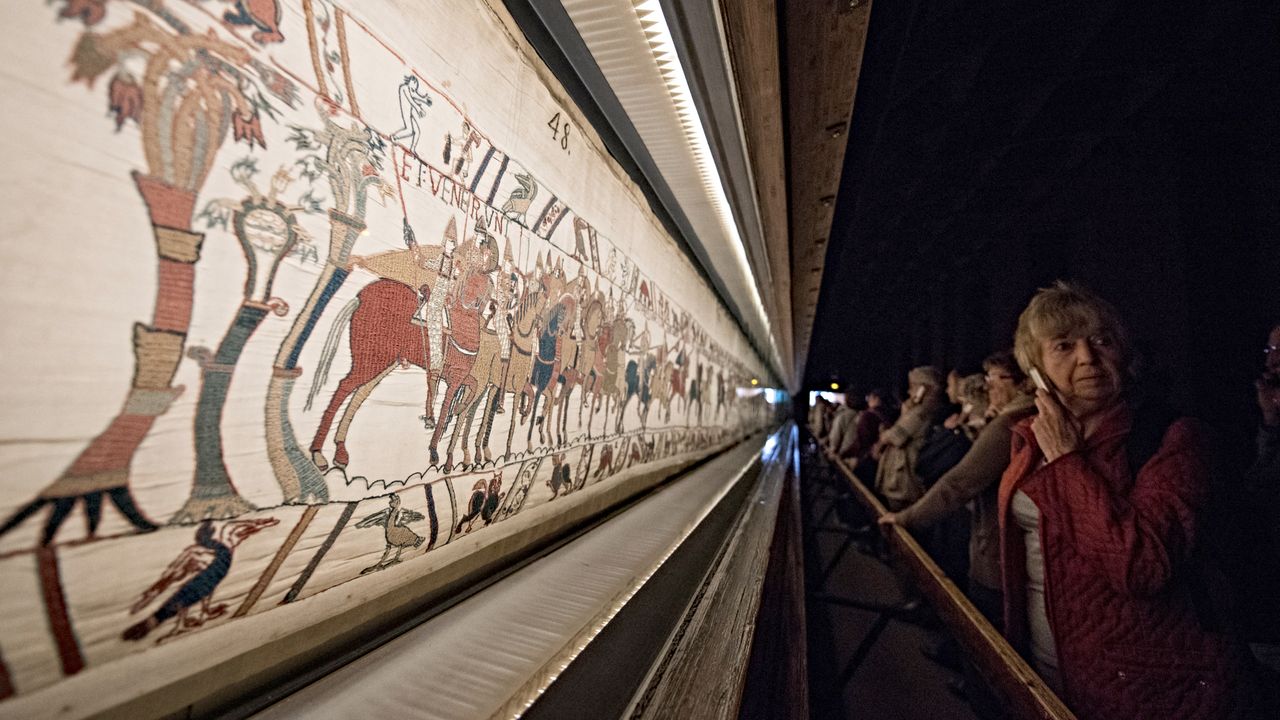
    The epoch-defining Bayeux Tapestry is coming to the UK this year for a not-to-be-missed visit. Other exhibitions to check out in 2026 include tributes to artistic legends, as well as opportunities to cast a fresh eye at the work of artists who may be underappreciated.

    Bayeux Tapestry, British Museum, London
    In what may be the “art event of the year”, said Jonathan Jones in The Guardian, the “vast embroidery” telling the story of the Norman Conquest will be displayed here in a “once-in-a-lifetime triumph of cultural generosity by France”. Book early – it’s expected to be a blockbuster.

    Enid Marx, Compton Verney, Warwickshire
    You might not have heard of Enid Marx, said The Times, “but you’ve probably sat on one of her most famous works” – the design that covers the seats of the London Underground. A “prolific and imaginative designer”, her work spanned textiles, children’s books, wrapping paper, stamps and bookplates.

    Beryl Cook: Pride and Joy, The Box, Plymouth
    The work of “self-taught painter” Cook “may not be great art”, said The Guardian, but it is fun, colourful and larger-than-life. This show, marking her centenary year, serves up a “bawdy slice of Plymouth and post-war British life”.

    Gwen John: Strange Beauties, National Museum, Cardiff; National Gallery of Modern Art, Edinburgh
    The “luminous, introspective and quietist works” of Welsh modernist Gwen John offer a vision that still feels strikingly modern 150 years after her birth, said Laura Cumming in The Observer. The first major showing of her work for 40 years, this is an “unmissable retrospective”.


    Statistic of the day

    18 months: How long before the average weight-loss jab user regains all their lost weight after stopping treatment, according to a study published in the British Medical Journal. Former users of injections such as Mounjaro and Wegovy regained at a monthly rate of 0.4kg, compared with 0.1kg for lapsed dieters who used traditional methods.


    instant opinion

    Today’s best commentary

    Trump’s lessons for Europe
    Peter Mandelson in The Spectator
    Europe’s “growing geopolitical impotence” is confirmed by the “brutal reality” of the “histrionics about Greenland”, writes Britain’s former US ambassador Peter Mandelson. To be clear, Donald Trump won’t actually “invade” Greenland: “he doesn’t need to”, because US troops are “already there”. Once the “threats to Arctic security” from Russia and China “crystallise” in our minds, “serious discussion will take over”. The “bigger issue” is when European leaders will adjust to the “revolution under way” in the White House.

    If a pint puts drivers over the limit, it’s time to order smaller drinks
    Rosamund Hall in The Independent
    New drink-driving laws mean “a full pint would put many motorists over the legal alcohol limit”, writes drinks expert Rosamund Hall. “If we’re serious about road safety”, maybe “that’s no bad thing”. Let’s “rethink our devotion” to the “hulking” glass of “foamy beer” that “rarely leaves me wanting more – only needing the loo”. We should embrace the “cooler, more sensible” two-thirds pint and adjust “what we sink on a Friday night”, for “longer, healthier and happier lives”.

    The royals’ coolest family just showed why William won’t need Harry and Meghan back in UK
    Chris Riches in the Daily Express
    Meghan and Harry “think they can have their Californian cake and eat it over here”, writes Chris Riches. But while William and Kate “could do with another family with young children to capture” the nation’s hearts, it’s Princess Anne’s daughter Zara and her “down-to-earth” husband, Mike Tindall, who have developed “trusting bonds” with the Waleses. “Not since the River Kwai will a bigger bridge need building” for the Sussexes to come back into the “royal fold”.


    word of the day

    Sabotage

    A major threat to Britain’s infrastructure, according to a new report from the Council on Geostrategy. The think tank warned that saboteurs could plunge telecommunications, banking, healthcare and supply chains into chaos by targeting just 60 undersea cables that are responsible for 99% of data flowing in and out of the country.


    Evening Review was written and edited by Rebecca Messina, Jamie Timson, Harriet Marsden, Chas Newkey-Burden, Irenie Forshaw, Helen Brown, Natalie Holmes, Adrienne Wyper, David Edwards and Kari Wilkin, with illustrations from Stephen Kelly.

    Image credits, from top: illustration by Stephen Kelly / Shutterstock; Jim Watson / AFP / Getty Images; Onfokus / Getty; Giuseppe Cacace / AFP / Getty Images; Loic Venance / AFP / Getty Images

    Morning Report and Evening Review were named Newsletter of the Year at the Publisher Newsletter Awards 2025
     

    Recent editions

    • Morning Report

      UK forces aid US seizure of tanker

    • Evening Review

      Artemis II: back to the Moon

    • Morning Report

      Britain signs deal to deploy troops to Ukraine

    VIEW ALL
    TheWeek
    • About Us
    • Contact Future's experts
    • Terms and Conditions
    • Privacy Policy
    • Cookie Policy
    • Advertise With Us
    • FAQ
    Add as a preferred source on Google

    The Week UK is part of Future plc, an international media group and leading digital publisher. Visit our corporate site.

    © Future Publishing Limited Quay House, The Ambury, Bath BA1 1UA. All rights reserved. England and Wales company registration number 2008885.