The Week The Week
flag of US
US
flag of UK
UK
https://cdn.mos.cms.futurecdn.net/skoGBi9qKFoUtnNWkovjJQ.jpg

SUBSCRIBE

Try 6 Free Issues

Sign in
  • View Profile
  • Sign out
  • The Explainer
  • Talking Points
  • The Week Recommends
  • Podcasts
  • Newsletters
  • From the Magazine
  • The Week Junior
  • More
    • Politics
    • World News
    • Business
    • Health
    • Science
    • Food & Drink
    • Travel
    • Culture
    • History
    • Personal Finance
    • Puzzles
    • Photos
    • The Blend
    • All Categories
  • Newsletter sign up Newsletter
  • The Week Evening Review
    Pandoro-gate, Starmer’s U-turns, and mining Greenland

     
    IN THE SPOTLIGHT

    ‘Pandoro-gate’: Italy’s charity cake scandal 

    Italy’s most famous influencer has been cleared of aggravated fraud following a high-profile celebrity trial dubbed “Pandoro-gate”.

    “The nightmare has ended,” Chiara Ferragni told reporters yesterday, after the “long-running scandal involving a charity Christmas cake” drew to a close in a Milan courtroom, said the BBC.

    ‘Italian Kardashian’
    Ferragni found fame and fortune as an “O.G. fashion blogger turned influencer turned Italian Kardashian”, said Puck. Her blog The Blonde Salad, which she started in 2009, “occupied an outsize portion of the industry’s collective consciousness”, securing her front-row seats at Milan Fashion Week, magazine covers, and ultimately a “multimillion-dollar business” selling her own products.

    In 2022 and 2023, she partnered with Italian confectioner Balocco to market limited-edition Pandoro “Pink Christmas” cakes. The advertising campaign “suggested proceeds would go to the Regina Margherita children’s hospital in Turin”, said CNN. However, it later emerged that the charitable donation was a €50,000 flat fee, while the proceeds of the cakes would go “directly to Ferragni”, in addition to a €1 million payment to two of her companies for sponsorship of the campaign.

    Prosecutors requested that she face a 20-month prison sentence, alleging that the marketing of the campaign was deliberately misleading. Ferragni denied the charges, telling the court that she had made a “communication error” but that “everything we have done, we have done in good faith”.

    Redemption arc
    She and two co-defendants were acquitted yesterday of criminal wrongdoing. But “most of the damage” has already been done, said Forbes. Ferragni has paid a fine of €1.1 million to Italy’s antitrust authority, in addition to various other settlements, and her companies have been “bleeding millions”.

    Pandoro-gate has also had wider legal ramifications. In 2024, the Italian government passed new legislation, dubbed the Ferragni law, imposing greater transparency requirements for influencers with more than a million followers promoting charity fundraisers.

    As for Ferragni herself, there could still be a “Martha Stewart-esque redemption arc in her future”, said Puck. The US lifestyle guru “did six months” in prison for her part in an insider trading scheme and “emerged slightly humbled”, then “went on to amass more clout than ever”.


    TODAY’S BIG QUESTION

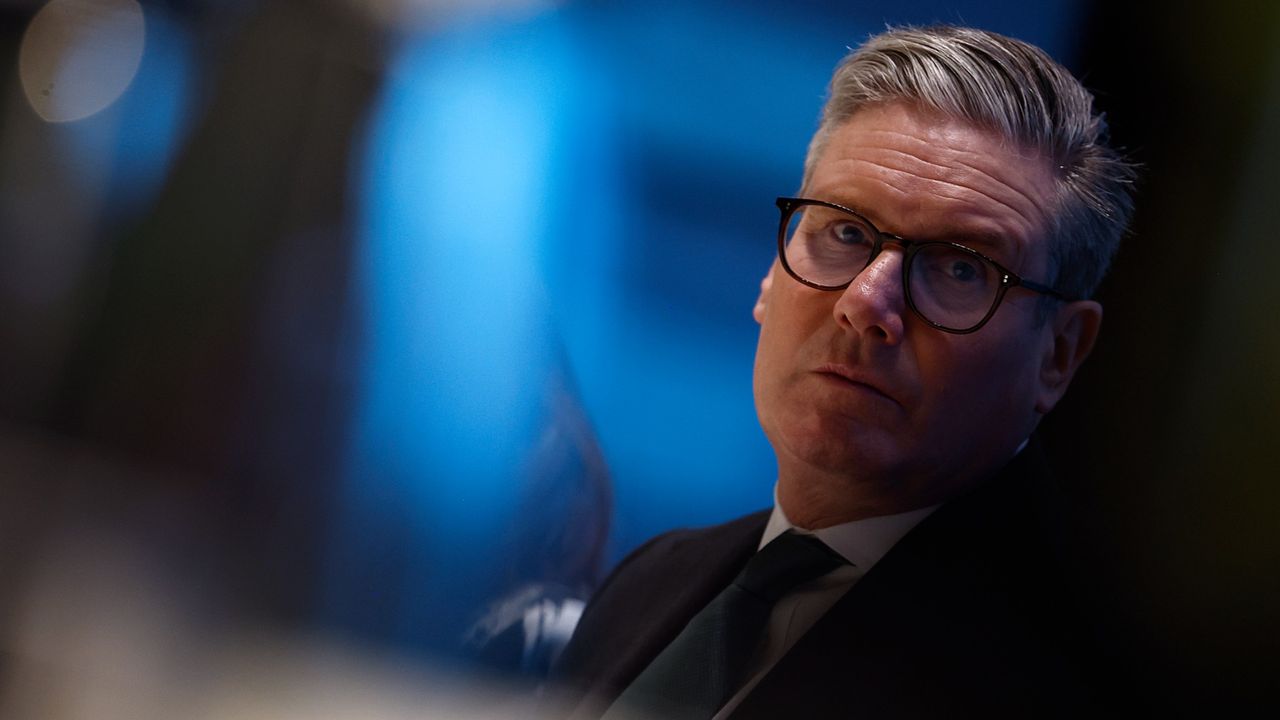
    Does Keir Starmer have a U-turn problem?

    Keir Starmer once said “there is no such thing as Starmerism, and there never will be”. It was meant to signal his preference for pragmatic progressivism over ideological purity, but to many, it has come to encompass all that is wrong with the current Labour government.

    As it ditches part of yet another policy this week – on plans to make its digital ID scheme mandatory for UK workers – Downing Street faces a “political challenge”, said BBC political editor Chris Mason. The government’s vision for the country is increasingly unclear as “the climbdowns, dilutions, U-turns, about-turns, call them what you will, are mounting up”.

    What did the commentators say?
    A change of heart can be “strategic”, showing flexibility and “sensitivity to public opinion”, said George Eaton in The New Statesman. But “too many” of Starmer’s U-turns look like “the product of incoherent thinking and inadequate preparation”. The watering-down of the digital ID plans follows about-turns on changes to inheritance tax for farmers, business-rate relief on pubs and the winter fuel allowance, not to mention the reversals on welfare reform and a grooming gangs inquiry. Instead of moving “towards a clear destination”, Labour looks “as if it is merely going round in circles”.

    Starmer is turning into the “Grand Old Duke of York”, an unnamed Labour MP told The Telegraph’s Dominic Penna, and that is “building up resentment”. Hull MP Karl Turner said he and his colleagues now have to “think very carefully before defending policy decisions publicly”, as any subsequent U-turns leave them “looking really stupid”.

    U-turns are “rarely” the result of “anger in the country”, said The Independent’s political editor David Maddox. They happen when a government doesn’t “have the strength to push through their agenda”, and the “climbdown” on digital IDs looks like the behaviour of a prime minister in “survival mode”.

    What next?
    Future government reversals could be on anything from private landlord rental income to employment rights, said Matthew Lynn at MoneyWeek. “The one thing we know for certain about this government is that, as soon as it runs into any serious opposition, it quickly changes its mind.”


    QUOTE OF THE DAY

    “The British public are tired of political psychodrama and so am I.”

    Kemi Badenoch explains her decision to sack Robert Jenrick after discovering he was plotting a high-profile defection to Reform. In a post on social media, the Tory leader said she’d received “clear, irrefutable evidence” of the former shadow justice secretary’s plans.


    Poll watch

    One in five (21%) bereaved pet owners found the death of their pet more upsetting than losing a human loved one, according to a survey of 975 people for a study on grief published in the journal PLOS One. Almost 8% of those mourning a pet met the diagnostic criteria for clinically severe grief.


    THE EXPLAINER

    Why mining Greenland’s minerals won’t be easy

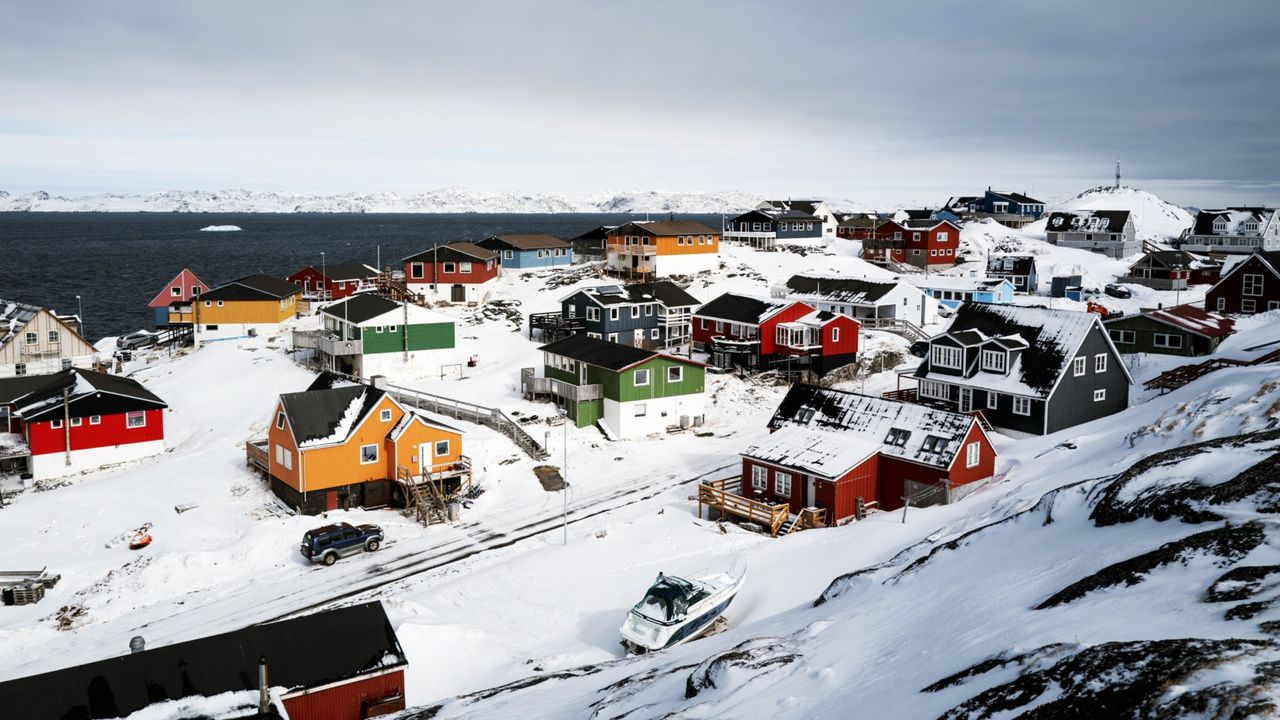
    President Donald Trump is renewing his push to take over Greenland, and tapping into the Danish territory’s natural resources is a key part of the strategy. But even if Trump were to seize control of Greenland despite Denmark’s vehement opposition, experts say the island’s harsh climate and environment are an insurmountable barrier to mining its natural resources on any sizable scale.

    What natural resources does Greenland have?
    Greenland has significant supplies of rare earth elements, “vital for many everyday technologies” including TVs and smartphones, said the BBC. China currently “controls the world’s supply” of rare earths, Critical Metals CEO Tony Sage told the broadcaster. Greenland represents an opportunity for the US to level the playing field.

    Beyond rare earths, discoveries of “graphite and graphite schist are reported from many localities on the island”, said Reuters. Other minerals found there include diamonds, gold, nickel, titanium, tungsten and zinc, according to Greenland’s Mineral Resources Authority. Yet Greenland only has one fully operational mine.

    Why is mining them so difficult?
    Most of Greenland’s natural resources are “located in remote areas above the Arctic Circle, where there is a mile-thick polar ice sheet and darkness reigns much of the year”, said CNN. Mining in the Arctic “can be five to 10 times more expensive than doing it elsewhere on the planet”.  

    Lack of infrastructure also presents a problem. Even in the more populated southern regions, “there are few roads and no railways, so any mining venture would have to create these accessibilities”, Diogo Rosa, a researcher with the Geological Survey of Denmark and Greenland, told The Associated Press. There is also the question of power; many of the more remote areas don’t have consistent electricity.  

    These logistical challenges mean any “natural resource extraction is unlikely to feature centrally” in a US vision for Greenland,  said University of Sussex researcher Lukas Slothuus on The Conversation. But if foreign powers did find a way to mine there, it would “reverberate in Copenhagen, as Greenland has a mining profit-sharing agreement with Denmark”.


    Good day 🖼️

    … for cultural heritage, with £59.7 million worth of artefacts to go on display at sites across Britain after being donated by their owners in exchange for tax reductions. Winston Churchill’s wartime desk and documents relating to the 1170 murder of Thomas Becket are among the objects handed over in the past year as part of Art Council England’s cultural gifts and acceptance in lieu schemes.


    Bad day 🗳️

    … for local democracy, with more than a third of eligible councils in England asking to postpone elections due in May until next year. According to BBC research, 24 of the total 63 permitted to request postponements have done so ahead of today’s deadline, amid an ongoing overhaul of local government structures that council leaders say impacts their ability to organise an election.


    picture of the day

    Final honours

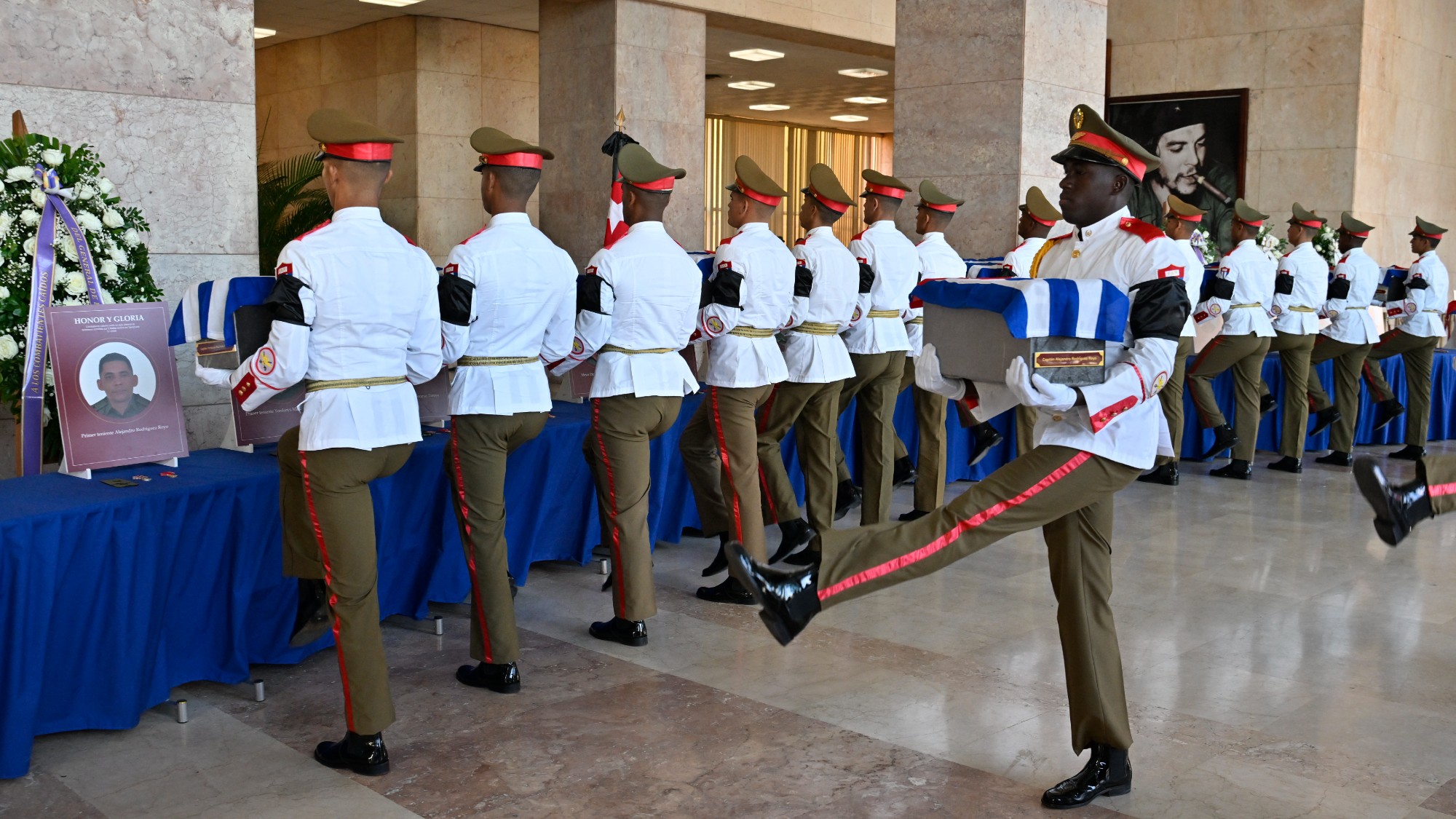
    The repatriated remains of 32 Cuban protection officers killed during the US operation to capture Venezuela’s Nicolás Maduro are placed on display at Havana’s Ministry of the Revolutionary Armed Forces. The ages of the slain personnel ranged from 26 to 60.

    Adalberto Roque / Pool / Getty Images


    Puzzles

    Guess the number

    Try The Week’s new daily number challenge in our puzzles and quizzes section

    Play here


    THE WEEK RECOMMENDS

    The Rivals: a ‘lively’ retelling of the 18th-century comedy

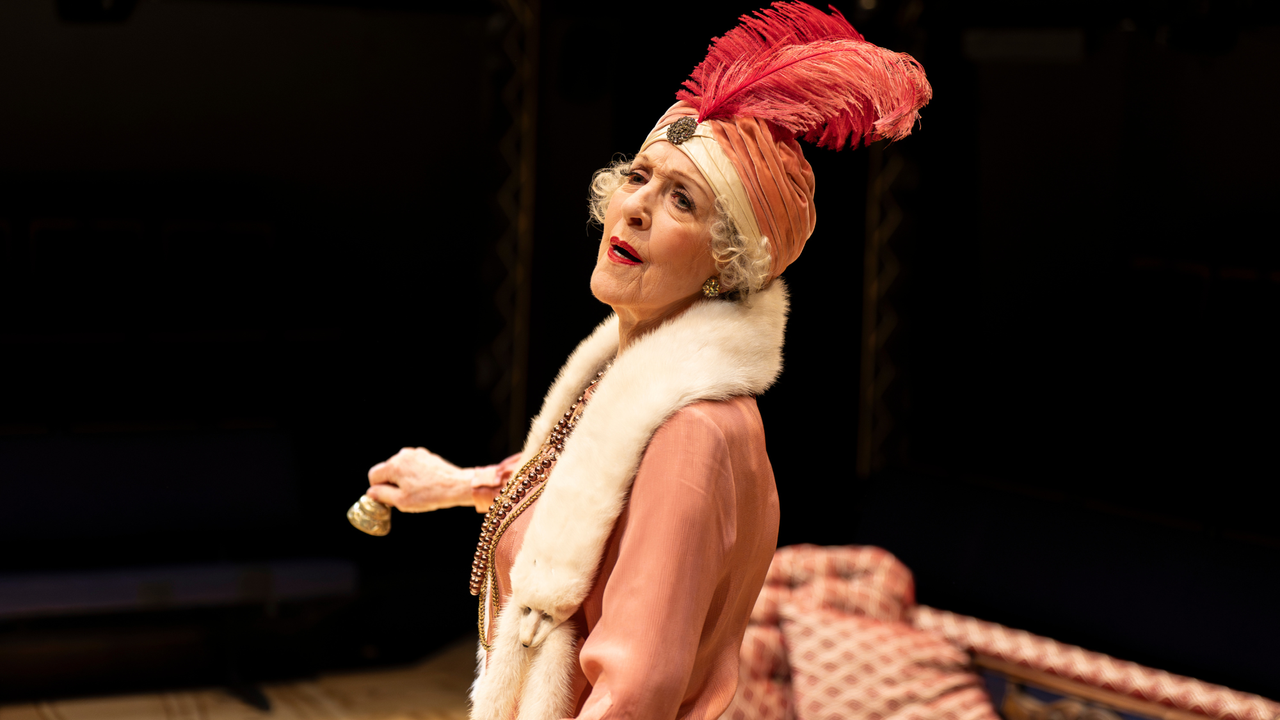
    Director Tom Littler brings a “sparkier” version of Richard Brinsley Sheridan’s 1775 comedy to life at the Orange Tree in London’s Richmond, said Heather Neill on The Arts Desk. With the “ever-elegant” Patricia Hodge in the role of Mrs Malaprop, there is “never a dull moment” in this rendition, which relocates the action to 1927, complete with“attractive gilded art deco friezes and colourful period costumes”.

    Littler has “successfully married old and new” in this “craftily edited rejig”, said Dominic Cavendish in The Telegraph. The story follows Jack Absolute (Kit Young), who tries to woo Lydia Languish (Zoe Brough) in the guise of the “lowly sergeant Beverley to indulge her sentimental ideas about poverty”. His false identity paves the way for “spiralling confusions”.

    The “slick and colourful” revival is a “more faithful update” than other adaptations, said Dominic Maxwell in The Times. The show is elevated by “savvy comic performances that largely stop short of caricature”. Robert Bathurst presents a “robust, unselfish” Sir Anthony Absolute, while Brough as Lydia and Boadicea Ricketts as Julia Melville deliver performances that are “very now without feeling laboured”.

    Sheridan’s work had a “sharp satirical bite” at the time, said Dave Fargnoli on The Stage, but the “social comedy” doesn’t hold as much weight today. Still, Littler makes up for it by “leaning into the farcical plot” and “amping up the silliness” with extra gags. With its “colourful costumes” and “Charleston-style choreography”, “The Rivals” is a “thoroughly entertaining” spectacle that makes for a “lively” evening.


    Statistic of the day

    1.56 million: The number of pension-aged Britons still on employers’ payrolls, according to HMRC – a 12% jump from 2020-21. Estimates based on the latest Survey of Personal Incomes also suggest a further 562,000 people aged over 65 are self-employed, taking the total number of working pensioners to around 2.12 million.


    instant opinion

    Today’s best commentary

    YouTube feels like TV should – no wonder people choose it over the BBC
    Sophie Wilkinson in The Independent
    YouTube viewing figures have “overtaken” the BBC’s, writes Sophie Wilkinson, and “I’m surprised that anyone is surprised”. Watching “Beeb content” feels “like entering a smart dining room with a sommelier to take you through the wine pairings”, while watching YouTube “is like barging through Camden market’s deep-fried Chinese takeaway food”. The latter’s “endless servings of naughty, low-brow” content “scratch itches at a level that high-powered media executives could only dream of reaching”.

    The world of today looks bad, but take hope: we’ve been here before and got through it – and we will again
    Martin Kettle in The Guardian
    “National morale” is “shot” and “politics commands little faith”, writes Martin Kettle. “Welcome, in short, to the Britain of the mid-1980s.” Things then felt “very much” as they do now. But “those moods did not endure”, because we learned it’s “better to cooperate on things on which you can agree than to focus on the things that divide you”. Once today’s politicians realise that “the arena matters more than the grandstand”, we “can get out of that place” of despair again.

    It’s not just the Fed. Politics looms over central banks everywhere
    The Economist’s editorial board
    “The idea that central banks should enjoy some independence is as old as central banking,” says The Economist, but “try telling that” to Donald Trump. The US president “has spent the past year bullying the Federal Reserve” to slash interest rates. Central-bank independence has been a “triumph of applied economics”, yet it’s also “under threat” from Reform and the Greens in the UK. “Relying on politicians” instead would be “a huge gamble”.


    word of the day

    Bandhgala

    From the Hindi for “closed neck”, a high-collared men’s jacket that became a popular style of formalwear in India during the British Raj. India’s railway minister, Ashwini Vaishnaw, has announced that the uniform worn by state rail employees will no longer include the bandhgala, which he denounced as a vestige of a “colonial mindset”.


    Evening Review was written and edited by Rebecca Messina, Hollie Clemence, Elliott Goat, Justin Klawans, Chas Newkey-Burden, Deeya Sonalkar, Irenie Forshaw, David Edwards, Helen Brown and Kari Wilkin, with illustrations from Stephen Kelly.

    Image credits, from top: illustration by Marian Femenias-Moratinos / Getty Images; Benjamin Cremel / WPA Pool / Getty Images; Carsten Snejbjerg / Bloomberg / Getty Images; Adalberto Roque / Pool / Getty Images; Ellie Kurttz / Orange Tree Theatre

    Morning Report and Evening Review were named Newsletter of the Year at the Publisher Newsletter Awards 2025
     

    Recent editions

    • Morning Report

      Denmark rebuffs US over Greenland

    • Evening Review

      The Maccabi Tel Aviv fan-ban blunder

    • Morning Report

      Iran deaths mount as Trump says ‘help is on its way’

    VIEW ALL
    TheWeek
    • About Us
    • Contact Future's experts
    • Terms and Conditions
    • Privacy Policy
    • Cookie Policy
    • Advertise With Us
    • FAQ
    Add as a preferred source on Google

    The Week UK is part of Future plc, an international media group and leading digital publisher. Visit our corporate site.

    © Future Publishing Limited Quay House, The Ambury, Bath BA1 1UA. All rights reserved. England and Wales company registration number 2008885.