The Week The Week
flag of US
US
flag of UK
UK
https://cdn.mos.cms.futurecdn.net/skoGBi9qKFoUtnNWkovjJQ.jpg

SUBSCRIBE

Try 6 Free Issues

Sign in
  • View Profile
  • Sign out
  • The Explainer
  • Talking Points
  • The Week Recommends
  • Podcasts
  • Newsletters
  • From the Magazine
  • The Week Junior
  • More
    • Politics
    • World News
    • Business
    • Health
    • Science
    • Food & Drink
    • Travel
    • Culture
    • History
    • Personal Finance
    • Puzzles
    • Photos
    • The Blend
    • All Categories
  • Newsletter sign up Newsletter
  • The Week Evening Review
    Arctic Sentry, central banks, and the great audiobook debate

     
    TODAY’S BIG QUESTION

    Would Arctic Sentry deter Russia and China?

    Nato is mulling a joint operation to defend the Arctic from future Russian and Chinese aggression – and to neutralise US ambition. The hope is that the proposed Arctic Sentry could placate Donald Trump, who has used the threat of Russian and Chinese ships to justify his desire to take control of Greenland.

    What did the commentators say?
    The Arctic is “the gateway for Russia’s Northern Fleet to be able to threaten” the UK and its allies, Foreign Secretary Yvette Cooper told the BBC while visiting British forces in northern Norway. So Nato must “double down” on security in the region. She called for “coordinated exercises, operations and intelligence sharing”, covering “the high north”, including Greenland, Iceland, Finland and the increasingly busy shipping lanes.

    Although the waters around Greenland “aren’t full of Russian and Chinese ships right now”, said Radio Free Europe, “that could change as Arctic ice melts and new sea lanes open up”. But there are “many practical obstacles”. Nato has only about 40 ice-breaker vessels in total – fewer than Russia. Hundreds of such ships would be needed “to cover such a vast area”. And aside from in Nordic countries and Canada, few Nato troops have experience of operating “in harsh Arctic conditions”.

    Nato’s Baltic Sentry and Eastern Sentry operations were “formulated to tackle specific threats”, said The Telegraph, but in the case of Greenland, the goals “are not as clear-cut”. A mass deployment would also “suck vast resources away from other priorities”, such as a potential peacekeeping force in Ukraine, or protecting Nato’s eastern flank from Russia. It “would simply be seen as a costly public relations project” designed to placate Trump.

    What next?
    One potential Arctic Sentry scenario could be “Europeans handling air and sea surveillance” of what is known as the GIUK gap – the area between Greenland and Ireland/the UK – while the US “increases its troop presence in Greenland”, said Radio Free Europe.

    But the mission will most likely “focus on the intelligence aspect of security”, which is seen as “a vital way of securing the Arctic”, said The Telegraph.


    THE EXPLAINER

    The threats to central bank independence 

    The independence of the US Federal Reserve is under threat as Donald Trump tries to influence the central bank’s policies and pushes ahead with a criminal investigation into its chair. Trump’s attacks on Jerome Powell (pictured above) are widely viewed as an attempt to “force interest rate cuts” from the Fed, “in defiance of its mandate and independence”, said Sky News.

    Central banks beyond the US are also facing challenges, as global instability, swelling deficits and high inflation trigger doubts about the long-accepted notion that an independent body is the best vehicle for delivering economic results.

    Why is independence viewed as important?
    The modern idea of central-bank independence emerged after the Second World War. The argument in favour is that politicians are likely to be “tempted by self-defeating monetary policies” in pursuit of short-term electoral goals, said The Economist. Monetary policies that “make everyone better off” in the long run are more attainable and more sustainable if they’re “delegated to a conservative central banker”.

    Central banks have been lauded as a “triumph of applied economics”. As “independence rose, inflation fell” and “recessions became rarer”. But this “triumph” is now “under threat” in the US and elsewhere.

    Why is that changing?
    Recent surges in inflation have damaged public trust in central banks and sparked vocal criticism from politicians. The global financial crisis, a prolonged period of quantitative easing, and the “pressures of climate risk, geopolitical shocks and fiscal activism” are further highlighting the “fundamental” question of whether the “orthodox consensus” has “reached its limits”, said Chatham House.

    What could go wrong?
    Trump’s interference with US monetary policy “could lead to financial panic and economic disaster” with consequences worldwide, said Bloomberg. A monetary policy dictated by “short-term political calculations” might lead to lower interest rates but would then spark higher inflation and, ultimately, “increase the cost of credit, discourage private investment” and make it harder to service national debt.

    But Trump’s “damaging attacks on the Fed shouldn’t obscure its failures”, said Investors’ Chronicle. Independence is one thing, but “technocratic policymakers with limited democratic accountability shouldn’t be beyond censure”.


    QUOTE OF THE DAY

    “Most people didn’t know, including me, that some of those wars were going on.”

    Donald Trump muses on the eight global conflicts that he claims to have halted since returning to the White House. The world is “safer and much more peaceful” than a year ago, the president claimed after signing his Board of Peace charter in Davos.


    Poll watch

    More than one in four (26%) children are not toilet-trained when they start reception, according to a survey of 1,076 primary school staff for education charity Kindred Squared. The annual poll suggests that the number of four- and five-year-olds entering education without basic language skills and the ability to eat or drink without help is also increasing.


    TALKING POINT

    Do audiobooks count as reading?

    “Once scorned by purists as the fake Rolexes of the reading world”, audiobooks are now booming, said Nilanjana Roy in the Financial Times. But questions remain about whether listening to a book instead of poring over its pages counts as reading.

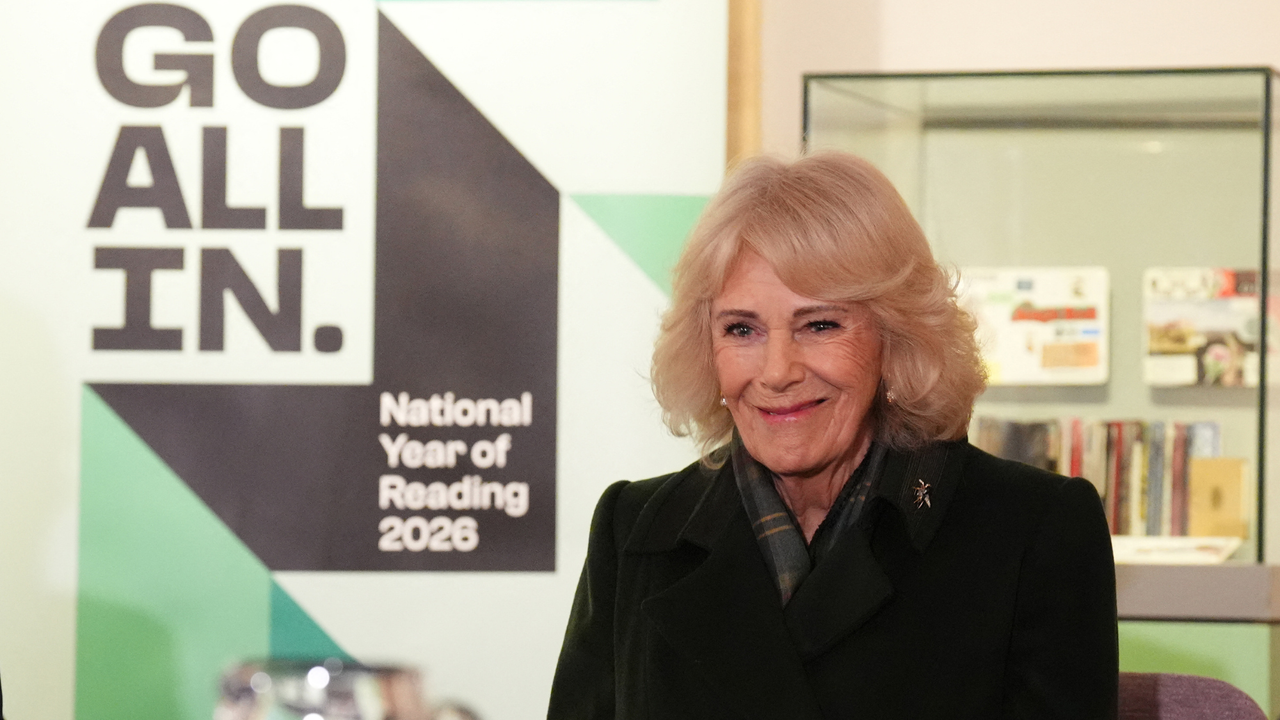
    Queen Camilla clearly thinks it does, appearing in cartoon form in a special edition of The Beano comic to tell Dennis the Menace: “Go all in for the National Year of Reading, Dennis! Comics and audiobooks count too!”

    ‘Pride’ and ‘snobbishness’
    Many people don’t think audiobooks “qualify” as proper reading, said Brian Bannon, chief librarian at the New York Public Library, in The New York Times. “There is a pride – even a snobbishness – to being well read.” Telling someone that you’ve listened to a book instead of reading the physical copy often “comes out sounding like an apology”.

    Our minds sometimes “wander” both when we’re reading and when listening, David Daniel, a psychology professor at James Madison University in Virginia, told Time. But snapping out of these “little mental sojourns” and finding your place in the text isn’t as easy when you’re listening to a recording, especially when “grappling” with a complex piece of writing.

    ‘Parallel way to read’
    We need to “reframe what it means to be a reader”, moving past the “traditional hierarchical values” that still put physical books at the top, said Debbie Hicks, creative director of the Reading Agency. When it comes to reading, “content” is more important than the “medium”, she told The Guardian.

    To suggest that reading books is the “only kind of reading that counts” does a “disservice” to the “many dyslexic or visually challenged booklovers among us”, said Roy in the Financial Times. Audiobooks should be seen as a “parallel way to read”, not dismissed as inferior.

    The “destigmatising” of audiobooks could offer a “path to a more nuanced way of thinking about literacy”, said Bannon in The New York Times. “We need more readers – however they get there.” After “struggling to read as a kid, audiobooks were my lifesaver”, said Miranda Larbi in Stylist. They turned out to be a “gateway for physical books – a key for unlocking a world that felt totally inaccessible”.


    Good day 🎸

    … for classic rock, as The Eagles claim the record for the biggest-selling US album of all time. The Californian band’s “Their Greatest Hits 1971-1975” has been awarded quadruple-diamond status by the Recording Industry Association of America, after the 1976 release topped 40 million sales.


    Bad day 🧇

    … for bargain breakfasts, as the cost of a single McDonald’s hash brown climbs to £1.99 at some branches. “We are officially done,” declared an X user under a photo showing the hiked price on the menu at one of the chain’s franchises, in a post that has racked up almost half a million views.


    picture of the day

    Political climate

    Soldiers holding weather balloons march through snow in Davos, Switzerland, where the World Economic Forum’s summit draws to a close tomorrow. This year’s meeting included a panel discussion on integrating AI into weather forecasting.

    Ina Fassbender / AFP / Getty Images


    Puzzles

    Guess the number

    Try The Week’s new daily number challenge in our puzzles and quizzes section

    Play here


    THE WEEK RECOMMENDS

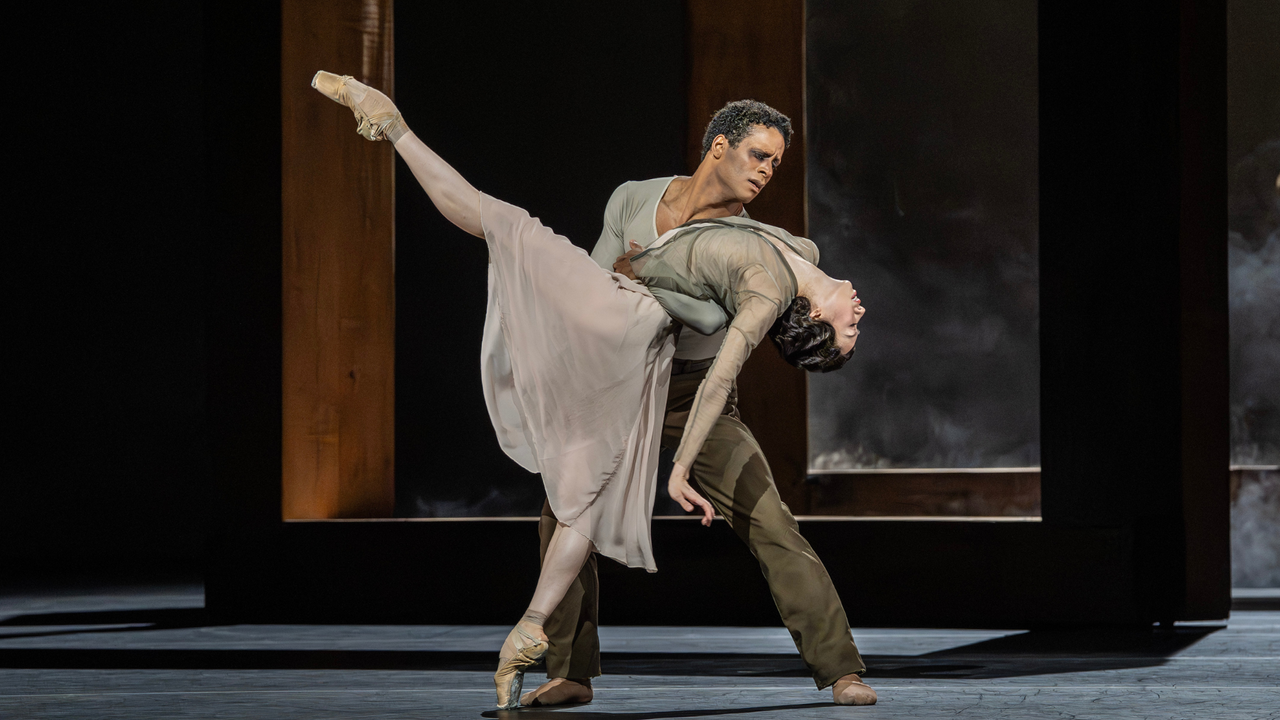
    Woolf Works: the Royal Ballet’s ‘dazzling’ production

    “How do you capture the effect of one of the most groundbreaking novelists of all time?” said Rebecca Watson in the Financial Times. With the bar set “dauntingly high”, “Woolf Works” was “always going to have its work cut out”.

    The three-act ballet is loosely based on three of Virginia Woolf’s books: “Mrs Dalloway”, “Orlando” and “The Waves”. Choreographer Wayne McGregor “eschews straight narrative”, though, instead plunging us into “Woolf’s creative world” and examining her “obsessions and experience”. His ballet “vividly” captures how it feels to read Virginia Woolf’s writing, injecting a “charged quality” that draws in the audience. Max Richter’s rich and varied score is also a “vital part” of the show, blending electronic sound with a live orchestra.

    It’s a “dazzling” production, said Teresa Guerreiro in The Times. There is something “almost painterly” about the staging, thanks in part to Ravi Deepres’ “deeply evocative” film of “white words swirling onto the black front curtain”, and later, a “slow moving monochrome” projection of the “rebellious sea”. Lucy Carter’s lighting offers “bright turquoise laser beams, occasionally tempered with a shaft of red”, which add to the drama of the second section. And while the choreography “doesn’t always inspire”, the dancers are “outstanding”.

    “No one divides opinion quite like Wayne McGregor,” said Jenny Gilbert on The Arts Desk. Admirers love the “brave-new-world qualities of his work”, but those who like knowing “who’s who and what’s what” should probably steer clear. In this production, “even those who’ve read the novels are at no great advantage”.


    Statistic of the day

    0.39%: The proportion of Britons taking ADHD medication, according to latest figures. The use of drugs to treat attention deficit hyperactivity disorder more than tripled between 2010 and 2023, with a 20-fold hike among women aged 25 or over, a study published in The Lancet’s European health journal found.


    instant opinion

    Today’s best commentary

    Divorce is bad for Britain, but nobody wants to say it
    Yasmin Alibhai-Brown in The i Paper
    More than 40% of UK marriages now end in divorce and “in some ways”, that’s a sign of “progress”, writes Yasmin Alibhai-Brown. Fewer couples are “locked in miserable unions” and “women no longer put up with boring, unworthy, unfaithful or abusive men”. But it’s also “saddening”, because divorce “splinters lives”. I’ve “been through it” and know how family “bonds” can break, even when everyone tries “to do their best”. Whatever the lawyers promise, “divorce is never painless or cost-free”.

    Why we have the calendar all wrong
    Sarah O’Connor in the Financial Times
    In January, animals hibernate but “humans buy new exercise equipment” and “make ambitious new resolutions”, writes Sarah O’Connor. Why “attempt to step up a gear when the rest of nature” slows down? The Romans lumbered us with the “notion that January marks the beginning of the year”, but we could avoid the post-Christmas “handbrake turn” by choosing to view spring as “our ‘psychological’ new year”. “Join me”, and HMRC, and reset your calendar to begin on 6 April instead.

    Prince Harry may focus on legal action, but it’s business as usual for the Royals
    Russell Myers in The Mirror
    The royal family, writes Russell Myers, will endure “Prince Harry’s latest court case” with the “same mantra that has carried” them through “generations of upheaval – Keep calm and carry on”. They’re focused on getting “on with the job” despite the “global attention” on Harry and Meghan. Tellingly, the King “has chosen to keep his distance”, and “while Harry may talk” of reconciliation with his family, his “battles with the media” will “do little to repair those shattered relationships”.


    word of the day

    Lüften

    From a verb meaning “to air out”, a German cultural norm in which windows are opened at least once a day, regardless of weather or temperature, to let fresh air circulate. Lüften is now being embraced by US influencers, who are promoting the practice to their followers under the less charming name “house burping”.


    Evening Review was written and edited by Rebecca Messina, Jamie Timson, Harriet Marsden, Chas Newkey-Burden, Irenie Forshaw, Helen Brown, David Edwards and Kari Wilkin, with illustrations from Stephen Kelly.

    Image credits, from top: illustration by Stephen Kelly / Getty Images; Chip Somodevilla / Getty Images/ Andrew Milligan / Pool / AFP / Getty Images; Ina Fassbender / AFP / Getty Images; Johan Persson

    Morning Report and Evening Review were named Newsletter of the Year at the Publisher Newsletter Awards 2025
     

    Recent editions

    • Morning Report

      Trump strikes Greenland ‘deal’

    • Evening Review

      Can anyone stop Donald Trump?

    • Morning Report

      UK defends Chagos deal despite Trump’s criticism

    VIEW ALL
    TheWeek
    • About Us
    • Contact Future's experts
    • Terms and Conditions
    • Privacy Policy
    • Cookie Policy
    • Advertise With Us
    • FAQ
    Add as a preferred source on Google

    The Week UK is part of Future plc, an international media group and leading digital publisher. Visit our corporate site.

    © Future Publishing Limited Quay House, The Ambury, Bath BA1 1UA. All rights reserved. England and Wales company registration number 2008885.