The Week The Week
flag of US
US
flag of UK
UK
https://cdn.mos.cms.futurecdn.net/flexiimages/jzblygzdxr1769609154.gif

SUBSCRIBE

Try 6 weeks free

Sign in
  • View Profile
  • Sign out
  • The Explainer
  • Talking Points
  • The Week Recommends
  • Podcasts
  • Newsletters
  • From the Magazine
  • The Week Junior
  • More
    • Politics
    • World News
    • Business
    • Health
    • Science
    • Food & Drink
    • Travel
    • Culture
    • History
    • Personal Finance
    • Puzzles
    • Photos
    • The Blend
    • All Categories
  • Newsletter sign up Newsletter
  • The Week Evening Review
    Corruption concerns, Ice funding, and the quest for eternal life

     
    THE EXPLAINER

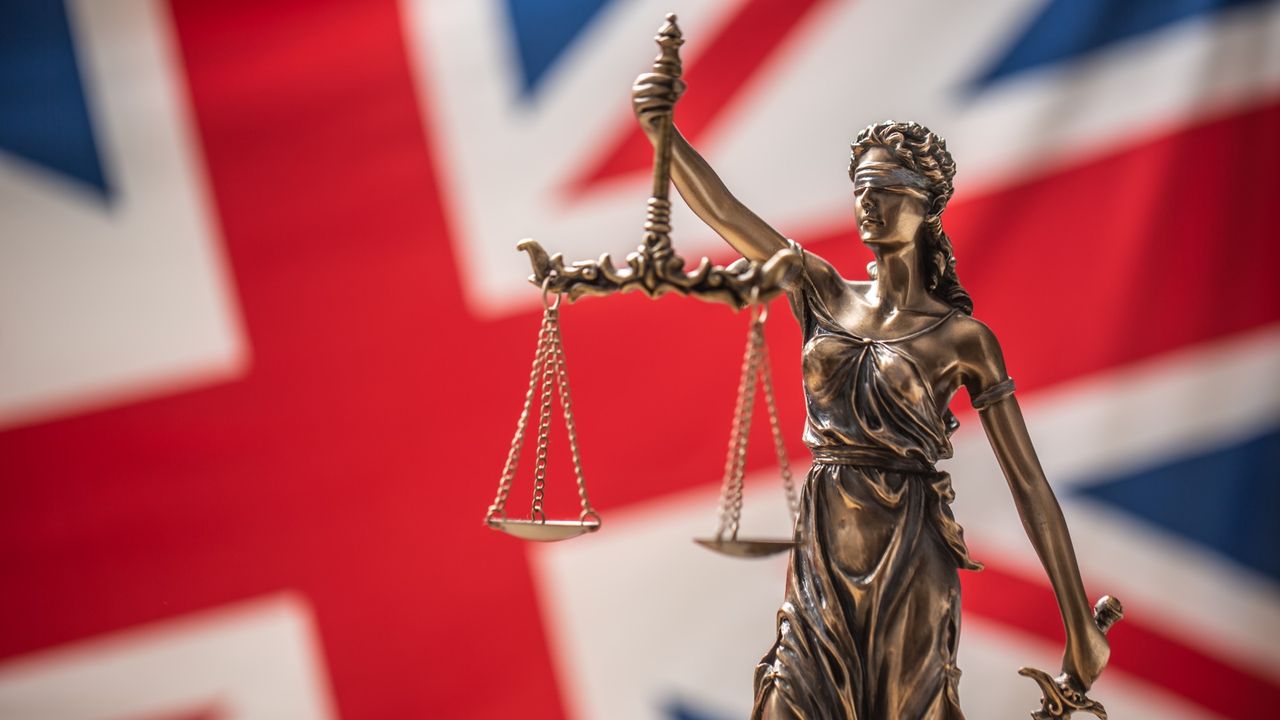
    How corrupt is the UK?

    The UK has sunk to its lowest ever score in Transparency International's global index of perceived corruption in the public sector. This is more than “a temporary blip”, said Daniel Bruce, Transparency International UK’s chief executive. “It risks becoming a defining feature of our political culture.”

    How has the UK’s ranking changed?
    The Corruption Perceptions Index (CPI) ranks countries on a scale of 0 (completely corrupt) to 100 (completely uncorrupt). In this year’s index, the UK scored 70, down from 71 last year. The drop did not change the UK’s overall ranking of 20th out of a total 182 countries. But it marks a significant long-term decline since 2016, when the UK scored 81 and was ranked as the 10th most transparent nation globally.

    What are the major concerns?
    “In the UK, the past decade has seen major domestic scandals, the awarding of favours and honours to political donors, and MPs working as lobbyists for paying clients and corrupt regimes,” said Transparency International. Last year brought “some of the highest spending political campaigning on record, alongside troubling reports of access-for-cash arrangements and questionable appointment processes”, said Bruce.

    Keir Starmer has promised to restore integrity in politics, but the anti-corruption organisation warned that the latest score “shows that business as usual is not enough to turn the corner”. Corruption risks “becoming embedded as the ‘new normal’”.

    How did other countries do?
    Denmark topped this year’s list, with 89 points, followed by Finland (88) and Singapore (84). Venezuela (10), Somalia (9) and South Sudan (9) were at the bottom of the index. The US scored 64, its lowest ever ranking. The average CPI score has dropped to 42, the lowest level in more than a decade, and only five countries scored more than 80 – “once a benchmark for clean governance”, said DW – down from 12 a decade ago.

    With the global order “under strain”, said Transparency International, many leaders have cited “security, economic or geopolitical issues as reasons to centralise power, sideline checks and balances and roll back commitments to internationally agreed standards – including anti-corruption measures”.


    TODAY’S BIG QUESTION

    Can the Democrats tame Ice?

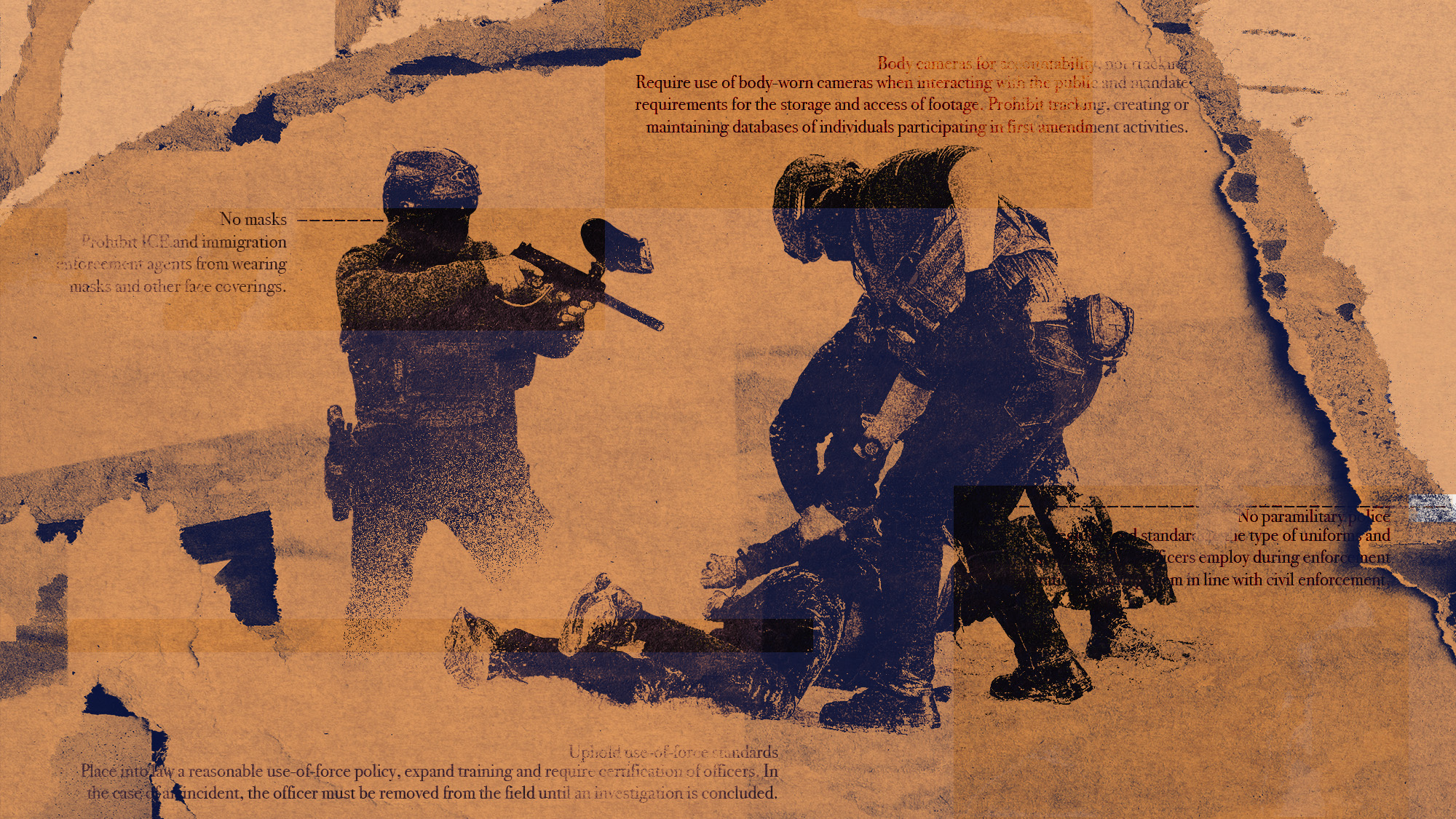
    With just one day before federal funding for US Immigration and Customs Enforcement is set to expire, the country’s lawmakers remain at an impasse about proposed reforms to the controversial agency.

    Although Republicans control both chambers of Congress, they need Democratic votes in order to pass a bill to provide stopgap funding for the Department of Homeland Security until a long-term spending deal is reached. Democrats have pledged not to back the bill unless their terms are met. The reforms are a “line in the sand”, said the Democrats’ leader in the House of Representatives, Hakeem Jeffries.

    What did the commentators say?
    The sanctity of American homes is a key sticking point for Democrats, who want to “bar federal immigration agents from entering private property without a judicial warrant”, said The Washington Post. Republicans claim this “would add an unnecessary layer of bureaucracy”, but a recent Economist/YouGov survey found that 70% of Americans support such a measure.

    Democrats are also “pushing for a mask ban”, said The Hill. Officials say face coverings protect Ice agents from being “doxxed” online, but critics claim it “erodes accountability”. Other demands include a guarantee that federal funds will not be used to carry out raids on or near “medical facilities, schools, child care facilities” and places of worship, said The Guardian. Agents would also be barred from profiling individuals based on “their job, their spoken language and accent, or their race or ethnicity”.

    Ice has recently agreed to equip all of its agents with body cameras, but that has Democrats “running headlong into a new problem”, said Politico: a growing “outcry from privacy advocates that surveillance tools will allow Ice agents to identify and track protesters”.

    What next?
    Unless an agreement is reached by midnight tomorrow, the Department of Homeland Security will go into shutdown. But thanks to last year’s “Big Beautiful Bill”, which funnelled $75 billion to Ice, the department “has money to mitigate much of the shortfall”, said news broadcaster MS NOW. The department’s other agencies, including the Coast Guard and the Secret Service, are likely to be hardest hit.


    QUOTE OF THE DAY

    “Shame sticks to you, it sticks to your skin. And that shame is a double sentence, it’s a suffering you inflict on yourself.”

    Gisèle Pelicot urges fellow victims of sex crimes to “never have shame”, in her first TV interview. The 73-year-old refused the right to anonymity during the trials of her ex-husband and 50 other men who sexually assaulted her while she was drugged and unconscious.


    Poll watch

    Almost four in ten (39%) Brits regard the US as an unreliable ally, outnumbering the 35% who think Washington can still be trusted. A Politico poll of more than 8,000 adults across the UK, Canada, France and Germany found that Canadians were the most sceptical about whether the US has their backs, with 57% expressing doubts.


    IN THE SPOTLIGHT

    Why ‘longevity fixation syndrome’ is on the rise

    Immortality may seem like the preserve of Greek myth, science fiction and the Silicon Valley elite, but an obsession with living forever appears to be affecting ordinary people too. Longevity Fixation Syndrome is being flagged by some health professionals as a new mental-health disorder characterised by an obsession with extending the biological clock and staving off not only the signs of age but death itself.

    ‘Obsessive self-surveillance’
    People with LFS may “obsessively” monitor their sleep patterns, bowel movements and blood-sugar levels, following intense exercise routines, strict diets and “supplement protocols”, and embrace “controversial therapies”, said The Mirror.“What starts as self‑care becomes obsessive self‑surveillance,” Jan Gerber, CEO of Zurich-based mental-health clinic Paracelsus Recovery, told the newspaper. We’re starting to see “a growing number” of people “whose lives are dominated by the fear of ageing and decline”.

    Although LFS has yet to appear in official diagnostic manuals, Gerber compares it to orthorexia, an eating disorder characterised by an obsession with healthy food. And like many other addictions, it can affect the sufferer’s career and personal relationships. Ironically, said The Mirror, “the stress generated by this mindset can be so intense that it actively shortens lifespan, rather than extending it”.

    Struggle to ‘accept mortality’
    The most public face of the crusade against ageing is Bryan Johnson, a 48-year-old American venture capitalist who has vowed to “achieve immortality” and to make his “Don’t Die” movement “the most influential ideology in the world by 2027”.

    Public interest is clearly growing, with Global Google searches for “longevity” tripling over the course of 2025. At last month’s Consumer Electronics Show in Las Vegas, longevity tech was “the hype vertical du jour”, said the Financial Times. Items on display included a $899 (£660) “longevity mirror” that tells how well the person reflected is ageing.

    This obsession with longevity “reveals a self-centred society” in which people struggle to “accept mortality”. It is also, “let’s face it”, a new “buzzword” for shifting products. We’d probably do well to face the fact “that when we die is not something we can control”, and “realise that life is too important to waste it trying to live forever”.


    Good day 🦴

    … for faithful pets, who can now legally be buried alongside their owners in an animal-loving Brazilian state. São Paulo’s governor signed off the new “Bob Coveiro” (“Gravedigger Bob”) law, named after a local dog who lived in a municipal cemetery for 10 years after his owner was buried there.


    Bad day 🎨

    … for Tracey Emin, who is facing a £160,000 bill to fix cladding and structural problems at Margate’s Arlington House, as the owner of four flats in the brutalist tower block. The Turner Prize-winning artist has accused the building’s owners of negligence and said it was “morally wrong” to make leaseholders pay for the repairs.


    picture of the day

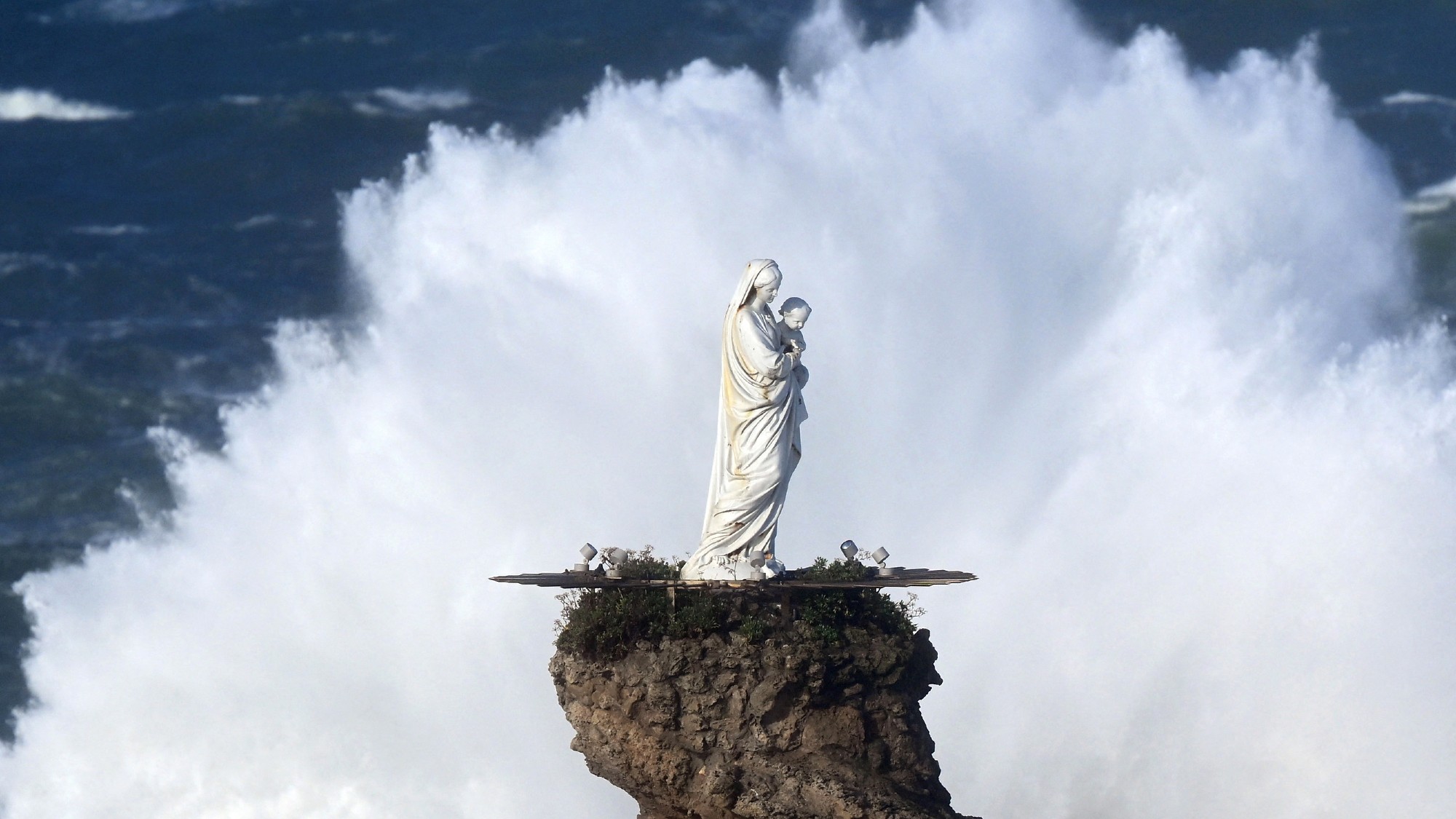
    Rock solid

    Waves whipped up by Storm Nils crash around the Rocher de la Vierge (Rock of the Virgin) in Biarritz, southwestern France. Some 850,000 homes in the country’s south were left without power following 100mph winds and heavy downpours.

    Gaizka Iroz / AFP / Getty Images


    Puzzles

    Guess the number

    Try The Week’s new daily number challenge in our puzzles and quizzes section

    Play here


    THE WEEK RECOMMENDS

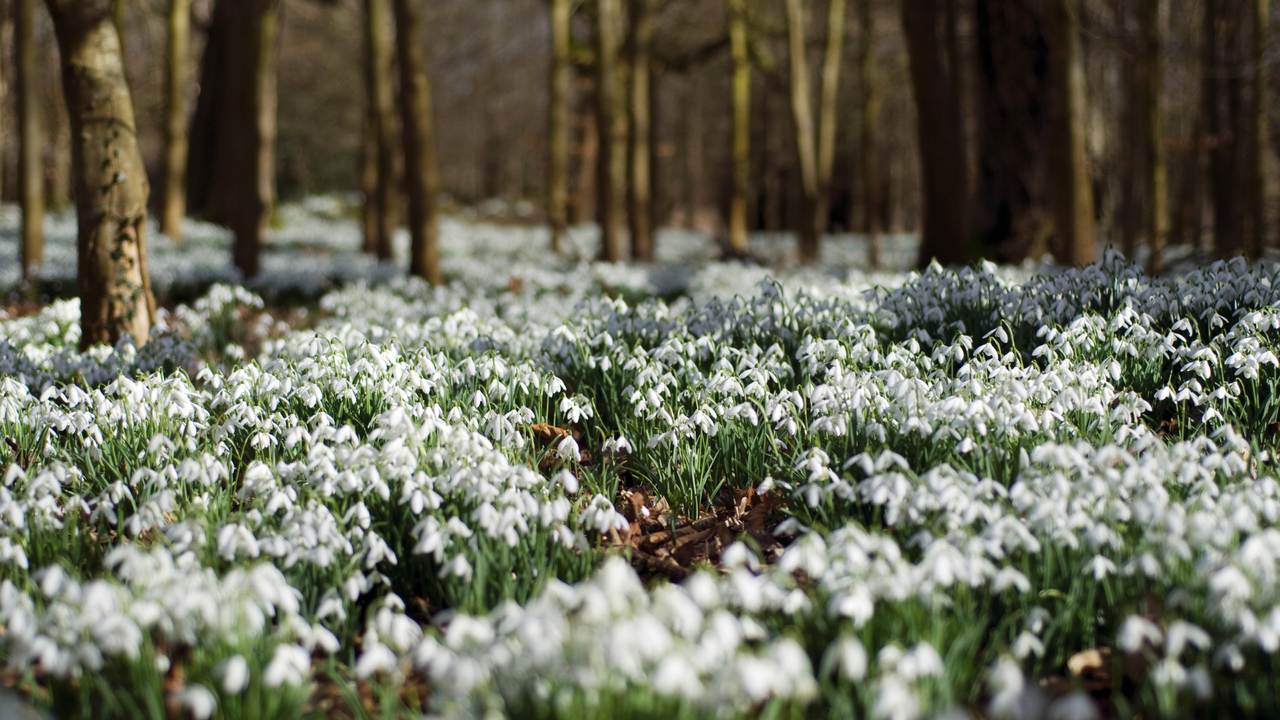
    Where to go snowdrop spotting this February

    It may be the greyest of Februarys but this is the month that Britain’s snowdrop enthusiasts (or “galanthophiles”) look forward to the most, as “enchanting white carpets” sprout up across the country, said The Independent. Here are some of the best places to spot the “pint-sized” blooms.

    Goldsborough Hall, North Yorkshire
    This Yorkshire stately home offers a truly “spectacular” sea of snowdrops that “blankets” the 12-acre grounds, said The English Garden. The Snowdrop Walk features more than “100 rare varieties of snowdrops”, some of which are so rare that “they haven’t yet been named”.

    Shepton Snowdrop Festival, Shepton Mallet, Somerset
    This year’s festival is dedicated to James Allen (the “Snowdrop King”), who in the 19th century became the first person to breed new varieties from wild species, said Country Life. For the first time, local landmarks including Forde Abbey and Dunster Castle will be joining forces to form the Great Snowdrop Trails of Somerset.

    Cambo Gardens, St Andrews, Fife
    The snowdrops found here are the perfect “tonic” when it feels like “winter is dragging its heels”, filling the air “with their honeyed scent”, said The Scotsman. Cambo Gardens offers a range of ways to enjoy the season, with “walks, talks, woodland trails, expert workshops and live music events”.

    Gelli Uchaf, near Llandeilo, Carmarthenshire
    Although the smallest garden on this list, this Welsh beauty is home to one of the most “diverse micro-climates”, said The Independent. The slopes are underplanted with hundreds of thousands of snowdrops, as well as crocuses, cyclamens, daffodils and many other types of bulbs.


    Statistic of the day

    Three: The number of managers sacked by Nottingham Forest so far this season, with 12 matches remaining for the Reds. Sean Dyche is the latest out the door, following the club’s 0-0 home draw with Wolves yesterday. He held the post for 119 days after replacing Ange Postecoglou, who lasted just 39 days after succeeding Nuno Espírito Santo.


    instant opinion

    Today’s best commentary

    Britain’s predicament will get worse before it gets better
    The Economist’s editorial board
    The UK’s “political instability has become chronic”, says The Economist. You might “think things can only get better” for Labour after the past week’s drama, but “alas, the more likely path is drift”. The nation is in a “declinist mood” that’s “redolent” of the 1970s, and Keir Starmer lacks “a plan or the political capital to get much done”. In the absence of “clear-eyed” Labour modernisers, “voters will have to look elsewhere for renewal”.

    Why heartbreak is good for you
    Kat Rosenfield on UnHerd
    I’ve always thought “getting hurt is table stakes for getting to fall in love”, writes Kat Rosenfield. But “droves” of young people are trying to “guard” their hearts and assets by getting prenups. “Perhaps this was predictable” for a generation raised to believe “every interaction should have an escape hatch to protect one from emotional harm”. But to “make a go of it in love”, you must take a “delirious leap together”, because this “foolish act of leaping is everything”.

    Pubs are for everyone. Don’t let Reform make them the political property of the boorish hard right
    Jonathan Liew in The Guardian
    For Nigel Farage, romanticising the pub is a “shortcut to working-class authenticity”, writes Jonathan Liew. He portrays them as a “refuge where old white lads can say whatever they like”. But the “real beauty” of pubs is their “versatility” – from “chain pub” to “gastropub, darts pub, gay pub, old man pub, gay old man pub” and pub with “a dog bowl in the corner”. Talk of “saving the great British pub” shouldn’t focus on “one demographic”.


    word of the day

    Subdued

    The state of the UK economy, according to the Office for National Statistics, after new data revealed that GDP rose by only 0.1% in the last quarter. “The overall picture as 2025 drew to a close continued to be one of subdued growth,” Liz McKeown, ONS director of economic statistics, told the BBC’s “Today” programme.


    Evening Review was written and edited by Rebecca Messina, Elliott Goat, Justin Klawans, Will Barker, Chas Newkey-Burden, Irenie Forshaw, David Edwards, Helen Brown and Kari Wilkin, with illustrations by Julia Wytrazek.

    Image credits, from top: SimpleImages / Getty Images; illustration by Julia Wytrazek / Getty Images; illustration by Julia Wytrazek / Getty Images; Gaizka Iroz / AFP / Getty Images; Ed Godden / Digital Camera Magazine / Getty Images

    Morning Report and Evening Review were named Newsletter of the Year at the Publisher Newsletter Awards 2025
     

    Recent editions

    • Morning Report

      Starmer urged to appoint woman to senior post

    • Evening Review

      How much more rain can the UK endure?

    • Morning Report

      Shootings at Canadian school and home claim 10 lives

    VIEW ALL
    TheWeek
    • About Us
    • Contact Future's experts
    • Terms and Conditions
    • Privacy Policy
    • Cookie Policy
    • Advertise With Us
    • FAQ
    Add as a preferred source on Google

    The Week UK is part of Future plc, an international media group and leading digital publisher. Visit our corporate site.

    © Future Publishing Limited Quay House, The Ambury, Bath BA1 1UA. All rights reserved. England and Wales company registration number 2008885.