The Week The Week
flag of US
US
flag of UK
UK
https://cdn.mos.cms.futurecdn.net/flexiimages/jzblygzdxr1769609154.gif

SUBSCRIBE

Try 6 weeks free

Sign in
  • View Profile
  • Sign out
  • The Explainer
  • Talking Points
  • The Week Recommends
  • Podcasts
  • Newsletters
  • From the Magazine
  • The Week Junior
  • More
    • Politics
    • World News
    • Business
    • Health
    • Science
    • Food & Drink
    • Travel
    • Culture
    • History
    • Personal Finance
    • Puzzles
    • Photos
    • The Blend
    • All Categories
  • Newsletter sign up Newsletter
  • The Week Evening Review
    Youth unemployment fears, Dual citizen woes, and the EU vs. fast fashion

     
    TODAY’S BIG QUESTION

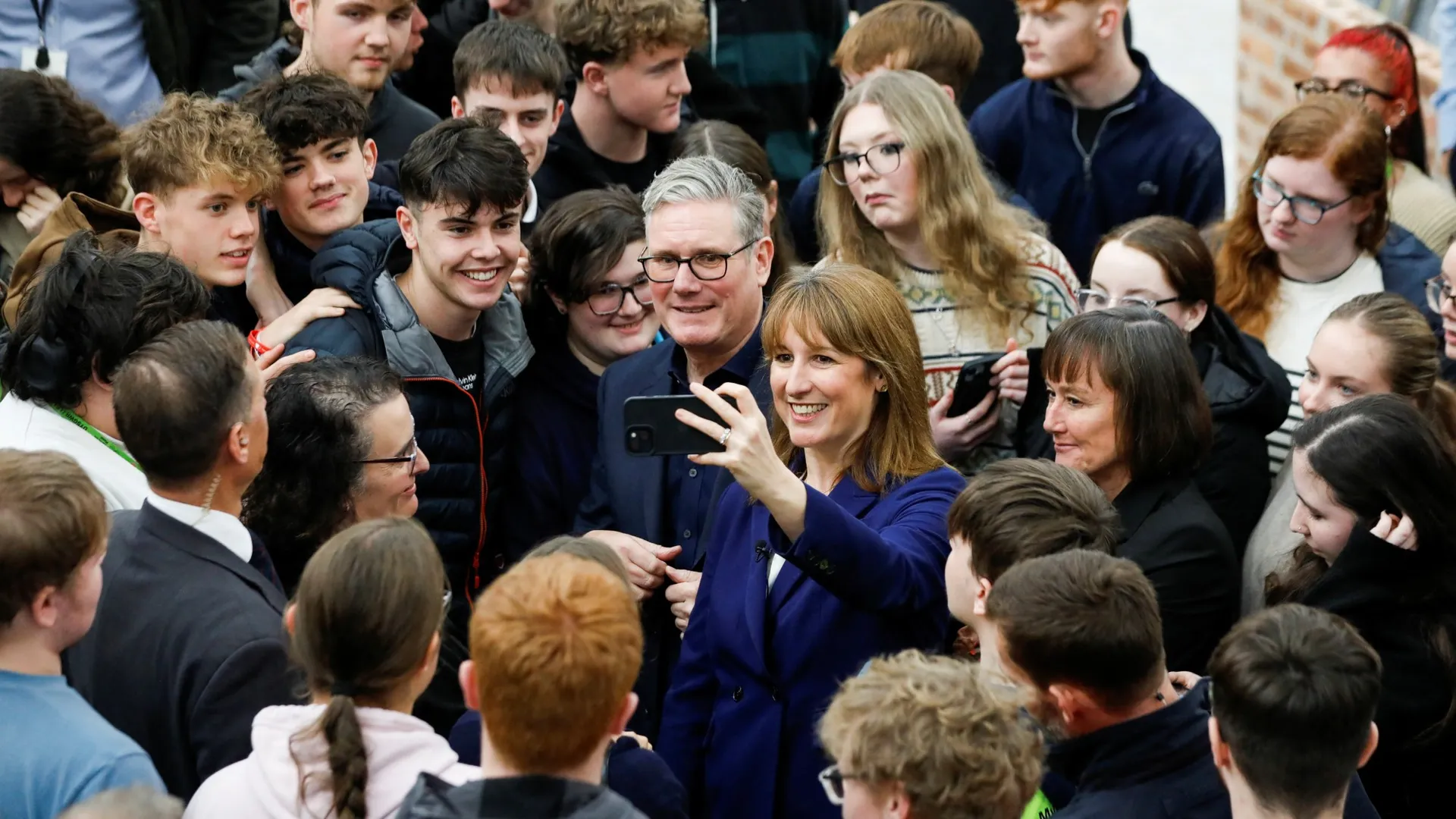
    Is Labour pricing young people out of the job market?

    Plans to equalise the minimum wage for all ages are being cast into doubt as youth unemployment rises. Keir Starmer today insisted the government will stick to its manifesto pledge but didn’t commit to a timeline for the change. Chancellor Rachel Reeves said Labour needed to get the “balance right”.

    The commitment to raise the minimum wage for 18- to 20-year-olds to the same hourly rate as older people is facing pushback from business groups, who say hiring young people would become too expensive. The unemployment rate for 16- to 24-year-olds is already at the highest level in more than a decade, at 16.1%, according to Office for National Statistics figures released yesterday. 

    What did the commentators say?
    “Labour has been its own worst enemy,” said the Financial Times editorial board. Although global economic uncertainty, advances in AI and higher interest rates have all played a part in cooling the job market, “own goals” by the government, especially on national insurance contributions, are “adding insult to injury”. Britain’s latest jobs numbers, with “losses concentrated” in “sectors that disproportionately employ the young”, look “grim” for a “party that prides itself on serving ‘working people’”.

    Let’s not overlook just how much AI is affecting the job market for young people, said City A.M.’s Saskia Koopman. “Hiring freezes” have “overtaken mass layoffs”, making it difficult to get a foot on the employment ladder. If hiring – particularly in “AI-exposed areas” – continues to “stall”, the current “cyclical cooling could turn into something more persistent”.

    “The time has come for the brutal truth,” said Chloe Combi in The Independent. “Young people are being, and have been, failed.” Something has gone “profoundly wrong”, and it’s not young people’s fault: that lies “with the generations before them that created this no-hope landscape”. 

    What next?
    Whether the government delays its promised age-band equalisation or not, more action is needed to help young people, said Combi in The Independent. We should be “pooling money into professional training and learning programmes”, which “would be an investment on so many levels”.


    THE EXPLAINER

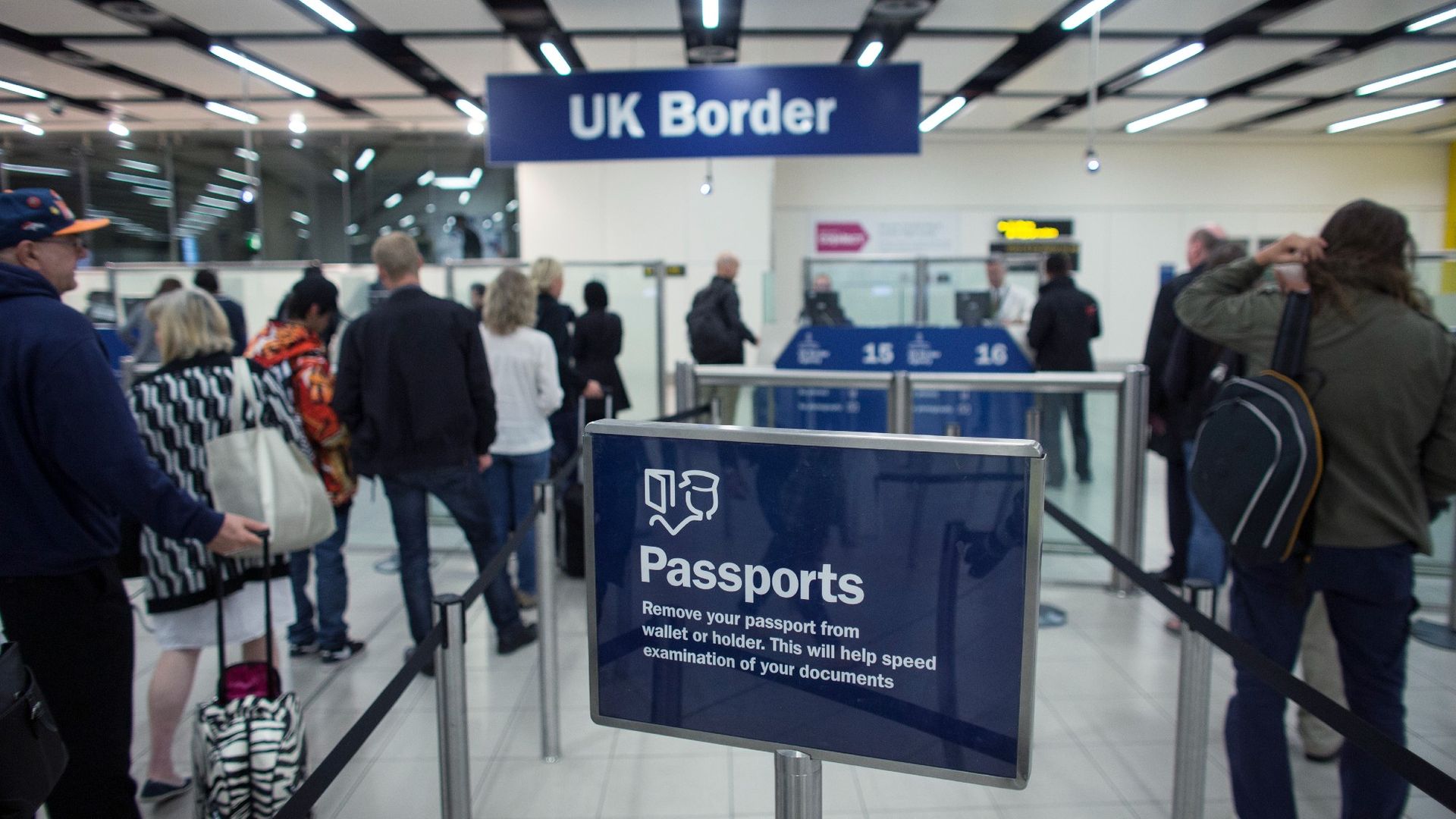
    Why British dual citizens are facing passport problems

    A growing number of expats are considering renouncing their British citizenship over new passport rules that they claim make them “second-class citizens”. The changes have sparked a “backlash from Britons overseas” who could be left “stranded” as a result, said the Daily Mail.

    What is changing?
    Currently, people who are legally a citizen of both the UK and another country are able to travel to and from the UK on either their UK passport or the passport of their second nationality. But under new rules that come into force next Wednesday, dual British citizens entering or leaving the UK will have to prove their right of abode, which exempts them from immigration control, by showing a British passport or obtaining a digital certificate of entitlement to the right of abode, which replaces the paper sticker version currently used in foreign passports. The digital certificate will cost £589.

    Why the change?
    The Home Office says the reforms are part of its bid to modernise the border through a digital system. When passengers do not have either a valid British passport or certificate of entitlement, a spokesperson said, airlines, ferry operators and train companies “cannot verify” that they are British citizens, “which may lead to delays or refused boarding”. 

    The reform is also a response to a data issue: when dual British citizens travel on a foreign passport, carriers currently log them in the same way as other foreign nationals, making it impossible to distinguish them from visa holders. The Home Office hopes the new rule will improve the accuracy of immigration records.

    What has the reaction been?
    Campaigners said that the 1.2 million dual British citizens worldwide will be in a worse position than foreign citizens. Dual nationals trying to enter Britain with non-British passports could be “blocked from boarding flights to Britain or stopped at the border”, said The Times, “putting them at a disadvantage”. The move has also caused confusion among British families living abroad whose children do not have a British passport and could therefore be denied entry to the UK.


    QUOTE OF THE DAY

    “Emotionally, people will never forgive this. Never.”

    Volodymyr Zelenskyy tells Axios that it was “not fair” for Donald Trump to pressure Ukraine to give up the Donbas region as part of a US-brokered peace deal. A second day of talks with Russia in Geneva ended after two hours this morning.


    Poll watch

    Left-wing voters are prepared to get tactical at the next election, YouGov research suggests. A voting intention poll of 4,194 adults found that 57% and 58% of Green and Lib Dem supporters, respectively, would vote for Labour to prevent a Reform victory in their seat. More than three-quarters of Labour supporters said they would back either of the two rival parties to defeat Reform.


    IN THE SPOTLIGHT

    The EU’s war on fast fashion

    While Europe’s love for fast fashion shows no sign of waning, the bloc’s governments seem decidedly less keen on the e-commerce giants. The European Commission has launched an investigation into Shein under its Digital Services Act (DSA) that will assess whether the Chinese-founded company’s safeguards are curbing the sale of illegal items, including content that constitutes “child sexual abuse material”. 

    “In the EU, illegal products are prohibited – whether they are on a store shelf or on an online marketplace,” said EU tech chief Henna Virkkunen in a statement. The commission is also concerned about the “gamification” of the Singapore-based platform and its “addictive” design, a spokesperson told the BBC.

    ‘Swipe at the industry’
    Shein and e-commerce rivals such as Temu have made rapid inroads in Europe, but concern is growing over the environmental impact of fast fashion. In the EU, five million tonnes of clothing are “dumped” every year, according to the European Parliament – equivalent to 12kg per person.

    The EU introduced new rules on textile waste last year that passed the cost of collecting, sorting and recycling textiles to companies. In a “direct swipe at the fast-fashion industry”, said the Financial Times, negotiators agreed that online retailers – including those based outside the EU but selling into the bloc – would be subject to the “same obligations” as bricks-and-mortar businesses.

    Cultural and economic ‘affront’
    France has been “going after” Shein for years, said Nicole Lipman in The Guardian. Authorities have investigated the company for human rights and environmental violations and fined it for “misleading discounts”. They “fear Shein’s impact on the economy and labour markets, but also what the brand stands for: dirt-cheap clothing, at the expense of ethics”. Shein represents a cultural, as well as economic, “affront”.

    If the European Commission now reaches a so-called “non-compliance decision”, said The Associated Press, Shein may be forced to “alter its actions”. Companies can also be fined up to 6% of their annual global revenue for DSA violations. That puts Shein “at risk of $2.2 billion in penalties”, said The Verge.

    “Protecting minors and reducing the risk of harmful content and behaviours are central to how we develop and operate our platform,” Shein said in a statement.


    Good day 💂

    … for London tourists, as the city cracks down on pedicab riders who charge rip-off fares and blast out music. Under Transport for London’s planned rules, drivers and operators will also have to pay for a licence, meet English language requirements, pass a safety test and hold at least a driving theory test certificate.


    Bad day 💸

    … for economic clarity, with uncertainty surrounding not only Labour’s minimum wage rise but also Reform’s stance on state pension increases. The opposition party’s Treasury spokesperson Robert Jenrick told a press conference this morning that he backed the triple lock, but Nigel Farage later insisted the issue was still “open for debate”.


    picture of the day

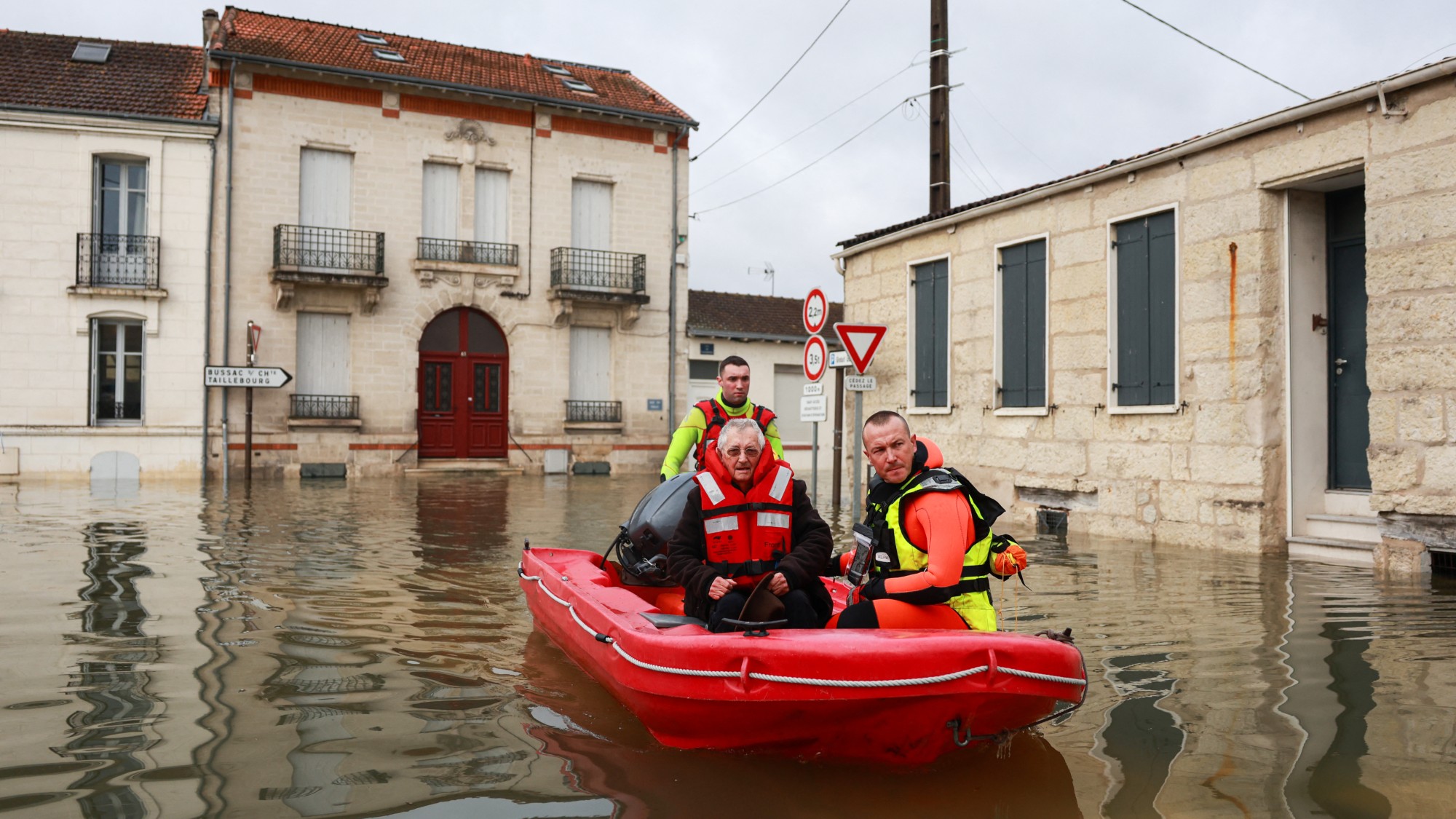
    Burst banks

    Rescuers navigate a flooded street in the French city of Saintes as the Charente River overflows following days of heavy rain. Four departments in western France remain on red alert for flooding as Storm Pedro batters Western Europe.

    Romain Perrocheau / AFP / Getty Images


    Puzzles

    Guess the number

    Try The Week’s new daily number challenge in our puzzles and quizzes section

    Play here


    THE WEEK RECOMMENDS

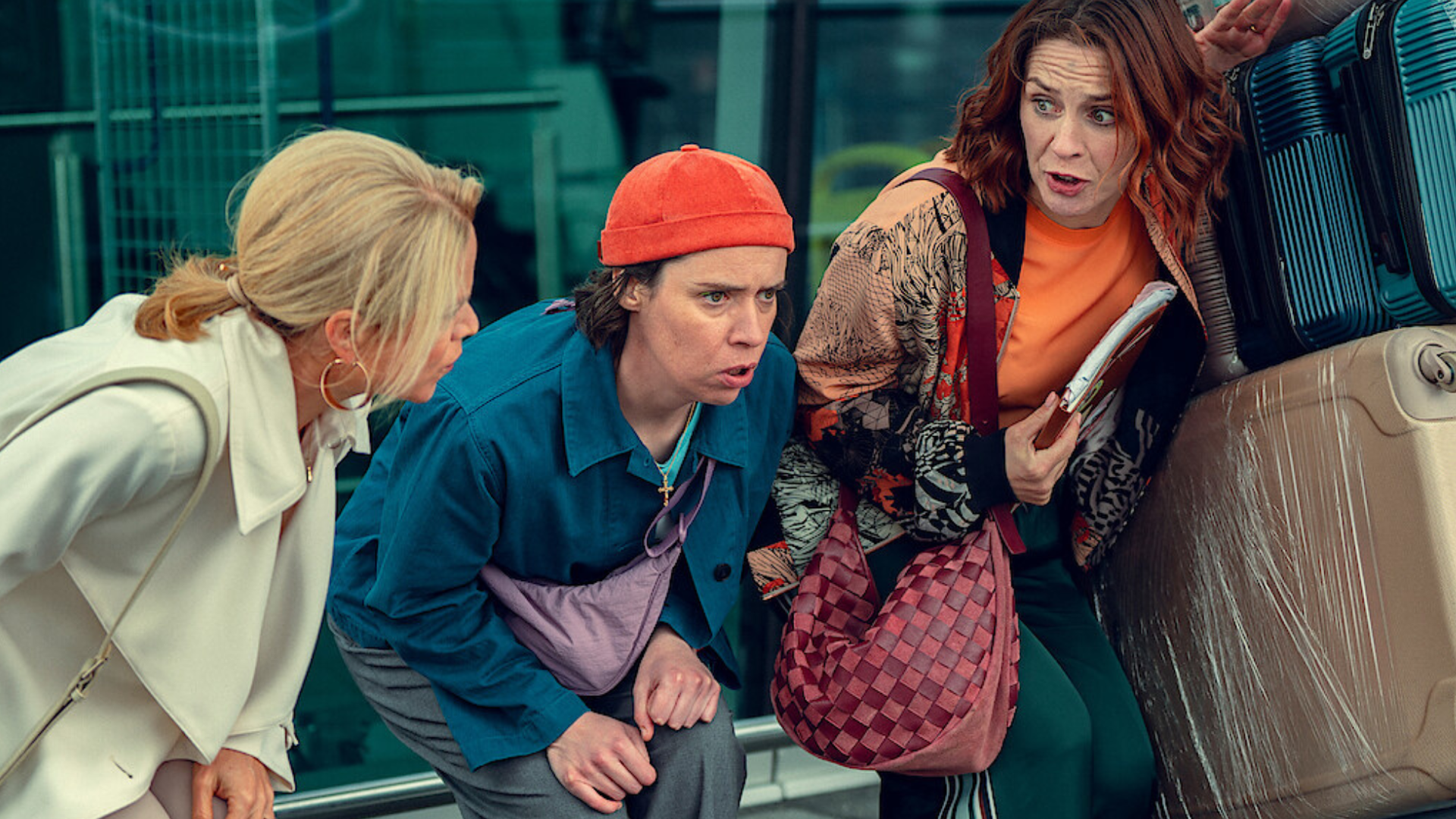
    How to Get to Heaven from Belfast: a ‘proper odyssey’

    “How do you follow a smash hit like ‘Derry Girls’?” said Rebecca Nicholson in the Financial Times. It certainly isn’t easy, but Lisa McGee – creator of the much-loved comedy about school friends growing up during the Troubles – is back with a brand-new show.

    “How to Get to Heaven from Belfast” follows “three old mates from Belfast”: Dara (Caoilfhionn Dunne), Robyn (Sinéad Keenan) and Saoirse (Roisin Gallagher). Now in their 30s, the trio reunite for the funeral of another of their school friends, Greta, who died in an accident.

    The four of them were “involved in something dark” two decades earlier and hadn’t seen Greta since, said Anita Singh in The Telegraph. Episode one ends with a “twist” that’s “so good I could not wait to dive into” the second instalment. A murder mystery with plenty of the “comedic brilliance” of McGee’s earlier work, “this is your new binge-watch”.

    “Derry Girls” fans “won’t be disappointed”, said Laura Hackett in The Times. The “wide range of tones” that the show straddles is initially a “little disconcerting”, but persevere and your patience will be rewarded in “bucketloads”. Plot twists unfold “effortlessly” as the series builds into a “proper odyssey that spans Belfast, Donegal, Dublin, Derry and even Portugal”. And as the “high jinks get wilder”, the tale’s “emotional heart beats stronger too”. Beyond the laughter, this is a sensitive exploration of female friendship and the “devastating ripple effects of trauma”.


    Statistic of the day

    3%: The rate of inflation in January, the lowest level since March 2025. The drop was driven by falling fuel and airfare prices and a slowdown in food inflation and has boosted hopes that the Bank of England will cut interest rates next month.


    instant opinion

    Today’s best commentary

    There is no working-class party
    Anoosh Chakelian in The New Statesman
    Westminster thinks tradespeople are “the totemic working-class” Brits, writes Anoosh Chakelian. That’s why Robert Jenrick campaigns “against tool theft” and Nigel Farage embraces “market trader turned influencer Thomas Skinner”, while Keir Starmer “evokes his toolmaker dad”. But “old class assumptions” are changing, with class now linked to income, not profession. Politicians “are still blinded by the grubby headlights of the white van”, but young people know “working a trade can make you part of the boss class”.

    I'm jealous of my friends making six figures – I'll never catch up
    Zing Tsjeng in The i Paper
    “The green-eyed monster came for me hard” when some friends revealed their salaries, writes Zing Tsjeng. In our 20s, we were “chugging along the same tracks”, but as we hit 30, they “started pulling financially ahead”. They are the “superyachts” to my “leaky paddleboat on the Thames”. I could “get new mates” on the “same socio-economic level”, but I’ve “let go of jealousy” instead. As the saying goes, “to be rich in friends is to be poor in nothing”.

    Why is Greggs trying to sell me a matcha latte?
    Matthew Wilcox in The Spectator
    It’s “the last bastion of brown food in the post-Ottolenghi era”, but even Greggs is now selling matcha lattes, writes Matthew Wilcox. Matcha is “Tiktok slurry” that tastes “like lawn” but is said to be “grounding” and “mindful”. Greggs should be “the antidote to all this”: no one claims a sausage roll can “support cognitive clarity”. But we can’t resist the “wellness snake oil”. Show us a “foreign noun” and a “claim about antioxidants” and we form a queue.


    word of the day

    Doughnutting

    A form of fare evasion in which a passenger buys tickets covering the beginning and end of a journey – but not the middle section, leaving a “hole”. Former HSBC executive Joseph Molloy has been banned from Southwestern Railway after using the scam at least 740 times to dodge £5,911 in fares. Train companies are reportedly testing GPS technology to track passengers’ movements in a bid to prevent doughnutting.


    Evening Review was written and edited by Jamie Timson, Rebecca Messina, Will Barker, Chas Newkey-Burden, Irenie Forshaw, Adrienne Wyper, Helen Brown and Kari Wilkin.

    Image credits, from top: Temilade Adelaja / WPA Pool / Getty Images; Oli Scarff / Getty Images; Firas Abdullah / Anadolu / Getty Images; Romain Perrocheau / AFP / Getty Images; Christopher Barr / Netflix

    Morning Report and Evening Review were named Newsletter of the Year at the Publisher Newsletter Awards 2025
     

    Recent editions

    • Morning Report

      Reform vows to axe Equality Act

    • Evening Review

      How poison became Russia’s weapon of choice

    • Morning Report

      Starmer faces backlash after council election U-turn

    VIEW ALL
    TheWeek
    • About Us
    • Contact Future's experts
    • Terms and Conditions
    • Privacy Policy
    • Cookie Policy
    • Advertise With Us
    • FAQ
    Add as a preferred source on Google

    The Week UK is part of Future plc, an international media group and leading digital publisher. Visit our corporate site.

    © Future Publishing Limited Quay House, The Ambury, Bath BA1 1UA. All rights reserved. England and Wales company registration number 2008885.