The Week The Week
flag of US
US
flag of UK
UK
https://cdn.mos.cms.futurecdn.net/flexiimages/jzblygzdxr1769609154.gif

SUBSCRIBE

Try 6 weeks free

Sign in
  • View Profile
  • Sign out
  • The Explainer
  • Talking Points
  • The Week Recommends
  • Podcasts
  • Newsletters
  • From the Magazine
  • The Week Junior
  • More
    • Politics
    • World News
    • Business
    • Health
    • Science
    • Food & Drink
    • Travel
    • Culture
    • History
    • Personal Finance
    • Puzzles
    • Photos
    • The Blend
    • All Categories
  • Newsletter sign up Newsletter
  • The Week Evening Review
    US-UK relations, family voting, and Easter days out

     
    TODAY’S BIG QUESTION

    Is the UK-US special relationship over?

    Donald Trump appears to be cooling on Keir Starmer after the PM blocked the US from using the Chagos Islands military base to launch last weekend’s strikes on Iran. Although Starmer later approved a separate US request to use RAF bases for “specific and limited defensive” purposes, that didn’t stop the president declaring that he was “very disappointed” in his British counterpart. In a personal jibe, he said: “This is not Winston Churchill that we’re dealing with.”

    The question, said Katy Balls in The Times, is whether this is a “blip with Trump in a fit of pique” or “the latest sign of a more permanent splintering in relations”.

    What did the commentators say?
    Many have previously been surprised by how well Trump and Starmer “appeared to get on”, said Balls. They don’t have much in common but still had “warm exchanges”, and the UK “scored a trade deal before others”. But Starmer’s decision to deny the US request for UK help in Iranian strikes “marks a new, more fractious chapter in the so-called special relationship”.

    Clearly, Starmer is “no longer the Trump whisperer”, said The Independent’s David Maddox. The “killer line” in Trump’s recent interviews was his “almost wistful reflection that the relationship was ‘not what it was’”. Words like “disappointing” suggest “a certain regret”, rather than “his usual bombastic attack style”.

    The relationship has been doomed from the moment the US threatened its Nato allies for “resisting a land-grab” of Greenland, said James Schneider in The New Statesman. And good riddance: it was “never one of equals”. Foreign policy is the “theatre in which the special relationship most reliably produces catastrophe”. Afghanistan, Iraq, Libya, the US-backed Israeli genocide in Gaza and now Iran – America’s actions have “never commanded popular consent” in Britain.

    What next?
    “Reports of the death of the special relationship are greatly exaggerated,” said The i Paper’s Kitty Donaldson. The two nations have “seemed on the brink of breaking off relations” many times, but the “underlying bedrock” of the “intertwined military and intelligence alliance” is unchanged. Trump’s criticism is a “pattern of behaviour”, while his officials “crack on as usual behind the scenes”. 


    THE EXPLAINER

    Family voting: the electoral fraud causing concern

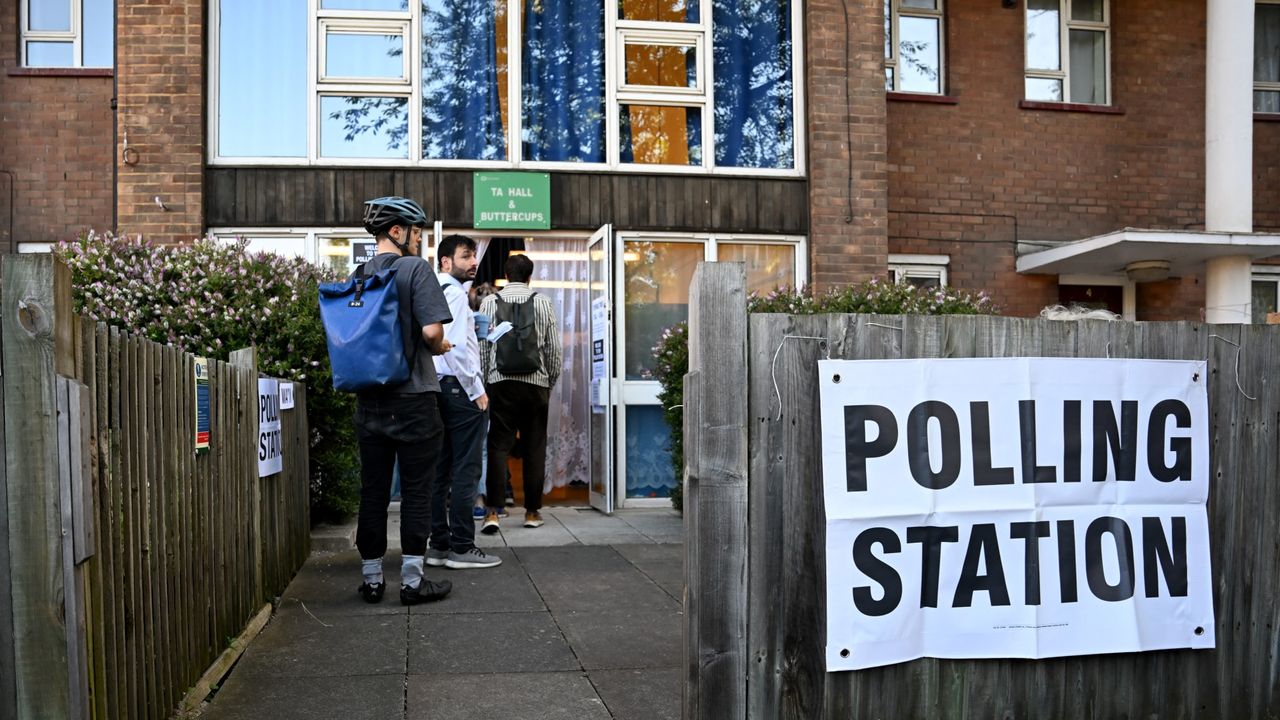
    Nigel Farage has called for police to patrol polling stations on election days to crack down on family voting, following allegations of the illegal practice in the Gorton and Denton by-election. It would be “very easy” to address the issue, the Reform UK leader said. Councils and returning officers in polling stations must enforce “the very specific legislation” banning family voting, with backing from police officers to ensure “the law is being obeyed”.

    Why is family voting so controversial?
    Family voting is when one person fills out or influences the ballot paper for other family members, instead of each voter making an independent choice. The male head of a household is commonly the family member who directs or completes the vote for others.

    Electoral observers consider family voting a violation of democratic standards because it breaks the secret ballot principle, limits individual political freedom and often disproportionately affects women and younger voters. In 2023, the UK passed the Ballot Secrecy Act, which made it an offence for a person to “accompany an elector into a polling booth; or position near an elector inside a polling station with the intention of influencing how they cast their vote”.

    Being “coerced” by a relative to vote in a particular way is “ugly” and “anathema to British values of open democracy and individual liberty”, said Khadija Khan in the Daily Mail. But Farage’s complaints are “all part of a well-practiced strategy of screaming foul whenever he is defeated in a democratic election”, said Byline Times.

    Where does it happen?
    Family voting has been documented by electoral observers in parts of Eastern Europe, Central Asia, the Balkans and some Middle Eastern and African countries.

    Democracy Volunteers, a non-profit group of election observers, said it witnessed 32 incidents of family voting in last week’s Gorton and Denton by-election, in 15 of 22 polling stations that it observed, an “extremely high” number. But the organisation “did not provide any information about the people involved”, said Full Fact. As voters went to the polls, a spokesperson for the acting returning officer in the by-election said that polling station staff were “trained to look out for any evidence of undue influence on voters” but “no such issues have been reported today”.


    QUOTE OF THE DAY

    “Each day has felt like a month.”

    An Iranian describes life in Tehran as the capital city faces heavy air strikes from the US and Israel. “I doubt any of us will ever be the same as before,” the man, whose identity was protected, told the BBC.


    Poll watch

    Gen Z men are more than twice as likely as male Baby Boomers to think wives should always obey their husbands. A survey of 23,000 people across 29 countries by Ipsos and King’s College London found this belief was held by 31% of men born between 1997 and 2012, compared with 13% born between 1946 and 1964.


    IN THE SPOTLIGHT

    The dissolution of Japan’s ‘cult’ Unification Church

    The Tokyo High Court has upheld a decision to dissolve the Unification Church, a controversial religious organisation linked to the assassination of Japan’s former prime minister Shinzo Abe. Tetsuya Yamagami, who was sentenced to life in prison for the murder, cited Abe’s affiliation to the church as his primary motivation.

    Founded in South Korea, the Unification Church has “exerted significant influence in Japan since the 1960s”, said The New Yorker. It was launched by Sun Myung Moon, and followers are referred to as Moonies. They promote a “theological mix of Christian Messianism, Cold War anti-Communism, pro-natalism, and self-adulation”. Around the same time that the church was founded, Moon “befriended” Abe’s grandfather, Nobusuke Kishi, “a war criminal who later served as prime minister” and head of the Liberal Democrats, Abe’s future party.

    Forced compensation
    The church has used “coercive tactics to solicit large donations” from its members, said The Japan Times. A lower court ruled last year that it had “committed acts in violation of laws and regulations that can be recognised as significantly harming the public welfare”. There has been “intense societal focus on the rulings” due to the “scope of harm” the organisation has caused across the country. Under the Religious Corporations Act, the church will be forced to compensate around 1,500 people with “damage fees totalling approximately ¥20.4 billion” (£97 million).

    The church will also lose its title as a religious organisation and can continue only as a “voluntary organisation”, so it will lose tax benefits. Even if it appeals the decision to the Supreme Court, the liquidation process can proceed immediately.

    ‘Exploiting fears’
    The Unification Church has faced global scrutiny since the “shock assassination” of Abe in 2022, said the BBC. Yamagami, who has appealed his sentence for the killing, “held a grudge against the prime minister” over his links to the organisation because it “bankrupted his family”.

    Investigators revealed “close ties with many conservative lawmakers”, and found that the church “coerced” followers into “buying expensive items” by “exploiting fears about their spiritual well-being”. To combat the “universal threat” of “cults” like the Unification Church, said Nippon.com, Japan should “draw on foreign legal frameworks like France’s anti-cult laws”. This is an “ongoing human rights crisis that can no longer be ignored”.


    Good day 🐻

    … for “Paddington The Musical”, which is up for 11 Olivier awards at next month’s ceremony. The West End production, written by Tom Fletcher and Jessica Swale, is the joint most-nominated show at this year’s awards, alongside the revival of Stephen Sondheim’s “Into the Woods”.


    Bad day 🗂️

    … for German efficiency, after Chancellor Friedrich Merz’s warnings that Germany is “asphyxiated” by red tape were confirmed by researchers. A study at leading business school ESMT Berlin found that the volume of federal regulation has almost doubled from 22,068 pages in 2006 to 40,270 today.


    picture of the day

    Fully illuminated

    Moonlight brightens the skies above the High Tatras mountains in Slovakia. The March full Moon is known as the Worm Moon, after the earthworms that start to emerge in spring.

    Grzegorz Momot / EPA / Shutterstock


    Puzzles

    Guess the number

    Try The Week’s new daily number challenge in our puzzles and quizzes section

    Play here


    THE WEEK RECOMMENDS

    Family-friendly Easter days out

    Easter events are in high demand, with popular attractions often selling out well in advance. To help you crack on with planning some fun, here is a range of family-friendly things to do during the upcoming holiday.

    Dragon eggs at Gwrych Castle, Wales
    Young adventurers are invited to Gwrych Castle in north Wales to search for magical dragon eggs. Fancy dress is encouraged and children receive a treat at the end. Grown-up adventurers can also enjoy exploring the enchanting castle ruins, where “I’m a Celebrity... Get Me Out of Here!” was filmed during the pandemic. There are spectacular views over the Irish Sea.

    Animal magic at London Zoo
    London Zoo is hosting a Zoonormous Egg Hunt, with plenty of fascinating animal facts to learn along the way. The zoo is home to more than 8,000 animals and has a variety of walk-through, barrier-free exhibits where visitors can get up close to adorable (and also not so adorable) creatures including lemurs, squirrel monkeys, butterflies and giant spiders. 

    Easter festival in Edinburgh
    Conifox Adventure Park, on the outskirts of Edinburgh, is hosting an Easter Festival where children can meet the Easter Bunny in Hoppity Hollow, colour Easter mugs, find eggs in the maze and take part in an Easter-lympics. The ticket also includes entry to the park.

    White Rabbit tales in Hammersmith, London
    Easter bunnies don’t get much more iconic than the White Rabbit from “Alice in Wonderland”, and now there’s a chance to catch him in London. Riverside Studios is staging a dynamic adaptation of Lewis Carroll’s classic tale, with an original score, impressive stage sets, elaborate costumes and exuberant puppetry.


    Statistic of the day

    £936 million: The amount of government funding returned by dentists in England in the past two years after failing to fulfil their NHS contracts. A BBC analysis of NHS accounts found a “sharp rise” in the amounts being handed back, as dentists increasingly prioritise private patients.


    instant opinion

    Today’s best commentary

    Childless women have become public enemy number one
    Kate Lister in The i Paper
    For “right-wing pundits” and Reform, “older women without kids have become the social scapegoats that single mothers were in the 1990s”, writes sex historian Kate Lister. As such a woman, I find it “almost flattering to be considered such a powerful threat to the patriarchy”. But “pronatalist rhetoric” is “lazy, misogynistic claptrap”. It’s just “far easier to blame childless women than to look at the wider social, economic, and political factors” behind decisions not to have children. 

    Gadgets turning vintage make me realise I’m old
    George Chesterton in The Telegraph
    Young people’s fetishisation of iPods leaves me “in a bit of a spin”, writes George Chesterton. “Am I really so old that a device first on sale in 2001 is considered vintage?” What “seemed so revolutionary at the time” is now valued for “its unconnected simplicity”, as a gadget “‘only’ for music”, with no “maddening social media notifications”. That “my past is the equivalent of an emotional support dog” for “anxious Gen Z cultural butterflies” is “hard to take”.

    Football’s converging moral panics hold up a mirror to our fractured world
    Jonathan Liew in The Guardian
    “Football used to be our refuge,” writes Jonathan Liew. Now it “reflects” the “insanity” of our world “right back at us”. Players are booed “for being Muslim”, the “Champions League format is the six-seven meme”, “VAR is like trying to get hold of your bank at weekends”, and one of the World Cup participants is being bombed “by one of the hosts”. But I’ll “put up with the bad bits because the high is still like nothing else on Earth”.


    word of the day

    Cha-cha-cha

    The Cuban quick-step has got Westminster critics in a spin, after “Strictly Come Dancing” stars stepped out in Parliament with Speaker Lindsay Hoyle and a troupe of MPs yesterday to promote a public health campaign. The “optics” of MPs doing the cha-cha-cha while the “world teeters on the brink of World War Three is completely inappropriate”, former Labour MP Zarah Sultana said on X.


    Evening Review was written and edited by Hollie Clemence, Jamie Timson, Harriet Marsden, Chas Newkey-Burden, Will Barker, Alexandra Zagalsky, David Edwards, Helen Brown and Kari Wilkin, with illustrations from Stephen Kelly and Julia Wytrazek.

    Image credits, from top: illustration by Stephen Kelly / Getty Images; Paul Ellis / AFP via Getty Images; illustration by Julia Wytrazek / Getty Images; Grzegorz Momot / EPA / Shutterstock; Zoological Society of London ZSL

    Morning Report and Evening Review were named Newsletter of the Year at the Publisher Newsletter Awards 2025
     

    Recent editions

    • Morning Report

      Kurdish fighters ‘preparing to enter Iran’

    • Evening Review

      After the ayatollahs

    • Morning Report

      Trump says US Navy could escort Hormuz tankers

    VIEW ALL
    TheWeek
    • About Us
    • Contact Future's experts
    • Terms and Conditions
    • Privacy Policy
    • Cookie Policy
    • Advertise With Us
    • FAQ
    Add as a preferred source on Google

    The Week UK is part of Future plc, an international media group and leading digital publisher. Visit our corporate site.

    © Future Publishing Limited Quay House, The Ambury, Bath BA1 1UA. All rights reserved. England and Wales company registration number 2008885.