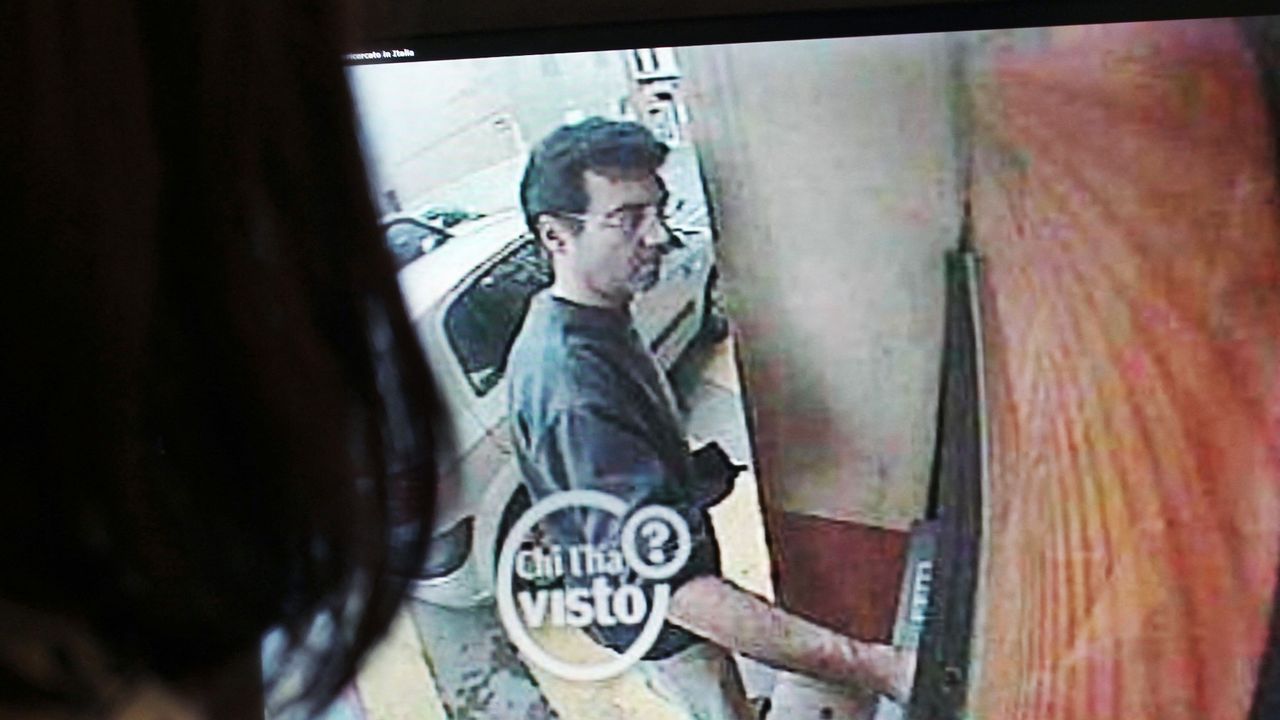
West Texas isn’t an obvious hiding place for a French aristocrat who disappeared 15 years ago after his family were found murdered. But the Sheriff’s Office of Brewster County last week posted a request for information about Xavier Dupont de Ligonnès, following a tip-off from an investigative news team that he had been seen in the south of the region in 2020, accompanied by a black Labrador.
Ligonnès (pictured above in 2011) “had previously travelled to Brewster County and reportedly claimed it was one of his favourite places”, the sheriff said on the office’s Facebook page. The post was “enough to stir a frenzy” among French “amateur sleuths and crime fans”, said The Times. Their “favourite mystery” echoes the enduring controversy around the UK’s “elusive Lord Lucan”.
Last confirmed sighting
Ligonnès was 50 when the bodies of his wife, Agnès, and his children – Arthur, 20, Thomas, 18, Anne, 16, and Benoît, 13 – were discovered under the patio at their home in Nantes in April 2011. They had all been shot, wrapped in sheets, covered in quicklime and buried, along with the two family dogs. The last confirmed sighting of Ligonnès was two weeks after the bodies were discovered, at a motel near Saint-Tropez. His car was later found abandoned in the car park.
Initial investigations revealed that, in the days before the killings, Ligonnès had bought cement, digging tools and four bags of lime in various locations in the Nantes area. He also owned a .22 rifle similar to the one used in the killings, and had recently bought ammunition and gone to practise at a local shooting club.
False leads
Ligonnès, who had an aristocratic lineage, was a “failed businessman”, said The Times. He “lived a fantasy life in which he claimed he was, among other things, a US intelligence agent”. But by the time of his disappearance, he had accrued significant debts and was struggling to maintain his family’s outwardly comfortable lifestyle.
Reports subsequently emerged that Ligonnès had written to friends up to a year before the killings, warning that he was contemplating “suicide, alone or collective” and “shooting up the house while everyone is sleeping”. In the months and years since, hundreds of sightings of Ligonnès have been reported to police, but all have so far proved to be false leads.
|