The Week The Week
flag of US
US
flag of UK
UK
https://cdn.mos.cms.futurecdn.net/flexiimages/jzblygzdxr1769609154.gif

SUBSCRIBE

Try 6 weeks free

Sign in
  • View Profile
  • Sign out
  • The Explainer
  • Talking Points
  • The Week Recommends
  • Podcasts
  • Newsletters
  • From the Magazine
  • The Week Junior
  • More
    • Politics
    • World News
    • Business
    • Health
    • Science
    • Food & Drink
    • Travel
    • Culture
    • History
    • Personal Finance
    • Puzzles
    • Photos
    • The Blend
    • All Categories
  • Newsletter sign up Newsletter
  • The Week Evening Review
    Pope vs. Trump, Poland’s economy, and NHS satisfaction

     
    TODAY’S BIG QUESTION

    Can the Pope change the course of the Iran war?

    Pope Leo XIV has said God ignores the prayers of those who wage war and have “hands full of blood”, in what appears to be a clear rebuke of Donald Trump’s administration. Leo is “known for choosing his words carefully”; he “did not specifically name any world leaders” but he has “been ramping up criticism of the Iran war in recent weeks”, said The Independent.

    What did the commentators say?
    “The papacy has always been political,” said Pete Reynolds in The Wall Street Journal. As the first American leader of the world’s 1.4 billion Catholics, Leo “brings a deeper understanding” of US society and politics than any previous pope, so “his critiques” can’t be as easily dismissed by US politicians. But he will also be well aware that “millions of American Catholics voted for Trump”.

    Until now, Leo was delicately “navigating a minefield” with the Trump administration, said The Washington Post. Pitched by the Vatican “as a unifier and bridge builder”, he was striving to remain “above the fray”, while his allies in the Holy See, and cardinals and bishops in the US, could challenge “more directly”.

    The problem is, said George W. Bush’s former speechwriter, William McGurn, in The Wall Street Journal, that “the kind of rightly ordered world” Leo “desires can’t be built by armies alone – but can almost never be built without armies and without the threat of force.” Traditional Catholic teachings, “grounded in the reality of man’s fallen human nature”, have been traded by successive popes for “functional pacificism” that “risks being dismissed even by sympathisers”.

    What next?
    A “major rift” has opened up in the Christian coalition that elected Trump, said the National Catholic Reporter. “Traditionalist Catholics and evangelicals” are split over the Iran war and, more broadly, “over the role Israel plays in US foreign policy”.

    Leo’s most recent comments could be “a moment of reckoning for Catholics caught up in Maga”, Austen Ivereigh, a biographer of Pope Francis, told the paper. How do they “reconcile obedience to church authority with support for Trump”?


    THE EXPLAINER

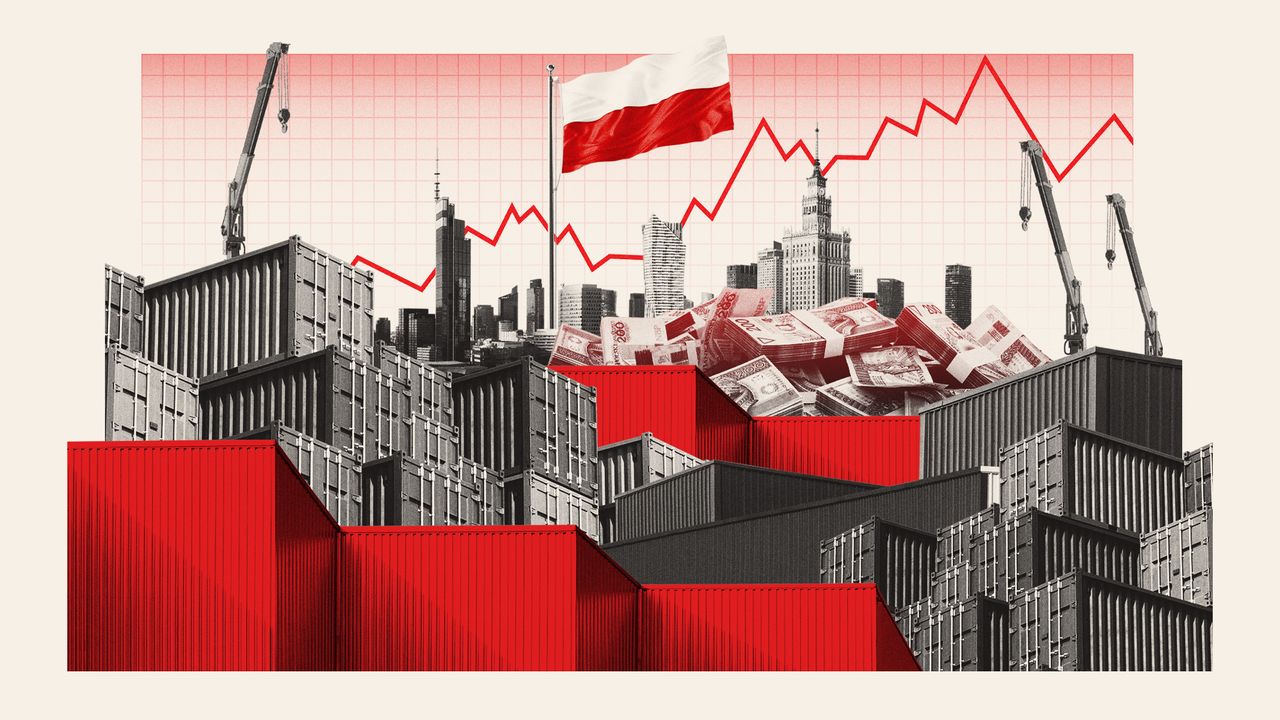
    How Poland has become a top 20 global economy

    When the Communist regime collapsed in 1989, Poland’s economy was considered one of the most dire in Europe. Fast forward to 2026, and the country has the 20th largest economy in the world. So how did Poland become Europe’s new economic gem?

    How strong is the Polish economy?
    Poland’s economic output crossed the $1 trillion threshold for the first time in 2025, when its gross domestic product increased 3.6% year-on-year, according to data released by the country’s statistics agency earlier this month. That enabled it to leapfrog Switzerland and enter the world’s top 20 economies for the first time.

    This is a far cry from the early to mid-1990s, when Poland “rationed sugar and flour, while its citizens were paid one-tenth of what West Germans earned”, said The Associated Press.

    What’s behind its success?
    One of the most important factors was “rapidly building a strong institutional framework for business”, economist Marcin Piatkowski of Poland’s Kozminski University told the AP. The creation of anti-monopoly agencies and regulatory bodies ensured that Poland’s economy “wasn’t hijacked by corrupt practices and oligarchs, as happened elsewhere in the post-Communist world”.

    In more recent years, EU funding has “helped modernise Polish industry and expand an increasingly digitalised services sector”, said The Wall Street Journal. Above all, Polish business leaders “take opportunities when they see them”, Dominik Kopiński, a senior adviser at the Polish Economic Institute, told Deutsche Welle. “They are trailblazing for other companies, setting an example.”

    Will it last?
    As with much of the developed world, demographics are not in Poland’s favour: it has a low birth rate and an ageing society, said the AP. Wages are also “lower than the EU average” and, “while small and medium enterprises flourish, few have become global brands”.

    The country “must also contend with rising public debt”, said The Wall Street Journal. Poland’s budget deficit of 6.8% is “significantly higher than the 3% benchmark for EU member states”. If Poland wants to continue climbing the economic ladder, its government will “need to rein in spending and raise taxes” over the coming years.


    QUOTE OF THE DAY

    “Towns like Bolton have been absolutely shat on.”

    Green MP Hannah Spencer tells The Guardian that her hometown is among those paying the price for “a decade and a half of austerity”. But “this is fixable”, said the former plumber, who swept to victory in last month’s Gorton and Denton by-election.


    Poll watch

    Nearly three-quarters of Brits (72%) would support a tax on foreign visitors to the UK to help finance the nation’s museums and keep them free to enter, according to a survey for the Art Fund. Two in five respondents said they visit a national museum at least once a year.


    TALKING POINT

    NHS satisfaction: on the road to recovery?

    Public satisfaction with the NHS has increased for the first time since 2019. But although 26% of British adults questioned in the British Social Attitudes survey said they were satisfied with the health service – an increase of 6% from 2024 – there was still a majority, some 51%, who said they were dissatisfied. That “sounds more like a cause for concern than celebration”, said The Guardian’s editorial board.

    ‘Justified impatience’
    “The public appears inclined to accept the government’s narrative of a broken system being painstakingly put back together” but hospital waiting lists are “still huge”, NHS dentistry has “probably never been in a weaker state” and there’s “justified impatience” on lagging social care provision, said The Guardian. So “having pronounced the NHS ‘broken’”, Wes Streeting and his Department of Health and Social Care colleagues must “hurry up with their repairs”.

    Still, the survey results, published by The King’s Fund think tank, suggest the health service is “finally on the long road to recovery”, said The Mirror. This “gold standard assessment” finds that this Labour government’s first full year in power “saw the greatest fall in dissatisfaction” in the NHS since “New Labour’s first full year in power in 1998”.

    Skills shortage
    “Debate” about the NHS “typically focuses on funding, waiting lists and plans for reform”, said Chris Day, chair of the Russell Group, in The Times. But the system’s “most fundamental constraint” is that it “does not have enough skilled people”. There are more than 100,000 vacancies across the “health ecosystem”, and demand “is rising faster” than ever, due to “an ageing population, rising chronic illness and growing expectations”. The “real solution” is to increase “training capacity” and support a “range of alternative career paths into healthcare”.

    The health service is “central” to Labour’s “tenuous hopes of political recovery”, said Chris Smyth in the Financial Times; if Labour can’t convince voters it’s “fixing the NHS”, it “will have little else to offer”. But if it can “demonstrate tangible improvement”, it will have a “powerful argument” against Reform’s Nigel Farage, who has “repeatedly questioned whether the NHS funding model can survive”.


    Good day ⛪

    … for Jerusalem’s Catholics, as their spiritual leader was granted access to the Church of the Holy Sepulchre following a global outcry when Israeli police blocked his entry. Cardinal Pierbattista Pizzaballa had been told that Palm Sunday Mass couldn’t be celebrated at the church – believed to be built on the site of Christ’s crucifixion – owing to wartime measures locking down Jerusalem’s religious buildings.


    Bad day 🚨

    … crime-busting, as an investigation by The Sun reveals that 92% of burglaries reported in England and Wales in 2025 went unsolved. In 1,528 of 4,536 police neighbourhoods, not a single reported burglary led to a conviction. The vast majority of investigations (77%) ended with no suspect being identified.


    PICTURE OF THE DAY

    Sweet success

    Students in Patna, capital of the Indian state of Bihar, celebrate with traditional ladoo sweets after getting their Class 10 exam results, equivalent to GCSEs. Bihar is the first state to release the results of the nationwide exams, which finished earlier this month.

    Santosh Kumar / Hindustan Times / Getty Images


    Puzzles

    Guess the number

    Try The Week’s daily number challenge in our puzzles and quizzes section

    Play here


    THE WEEK RECOMMENDS

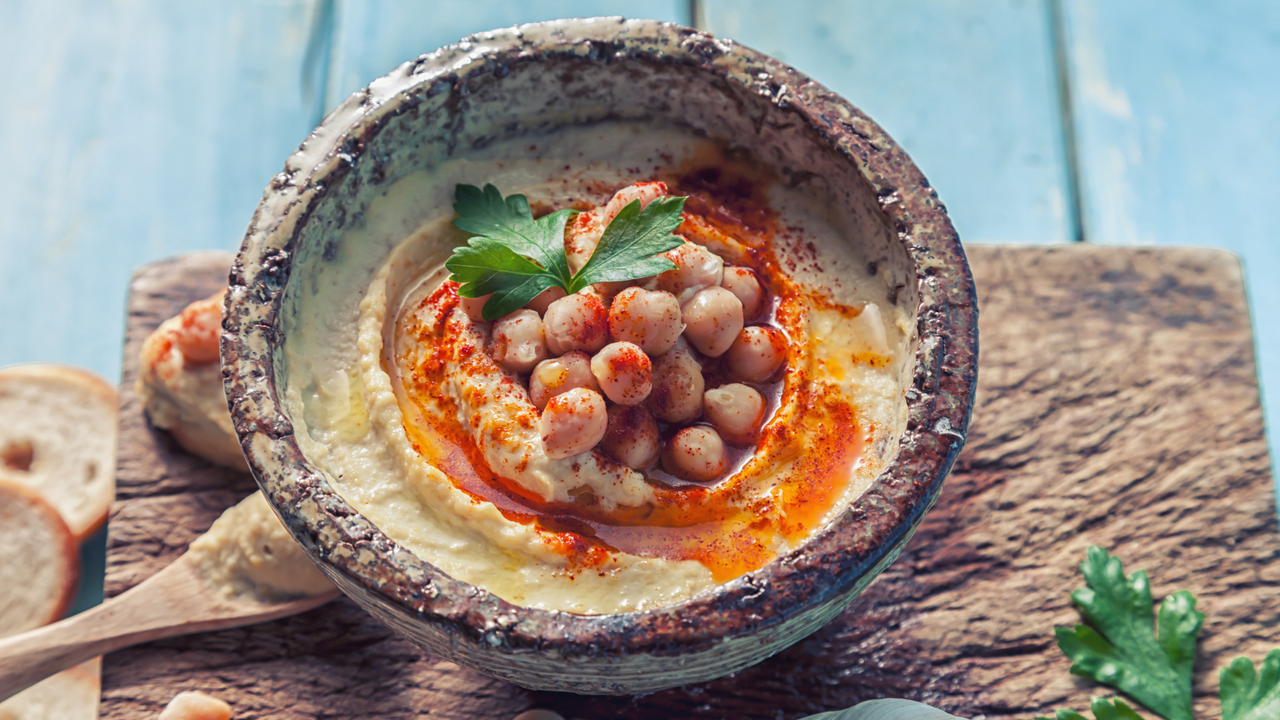
    Hummus: officially part of ‘the national diet’

    Britain is a “dip-obsessed” nation, said The Guardian, and hummus is at the top of the list. The chickpea-based Middle Eastern dip first hit UK supermarket shelves in Waitrose in 1987 and has since become a “staple” of shopping baskets across the nation.

    Social media has added fuel to the hummus craze in recent years, thanks to TikTok’s “obsession with #grazingboards and #girldinners” while, offline, bread and dips have become a “culinary calling card” at restaurants. In a sign of its “importance in the national diet”, said The Times, hummus was recently added to “that ultimate consumer accolade”: the Office for National Statistics’ virtual shopping basket of popular goods used to measure the cost of living in Britain.

    With so many varieties to choose from, picking a pot of supermarket hummus can be a “minefield”, said Tomé Morrissy-Swan in The i Paper. Stand-out options include Waitrose’s No. 1 Extra Virgin Olive Oil Houmous, which has a “smooth, mousse-y” texture with a “strong but not bitter” tahini taste, and Sainsbury’s Organic Classic Houmous, which isn’t as smooth but has a “very strong, pleasing tahini flavour”. 

    For those keen to avoid the “long list of unnecessary ingredients” sometimes found in store-bought tubs, it is fairly straightforward to make hummus at home, said Phoebe Cornish in the Daily Express. And if you’re looking to “forgo additives, preservatives, and added sugar”, Jamie Oliver’s 10-minute, five-ingredient recipe is a great place to start.


    Statistic of the day

    1,028: The number of referrals for body dysmorphia in 2024-25, according to latest NHS England data. The referral rate has almost quadrupled from 266 in 2021-22, when the health service first began tracking body dysmorphic disorder. Officials have attributed the increase to “hyper-unrealistic body expectations” on social media.


    instant opinion

    Today’s best commentary

    The US-Israeli war on humanity
    Yara Hawari on Al Jazeera
    “Brute force” is being used to impose a “might makes right” world order, writes Yara Hawari of the Palestinian Policy Network think tank. And Gaza is at “the epicentre”. Donald Trump clearly wants to expand his Board of Peace to replace the UN with “a structure answerable solely to Washington”, in a “global project” that has already spread to Venezuela, Cuba and Iran. “What started in Gaza is continuing elsewhere” as “the genocidal US-Israeli war machine” assaults “humanity itself”.

    Alan Bennett has gone from national treasure to insufferable snob
    Michael Henderson in The Telegraph
    Alan Bennett “bats high in the order” of grumps who rail against the world, writes Michael Henderson. “He’s always been witty. Occasionally he’s wise.” But “a dispiriting sourness has crept into” his latest collection of diaries. “Cosy Alan now approves” of those who “declare ‘I can’t say I love my country because I don’t know what that means’”. He’s spent much of his 91 years “writing about a country he appears to distrust, and many of its people, who he clearly despises”.

    Forget birdwatching, I’m into moth-watching: they’re fascinating and misunderstood insects
    Helen Pilcher in The Guardian
    “I’ve been hooked on moths” since childhood, writes Helen Pilcher. There are about 2,500 species, often distinguished only by “the curve of a forewing”. They pollinate plants and can have colours that “make Elton John’s stage outfits look tame”. They are also “endlessly surprising”, like the tiger moth that emits “ultrasonic clicks to jam their bat nemeses’ sonar”, and the death’s head hawkmoth that “mimics the scent of bees so it can raid honey from their hives”.


    word of the day

    Jeepney

    Small buses used for public transport in the Philippines, originally made from US military Jeeps left behind after the Second World War. Following recent strikes by transport workers hit by rising fuel costs, Manila’s city government is to subsidise more than 1,400 jeepneys to support the sector and allow commuters to ride for free.


    Evening Review was written and edited by Rebecca Messina, Elliott Goat, Justin Klawans, Chas Newkey-Burden, Deeya Sonalkar, Irenie Forshaw, Helen Brown, David Edwards, and Kari Wilkin, with illustration from Stephen Kelly.

    Image credits, from top: illustration by Stephen Kelly / Getty Images; illustration by Stephen Kelly / Getty Images; iStock / Getty Images Plus; Santosh Kumar / Hindustan Times / Getty Images; Stock Photos / Getty Images

    Morning Report and Evening Review were named Newsletter of the Year at the Publisher Newsletter Awards 2025
     

    Recent editions

    • Morning Report

      Iran threatens to ‘rain fire’ on US ground troops

    • Sunday Shortlist

      A ‘glorious revival’ of a classic tragi-comedy

    • Saturday Wrap

      Meningitis: was the response too slow?

    VIEW ALL
    TheWeek
    • About Us
    • Contact Future's experts
    • Terms and Conditions
    • Privacy Policy
    • Cookie Policy
    • Advertise With Us
    • FAQ
    Add as a preferred source on Google Add as a preferred source on Google

    The Week UK is part of Future plc, an international media group and leading digital publisher. Visit our corporate site.

    © Future Publishing Limited Quay House, The Ambury, Bath BA1 1UA. All rights reserved. England and Wales company registration number 2008885.