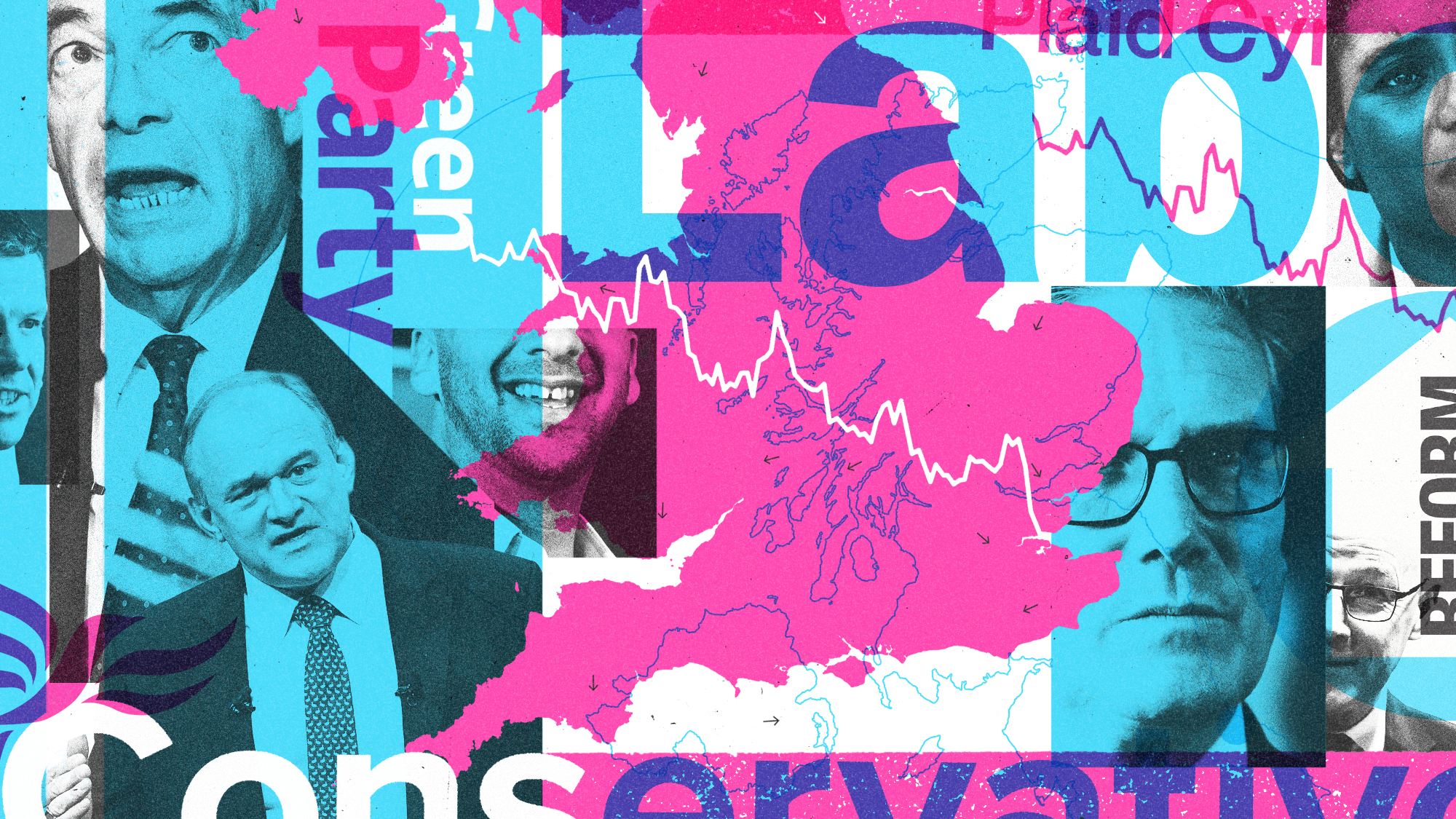
For more than a century, British politics has been a contest between two parties. That could end with Thursday’s local and devolved elections.
Reform UK is currently leading on 25%, according to Politico’s poll of polls on 30 April, which has the Conservatives and Greens tied on 18%, and Labour on 17%. The Liberal Democrats are just a few points behind. In Scotland, the Scottish National Party is hoping to secure an overall majority in Holyrood, while Plaid Cymru is on course to lead the devolved government in Wales.
“We are living in unprecedented circumstances,” the UK’s leading polling expert, John Curtice, told The Times. “The basic assumptions of British politics – there isn’t enough space for a party to the right of the Tories or the left of Labour – have gone.”
What did the commentators say?
The fracturing of the electorate was already evident at the last general election but has been turbo-charged over the past two years as “binary tribalism has been replaced by retail politics”, said The Times. Voters are “more promiscuous in their favours”, and following a decade and a half of stagnant living standards, “they are prepared to take a punt on insurgent parties without kicking the tyres”.
A “nation that has long prided itself on moderation and stability” is now experiencing an “anti-establishment revolt of the sort that has gripped countries from the US and Argentina to Germany”, said Irina Anghel at Bloomberg. Reform and the Greens look set to pick up hundreds of former Labour and Conservative seats, in a “power shift” that would “reinforce insurgents’ local networks and party organisations across the country, helping to forestall any restoration of the two-party system by the next general election”.
“It’s the Dutch-ification of British politics,” said Simon Hix, a politics professor at the European University Institute. “Everyone used to make fun of the Netherlands, where 17 parties get elected to parliament, but this trend is happening everywhere in the world.”
What next?
Although more choice is positive, said the Financial Times, electoral fragmentation “brings governability into question”. Voters are “largely moving from one left-leaning party to another, or from one right-leaning party to another, but coalitions of left and right can be hard to build”. Britain’s first-past-the-post system also “creates particular problems of democratic legitimacy”. As voting fragments, candidates are elected with an ever-smaller share of votes cast. |