The Week The Week
flag of US
US
flag of UK
UK
https://cdn.mos.cms.futurecdn.net/flexiimages/jzblygzdxr1769609154.gif

SUBSCRIBE

Try 6 weeks free

Sign in
  • View Profile
  • Sign out
  • The Explainer
  • Talking Points
  • The Week Recommends
  • Podcasts
  • Newsletters
  • From the Magazine
  • The Week Junior
  • More
    • Politics
    • World News
    • Business
    • Health
    • Science
    • Food & Drink
    • Travel
    • Culture
    • History
    • Personal Finance
    • Puzzles
    • Photos
    • The Blend
    • All Categories
  • Newsletter sign up Newsletter
  • The Week Evening Review
    The legislative agenda, Manchesterism, and an ‘electronic warfare arms race’

     
    THE EXPLAINER

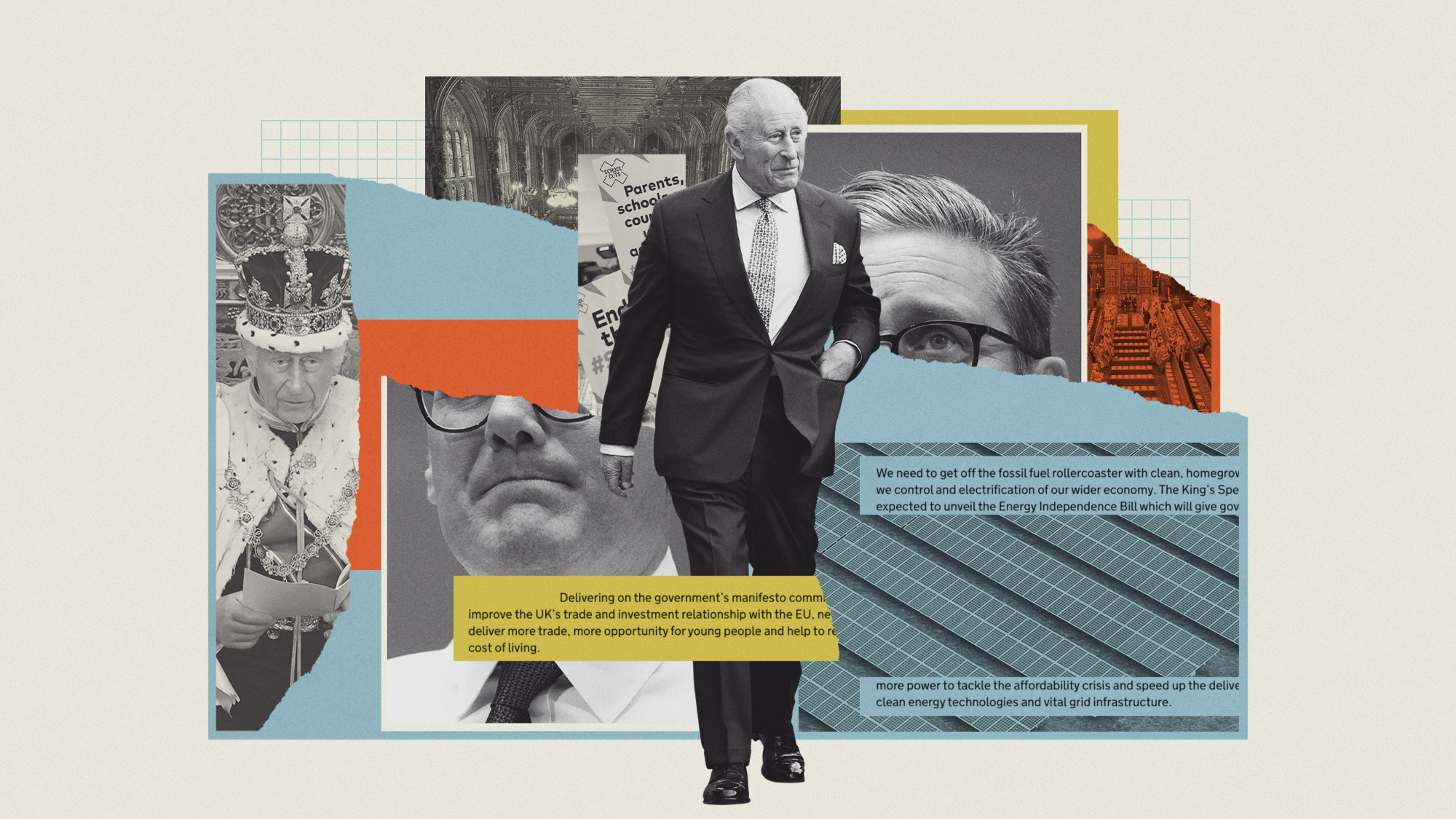
    The King’s Speech: what was announced

    King Charles has laid out the government’s legislative agenda for the next year, even as speculation mounts that Keir Starmer will not be around to lead it.

    Buckingham Palace had taken the extraordinary step of privately asking Downing Street if the ceremonial State Opening of Parliament should proceed, given the political crisis engulfing the prime minister.

    What was announced?
    The King announced a package of 37 bills for the 2026-27 parliamentary session. They include a bill to lay the ground to adopt European regulations and another to allow the government to fully nationalise British Steel. A Clean Water Bill will seek to merge the functions of the existing regulators, including Ofwat, and measures are also planned to streamline the process for approving new nuclear energy projects. The long-awaited Commonhold and Leasehold Reform Bill will end the leasehold flat system in England and Wales and cap annual ground rents.

    The King also set out plans for a voluntary digital ID scheme, an overhaul of special educational needs provision in England, a tightening of the asylum system, a scaling-back of jury trials, and restrictions on foreign political donations. Other legislation seeks to enable peerages to be removed, and the voting age could be lowered to 16.

    What was missing?
    There was no second attempt to reform the welfare system. The first try, which included eligibility restrictions for some health-related benefits, resulted in a backbench revolt and an embarrassing U-turn by the government last year. Also absent was any legislation about the Chagos Islands or any move to resurrect the assisted dying bill that failed to become law in the last parliamentary session.

    What if Starmer goes?
    The legislation crafted by Starmer and set out today “is already in danger of being overtaken by events, as many Labour MPs attempt to force the prime minister from office”, said the Financial Times. The King faced the “unusual and awkward position of putting forward an agenda” that could be “left potentially obsolete by political turmoil”.

    No one expects the King’s Speech to be voted down – that would effectively be a vote of no confidence in the government. But were the PM to resign or be forced out, the legislative programme of a new leader could diverge significantly from the one announced today.


    TODAY’S BIG QUESTION

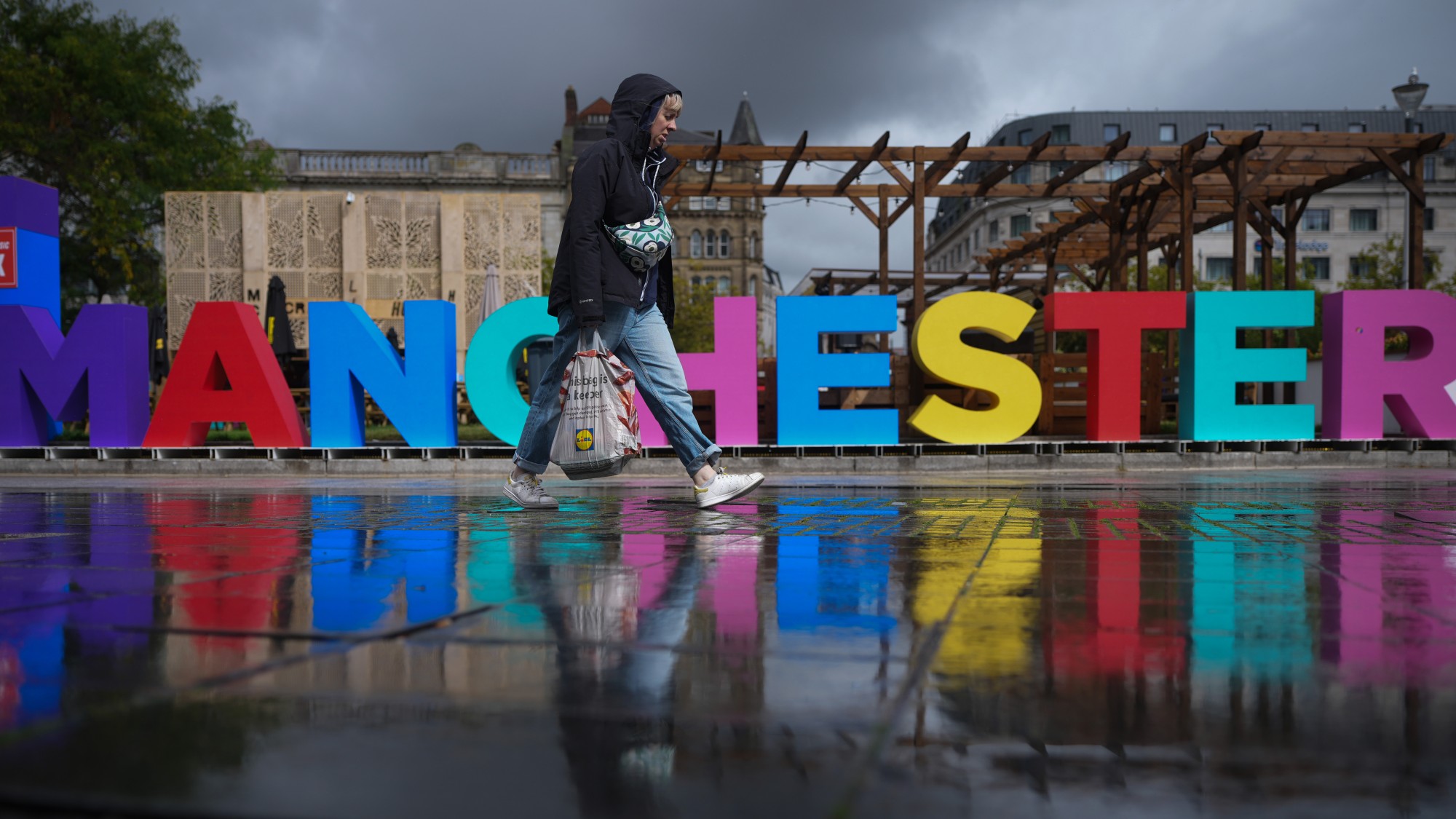
    Is Manchesterism really the cure for Britain’s ills?

    Andy Burnham’s vision for the country’s future – Manchesterism – remains highly divisive. Critics dismiss it as “mostly vibes and boosterism” that “relies on a bottom-up localism” difficult to scale at a national level, said PoliticsHome. Others applaud it as our potential economic and political saviour.

    What did the commentators say?
    Burnham’s programme has begun “delivering affordability and economic dynamism” by “regaining public control” of essential services, said Mathew Lawrence, director of progressive think tank Common Wealth, in The New Statesman. Manchesterism is a “horrifically overused phrase” about how my city “does things differently”, said Stephen Topping in the Manchester Evening News. But it’s true. Manchesterism is “‘place-based’ rather than party political”. It involves “public services working closer together, and in partnership with both the private sector and community groups, to ensure the benefits of a stronger economy can be felt by more people”.

    The Greater Manchester region has become the UK’s fastest-growing economy over the past decade, “at more than double the rate of the national average”. Devolution has been critical: the “trailblazer” deal struck in 2023 has allowed Greater Manchester to “take public control of key services” such as the bus network, which has improved living standards and boosted the local economy. Those who have worked closely with Burnham believe Manchesterism “could work in other parts of the UK”, though it would pose “a radical departure from the UK’s largely centralised economy”.

    Manchesterism may be the “buzzword of the day”, said Daniel Johnson in The Telegraph, but it’s simply people projecting their “pipe dreams” onto Burnham’s “blank canvas of soft-left localism”. “The irony is that 19th-century Manchesterism was more or less the opposite of what the Labour Party now thinks it means.” Manchester was “both the laboratory and the showcase of the Industrial Revolution”, the “citadel of free trade”. It had nothing to do with Burnham’s “municipal socialism”.

    What next?
    Sources say Burnham is planning to endorse a pamphlet outlining a framework for Manchesterism and how it could be rolled out across the UK.


    QUOTE OF THE DAY

    “Lots done, lots to do.”

    Wes Streeting posts on X amid reports that he plans to resign and launch a Labour leadership challenge as soon as tomorrow. Remaining schtum about the claims, the health secretary instead hailed the party’s record on improving the health service. 


    Poll watch

    Nearly two-thirds (62%) of Brits would support a ban on smoking in pub gardens. A YouGov survey of 13,259 adults for the charity Action on Smoking and Health also revealed widespread support for extending smoke-free laws to playgrounds (93%), bus stops (78%) and university campuses (68%). 


    IN THE SPOTLIGHT

    How GPS jamming is playing havoc in the Middle East

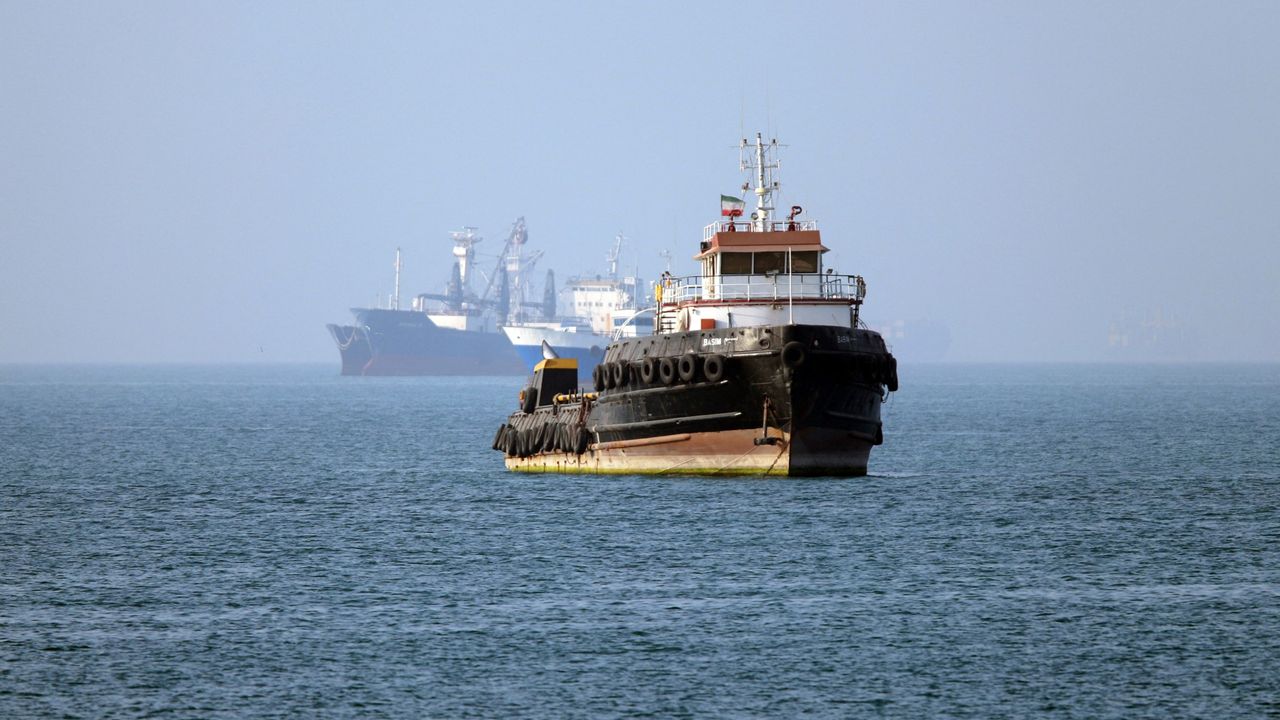
    GPS jamming across the Middle East has exploded since the US and Israel began their war against Iran in February, “plunging both sides into an ‘electronic warfare arms race’”, said The Independent. “Underlying the dramatic clashes across the region”, forces on all sides are “quietly fighting an invisible war by land, air and sea, distorting tracking information to sow chaos or hide in plain sight”.

    ‘Major issue’
    Jamming is essentially disrupting signals from global navigation satellite systems with electromagnetic noise. “Spoofing” is more sophisticated and involves transmitting fake signals to provide a false location. Both are used to distort drone and missile guidance systems. Interference “isn’t a new phenomenon”, said CNN. It has been used in modern warfare since the Second World War. But it has become “a major issue” for shipping and aircraft since the Russian invasion of Ukraine in 2022.

    While all sides engage in such disruption, Iran is particularly “prolific” in spoofing, said Philip Ingram, an intelligence expert and former British Army colonel. Tehran uses it to “add confusion and disrupt any of the allied intelligence gathering”.

    Strait has ‘gone dark’
    The problem with GPS jamming is that it cannot be contained within precise geographic boundaries and does not discriminate between military and commercial systems. On the first day of the war alone, electronic interference disrupted the navigation systems of more than 1,100 commercial ships in UAE, Qatari, Omani and Iranian waters, according to a Windward report cited by Inside GNSS.

    “The missiles and drones make for good headlines, but they’re a distraction,” said global financier Erik Bethel and maritime trade expert Ami Daniel in Fortune. The “real story” is that the Strait of Hormuz, through which a fifth of the world’s oil and gas passes, has “gone dark”. This is “not in some poetic sense, but literally”.

    Various technologies offer protection against GPS jamming, and military-grade GPS is more resistant, but the race is on to find a more secure alternative. Global navigation satellite systems are “a wonder of the modern world”, but “the luxurious era of those signals not being messed about with intentionally is over”, said Ramsey Faragher, chief executive of the Royal Institute of Navigation in London. “We need to rapidly catch up.”


    Good day 💊

    … for post-jab weight maintenance, which may be as simple as popping a pill, according to a study in the journal Natural Medicine. Trials involving 376 people coming off GLP-1 injections found that those who took orforglipron, a tablet already available in the US, every day for a year kept almost 75% of their lost weight off, compared with 49% for those given a placebo. 


    Bad day 🪩

    … for Boy George, who has failed to make it through to Saturday’s Eurovision final in Vienna. The Culture Club frontman co-wrote San Marino’s entry, “Superstar”, and joined singer Senhit to provide the backing vocals during last night’s semi-final. Despite not being among the ten qualifiers, it was a “fabulous” experience, he said on X today.


    PICTURE OF THE DAY

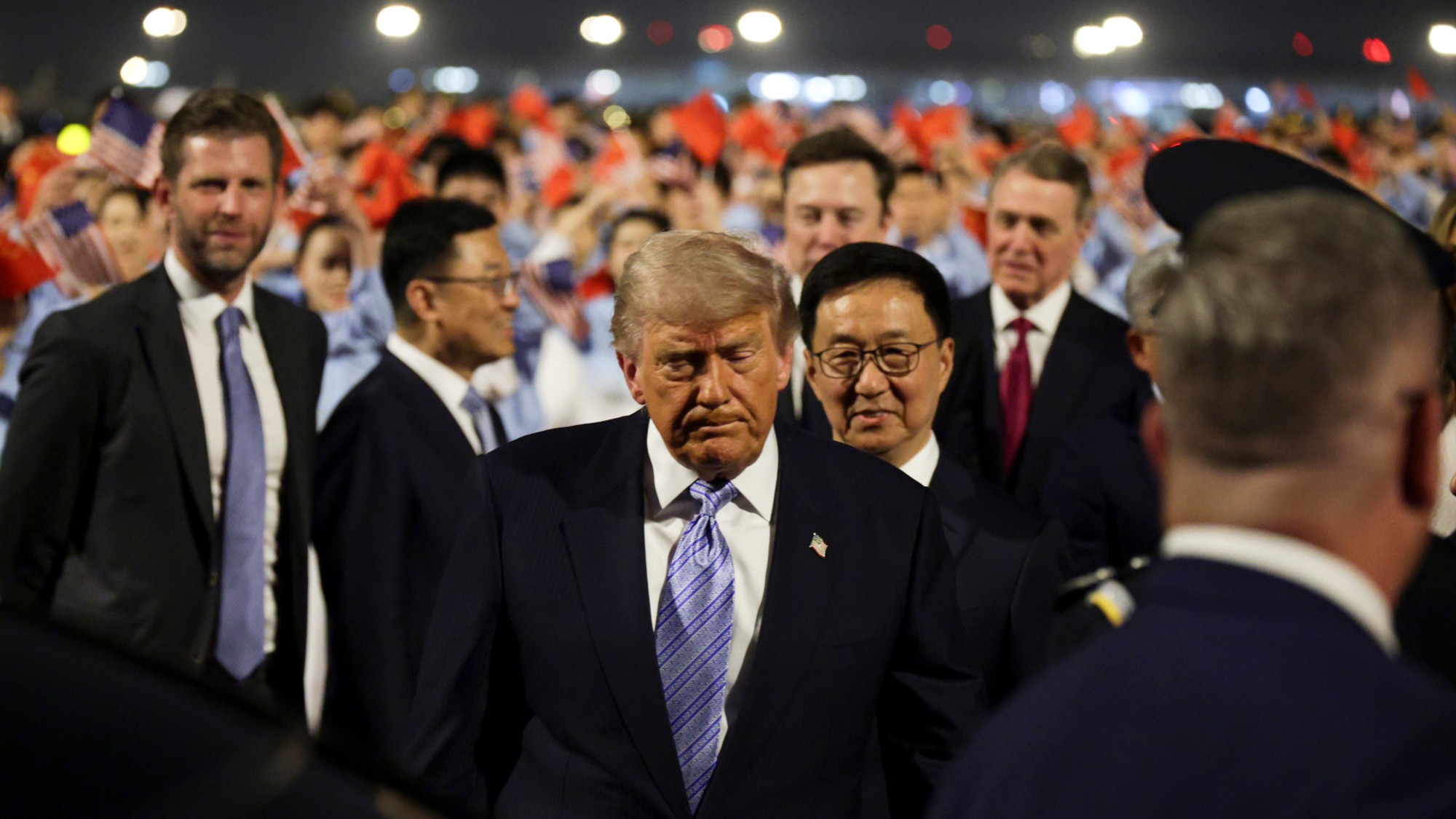
    Grand hopes

    Donald Trump leads a US entourage including his son Eric and Elon Musk after landing in China for a two-day visit. After stepping off Air Force One, the president was driven into Beijing in an armoured convoy, ahead of his high-stakes summit with Xi Jinping.

    Alex Wong / Getty Images


    Puzzles

    Chain Word

    Try The Week’s new daily word challenge in our puzzles and quizzes section

    Play here


    THE WEEK RECOMMEND

    Rivals season two: ‘beyond earthly praise’

    If you thought the new series of Jilly Cooper’s bonkbuster would be “dialling down the raunch, think again”, said Carol Midgley in The Times. “Buckle up” for another “brazen OTT romp through the 1980s posho set of Rutshire, where everyone seems to be rutting everyone else’s spouse before readjusting their bouffant hairdo and having another glass of champagne”.

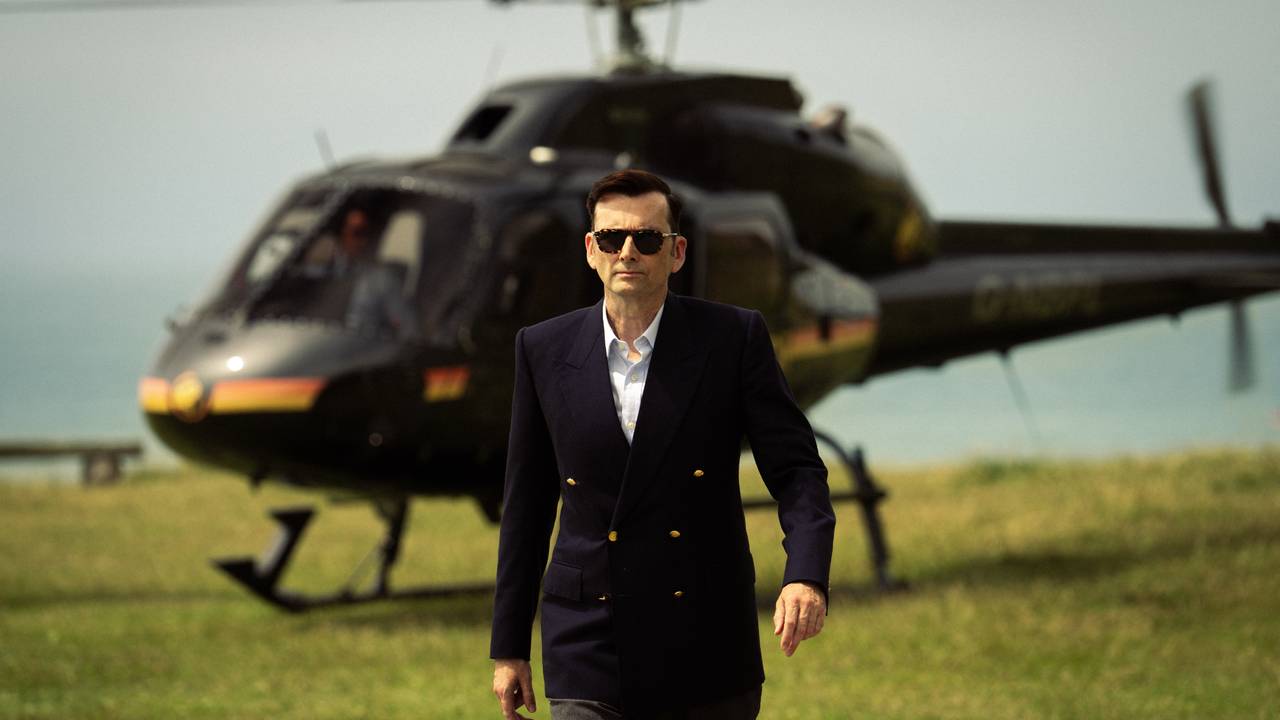
    Corinium boss Lord Tony Baddingham (David Tennant) was “whacked over the head with a gold statuette” at the end of last season, but he’s back to plan “messy revenge” on his former lover Cameron (Nafessa Williams) and his nemesis, Tory MP Rupert Campbell-Black (Alex Hassell). On the surface, the “daft plot” revolves around a “TV franchise war”. Really, though, “Rivals” is about “love and power”. This is a show with “huge heart” that, “despite its deliberate corniness”, is “gloriously uplifting television”.

    Series two also sees the “shaggers” preparing for the 1987 general election, said Sarah Dempster in The Guardian. Can Rupert keep his seat or will the “monstrous tabloid hack” Beattie team up with Lord Tony to “stitch him up like a kipper”? And who will win the battle for the “coveted” Central South West television franchise?

    The acting is “superb” – everyone seems to be having the “time of their life” – and the dialogue is “fabulous”, peppered with “twinkling” jokes. “How best to reward such exquisitely knowing escapism? Ten stars? Ten thousand stars? ‘Rivals’ is beyond earthly praise.”

    I found it enormous “fun”, said Nick Hilton in The Independent. “Well written” and “well acted”, with “bucolic horniness” in spades, it’s a “rare treat in today’s television landscape”.


    Statistic of the day

    $1.2 ​trillion: The estimated cost of Donald Trump’s “Golden Dome” missile defence system, according to the Congressional Budget Office. The newly calculated total for developing, deploying and operating the unproven shield technology over two decades is almost seven times higher than the $175 billion originally earmarked. 


    instant opinion

    Today’s best commentary

    The hantavirus outbreak has been well-handled – but there are still dangerous days ahead
    Devi Sridhar in The Guardian
    Hantavirus cases occur “all the time all over the world”, writes public-health expert Devi Sridhar. But the outbreak on the cruise ship is difficult to control, especially as “quite a few passengers disembarked” before it was detected. The World Health Organization has coordinated a “coherent and integrated” global response, but “we’ll only know for sure in the weeks to come” if it’s all enough to prevent a wider spread.

    The crisis is Sudan is much worse than what is acknowledged
    Zia Sulik on Al Jazeera
    “The world still doesn’t fully comprehend what has happened” in Sudan’s “complicated war”, writes Zia Salik of Islamic Relief UK. I recently visited Khartoum and “the destruction was apocalyptic”. An estimated 150,000 people have died, not just “from violence but from disease and starvation”. Now, the Iran war “is choking supply chains and exacerbating Sudan’s hunger crisis”. Other countries must “step up” and get aid in. “It should not be too much to ask.”

    Greggs has made me ashamed to be British
    Emily Watkins in The i Paper
    Greggs’ “leap into international territory” with its new “outpost” at Tenerife airport is “the safest bet the chain could have made”, writes Emily Watkins. Millions of Brits fly there each year, and our citizens tend to “retreat to a copy-paste, theme-park version” of a UK high street when abroad. But with Spain offering “some of the best food in the world”, to clamour for a sausage roll is “perverse”. It tempts me “to chuck my UK passport into the Mediterranean Sea”.


    word of the day

    Monochrome

    Japan’s leading snack maker is switching to black-and-white packaging as the Iran war disrupts supplies of key ink ingredients. Calbee’s colourful crisp packets will fade to monochrome from the end of this month, due to shortages of the oil-derived naphtha “commonly used as a printing ink solvent”, said Japan Today. 


    Evening Review was written and edited by Hollie Clemence, Jamie Timson, Rebecca Messina, Harriet Marsden, Chas Newkey-Burden, Irenie Forshaw, David Edwards, Helen Brown, Adrienne Wyper and Kari Wilkin, with illustrations from Stephen P. Kelly.

    Image credits, from top: illustration by Stephen P. Kelly / Getty Images; Christopher Furlong / Getty Images; Amirhossein Khorghooei / ISNA / AFP / Getty Images; Alex Wong / Getty Images; Disney+

    Morning Report and Evening Review were named Newsletter of the Year at the Publisher Newsletter Awards 2025
     

    Recent editions

    • Morning Report

      Starmer to meet Streeting as tensions appear to ease

    • Evening Review

      Five moments that brought Starmer to the brink

    • Morning Report

      Time to go, cabinet ministers tell Starmer

    VIEW ALL
    TheWeek
    • About Us
    • Contact Future's experts
    • Terms and Conditions
    • Privacy Policy
    • Cookie Policy
    • Advertise With Us
    • FAQ
    Add as a preferred source on Google Add as a preferred source on Google

    The Week UK is part of Future plc, an international media group and leading digital publisher. Visit our corporate site.

    © Future Publishing Limited Quay House, The Ambury, Bath BA1 1UA. All rights reserved. England and Wales company registration number 2008885.