The Week The Week
flag of US
US
flag of UK
UK
https://cdn.mos.cms.futurecdn.net/flexiimages/jzblygzdxr1769609154.gif

SUBSCRIBE

Try 6 weeks free

Sign in
  • View Profile
  • Sign out
  • The Explainer
  • Talking Points
  • The Week Recommends
  • Podcasts
  • Newsletters
  • From the Magazine
  • The Week Junior
  • More
    • Politics
    • World News
    • Business
    • Health
    • Science
    • Food & Drink
    • Travel
    • Culture
    • History
    • Personal Finance
    • Puzzles
    • Photos
    • The Blend
    • All Categories
  • Newsletter sign up Newsletter
  • The Week Evening Review
    ‘Civil war’, universal vaccines, and Madonna’s eye-popping music video

     
    TODAY’S BIG QUESTION

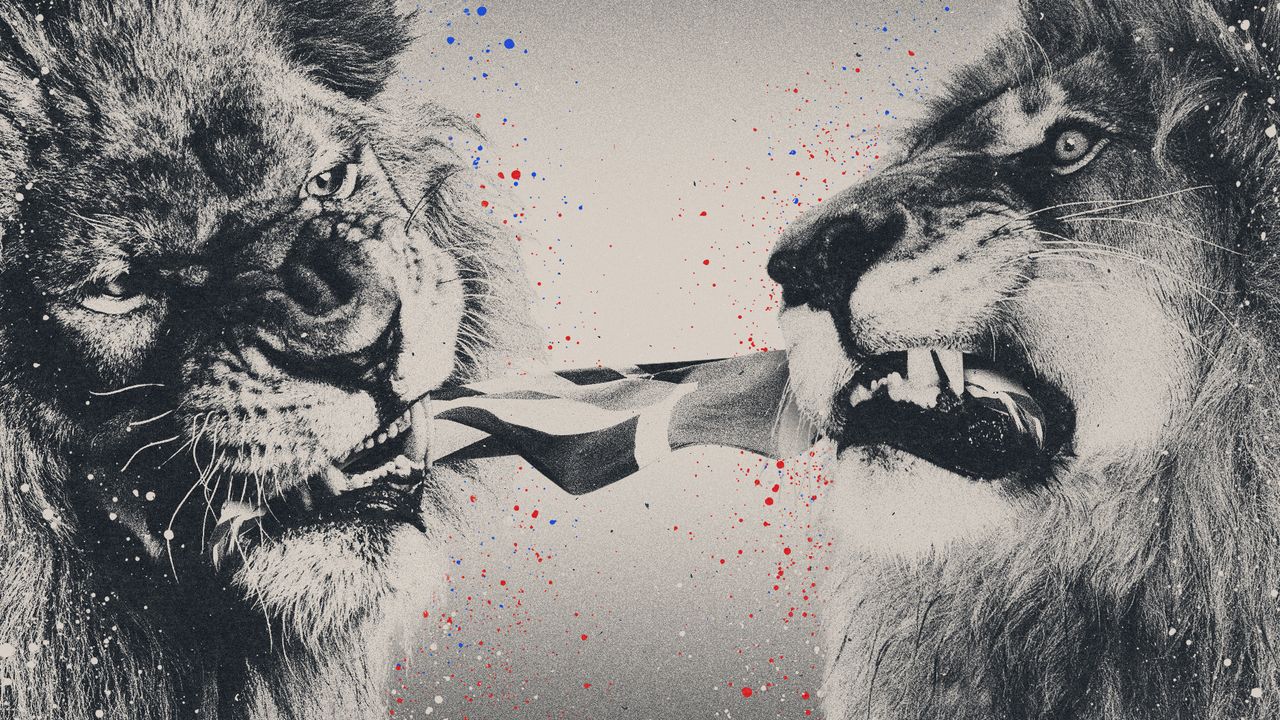
    Civil war in the UK: online fantasy or emerging reality?

    Police have deployed water cannons to quell another night of violent protests in Belfast and “civil war predictions seem to be increasing by the hour”, said John Harris in The Guardian.

    Despite appeals for calm from the family of stabbing victim Stephen Ogilvie, figures including Elon Musk and Tommy Robinson continue to push the idea of civil unrest – not only in Northern Ireland but also in the rest of the UK. Online fury is starting to have tangible consequences in the real world.

    What did the commentators say?
    Violent disorder in Southampton after the conviction of Henry Nowak’s murderer, “weeks of riots” last year in Northern Ireland, and the Stockport riots in 2024 were all fuelled by online misinformation and “incendiary language” from the far-right, said Shane Raymond in The Journal.

    Social media is being used to recast Britain as a “violent dystopia”, said Harris in The Guardian, and to “smooth the path to power of some of the most terrifying politicians Britain has ever seen” – including “king of the civil war genre”, Nigel Farage. A vision of Britain in perpetual crisis is fed into “algorithmically curated video feeds” of fighting and riots. Politicians need to understand that what people are seeing on phones is warping their perception of what is still a “largely stable country”.

    Claiming we are on the verge of a civil war is “not only unconvincing, but potentially harmful”, said Jonathan Portes, from the UK in a Changing Europe academic think tank. Yes, “trust in institutions has declined”, but “this is neither new nor unique to the UK”. What is new is the rhetoric of crisis emerging from “fringe spaces” to “mainstream commentary”. This “exaggeration” is not “harmless” but “protest is not insurgency, and polarisation is not civil war”.

    What next?
    Keir Starmer has condemned the Belfast protests but his “bemused and drifting government has done nothing to tackle the root cause”: a perception, however erroneous, that legal and illegal immigration “is out of control”, said The Times’ editorial board. Starmer needs to recognise the “explosive dimensions of immigration” and its “exploitation” by bad actors. Failure to do so would be a “national security risk”.


    THE EXPLAINER

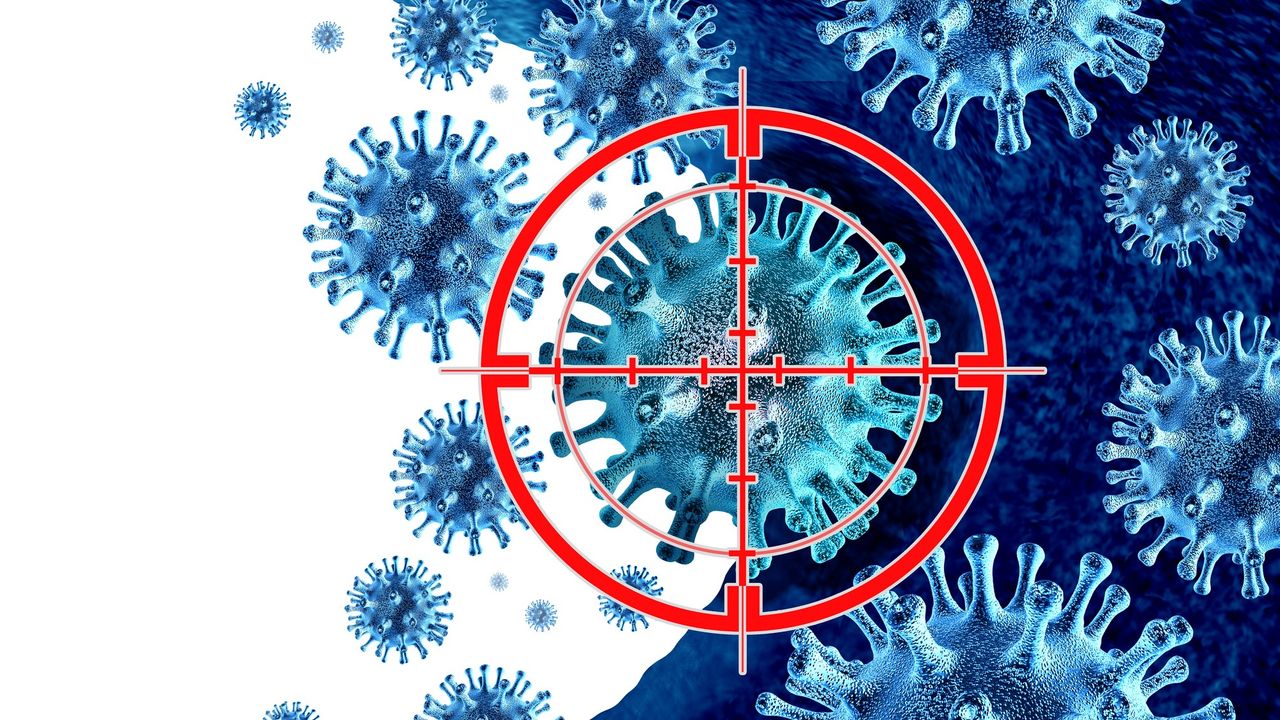
    How the ‘universal vaccine’ could keep pandemics at bay

    A needle-free universal vaccine may soon be on the horizon. Scientists have harnessed AI to create a “super-antigen” that has shown promise against a range of coronaviruses in its first human clinical trial – and may even be able to counter pandemics that have yet to emerge.

    How does the vaccine work?
    “Rather than targeting a single specific strain”, the vaccine’s AI-created “super-antigen” instead “mimics shared features across multiple coronaviruses, which can trigger the body’s immune system to fight a broad array of pathogens with those base characteristics”, said Euronews.

    Administered through a high-pressure liquid jet, the universal vaccine does not require use of needles and doesn’t have to be kept as cold as traditional vaccines, making it “well-suited for use in low- and middle-income countries”.

    What makes it so special?
    This “new class of universal vaccines is future-proofed”, said Saul Faust, a professor at the University of Southampton and the study’s chief investigator. They don’t need to be updated to respond to virus variants, and they could even be effective against “related viruses that haven’t yet emerged”.

    The old vaccine development system was like a “dog chasing its tail”, said study lead Jonathan Heeney, a researcher from the University of Cambridge’s Lab of Viral Zoonotics. “We can escape the constant cycle of chasing the virus variants circulating in humans.”

    How effective is it?
    The vaccine has already shown promise in humans. The first clinical trial was conducted with 39 volunteers, and triggered an immune response “not only to SARS-CoV-2 and SARS but to related bat viruses that could potentially jump from animals to humans and cause future pandemics”, said the study’s authors.

    While the “magnitude of the response was limited and did not increase predictably with higher doses”, this was likely influenced by prior Covid-19 exposure and vaccination history among participants. A larger phase 2 trial will “next assess the vaccine’s ability to induce immune responses in a wider and more diverse population and confirm that it generates strong, broadly protective immune responses”.


    QUOTE OF THE DAY

    “It’s important sometimes to chill, relax.”

    Fifa president Gianni Infantino tries to calm football fans complaining about high ticket prices and visa issues in the run-up to this year’s men’s World Cup. “We are trying to find solutions,” he said at a press conference in Mexico City, but “we are not kings of the world”.


    Poll watch

    Outsourcing decision-making to AI has been discussed in 84% of company boardrooms, according to a poll of 400 directors and executives by business software company Board Intelligence. Almost half (49%) said their company had already started implementing AI into decision-making, although only 8% thought boards themselves would be significantly affected.


    IN THE SPOTLIGHT

    Madonna’s ‘raucous’ and ‘baffling’ Confessions II 

    The Queen of Pop has delivered the kind of OTT, “bells-and-whistles music video” that seemed to be “on the way out”, said Ed Potton in The Times. Madonna’s new 14-minute short film “Confessions II”, which marks the release of her latest album, features a “full-throttle celebrity perv-rave” in a nightclub loo packed with famous faces from Richard E. Grant to Benedict Cumberbatch.

    ‘Hide the cocaine!’
    In much the same way Madonna’s 1990 “Vogue” music video became “shorthand” for “‘pointy tits’”, “Confessions II” will be remembered as the “vagina laser video”, said Zoe Williams in The Guardian. This time, the star must traverse a shadowy forest dodging green laser beams that fire from the dancers’ crotches in a symbol of “life force and unstoppable orgone energy”.

    Later, she storms into the club bathroom where Chelsea footballers Cole Palmer and João Pedro “look around in alarm” from the urinal – “as you would if the Queen of Pop sashayed past when you were having a wazz”, said Potton in The Times. “Hide the cocaine!” she sings before the camera cuts to Kate Moss flipping her hair in the mirror, and Cumberbatch delivering some “textbook dad dancing”.

    ‘Gloriously over the top’
    “Confessions II” is more than just a “flashy, star-studded commercial” for Madonna’s new album, said Joey Nolfi in Entertainment Weekly. “It’s a powerful meditation on her legacy, her future, and how the world sees her as she reaches a new dawn in a storied life that’s largely played out in arenas beyond her control.”

    The film will have “generated exactly the response she will have hoped for”, said Dan Wakeford in The Independent. Cameos from the eclectic assortment of celebrities have us “agog, debating who we are most thrilled to see sharing a frame”. The inclusion of high-brow actor Cumberbatch is a “deliberate provocation”, telling us “high culture and club culture are the same culture”.

    Of course, there have been “predictable snarks” about how Madonna should be behaving more appropriately for her 67 years, said Potton in The Times. “Nonsense. Raucous, baffling and gloriously over the top, this film is exactly what she should be doing.”


    Good day 🏈

    … for Patrick Mahomes, who becomes the first NFL player with a contract worth more than $500 million. The Kansas City Chiefs’ star quarterback has agreed a two-year extension to his 10-year deal, tying him to the team until 2033 and taking his base earnings to almost $505 million.


    Bad day 🛬

    … for Ryanair, which faces a Competition and Markets Authority investigation over charging parents to sit next to their children. Reserving a seat is optional for all Ryanair passengers except a parent of a child aged two to 11, who must pay for a “mandatory family seat”. The airline said the investigation was “bogus”.


    PICTURE OF THE DAY

    Off with a bang

    Fireworks light up the night sky around the Sagrada Familia in Barcelona to celebrate Pope Leo’s blessing of the basilica’s Jesus Christ tower. The building of the tower marks a major step towards completion of the basilica, which has been under construction for 144 years.

    Manaure Quintero / AFP via Getty Images


    Puzzles

    Chain Word

    Try The Week’s new daily word challenge in our puzzles and quizzes section

    Play here


    THE WEEK RECOMMENDS

    Three stunning spots to see in the summer solstice

    From sunrise gatherings to dance festivals and floating-flower rituals, summer solstice celebrations certainly blow the cobwebs away.

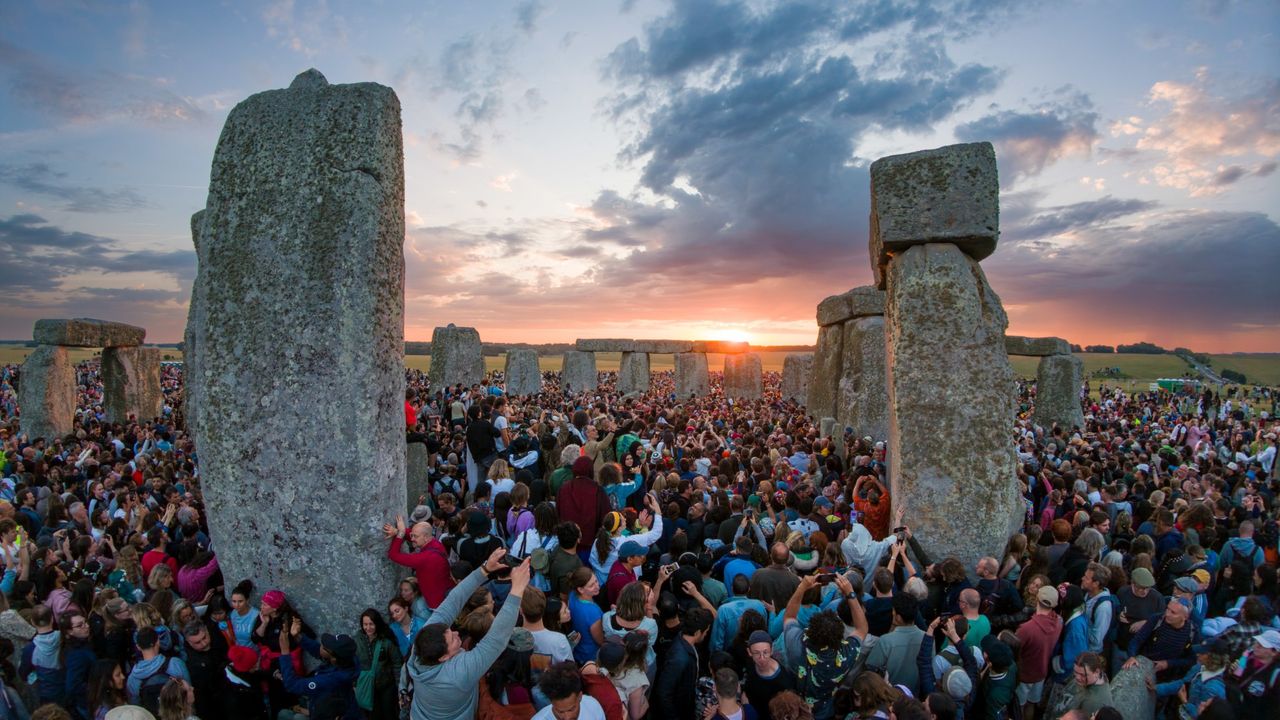
    The longest day of the year usually falls on 21 June, while, for the southern hemisphere, it’s six months later. It has been marked all around the world for thousands of years, with traditions, holidays and festivals. Here are some of the best places to mark midsummer – maybe with some chanting and drumming.

    Stonehenge
    The 4,000-year-old stone circle in Wiltshire is one of the most famous places to observe the solstice. Visitors flock to the site “to witness the moment the sun rises up behind the ‘heel stone’, the ancient entrance to the monument”, said the BBC. Parking is limited and must be pre-booked; there will be special shuttle buses from Salisbury train station.

    Mount Olympus
    In Greece, many “still follow the 2,500-year-old tradition” of climbing Mount Olympus to observe the solstice, while in some Eastern European countries like Belarus, people take “chaplets” – small flower garlands – to rivers and set them floating downstream, said Condé Nast Traveller.

    Chichen Itza
    In Mexico, all eyes turn to the El Castillo pyramid at Chichen Itza, which was constructed so that the shadows of the setting sun at the summer solstice “look like a feathered serpent descending”. The symbol of Kulkulcan, a Mayan deity of wind, rain and the passing of time, it is a reminder “that the arrival of summer is a pivotal time to accept new beginnings”.


    Statistic of the day

    1: The number of asylum seekers returned by the UK to the Republic of Ireland under a post-Brexit deal signed in 2020. The common travel area with Ireland was acting as “a back door to Britain”, a former Home Office official told The Times. There have been no migrants transferred from Ireland to the UK under the deal.


    instant opinion

    Today’s best commentary

    Alas for poor Nigel Farage, Rupert Lowe has his number
    Hugo Rifkind in The Times
    Rupert Lowe’s “strange, borderline non-existent party” will not win the Makerfield by-election, writes Hugo Rifkind. But it could “divert as much as a fifth of Reform’s vote”, making it “almost impossible” for Nigel Farage’s party to win, which is “hilarious”. Restore is “doing to Reform” what Reform “did to the Conservatives”. This “mad factionalism” is a “woke purity spiral in the other direction” but Farage deserves credit for his “refusal to get all the way down into the dirt” with Lowe.

    The World Cup Paradox
    The Economist’s editorial board
    Although “mega-events like the World Cup still seize global attention”, the “bigger picture is that entertainment is fragmenting”, says The Economist. “From music to television to social media and gaming”, we’re “tuning out of American content and embracing alternatives from closer to home”; the world is “more connected”, but people are choosing “more local forms of fun”. The US “has lost its grip on content and with it the cultural tractor-beam that has recruited millions” to its “values and ideas”.

    The EU is inviting the Taliban to Brussels. Europe’s credibility lies in tatters
    Shada Islam in The Guardian
    The EU is to host talks with the Taliban about “forcibly deporting asylum seekers” back to Afghanistan, writes global strategy consultant Shada Islam. But “what begins with migrants does not end with migrants”, and “once political elites convince people that some human beings deserve fewer rights” than others, the “circle of exclusion keeps expanding to include all of us”. Europe “rightly embraced” Ukrainian refugees, but it is now “engaged in illegal pushbacks against those from war-stricken countries in the global south”.


    word of the day

    Pünktlichkeit

    German for “punctuality”, a concept that’s been eluding state rail company Deutsche Bahn. Despite stereotypes of Teutonic efficiency, only 60% of its long-distance trains arrived on time last year. Chancellor Friedrich Merz’s government has committed €100 billion to a complete overhaul of the country’s ageing rail infrastructure.


    Evening Review was written and edited by Rebecca Messina, Jamie Timson, Chas Newkey-Burden, Will Barker, Devika Rao, Irenie Forshaw, Helen Brown, David Edwards and Kari Wilkin, with illustrations from Stephen P. Kelly.

    Image credits, from top: illustration by Stephen P. Kelly / Getty Images; wildpixel / Getty Images; YouTube / Madonna; Manaure Quintero / AFP via Getty Images; Finnbarr Webster / Getty Images

    Morning Report and Evening Review were named Newsletter of the Year at the Publisher Newsletter Awards 2025
     

    Recent editions

    • Morning Report

      Police use water cannons to stem Belfast unrest

    • Evening Review

      A new front in the culture wars

    • Morning Report

      Violence erupts across Belfast after stabbing

    VIEW ALL
    TheWeek
    • About Us
    • Contact Future's experts
    • Terms and Conditions
    • Privacy Policy
    • Cookie Policy
    • Advertise With Us
    • FAQ
    Add as a preferred source on Google Add as a preferred source on Google

    The Week UK is part of Future plc, an international media group and leading digital publisher. Visit our corporate site.

    © Future Publishing Limited Quay House, The Ambury, Bath BA1 1UA. All rights reserved. England and Wales company registration number 2008885.