The Week The Week
flag of US
US
flag of UK
UK
https://cdn.mos.cms.futurecdn.net/flexiimages/jzblygzdxr1769609154.gif

SUBSCRIBE

Try 6 weeks free

Sign in
  • View Profile
  • Sign out
  • The Explainer
  • Talking Points
  • The Week Recommends
  • Podcasts
  • Newsletters
  • From the Magazine
  • The Week Junior
  • More
    • Politics
    • World News
    • Business
    • Health
    • Science
    • Food & Drink
    • Travel
    • Culture
    • History
    • Personal Finance
    • Puzzles
    • Photos
    • The Blend
    • All Categories
  • Newsletter sign up Newsletter
  • The Week Evening Review
    A ‘hybrid’ Navy, secrecy over Beijing plane crash, and the science of penalty shoot-outs

     
    THE EXPLAINER

    The Armed Forces reboot

    “Equipping our forces, defending our future”: that’s the core promise of the government’s long-delayed defence investment plan. Keir Starmer said the “historic shift” in defence planning will “strengthen our Armed Forces on land, at sea and in the air”, and a £15 billion boost to current spending will provide “cutting-edge capabilities” to deter “evolving threats and keep the British people safe”. But there is concern over how much of a gamble the move to a “hybrid Navy” – with a greater focus on drone warfare – might turn out to be.

    What is a ‘hybrid Navy’?
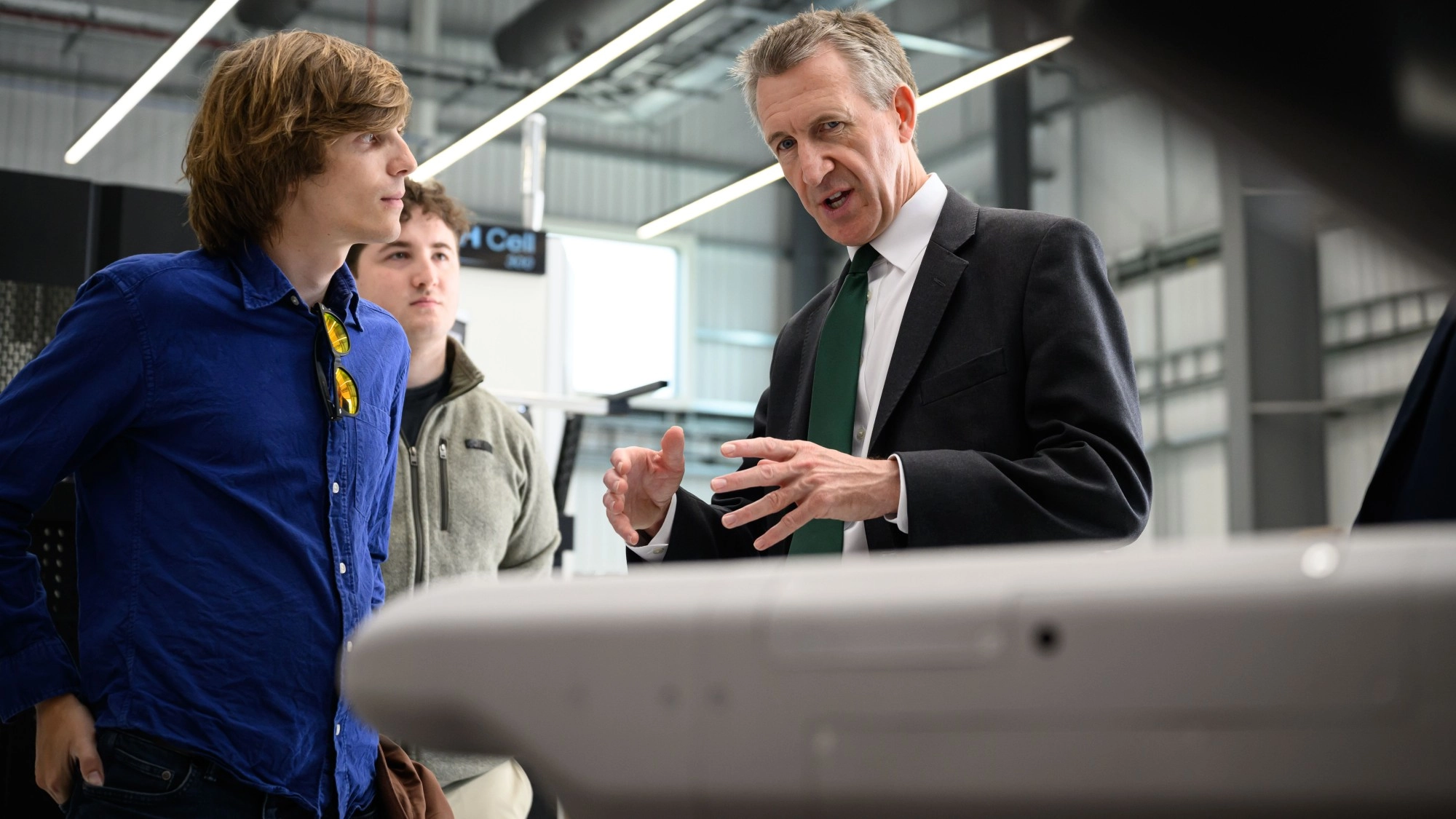
    It will mean a mix of “crewed and uncrewed capabilities”, said the Ministry of Defence. The Navy’s Type 45 destroyers will no longer be replaced by expensive Type 83 destroyers; instead, under plans finalised by new Defence Secretary Dan Jarvis (pictured above), “at least six” common combat vessels will act as a “control hub” for a fleet of aerial, surface and underwater drones. This is part of the £5 billion being invested into a “drone transformation” of the Armed Forces, “driven by lessons from Ukraine”, said the MoD.

    This shift is the one that’s “likely to make the most waves”, said Breaking Defense. With a hybrid Navy, “we’re absolutely taking both feet off the ground and leaping into the unknown”, retired Royal Navy commodore Steve Prest told BFBS Forces News. It’s “hugely risky” because “a lot of the technologies” haven’t been “put together in this way previously”, nor has it been proved that they can “deliver this overall capability” in the way it is now required.

    What about jets and troops?
    For the RAF, there will be a “new, national Collaborative Combat Air programme”, involving the development of “autonomous fighter jets which will fly alongside crewed jets, to defend the UK’s skies”. Funds will be spent on a collaborative project with Italy and Japan to build the next generation of RAF stealth jets, but more than 30 Wildcat and Chinook helicopters will be axed. Storm Shadow cruise missiles will also be phased out.

    The UK military will be given inexpensive attack drones, which have long been hailed by the Ukrainian army as their “saviour” in the war against Russia, said the BBC. There will also be uncrewed ground vehicles, plus new armoured vehicles, with AI-enabled digital targeting.


    TODAY’S BIG QUESTION

    What does secrecy over plane crash tell us about China?

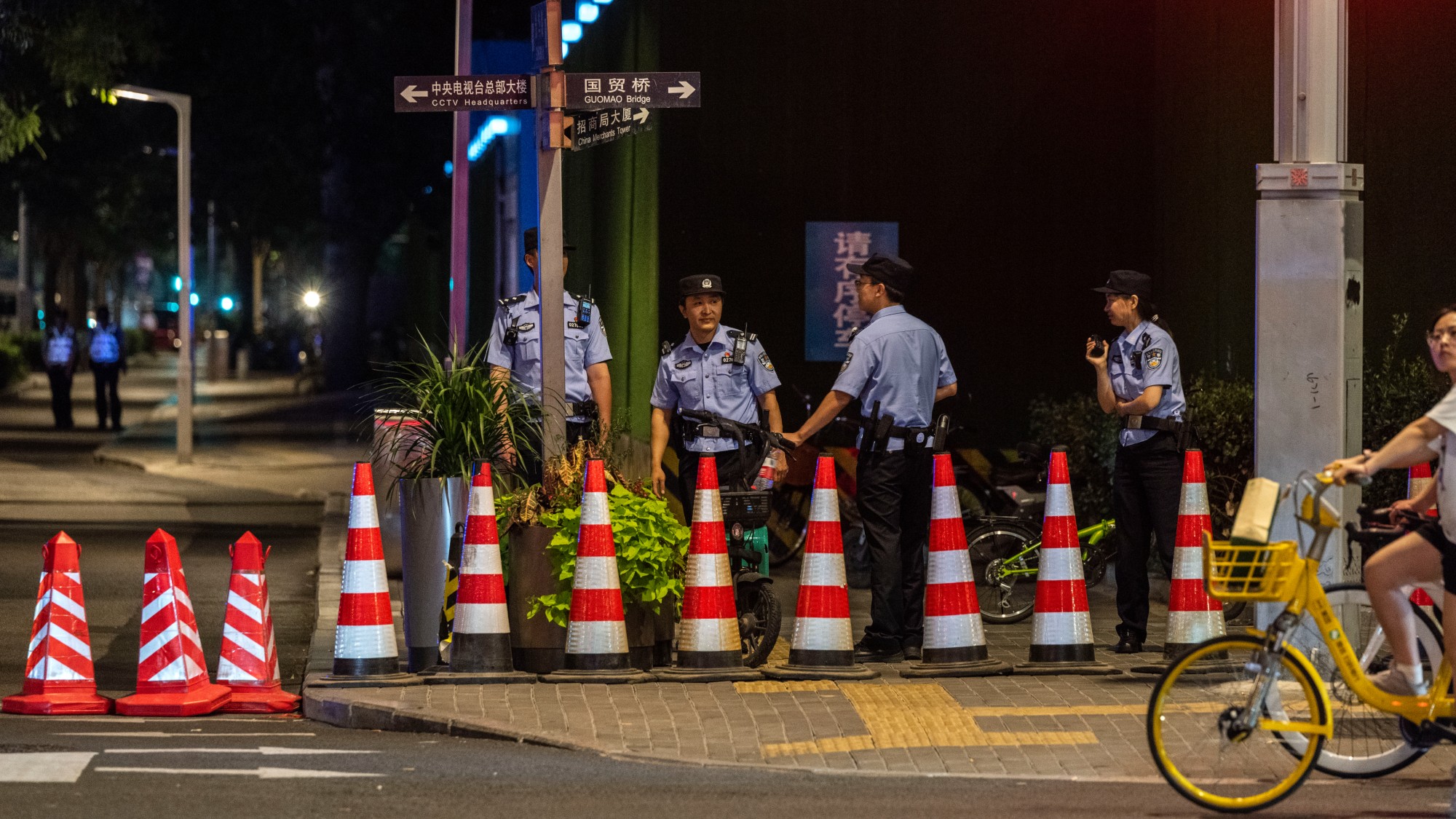
    Last Friday afternoon, a light aircraft belonging to a local aviation school flew into the side of Beijing’s tallest building, the 109-storey Citic Tower, killing the pilot and injuring at least 13 people. Five days later, we’re none the wiser about “why, and how, that happened”, said the BBC. The only official statement on the incident is a “60-word report detailing the basic facts in the state-owned Beijing Daily”, while eyewitness videos and photos have been “scrubbed off the internet”.

    What did the commentators say?
    The skyscraper is only a few miles from Zhongnanhai, the tightly controlled complex that acts as the headquarters of the Chinese Communist Party and the centre of government. An unidentified aircraft over this sensitive area would have posed a security dilemma for authorities, said Li Wei from state-run think tank China Institutes of Contemporary International Relations. Once the plane deviated from its approved flight path, there would have been “little reaction time for air traffic control and air defence identification”, he told the South China Morning Post. “Shooting down a civilian aircraft in a crowded urban area would create potential ground threats and panic.”

    Beijing has “some of the world’s strictest airspace controls”, including a “permanent no-fly zone of roughly 100 sq km (39 sq miles) over its political core”, said the BBC. Chong Ja Ian, a non-resident scholar at the Carnegie China research centre, told the broadcaster that the incident would be an “embarrassment to the security services”.

    Although China “periodically” experiences high-profile “acts of suicidal violence”, the most likely explanation “lies not in protest but in privilege”, said James Palmer on Foreign Policy’s China Brief. Private planes are a rarity in China, reserved for the “well connected”, whose sense of entitlement “extends to the skies”. Corruption is “endemic” within the People’s Liberation Army, and “it would not be surprising if certain civilians were occasionally allowed into PLA airspace”. If that is what occurred here, “the political consequences will be severe for whoever bent the rules”.

    What next?
    Whether accidental or deliberate, “the fatal flight will raise awkward – and potentially career-ending – questions for those responsible for security” in the capital, said the Financial Times.


    QUOTE OF THE DAY

    “To this day, she’s given me a love of teatime that I never knew I needed.”

    Prince William recalls how he spent “many a quiet afternoon” with his grandmother at Windsor Castle “chatting” and “sharing stories”. His memories have been recorded for the Queen Elizabeth Digital Memorial, a collection of archive material mapping the late monarch’s life and reign.


    Poll watch

    As the UK’s driving theory test turns 30 today, only 44% of drivers are confident they would pass the exam if they took it now. But more than three-quarters (78%) felt sure they could pass the practical driving test again, according to a survey of 12,475 AA members.


    IN THE SPOTLIGHT

    On the spot: the science of penalty shoot-outs

    Thomas Tuchel has said England will follow Gareth Southgate’s shoot-out blueprint, should it come to penalties at this year’s World Cup. “We are prepared. We have a process; the players have a process,” he said.
    Southgate would decide on his penalty takers “well in advance, based on the training”, and vowed “to take full accountability” in public, so none of the players would need to take any blame, said the BBC.

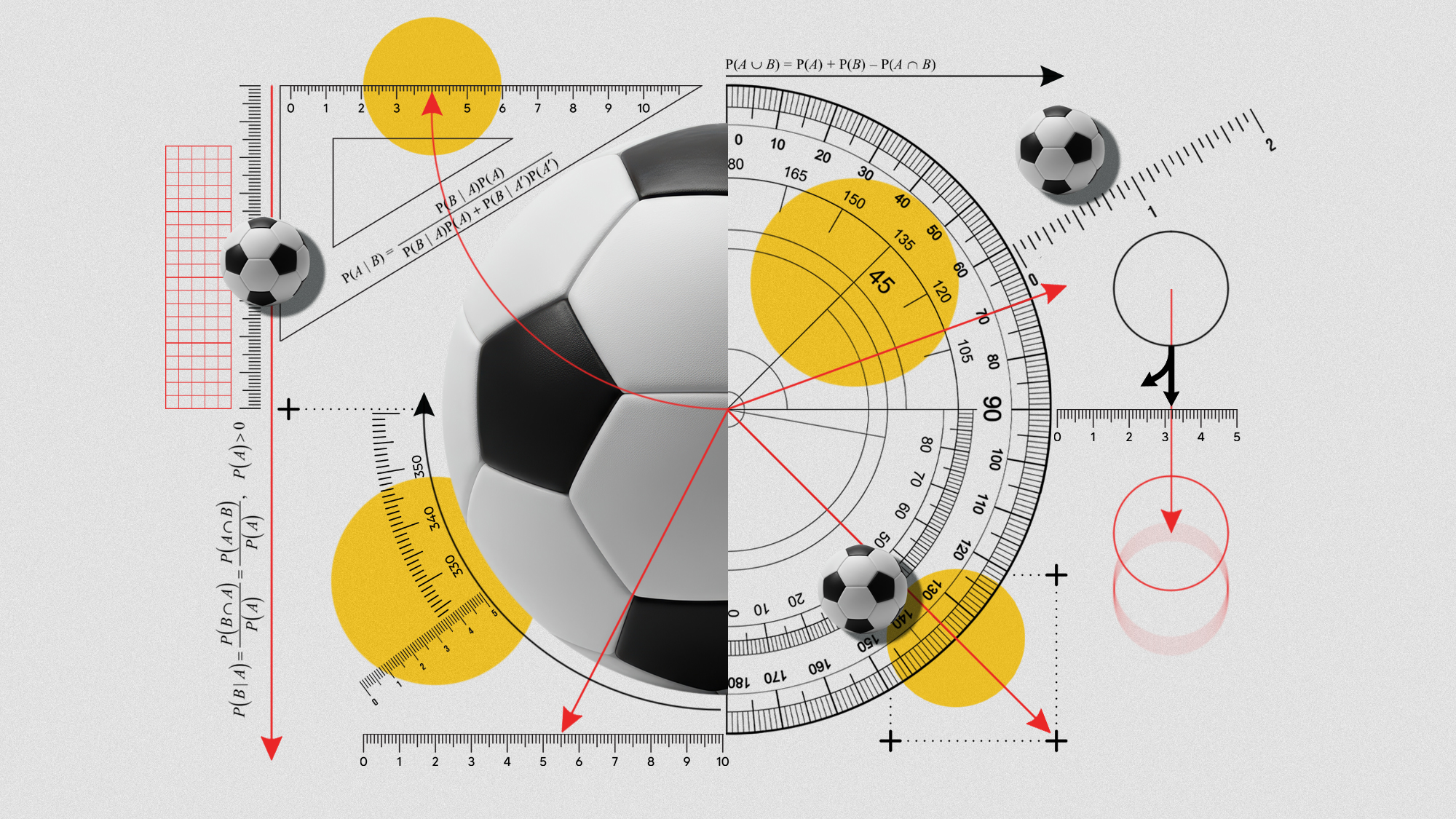
    With the knockout rounds of this summer’s tournament under way, the “spectre” of the shoot-out “hovers over every match”, said CBC. And, to try to gain an edge, many coaches are carefully analysing the psychology, mathematics and history of penalties.

    Stakes up, scores down
    Research on penalty kicks has helped the world’s top teams “win more shoot-outs”, said Science News Explores. The pattern that “stands out” is that, “as the stakes go up, the chances of scoring go down”. Penalty kicks tend to be less successful towards the end of tournaments; and players are most likely to score if a goal means victory – and least likely if failure means defeat. For that reason, said a study in the Journal of Sports Sciences, a team’s five best penalty takers should walk up to the spot in reverse order of past success.

    The received wisdom is that England are poor at taking penalties. Spain and the Netherlands actually have the worst record, losing four World Cup shoot-outs each; England (as well as Italy and France) have lost three, only winning their first with a 4-3 victory over Colombia in 2018, with Southgate in charge.

    Risky targets
    Where you aim your penalty kick matters, according to analysis by Opta. Low and to the left augurs well: of 292 penalties taken in World Cup shoot-outs between 1982 and 2022, 41 were kicked in that direction, and 85% of them converted. The top third of the goal is a riskier target but, with precise execution, can bring even better rewards: of the 39 penalties hit high and on target, none were saved. 

    But the best-laid plans still fail. Germany’s penalty record at major tournaments had become the “stuff of legend”, said The Guardian. They had won six consecutive shoot-outs in all competitions, with their only previous defeat dating back to 1976. Then came penalties in their game against Paraguay on Monday, and the shock of the tournament so far. Three Germans missing in one shoot-out proves that, in this sporting lottery, anything can happen.


    Good day ⚽

    … for knocking off early, after the professional body for HR urged companies to let staff finish in time for today’s 5pm World Cup kick-off between England and DR Congo. The Chartered Institute of Personnel and Development said bosses should “think about workforce flexibility” during “the largest football event in the world”.


    Bad day 🌳

    … for sacred offshoots, after a seedling from Cumbria’s felled Sycamore Gap tree was reportedly stolen from the National Trust’s Wray Castle in the Lake District. As one of 49 saplings grown from the tree’s seeds after it was illegally chopped down by two men in 2023, it “symbolised resilience and renewal”, said staff, who have called on the thief to return it.


    PICTURE OF THE DAY

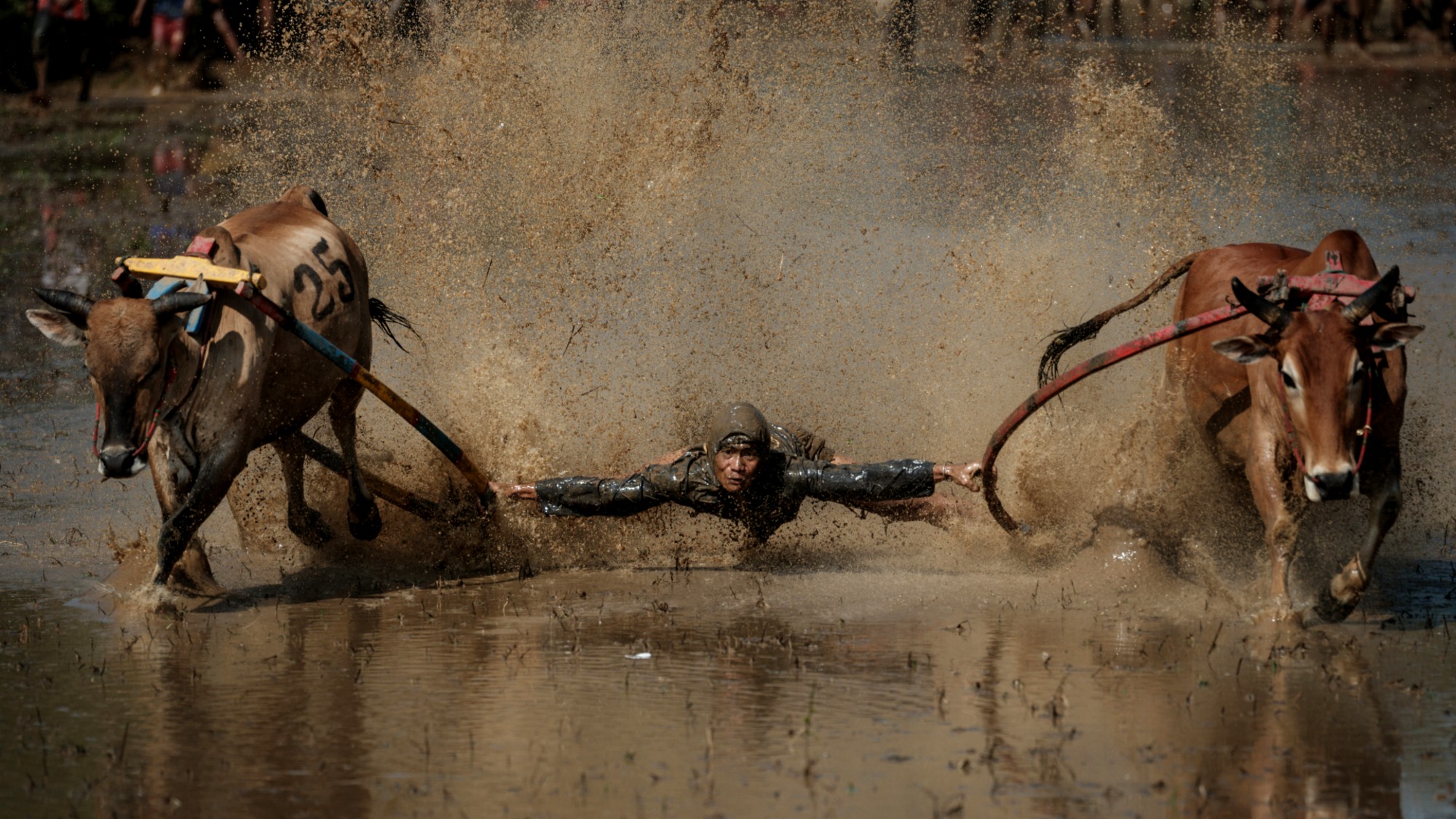
    Indonesian rice run

    A jockey balances on a wooden plough between two bulls, steering them through a flooded paddy field during Pacu Jawi, in Tanah Datar, West Sumatra. The traditional bull-racing event celebrates the end of the rice harvest.

    Yasuyoshi Chiba / AFP / Getty Images


    Puzzles

    Chain Word

    Try The Week’s new daily word challenge in our puzzles and quizzes section

    Play here


    THE WEEK RECOMMENDS

    The Last 12 Weeks: a ‘thought-provoking’ podcast

    It’s “high stakes” stuff, said The New York Times. An eye-opening new podcast follows defence lawyers as they “try to save their client’s life” during his last weeks on death row.

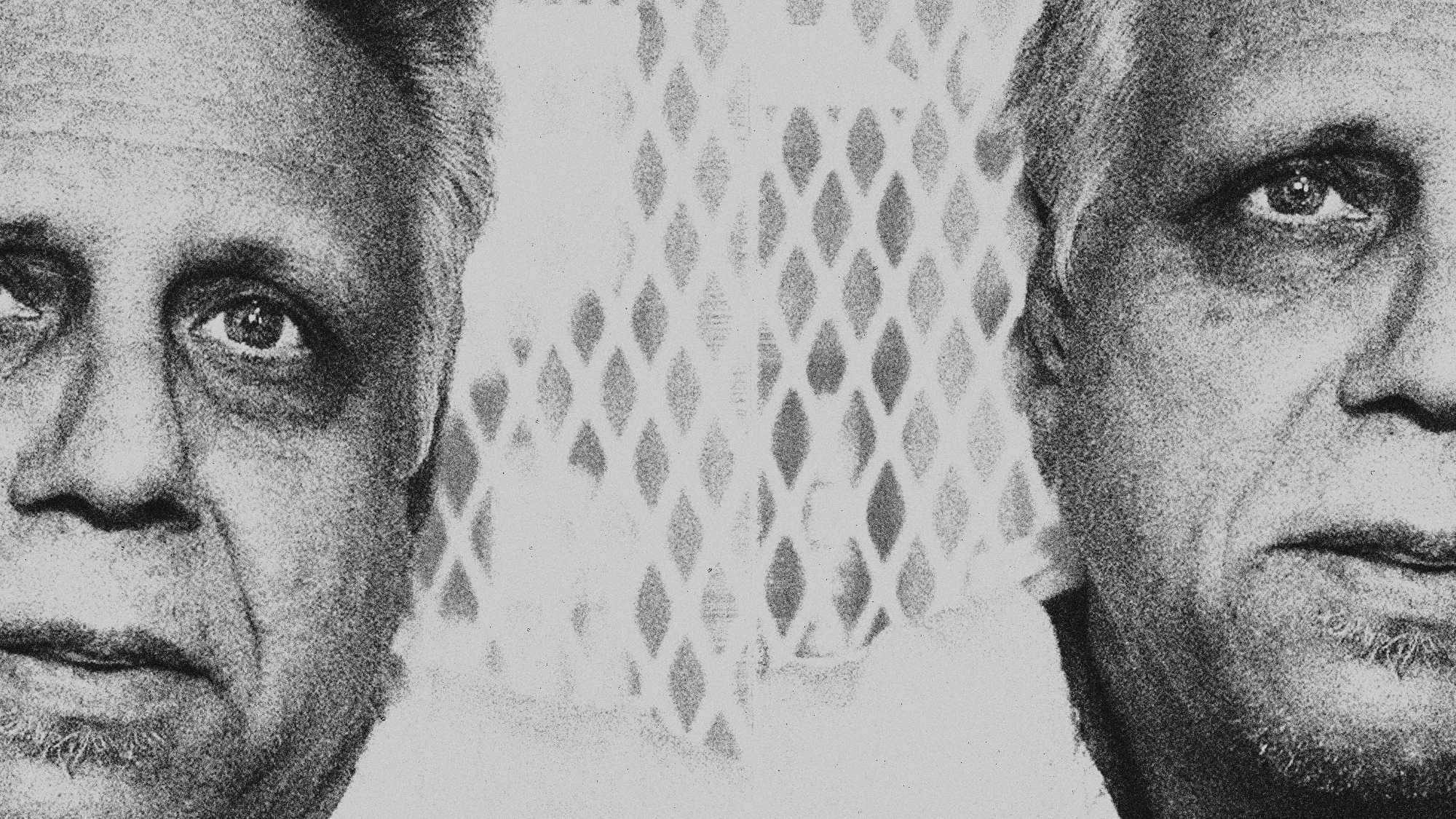
    It’s been over three decades since David Wood (pictured above) was convicted of murdering six young women and girls and burying their bodies near El Paso – crimes for which he was nicknamed the Desert Killer. The five-part series from Serial Productions centres around the often “bizarre work involved in trying to halt” his execution.

    Pulitzer Prize-winning criminal justice reporter Maurice Chammah is given “extraordinary level of access” to the inner workings of the case in its “final stretch”, bringing listeners “into the room with the lawyers” as they attempt to “poke holes in the case” and search for elusive witnesses, all while the “clock ticks down”.

    Made in collaboration with non-profit news organisation The Marshall Project, it’s a “spare but thought-provoking” podcast, said The Guardian. As Wood’s execution looms, his lawyer’s final attempt to prove his innocence naturally seems “inconceivable to the victims’ families”.

    “Dead women as content! How marvellously unsurprising, I thought,” said Jude Rogers in The Observer. But, as I kept listening, I realised “this isn’t another mindless excursion into true crime’s murky waters, but a proper immersion in the waves that surround it”. Even sections about the legal process that should be “brain-crushingly dull” are made to “glisten” with fascinating details. Like other Serial podcasts, the “modus operandi is hardcore”: to introduce a “deeply tangled” court case, “then patiently tease apart the threads, demanding the listener’s full attention”.


    Statistic of the day

    £22,500: The amount paid per hour to Nigel Farage to promote gold dealer Direct Bullion. Reform UK’s leader was paid £270,000 for 12 hours of work, taking his earnings outside Parliament to around £400,000 so far this year.


    instant opinion

    Today’s best commentary

    For striking doctors, this pay deal will be the bitterest pill
    Olly Scargill in The Independent
    A key issue in the “long-running dispute” between the British Medical Association and the government was the “brutal competition” for doctors’ training posts, writes resident doctor Olly Scargill. So, the new deal promising 4,500 extra training places and “prioritisation of UK medical graduates” is a real win. But it comes “at a huge cost”: cancelled operations and “reputational damage in the eyes of the public”, whose initial support has “haemorrhaged” after 15 rounds of strike action.

    Working-class children need higher self-esteem
    Melanie Phillips in The Times
    Coming “from homes with few books”, working-class white children start school “already behind”, then “lose interest” and “disengage”, writes Melanie Phillips. While children from ethnic minority families are raised in a culture “of aspiration”, white working-class children feel the “impact of cultural demoralisation”, linked to “the erosion of stable local industries”. Plans for massive investment in defence manufacturing could mean “an expansion of skilled labour” that might alleviate this “paralysing despair”, and restore “a sense of purpose” and “belonging”.

    Why Scots will never support England at the World Cup
    Dominic Midgley in The Spectator
    Now that Scotland’s crashed out of the World Cup, Macgregor’s pub in the Renfrewshire town of Gourock is adorned with the flags of the “Auld Enemy’s opponents”, writes Dominic Midgley. “To an Englishman who spent his school-age years in Scotland, such obsessive anti-Sassenach fervour is nothing new.” Every time Scots sing “Flower Of Scotland”, they are “wanging on about a 14th-century” uprising against the English. The King says he hopes “the Tartan Army ‘might cheer’” for England tonight; that’s a call “doomed to failure”.


    word of the day

    Cyclesyncing

    The health trend of women matching their diet and exercise schedule to each phase of their menstrual cycle. “Cyclesyncing” is not backed by “robust research”, said NewScientist, but there is “mounting” evidence that hormone fluctuation may impact immune responses. A London School of Hygiene & Tropical Medicine study, for example, found that women vaccinated against Covid-19 in the progesterone-high luteal phase of their cycle reported a breakthrough infection sooner than those vaccinated during their oestrogen-high follicular phase.


    Evening Review was written and edited by Hollie Clemence, Jamie Timson, Chas Newkey-Burden, Rebecca Messina, Irenie Forshaw, Adrienne Wyper, David Edwards and Helen Brown, with illustrations from Stephen P. Kelly.

    Image credits, from top: Leon Neal / Getty Images; Kevin Frayer / Getty Images; illustration by Stephen P. Kelly / Getty Images; Yasuyoshi Chiba / AFP / Getty Images; illustration by Stephen P. Kelly / AP Photo

    Morning Report and Evening Review were named Newsletter of the Year at the Publisher Newsletter Awards 2025
     

    Recent editions

    • Morning Report

      US Supreme Court defies Trump on birthright citizenship

    • Evening Review

      Putin’s reckoning in Crimea

    • Morning Report

      Starmer finds an extra £1bn for defence

    VIEW ALL
    TheWeek
    • About Us
    • Contact Future's experts
    • Terms and Conditions
    • Privacy Policy
    • Cookie Policy
    • Advertise With Us
    • FAQ
    Add as a preferred source on Google Add as a preferred source on Google

    The Week UK is part of Future plc, an international media group and leading digital publisher. Visit our corporate site.

    © Future Publishing Limited Quay House, The Ambury, Bath BA1 1UA. All rights reserved. England and Wales company registration number 2008885.