The Week The Week
flag of US
US
flag of UK
UK
https://cdn.mos.cms.futurecdn.net/flexiimages/jzblygzdxr1769609154.gif

SUBSCRIBE

Try 6 weeks free

Sign in
  • View Profile
  • Sign out
  • The Explainer
  • Talking Points
  • The Week Recommends
  • Podcasts
  • Newsletters
  • From the Magazine
  • The Week Junior
  • More
    • Politics
    • World News
    • Business
    • Health
    • Science
    • Food & Drink
    • Travel
    • Culture
    • History
    • Personal Finance
    • Puzzles
    • Photos
    • The Blend
    • All Categories
  • Newsletter sign up Newsletter
  • The Week Evening Review
    Prince Harry, military courts, and Folarin Balogun’s red card

     
    TODAY’S BIG QUESTION

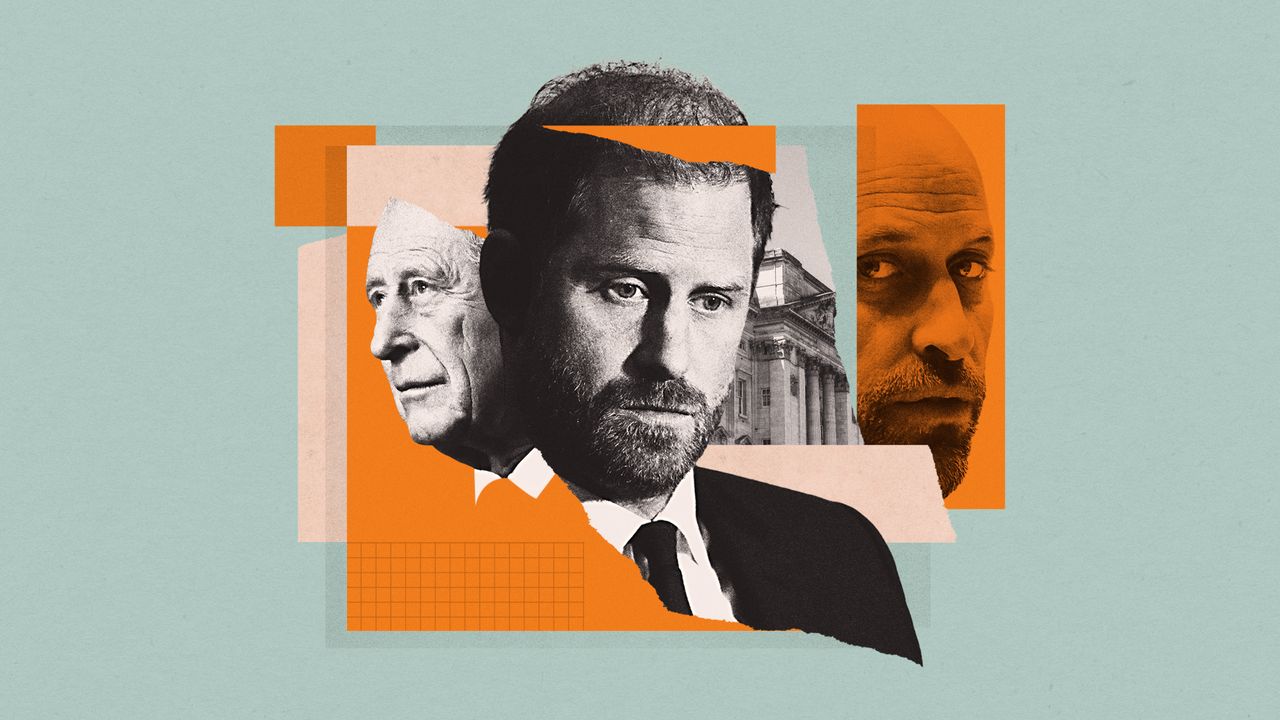
    Is this it for Prince Harry and the royals?

    “It’s all just so terribly ‘EastEnders’ with Received Pronunciation,” said The Sun’s Clemmie Moodie. After weeks of “frenetic speculation” about a royal reconciliation, Prince Harry said on Monday that he had accepted an invitation to stay at Buckingham Palace this week. But minutes later, royal sources counter-briefed, saying he had not formally accepted the invite in time and that the offer had been withdrawn.

    What did the commentators say?
    “It has taken quite some time for the King to lose patience with his younger son” but it seems he has “finally had enough”, said The Telegraph’s royal editor Hannah Furness. Charles “has drawn a boundary for his 41-year-old son in a sharp lesson to be learnt publicly”, that “Buckingham Palace is not available on lastminute.com”.

    Debate has raged over whether the briefing debacle, which comes amid an ongoing row over security, was a genuine case of miscommunication or an attempt by Harry to try to “bounce” his father into reversing his decision, said the Daily Mail’s royal editor Rebecca English. A third possibility is that “the furious prince simply doesn’t care any more and wants to cause his family maximum embarrassment”. Whatever the case, Harry’s long-planned trip to Britain is “once again mired in the same smorgasbord of chaos, confusion, claim and counterclaim that has characterised all of his dealings with Buckingham Palace in recent years”.

    The “real tragedy”, said the Daily Express’ deputy royal editor Rebecca Russell, is that the Duke of Sussex “has spent years fighting for control of his narrative, yet he remains completely blind to how he is being outplayed”.

    What next?
    Royal traditionalists and fans of the Sussexes had been “united in their desire for meaningful reconciliation” after “arguably the most fractious time in royal history”, said Moodie in The Sun. “And yet, here we are again.”

    A rekindling of brotherly love between Prince Harry and Prince William “seems even less likely”, said BBC royal correspondent Sean Coughlan. “They remain on very different trajectories, with William’s life heading remorselessly to the point where he will take to the throne.”


    THE EXPLAINER

    Why US military personnel are avoiding British justice

    The US-UK relationship is facing a new test in the form of two high-profile legal cases in which American military personnel were tried by US authorities over alleged offences on British soil. Justice Secretary David Lammy has told the Commons that officials are “working across government to establish the full facts” of both cases.

    What were the cases?
    Four women and a 16-year-old girl accused US airman Hannes Marschalek of indecent exposure in 2022, while he was stationed at RAF Lakenheath in Suffolk. The case was turned over to American forces by Cambridgeshire police three weeks after his arrest. Marschalek accepted a plea bargain and was dismissed from the air force by a military judge and sentenced to two months in a correctional facility. But a US military appeal court dismissed the guilty verdict earlier this year on the grounds that prosecutors had charged him under the wrong offence. He remains on the sex-offender registry in the US, but had he been “prosecuted in the English criminal courts, Marschalek would have faced up to two years in jail”, said The Guardian.

    Jacob Wulfson, a US air force captain also based at Lakenheath, was accused in December 2023 of drugging, assaulting and strangling a woman after meeting via a dating app. He was convicted of strangulation, dismissed from the military and given six months’ detention, but was cleared of sexual assault by an all-male panel of air force officers.

    Why weren’t the cases tried by UK courts?
    American forces in the UK are governed by the 1951 Nato Status of Forces Agreement, which was incorporated into British law in the Visiting Forces Act 1952. As well as outlining visa exemptions and the right to bear arms, this “obscure” agreement allows the US government to prosecute overseas military personnel under certain conditions, said The Guardian. In practice, the “process is ambiguous”. In the cases involving Marschalek and Wulfson, local British police handed control over to the US.

    The US military justice system has a “distinct legal framework and is separate from British civilian courts”, said ITV News. There are also significant deviations from US civilian law, said law professor Joshua Kastenberg on The Conversation. Judges are “uniformed officers” who are “subject to the chain of command”. And a court-martial only needs a two-thirds majority to establish guilt, instead of unanimity.


    QUOTE OF THE DAY

    “It was like going to Madame Tussauds.”

    BBC Radio 1’s Greg James describes his “absolutely mad” experience as a guest at Taylor Swift and Travis Kelce’s celebrity-packed wedding in New York. And the “first 10,000 drinks were free”, which led to an “incredible hangover”, James joked to his “Breakfast” show listeners. 


    Poll watch

    As the temperatures soar again, a majority (68%) of Brits think it is acceptable for men to wear shorts in the office, according to YouGov. That’s up from 37% in 2016. But only 28% of the 2,075 people quizzed in the latest survey regard flip-flops as acceptable work attire. 


    TALKING POINT

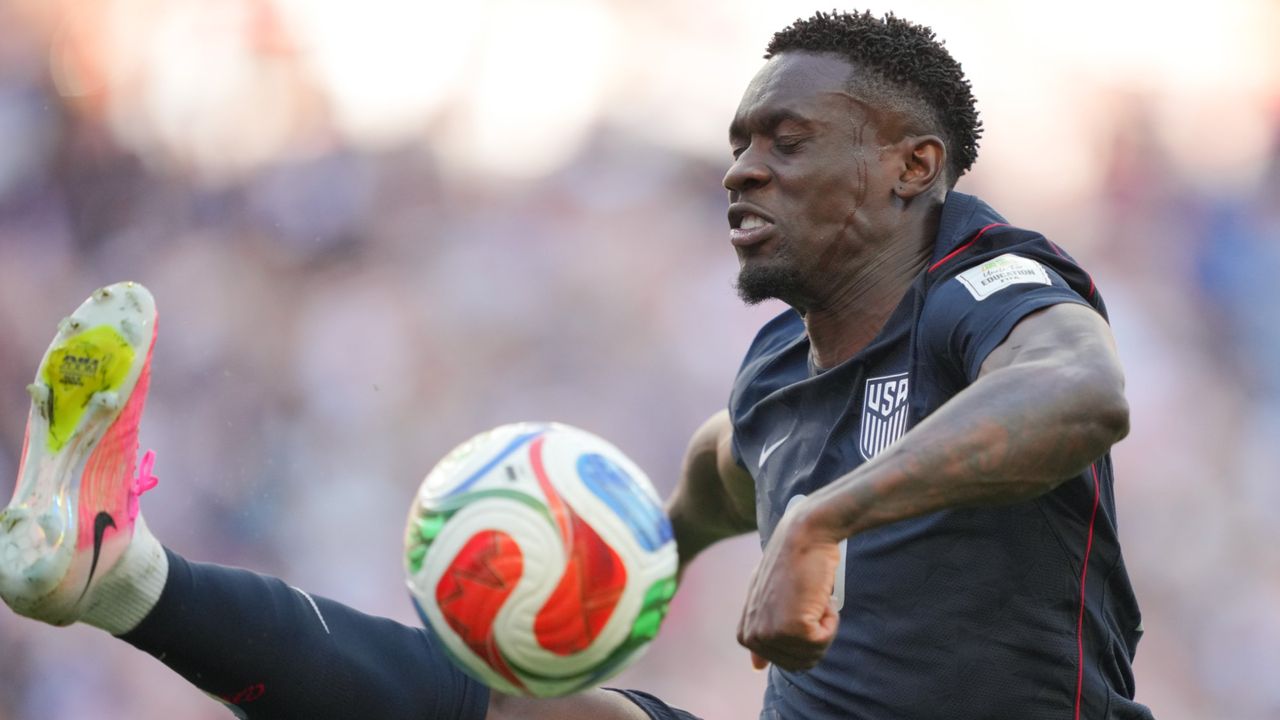
    Folarin Balogun red card: did Fifa cross a red line?

    “The only thing more riling than a referee’s interference in a sports event is a politician’s,” said Sally Jenkins in The Atlantic. The red card issued against US star striker Folarin Balogun (pictured above) for “stepping on an opponent’s ankle” during the World Cup match against Bosnia-Herzegovina was a “terrible call”. But Fifa’s regulations “couldn’t be clearer”: a red card means “automatic suspension for the next game”.

    Instead, the tournament organisers “magically lifted” the 25-year-old’s suspension in time for the host team’s last-16 clash against Belgium on Monday, after a phone call by Donald Trump to “his good friend Gianni Infantino, the president of Fifa”. 

    The US president later thanked Fifa for “doing what was right, and reversing a great injustice”. But the world governing body has given “such a feeble procedural explanation” for the reversal, said Jenkins, that the “entire sporting globe” is “incensed over the garbage-y scent of an inside job”.

    ‘Trump being Trump’
    “Reviewing the legal consequences of red cards in football is nothing new in the modern game,” Mohammad al-Kamali, chair of Fifa’s disciplinary committee, said in a statement. The red card was “not overturned”; its effects were suspended. Fifa’s disciplinary code allows the judicial body to decide to “fully or partially suspend the implementation of a disciplinary measure”, opting instead for a probation, said The Independent’s senior sports writer Kieran Jackson. Balogun has essentially received a “suspended sentence”, active for one year.

    Still, no one can claim Trump “fails to advocate for American interests with a doggedness that borders on obsession”, said Nicole Russell in USA Today. I’m not surprised he made the call: this is just “Trump being Trump”, and a World Cup red card was “never going to be the exception”. But Infantino “could have said no”.

    ‘Viper in the tent’
    Critics say this latest episode is “symptomatic of deeper problems at Infantino’s Fifa”, said the Financial Times’ sports editor Josh Noble. They argue that the federation’s decision-making is “increasingly designed to further political and commercial goals”.

    The US’s exit from the tournament “allows this rotten case to be quickly brushed under the rug”, said The i Paper’s chief football writer Daniel Storey. But it has “slipped a viper into the tent of football’s governance”.


    Good day 🗑️

    … for Count Binface, whose odds of winning the Clacton by-election against Nigel Farage were slashed by bookmaker William Hill to 9/2. The self-described intergalactic space warrior, who has run in a series of high-profile elections, was tipped for success this time round after the other main parties refused to field candidates. 


    Bad day 🌿

    … for marine life, as the Met Office warns of the risk of “mass mortality events” in UK waters as ocean temperatures reach “extreme” levels. The marine heatwave threatens to damage seagrass and kelp habitats, trigger harmful algal blooms and alter fish populations. 


    PICTURE OF THE DAY

    ‘Path Towards the Stars’

    The Milky Way arcs over Tenerife’s volcanic landscape. The image, captured by Italy’s Matteo Strassera, has been shortlisted from nearly 4,000 entries to the Royal Observatory Greenwich’s 18th annual ZWO Astronomy Photographer of the Year competition.

    © Matteo Strassera / ZWO Astronomy Photographer of the Year


    Puzzles

    Chain Word

    Try The Week’s new daily word challenge in our puzzles and quizzes section

    Play here


    THE WEEK RECOMMENDS

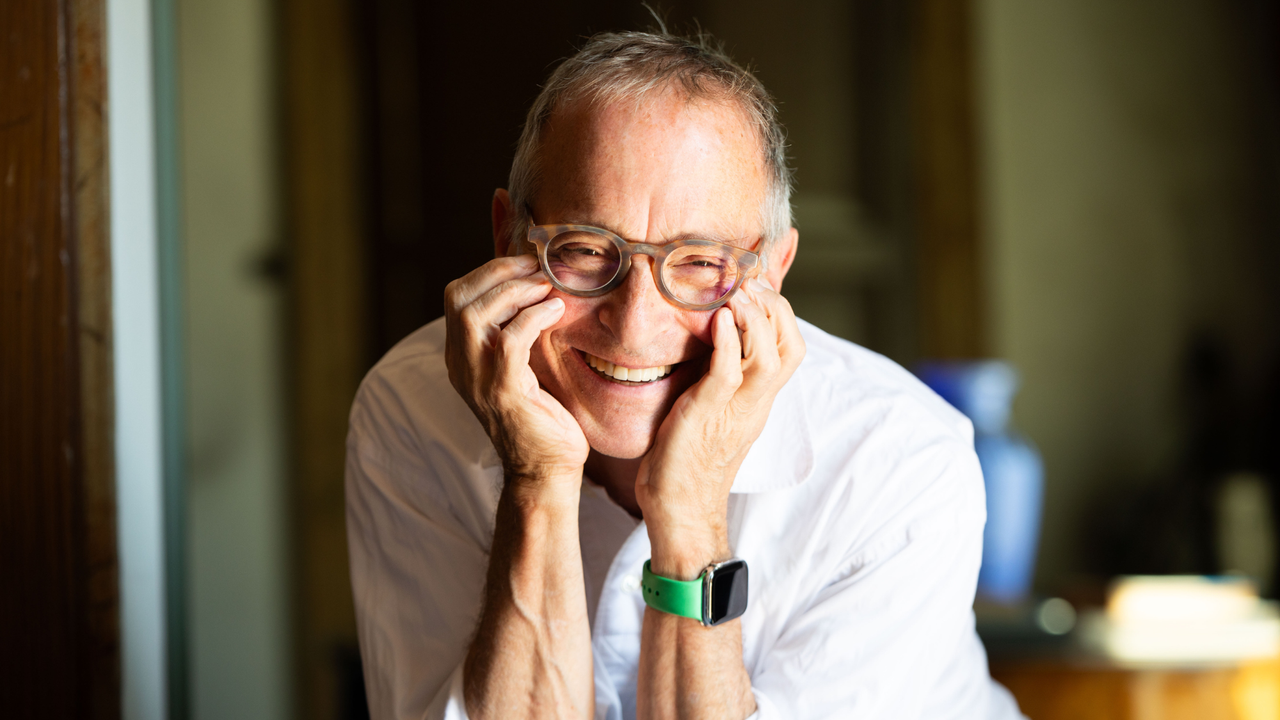
    David Sedaris examines ageing with ‘grim glee’

    “What can there possibly be left in the Sedaris backstory that the writer hasn’t already mined?” asked Emma Brockes in The Guardian. The American humourist has written nine volumes of essays over his decades-long career. But his latest collection reveals that he hasn’t run out of ideas. Reading Sedaris is now a “glitchier experience” but his “tone still charms, even as it advances to a state of crankiness that makes him look like a gay Larry David”.

    In the 28 essays that make up “The Land and its People”, Sedaris sticks to his tried-and-tested formula of harvesting from “everyday experiences with his husband, Hugh, his siblings and his friends”. The book is peppered with “laugh-out-loud moments”, such as his experience at a “No Kings” protest against Donald Trump where he finds himself “baffled by his fellow protesters’ lack of focus”.

    Inevitably, some of the essays “have more going for them, and more in them, than others”, said Roddy Doyle in The New York Times. As to whether it’s as funny as his earlier books, “we’re very lucky to have both”. Sedaris has grown older and the “world seems weirder”. That’s why I love reading his work: “for him, being alive has always been strange and atrocious, contradictory, unfair and hilarious”. Now approaching 70, he “examines ageing with the same vigour, curiosity and grim glee” that brought his other books to life.

    It’s when Sedaris reflects on the “minutiae of everyday life” that his writing “really shines”, said Buzz Magazine. Whether “documenting a humdrum car journey” or “arguing in bad French with an AI assistant on Duolingo”, he remains a “masterful storyteller” who is “always outrageous and highly entertaining company”.


    Statistic of the day

    £28 million: How much Virgin Media has been fined for delaying or preventing customers from cancelling their contracts – the biggest penalty ever issued by Ofcom under its consumer protection rules. The regulator said the telecoms giant “likely mishandled” millions of customer phone calls between 2022 and 2024, with tactics including call-dropping, unnecessary transfers and putting customers on hold for “no reason”.


    instant opinion

    Today’s best commentary

    Here’s the lesson to learn from England’s World Cup joy: shared purpose is key, not shared ancestry
    Maya Tudor in The Guardian
    When England beat Mexico, “millions of people experienced something increasingly rare in modern Britain: uncomplicated national joy”, writes politics professor Maya Tudor. Our country’s “political malaise” and “endless arguments” were replaced by “pride in a shared national story”. No one was “asking where these footballers’ grandparents had been born”. The team “offered a different vision: confident, ambitious and united by shared purpose rather than shared ancestry”. The challenge now is to achieve unity that “lasts longer than 90 minutes”.

    Labour and the Tories need to outflank the extremists
    Stephen Bush in the Financial Times
    Imitation “may be the greatest form of flattery but it is a poor political strategy”, writes Stephen Bush. The “theory” that elections are “won on issues of culture” has been “tested to destruction” – the Tory party will never be a “convincing populist party” despite acting like “a regional annexe of Reform”, and Labour’s “populist leftwing measures” haven’t won back “voters lost to the Greens”. The UK’s “two-party system might yet be revived”, but only if both return to “core principles” voters actually care about.

    Give the young reason to be proud of Britain
    Munira Mirza in The Times
    The impact of the financial crisis, Brexit and “the return of zero sum competition in global affairs” all send a message that “the nation state is back and Britain must adapt”, writes former No. 10 policy unit director Munira Mirza. Restoring patriotic pride will take more than “performatively flying the flag”. Andy Burnham must focus on “prioritising the welfare of those who live and contribute in the UK”, whether by ensuring “cheap, abundant energy” or “helping young British entrepreneurs”.


    word of the day

    Topolino

    Italian for “little mouse” and the name of Fiat’s two-seater electric car, now launching in the UK and US. “It is, indeed, very little,” at only 2.5 metres long, said The Wall Street Journal. And with a top speed of 28mph, the Topolino is “in competition with a class of low-speed vehicles and upscale golf carts” rather than typical passenger cars. 


    Evening Review was written and edited by Hollie Clemence, Rebecca Messina, Will Barker, Harriet Marsden, Chas Newkey-Burden, Irenie Forshaw, Adrienne Wyper, David Edwards and Kari Wilkin, with illustrations from Stephen P. Kelly.

    Image credits, from top: illustration by Stephen P. Kelly / Getty Images; Christopher Furlong / Getty Images; John Todd / ISI Photos / ISI Photos / Getty Images; © Matteo Strassera / ZWO Astronomy Photographer of the Year; Leonardo Cendamo / Getty Images

    Morning Report and Evening Review were named Newsletter of the Year at the Publisher Newsletter Awards 2025
     

    Recent editions

    • Morning Report

      Farage’s by-election gamble backfires

    • Evening Review

      Farage declares war

    • Morning Report

      Infantino faces calls to resign

    VIEW ALL
    TheWeek
    • About Us
    • Contact Future's experts
    • Terms and Conditions
    • Privacy Policy
    • Cookie Policy
    • Advertise With Us
    • FAQ
    Add as a preferred source on Google Add as a preferred source on Google

    The Week UK is part of Future plc, an international media group and leading digital publisher. Visit our corporate site.

    © Future Publishing Limited Quay House, The Ambury, Bath BA1 1UA. All rights reserved. England and Wales company registration number 2008885.