The Week The Week
flag of US
US
flag of UK
UK
https://cdn.mos.cms.futurecdn.net/flexiimages/jzblygzdxr1769609154.gif

SUBSCRIBE

Try 6 weeks free

Sign in
  • View Profile
  • Sign out
  • The Explainer
  • Talking Points
  • The Week Recommends
  • Podcasts
  • Newsletters
  • From the Magazine
  • The Week Junior
  • More
    • Politics
    • World News
    • Business
    • Health
    • Science
    • Food & Drink
    • Travel
    • Culture
    • History
    • Personal Finance
    • Puzzles
    • Photos
    • The Blend
    • All Categories
  • Newsletter sign up Newsletter
  • The Week Evening Review
    A ‘maritime embargo’, the new cabinet, and long queues for Russian drivers

     
    TODAY’S BIG QUESTION

    A new front in the Middle East conflict?

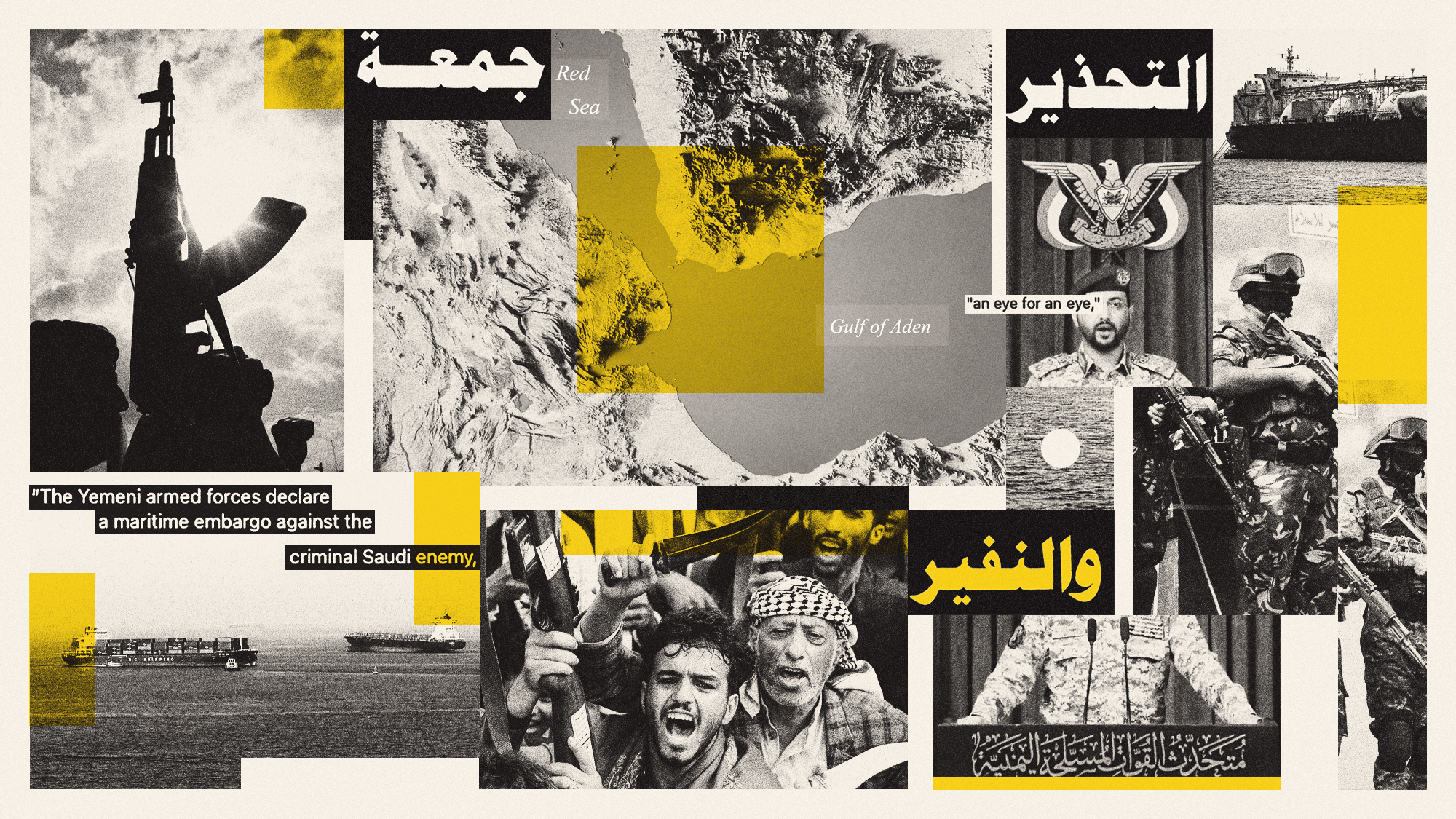
    Yemen’s Iran-aligned Houthi militia has announced it is closing the Bab al-Mandab Strait to Saudi ships, in a “maritime embargo” that could further disrupt global energy supplies. The strait, a strategic gateway linking the Red Sea with the Gulf of Aden, is one of the world’s most important oil transit routes. And, in recent days, Iran has reportedly called on the Houthis to block the strait to all tanker traffic passing through it.

    Bab al-Mandab is the “chokepoint” on the key sea path that avoids the Strait of Hormuz, so closing it could seriously “squeeze the global economy” and “add another layer of complexity” to the Middle East conflict, said The Wall Street Journal.

    What did the commentators say?
    This strait is “one of the region’s most sensitive sources of leverage”, and that makes the Houthis Iran’s “best placed” allies “to open another pressure front”, said Ahmed al-Shalafi on Al Jazeera. Around 10% to 12% of annual global maritime trade passes through the strait. With both Bab al-Mandab and Hormuz closed, cargo ships would have to “take a weeks-long detour” around Africa, said Akhtar Makoii in The Telegraph.

    The Houthis have already shown they are capable of shutting down the waterway: “during the Gaza war, they fired on commercial vessels in the Red Sea for months, driving much of the world’s shipping away from the route”. Closing it again would allow the Houthis to “press their own regional ambitions” and, particularly, “punish Saudi Arabia, their long-time enemy”. 

    Recent hostilities are “breaking down” the informal 2022 Saudi-Houthi truce that “ended virtually all cross-border attacks” between the two countries, said Stephen Kalin in The Wall Street Journal. The Houthis “see an opportunity to gain an advantage” on the Saudis and feel “strategically emboldened by a perception that Iran has outmanoeuvred the US”.

    What next?
    Saudi Arabia does not seem “eager to return quickly to a broad war” with the Houthis, said al-Shalafi on Al Jazeera.

    “Whether the Houthis move from threats to direct action” or not “remains the critical issue”, Yemeni analyst Mohammed Albasha told Reuters. But “even if no ships are attacked, ​the announcement alone is likely to disrupt shipping and create ​uncertainty”.


    THE EXPLAINER

    Who’s who in Andy Burnham’s new cabinet

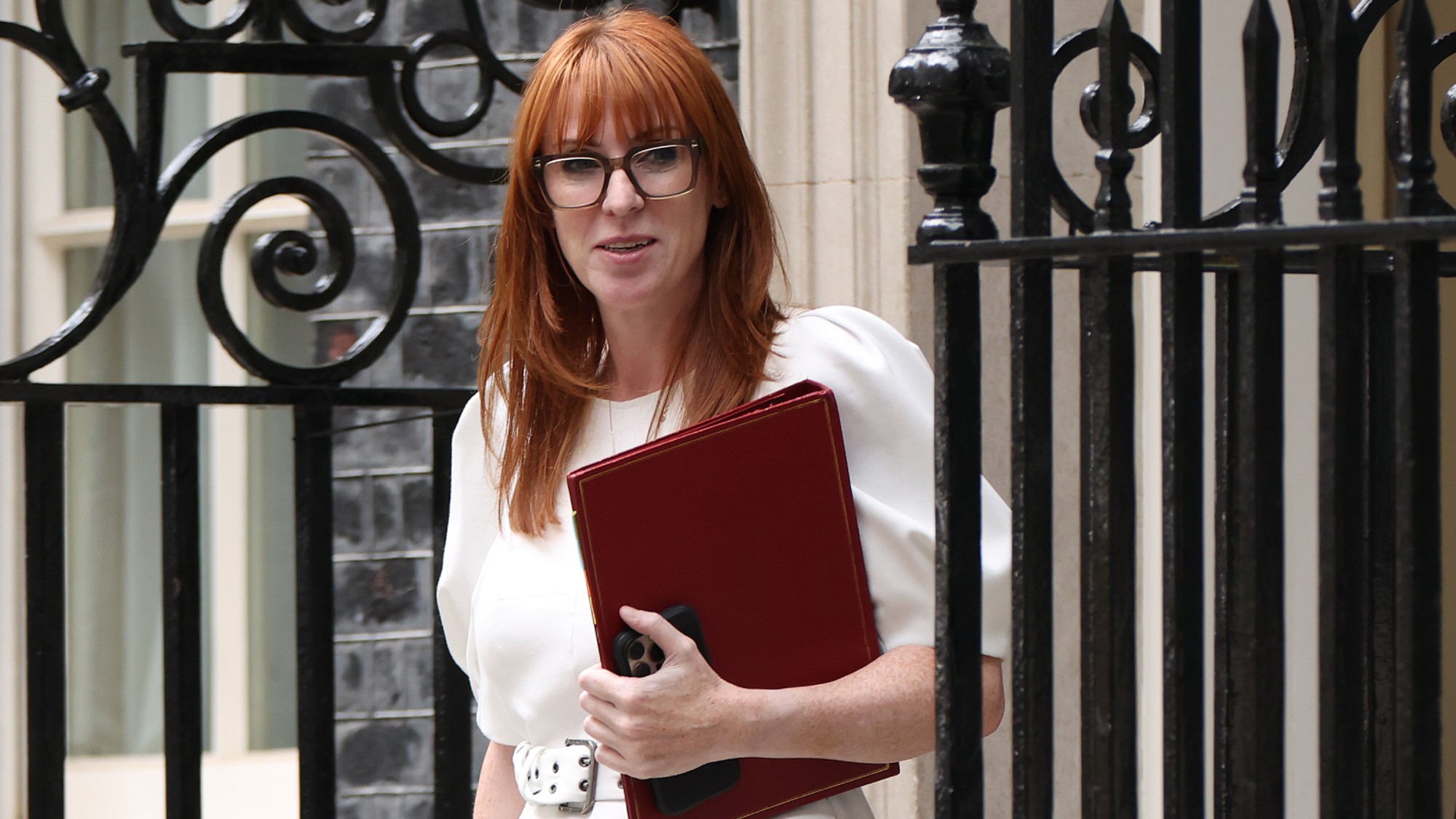
    Andy Burnham began his premiership in dramatic style last night, with a brutal purge of ministers loyal to his predecessor in a cabinet reshuffle far more wide-ranging than many expected. Today the new PM held the first meeting of his top team, “spanning the mainstream wings of the party, including key Northern allies and ministers who fell out with Starmer”, said Politico’s UK political correspondent, Sam Blewett.

    Who took the top jobs?
    The biggest winner is the new Chancellor John Healey, a surprise pick but seen as a safe pair of hands. Ed Miliband was appointed foreign secretary, replacing Yvette Cooper, who was moved to the health department in what is technically a demotion. Lucy Powell was made education secretary, displacing Bridget Phillipson who was left only with her equalities brief. Home Secretary Shabana Mahmood is one of the few Starmer-era ministers to keep her job, along with Pat McFadden at the Department for Work and Pensions, and Culture Secretary Lisa Nandy.

    Burnham loyalists make up much of the rest of the cabinet, with his right-hand woman and key enforcer Louise Haigh becoming chancellor of the Duchy of Lancaster and first secretary of state, tasked with making government run effectively. Anneliese Midgley, one of the key figures in Burnham’s leadership campaign, has become chief whip, while Miatta Fahnbulleh takes over from Miliband as energy secretary.

    Rounding off a long evening of Westminster psychodrama, former deputy PM Angela Rayner returned to her old job as housing and communities secretary, and one-time leadership contender and former health secretary Wes Streeting became secretary of state for defence.

    What does this say about Burnham’s plans?
    In his first speech as PM, Burnham vowed to end rough sleeping, raise the income tax personal allowance, cut VAT on electricity bills and reform social care. Now it’s up to Healey to find the cash and the flexibility, within strict fiscal rules, to make these, and other ambitions, happen.

    Burnham appears to have a “much stronger theory of power – a view about how he wants to use the office and what he wants to prioritise – than his recent predecessors”, said journalist Sam Freedman in his Comment is Freed newsletter. Unlike Starmer, whose government “looked buffeted by events and U-turns” from day one, Burnham “has indicated not just that he has priorities but that he is willing to make the institutional changes required”.


    QUOTE OF THE DAY

    “The pain is immense, and it will take time for this wound to heal.”

    Lionel Messi breaks his silence on Argentina’s World Cup final defeat to Spain. Writing on Instagram last night, the legendary striker said he would “also hold on to all the good” and that the matches would “forever remain in our memories”.


    Poll watch

    Net approval for Donald Trump’s decision to attack Iran has fallen to -30% among Americans. While 27% think it was the right move, 57% disagree. “The war in Vietnam took six years to become as reviled as the Iran war has become in six months,” said The Economist, which carried out the survey of 1,616 American adults with YouGov.


    IN THE SPOTLIGHT

    Russia is in the middle of a major fuel crisis

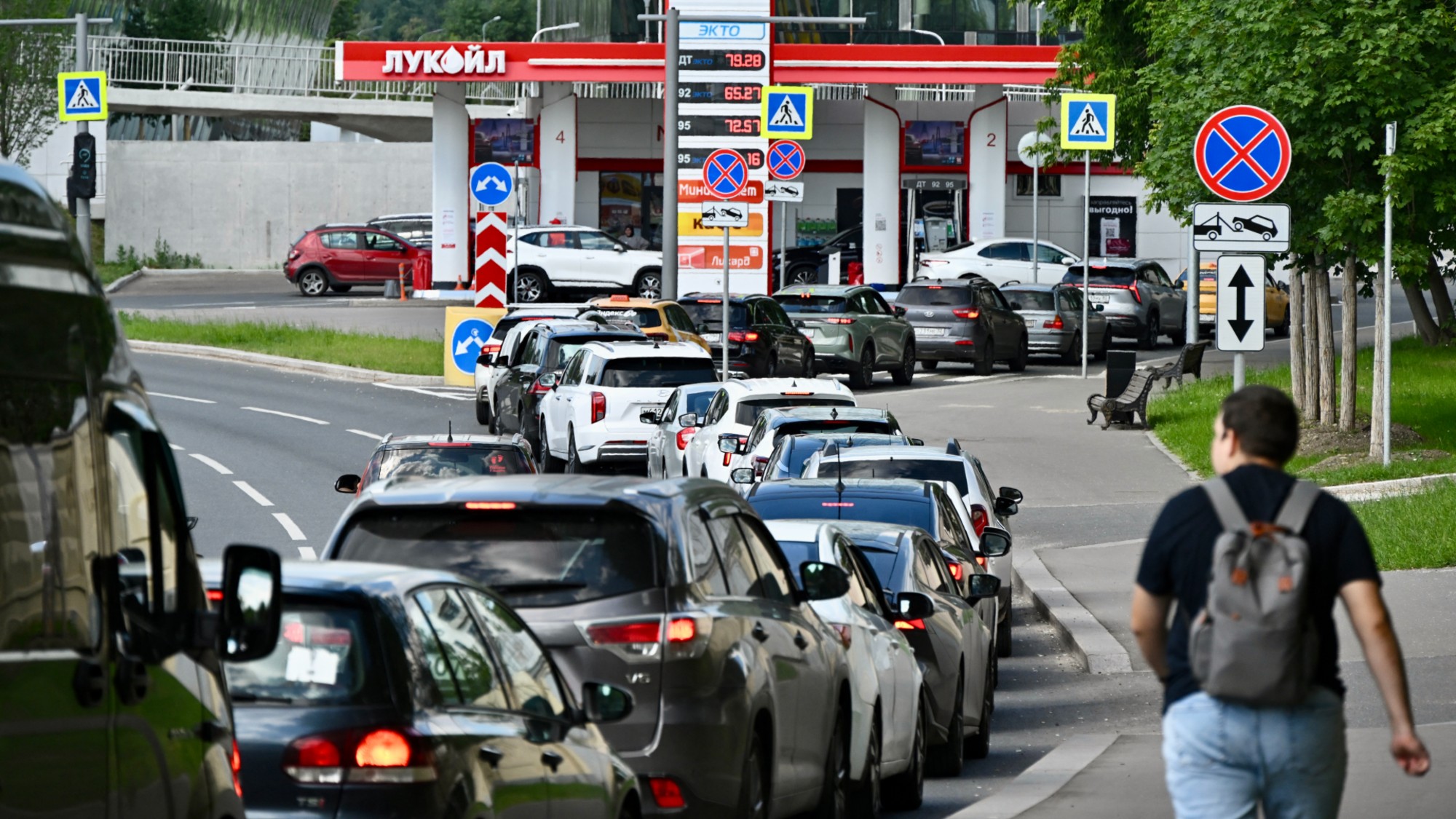
    Russia, one of the world’s top oil producers, is facing an “unprecedented” fuel crisis, said Agence France Presse. As Ukrainian strikes on its depots intensify, life in Russia has been disrupted “more than at any point since the conflict began in 2022”. Lining up in queues for petrol has “become a staple of life”, causing “impatience” in a country where cars are the primary mode of transport.

    ‘Lowest level in over two decades’
    Putin has rarely acknowledged that the Russian invasion of Ukraine has led to challenges. But earlier this month he admitted in an interview with state television that the country was facing a “certain deficit” of fuel. Russia must “reduce to a minimum the impact of terrorist attacks on our civilian targets and infrastructure”, he told his senior officials. 

    Ukraine has “stepped up attacks on Russian energy facilities in recent months, hitting Russia’s crude oil”, said Al Jazeera. The “amount of crude oil Russia processed into fuel in June was down 25% from a year ago, to 3.95 million barrels per day – the lowest level in over two decades”, Gary Peach, an oil markets analyst at Energy Intelligence, told The Associated Press.

    Ukraine has “clearly scaled up” the quantity and quality of their drones, Christina Harward, an expert at the Institute for the Study of War, told Deutsche Welle.

    ‘Frustration and uncertainty’
    In some parts of Russia, fuel shortages have led to social and financial unrest. The “lines are growing at Russian gas stations – and so is the frustration and uncertainty”, said the AP.

    The effects of the shortages have been highlighted across social media, with one post reportedly showing farmers “struggling to afford fuel for harvest”, said Reuters. Some Russian drivers have also started to “crowdsource maps, and trade tips about which stations have fuel and shorter lines”. Internet searches for “‘how to siphon fuel’ rose to more than ⁠9,300” in June from just 697 the month before.

    For now, Russia has “enough fuel for the army, key industries, and agriculture”, said Alexander Kolyandr at the Center for European Policy Analysis. “But, everywhere else, the choice is between paying more and waiting longer.”


    Good day 🪵

    … for female lumberjacks, who set three world records at this year’s Lumberjack World Championships in Wisconsin. One Czech woman smashed two previous bests for chopping white pine, and an American set a new time for the “Women’s Boom Run”, sprinting over eight floating red cedar logs and back in 13.78 seconds.


    Bad day 🦤

    … for avian research, after a sharp increase in AI-manipulated images of birds on citizen database platforms. Scientists have urged birdwatchers to limit their use of AI as it could undermine the credibility of the public sightings they routinely use to monitor species and research habitats.


    PICTURE OF THE DAY

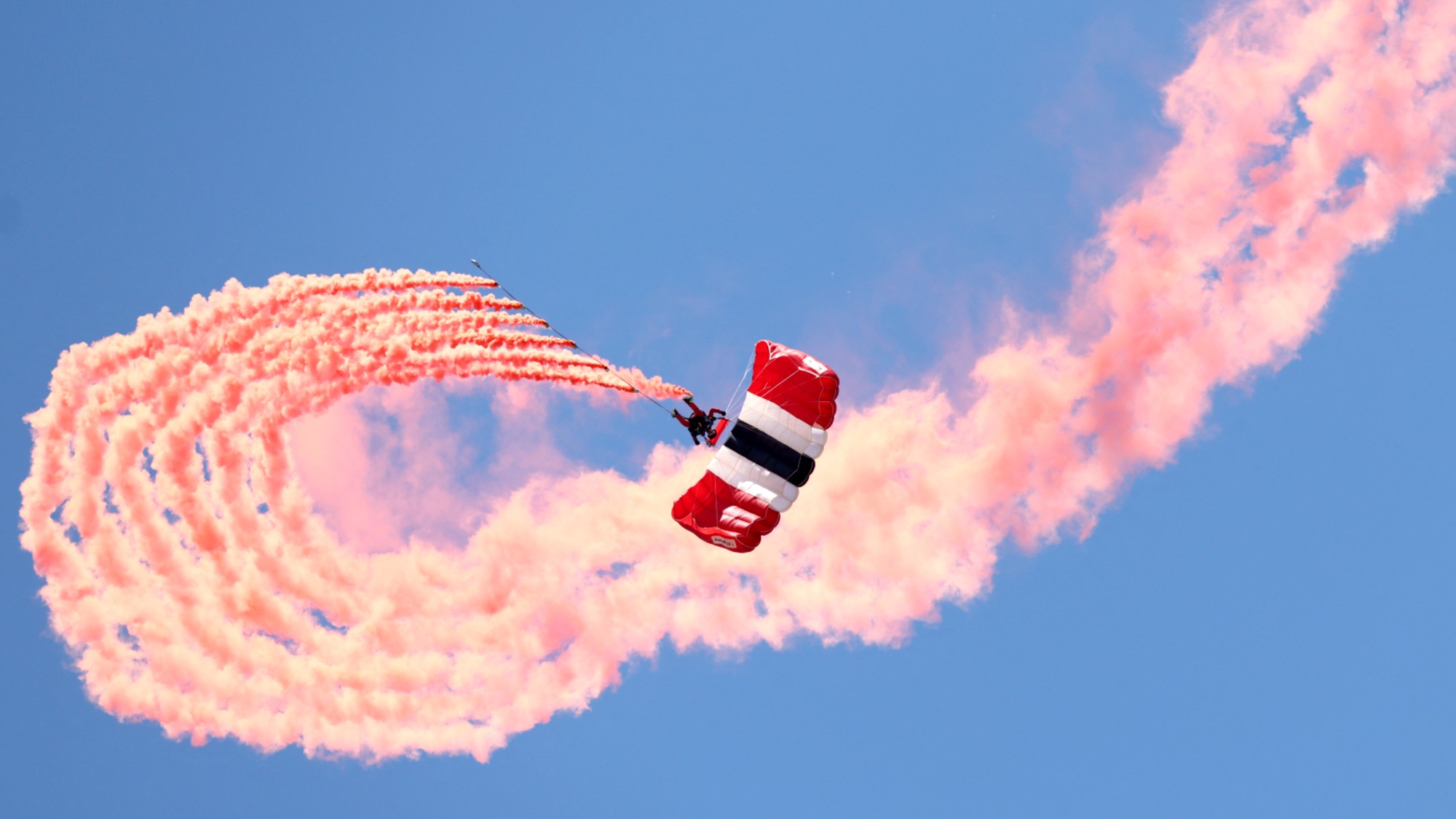
    Loop-de-loop

    A member of the Red Devils, the British Army’s parachute display team, turns in the sky above the Farnborough International Airshow. The annual event in Hampshire attracts tens of thousands of aviation fans, keen to see both state-of-the-art and historic aircraft.

    Toby Shepheard / AFP / Getty Images


    Puzzles

    Chain Word

    Try The Week’s new daily word challenge in our puzzles and quizzes section

    Play here


    THE WEEK RECOMMENDS

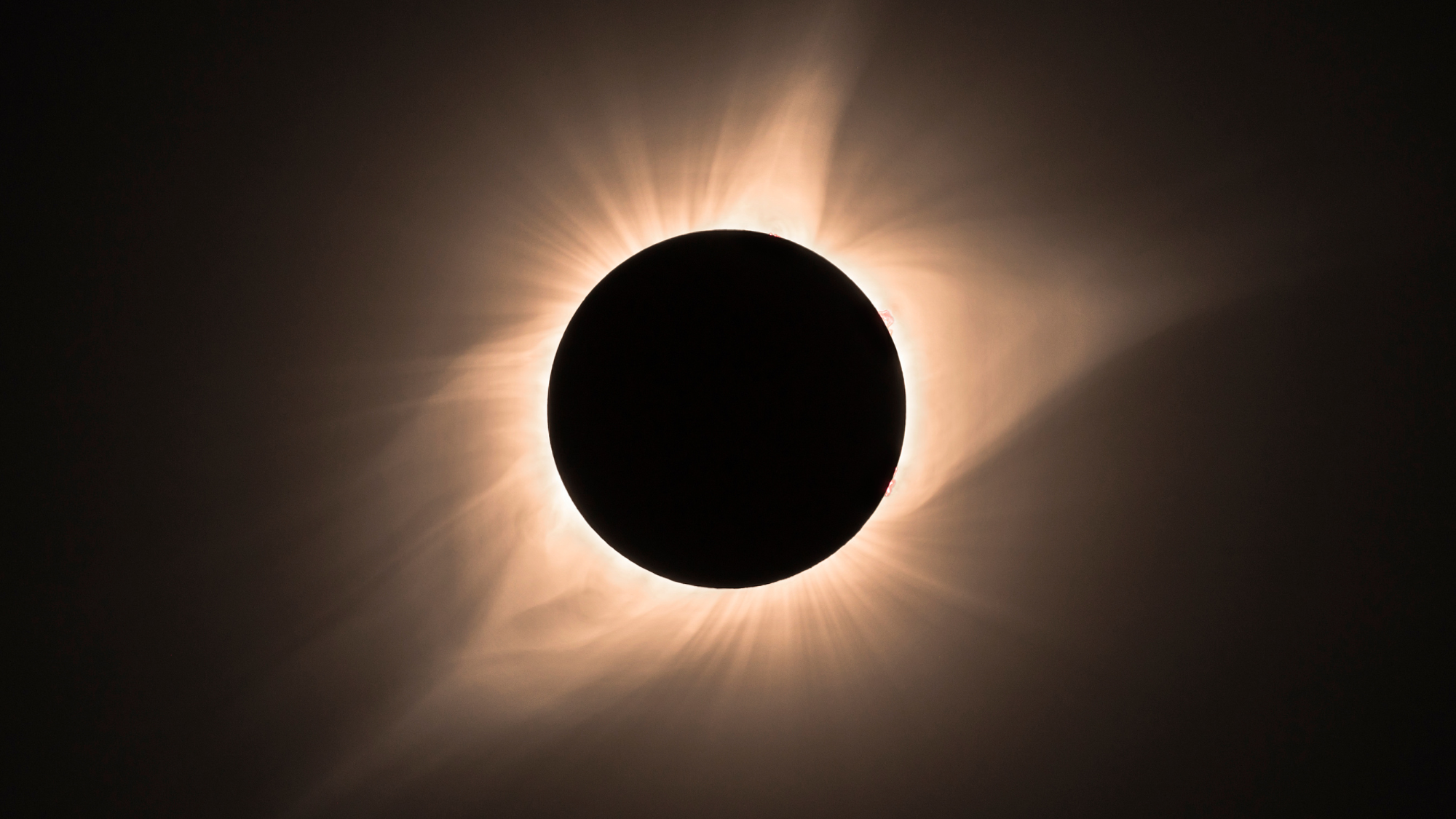
    Best places to watch August’s total solar eclipse

    On 12 August, there will be a total solar eclipse over parts of Europe for the first time in almost 30 years. For a few moments, parts of Greenland, Iceland, Spain, Russia and Portugal will experience total darkness in daylight hours.

    The Moon will pass directly between the Sun and the Earth, completely blocking the Sun’s brightness and plunging “daylight momentarily into darkness”, said National Geographic. Anyone watching will need proper eclipse glasses, which are thousands of times darker than regular sunglasses, to protect their eyes.

    The partial (90%) eclipse over the UK should be visible in Edinburgh and Glasgow at 6.08pm, in Manchester and Liverpool at 6.13pm, and in London, Cardiff, Bristol and Cornwall at about 6.15pm.

    Valencia, Spain is on the path of totality. And, in the months leading up to the eclipse, the city has been putting together celestial experiences, lectures and workshops at museums and cultural centres. Cruise lines travelling between mainland Spain and Mallorca, including Celebrity, Fred Olsen and Princess, are also offering “eclipse specials” and will “ensure their vessels are on the path of totality”, said The Independent.

    If you’re lucky enough to be in Valencia on 12 August, seek out an open location with a clear western horizon and minimal light pollution in the late evening, shortly before sunset. Some of the “best vantage points” will be rooftops, said National Geographic: places like the Grand Hotel Centenari and Luna de Valencia in Hotel Puerta Serranos are staging rooftop viewings, with cocktails and music to “complete the experience”.

    Other Spanish towns in the path of totality include Oviedo, Leon, Burgos and Valladolid. Northern Russia will experience total darkness at midday, before it moves to Iceland and Greenland in the afternoon and evening.


    Statistic of the day

    One in 292 million: The odds of winning the top prize in Powerball, the world’s biggest rolling jackpot game, which launches in the UK today. Players pay £4 per line to try to win the jackpot, currently estimated at £300 million, and paid out over 30 years.


    instant opinion

    Today’s best commentary

    The ultra rich should be delighted to pay a wealth tax
    Zing Tsjeng in The i Paper
    “As the gap between the haves and the have-nots” becomes an “impassable gulf”, “public sentiment” has shifted, writes Zing Tsjeng, presenter of the “Good Bad Billionaire” podcast. The lives of the uber-rich now inspire such feelings of “discomfort – if not outright distaste” – that three-quarters of Brits back a wealth tax. It would be “in the interests” of the wealthy to fall in line: history shows that, left unchecked, “populist anger towards monied elites has a tendency to end in bloodshed”.

    This is the end of Russia
    Alexander Etkind in The New Statesman
    More than four years into a war it “expected to win in days”, Russia’s defeat in Ukraine appears “decided”, writes Russian historian Alexander Etkind. Ukraine’s “cheap, dispersed and precise” drones have “outrun and outgunned Russia’s sclerotic, Soviet-rooted” weaponry, and Vladimir Putin’s biggest “bet – his mysterious friendship with the US President – has started cracking”. The momentum “has shifted” in Kyiv’s favour and “when the smoke settles” on this conflict, “the geopolitical map of Europe, and of Eurasia as a whole, will change forever”.

    France sans onions is like Ireland without potatoes
    Hannah Betts in The Telegraph
    “France is facing a crisis of national soul-morphing proportions,” writes Hannah Betts. The “foundation of Gallic gastronomy” – the onion – is in “catastrophic dearth” following successive heatwaves, “causing chefs countrywide to weep”. It’s “au revoir to the fond de cuisine” and “bonjour bland monotony”. “Not for nothing” do we imagine the archetypal Frenchman as “bereted and Breton jerseyed”, with “strings of alliums” around his neck: France “without its onion” is like “Italy sans tomato” or “Britons deprived of tea”.


    word of the day

    Magnetoreception

    The ability to sense the Earth’s geo-magnetic fields, for orientation and navigation. A “surprisingly large number” of bee species (74 out of 96 tested) have “magnetic properties”, said Laura Russo, an evolutionary biologist from the University of Tennessee, whose findings have been published in the journal Science Advances. Writing on The Conversation, she said this suggests bees have an internal magnetic “compass” for navigation, which “is probably an ancient, well-conserved trait”.


    Evening Review was written and edited by Hollie Clemence, Rebecca Messina, Irenie Forshaw, Lea Tran, Justin Klawans, Chas Newkey-Burden, Adrienne Wyper and Helen Brown, with illustrations from Stephen P. Kelly. 

    Image credits, from top: Illustration by Stephen P. Kelly / Getty Images; Dan Kitwood / Getty Images; Igor Ivanko / AFP / Getty Images; Toby Shepheard / AFP / Getty Images; John Finney / Getty Images

    Morning Report and Evening Review were named Newsletter of the Year at the Publisher Newsletter Awards 2025
     

    Recent editions

    • Morning Report

      Healey becomes chancellor in cabinet reshuffle

    • Evening Review

      How to take on Burnham

    • Morning Report

      Spain edge Argentina to reclaim World Cup

    VIEW ALL
    TheWeek
    • About Us
    • Contact Future's experts
    • Terms and Conditions
    • Privacy Policy
    • Cookie Policy
    • Advertise With Us
    • FAQ
    Add as a preferred source on Google Add as a preferred source on Google

    The Week UK is part of Future plc, an international media group and leading digital publisher. Visit our corporate site.

    © Future Publishing Limited Quay House, The Ambury, Bath BA1 1UA. All rights reserved. England and Wales company registration number 2008885.