The Week The Week
flag of US
US
flag of UK
UK
https://cdn.mos.cms.futurecdn.net/flexiimages/jzblygzdxr1769609154.gif

SUBSCRIBE

Try 6 weeks free

Sign in
  • View Profile
  • Sign out
  • The Explainer
  • Talking Points
  • The Week Recommends
  • Podcasts
  • Newsletters
  • From the Magazine
  • The Week Junior
  • More
    • Politics
    • World News
    • Business
    • Health
    • Science
    • Food & Drink
    • Travel
    • Culture
    • History
    • Personal Finance
    • Puzzles
    • Photos
    • The Blend
    • All Categories
  • Newsletter sign up Newsletter
  • The Week Evening Review
    Political non-apologies, the UN’s next leader, and drones in Germany

     
    TODAY’S BIG QUESTION

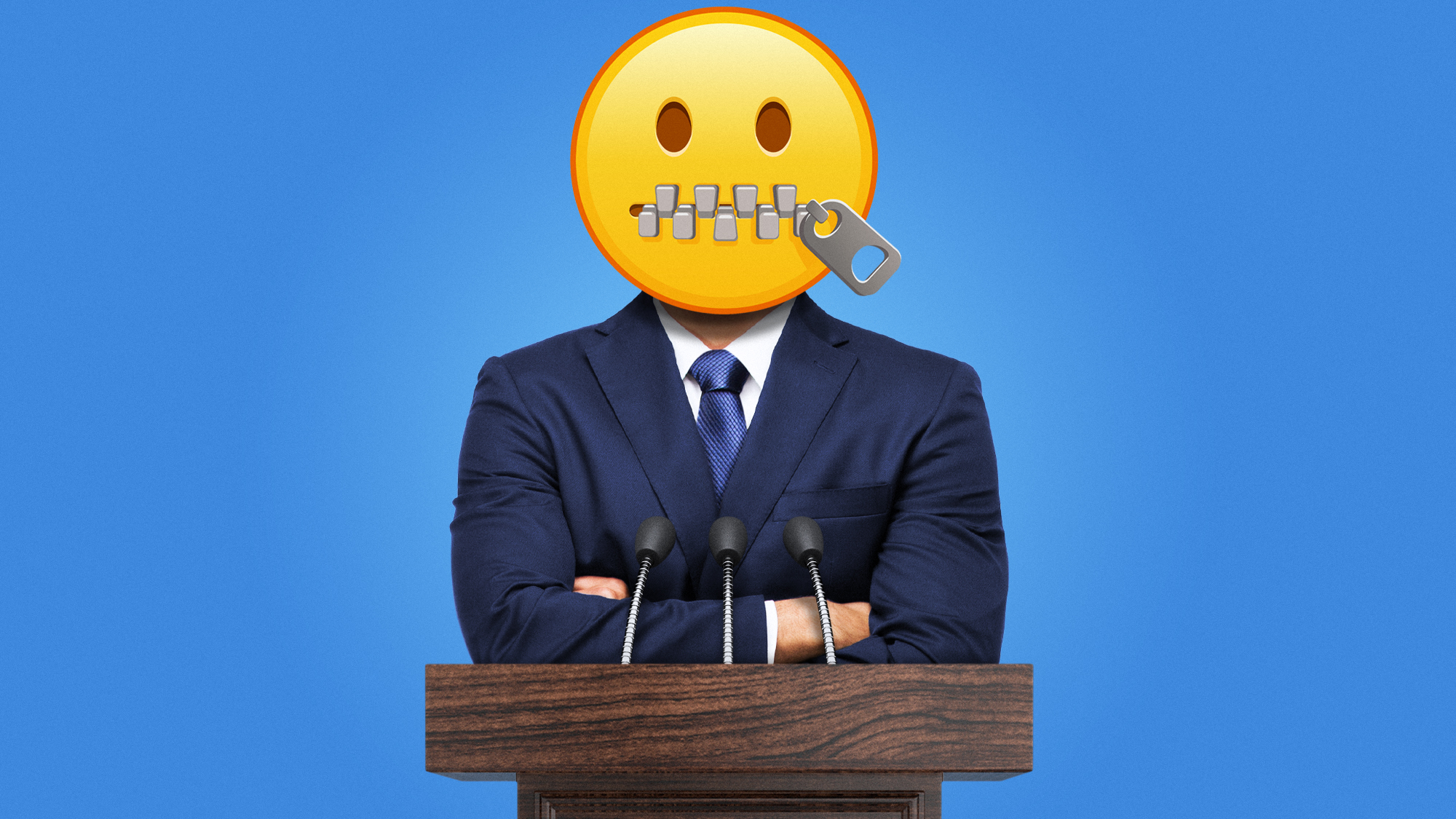
    Why do politicians struggle to apologise?

    “If I’d done it deliberately, I’d be apologising,” said Zack Polanksi last week, in “syntax recognisable to parents” everywhere, said The Economist. The leader of the Greens was refusing to apologise to Nigel Farage after he had agreed to a social-media collaboration on a series of photos – one of which showed a man in a T-shirt, an outline of a guillotine and the words: “We’re only making plans for Nigel.” Polanski insisted it was “quite obvious” that he had not done anything wrong – apart from “make an inadvertent mistake”. 

    What did the commentators say?
    Politicians “almost never apologise”, said political behaviourist Bence Hamrak on LSE Blogs. And that’s probably down to the “lack of electoral punishment for dishonesty”. Research shows that apologies “may contradict the aggressive, masculine style of politics that voters might expect”; saying sorry can “be interpreted as a sign of weakness”.

    Rather than apologise, politicians “employ a common arsenal” of tools to kill the story and preserve their reputation, said Rachel Cordery in The New Statesman. After the 1956 Suez Crisis, Anthony Eden resigned but “never accepted responsibility for his failings”. The official explanation for his resignation was “ill health”. Today, the “first step is to deny that the problem exists”, then, if the story persists, “acknowledge the crisis without accepting” the blame.

    After time has passed, some opt for the partial apology: Tony Blair apologised for “some failures” in the planning of the Iraq war and its “aftermath”, not the war itself; Liz Truss’ semi-atonement for her disastrous “mini-budget” was that she had gone “too far and too fast”.  Sometimes, public figures apologise so “long after the event” that they know “no blame could possibly attach to them”, said Simon Jenkins in The Guardian. See “Rishi Sunak for infected blood, David Cameron for Hillsborough” and “Keir Starmer for Grenfell”. 

    But people “need apologies” and “are likely to respect them” – if the regret is sincere. Apologising well could make the public “less cynical towards those in power”.

    What next?
    Reform UK reported Polanski to the police for incitement to violence, but the police decided not to take criminal action. And yet the row has damaged the leader of the Greens, according to recent polling by the More in Common think tank. Polanski’s approval rating has fallen to minus 28, making him the most unpopular major party leader in the country.


    The Explainer

    The race to be the UN’s next secretary general

    The United Nations is preparing to choose a new secretary general for the first time in a decade, with six candidates vying to succeed António Guterres of Portugal. The choice will be made by the UN General Assembly, following the recommendation of the Security Council, whose permanent members are the UK, China, France, Russia and the US. But the winner faces a huge challenge, with multiple geopolitical crises and the UN’s own status in question.

    What does the secretary general do?
    “Equal parts diplomat and advocate, civil servant and CEO”, the secretary general is both chief administrative officer and the UN’s public face, according to the organisation’s official description. He or she oversees several important UN bodies, including the Security Council, which is charged with maintaining peace and security. But, unlike a prime minister or president, the secretary general does not have the power to make laws or command countries. The role is more about persuasion, diplomacy and authority than political power.

    Who is in the running?
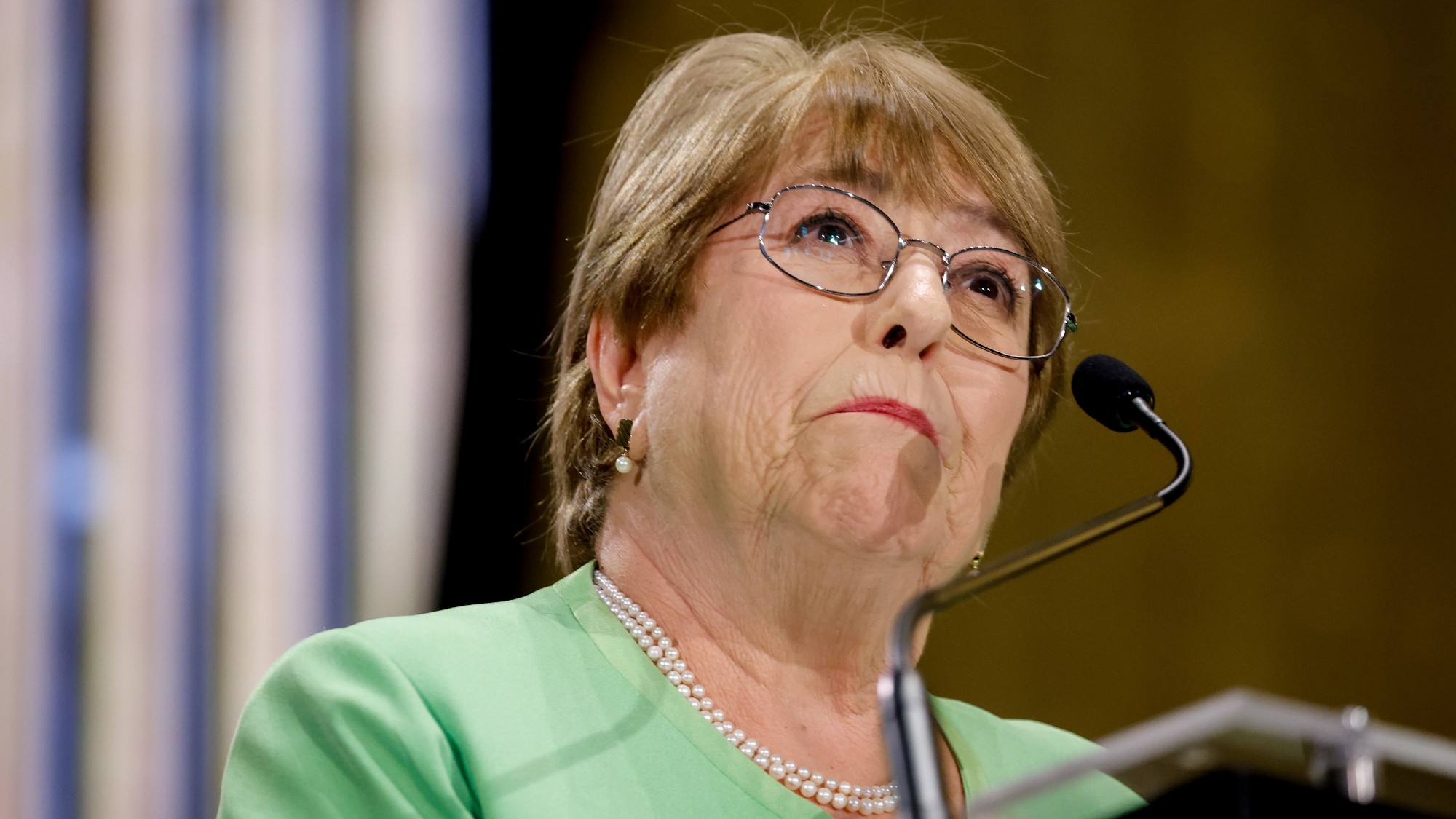
    “Calls for a Madame Secretary General” have been growing “louder”, said the Australian Institute of International Affairs. The female candidates include Michelle Bachelet (pictured above), former president of Chile; Maria Fernanda Espinosa, former foreign minister of Ecuador; Rebeca Grynspan, former vice president of Costa Rica, and Carolyn Rodrigues Birkett, former foreign minister of Guyana.

    The men in contention are Rafael Grossi, the Argentinian diplomat and director general of the UN’s nuclear watchdog, the International Atomic Energy Agency, and Macky Sall, a former prime minister and president of Senegal. Observers say “it is difficult to pick a favourite” because the world’s major powers are “divided on the outcome”, said Agence France-Presse. But Grossi has been “repeatedly mentioned”.

    What will be top of their in-tray?
    Gaza and Ukraine will be high on the list, but influencing outcomes in either will be a “tough task” because the “relevance, power and financial capability” of the UN is “under an increasingly harsh spotlight”, said Deutsche Welle.

    The UN is “an increasingly irrelevant global institution”, said Politico. The US, “its most powerful member”, is “abandoning and defunding” many parts of its “sprawling structure”. The Security Council itself “barely functions”, because of the “rivalries” between the US, China and Russia, all of whom have veto powers. “Even as a venue for international gatherings”, the UN is “fading” because leaders would “rather meet and make deals” at the G20.


    Poll watch

    Nearly half (42%) of 25- to 34-year olds work every day while they’re on holiday, compared with just over a quarter (27%) of UK workers overall. Younger employees are also more likely than older ones to feel anxious about returning from holiday, according to a poll of 1,000 workers by OnePoll for Employment Hero.


    Statistic of the day

    $942 million: The total amount Meta has been fined in the US for the harms done to children on its platforms. A New Mexico judge ordered an additional $567 million penalty last night, on top of the $375 million already imposed when the tech giant lost a landmark civil trial in March.


    IN THE SPOTLIGHT

    Leipzig drone explosives: portent of Russia-Nato war?

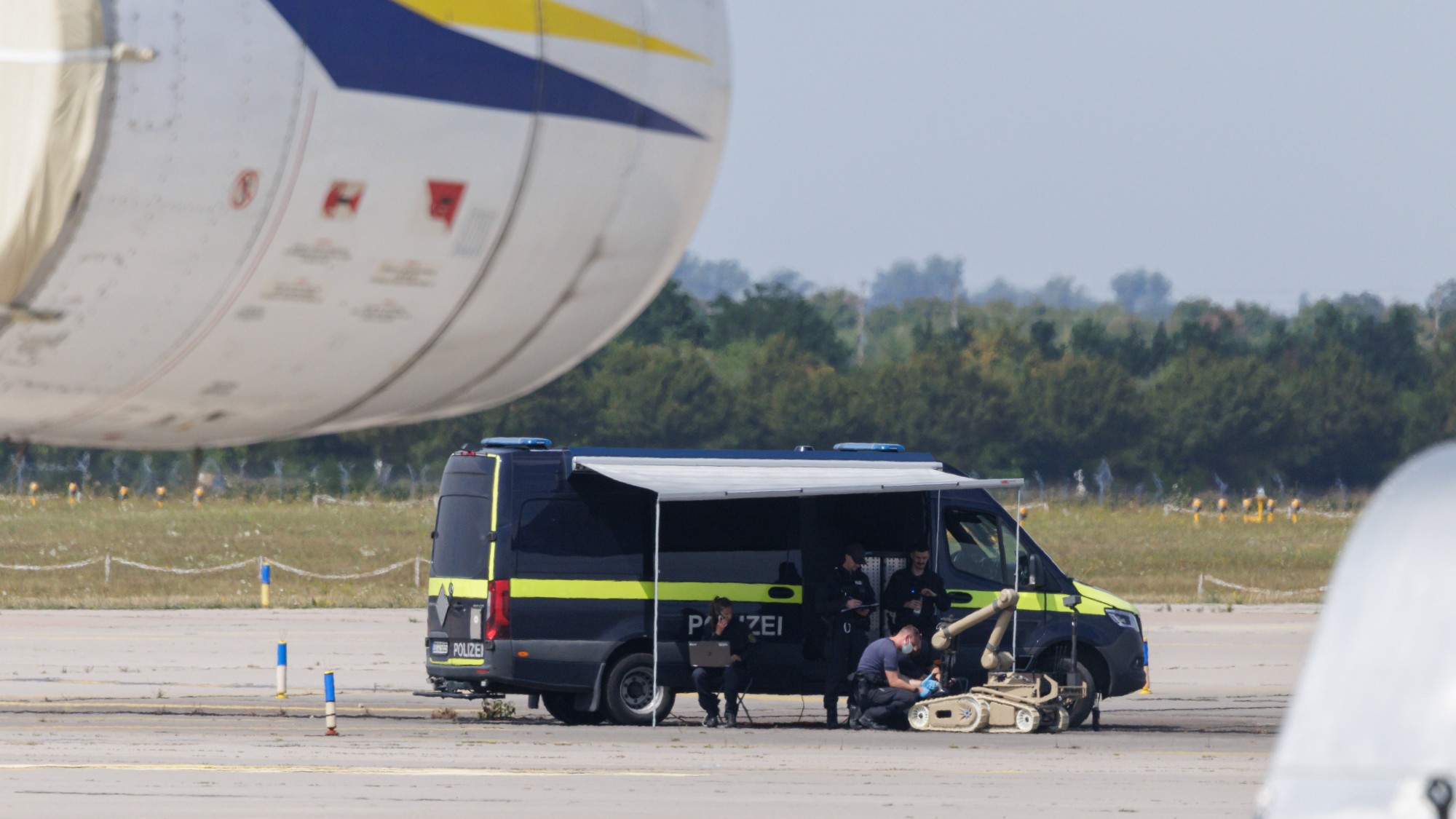
    “The fact that a drone armed with explosives is here on the grounds of an airport represents a new threat scenario,” said Germany’s Interior Minister Alexander Dobrindt in Leipzig. “We’re talking about a professional hybrid threat situation.”

    Dobrindt looked “ashen-faced”, said Newsweek. Flights were halted after the discovery of a quadcopter armed with explosives in a restricted area of the airport. Security experts are asking a “once unthinkable” question: is Germany “de facto at war, or at least engaged in a hybrid war – and with whom?”

    Germany a ‘primary target’
    Leipzig/Halle airport is a Nato and German military logistics hub. Since 2022, Ukraine has used it to transport military equipment; it’s also the base for Antonov Airlines, a Ukrainian cargo carrier. As the drone was found close to a Ukrainian freight plane, this has “directed suspicion towards Russia”, said The Guardian.

    Drone sightings at German airports rose “significantly” in the first half of 2026, said Der Spiegel. Over 165 drones were spotted at 15 airports, compared with 101 in the same period last year, according to German Air Navigation Services. The threat of drone attacks is “becoming increasingly concrete”, said Süddeutsche Zeitung. But bringing drones down is notoriously difficult. They can be stopped by “jammers, nets, or even by being shot down”, but that is a “delicate task” when they are near residential areas. Leipzig airport was equipped with a drone defence system but this “custom-made” model was seemingly able to bypass it.

    Germany is becoming the “primary target” in “Russia’s shadow war”, aimed at dissuading Berlin from supporting Kyiv “in the short term”, and weakening the country “in the long term”.

    Russia trying to ‘sow fear’
    “Moscow does have form” with this kind of attack, said the BBC. Although there is no hard evidence yet, “if Russia was behind this”, its aim was likely to “sow fear”. 

    There are also concerns about Russian interference in German regional elections in September. In some former communist and East German states, “pro-Russian sentiment remains strong”, said Politico. And, with their campaigners warning about escalations with Moscow from a “war-mongering” government, the far-right AfD party “could take power for the first time at the state level”. 


    Good day🍾

    … for English vineyards, with some growers anticipating a landmark year after four successive heatwaves have left vines thriving. It could be “one of the best vintages English wine has ever seen”, said the head winemaker at the Balfour Estate in Kent.


    Bad day🌲

    … for phallic forestry, with an unusually shaped area of Scottish woodland known as the “Cock of the North” scheduled for felling. Scottish Forestry said the much-loved Castle Crawford Wood in south Lanarkshire is “experiencing significant windblow” and is at “the end of its natural lifecycle”. 


    picture of the day

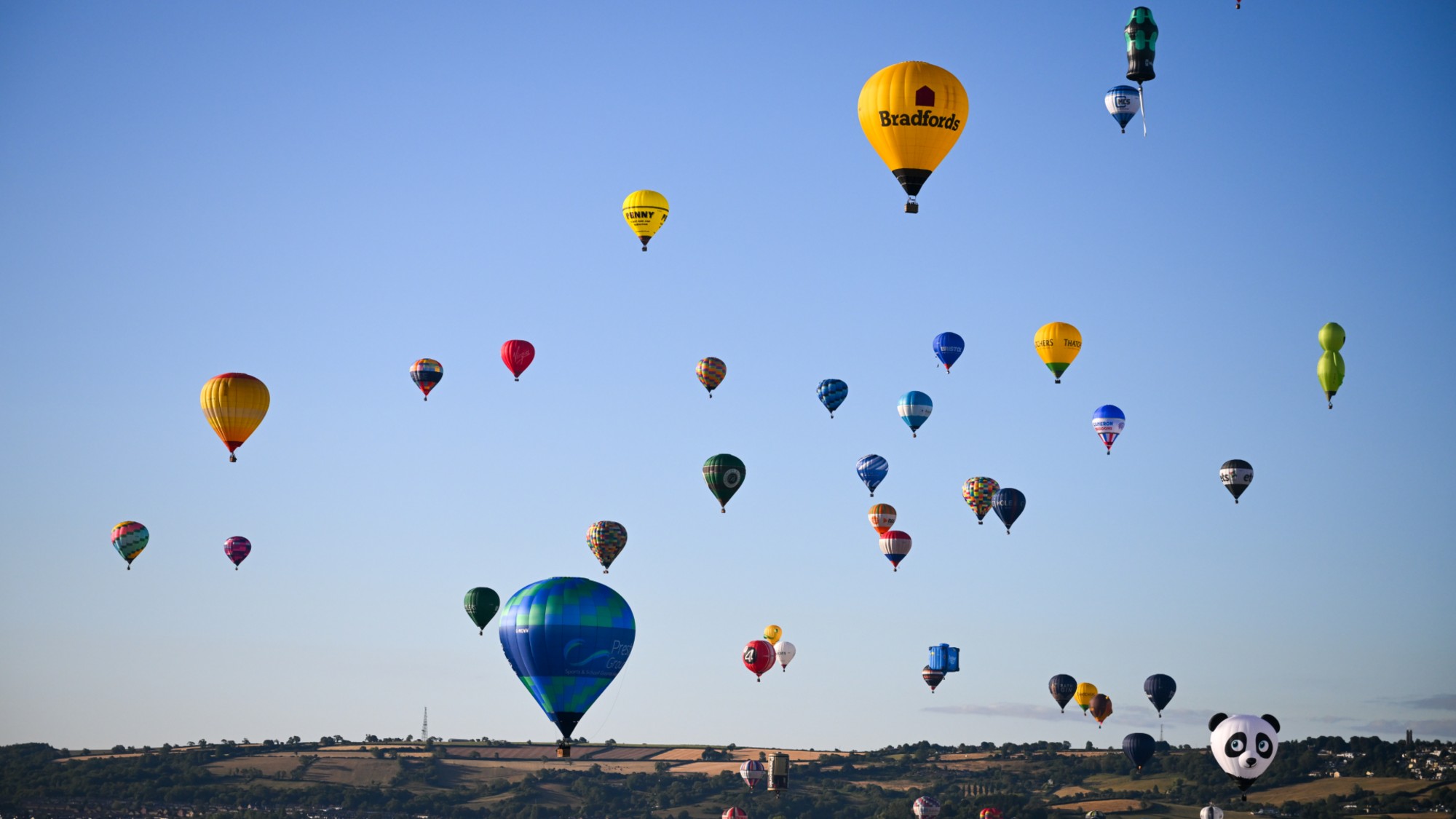
    Up, up and away

    Balloons take to the sky at the opening of the Bristol International Balloon Fiesta at Ashton Court Estate. Europe’s largest annual hot-air balloon event runs until Sunday, with “mass ascents” twice a day.

    Finnbarr Webster / Getty Images


    PUZZLES AND QUIZZES

    Quiz of The Week

    Have you been paying attention to The Week’s news? Try our weekly quiz, part of our puzzles section, which also includes sudoku and crosswords 

    Play here


    THE WEEK RECOMMENDS

    Properties of the week: houses in the Tudor style

    Denbighshire: Plas Yn Llan, Llangynhafal
    Distinguished Grade II house, dating back to 1580. 4 beds, 2 baths, kitchen, 3 receps, conservatory, gardens, outbuildings. £950,000; Fisher German.

    Worcestershire: Haventree Cottage, Suckley
    A sprawling, traditional timber-frame-build country home, set in over two acres of private grounds with far-reaching views across the Teme Valley landscape. Main bed with en suite and dressing room, 5 further beds, 2 baths, kitchen-breakfast room, 3 receps, garage, gym. £1.35m; Morgan Aps.

    Oxfordshire: Cherry Tree Cottage, Goring Heath
    Dating from the 17th century, this Grade II thatched cottage has been lovingly restored, and was nominated for a South Oxfordshire Conservation Award. 3 beds, 2 baths, open-plan kitchen-dining room, recep, terrace, gardens and grounds of approx. 0.4 acre. £800,000; Warmingham.

    Suffolk: The Malthouse, Hacheston, Woodbridge
    This remarkable Grade II home dates back to 1541 and has maintained its original timber frame. Main suite, 2 further beds (both en suite), kitchen-breakfast room, 2 receps, study, garden, outbuilding. £650,000; Fenn Wright.

    See more


    QUOTE OF THE DAY

    “Busy pubs full of people talking to each other is not a public nuisance; it is British life.”

    Downing Street pushes back at a draft licensing policy from London’s Westminster council, which recommends that pubs discourage “vertical drinking” by only allowing table service, and suggests taking last orders at 10pm. Soho “did not become world famous by taking last orders early,” the PM’s spokesperson said.


    instant opinion

    Today’s best commentary

    As a Tory, I say things are looking up. Farage is fading, and the looming threat to No 10 is called Kemi
    Simon Hart in The Guardian
    “Something is afoot; the bookies can feel it,” writes former Conservative MP Simon Hart. Kemi Badenoch is performing so confidently as my party’s leader that even “sceptics” are thinking “she really could be the next prime minister”. She has “fluency” and “clarity”, and Margaret Thatcher’s skill for “persuading MPs and the public” that her “ambition is worth some pain along the way”. With her poll ratings climbing and the Reform “vessel heading for the icebergs”, this looks like “an opportunity for us”.

    Jason Arday is merely a symptom of the Left’s corruption of excellence
    Tomiwa Owolade in The Telegraph
    “For an autistic black man” to become a Cambridge University professor at 37 “sounds like a fairy tale”, writes Tomiwa Owolade. But Jason Arday’s subsequent resignation after accusations of plagiarism and fabrication “has exposed a deep rot within our education system”. It seems Cambridge “relaxed” its “standards of academic rigour” in the name of equality and inclusivity. Many ethnic minority families would be “offended” by that, “as though there’s an inherent fault” in us “that only positive discrimination can rectify”. It’s “the bigotry of low expectations”.

    This is why I’m backing London’s bid to host WorldPride
    Sadiq Khan in The Independent
    The “horrific terrorist attack at Berlin Pride” shows that “we cannot take progress for granted”, writes London mayor Sadiq Khan. We must “come together and celebrate Pride – and all that it stands for – more loudly and proudly than ever”. I’m supporting London’s bid to host WorldPride in 2032, when it will be 60 years “since London’s first Pride march”. It’s time to “step up and lead – championing the values of freedom, equality, and inclusivity that have come to define our capital city”.


    word of the day

    Tomdaya

    The latest celebrity-couple portmanteau: Tom Holland and Zendaya. The Hollywood pair married earlier this year and reportedly had a second wedding celebration at the Beaverbrook Hotel in Surrey on Tuesday. They star together in both “The Odyssey” and “Spider-Man: Brand New Day”, films currently sweeping the box office in a so-called “Spidyssey” storm.


     Evening Review was written and edited by Harriet Marsden, Jamie Timson, Irenie Forshaw, Chas Newkey-Burden, Will Barker, Helen Brown, David Edwards and Steph Jones, with illustrations by Stephen P. Kelly.

    Image credits, from top: Illustration by Stephen P. Kelly / Getty Images / Shutterstock; John Lamparski / Bloomberg / Getty Images; Jens Schlueter / Getty Images; Finnbarr Webster / Getty Images; Fisher German; Morgan Aps; Warmingham; Fenn Wright

    Morning Report and Evening Review were named Newsletter of the Year at the Publisher Newsletter Awards 2025
     

    Recent editions

    • Morning Report

      Yemeni violence surges

    • Evening Review

      How worried should we be about rogue AI?

    • Morning Report

      Cambridge professor resigns amid plagiarism row

    VIEW ALL
    TheWeek
    • About Us
    • Contact Future's experts
    • Terms and Conditions
    • Privacy Policy
    • Cookie Policy
    • Advertise With Us
    • FAQ
    Add as a preferred source on Google Add as a preferred source on Google

    The Week UK is part of Future plc, an international media group and leading digital publisher. Visit our corporate site.

    © Future Publishing Limited Quay House, The Ambury, Bath BA1 1UA. All rights reserved. England and Wales company registration number 2008885.