The Week The Week
flag of US
US
flag of UK
UK
https://cdn.mos.cms.futurecdn.net/flexiimages/jzblygzdxr1769609154.gif

SUBSCRIBE

Try 6 weeks free

Sign in
  • View Profile
  • Sign out
  • The Explainer
  • Talking Points
  • The Week Recommends
  • Podcasts
  • Newsletters
  • From the Magazine
  • The Week Junior
  • More
    • Politics
    • World News
    • Business
    • Health
    • Science
    • Food & Drink
    • Travel
    • Culture
    • History
    • Personal Finance
    • Puzzles
    • Photos
    • The Blend
    • All Categories
  • Newsletter sign up Newsletter
  • The Week Evening Review
    Patriot missiles, rough sleeping, and the disappearing first lady

     
    THE EXPLAINER

    Why Patriot missiles are so important for global security

    It is “the most sought-after weapon in the world”, said CNN. But the US-made Patriot interceptor, capable of shooting down ballistic missiles, is “the focus of a global supply crunch” caused by “liberal use in the Gulf”, often just to counter Iranian drone attacks. In Ukraine, supplies have “pretty much run out”. 

    Ballistic-missile intercepts by Ukraine “have gone from more than 70% to none”, said The Guardian. Russia now strikes “with impunity”.

    What makes Patriot so special?
    Patriot, or the Phased Array Tracking Radar for Intercept on Target, is “one of the most advanced” mobile surface-to-air missile defence systems in the world, said The Independent. Combined with other defences, Patriot has intercepted more than 90% of Iran’s missiles and drones, according to the US Congressional Research Service. It is also “the only weapon capable of shooting down Russian ballistic missiles fired at Ukraine”, said the Financial Times.

    Nineteen other countries buy and operate the system. The US “tightly guards the technical blueprints required to manufacture it”, said The Telegraph. So far, only Germany and Japan are licensed to make their own, although Volodymyr Zelenskyy is “desperate” to secure permission for Ukraine to do so.

    What does it mean for global security?
    Almost all of the countries that operate the Patriot system are “reliant on US production and supply chains, meaning any shortage in the US effectively becomes a global shortage”, said The Telegraph. And with Russia, Iran, China and North Korea all “ramping up production” of ballistic missiles, “the defence side is falling behind”.

    The US, Germany and Japan are able to produce about 840 Patriot interceptors a year. But it can often take two to three interceptors – or more – to defeat an incoming missile.

    Some analysts view continuing US strikes on Iran as evidence that “stockpile concerns are overblown”, said the Foreign Policy Research Institute. “That is the wrong inference.” The “strategic constraint” is the number of interceptors that “hold enemy launchers” at bay and “keep bases alive”. Bombs “let you keep fighting the war you are in”; interceptors decide if you can “afford to fight the next one”.


    TODAY’S BIG QUESTION

    Will Burnham’s rough sleeping plan work?

    Andy Burnham “enters No. 10 understanding what drives the crisis” of rough sleeping, following his reforms in Manchester, said Jennifer Williams in the Financial Times. He donated 15% of his mayoral salary to help fund his A Bed Every Night scheme – 600 new beds across shelters in each of Greater Manchester’s 10 boroughs, open 365 days a year – and used the media to draw attention to the issue. Rough sleeping numbers in the region are now 25% below the 2017 peak levels.

    But Burnham’s failure to completely end the problem in Greater Manchester has fuelled scepticism about his pledge that every person sleeping on England’s streets is to be offered somewhere to stay this winter.

    What did the commentators say?
    Burnham didn’t achieve the Manchester target, said Williams in the FT, but he “galvanised a fragmented local system to focus on the crisis, while experimenting with a series of local policies, some of them successful”.

    The policy raises “all sorts of political questions” when it comes to homelessness, not least “regarding ‘no recourse to public funds’”, which bans migrants without settled status from claiming most benefits, said Anoosh Chakelian in The New Statesman. This condition is a “significant cause of hardship and rough sleeping”, with the closure of asylum hotels “contributing to more visible destitution on Britain’s streets”.

    This is one of the “hardest-to-achieve” pledges in office, said Caroline Hug in Politico. Burnham’s announcement of an additional £102 million in funding gives his “big rough-sleeping pledge some meat”, but the plan is light on detail.

    What next?
    “Any serious homelessness strategy needs to fund social connection as deliberately as it funds bricks and mortar,” said social inclusion expert Jo Richardson on The Conversation. This requires a dedicated support workforce and integrated partnerships across health and social care – a “bigger, more specific commitment than five years of funding alone can achieve”.


    QUOTE OF THE DAY

    “I think the technology, I’m afraid, is outpacing accountability. The technology is outpacing humanity.”

    UN humanitarian chief Tom Fletcher warns of the civilian cost of drone warfare, in an interview from Kyiv. Weapon designers are not considering humanitarian law and the “protection of civilians”, he told BBC Radio 4’s “Today” programme.


    Poll watch

    A majority of young people distrust the top figures in the AI industry, according to a CNBC Generation Lab poll of 1,088 Americans aged 18 to 34. Of the nine leaders included in the survey, Palantir CEO Alex Karp had the worst score, with an 81% distrust rating. Microsoft CEO Satya Nadella had the best but was still viewed with suspicion by 65%. 


    IN THE SPOTLIGHT

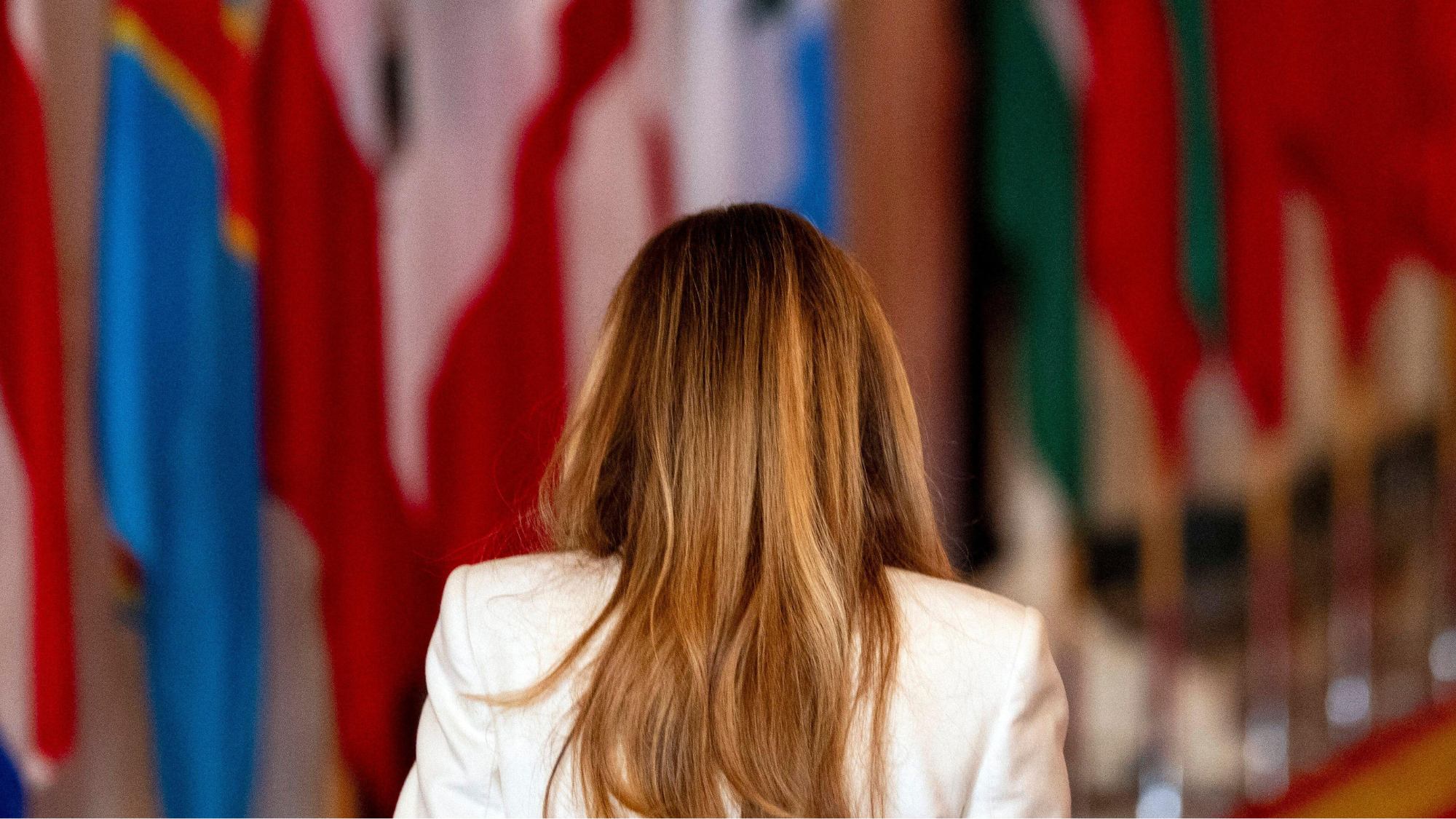
    The curious case of the disappearing first lady

    Melania Trump has done only half as many public appearances as she’d clocked up at the same point in Donald Trump’s first term, according to an NBC News analysis. She’s “only made 38” this year, said The Guardian, and now “she’s been MIA for about a month”, following her appearance at the World Cup final on 19 July.

    ‘Even lower profile’
    Melania’s public schedule has “nearly vanished” this summer, dropping to just five appearances in June and July, said the Daily Beast. She’s “dramatically less active” than other 21st-century first ladies: her 29 speeches since her husband returned to office last year pale in comparison to the 130 delivered by Michelle Obama over an equivalent timeframe.

    “To be fair”, this isn’t completely “out of character”, said The Guardian. During her husband’s first term, Melania’s “frequent absences sparked various conspiracy theories, including one that she had a body double”. But, this time round, she seems to be “keeping an even lower profile”, although she released a glossy eponymous documentary in January, and a “companion docuseries” is scheduled to air this autumn.

    ‘Work behind the scenes’
    In Melania’s absence, Trump aide Natalie Harp “has seldom strayed far from the president’s side”, said The Independent. The 35-year-old former One America News Network presenter joined Trump’s staff in 2022 and accompanied the president on his state visit to China this May – “a trip Melania Trump did not attend”. The president’s “perceived closeness” to his aide is fuelling “unfounded rumours that the pair are having an affair”, said The Telegraph.

    But “this is a first lady who isn’t troubled by what her critics think”, said NBC’s White House correspondent Monica Alba. Melania’s domestic and overseas appearances have been “scaled down”, but officials say “that’s because she’s doing a lot of work behind the scenes”. Her senior advisor told NBC News that she “prioritises results over appearances”. On Monday, the White House announced that the first lady had “facilitated the reunification of another child with her family” after “being separated” during the Russian war with Ukraine. She is now said to be “focused” on her “next reunification” effort.


    Good day 👑

    … for royal traditions, after King Charles reinstated the Balmoral Highlanders, 90 years after they were disbanded under George V. The Highland men-at-arms, who are employees of the Balmoral estate, wore the newly created Balmoral Glen Gelder tartan and carried ceremonial Lochaber axes as they welcomed Charles to the Scottish castle yesterday to begin his annual summer holiday.


    Bad day 😷

    … for party atmospheres, as dust whipped up during the long dry spell leaves festivalgoers choking. Attendees at outdoor music events nationwide are wearing facemasks to avoid breathing in what have been described as “apocalyptic” clouds of dust, amid warnings about the risk of respiratory problems.


    PICTURE OF THE DAY

    Roaring success

    A lion shows off his razor-sharp teeth at the Berlin Zoological Garden, the oldest and most visited zoo in Germany. The big cats can open their jaws up to 28cm wide and their roar can be heard up to five miles away. 

    Tobias Schwarz / AFP / Getty Images


    Puzzles

    Chain Word

    Try The Week’s daily word challenge in our puzzles and quizzes section, which also includes sudoku and Guess the Number

    Play here


    THE WEEK RECOMMENDS

    Tony: ‘rollicking’ Anthony Bourdain biopic

    Many stretches of Anthony Bourdain’s “gritty” and “well-chronicled” life could work for a biopic, said Tim Robey in The Telegraph. But in “Tony”, Matt Johnson sticks with “just one summer”, in 1975, when the celebrity chef was 19 – long before he found fame and fortune.

    Based on the opening chapters of Bourdain’s bestselling memoir, “Kitchen Confidential”, the film opens as Tony – played by Dominic Sessa, the “deeply talented” young actor from “The Holdovers” – leaves home after failing to get a prestigious summer writing fellowship. He follows a “girl he fancies” to Cape Cod and then gets “self-pityingly drunk” when he finds out she has a boyfriend.

    After being thrown out of an oyster shack, a kindly chef (Antonio Banderas) gives him a job washing dishes, and Tony finds himself in the “cramped, all-male milieu of flying expletives and cruel practical jokes”. Johnson effortlessly mixes the “toxic camaraderie” of these scenes with montages of Bourdain’s slow-but-steady daily improvements. “It plays like ‘Rocky’ with kitchen knives.”

    Gradually, Tony’s “insufferability” is “hosed away”, said Danny Leigh in the Financial Times. Sessa dazzles in the “contradictory” role of the “charismatic sad-sack”. Johnson has made a “funny, sun-kissed biopic” that is “spry” and “enjoyable” despite the “complicated brief”. This film is aimed at those who know that the chef’s life story will lead to both “glory and tragedy” (Bourdain died by suicide in 2018). It “isn’t the whole story”, but that’s “probably fitting” – the chef was “nothing if not a spinner of yarns”.

    Mostly, “Tony” is a “rollicking, surprisingly sunny coming-of-age tale”, said Larushka Ivan-Zadeh in The Times. It’s a portrait of the fiery young chef that’s “spicy, salty, and just sweet enough”.


    Statistic of the day

    3,700: The number of degree apprenticeships in England advertised on the government’s Find An Apprenticeship website over the past year, down from 7,300 in 2023-24. The number of applicants has nearly tripled since then, from 8,100 to 21,800, according to data seen by the BBC. 


    instant opinion

    Today’s best commentary

    A fifth season without a verdict on Manchester City charges is scandalous
    Oliver Brown in The Telegraph
    “Three Prime Ministers, five Foreign Secretaries and 32 Premier League managers have come and gone since 115 charges of alleged financial impropriety were first levelled against Manchester City,” writes Oliver Brown. Since then, City have “spent £690m on strengthening their squad and won six major trophies”, while “we still have no idea” if they’ve been “playing fast and loose with the rules”. While they fight the accusations “fiercely” with a “formidable legal team”, top-flight football remains mired “in farce” for a “fifth straight season”.

    Free speech is universal or it’s worth nothing
    Alex Massie in The Times
    “Everyone loves free speech until a reporter is in their face,” writes Alex Massie. But while journalists “should strive to be kind”, it should not be “at the expense of the truth or legitimate inquiry”. This is “elementary” stuff, but it’s become “close to transgressive” as social media fuels an “inferno of whataboutery”. Yes, there’s “often something sulphurous” about “Fleet Street in full cry”, but “the only thing worse than an unchained press is a muzzled one”.

    What parent would actually wish fame on their own child?
    Claire Cohen in The Independent
    Hayden Panettiere’s life was “shaped” by “having been a child star”, writes Claire Cohen. The “Heroes” actor, who has died at 36, was “pushed into performing aged four” and became a “megastar” at 16. “I hardly need to list” the other child stars who “also died unfathomably young”. The entertainment industry “often fails” such children, who “are thrown into a world where exploitation is rife”. We should ban child stars, but it seems profits “matter more than people”.


    word of the day

    Moai

    Easter Island’s monolithic stone figures, whose name means “statue” in the Polynesian language Rapa Nui. The Moai emoji has had a “meteoric rise”, driven by young people using it to “indicate a deadpan response or a raised eyebrow”, said The New York Times. According to Google data, the Moai was the 33rd most-used emoji last year, up from 482nd in 2021.


    Evening Review was written and edited by Hollie Clemence, Jamie Timson, Will Barker, Harriet Marsden, Irenie Forshaw, Helen Brown, Adrienne Wyper and Kari Wilkin, with illustrations from Stephen P. Kelly.

    Image credits, from top: illustration by Stephen P. Kelly / Shutterstock / Getty Images; Simone Jimena Rudolphi / Drik / Getty Images; UPI / Alamy; Tobias Schwarz / AFP / Getty Images; Everett Collection Inc / Alamy

    Morning Report and Evening Review were named Newsletter of the Year at the Publisher Newsletter Awards 2025
     

    Recent editions

    • Morning Report

      Burnham unveils ‘everyone in for Christmas’ plan

    • Evening Review

      How Reform’s welfare axe would fall

    • Morning Report

      Trump threatens Oman as Iran talks miss deadline

    VIEW ALL
    TheWeek
    • About Us
    • Contact Future's experts
    • Terms and Conditions
    • Privacy Policy
    • Cookie Policy
    • Advertise With Us
    • FAQ
    Add as a preferred source on Google Add as a preferred source on Google

    The Week UK is part of Future plc, an international media group and leading digital publisher. Visit our corporate site.

    © Future Publishing Limited Quay House, The Ambury, Bath BA1 1UA. All rights reserved. England and Wales company registration number 2008885.