The Week UK The Week UK
flag of US
US
flag of UK
UK
https://cdn.mos.cms.futurecdn.net/flexiimages/jzblygzdxr1769609154.gif

SUBSCRIBE

Try 6 weeks free

Sign in
  • View Profile
  • Sign out
  • The Explainer
  • Talking Points
  • The Week Recommends
  • Podcasts
  • Newsletters
  • From the Magazine
  • The Week Junior
  • More
    • Politics
    • World News
    • Business
    • Health
    • Science
    • Food & Drink
    • Travel
    • Culture
    • History
    • Personal Finance
    • Puzzles
    • Photos
    • The Blend
    • All Categories
  • Newsletter sign up Newsletter
  • The Week Evening Review
    Tehran threat, Burnham’s Man City problem, and the wait for Grenfell justice

     
    TODAY’S BIG QUESTION

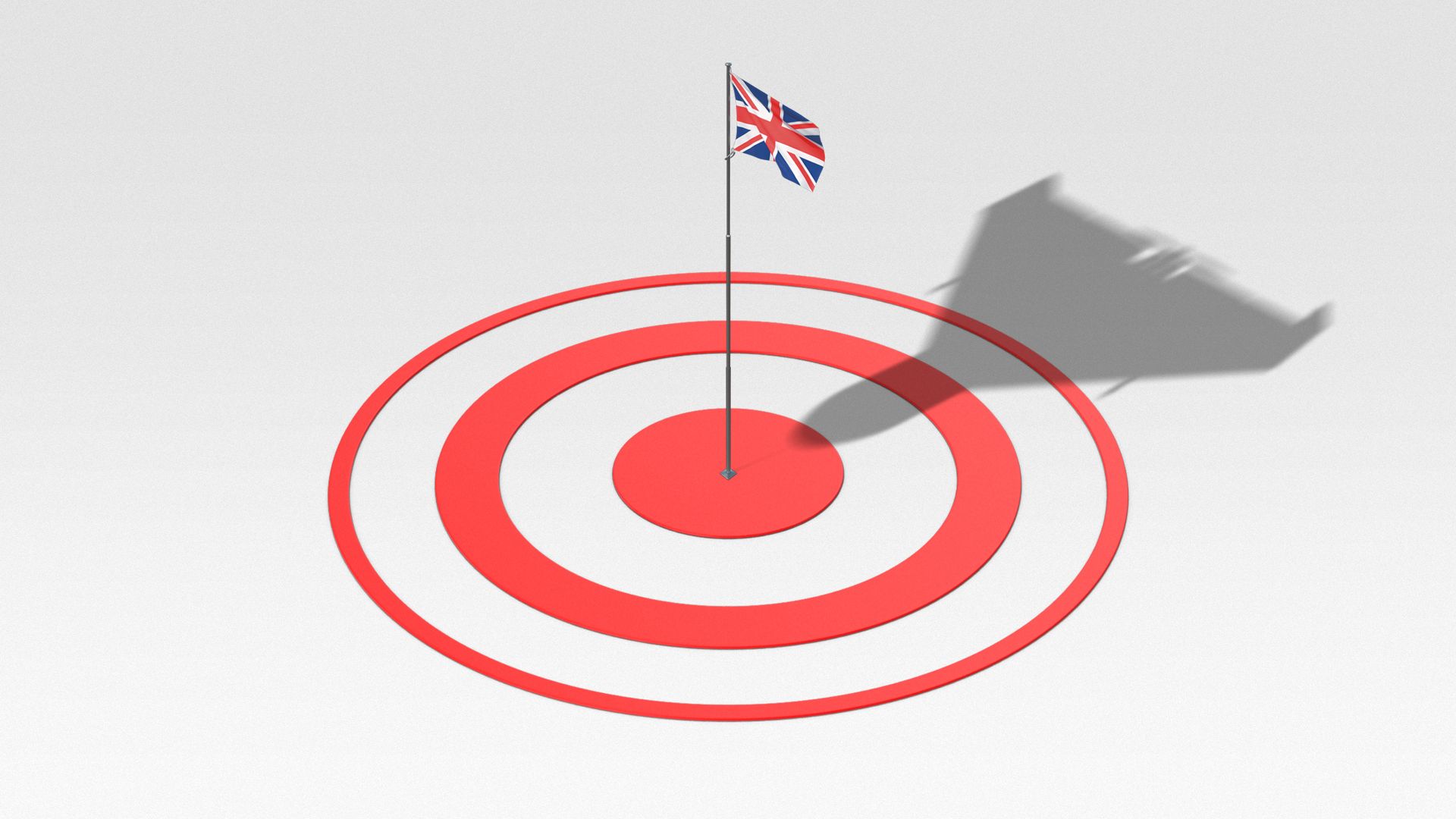
    Is the UK safe from Iran?

    The Trump administration has withdrawn all 12 of its B-1 bombers from RAF Fairford amid fears that last month’s suspected attack attempt on the Gloucestershire airbase was orchestrated by Tehran. The base had been acting as a forward operating location for US aircraft targeting sites in Iran.

    The scramble to withdraw the B-1s “tells us much about Iran, Britain and the emerging threats to US forces and assets”, said The Wall Street Journal in an editorial. “None of it is good.”

    What did the commentators say?
    The alleged Fairford plot is far from an isolated event. On Tuesday, three Iranian men appeared in court accused of spying on British-based dissident journalists. In July, a Tehran-backed cyberattack halted operations at a UK power plant for four days. And earlier this year, a wave of arson attacks targeting British Jews were linked to Iran’s Islamic Revolutionary Guard Corps (IRGC). 

    Tehran warned in July that “any base used for aggression against Iranian territory constitutes a legitimate target for our forces”. As far as the IRGC “is concerned”, said BBC security correspondent Frank Gardner, “Britain is already a participant in America’s war with Iran”.

    Modern warfare has been changed by the emergence of sophisticated state-run drone attacks, such as Ukraine’s Operation Spider’s Web last year, when low-cost drones smuggled into Russia were used to strike strategic targets, said The Times’ defence editor Larisa Brown. But they require “months of planning, utmost secrecy and the purchase or smuggling of large quantities of explosives”. One senior US diplomat expressed scepticism that Iran was capable of pulling off such an attack, according to Brown. “Yet there was enough concern for America to act.”

    What next?
    The Strategic Defence Review published by the UK government last year earmarked up to £1 billion for homeland air and missile defence over the next four years. But the “bigger problem has been finding the will to confront the Iranians and go on offence against their terror networks”, said The Wall Street Journal. The Iranian regime “clearly doesn’t think it will pay much of a price for orchestrating terror in Britain”, and “until that changes, even the best defence technology can only do so much”.


    TALKING POINT

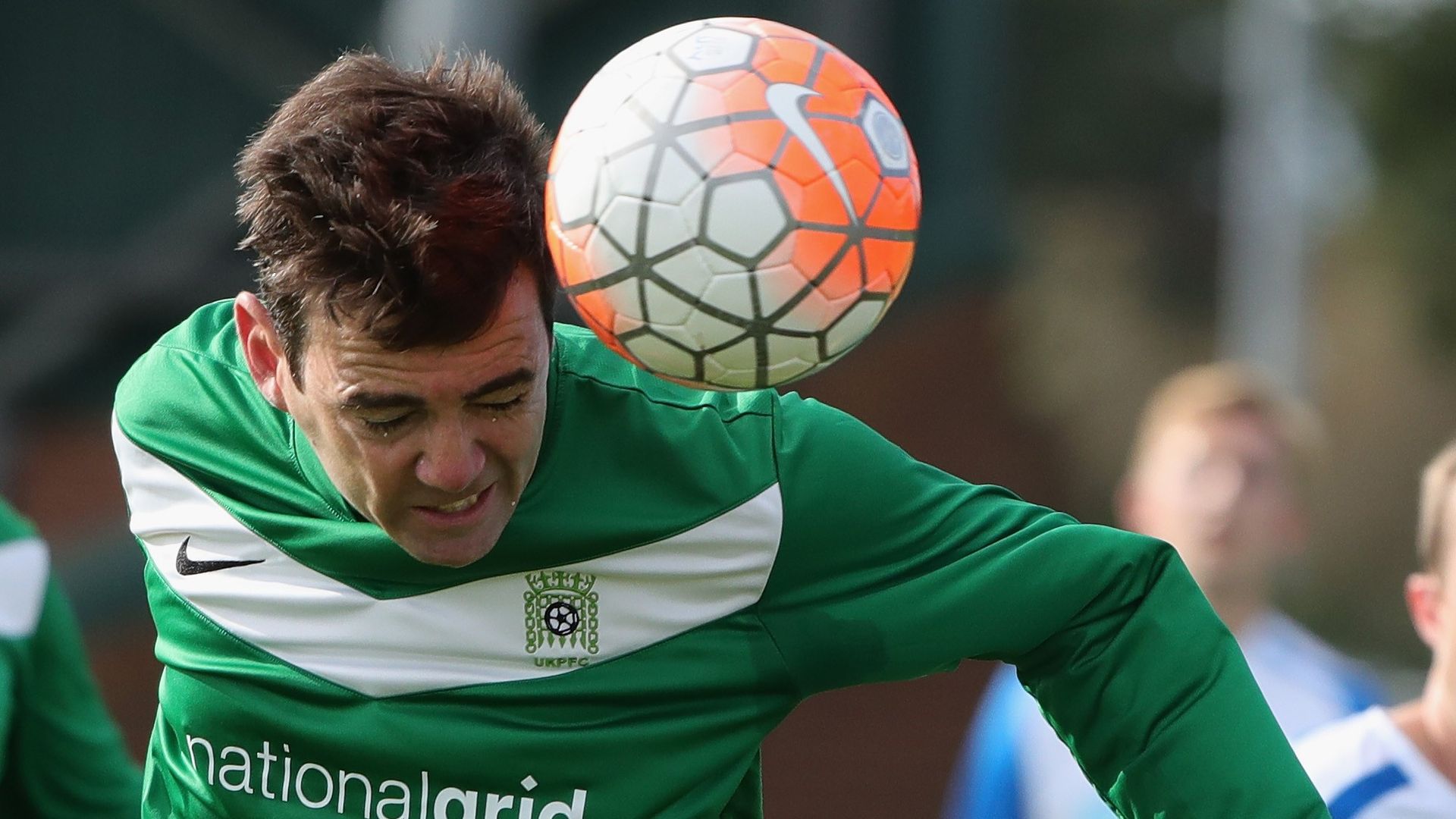
    Andy Burnham’s own goal over Manchester City

    Just hours after Andy Burnham sent the Labour Party faithful “into raptures” with his conference speech, his remarks about the Manchester City financial rule-breaking scandal triggered a “whiplash mood shift”, said The Mill.

    The former Manchester mayor told the BBC’s Chris Mason that the club’s UAE owners had been “a huge partner in the building of modern Manchester” and that he would be “really concerned” if they decided to sell up. Burnham’s apparent sympathy for the club’s leadership has become his “biggest self-inflicted tangle since he arrived in Downing Street in July”, said Mason.

    ‘Mealy-mouthed’ intervention
    The prime minister rode the “horse” of “football blokeyness” all the way to Westminster, said Barney Ronay in The Guardian, but now that horse is “threatening to run right over the top of him”. Yes, Burnham benefited hugely politically from Abu Dhabi investment in Manchester, but he needs to “stop thanking the UAE so profusely” for what was nothing more than a “business deal”.

    His “mealy-mouthed” intervention on Man City only “muddied the process of upholding” the verdict, said The Times’ chief football correspondent Jonathan Northcroft. Abu Dhabi is reportedly “threatening to cut billions of pounds of UK investment in umbrage” at the Premier League’s decision. It makes you wonder if “outside elements sticking their spoons into football is the path to salvation after all”.

    ‘Inseparable’ relationship
    It “felt revealing” that Burnham’s “first instinct” was to laud the ownership group, rather than empathise with the “masses horrified” by the seemingly systematic breaches of football’s financial rules, said Adam Crafton on The Athletic. City and Abu Dhabi are viewed as “inseparable”, emblematic of a broader UK-UAE relationship that is “considered crucial across security, investment and trade”.

    The “hundreds of millions of pounds Abu Dhabi ploughed into the area around” the Man City ground turned “one of the most deprived and desolate quarters of the city” into a thriving economic hub, said Simon Kelner in The i Paper. Burnham clearly felt he was “being true to his sense of fair play in illuminating” those benefits, but in future, it’s best that he “keeps well clear”.


    QUOTE OF THE DAY

    “Let ’em take out Los Angeles, let ’em take out San Diego. This is a very small price to pay.”

    Donald Trump shrugs off the threat of Iranian strikes on US soil, at a Nebraska campaign rally. White House Communications Director Steven Cheung later insisted the president “clearly” meant US cities “would have been threatened if a nuclear Iran hadn’t been stopped”.


    Poll watch

    Almost half (48%) of Brits aged 18 to 40 have experienced housing insecurity in the last five years, according to a Censuswide poll for financial education charity Money Ready. Of the 3,000 young adults quizzed, 25% have experienced some form of homelessness, including “sofa-surfing”, staying in emergency accommodation, or sleeping in a car or on the street.


    THE EXPLAINER

    Grenfell: key dates in the long fight for justice

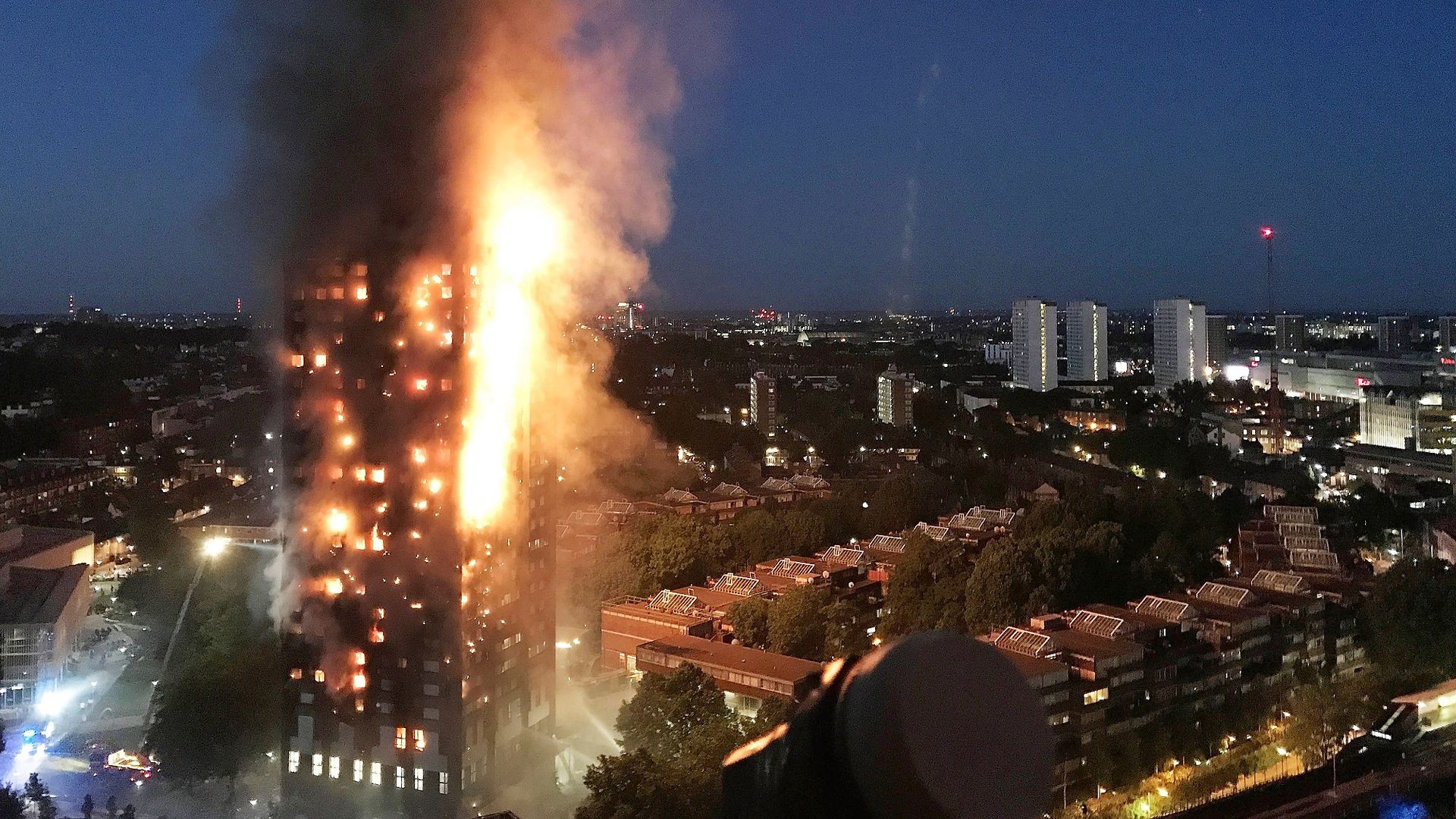
    The criminal investigation into the Grenfell Tower fire has reached a “milestone moment”, according to a senior Metropolitan Police officer. More than nine years after the tragedy, the force has asked prosecutors to consider charges including manslaughter, fraud and misconduct in public office against 20 companies and organisations and 54 individuals.

    The Crown Prosecution Service has said that charging decisions would be made before the 10th anniversary of the disaster. Here are some of the key events during the long wait for justice.

    14 June 2017: the fire
    Just before 1am, a fire broke out in the kitchen of a fourth-floor flat in the 23-storey tower block in north Kensington, west London. The resulting disaster claimed the lives of 72 people, making it “the deadliest domestic blaze since the Second World War”, said Sky News.

    15 June 2017
    Then PM Theresa May ordered a full public inquiry into the tragedy.

    30 June 2017
    Kensington and Chelsea London Borough Council leader Nicholas Paget-Brown resigned over “perceived failings” by the council related to the fire.

    19 September 2017
    The Met announced it was expanding its investigation to “consider corporate manslaughter and gross negligence manslaughter”.

    21 May 2018
    The inquiry began, with seven days of commemoration hearings dedicated to the dead, starting with the youngest, stillborn Logan Gomes.

    September 2018
    The government banned the use of combustible cladding on all new residential buildings above 18 metres, including schools and hospitals.

    October 2019
    The report on Phase 1 of the inquiry was published. It concluded that the tower’s cladding did not comply with building regulations and was the “principal” reason for the rapid and “profoundly shocking” spread of the blaze.

    27 January 2022
    The inquiry entered Phase 2, focusing on issues around cladding, the tower’s management and the emergency response.

    4 September 2024
    The final Grenfell Tower Inquiry report was published. It concluded that all 72 deaths were “avoidable” and that residents had been “badly failed” by parties “responsible for ensuring the safety of the building and its occupants”.


    Good day 🍄

    … for mycophiles – aka mushroom-lovers – as a record number of fungi are expected to pop up in British gardens. A dry summer followed by a wet autumn creates the perfect conditions for mushrooms to thrive, according to the Royal Horticultural Society, which is reporting early signs of a boom season ahead.


    Bad day 🎭

    … for completionists, as “Harry Potter and the Cursed Child” returns to the West End as a single show rather than a two-part performance. From Friday, theatregoers will see a three-hour truncated version of the production rather than the original six-hour show split across two sittings.


    PICTURE OF THE DAY

    Final whistle

    Lionel Messi is overcome with emotion after ending his Argentina career with a 3-0 victory in last night’s friendly against Benin in Buenos Aires. The 39-year-old scored a penalty and made two assists in his 208th and final game for his national team.

    Luis Robayo / AFP / Getty Images


    Puzzles

    Chain Word

    Try The Week’s daily word challenge in our puzzles and quizzes section, which also includes sudoku and Guess the Number

    Play here


    THE WEEK RECOMMENDS

    Holding Lightning makes the case for Houston’s ‘genius’

    She was a cultural icon who sold more than 200 million records, yet Whitney Houston’s achievements have been “obscured by public interest in her private life”, including the drug addiction that contributed to her death at the age of 48, said Liam Kelly in The Telegraph. All this makes her a “compelling character” for Emily Lordi’s new biography, “Holding Lightning: the Life, Loves and Art of Whitney Houston”.

    The version of Houston’s story that has played out in most of the books and documentaries about her since her 2012 death is of the “wholesome choirgirl” whose life was derailed by her marriage to bad-boy singer Bobby Brown in 1992, said The Times’ Victoria Segal. But Lordi, a critic and professor of English at Vanderbilt University, refuses to “reduce Houston’s story to another ‘good girl gone bad’ narrative”, said Priya Elan in The Guardian. Instead, she “presents a pluralistic take” on Houston’s life in which the singer’s “queerness, drug use and eccentricities” are placed “in the wider context of her unique talent and the pressures placed on her to embody Black excellence”.

    “Holding Lightning” makes a persuasive case for Houston’s artistic “genius”, said The New York Times culture editor Leah Greenblatt. Although Lordi’s analysis can “tip into academic mode, and she sometimes overreaches”, she “works eloquently to elevate and re-reframe an icon”. At its best, her book allows Houston “the grace of something she longed for and rarely got to be: life-size”.


    Statistic of the day

    9.8%: The record-low proportion of UK adults who smoke, down from more than 20% in 2011, according to ONS tracking. Newly published data for 2025 shows that vaping was more commonplace than smoking for a second consecutive year, with 9.9% of adults using e-cigarettes regularly or occasionally.


    instant opinion

    Today’s best commentary

    It’s not just Cornell: rape culture spreads from frat houses to business, politics and even boys’ phones
    Deborah Frances-White on The Nerve
    US fraternity houses “have long been associated with toxic behaviour” and “sexual assault”, writes “The Guilty Feminist” podcaster Deborah Frances-White. They also open doors “to the corridors of power” – so “if women aren’t safe in a frat house”, they aren’t safe in a courthouse, a boardroom or the White House. And now that “every young man can carry” manosphere content “in his pocket”, the frat house mentality “is on the loose” elsewhere. “It’s down to the decent men” to “step up”.

    India’s ‘million mutinies’ are puncturing Modi’s aura of invincibility
    Vidya Krishnan on Al Jazeera
    India’s young people are “out on the streets”, writes Vidya Krishnan. A “sudden convergence” of “volatile protests” over everything from electoral manipulation to “examination irregularities” has caught PM Narendra Modi “in a pincer movement of domestic unrest”. He no longer has the “combined power of popular legitimacy and institutional control”, and “the giant balloon” of his self-esteem is being “pierced” by “relentless” online ridicule. “History will note” that his regime began to teeter “when ordinary students stopped believing that nothing can be done”.

    More Labour voters than Tories go to Waitrose? Drop the focaccia!
    Carol Midgley in The Times
    Waitrose is the supermarket where you’d “expect to find a man called Hector in mustard corduroy trousers, bellowing” about olive bread, writes Carol Midgley. But a new poll suggests “you’re more likely to find Labour voters” there “than Tory ones”. I’m surprised that’s the place where lefties “stock up on Prunotto Barollo” for their dinner parties. I shop at Tesco, because it’s nearest, but I must try “not to be bitter” and just “accept that I’m a supermarket commoner”.


    word of the day

    Techno-optimism

    The belief that technology will solve global problems such as climate change. A survey of more than 9,000 scientists across 115 countries found that the 27% who identified as techno-optimists were 23% less likely to participate in climate action than their tech-sceptic peers, according to a newly published London School of Economics study.


    Evening Review was written and edited by Rebecca Messina, Jamie Timson, Elliott Goat, Will Barker, Chas Newkey-Burden, David Edwards, Adrienne Wyper, Helen Brown and Kari Wilkin, with illustrations from Stephen P. Kelly.

    Image credits, from top: illustration by Stephen P. Kelly / Shutterstock / Getty Images; Christopher Furlong / Getty Images; Gurbuz Binici / Getty Images; Luis Robayo / AFP / Getty Images; Frederic Reglain / Gamma-Rapho / Getty Images
     

    Recent editions

    • Morning Report

      Death row inmate Pike awake and speaking

    • Evening Review

      Why is Andrew suing the police?

    • Morning Report

      Britannia Shield: does the UK need its own Iron Dome?

    VIEW ALL
    TheWeek
    • About Us
    • Contact Future's experts
    • Terms and Conditions
    • Privacy Policy
    • Cookie Policy
    • Advertise With Us
    • FAQ
    Add as a preferred source on Google Add as a preferred source on Google

    The Week UK is part of Future plc, an international media group and leading digital publisher. Visit our corporate site.

    © Future Publishing Limited Quay House, The Ambury, Bath BA1 1UA. All rights reserved. England and Wales company registration number 2008885.