The Week UK
https://cdn.mos.cms.futurecdn.net/flexiimages/jzblygzdxr1769609154.gif

SUBSCRIBE

Start your trial today

flag of US
US
flag of UK
UK
Sign in
  • View Profile
  • Sign out
  • Newsletter sign up Newsletter
    • The Explainer
    • Talking Points
    • The Week Recommends
    • Podcasts
    • Newsletters
    • From the Magazine
    • The Week Junior
    • More
      • Politics
      • World News
      • Business
      • Health
      • Science
      • Food & Drink
      • Travel
      • Culture
      • History
      • Personal Finance
      • Puzzles
      • Photos
      • The Blend
      • All Categories
    WeekDay AM: 10 Things you need to know this morning
    Cop31 ends in failure, the UK’s ‘last crewed jet fighter’, and a vaccine for acne

     
    today’s climate story

    Cop31 ends in failure as countries reject deal

    What happened
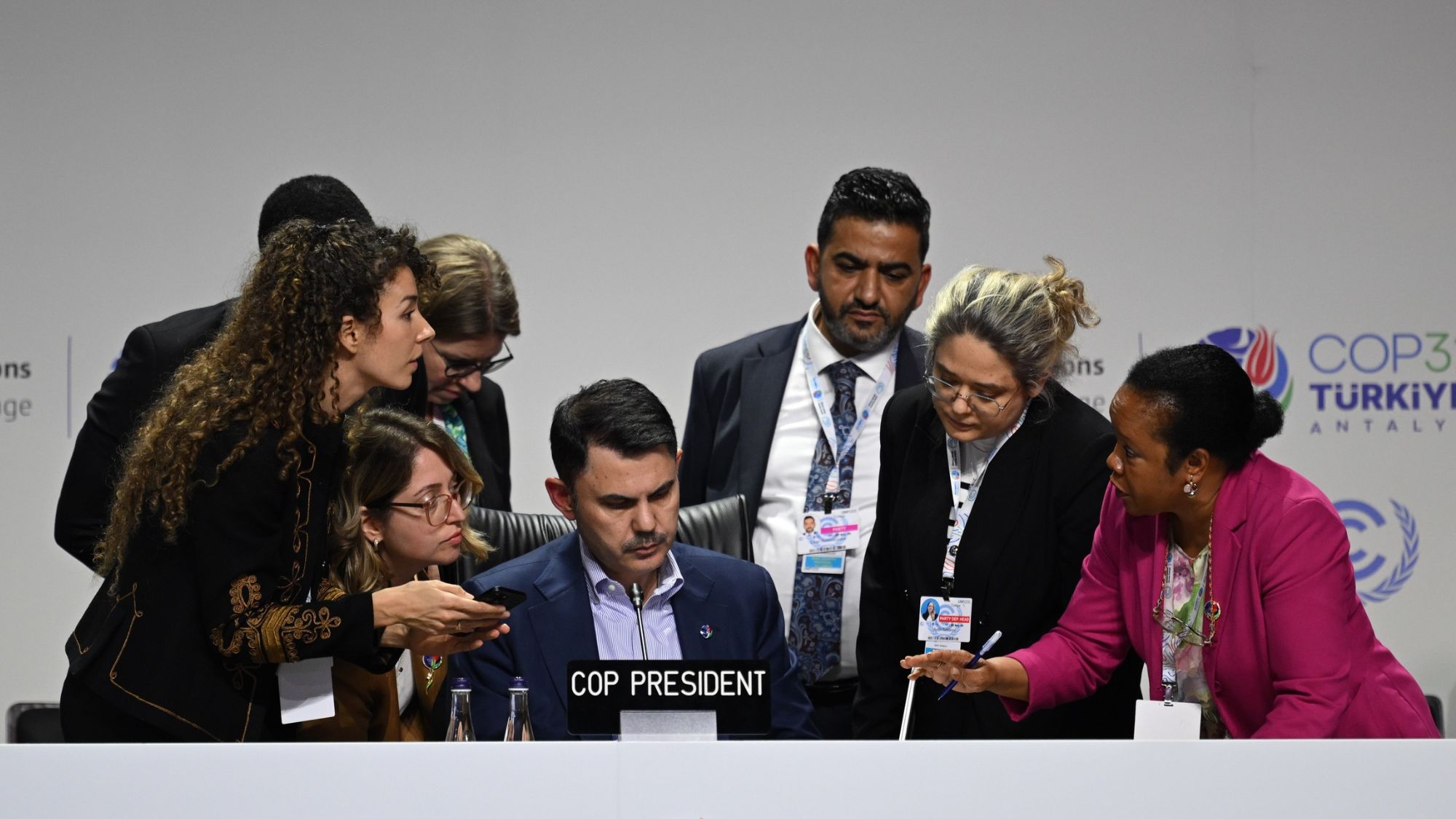
    The Cop31 climate summit in Antalya, Turkey has failed to reach a final agreement after a host of nations walked away from a proposal that made no mention of reducing fossil fuel use. The dispute extended the conference by almost two days, making it the longest COP on record.

    The EU, UK and vulnerable island nations opposed the wording of the deal, while developing countries criticised its lack of new funding to help them cope with rising temperatures.

    Who said what
    The breakdown “underscored the deep rift between oil producers and other nations, who had pressed for a more meaningful deal”, said Taz Ali in the Washington Post. The words “fossil fuels” did not appear anywhere in the text of the final draft presented to delegates yesterday. Ireland’s Climate Minister Darragh O’Brien called the proposed agreement “unconscionable”, while the UK said it was “profoundly disappointed”. Tuvalu’s Climate Minister Maina Talia said: “It seems like we are negotiating with the Saudis.”

    “Cop31 failed, but in ‘the real world’ the transition away from fossil fuels is inevitable,” said Fiona Harvey and Graham Readfearn in The Guardian. The summit’s failure was “due to a refusal to admit we cannot confront the climate crisis without shifting to renewables”.

    What next?
    Countries will have to resume negotiations at future climate talks, with campaigners warning that governments must return with stronger commitments.


    today’s military story

    RAF chief says Tempest could be UK’s last crewed fighter

    What happened
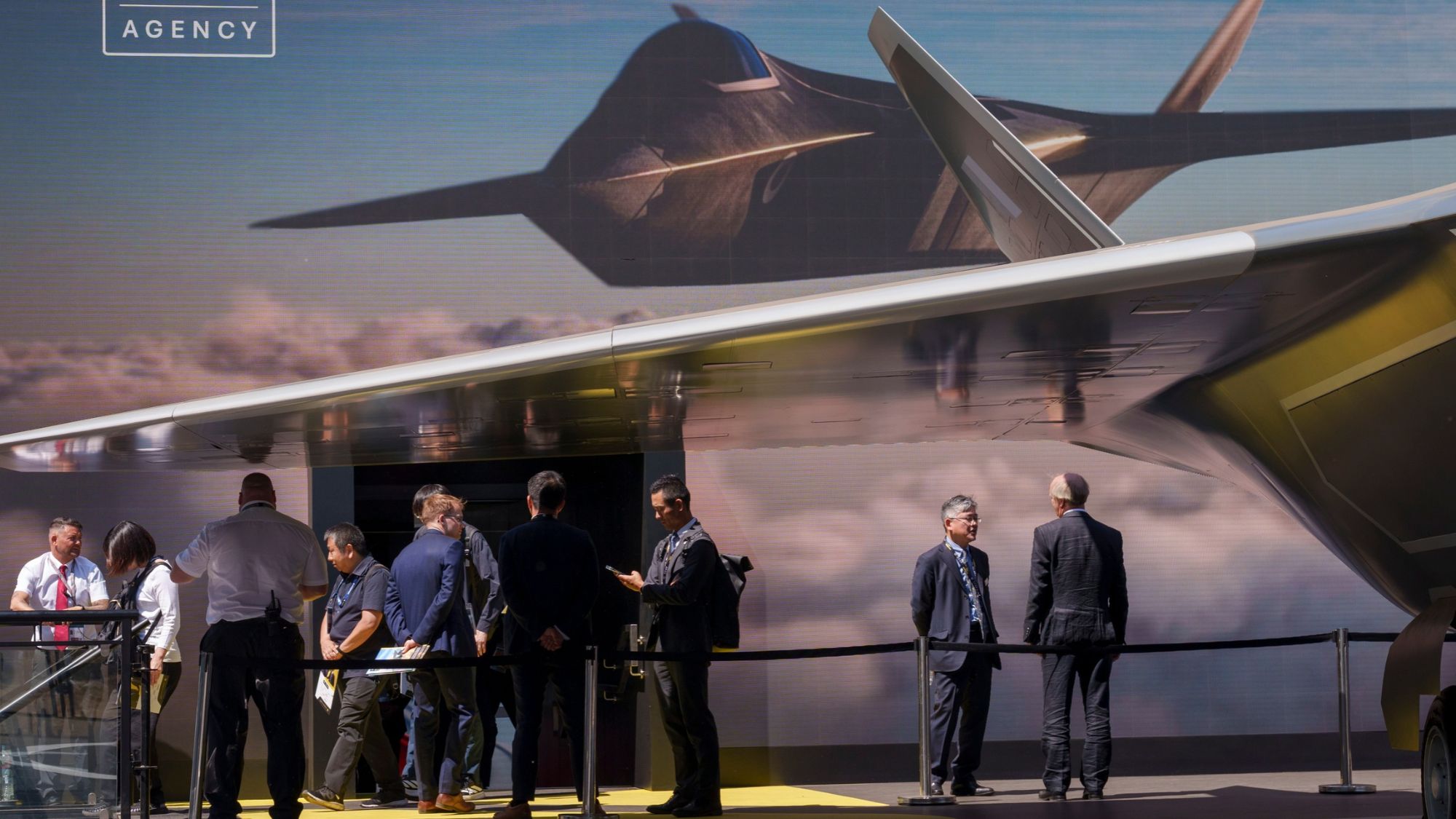
    Britain’s next-generation jet could be the final crewed combat aircraft that it produces, according to the head of the Royal Air Force.

    Air Chief Marshal Sir Harv Smyth said rapid advances in artificial intelligence and autonomous technology would reshape warfare in the air. The Global Combat Air Programme, developed jointly by Britain, Italy and Japan, is expected to produce the sixth-generation aircraft, known as Tempest, from 2035.

    Who said what
    Smyth said uncrewed drone aircraft, assisted by AI, would transform military aviation “as profoundly as the shift from propellers to jets” had. He also revealed that unpiloted fighters would begin operating in UK airspace next year.

    A US Air Force test last month offered “a glimpse into the future” that the RAF chief appears to imagine, according to Sky News. Taking off from a base in California, a piloted F-22 Raptor “acted as an airborne ‘quarterback’, issuing tactical instructions to a ‘wingman’ drone nearby”. The technology could therefore mark the beginning of the end for pilots flying Britain’s frontline fighters.

    What next?
    The RAF plans to operate the Tempest alongside Typhoons, F-35s and autonomous aircraft. The £4.6 billion programme is already supporting thousands of jobs, with Canada joining as an observer and Germany potentially being added to the partnership.


    Today’s international story

    Democrats secure biggest House majority in 34 years

    What happened
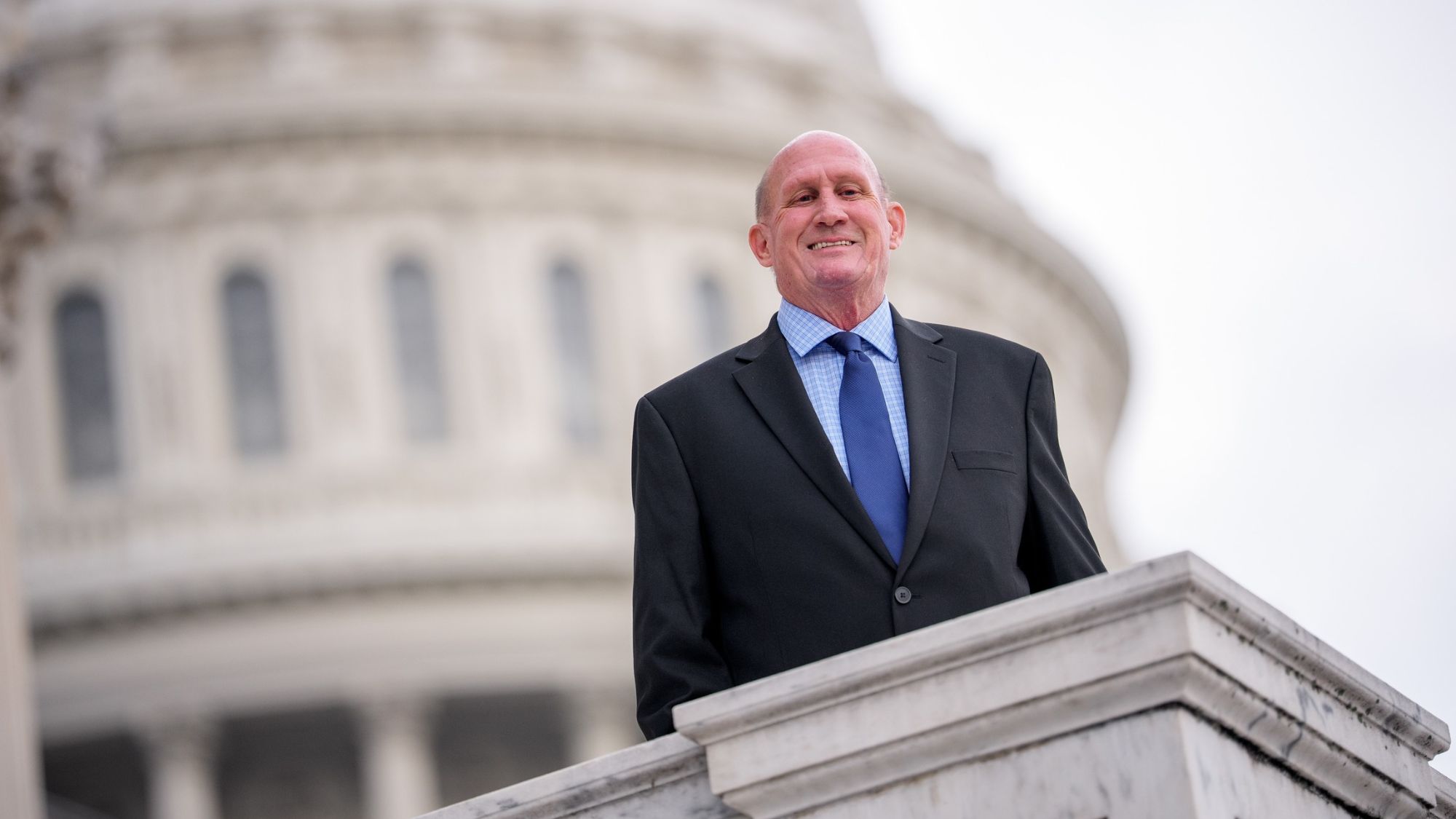
    Democrats have secured their largest majority in the US House of Representatives since 1992 after Chuck Hubbard defeated Republican Virginia Foxx in North Carolina.

    Hubbard (pictured above) won the closely fought race by just 330 votes following a recount requested by Foxx. Democrats now hold at least 258 House seats to the Republicans’ 173, with four contests still undecided.

    Who said what
    Foxx, who had represented North Carolina in Congress since 2005, said she was “humbled and grateful” for the support she had received. Hubbard, who lost to Foxx by nine percentage points in 2024, said she had “graciously conceded” and praised her willingness to ensure a smooth handover.

    These “historic midterms bring a new world order to Washington”, according to CNN. The result represents a “sweeping backlash to rising prices and President Trump’s tumultuous second term”, said Tim Balk in The New York Times.

    What next?
    The Democrats’ majority in the House, combined with their control of the Senate, will give them significant power to investigate the Trump administration and block or scrutinise appointments. The party will “also be able to pass legislation through Congress easily”, said Madeline Halpert on the BBC, “though Trump still has to give final sign off for it to become law”.


    It’s not all bad

    A Victorian workman whose home became a hidden masterpiece has been honoured with a blue plaque. David Parr spent his days decorating mansions and Cambridge colleges with William Morris designs, then devoted his evenings to covering his own modest terrace house with intricate artwork. The extraordinary home was preserved by his granddaughter and it opened to the public in 2019. Parr is believed to be the first working-class Victorian art-workman to receive a plaque.


    under the radar

    Scientists are working to develop an acne vaccine

    A vaccine could soon make you blemish free. Rather than just treating the skin condition, it would target acne-causing bacteria to prevent the ailment from developing altogether.

    Acne is “caused by the immune system overreacting to proteins released by skin bacteria”, said New Scientist. The most common bacterium that causes acne is Cutibacterium. It is “present on just about everybody”, even “those that don’t have acne”.

    Several strains of the bacteria are “known to ramp up the body’s immune system, while others don’t appear to provoke the same response”, said The Boston Globe. Two companies, Sanofi and Armora Biosciences, are currently developing acne vaccines.

    Sanofi is working on an mRNA vaccine, while Armora Biosciences is developing one that targets an enzyme produced by the acne-causing bacteria C. acnes. It aims to block the enzyme called Hyl-A, which triggers inflammation, while preserving Hyl-B, a related enzyme that can benefit the skin.

    These vaccines could “do wonders for chronic acne sufferers and help save hundreds of dollars per year on acne products and medications”, according to Men’s Health. Current acne treatments tend to be antibiotics that kill all C. acnes strains and can worsen antibiotic resistance. The other common treatment, isotretinoin (Roaccutane), is “more effective than antibiotics, but has a long list of nasty side effects”, added New Scientist.

    It is still not certain how effective any vaccine will be because a variety of factors affect whether someone develops acne. “In the case of the skin, it’s very difficult to form your own immunity,” Dr Abigail Waldman, a dermatologist at Mass General Brigham, told the Globe. This means it’s “going to be difficult for them to get a very focused, effective” vaccine.


    on this day

    23 November 1959 

    During a speech in Strasbourg, French President Charles de Gaulle called for a unified Europe “from the Atlantic to the Urals” – a vision that notably did not include the British Isles. Last week European Commission President Ursula von der Leyen hailed Andy Burnham’s “EU reset” as a “turning point” in post-Brexit relations.


    Today’s newspapers

    ‘Deal rejected’

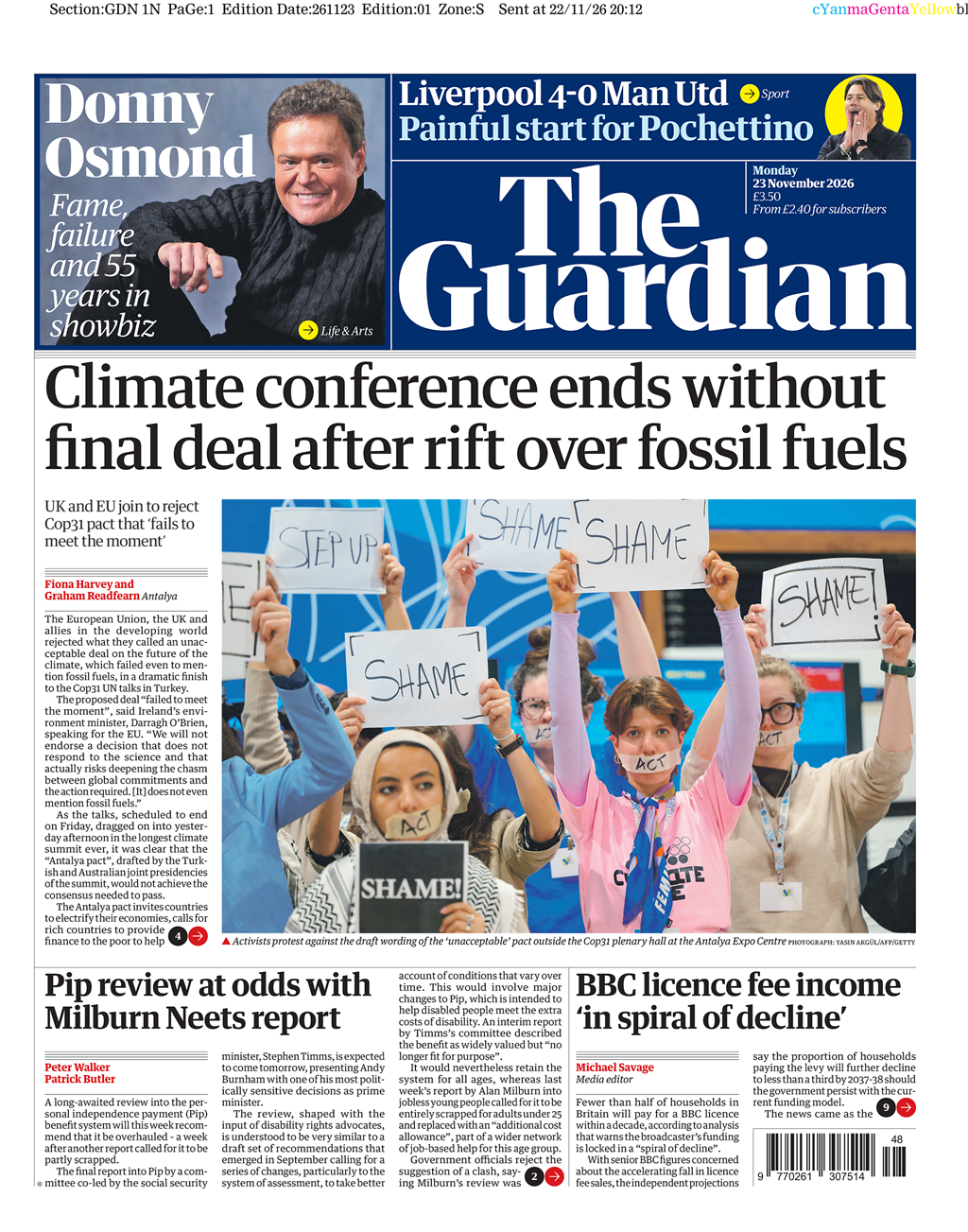
    “Cop31 climate talks break down as key deal rejected”, says The Guardian, after the summit ended without agreement. The Times calls for disability benefits to be “tailored for each claim”, while The i Paper reports that universal credit is “set for major overhaul”. The Financial Times says catering firm Compass plans to move its listing to New York in “a blow to London”. The Mirror leads on Tyson Fury’s “trauma and booze battle”.

    See the newspaper front pages


    tall tale

    Clan-destine act

    A Frenchman who smashed his way into the glass case containing Perth’s famous Stone of Destiny while dressed in a kilt and bonnet has claimed that it was his ancestral right to do so. Arnaud Harixcalde Logan, 36, who caused more than £9,000 worth of damage to the city’s museum in the incident last year, told Perth Sheriff Court that the stone had been stolen from the Logan clan and sitting on it was his “birthright”.


    Morning Report was written and edited by Arion McNicoll, Rebecca Messina, Devika Rao, Ross Couzens and Chas Newkey-Burden, with illustrations by Julia Wytrazek.
    Image credits, from top: Abdullah Guclu / Anadolu / Getty Images; Richard Baker / In Pictures / Getty Images; Andrew Harnik / Getty Images; Illustration by Julia Wytrazek / Getty Images.
     

    Recent editions

    • Sunday Shortlist

      Eastern bloc spy drama ‘blast’

    • Saturday Wrap

      The age of consent

    • Evening Review

      Will the polar vortex bring snow?

    VIEW ALL
    TheWeek
    • About Us
    • Contact Future's experts
    • Terms and Conditions
    • Privacy Policy
    • Cookie Policy
    • Advertise With Us
    • FAQ
    Add as a preferred source on Google Add as a preferred source on Google

    The Week UK is part of Future plc, an international media group and leading digital publisher. Visit our corporate site.

    © Future Publishing Limited Quay House, The Ambury, Bath BA1 1UA. All rights reserved. England and Wales company registration number 2008885.