The Week UK
https://cdn.mos.cms.futurecdn.net/flexiimages/jzblygzdxr1769609154.gif

SUBSCRIBE

Start your trial today

flag of US
US
flag of UK
UK
Sign in
  • View Profile
  • Sign out
  • Newsletter sign up Newsletter
    • The Explainer
    • Talking Points
    • The Week Recommends
    • Podcasts
    • Newsletters
    • From the Magazine
    • The Week Junior
    • More
      • Politics
      • World News
      • Business
      • Health
      • Science
      • Food & Drink
      • Travel
      • Culture
      • History
      • Personal Finance
      • Puzzles
      • Photos
      • The Blend
      • All Categories
    The Week Evening Review
    Brexit backlash, the White House Farm murders, and aviation’s ‘coffin corner’

     
    TODAY’S BIG QUESTION

    Brexit debate reopened: what are the risks?

    The prime minister has agreed a “reset” deal with the EU that will ease checks on British food and drink exports, relink carbon-emissions trading schemes, and establish a youth experience programme that allows 100,000 young people from each side to live, work and study across borders for up to three years. The deal will boost the UK economy by £17 billion, according to Andy Burnham. But Nigel Farage and other Leavers claim the domestic costs will be high.

    What did the commentators say?
    The reset agreement has “many merits”, said The Sunday Times’ editorial board, but “there remain uncomfortable questions”. Burnham’s “pro-European narrative” risks distracting from our “more intractable problems”: ballooning welfare bills, poor economic growth and the “parlous state of Britain’s defences”. The PM’s “studied ambiguity” on the future UK-EU relationship risks reigniting the “deeply divisive debates” of the referendum.

    Burnham is right to “reopen a national debate”, said Paul Taylor of the European Policy Centre in The Guardian. But reactions to this summit have shown that the “toxic British politics” around any such move haven’t dissipated. Farage has talked of a “betrayal” of the referendum vote, while Kemi Badenoch’s accusation that the reset deal was unfair to the UK is a “telling indicator of the epic battles over money” to come.

    A row over tuition fees “soured the summit”, said the Financial Times. EU diplomats “dug in on politically sensitive issues” in “often testy meetings”. Ministerial colleagues say Burnham now recognises not only the domestic risks but also the “perilous nature” of negotiating with a bloc that “holds most of the cards”. He is restricted by the “red lines” in Labour’s 2024 election manifesto, while Brussels hasn’t shifted from its “no cherry-picking” mantra. The PM insists the key issues will be put to the British people at the next election, but he has “unleashed a debate that he cannot now contain”.

    What next?
    Burnham told a post-talks news conference that the reset deal will clear the way for months of “brainstorming” on future relations with the bloc, ahead of another EU summit expected late next year.


    THE EXPLAINER

    The White House Farm massacre revisited

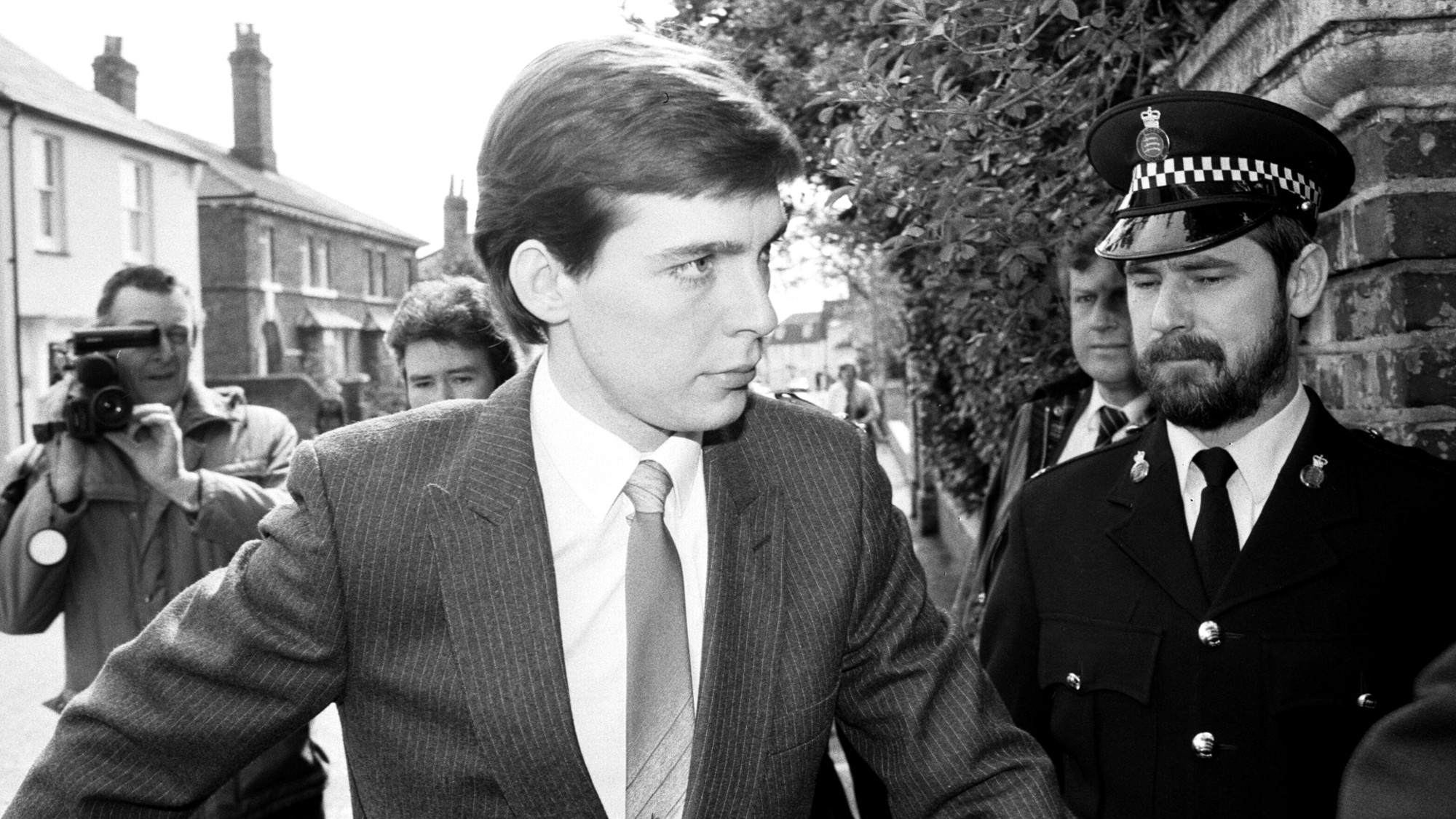
    Four decades after Jeremy Bamber was found guilty of murdering five members of his family, the White House Farm murders remain “compelling”, said the BBC. Bamber (pictured above) was sentenced to life imprisonment in October 1986, after a judge described him as “warped and evil beyond belief”. He has always maintained his innocence, and the case has “entered modern folklore, inspiring numerous TV shows, podcasts and books”.

    Mark Williams-Thomas, an investigative journalist and former detective, is doing a nationwide theatre tour exploring the ongoing fascination with the case. Even “he admits being surprised at the level of interest his show is attracting”, said the BBC.

    What happened?
    On 7 August 1985, five family members were shot dead at White House Farm, near Tolleshunt D’Arcy in Essex. The victims were Nevill and June Bamber, their adopted daughter, Sheila Caffell, and her six-year-old twin sons, Daniel and Nicholas. Adopted son Jeremy Bamber was the only surviving member of the immediate family. The prosecution argued that he killed his family before staging the scene to make it appear that Caffell, who had a history of mental health difficulties, had shot her relatives before taking her own life.

    Why is the conviction in doubt?
    Bamber has maintained that Caffell was responsible for the shootings. Critics of the conviction have questioned the reliability of the police investigation, the interpretation of forensic evidence and the credibility of witnesses. Attention has focused on whether Caffell could have fired the rifle, given the prosecution’s argument that a silencer attached to the weapon would have made this physically difficult.

    Forensic biologist Sue Carney-Gannon, who was commissioned by The Guardian, said last month that bloodstain patterns on Caffell’s clothing and arm suggested that she was sitting upright when shot and that the subsequent movement of her body was consistent with suicide.

    Will the case return to court?
    The Criminal Cases Review Commission, which investigates potential miscarriages of justice, has been reviewing the latest submission from Bamber since 2021. It has so far rejected four of the 10 points that he raised. The CCRC has the power to refer a case to the Court of Appeal if it considers there is a real possibility the conviction would not be upheld.  Two previous appeals by Bamber against his conviction were dismissed by the court. 


    QUOTE OF THE DAY

    “It absolutely boils my blood to think of someone stealing my mother’s work because I know how hard she worked at her craft.”

    Author Cyra McFadden’s daughter, Caroline, reacts to allegations that Jilly Cooper lifted lines from her mother’s 1977 book “The Serial”. A textual comparison by The Observer suggests near-identical extracts from the little-known American writer’s work appear in Cooper’s 1978 book “Prudence”. 


    Poll watch

    Four in five (81%) Brits would use an online map to navigate an unfamiliar area. A YouGov poll of 5,377 adults found that only 10% rely on paper maps, while 8% either wouldn’t use any or were undecided.


    IN THE SPOTLIGHT

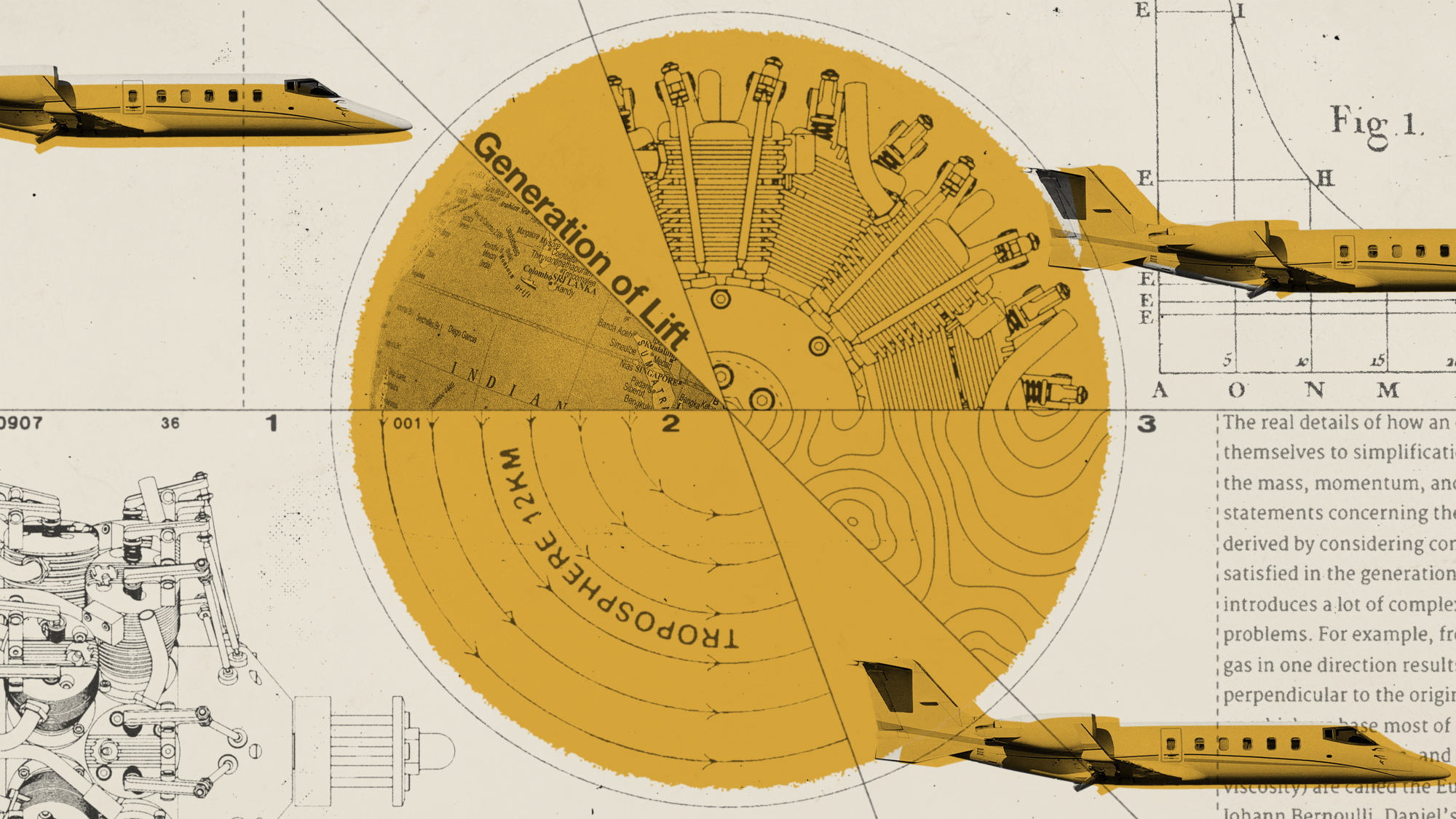
    The ‘coffin corner’ phenomenon

    Aviation experts are talking about a “little-known phenomenon” known as “coffin corner” following a fatal plane crash in Florida, said The Telegraph. The private Bombardier Learjet 60, travelling from Texas to the Bahamas, nosedived into a road in West Palm Beach on 1 November, killing all nine people aboard. Aviation experts have suggested “coffin corner” could have been a factor.

    ‘Perilous situation’
    The term, sometimes also known as “Q corner”, describes a “perilous situation in aerodynamics” in which planes risk stalling if they slip out of a narrow airspeed range, said The Telegraph. Planes can only fly because “air pressure is higher under the wings than above them”, which creates lift. At higher altitudes where the air is thinner, they need to travel faster to generate the required lift.

    But airliners also have a maximum speed limit, determined by the speed of sound. Since sound travels more slowly in thin air, that limit decreases as an aircraft climbs. As a result, a pilot at high altitude has to fly within an increasingly narrow gap between safe minimum and safe maximum speeds. If those two lines are drawn on a chart, the segment of space before the lines meet is “coffin corner” – and “it’s an extremely uncomfortable place for pilots to be”.

    ‘Major focus’
    The mayday call from the Learjet 60 came shortly after air traffic control approved a request to climb from 35,000ft to 37,000ft. In audio recordings, the crew reported “moderate turbulence” and said they were “managing the ice”.

    Former US navy fighter pilot Matthew Buckley told CBS Austin that this attempt to climb higher might have resulted in the nosedive. “There’s a certain point where even adding more power isn’t going to get you more lift. It just turns into a brick, and you just start falling out of the sky.”

    The US National Transportation Safety Board has launched an investigation into the crash and said “weather conditions are a major focus”. Coffin corner “does not make high altitude flight inherently unsafe”, said Simple Flying. The commercial aviation industry has an “exceptional safety record at high altitude”. But it “highlights the precision with which modern aviation operates”.


    Good day ⚽

    … for UK football, as Fifa confirms that England, Northern Ireland, Scotland and Wales will host the 2035 Women’s World Cup. The international tournament was last held on these shores in 1966, when England’s men’s team defeated West Germany to win their first, and only, World Cup title. 


    Bad day 🥔

    … for Walkers, which is being mocked over its latest limited-edition crisps creation – roast potatoes flavour. “Am I going crazy or is this essentially a potato flavoured potato?” one critic asked on social media.


    PICTURE OF THE DAY

    Sow lucky

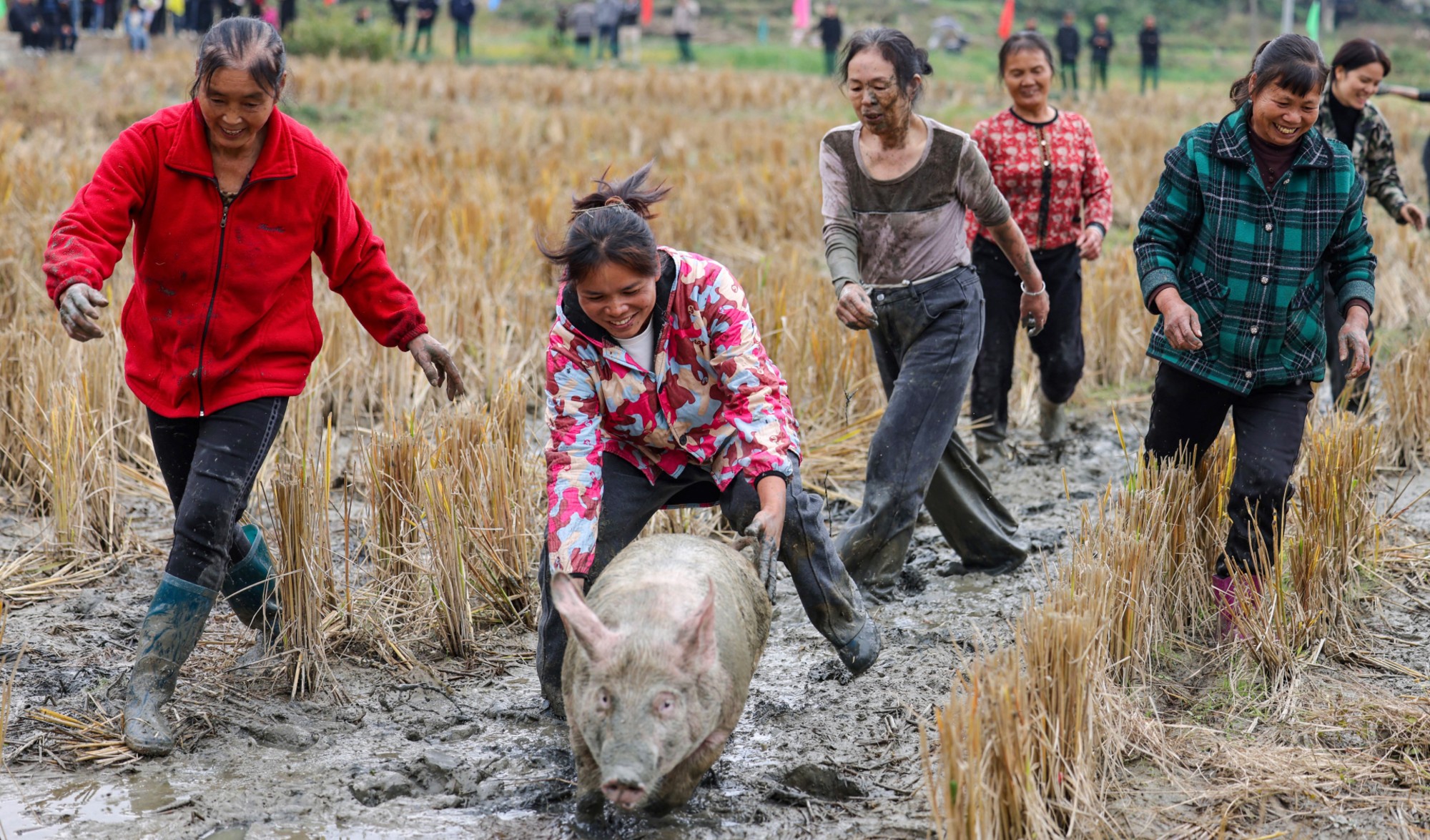
    Locals compete in a pig-catching contest during harvest festival celebrations in China’s Guizhou province. Capturing one of the animals, which symbolise wealth and abundance in Chinese culture, is thought to bring good fortune for the year ahead. 

    CN-STR / AFP / Getty Images / China OUT


    Puzzles

    Chain Word

    Try The Week’s daily word challenge in our puzzles and quizzes section, which also includes sudoku and Guess the Number

    Play here


    THE WEEK RECOMMENDS

    Asador Etxebarri: the world’s best restaurant

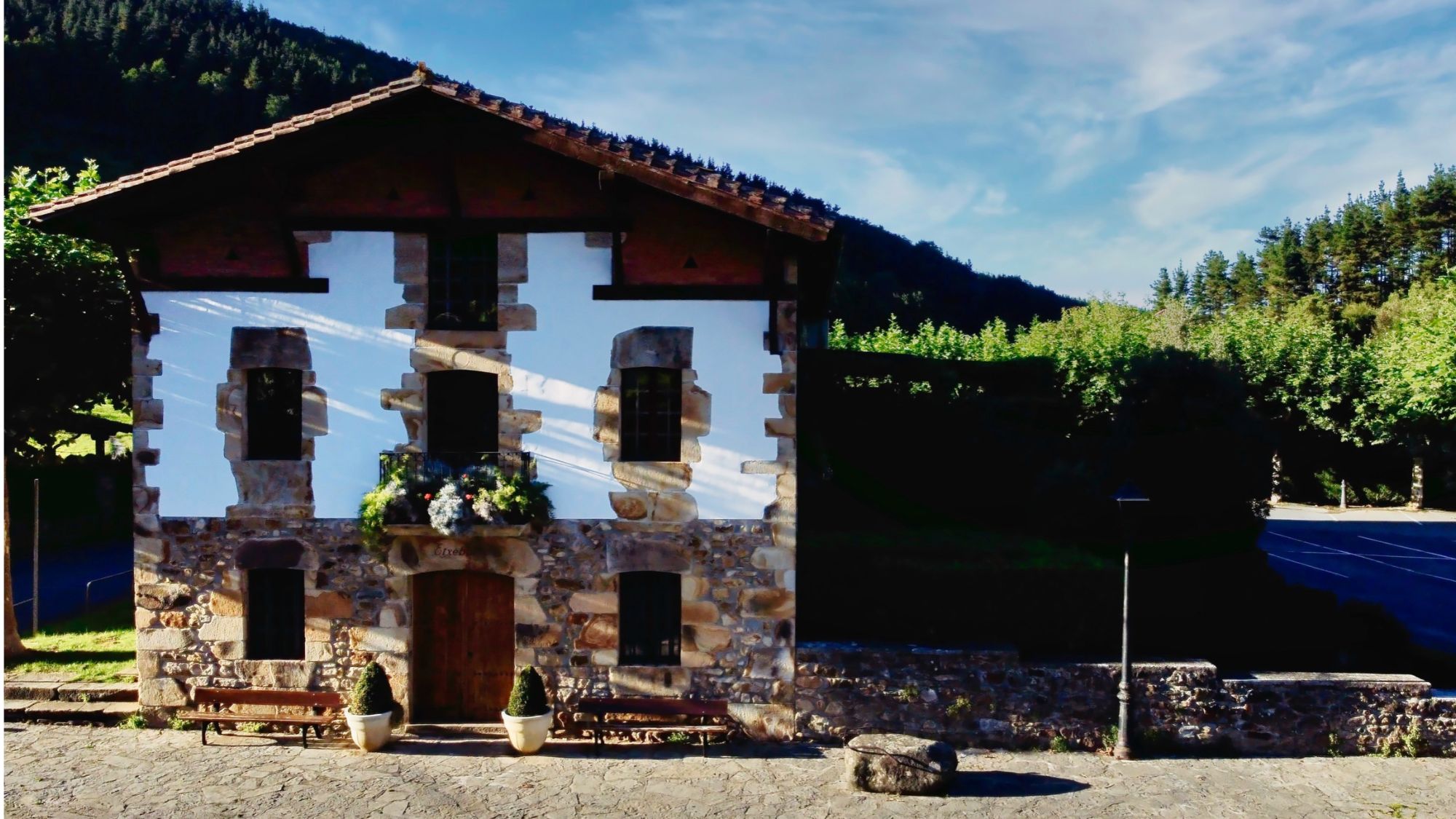
    A rural grill restaurant in the Basque region of northern Spain has topped the annual “The 50” best restaurants in the world rankings. Asador Etxebarri first featured on the list in 2008 and ranked second for the past two years, before winning the 2026 crown.

    Diners have been making the “pilgrimage” to Asador Etxebarri since chef-owner Victor Arguinzoniz first opened its doors in 1990, said Condé Nast Traveller. Unsurprisingly, it is “notoriously difficult” to book a table, said Yasmin Fahr on Food and Wine, but this is a “hyped-up restaurant truly worth the hype”. After a “stunning drive through the Basque Country” to the mountain village of Axpe, guests arrive at an 18th-century stone cottage in the middle of “rocky green hills”.

    With only eight tables, the restaurant is more like a “friend’s cosy, rustic dining room (if that friend happened to own an idyllic farmhouse overlooking the lush Basque countryside)”. Asador Etxebarri’s small team create a “comfortable and easygoing atmosphere”, and the whole thing has a “family feel” – Arguinzoniz’s “wife greets the guests”.

    This experience doesn’t come cheap, with the 14-course tasting menu costing more than €300 (£250). But guests looking for “molecular gastronomy and tweezered fare” should think again, said Tomé Morrissy-Swan in The Telegraph. Each dish is “cooked entirely over flame” on hand-built grills, and is all the more delicious for it.  Come with an empty stomach to enjoy “simpler dishes” such as grilled fish, squid filled with caramelised onion paste, and a “centrepiece sharing steak”. Even the “signature dessert” – smoked-milk ice cream – is created over fire.


    Statistic of the day

    700,000: How many UK women will be invited to take part in the world’s largest trial of how artificial intelligence can help in breast cancer screening. Under the NHS England pilot, running for three years, the technology will be used alongside specialists to review mammograms in a bid to improve early detection and ease staff workloads.


    instant opinion

    Today’s best commentary

    There are more celebrity rapists to be revealed
    Caitlin Moran in The Times
    “Secrets that women kept for so long are now turning into prison sentences men will serve,” writes Caitlin Moran. And “there are so many more” to come. But in the “internet roll calls” of “Bad Men”, we’re lumping together “the criminal and the non-criminal”, grouping “rapists” with “pinchers”. It will all “turn into white noise” without more precise categories. I propose: men who “should never have sex again”, men who “should never work again”, and men who should “never be free again”.

    We all owe Wayne Rooney an apology
    Michael Hincks in The i Paper
    He’s eaten “buffalo anus” in the Australian jungle, but “nothing will taste sweeter to Wayne Rooney” than his image “changing 10,000 miles away”, writes Michael Hincks. “Each time he speaks on ‘I’m a Celebrity’”, he dispels the myth of “Wazza, the working-class Scouser as thick as his accent”. He’s modest, intelligent and “happy to show chinks in his armour”. It’s “sobering to hear” how “this brilliant footballer” struggled with “alcohol issues when we were collectively responsible for making his life harder”.

    Aprés or Après? The difference between the two is acute and grave
    Jane Shilling in The Telegraph
    It’s time to grab those “amusing Christmas jumpers”, writes Jane Shilling, but perhaps not the “suave burgundy” Marks & Spencer number with “Aprés” on the front. “Nul points” for knitting an “acute, rather than grave, accent on the ‘e’”. Yet “M&S seems impressively unbothered”; clearly, “we Anglo-Saxons” are “more relaxed about diacritical marks” than the orthographically sensitive French. Such is “the decline of language teaching in the UK” that “soon only a few uptight pedants will know or care about accents”.


    word of the day

    Riemann

    A 167-year-old maths problem that appears to have been solved with the help of AI. Anthropic employee Levent Alpöge claims to have used the Claude chatbot to prove the Riemann hypothesis that a hidden pattern governs how prime numbers are distributed. The discovery is “one dawn across science of something far greater”, Alpöge said in a post on Friday, a day after Anthropic’s US stock market debut. 


    Evening Review was written and edited by Hollie Clemence, Irenie Forshaw, Harriet Marsden, Chas Newkey-Burden, Rebekah Evans, Helen Brown, David Edwards and Kari Wilkin, with illustrations from Stephen P. Kelly.
    Image credits, from top: illustration by Stephen P. Kelly / Getty Images / Shutterstock; Peter Case / Mirrorpix / Getty Images; illustration by Stephen P. Kelly / Getty Images; CN-STR / AFP / Getty Images / China OUT; Nadieshda / Getty Images
     

    Recent editions

    • Morning Report

      Cop31 ends in failure as countries reject climate deal

    • Sunday Shortlist

      Eastern bloc spy drama ‘blast’

    • Saturday Wrap

      The age of consent

    VIEW ALL
    TheWeek
    • About Us
    • Contact Future's experts
    • Terms and Conditions
    • Privacy Policy
    • Cookie Policy
    • Advertise With Us
    • FAQ
    Add as a preferred source on Google Add as a preferred source on Google

    The Week UK is part of Future plc, an international media group and leading digital publisher. Visit our corporate site.

    © Future Publishing Limited Quay House, The Ambury, Bath BA1 1UA. All rights reserved. England and Wales company registration number 2008885.