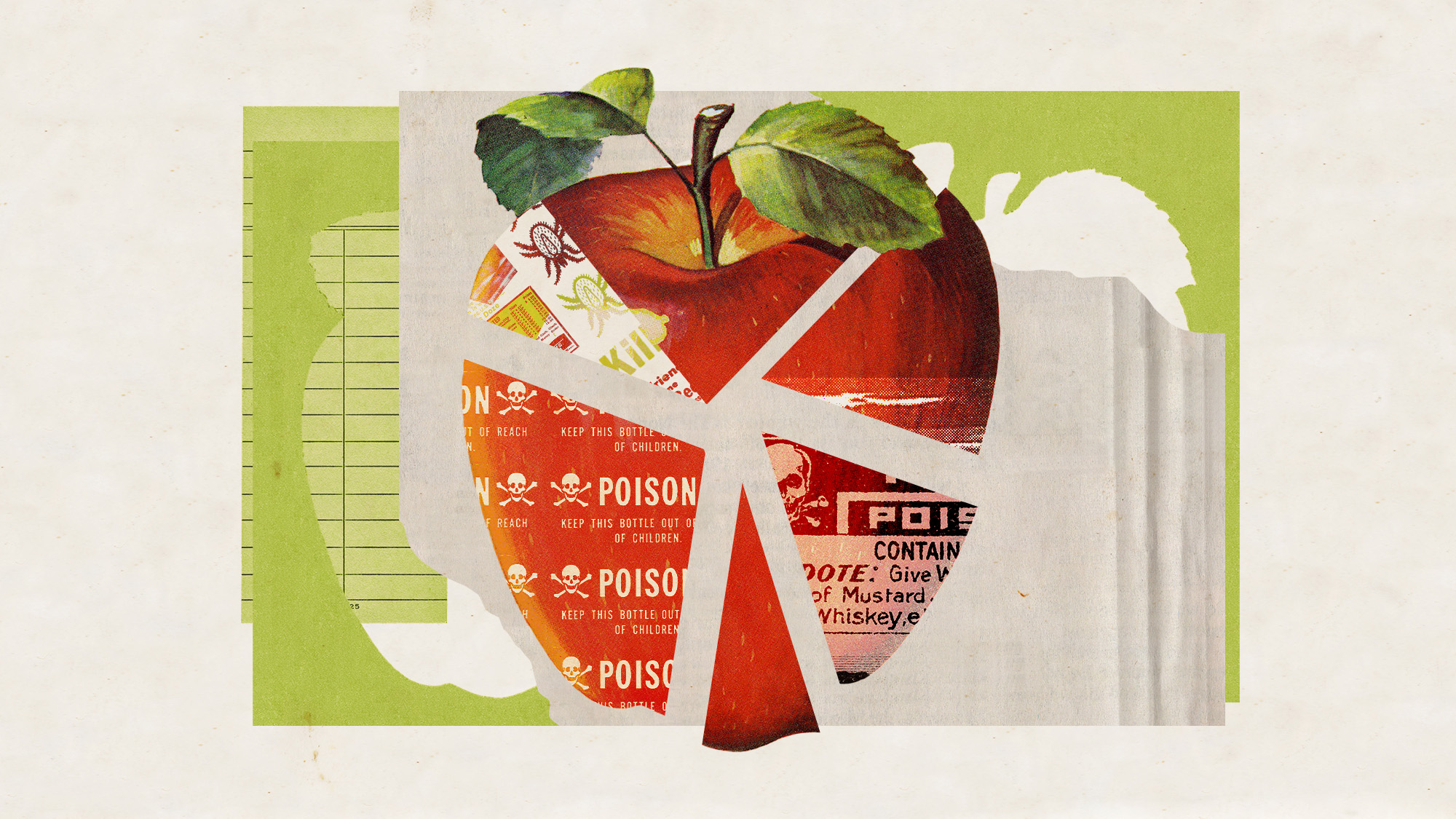
Poisoned apples may sound like the stuff of fairytales, but one of Europe’s favourite fruits might warrant a real-life health warning as environmental groups raise the alarm over toxic pesticide residues.
Pesticide Action Network (Pan) Europe, a coalition of NGOs, analysed apples bought in 13 European countries. It found residue from multiple pesticides – so-called “pesticide cocktails” – in 85% of them.
In 71% of cases, the apples contained at least one residue of pesticides classed “among the most hazardous in the EU”, according to Pan Europe.
Apples are the most widely grown fruit in Europe and “are also among the most heavily treated”, said Agence France-Presse.
The study, conducted last September, revealed that 64% of apple samples contained at least one residue of PFAS pesticides, also known as “forever chemicals”. Fludioxonil – a chemical toxic to human livers and kidneys – was found in nearly 40% of the samples. “It should have been banned, but EU member states have been blocking this for a year now,” said Pan Europe in a statement.
Most of the residues detected also exceeded the stricter limits of pesticide levels for children under three. If the apples were sold as processed baby food, 93% of them would be banned.
The European Commission and EFSA have been working since 2021 to “expand cumulative risk assessments to more pesticide groups”, said Euronews. But last year the EU proposed changes that would “weaken pesticide regulation”. Now, with rules to address pesticide cocktails “in limbo”, campaign groups are urging the bloc to “speed up”. |