The Week The Week
flag of US
US
flag of UK
UK
https://cdn.mos.cms.futurecdn.net/flexiimages/jzblygzdxr1769609154.gif

SUBSCRIBE

Try 6 weeks free

Sign in
  • View Profile
  • Sign out
  • The Explainer
  • Talking Points
  • The Week Recommends
  • Podcasts
  • Newsletters
  • From the Magazine
  • The Week Junior
  • More
    • Politics
    • World News
    • Business
    • Health
    • Science
    • Food & Drink
    • Travel
    • Culture
    • History
    • Personal Finance
    • Puzzles
    • Photos
    • The Blend
    • All Categories
  • Newsletter sign up Newsletter
  • WeekDay AM: 10 Things you need to know this morning
    US-Canada talks collapse, a fatal crash on A66, and the robot faster than Usain Bolt

     
    today’s international story

    US-Canada talks degenerate into trade war

    What happened
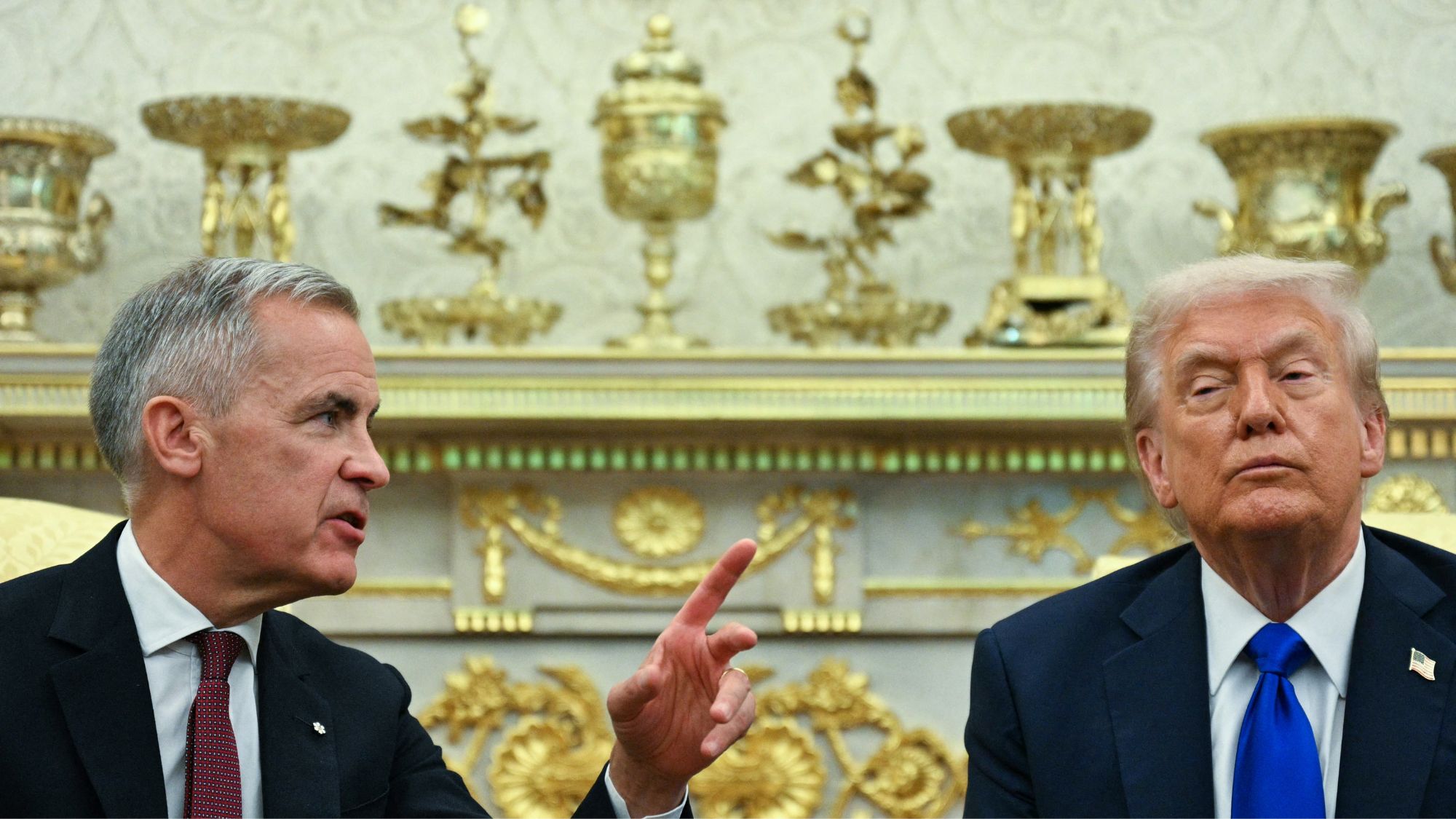
    Donald Trump has accused Canada of wanting the advantages of joining the US without becoming part of it after last-minute trade negotiations between the two countries collapsed. The breakdown has prompted Washington to impose fresh 50% tariffs on selected Canadian imports worth about $20 billion (£14.7 billion), covering products including wine, dairy, clothing and cement.

    Who said what
    Trump claimed that American farmers had faced unfairly high Canadian tariffs for years. Canadian Prime Minister Mark Carney called the US measures a “miscalculation” intended to damage his country and said Ottawa had been left with no choice but to respond in kind. “They asked too much and they offered too little,” he said.

    “Both sides blamed the other for the breakdown in talks,” said Lauren Almeida in The Guardian. This “shocking collapse” is the “latest sign that President Trump’s bulldozer approach to remaking the nation’s trade relationships may be reaching its limits”, said David J. Lynch in The Washington Post.

    What next?
    Canada will introduce matching tariffs from 8 September on American steel, dairy, appliances and electronics. With negotiations suspended and no timetable for restarting them, the dispute threatens to do lasting damage to one of the world’s closest trading relationships.


    today’s policing story

    Officers hailed as heroes after fatal crash

    What happened
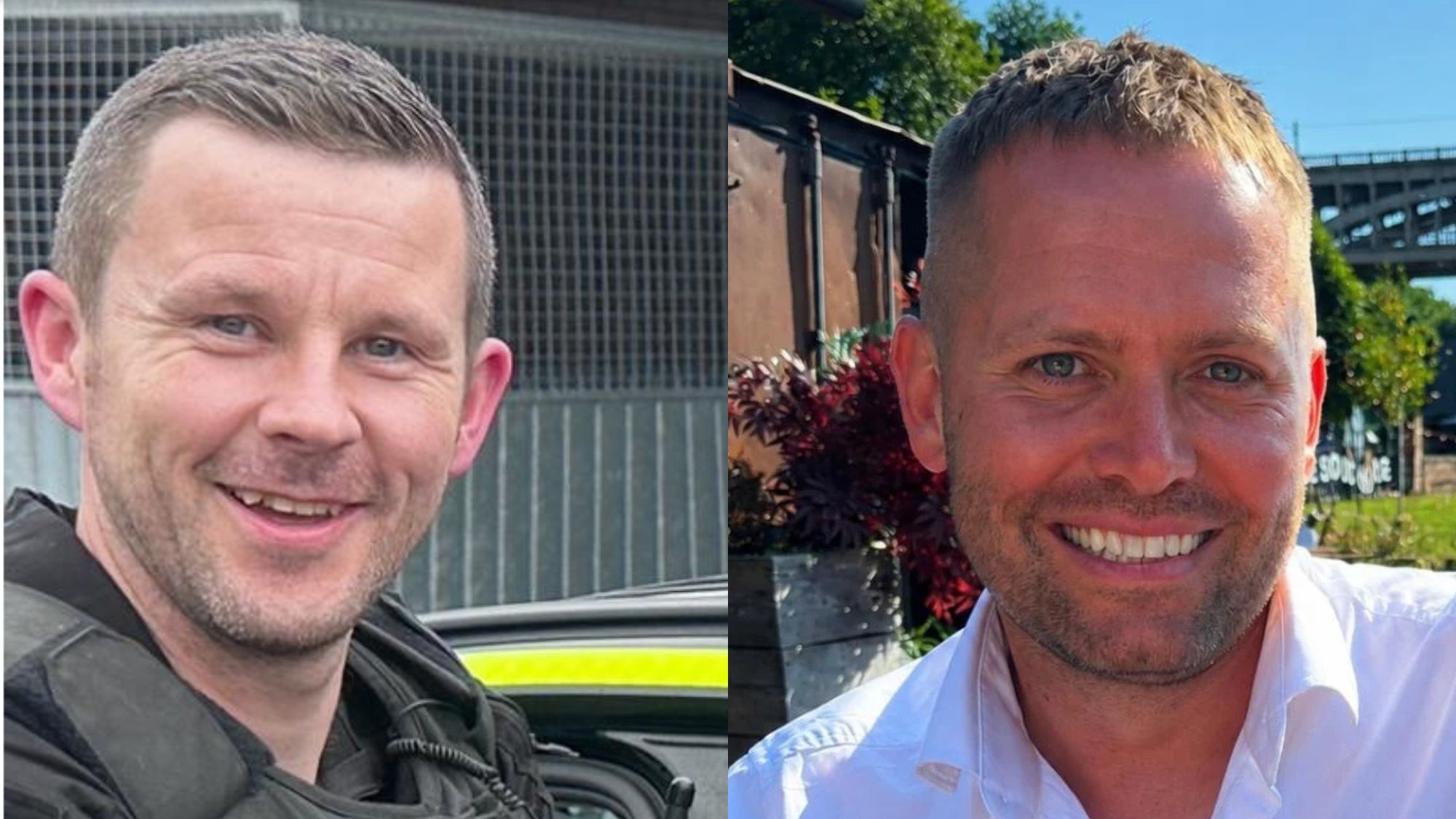
    Two Cleveland Police officers have been remembered as devoted family men after dying in a collision on the A66 near Middlesbrough. PC Tom Clough (pictured above left) and PC Matthew Blades (above right) were killed early on Saturday when a Volkswagen Passat entered the carriageway against the flow of traffic and struck their armed response vehicle. Five people inside the Passat also died in the collision.

    Who said what
    PC Blades’ wife described him as a “beloved husband” and devoted father to their two sons, saying his courage and commitment to others would remain part of his legacy.

    Police had engaged in a chase after receiving “intelligence regarding numerous incidents” linked to the Passat, which was suspected of having cloned number plates. However, the pursuit was abandoned when the suspected vehicle entered the A66 in the wrong direction. It then struck Blades and Clough’s oncoming police vehicle – which was not involved in the chase – just 10 seconds later.

    What next?
    The Independent Office for Police Conduct is examining the circumstances surrounding the incident. A fundraising appeal for the officers’ families had raised more than £180,000 by Sunday evening.


    Today’s technology story

    Robot bolts past sprinting great’s 100m record

    What happened
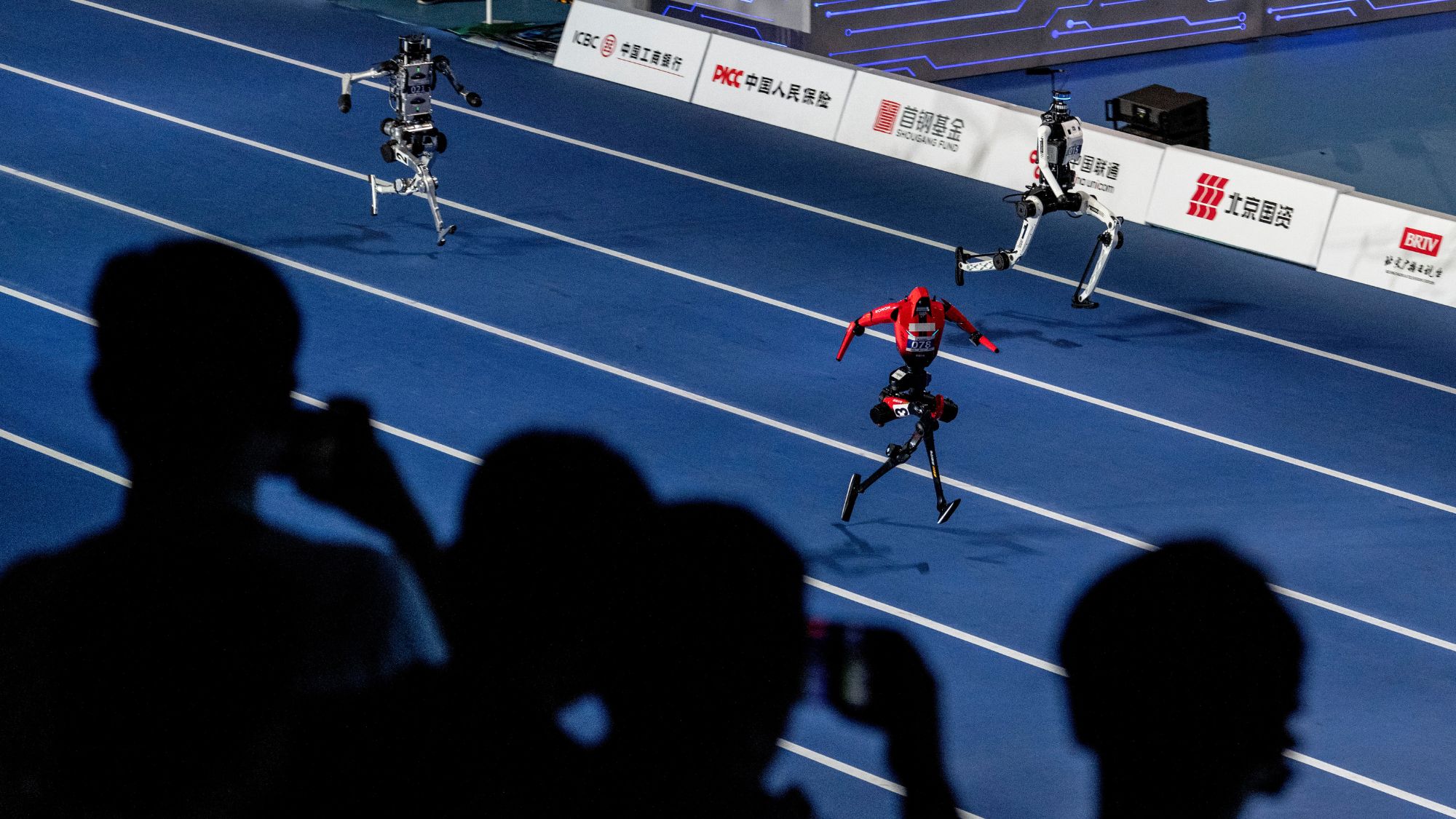
    A humanoid robot has apparently surpassed Usain Bolt’s 100-metre world record at a robotics competition in Beijing. Lightning Bolt, an X-Humanoid machine, covered the distance in 9.39 seconds, beating the Jamaican’s 9.58-second mark from 2009. But its victory was somewhat less graceful than Bolt’s: the robot slammed into a wall immediately after crossing the finish line and had to be carried away on a stretcher. Another robot had reportedly gone even faster in a pre-event trial, recording 9.32 seconds.

    Who said what
    The five-day World Humanoid Robot Games features more than 2,000 machines competing across 51 disciplines.

    “Humanoids are seen as the future of AI and there’s a wide range of potential uses,” said Jennifer Pak on NPR. “Right now, research is the main purpose, but also industrial factories, also inside the home, like cleaning, cooking, even folding your shirts.”

    What next?
    The competition will continue with events including football, table tennis, weightlifting, tug of war and jumping. The event is also showcasing China’s growing dominance in the humanoid robotic field as it somewhat overshadows competitors from 15 other countries, including the US, Germany and Japan.


    It’s not all bad

    People with type 2 diabetes could soon swap daily insulin injections for a weekly jab after NHS watchdog Nice approved a new long-acting treatment. Onswik, made by Eli Lilly, would cut injections from 365 a year to just 52, potentially giving hundreds of thousands of people greater freedom. Nice said it could be especially helpful for frail or disabled patients who rely on carers or healthcare workers to administer their insulin.


    under the radar

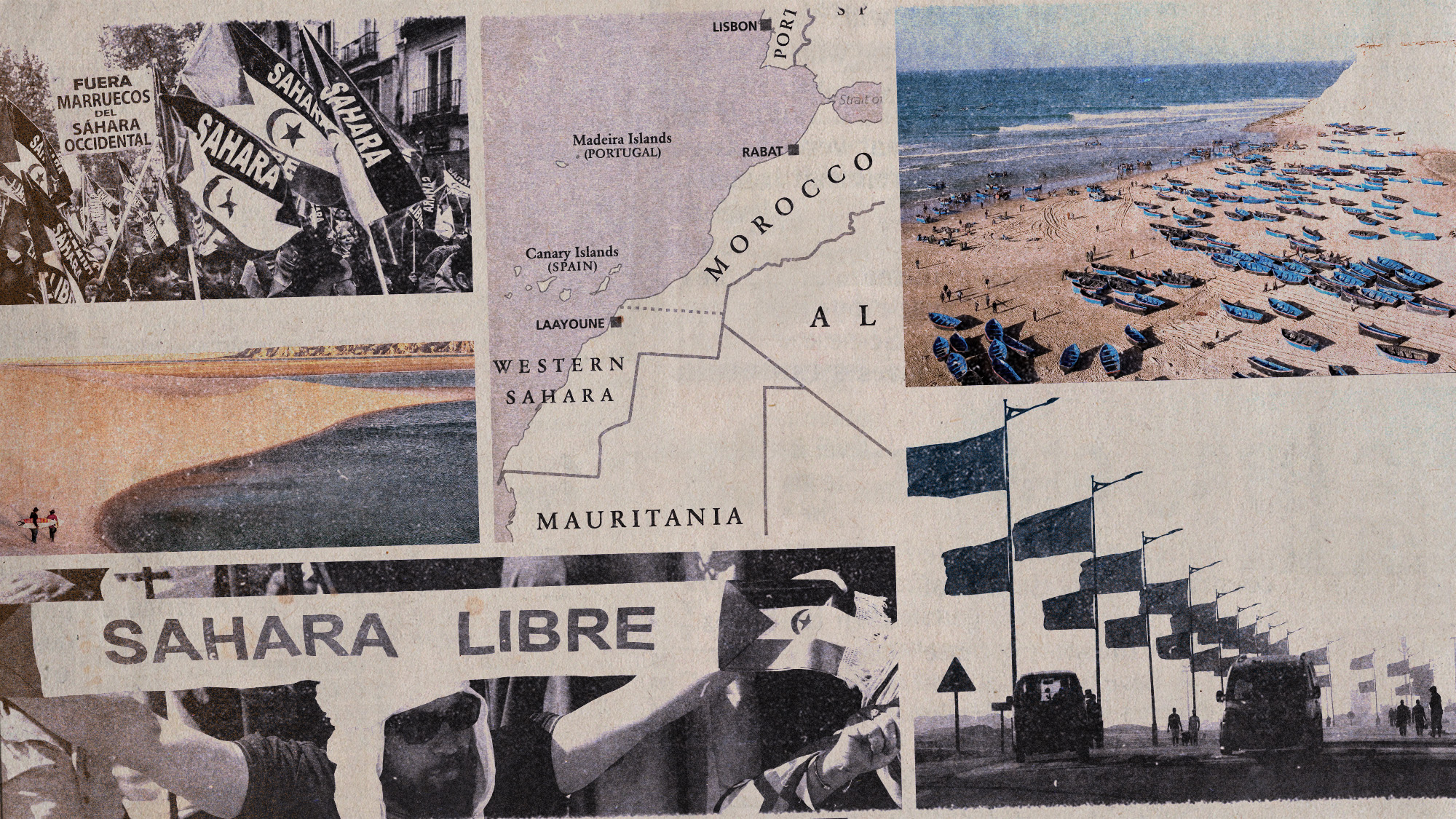
    Morocco’s attempt to rebrand Western Sahara

    The city of Dakhla – on a “peninsula where the Sahara meets the Atlantic” – is advertised to holidaymakers as “Morocco’s hidden gem”, according to the BBC. But tourists flying to this part of Western Sahara might not know that they’ll “be landing in one of the world’s longest ongoing territorial disputes”.

    A former Spanish colony, Western Sahara was annexed by Morocco in 1975. Since then it has been the subject of a dispute between Morocco and its indigenous Sahrawi people, led by the Polisario Front and its government-in-exile in Algeria. Now classified by the United Nations as a “non-self-governing territory”, about 80% of the country is occupied and administered by Morocco. Numerous UN-brokered talks to resolve Western Sahara’s future have failed.

    Morocco has been pouring considerable resources into Western Sahara. Since 2015 it has spent £7 billion trying to “level it up”,  said The Spectator. There are now water desalination plants, 620 miles of motorways and plans for eight “green hydrogen plants” and a “centrepiece” £1 billion Dakhla Atlantic Port.

    But Morocco’s annexation has created “one of the world’s most enduring yet overlooked refugee crises”, said Metro. For the past 50 years the indigenous Sahrawi people have been “forced to live under occupation or go into exile”: 173,000 Sahrawi refugees live in camps in Algeria, in the “harshest part of the desert”.

    In recent years the international consensus has shifted and consolidated in favour of Morocco’s “autonomy plan” for Western Sahara. Spain has endorsed the framework and both France and the US have recognised Morocco’s sovereignty over the region. In October the UN Security Council approved a resolution that gave the “strongest backing yet” to Moroccan control, “while making no mention of the independence referendum” sought by the Polisaro Front, said Bloomberg.


    on this day

    24 August 1968

    France became the world’s fifth thermonuclear power with a detonation at Mururoa Atoll in the South Pacific. This year President Emmanuel Macron announced major changes to France’s nuclear deterrence doctrine, including an increase in the country’s nuclear stockpile for the first time since 1992.


    Today’s newspapers

    ‘Ukraine gift’

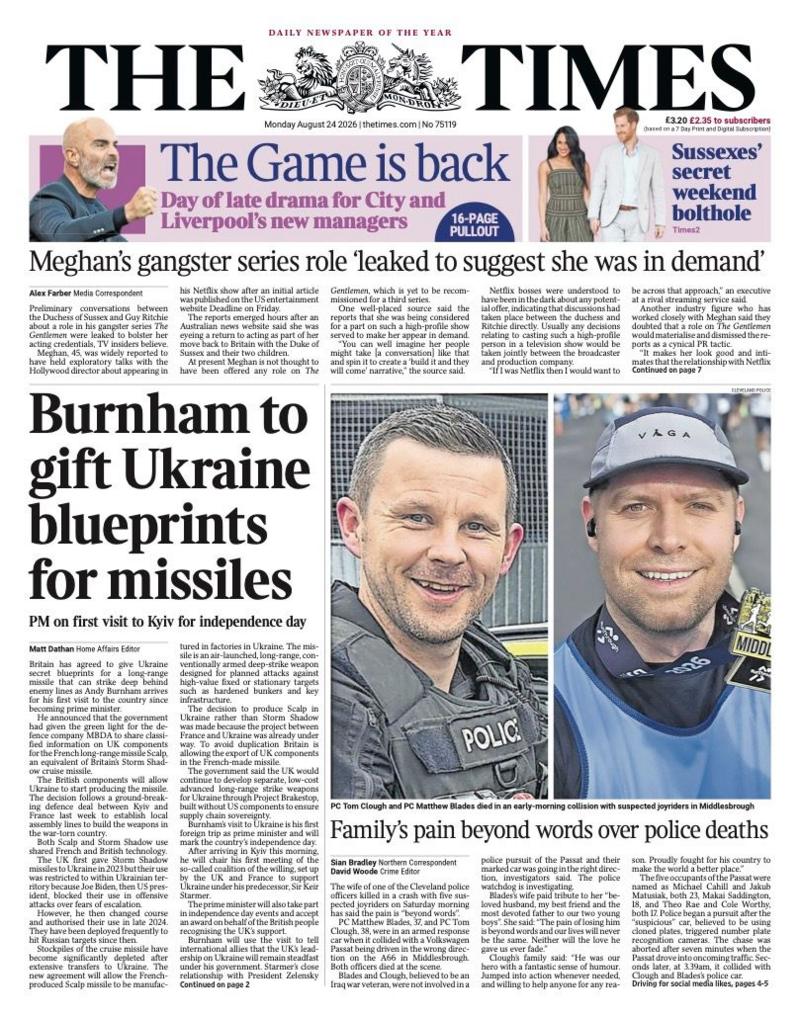
    Andy Burnham will “gift Ukraine blueprints for missiles”, The Times says. “Children are ‘not safe’ on the internet”, says the Daily Mail. “We’re all grin it together”, says The Sun, as Catherine, Princess of Wales “smiles” during a church trip. “No more”, The Mirror says, as “families who have lost loved ones to drowning” ask the PM to “take action”. The “Prem suspects” says the Daily Star, noting that Manchester City fans are “top of the league” for bad behaviour. “When did Britain become so ugly?” asks The Telegraph.

    See the newspaper front pages


    tall tale

    Sheep makes a clean getaway

    An escaped sheep in Germany boarded a parked bus and took a trip through a car wash before being reunited with its owner. The sheep had escaped from its pasture and wandered on to bus company RVM’s property in Lüdinghausen, said the Coesfeld Police on social media. The owner was contacted through the tag the sheep was wearing, but company officials said the animal had taken a ride through the facility’s bus-sized car wash while waiting for its owner to arrive. The sheep remained calm and co-operative throughout its brief journey, according to the transport firm.


    Morning Report was written and edited by Arion McNicoll, Jamie Timson, Will Barker, Ross Couzens and Chas Newkey-Burden, with illustrations by Julia Wytrazek.

    Image credits, from top: Jim Watson / AFP / Getty Images; Cleveland Police handout; Kevin Frayer / Getty Images; Illustration by Julia Wytrazek / Getty Images.

    Morning Report and Evening Review were named Newsletter of the Year at the Publisher Newsletter Awards 2025
     

    Recent editions

    • Sunday Shortlist

      Sian Clifford’s ‘barnstorming’ comedy

    • Saturday Wrap

      ‘The holy grail of military alliances’

    • Evening Review

      Harry and Meghan: why the comeback?

    VIEW ALL
    TheWeek
    • About Us
    • Contact Future's experts
    • Terms and Conditions
    • Privacy Policy
    • Cookie Policy
    • Advertise With Us
    • FAQ
    Add as a preferred source on Google Add as a preferred source on Google

    The Week UK is part of Future plc, an international media group and leading digital publisher. Visit our corporate site.

    © Future Publishing Limited Quay House, The Ambury, Bath BA1 1UA. All rights reserved. England and Wales company registration number 2008885.