What happened
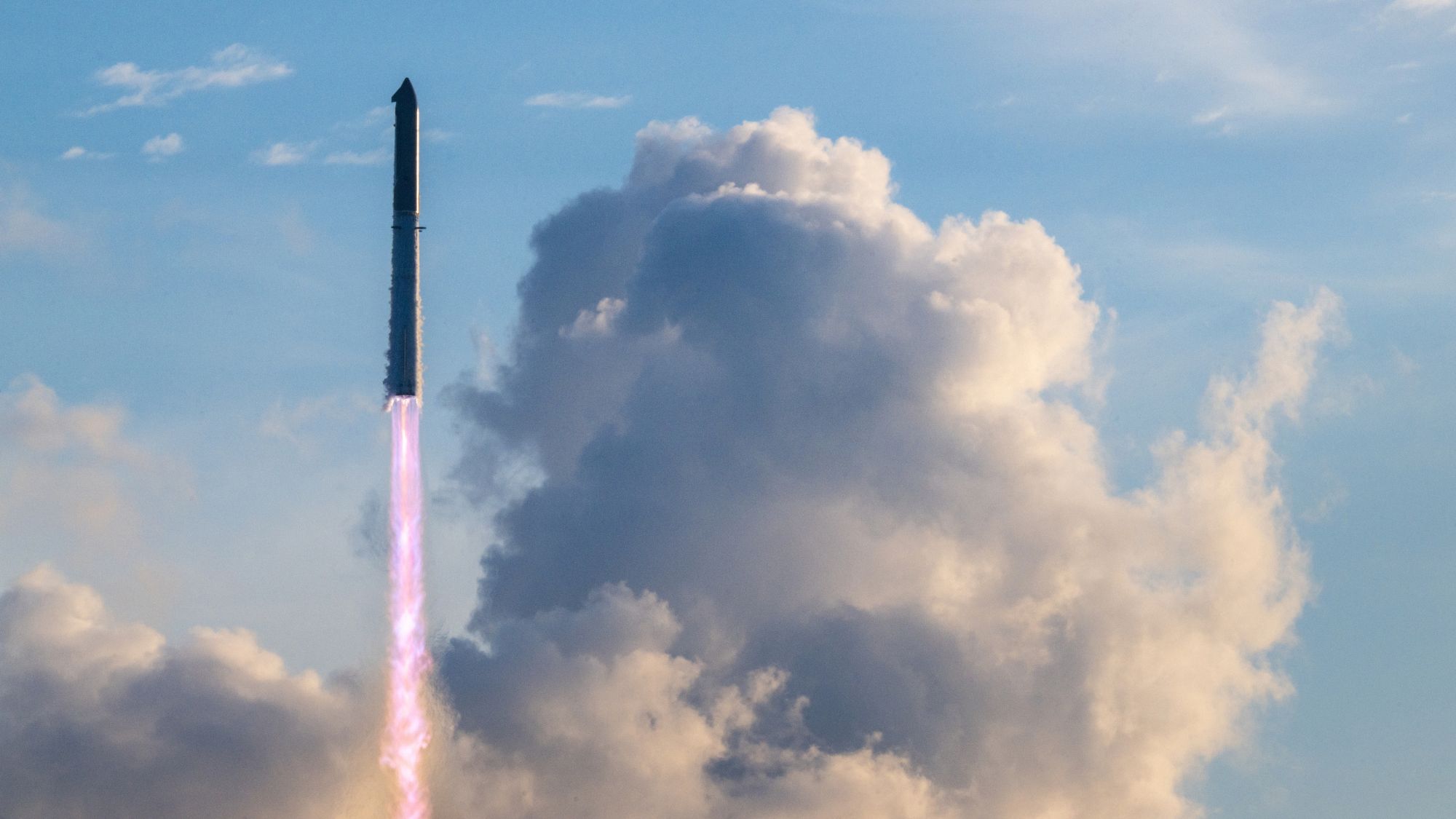
SpaceX, founded by Elon Musk, has launched its most powerful rocket into orbit for the first time on its 14th test flight. Despite one of its six engines failing during lift-off from Texas, Starship’s booster successfully detached to send the rocket into orbit, where all 26 of its Starlink satellites were deployed.
Nonetheless, the engine issue triggered an early return to Earth “out of an abundance of caution”, with Starship landing in a pre-arranged cleared zone in the Pacific Ocean.
Who said what
Despite the decision to cut the planned flight time from 10 hours to three, SpaceX’s live host said “this has been a wildly successful day so far”. Nasa administrator Jared Isaacman called it a “gorgeous launch”.
SpaceX describes Starship as “the most powerful launch vehicle ever developed”, claiming that it will eventually carry crew and cargo to “the Moon, Mars and beyond”.
If it could regularly return to its launch site and be caught by “giant mechanical arms”, Starship would “revolutionise the space industry, enabling launches of bigger, heavier satellites” at lower costs, said The New York Times.
What next?
SpaceX says Starship eventually aims to carry up to 100 people on “long-duration, inter-planetary flights”. |