The Week The Week
flag of US
US
flag of UK
UK
https://cdn.mos.cms.futurecdn.net/skoGBi9qKFoUtnNWkovjJQ.jpg

SUBSCRIBE

Try 6 Free Issues

Sign in
  • View Profile
  • Sign out
  • The Explainer
  • Talking Points
  • The Week Recommends
  • Podcasts
  • Newsletters
  • From the Magazine
  • The Week Junior
  • More
    • Politics
    • World News
    • Business
    • Health
    • Science
    • Food & Drink
    • Travel
    • Culture
    • History
    • Personal Finance
    • Puzzles
    • Photos
    • The Blend
    • All Categories
  • Newsletter sign up Newsletter
  • Saturday Wrap, from The Week
    Poll disaster, the OBR, and prostate screening

     
    briefing of the week

    The Office for Budget Responsibility

    Even before it accidentally published the Budget ahead of time last week, the OBR had become a lightning rod for criticism. Why?

    Why was the OBR set up?
    It was created in 2010 by David Cameron’s coalition government. Before then, the Treasury had produced its own economic and fiscal forecasts ahead of Budgets and spending reviews; being produced by the chancellor’s own staff, these were vulnerable to political manipulation and were consistently over-optimistic. In opposition, George Osborne had promised to set up a new official independent economic and fiscal watchdog. This, he said, would be made up of “wise men” who would “hold up a yellow card when the chancellor steps out of line”. Osborne vowed that it would “change the way Budgets are made for ever” and in the 15 years since, the OBR has emerged as one of Westminster’s most powerful bodies.

    What does it actually do?

    It monitors the government’s spending plans and provides forecasts for the economy and public finances covering the next five financial years – typically issuing them twice a year, at the Budget and Spring Statement. The forecasts assess possible changes to gross domestic product (GDP); population and employment rates; migration; productivity; borrowing costs; and inflation. It also evaluates the government’s performance against the fiscal targets it sets itself. (This government’s main fiscal rule is that day-to-day costs should be met by revenues by 2029/30, at which point it should only be borrowing to invest.) The OBR issues a “pre-measures” forecast to the chancellor two or three weeks ahead; then a “post-measures” forecast assessing tax and spending plans, which is published on the day. It also assesses, at least twice every two years, the long-term sustainability of the public finances. The forecasts it produces are hugely influential: they move financial markets, and can leave governments scrambling to fill yawning gaps projected in the public finances.

    Are its forecasts accurate?
    It is widely regarded as one of the more credible official forecasters. Over one to three years, the OBR’s assessment of GDP growth tends to be “more accurate than the average of other official forecasters in Europe”, according to a 2023 review, and certainly better than the historic Treasury forecasts, which were plagued by optimism bias; though it has also had a tendency to underestimate government borrowing, and, in the longer term, to overestimate GDP growth. Professor David Miles of the OBR likens its forecasts to a satnav estimate of a long journey: they are probabilistic long-term predictions, easily thrown off by changes in real conditions, and unlikely to be 100% right – but still a useful guide.

    Why has the OBR been criticised? 
    Forecasts are obviously speculative and partial. Some argue that the OBR – an unelected body – exercises disproportionate influence over major fiscal decisions, reducing the scope for democratic debate or political discretion. On the left, think tanks such as the New Economics Foundation say the OBR has consistently underestimated the benefits of large public investments and bold social spending – that it has a structural bias towards austerity or “status quo” economics. But it has critics on the right, too. Kwasi Kwarteng, who refused to consult the watchdog before his infamous mini-Budget of September 2022, said recently that the OBR focuses too much on balancing the books, and not enough on growth. William Hague has complained that its five-year forecasts encourage short-term thinking.

    Is the OBR too powerful?
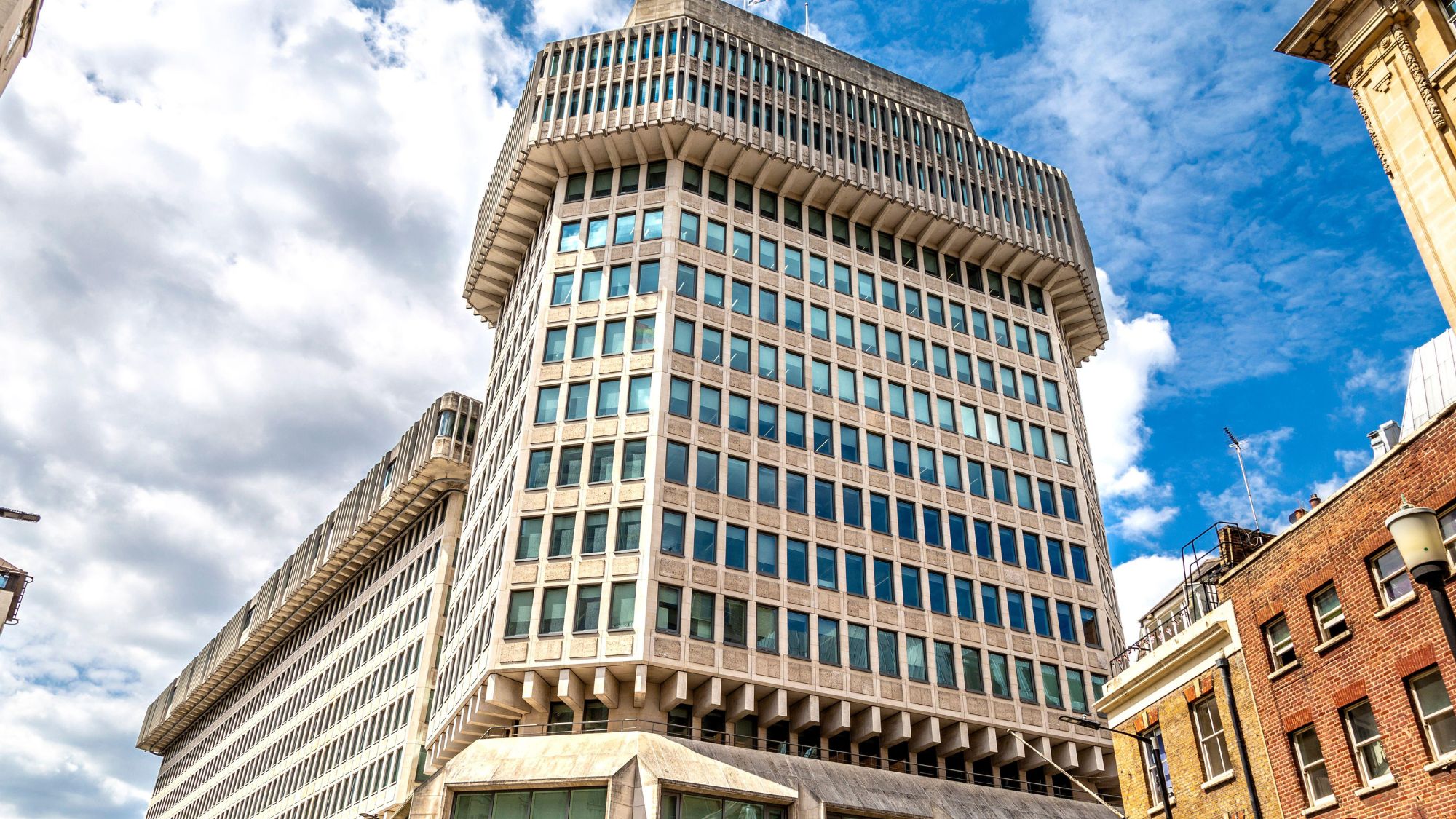
    Arguably. In April, the Financial Times’ Chris Giles warned that we were already “witnessing a terrible spectacle of the fiscal watchdog’s tail wagging the government dog”, citing the example of Rachel Reeves announcing a package of welfare cuts (later abandoned) in response to an OBR forecast downgrade. “It is unacceptable,” he added, “that public services and taxes are set not in the ballot box, but by unelected and barely accountable officials in a small office above the Ministry of Justice.” Giles redoubled his criticisms this week, following the leak of the entire Budget 45 minutes before Reeves announced it to the House of Commons, saying: “As the Budget showed, the fiscal watchdog’s predictions indirectly set our taxes. The minimum we require in return is competence.”

    What’s the case for the defence?

    That the OBR’s powers are conferred on it by Parliament, and that chancellors retain the right to set the fiscal rules by which they will be judged – they can change the assessment criteria if they wish – and also have a say in who fills the positions in the OBR’s top team. It was the current chancellor who chose to give the OBR more responsibility and independence, by allowing it to produce forecasts even when the government does not ask it to – an apparent response to the Truss mini-Budget. Besides, many of the fiscal problems encountered by Reeves in the past year could have been averted if she’d left herself more fiscal “headroom” in her first Budget, as previous chancellors have done.

    Does it have a future?
    Almost certainly – but changes are afoot. Last week, it was announced that the OBR will only check if the government is meeting its fiscal rules once a year, instead of twice (though it will continue to publish two sets of forecasts annually, to accompany the Spring Statement and the Budget). That change, according to analysts, was a recognition that the ever-changing economic outlook has contributed to economic uncertainty and rampant speculation about future tax rises. The disastrous leak of last week’s Budget on the OBR website, meanwhile, has piled pressure on the watchdog. On Monday, it said the leak had been the “worst failure” in its 15-year history; and admitted that a previous report, published in March alongside the Spring Statement, had also been accessed “prematurely”. Its chair, Richard Hughes, resigned.

    The “three wise men”
    Based on the 14th floor of a brutalist tower in Westminster nicknamed the Grey Lubyanka, the OBR is led by a so-called “Budget Responsibility Committee” of three people, appointed for five years by the chancellor after Treasury Select Committee approval. The trio (Osborne’s “three wise men”) is comprised of David Miles, an academic economist who previously served on the Bank of England’s interest-rate-setting Monetary Policy Committee; Tom Josephs, a former Treasury official; and, until this week, Richard Hughes, formerly of the left-wing Resolution Foundation think tank. Beneath them sit a permanent staff of just 52 civil servants, who do their work without much in the way of resources: reportedly, the OBR cannot afford a single news subscription; its officials can often be found wandering over to the Treasury to note down market prices from its single Bloomberg terminal.

    Media reports have focused on clashes between the OBR and the Treasury in recent months; but for the most part, relations are cordial. “All this hostility is a bit confected,” says former chancellor Jeremy Hunt. There are “battles”, certainly, but “the OBR is set up to be sceptical of chancellors … they’re there to stop chancellors pulling magic rabbits out of hats”.


    Spirit of the age

    A Cambridgeshire school attended by Samuel Pepys has proposed removing his name from one of its houses because of his “abusive and exploitative” attitudes towards women. Hinchingbrooke School said the author’s behaviour – in his diaries he writes of trying to touch at least one woman’s “mameles” (breasts) every day – did not “align with [our] values”.


    talking point

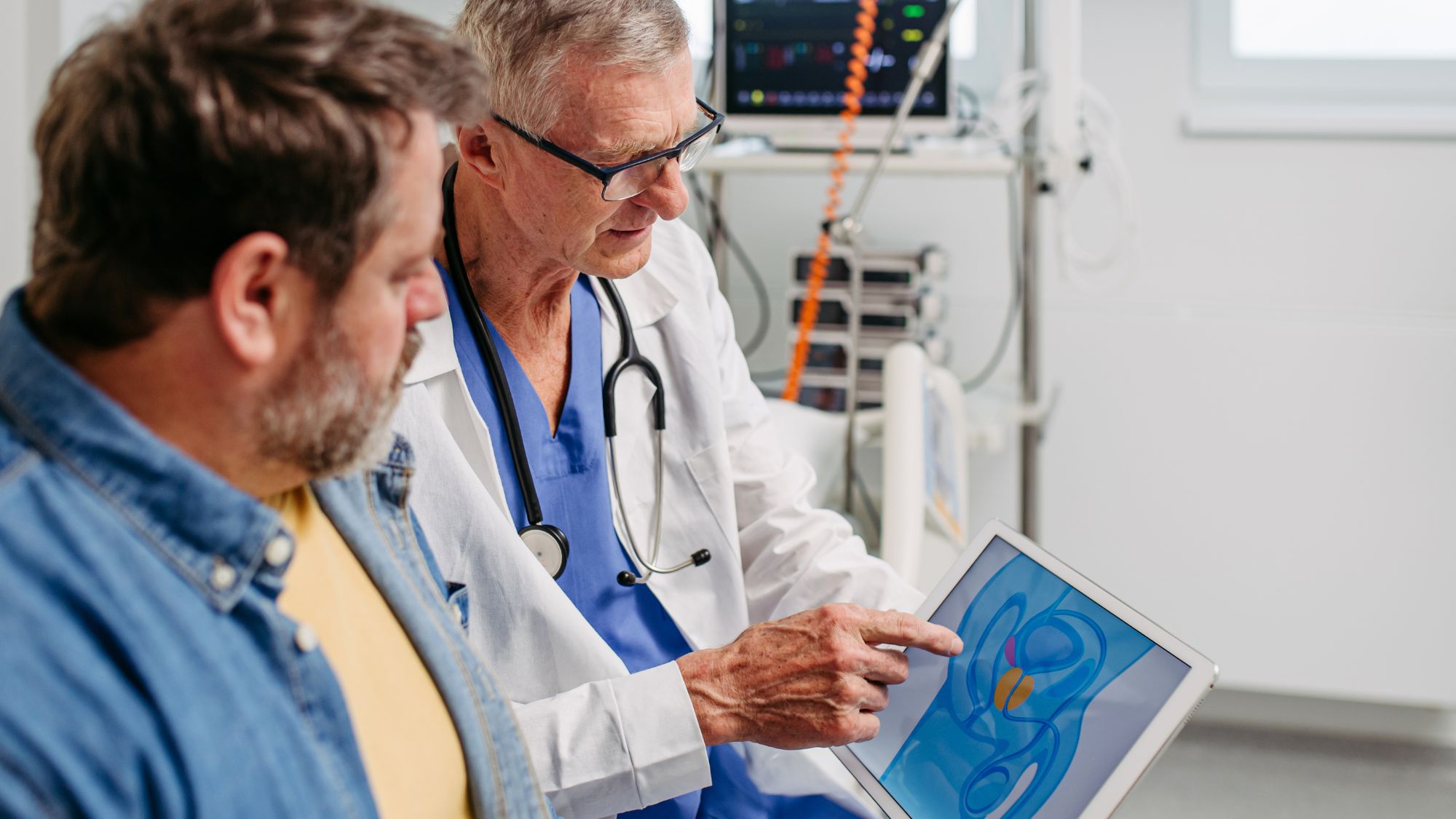
    Prostate screening: should it be routine?

    Prostate cancer is the most common form of cancer among British men, with 63,000 cases diagnosed each year, said The Telegraph. In some, such as the former PM David Cameron, it’s caught early enough to be treated – often by prostate-specific antigen (PSA) tests, which men can request from their GPs. In others, such as the Olympic cycling champion Chris Hoy, it is terminal: the diagnosis simply arrives “too late”. Last week, the National Screening Committee (NSC) had an opportunity to fix this sorry state of affairs, by recommending a new prostate cancer screening programme for millions of men over 50. Such a step, it is estimated, could save 1,500 lives a year. Yet in a “deeply disappointing” draft recommendation, it said that PSA checks aren’t sufficiently reliable to justify screening. Instead, said Rishi Sunak in the same paper, it proposed the “extremely limited screening” of men known to carry a BRCA1/2 gene mutation, which places them at a much higher risk. There’ll be no routine screening for Black men, one in four of whom will get prostate cancer in their lives; most men with a family history of the disease won’t be tested either. “This is a missed opportunity, and men will die as a result of it.”

    Many in the field had hoped the NSC might recommend a screening programme, said Professor Hashim Ahmed in The Observer. “Deep down, however, we knew the data would let us down.” So it has proved. The evidence was clear that no fewer than 1,000 men aged 50 to 60 would have to be screened and tested to save or extend two lives; and that the harm associated with testing “vastly outweighs the benefit”. PSA tests produce false negatives: they can miss the disease. They also produce false positives, and can lead to invasive tests and over-diagnosis. One in three men over 50 have “little areas of unimportant prostate cancer” which never spread. If these are detected, men often receive “unnecessary” treatments such as prostatectomy surgery or radiotherapy, which carry nasty side effects such as incontinence or erectile dysfunction. “So bad are these symptoms that one in five men regret having treatment.”

    The committee was right to be cautious, said David C. Gaze on The Conversation; and in any case, the debate is set to rumble on. Proponents of screening point to new data suggesting that PSA-based tests could cut prostate cancer deaths by 13%. The NSC, meanwhile, isn’t due to issue its final recommendations until March. Even then, the government could decide to overrule it. Still, it’s clear that “until screening can reliably tell harmful cancers from harmless ones, the risk of over-diagnosis and over-treatment will remain a real and serious concern”.


    controversy of the week

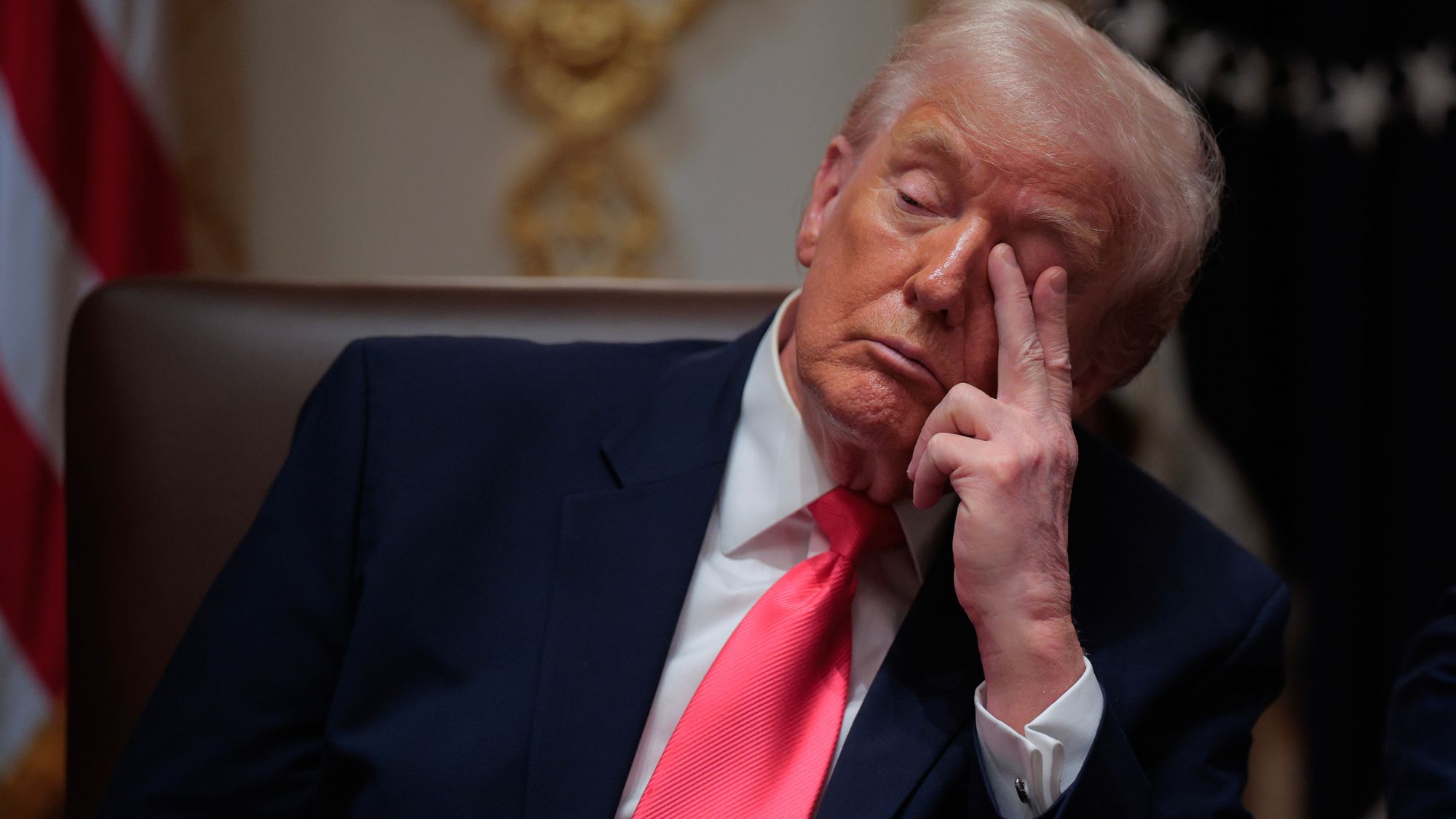
    Trump’s poll collapse: can he stop the slide?

    President Trump is slumping in the polls, said Joshua Green on Bloomberg, and he may drag the Republican Party down with him. He is now receiving a negative approval rating from every major pollster. But the “most stinging” numbers came in a recent Fox News survey, in which only 41% of respondents approved of Trump’s job performance – his lowest rating in the poll since October 2017. The survey had plenty of other bad news for the president, including career-high levels of disapproval from men, white voters, and those without a college degree. More than three-quarters of all respondents viewed the economy negatively, and “in a rebuke to a president who routinely blames economic woes on former president Joe Biden”, voters blame Trump, by a margin of two to one. Democrats would likely “win big” if the midterms were held tomorrow, said The Hill. A new Marist poll suggests that independents now favour Democrats by a 33-point margin.

    I’d love to tell you that Trump is being dragged down by “his authoritarian pathologies or his naked corruption”, said Nick Catoggio on The Dispatch. But the reason he’s sinking is because he has chosen to make the very issue he was elected to solve – the high cost of living – even worse. “Tariffs are eating his presidency alive.” In a recent YouGov poll, 73% of voters, including 56% of Republicans, said Trump’s signature economic policy has raised prices. It didn’t have to be like this. Voters would have given Trump “loads of slack” had he tried to clean up the “inflationary mess” left by Biden. Instead, he squandered that goodwill on tariffs, and helped Democrats up off the mat.

    Trump has clawed his way back up the polls before, said Ross Douthat in The New York Times. When his numbers tanked in April, he dialled back tariffs, “stopped shipping people to the Salvadoran dungeon” and halted government cuts. Now “the prescription is less obvious”. Like Biden, Trump is dealing with an economy that “isn’t terrible, but leaves people chronically dissatisfied”, and he can’t change that “via executive fiat”. His administration keeps talking about how its support for artificial intelligence will supercharge the economy. But that doesn’t play well with voters worried now about inflation, jobs and housing. On those fronts, the White House seems to lack any policy. “That’s the position of a political loser – and sooner or later, a lame duck.”


    Viewpoint

    Leave me alone, AI

    “I can’t remember exactly when it started, but some time in the last few months, AI went from being a topic of largely theoretical interest to an actively intrusive pest. It began when a bluish-purple circle appeared unbidden on my WhatsApp screen; it was ‘Meta AI’, a chatbot eager to help me find a restaurant or a recipe or other things I never want to find on WhatsApp. Since then I have realised something: that any time I tried to send an email, write a document or do virtually any other type of online work, AI barged in and tried to do it for me. I would be thrilled if AI would do one thing: go away and let me get on with whatever I was doing before it interrupted.”

    Pilita Clark in the Financial Times


    It wasn’t all bad

    A builder from West Sussex who received one of Britain’s largest lottery payouts has funded a new centre for vulnerable young adults in Chichester. Steve Thomson, 48, said he knew “exactly” what he wanted to do with the money after winning £105 million in the EuroMillions draw in 2019. Thomson, whose aunt was disabled, helped transform a near-derelict building into a three-storey community centre for charity Together Our Community – complete with a sensory room, a classroom and a training kitchen and café.


    People

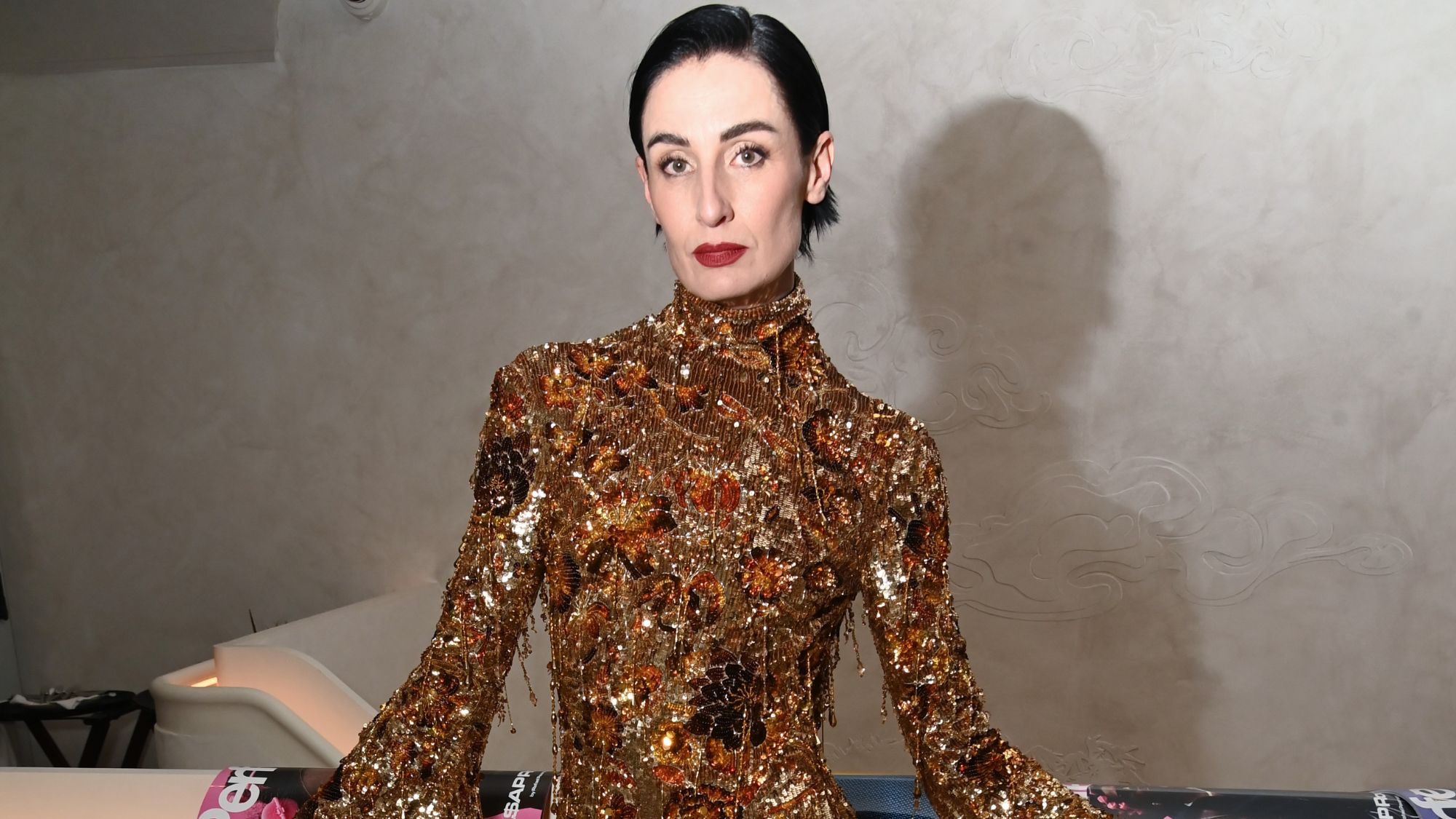
    Erin O’Connor

    Erin O’Connor was 17 when she was plucked from obscurity by a talent scout at “The Clothes Show Live” in Birmingham; and in the 30 years since, she has established herself as one of the world’s most famous models, walking for everyone from Dior to Versace. She hasn’t always been treated well, says Eva Wiseman in The Observer. Her angular beauty has been described by fashion photographer Tim Walker as “freak chic”: her neck, people said, was too long; her nose, they made her feel, was “like Concorde”. She has had bad experiences with designers (one “extraordinarily powerful” figure found fault with her body while she was naked in front of him).

    Being naturally shy, she also finds the social side of work daunting. “Walking into a room, doing a casting, exchanging small talk, was nothing short of terrifying,” she explains. But once the camera lens is trained on her, she has always felt entirely herself, and totally at ease – even if she was wearing a dress made of razor clams that cut her skin for Alexander McQueen, or “being held in a harness, 30ft in the air, being struck by imaginary lightning”. “There comes this brilliant moment for me where I’m literally untouchable,” she says. “Nobody can tell me off. Nobody can tell me I got it wrong. Nobody can tell me it’s not good enough. And so for this very timid, still introverted person who I am, it’s like… the weekend.”


    Image credits, from top: Chip Somodevilla / Getty Images; Nathaniel Noir / Alamy; Halfpoint Images / Getty Images; Dave Benett / Getty Images for Perfect Magazine
     

    Recent editions

    • Evening Review

      Putin-Modi love-in: a worry for the West?

    • Morning Report

      NHS warns of tidal wave of flu cases

    • Evening Review

      Time for Europe to fight fire with fire?

    VIEW ALL
    TheWeek
    • About Us
    • Contact Future's experts
    • Terms and Conditions
    • Privacy Policy
    • Cookie Policy
    • Advertise With Us
    • FAQ
    Add as a preferred source on Google

    The Week UK is part of Future plc, an international media group and leading digital publisher. Visit our corporate site.

    © Future Publishing Limited Quay House, The Ambury, Bath BA1 1UA. All rights reserved. England and Wales company registration number 2008885.