The Week The Week
flag of US
US
flag of UK
UK
https://cdn.mos.cms.futurecdn.net/flexiimages/jzblygzdxr1769609154.gif

SUBSCRIBE

Try 6 weeks free

Sign in
  • View Profile
  • Sign out
  • The Explainer
  • Talking Points
  • The Week Recommends
  • Podcasts
  • Newsletters
  • From the Magazine
  • The Week Junior
  • More
    • Politics
    • World News
    • Business
    • Health
    • Science
    • Food & Drink
    • Travel
    • Culture
    • History
    • Personal Finance
    • Puzzles
    • Photos
    • The Blend
    • All Categories
  • Newsletter sign up Newsletter
  • Saturday Wrap, from The Week
    ‘America First’ uncertainty, Iran’s history with the US, and ‘El Mencho’

     
    controversy of the week

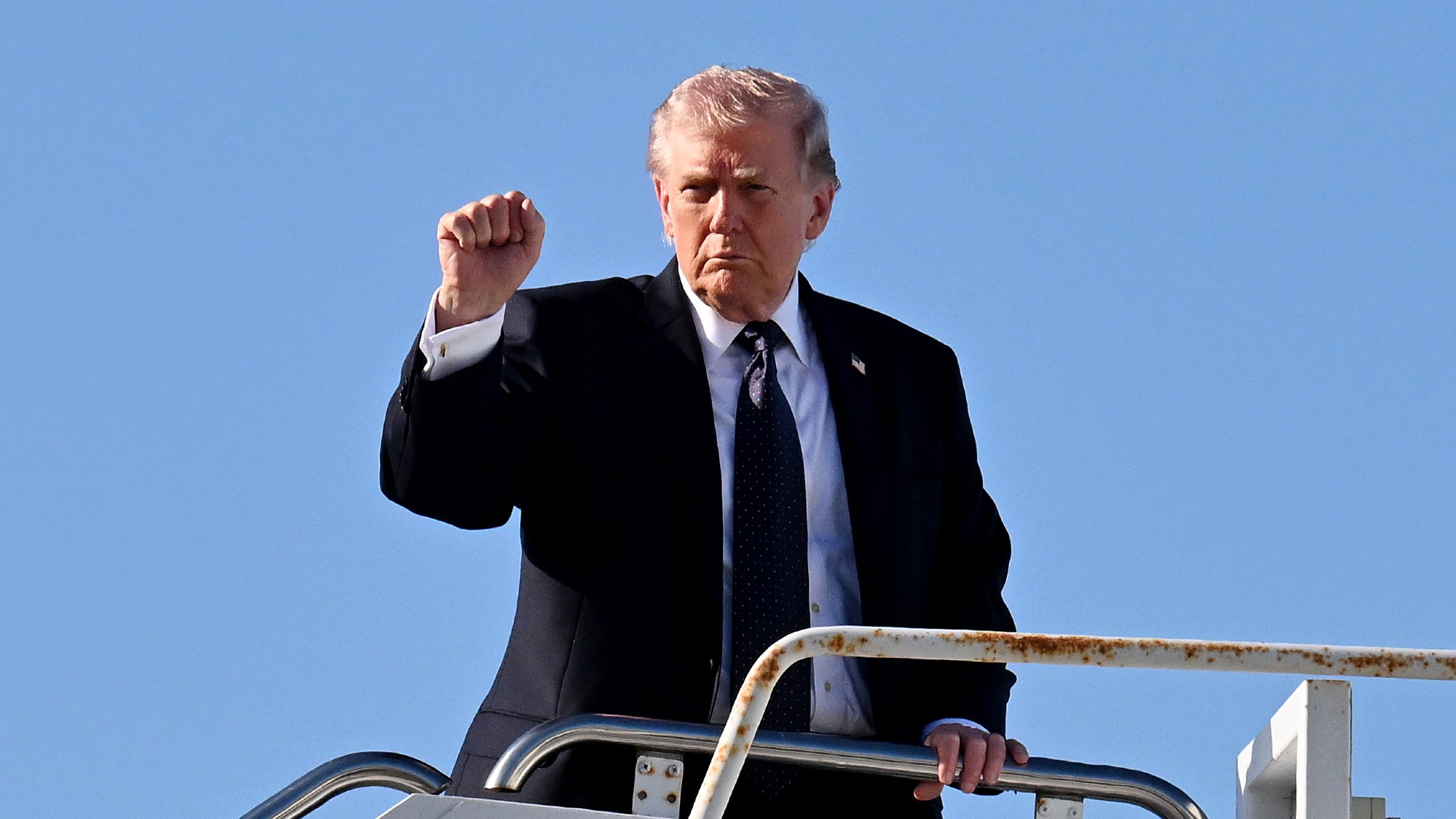
    Will Americans support Trump’s war in Iran?

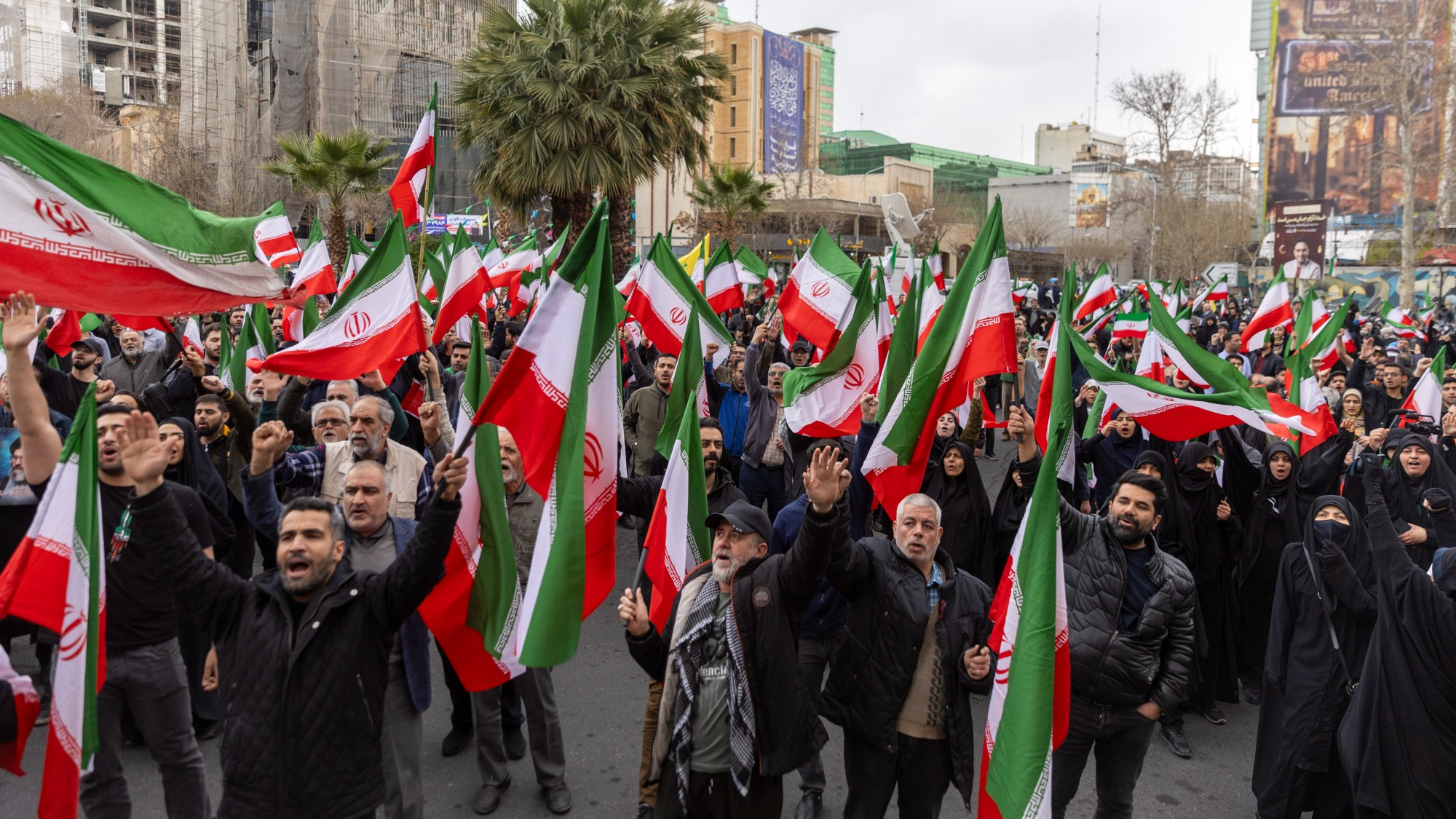
    It’s too early to tell how the military intervention in Iran is going to play out, said Emma Ashford in Foreign Policy, but we can already state one thing with certainty: this is not what Donald Trump’s “base or the American people wanted”. Trump campaigned as a peace candidate. He promised an “America First” agenda that prioritised pocketbook issues and kept the US out of dangerous foreign entanglements. His adviser, Stephen Miller, depicted him as the opposite of Kamala Harris, whose team was, he said, made up of “warmongering neo-cons [who] love sending your kids to die for wars they would never fight themselves”. But it seems Trump is not so different after all. Although only a quarter of Americans polled last week said they’d support military action against Iran, the president ploughed ahead with strikes without even bothering to make the case for war. Several Republicans, including former congresswoman Marjorie Taylor Greene, have condemned the attack on Iran as a betrayal. The populist commentator Tucker Carlson called it “absolutely disgusting and evil”. 

    Trump is hardly the first president to grow more hawkish in office, said Jim Geraghty in The Washington Post. It has been the pattern with every US leader since Bill Clinton: they campaign on domestic issues, then get drawn into foreign interventions. Their previously expressed fears about military overreach tend to dissipate once power is in the hands of someone they trust completely: themselves. But they’re also more aware, once in office, of the gravity of the threats facing the US. While the Iran strikes have upset some of Trump’s erstwhile backers, he has “calculated that he can strong-arm his base into line”, said Hugh Tomlinson in The Observer. As one Republican strategist noted over the weekend: “Maga is still whatever Trump says it is.” 

    The important thing, said Jim Antle in The Telegraph, is that Trump has so far limited his military actions to things that US forces are good at, such as killing enemies, rather than trying to emulate the neo-con agenda of nation-building and democracy promotion. As long as he can avoid a protracted conflict, he’ll be OK, said Mikey Smith in the Daily Mirror. Displays of US military muscle play quite well with his base: polls suggest that Maga supporters were not that averse to the idea of quick, punitive action against Iran. However, the second this military adventure “stops looking like a surgical strike and starts looking like a forever war”, Trump will find himself in a lot of political trouble.


    Briefing of the week

    Iran and the US: a history of enmity

    The US and the Islamic Republic of Iran have been at each other’s throats for nearly half a century

    When did the hostility begin? 
    Since the revolution of 1979, the Islamic Republic of Iran has considered the US the “Great Satan” (Israel is dubbed the “Little Satan”). The leaders of the new Shia Muslim theocracy thought of America as an intruder in the Middle East, and an obstacle to the mullahs’ goal of spreading their Islamic revolution. For decades, their political speeches and sermons have ended with the chant, Marg bar Amrika, “Death to America”. The US, for its part, has seen Iran as a fanatical and implacable foe. Long before the open warfare of recent months, the two nations have been locked into decades of low-level conflict, dating back to the period before the revolution.

    What are the roots of the animosity?
    Iran’s antipathy towards the US is rooted in the events of 1953, when the CIA – together with Britain’s MI6 – orchestrated a coup against the democratically elected Iranian prime minister, Mohammad Mossadegh. Considered a hero by many Iranians, Mossadegh had nationalised the British-owned Anglo-Iranian Oil Company. The US, fearing communist expansion into Iran, joined the UK in funding regime opponents, ensuring that their ally the Shah, Mohammad Reza Pahlavi – previously a constitutional monarch – was installed as head of state. British and US access to oil was restored. But as a result, the Shah was considered a puppet of the West by many Iranians; he used an often brutal secret police force to keep leftist and religious opposition groups in check.

    How did the Iranian revolution come about?
    The Shah’s regime was corrupt and dysfunctional. And amid a sharp economic contraction in the late 1970s, protests paralysed the country. The protesters included secular left-wingers and nationalists as well as Islamists, but Ayatollah Ruhollah Khomeini, a fundamentalist cleric at that time exiled in France, emerged as the movement’s undisputed figurehead. The unrest forced the Shah to flee in January 1979; within weeks, Khomeini had returned. On 11 February, Khomeini assumed leadership and established the theocratic government that still rules. President Jimmy Carter gave the Shah permission to enter the US for cancer treatment, and resisted the new regime’s demands for his return to stand trial. On 4 November 1979, enraged Iranian students broke into the US embassy in Tehran, taking 52 diplomats hostage for 444 days.

    How did the US react? 
    The hostage crisis set the tone for post-revolution relations. President Carter ordered a rescue mission, which went wrong, resulting in a mid-air crash in Iran that killed eight US servicemen. Carter severed diplomatic relations, and although the hostages were released in 1981, relations have remained frozen ever since. In the 1980s, a series of proxy struggles began. During the Iran-Iraq War, the US actively supported Iraq as the lesser of two evils, fearing Iranian victory and hegemony in the Gulf. In 1983, after a US peacekeeping mission in Lebanon turned into an intervention backing the country’s Christian government, two truck bombs killed 241 American service personnel. A Shia militia mentored by Iran, Islamic Jihad, claimed responsibility, and the US designated Iran a “state sponsor of terror”. In 1988, the US navy mistakenly shot down an Iranian passenger jet in the Persian Gulf, killing all 290 people on board. It was during this period that Iran decided to develop nuclear weapons, which the US regarded as a grave threat to its main regional ally, Israel. 

    Have relations always been bad? 
    After 9/11, more moderate elements in Iran’s government tried to advance dialogue, hoping to make common cause against al-Qa’eda and the Taliban. But in early 2002, President George W. Bush labelled Iran as part of the “axis of evil”, and began plans for regime change in Iraq; Iran, US officials suggested, would be next. In response, Iran formed an alliance that it called the “axis of resistance”, comprising Syria’s government, the Shia militant group Hezbollah in Lebanon, and Hamas in the Palestinian Territories (which it had funded since the 1990s). The US-led invasion of Iraq in 2003 initially alarmed Iran’s leaders, but as the occupation fell into disarray, it became clear that it was a great opportunity for them. Iranian-aligned Shia militias and politicians soon became a leading power in Iraq – their fighters killed hundreds of US soldiers with improvised bombs. When President Obama took office in 2009, he sought to calm tensions. 

    How did Obama calm tensions? 
    In 2015, US-led negotiators and Iran’s President Rouhani reached a deal to curtail Iran’s nuclear programme. Iran agreed to slash the number of its uranium centrifuges (which turn uranium into a form usable in nuclear bombs) and submit to inspections. In return, sanctions would be lifted and more than $50 billion in frozen Iranian assets held abroad would be released. The deal was designed to prevent Iran from enriching large amounts of uranium until at least 2031. But it was dumped in 2018 by President Trump, who complained that it only limited Iran’s nuclear activities until 2031 and didn’t address the country’s support for terrorism abroad. Instead, sanctions were tightened. 

    Why has the US attacked now? 
    The White House perceives Iran to be weak. US-led sanctions have helped to create the deepest economic crisis in its recent history. Major popular unrest flared up late last year and was put down with massive loss of life (perhaps as many as 30,000 killed). The 7 October 2023 attacks on Israel are also a crucial factor. Though Iran is not thought to have orchestrated them, its role as a patron of Hamas convinced many in the US and Israel of the need for military action; and the great damage done to Hamas and Hezbollah by Israel since has removed a deterrent to attacking Iran. The 12-day war on Iran in June last year, successfully prosecuted by Israel and the US, suggested that it could be attacked with relative impunity.

    From allies to arch-enemies 
    Before the 1979 revolution, Iran mostly maintained good relations with Israel. It was the second Muslim-majority country after Turkey to recognise the Jewish state, became its major oil supplier and cooperated on weapons programmes. Even so, anti-Zionist sentiment was widespread in Iran, stoked by its Shia clerics. And after the revolution, hostility to Israel became central to the ideology of the new Islamic Republic: Ayatollah Khomeini severed diplomatic ties, portrayed Israel as a Western colonial outpost and illegitimate occupier of Muslim land, and called for its elimination. (When Egypt made peace with Israel in 1979, Iran cut off diplomatic relations with Cairo.) 

    Ideological opposition turned to proxy confrontation through Iran’s support for Palestinian Islamic Jihad and Hamas, and for Hezbollah, which fought Israel during its long occupation of southern Lebanon. Israel, in turn, has opposed Western rapprochement with Iran and carried out covert operations against its nuclear programme, including assassinations of scientists. Although no evidence shows Iranian involvement in planning the 7 October attacks, its leadership praised Hamas’ fighters and confirmed Tehran’s support “until the liberation of Palestine and Jerusalem”.


    Spirit of the age

    For hundreds of years, Muslims have broken their Ramadan fast by eating a date; but now, many are choosing to drink a glass of Vimto instead. Created in Manchester in 1908, the fruit cordial has found a huge market in the Middle East. The Vimto sold there is thicker and sweeter than the UK version, and during the holy month, it typically sells more than 25 million bottles.


    Pick of The Week’s Gossip

    Carrey-free?

    When Jim Carrey made a rare public appearance at the César Awards in Paris last week, he looked so different that the internet exploded with speculation that an impostor had taken his place. “I’m no conspiracy theorist,” said one user, “but that’s not Jim Carrey.” The furore was such that the organisers felt obliged to issue a public statement that it was the real Carrey on stage.


    talking point

    The killing of ‘El Mencho’: a turning point for Mexico?

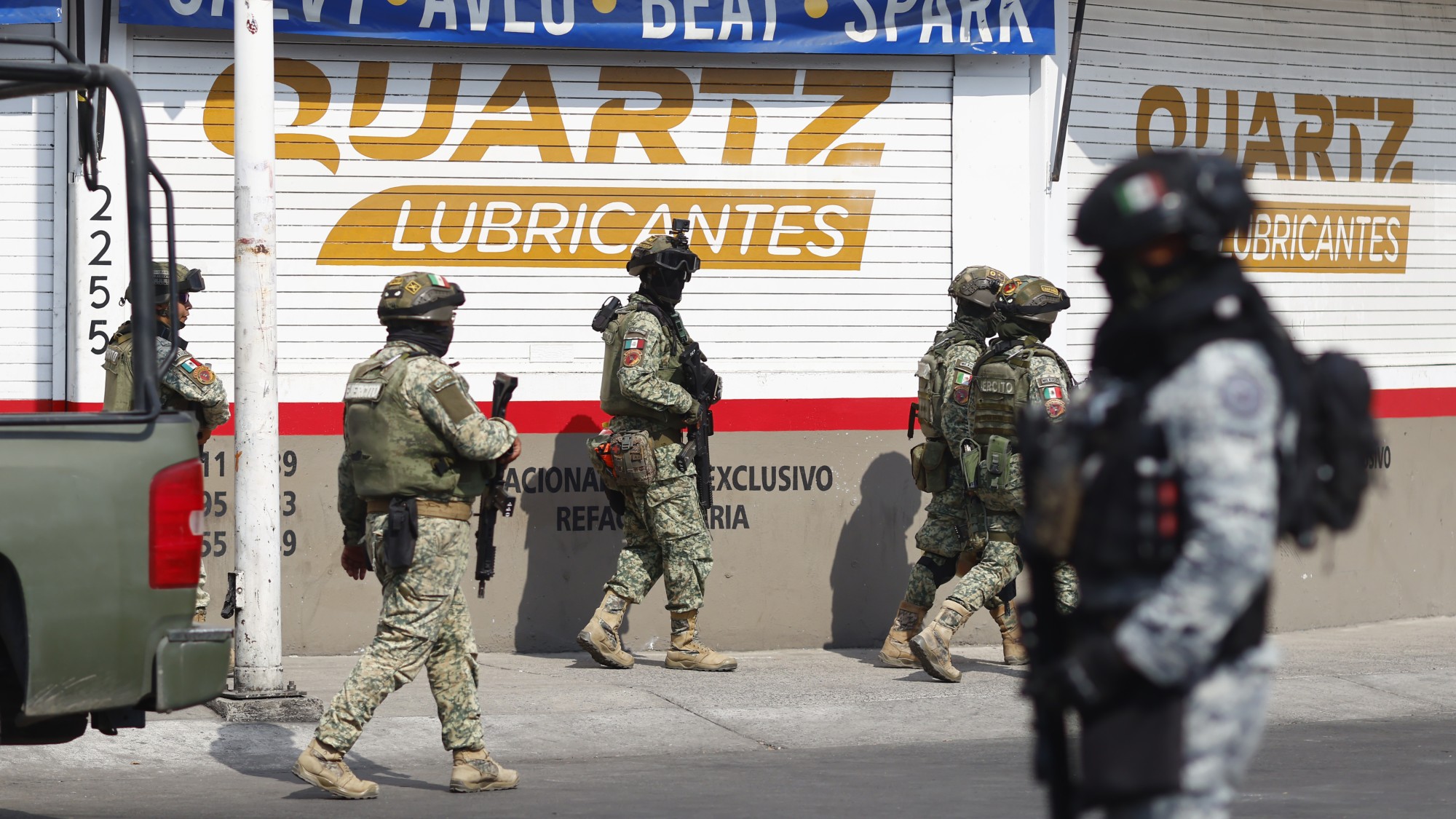
    They got him, said Jack Nicas in The New York Times. “El Mencho” has been taken out. The “biggest kingpin” in Mexico’s drug cartels and one of the world’s most wanted drug traffickers, Nemesio Oseguera Cervantes – to give him his full name – died last month in a military helicopter carrying him to hospital in Mexico City. The 59-year-old former policeman, head of the incredibly powerful Jalisco New Generation Cartel, had been hit by a bullet in a pre-dawn shootout with Mexican army soldiers who’d tracked him down to a mountain cabin in a pine forest some 80 miles south of Guadalajara, where he’d gone for a tryst with one of his girlfriends. The successful raid, “one of the most aggressive offensives against the cartels in more than a decade”, had been ordered by Mexico’s president, Claudia Sheinbaum, but she only did it because her hand had been forced… by Donald Trump. The US would intervene militarily in Mexico, he’d warned her, if she didn’t clamp down on the drug cartels. 

    The death of El Mencho “marks a turning point” in the state’s approach to dealing with the cartels, said León Krauze in El Universal. For years it has shied away from direct confrontation: under Sheinbaum’s predecessor, Andrés Manuel López Obrador, it had instead adopted a “hugs, not bullets” approach, seeking to address the social causes of the violence – poverty, lack of education, and so on. But those were lost years for Mexico; they “allowed organised crime to consolidate its power”. In the past decade, the country has seen a near 70% increase in lethal violence. So even if she made it under duress, Sheinbaum’s action should be welcomed. No country can afford to let criminal groups hold sway over a third of its territory.

    It was in the 1980s, after the US had cracked down on Colombian drug lords, that Mexico’s cartels – the infamous Sinaloa Cartel in particular – began controlling large swathes of territory so as to maximise profits from pumping cocaine into the US, said Bethany Platanella on Mexico News Daily. There are now some 37 large cartels and well over 100 smaller affiliates which, through bribery and corruption of local officials and police, are deeply embedded in district governance. They are also highly militarised: El Mencho’s Jalisco cartel – renowned for its extreme violence – has fleets of tank-style vehicles, and an arsenal of shoulder-fired rocket launchers. And their profits don’t just come from drugs, but from extortion of local businesses and farms; money laundering; cargo and fuel theft; kidnapping; human, sex and arms trafficking… you name it. 

    You might think that the killing of the “seemingly invincible” El Mencho marks a huge victory for Sheinbaum, but unfortunately we’ve been here before, said Sergio Sarmiento in El Diario. In 2010, Mexican forces attacked and killed Ignacio Coronel, a top boss of the Sinaloa Cartel. And the result was years of bloody gang warfare leading to the emergence of the upstart Jalisco gang chief, El Mencho. Taking out a cartel leader just leads to a huge spike in violence – as we are already seeing in this latest case. Gunmen have set fire to shops in the Jalisco region, established hundreds of roadblocks in 20 of the country’s 32 states, and killed at least 25 Mexican soldiers. 

    Mexico’s war on drugs will never succeed if it continues to focus “on the figurehead and not the structure”, said Ernesto Villanueva in Proceso. Everyone cheers when bosses like El Mencho are killed, but the drug networks remain, as does all the state corruption that allows them to prosper. Until these deeper problems are addressed, Mexico will never be transformed. The US must play its part too, said Antonio De Loera-Brust in Foreign Policy. For a start, it must do far more to stop the flow of US-made, military-grade weapons to the drug traffickers. Fail in that, and the same cycle of violence that has killed more than 400,000 people in the past 20 years will just continue. “Mexicans have been watching this movie nonstop since 2006. There is no happy ending; there are just endless bloody sequels. It’s time to write a new script.”


    It wasn’t all bad

    Giant tortoises have been returned to the Galápagos island of Floreana, some 180 years after the native population was wiped out by sailors, pirates and invasive species. The Floreana giant tortoise was deemed extinct, but in 2000, tests of a similar-looking population on a neighbouring island revealed that they were hybrids – probably descended from a Floreana tortoise that ended up there after being put on a ship for food. Now, 158 specially bred hybrids have been released on Floreana, to reclaim their ancestral territory.


    People

    Liza Minnelli

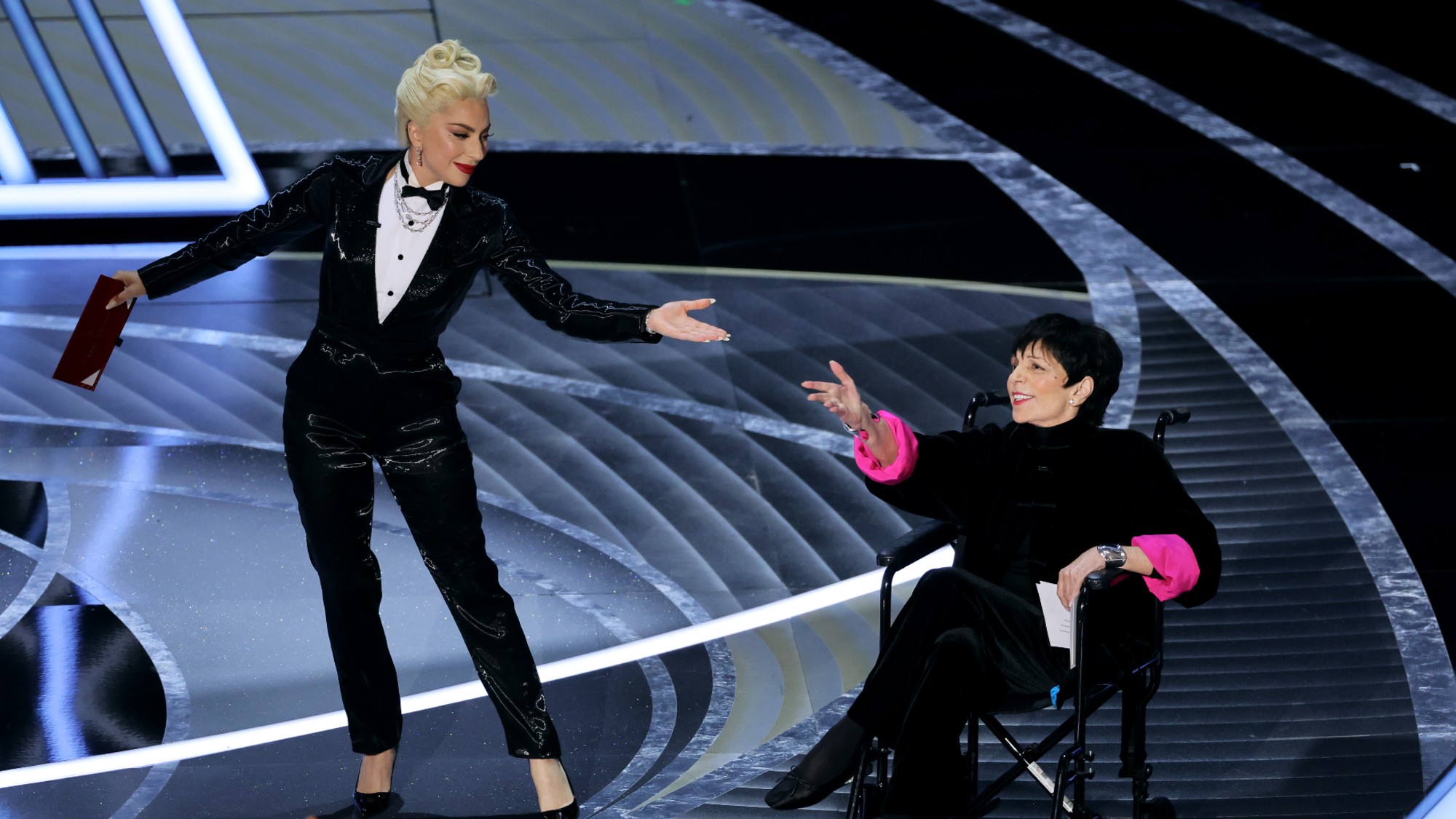
    Judy Garland has often been portrayed as a bad mother, but her daughter Liza Minnelli, 79, has never accepted that characterisation. “I’ve said this many times over the years, so let me say it again, loud and clear: Mama loved me passionately, and to this day I love her just as much,” she says in a new memoir, “Kids, Wait Till You Hear This!” 

    Journalists like to put it about that Garland “drank too much, took too many pills and ignored her family” – but Minnelli insists that her actions were not careless. “Mama spent millions of dollars in rehab units and hospitals, praying that they could heal her. She had rounds of electroshock therapy. Nothing worked.” Nor does Minnelli blame her mother for the addictions Garland battled until her death, from an accidental overdose, in 1969. “Industry executives – and, I’m told, my grandmother – had poisoned her with uppers and downers since she was a child star.” 

    It was not easy for Minnelli: by the time she was 13, she was her mother’s “nurse, doctor, pharmacologist and psychiatrist rolled into one”. And there were periods when money was so tight, they’d have to sneak out of hotels, to avoid paying the bill. But Garland made sure that even these desperate escapades seemed fun. “She had a genius for finding comedy in tragedy, a survival skill. That’s how she handled life’s toughest moments — with a clever quip, a pill and a drink.”


    Image credits, from top: Roberto Schmidt / Getty Images; Majid Saeedi / Getty Images; Stringer / Anadolu / Getty Images; Neilson Barnard / Getty Images
     

    Recent editions

    • Evening Review

      Orbán’s final countdown

    • Morning Report

      Trump wants to pick Iran's new leader

    • Evening Review

      The future of the special relationship

    VIEW ALL
    TheWeek
    • About Us
    • Contact Future's experts
    • Terms and Conditions
    • Privacy Policy
    • Cookie Policy
    • Advertise With Us
    • FAQ
    Add as a preferred source on Google Add as a preferred source on Google

    The Week UK is part of Future plc, an international media group and leading digital publisher. Visit our corporate site.

    © Future Publishing Limited Quay House, The Ambury, Bath BA1 1UA. All rights reserved. England and Wales company registration number 2008885.