The Week The Week
flag of US
US
flag of UK
UK
https://cdn.mos.cms.futurecdn.net/flexiimages/jzblygzdxr1769609154.gif

SUBSCRIBE

Try 6 weeks free

Sign in
  • View Profile
  • Sign out
  • The Explainer
  • Talking Points
  • The Week Recommends
  • Podcasts
  • Newsletters
  • From the Magazine
  • The Week Junior
  • More
    • Politics
    • World News
    • Business
    • Health
    • Science
    • Food & Drink
    • Travel
    • Culture
    • History
    • Personal Finance
    • Puzzles
    • Photos
    • The Blend
    • All Categories
  • Newsletter sign up Newsletter
  • Saturday Wrap, from The Week
    ‘Maga World Cup’, ‘presidency for profit’, and the Ebola outbreak

     
    controversy of the week

    The World Cup: ‘angst’ in the USA

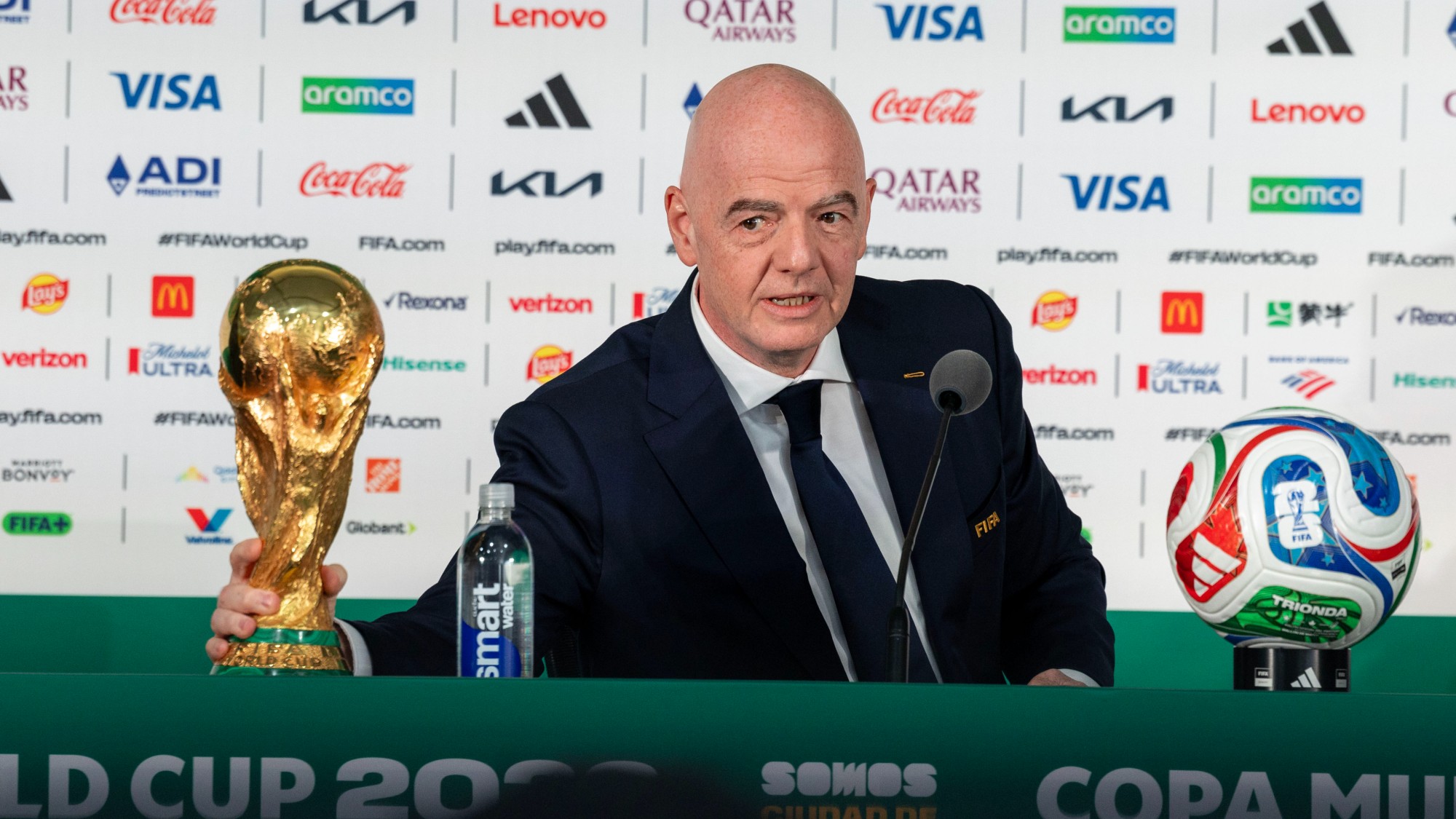
    The World Cup kicked off this week – but in the days leading up to it, “no one seemed all that excited”, said Jonathan Lemire in The Atlantic. The tournament will feature 48 nations playing 104 fixtures in 16 cities across the US, Canada and Mexico, and will give a stage to “some of the most famous people on Earth” – from Harry Kane to Kylian Mbappé. 

    Yet for many, it is “surrounded by angst”. Ticket prices are “astronomical”. Fifa has introduced “dynamic pricing”, so a seat at the final could set you back $10,000, and demand for many matches has slumped. Prices for everything from parking to accommodation have been vastly inflated: Airbnbs near New Jersey’s MetLife Stadium, where the final is being played, cost up to $17,000 for three nights. America’s relations with its co-hosts are strained, and there are fears of cartel violence in Mexico. “Hanging over it all is the war in Iran, particularly because it was started by the guy to whom the tournament’s organisers recently awarded a peace prize.” 

    This expanded World Cup will be the largest and most commercially driven in history, said Jason Burt in The Telegraph. Gianni Infantino, the Fifa president, wants “every match to be a money-spinning event” akin to the US Super Bowl: the fans are being treated like a “cash machine”. It’s also likely to be the “most politicised”. There have already been stories of Iranian players and staff struggling to secure visas; and progressives have voiced alarm that America’s immigration agency, Ice, is being used to provide stadium security. As for Donald Trump, he can be counted on to “hijack proceedings” in a cringeworthy way. 

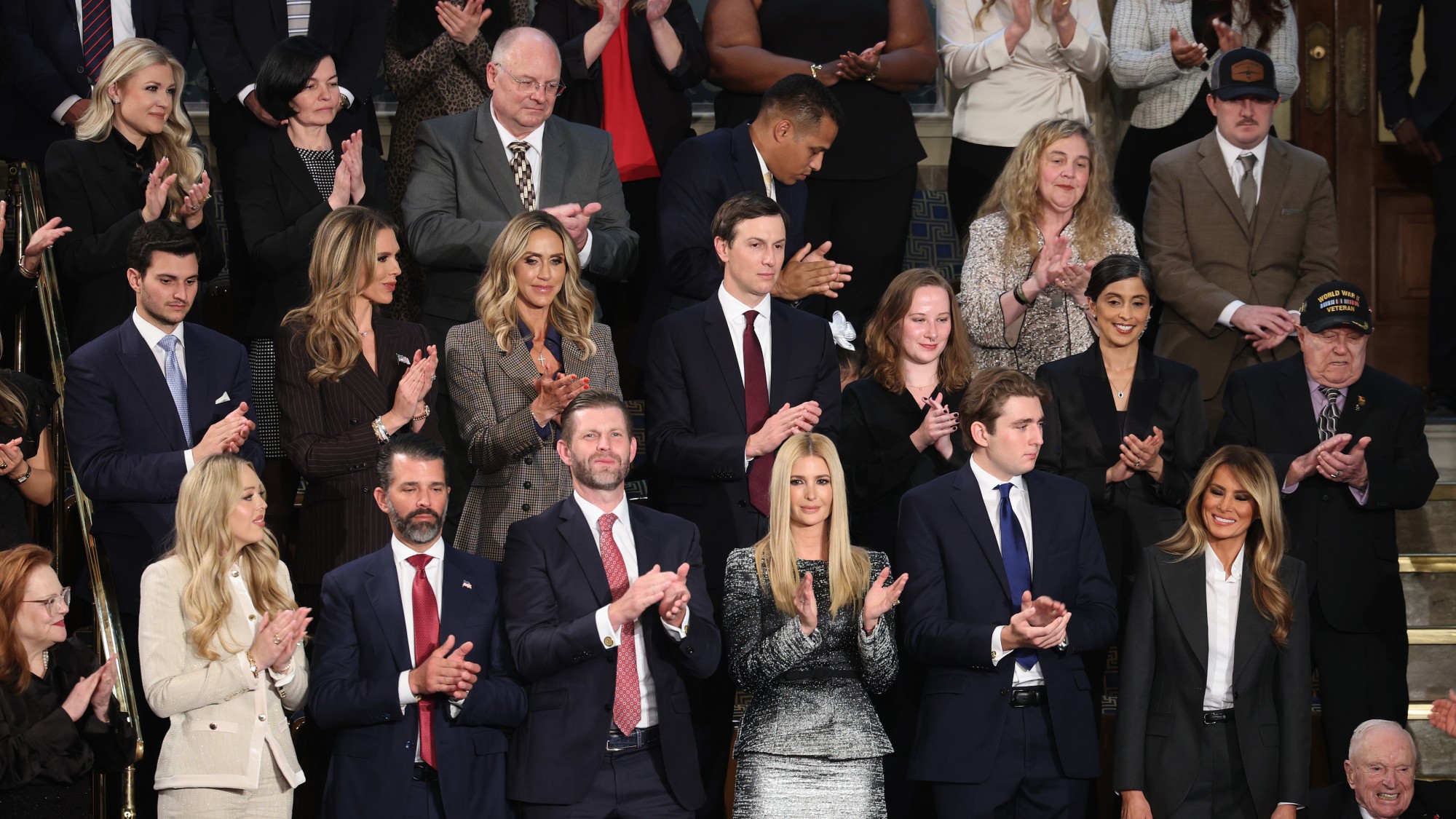
    Some have already dubbed this the “Maga World Cup”, said Simon Kuper in the Financial Times. But Trump might not see much benefit from it: all 11 of the US cities hosting games voted Democrat in their most recent elections, and there is a good chance of anti-Trump protests at matches.

    But what of the football itself, asked Emma Hayes in The Guardian. The favourites for the tournament include Spain, France, Argentina and, yes, England; but much will depend on how well squads adapt to the stifling heat, games at high altitude, and having to play across four time zones. Before every major sporting event, “people foresee a nightmare”, said Will Leitch in The Washington Post. And then, when the games begin, everyone just enjoys them. Maybe some things will go wrong. But the World Cup is the one event that captures the interest of the whole planet. It’s hard to make a mess of it, “no matter how hard you might try”.


    Briefing of the week

    Making money in the White House

    US ethics watchdogs argue that no other president has exploited his position for gain as extensively as Donald Trump 

    What sort of figures are involved?
    Being a “dealmaker” has always been part of Donald Trump’s brand, and he was never shy about, as Forbes puts it, “leveraging the presidency for profit”: the non-profit group Citizens for Ethics identified 3,737 conflicts of interest during his first presidential term. His second term, though, has been on quite a different scale. According to an analysis by The New Yorker’s David Kirkpatrick, Trump and his family had made $4 billion out of the presidency by January this year – boosting his net worth by 40% since his re-election. Forbes suggests that he personally has made $2.6 billion since his inauguration, taking his net worth to $6.5 billion.

    The lines between Trump family businesses and government power have now been comprehensively blurred. “The law’s totally on my side; the president can’t have a conflict of interest,” Trump said in 2016; and he has acted accordingly. 

    How has he been able to do this?
    Trump, unlike his predecessors, has always refused to disentangle himself from his financial interests or to release all his tax returns. But his financial norm-breaking during his first term was relatively cautious: charging the Secret Service full rates at his Florida resort or encouraging supplicants to stay at his Washington hotel.

    In January, he told The New York Times he had restrained his family’s business activities during his first term. “I got absolutely no credit for it,” he said. “I found out that nobody cared, and I’m allowed to [do business in office].”

    In practice, he is. After being sworn in, Trump fired the director of the Office of Government Ethics, a post-Watergate institution that’s meant to prevent financial conflicts of interest. He hasn’t appointed a new one. 

    How has he made money?
    While Trump was out of office, his family businesses diversified beyond property and brand licensing to include a publicly traded social media company, Truth Social, and a crypto venture, World Liberty Financial (WLF). Launched three days before his second inauguration, his personal crypto token, “$Trump”, soared in value to $73, before going into decline (it’s now worth $1.68). Investors lost around $2 billion, but Trump’s businesses and partners have made more than $320 million in trading fees. All his crypto ventures soared after his election, clearly in part because of his political influence. Two Abu Dhabi companies invested $500 million in WLF and bought $2 billion of its stablecoin; weeks later, the Trump administration authorised the sale of previously restricted AI chips to the UAE. The Financial Times found that by October 2025, Trump-affiliated crypto ventures had made more than $1 billion in profits. 

    What about the old businesses?
    Under the nominal leadership of the president’s eldest sons, Donald Jr and Eric, the Trump Organization has negotiated real-estate deals in Qatar, Saudi Arabia, Oman, the UAE, Vietnam and Serbia, which are set to double the size of its foreign business. At the same time, the Trump administration has been negotiating trade tariffs and sensitive defence arrangements with these nations.

    Trump announced that the G20 summit in December will be held at his own resort, Trump National Doral Miami, in Florida. And – very unusually – the Trump Organization has continued to trade vigorously in stocks and shares. In February, for example, Trump’s money managers bought at least $1 million in Dell stock. Trump started praising the company publicly nine days later; in May, a $9.7 bllion Pentagon contract sent Dell’s share price through the roof.

    Any other money-spinners?
    Many. A series of Trump-linked felons have been pardoned. Changpeng Zhao, a crypto billionaire convicted of violating money laundering laws, was pardoned after reportedly brokering a $2 billion investment involving WLF’s stablecoin. Paul Walczak, a care-home executive convicted for a $7 million tax fraud, received a presidential pardon after his mother attended a $1 million-a-head dinner with Trump. Trump’s fundraising vehicle, Maga Inc, a loosely regulated “political action committee”, is still open, though he can’t constitutionally stand for election again; it has raised over $340 million since the last election.

    There’s also an opaque donor fund for Trump’s new White House ballroom; Public Citizen, a non-profit, reports that donors to it have won more than $50 billion in federal contracts in six months. There’s another fund, for his presidential library foundation in Miami – which Trump says will be “a hotel”. It will also receive the $400 million Boeing 747 he accepted from Qatar last year; and $63 million pledged from legal settlements. 

    What legal settlements?
    Trump has launched a range of lawsuits against big companies. They have often chosen to settle, arguably for political reasons. Meta, for instance, pledged $22 million to his library in a case over the suspension of his account following the Capitol riots. Paramount, while seeking White House approval for its merger with Warner Bros., paid $16 million to settle an apparently frivolous case over coverage of Trump by its news subsidiary CBS. Trump has even sued government bodies that he himself controls, and then negotiated settlements at the taxpayers’ expense.

    In May, the Internal Revenue Service and the Justice Department announced a “settlement” that gave Trump immunity from all tax claims against him, and also established a $1.8 billion fund to compensate citizens “victimised” by the Biden administration. The fund, however, proved too much for Republicans; and a court ordered it to be halted. 

    What can be done?
    Trump is right, in a sense, that he is allowed to do this: federal laws banning officials from having financial interests affected by government policy do not apply to the president, because he is not an employee. In theory, the constitution forbids the president from receiving “emoluments” (benefits beyond his salary). But Congress dictates how this clause operates, so it is essentially a political question. Democrats are treating it as such, and intend to make presidential corruption a major theme of the midterm elections.

    Moving markets
    Since 1963, US presidents have tried to insulate themselves from financial impropriety by putting their assets in blind trusts, meaning that they don’t know where their money is invested. Trump has taken a different approach.

    A recent ethics filing shows that the Trump Organization executed 3,700 trades in the first quarter of 2026. Trump himself signed the filing – suggesting there’s no blind trust. The filing (which gives ranges rather than precise numbers) shows a $0.5 million-$1 million purchase of Nvidia stock a week before the Commerce Department gave the company permission to sell chips to China; a $65,000-$150,000 investment in Palantir days before the announcement of a billion-dollar contract with the Department of Homeland Security.

    It also shows a $1 million-$5 million investment in Boeing, for which he helped to negotiate a massive export deal to China. Also of concern are a series of oil futures trades this year that closely anticipated major, market-moving Iran policy announcements by Trump. The White House denies any wrongdoing.


    Spirit of the age

    An Australian academic who wrote a newspaper column advising students not to “cut corners” by using AI has admitted that she used AI to write the piece. In the article in The Sydney Morning Herald, Professor Cath Ellis urged students not to “outsource your thinking”. But other academics spotted that the piece contained peculiar terms and structures, and it was then flagged by AI detection software. She insists her piece was not written by AI, but “with AI”. She had, she said, uploaded 40,000 words worth of her writings into a LLM, and asked it to “frame” her ideas “into a coherent structure”. Her university’s media team then used AI to “suggest further improvements”. This, said a spokesperson, was a “sophisticated and appropriate” way to use AI.


    VIEWPOINT

    Handling the hatred

    “Being able to endure loathing with self-possession is now a crucial attribute in public life. Leaders across Europe are despised by their electorates with an intensity that confounds political scientists. Commentators struggle to explain why exactly Keir Starmer is held by much of the public not merely as a plodding inadequate, but as a cloven-hooved emissary of the forces of darkness; Emmanuel Macron and Friedrich Merz make Starmer’s ratings look almost buoyant. The question in politics nowadays is not, ‘Will the electorate like you?’ but ‘How much will they hate you?’ And will you be able to handle it when they do?” 

    James Marriott in The Times


    talking point

    The Ebola outbreak: is it spinning out of control?

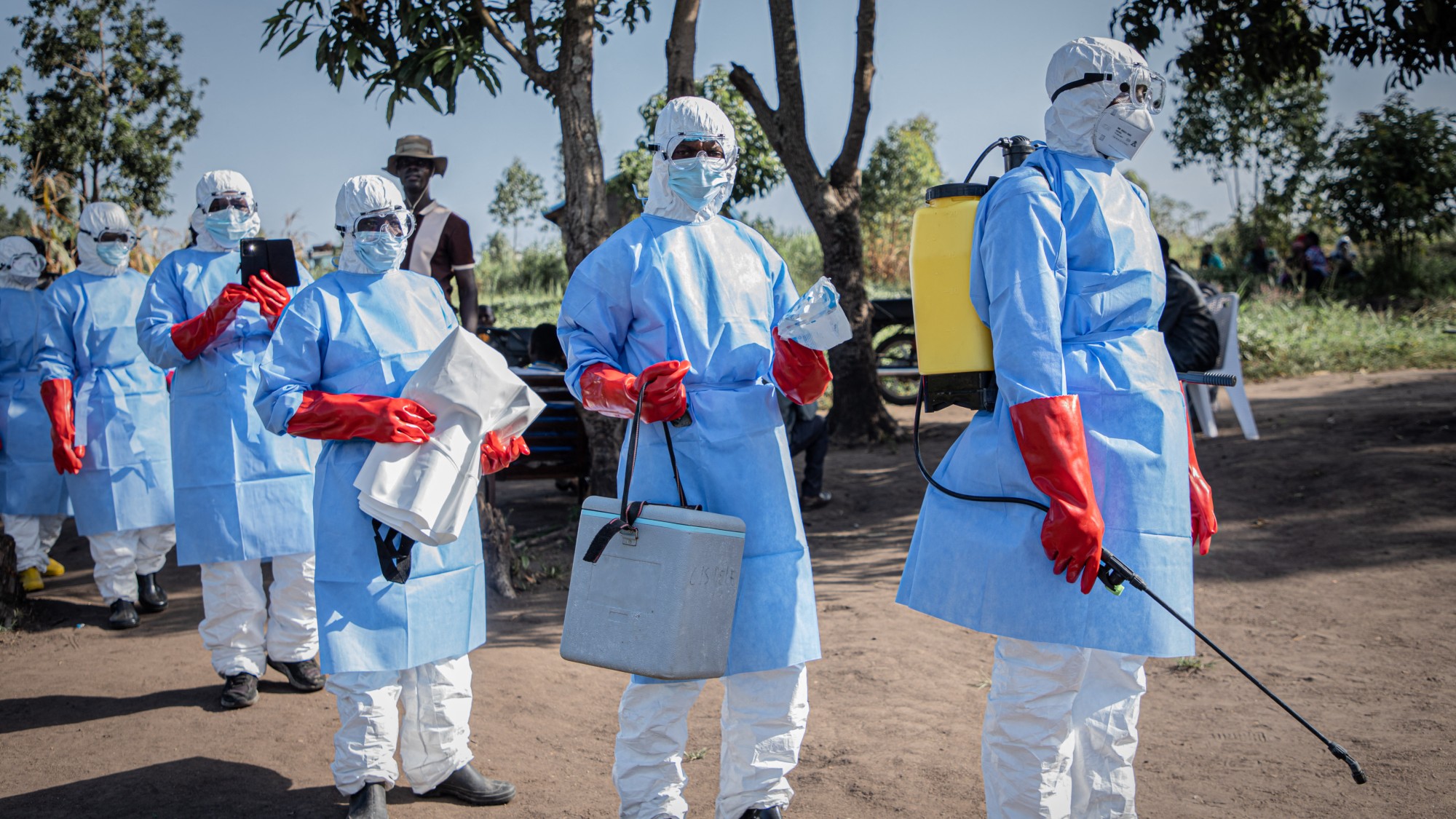
    What the US is trying to do in Kenya reeks of “neo-colonialism”, said The Daily Nation (Nairobi). To protect Americans from the deadly Ebola outbreak that is thought to have already killed at least 91 people in the Democratic Republic of Congo (DRC), the Trump administration has decreed that no one with the disease may enter its borders, even if they’re a US citizen. Any American unlucky enough to have contracted the virus in DRC should instead be sent for treatment hundreds of miles away to a specially commissioned Ebola health centre in Kenya.

    Cue outrage in Nairobi. “Kenya is NOT America’s biohazard dumping ground,” fumed a spokesman for one of Kenya’s doctors’ unions, echoing widespread fury at the proposal to set up a 50-bed quarantine facility at Kenya’s Laikipia Air Base. And hundreds of protesters took to the streets of Nanyuki, the town closest to the air base, fearing the disease might spread to their community. They blocked roads and set fire to tyres, and police had to fire tear gas to disperse them. According to some reports, two people were shot dead. Yet despite the uproar, and a temporary court order blocking the site’s construction, Kenya’s President William Ruto has vowed to press ahead with it. 

    The debacle in Kenya is far from the only mistake the US has made over the Ebola crisis, said The East African (Nairobi). “Epidemics are best fought collectively”, but under Trump the US has withdrawn from the World Health Organization and shut down USAID, scuppering the international response needed to stem the current outbreak, which has now spread to Uganda.

    Trump’s decisions have been disastrous, said Craig Spencer in The New York Times. Over the past year, critical surveillance networks in DRC have been dismantled, with the result that US officials only learnt of the first Ebola death a month after it happened, making it inevitable that the outbreak would turn “catastrophic” in scale. To put this in context, the world’s worst-ever Ebola outbreak, which broke out in Guinea in 2014, went on to kill 11,300 and infect 28,600 others. That outbreak was first detected when there were around 40 to 50 cases; for this one, that number was 400 to 500. And to make matters worse, rapid tests and vaccines do not exist for the Bundibugyo strain of Ebola that is behind this latest epidemic. 

    “We are not getting ahead of this virus. We are running after it,” said Denis Mukwege in Le Monde. It’s already the third-largest outbreak in history, and could well become the deadliest ever. The challenges facing teams on the ground are immense. For a start, the epicentre of the outbreak is war-torn eastern DRC, where conditions make contact-tracing almost impossible. And as the US has cut aid to the DRC from $1.34 billion in 2024 to just $428 million in 2025, local responders have “far fewer resources” than in any comparable recent crisis.

    To add to the crisis, front-line health workers are “deeply” mistrusted by the local population, said The Economist. Look what happened two weeks ago in the small town of Mongbwalu in northern DRC, where a group of young men made four different attacks on the local hospital in a bid to retrieve the body of an Ebola victim for burial. The day before that, townsfolk had torched an isolation unit. 

    So what must now be done? The crucial requirement is for the response to be consolidated under a single actor, just as it was for the 2014 outbreak when the UN Mission for Ebola Emergency Response (UNMEER) took charge, said Anthony Banbury in The Washington Post. Congolese health workers and international NGOs have done an excellent job so far, but the lack of coordination has been a serious hindrance. “It is like going to war with scattered, independent military units, but no central headquarters directing the overall effort.” In the absence of a body like UNMEER to devise and oversee a strategy for containing the outbreak, this epidemic could “spin out of control”. And then the world would be in real trouble.


    It wasn’t all bad

    Students exploring the basement of their school in Rome pushed through an old door, squeezed through a gap in a wall behind a boiler – and found themselves in an ancient Roman villa, complete with well-preserved frescoes and mosaics. Archaeologists have dated the remains to the second century AD, and say it would once have belonged to a noble family. Graffiti indicates that the villa had been discovered before, in the 1940s and 1950s, and by pupils of the school more recently. But its existence had been forgotten.


    People

    Rupert Everett

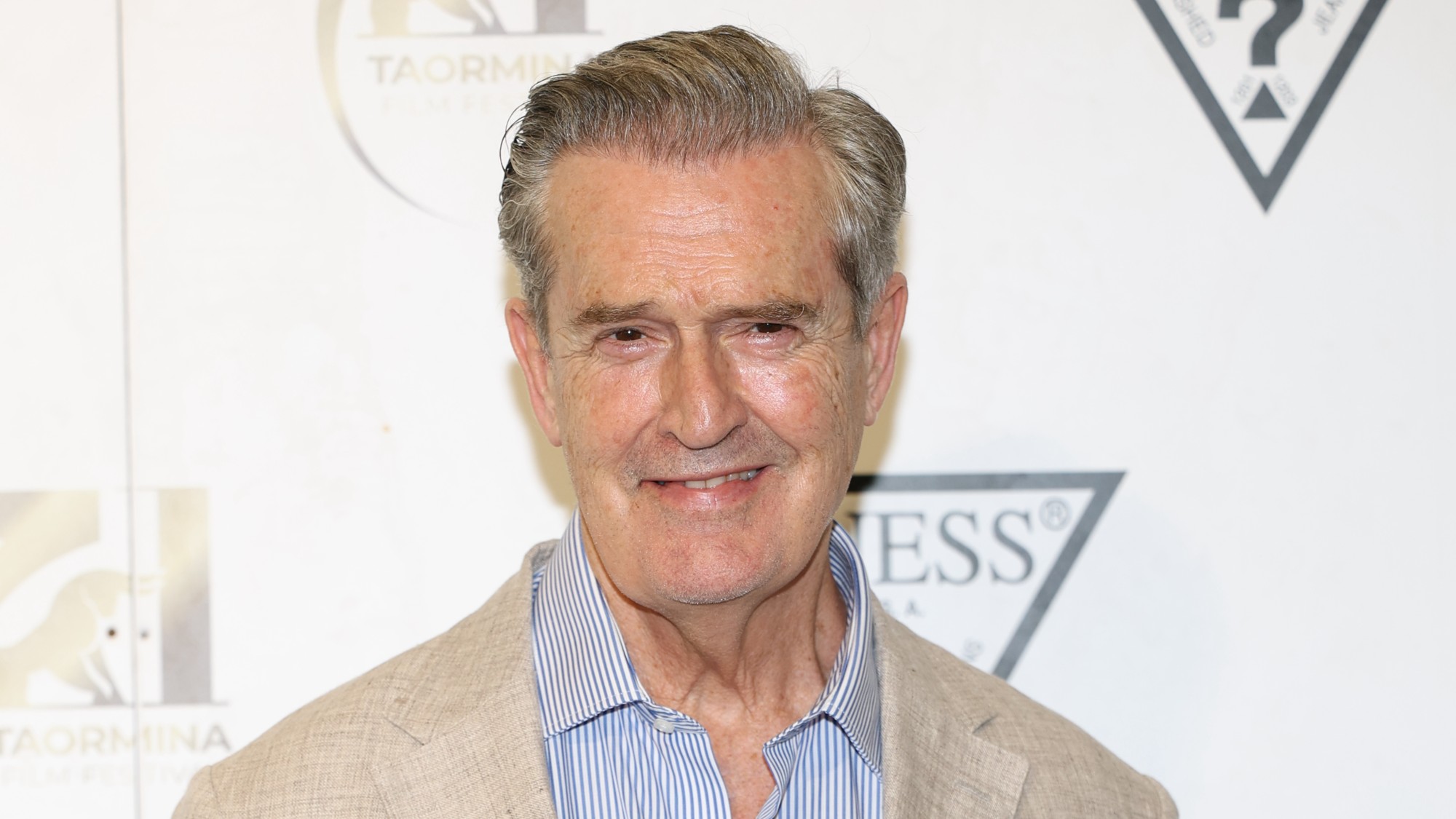
    “Brash. Pushy. Disingenuous. Lethal.” Rupert Everett does not have kind words for his former self. As a young actor, he was, he says, “obsessed about getting on, rather than doing my job”, and he behaved appallingly: disruptive in rehearsals, he pulled stupid pranks during performances, and was often off his head on drugs. In relationships – whether with men or the women with whom he had affairs, who included Susan Sarandon and Paula Yates – he was “shifty… always trying to get on to the next thing. No one was ever enough.”

    So how was he lethal? “I was just interested in myself and my own pleasure,” he told Simon Hattenstone in The Guardian. “That’s always lethal.” At times, he says, his behaviour was close to “sociopathic”. “I was a terrible gossip, and I repeated everything everyone told me. I’d borrow people’s clothes and never give them back.” Looking back, he can hardly explain it, let alone justify it. 

    Now, though, at 67, he feels himself to be a proper adult. He reckons he grew up at 55, but the real change came in 2018, when he and his husband Henrique moved to Wiltshire to be close to his mother. Looking after her until her death last year, aged 91, he reassessed his past, and started to appreciate the stiff-lipped war generation he’d spent his life in revolt against. “I feel I have become [my parents] since they died. I feel very much I am them, in one sense.”


    Image credits, from top: VCG / Getty Images; Win McNamee / Getty Images;  Benediction Murhabazi / AFP via Getty Images; Daniele Venturelli / Getty Images
     

    Recent editions

    • Evening Review

      How will the EU asylum pact affect Britain?

    • Morning Report

      Starmer in crisis after defence secretary quits

    • Evening Review

      Civil war in the UK: more than an online fantasy?

    VIEW ALL
    TheWeek
    • About Us
    • Contact Future's experts
    • Terms and Conditions
    • Privacy Policy
    • Cookie Policy
    • Advertise With Us
    • FAQ
    Add as a preferred source on Google Add as a preferred source on Google

    The Week UK is part of Future plc, an international media group and leading digital publisher. Visit our corporate site.

    © Future Publishing Limited Quay House, The Ambury, Bath BA1 1UA. All rights reserved. England and Wales company registration number 2008885.