The Week The Week
flag of US
US
flag of UK
UK
https://cdn.mos.cms.futurecdn.net/flexiimages/jzblygzdxr1769609154.gif

SUBSCRIBE

Try 6 weeks free

Sign in
  • View Profile
  • Sign out
  • The Explainer
  • Talking Points
  • The Week Recommends
  • Podcasts
  • Newsletters
  • From the Magazine
  • The Week Junior
  • More
    • Politics
    • World News
    • Business
    • Health
    • Science
    • Food & Drink
    • Travel
    • Culture
    • History
    • Personal Finance
    • Puzzles
    • Photos
    • The Blend
    • All Categories
  • Newsletter sign up Newsletter
  • Saturday Wrap, from The Week
    A surprise chancellor, political donations, and goodbye to King Kev

     
    controversy of the week

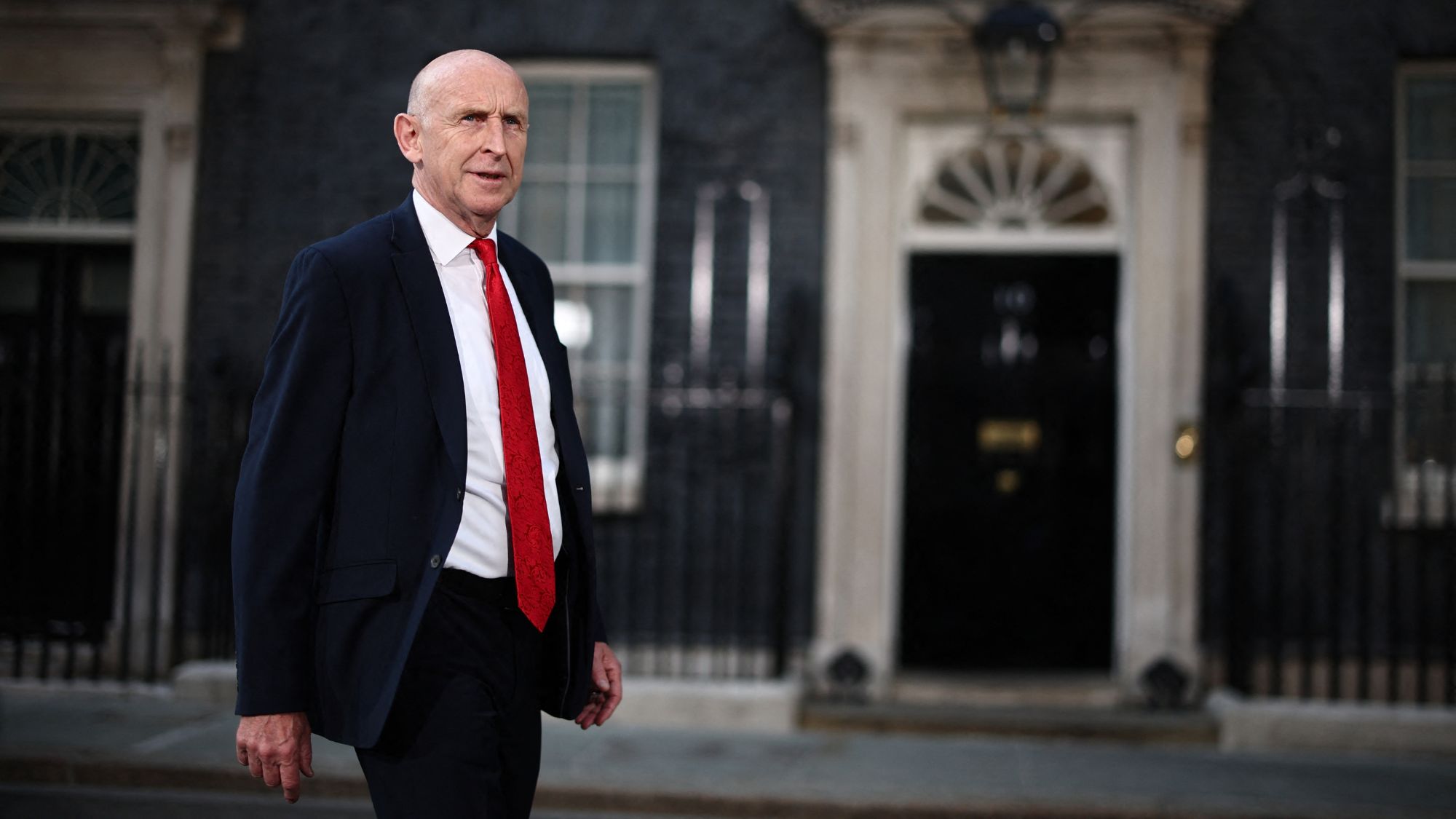
    John Healey at No. 11

    Appointing John Healey as chancellor was both Andy Burnham’s most important cabinet pick and his most unexpected. It was an early sign, said Ethan Croft in The New Statesman, of how “leak-proof” the new PM’s operation has been so far. The race for the job had been reported as a head-to-head between Ed Miliband and Shabana Mahmood. Instead, the former defence secretary got the job, presumably because both of the tipped candidates were “as divisive as each other” – Miliband owing to his zealous pursuit of net zero targets, and Mahmood because of “her hawkishness on borders”.

    Healey emerged as a sensible compromise candidate: not linked to any one faction of the party, widely liked, and with long Treasury experience (he served as a minister under Gordon Brown from 2002 to 2007). Markets briefly breathed a sigh of relief on Monday, said Tim Wallace in The Telegraph – at least it wasn’t Miliband in No. 11. But closer examination of Healey’s record did not reassure the City. He has long campaigned for a 50% top rate of tax, higher capital gains tax and more generous welfare payments. And although he was a minister in Tony Blair and Brown’s relatively business-friendly governments, he also served Jeremy Corbyn loyally from 2015 to 2020, as shadow housing secretary.

    Healey is seen as a “safe pair of hands”, said James Heale in The Spectator. His appointment is also “shrewd” because it signals that Burnham is serious about boosting defence spending – Healey resigned because he deemed Keir Starmer “unwilling” to fund the Armed Forces properly. Healey is “diligent” and popular in the party, said Kiran Stacey in The Guardian. But those who know him “say the new chancellor is more ideologically driven than he may seem”: he is certainly no “fiscal hawk”, and is likely to come down on the side of higher spending when presented with a policy dilemma.

    The challenges facing him now are daunting, said The Times. Bringing defence spending up to 3% of GDP by 2030, which Healey will presumably be obliged to do, will cost at least £15 billion per year. Tackling social care, which Burnham has promised, carries an annual cost of around £18 billion. Yet the PM is committed to Labour’s manifesto pledges not to raise income tax, national insurance or VAT. So where will the money come from? Fears are growing of a “red October” Budget. Healey can be an effective chancellor, said Andrew O’Brien on UnHerd. Burnham chose him in part because he is committed to reindustrialisation: as defence secretary, he finalised plans to build six new munitions factories. And as a “party loyalist”, Healey is likely to be able to take MPs with him when “tough decisions” have to be made – on welfare, for instance. He was seen as a “safe choice” as chancellor, but he may turn out to be a more “radical” one.


    Briefing of the week

    The rise of the political mega-donor

    A shrinking pool of ultra-wealthy donors increasingly bankrolls Britain’s political parties. Should we be worried?

    Why is this issue in the news?
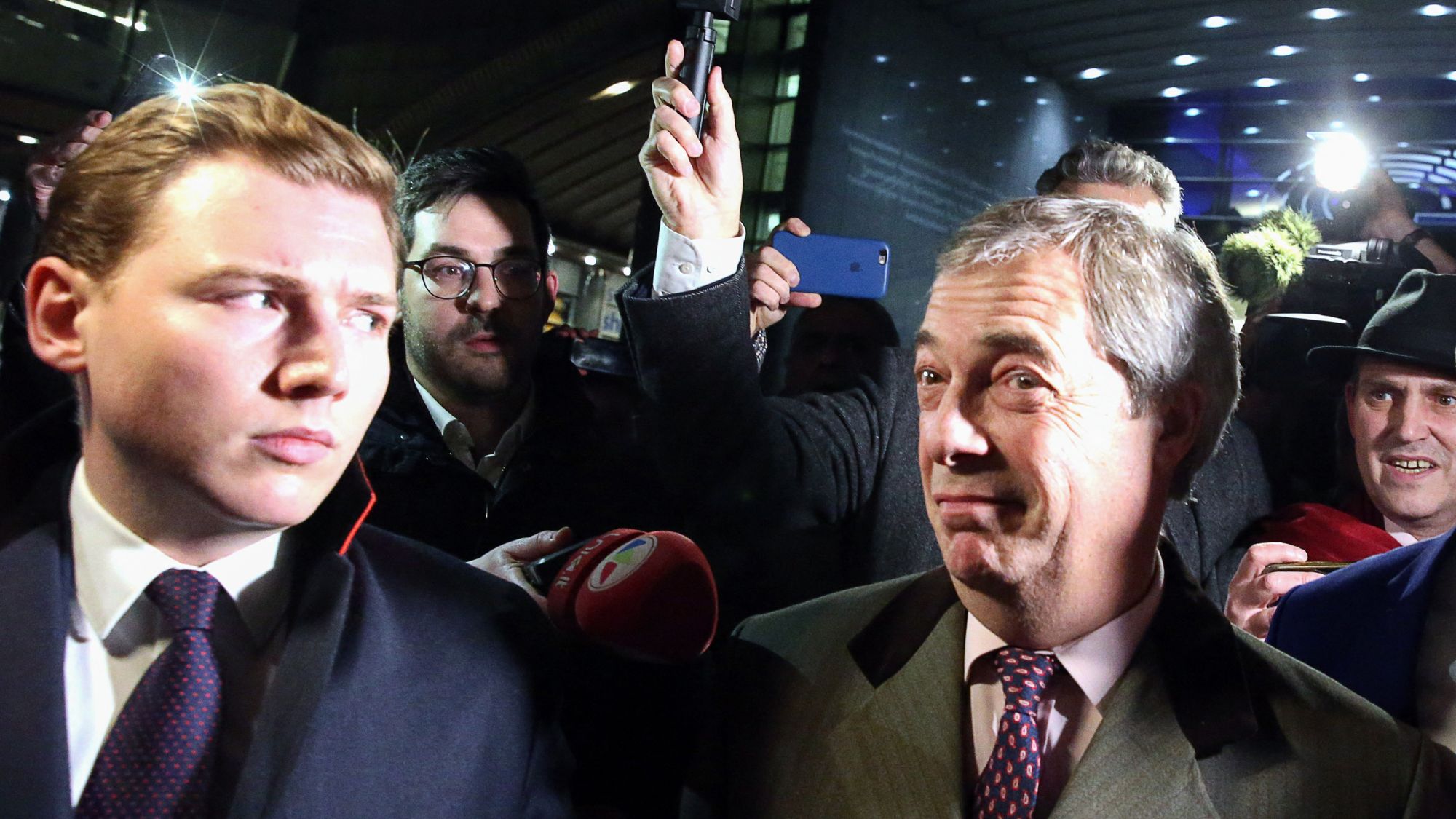
    The short answer is because of Reform UK. In December 2025 the Electoral Commission (EC), the statutory body that regulates elections and political finance, reported that Reform had received £9 million from the Thai-based crypto investor Christopher Harborne – the largest donation to a political party ever made by a living person in the UK. (Harborne also gave £5 million, said to be a personal gift, to Nigel Farage in 2024.) The latest figures show that just under £25 million was donated to UK political parties in the first quarter of 2026: £9.9 million to Reform, £6 million to the Conservatives, £4 million to Labour and £3 million to the Lib Dems.

    Of the money given to Reform, £7 million of it came from Harborne and one other donor, Ben Delo, the Hong Kong-based founder of a crypto exchange. This is, increasingly, a theme of all political funding. In 2015, donations of £1 million or more from individuals and companies accounted for 1% of all private political donations. By 2024, such high-value donations made up fully 35% of the total.

    Why is this happening? 
    Voluntary donations fuel party politics in the UK. State funding is limited to relatively small amounts given to opposition parties. Parties need money to pay their staff, conduct research, advertise and fight elections. The steady decline of membership – the Tories had around three million members in the 1950s, and now have around 130,000 – has seen fees replaced by donations. Big donations are not limited to Reform: members of the Sainsbury family have given tens of millions to the Conservatives and Labour, including a £10 million bequest to the Tories in 2022, the largest donation in UK history.

    Yet the past decade has seen the rise of a new generation of mega-donors, less well known, often residing abroad. At the same time, overall spending has grown, aided by the Tories’ controversial decision to raise the electoral spending cap by 80% in 2023. The total spent by all parties at the 2001 election was £27 million; at the 2024 election, it was nearly £69 million.

    What does the law say about political spending?
    For election campaigns, spending limits are set for each national party (calculated at £54,010 per constituency contested) and for each local candidate (from £11,390). There is, however, no general limit on political donations. Since 2000, donations over £11,180 (previously £7,500) must be reported to the EC. However, loopholes abound. For instance, Frank Hester and his company The Phoenix Partnership donated £15 million to the Conservatives before the 2024 election (63% of the party’s campaign spending) but broke it up into smaller amounts to avoid scrutiny. Donors have to be “permissible”, meaning they’re an individual who is on the electoral register (this includes overseas voters), or a UK-registered company, union or other body. Those who are not UK voters can get round the ban by giving money via UK subsidiaries, or by using so-called unincorporated associations.

    Why is this a matter for concern?
    Money affects electoral outcomes. Arguably, Reform could not have established itself as a major party without generous funding for it and its predecessor, the Brexit Party. And by and large, parties do not get something for nothing. Political scientists often divide donors into three (overlapping) groups: “ideologues”, motivated by a cause; “investors”, who give money to those they think will represent their interests; and “intimates”, who enjoy the access it gives to lawmakers and the associated prestige. The dangers of this are well-rehearsed. But as donations grow more narrow and concentrated among the super-rich, the fear is that parties are ever-more vulnerable to donor pressure. It is no coincidence, critics say, that two-thirds of Reform’s money comes from crypto businessmen, and that the party is calling for a regulatory “Big Bang 2” to turn the UK into a “crypto hub”. But the problem spreads wider than that. Transparency International UK has assessed that £42 million given to political parties since 2001 came from donors either alleged, or proven, to be involved in fraud, corruption or money-laundering.

    Is there an alternative to the current system?
    Many nations cap not what parties can spend but what donors can give. Australia has a $50,000 annual donation cap; Canada limits individuals to around $1,750 per year; France caps them at $7,500. In each case, however, the state makes up the shortfall – per voter, France spends over 10 times as much as the UK on political parties – and in Britain such state funding is unpopular; most taxpayers reject the principle that they should fund parties they disagree with. At the other end of the spectrum from France is the US, where the Supreme Court has scrapped all donation and spending limits on freedom of speech grounds. The cost of US elections, and the influence of the very rich, has since rocketed.

    Are there any plans to limit donations?
    Labour’s 2024 manifesto promised to “protect democracy by strengthening the rules around donations”. Philip Rycroft’s independent review into foreign financial interference recommended, among other things, an annual £100,000 cap on political donations from British voters living abroad; a suspension of crypto donations; and tighter “Know Your Donor” checks. In March, these were added as amendments to the Representation of the People Bill, which was due to come to the Commons for its third reading last week. The bill’s progress was abruptly delayed, because of backbench amendments aimed at capping domestic political donations. The Labour MP Stella Creasy proposed a universal annual cap of £100,000 on individual donations. (This would have stripped Reform of around 85% of its funding.) Both Reform and trade unions – whose block donations to Labour could have been affected – objected. The delay will allow Andy Burnham’s government to reshape the legislation.


    Spirit of the age

    Don’t expect to see Gen Z-ers clutching handbags on a night out, says The Times. The new trend among young women is to hold all the essentials – sunglasses, phone, lipstick – in one hand. Those who’ve perfected the “girl grip” (or “everything claw”) can hold a drink too. According to one survey, a  third of Gen Z women head out without a bag; 44% think handbags are old-fashioned.


    VIEWPOINT

    A licence to dislike

    “The message from the lifestyle gurus of social media is that there’s a glorious world out there of possibility and adventure, and we should be open to it regardless of vintage: wild swimming; the mind-boggling emotional geometry of polyamory; natural wines that smell like unwashed pig duodenum. To which I say, sod that. The benefit of having been around the block a few times is the joy of knowing what you do not like, through extended exposure. For example, I will never sit through another production of ‘Hamlet’. I will not go camping. Picnics are too much admin, no-reservation restaurants are a bore, and most buffets are where good food goes to die.” 

    Jay Rayner in The Financial Times


    talking point

    King Kev: a ‘riot of colour’ in a grey world

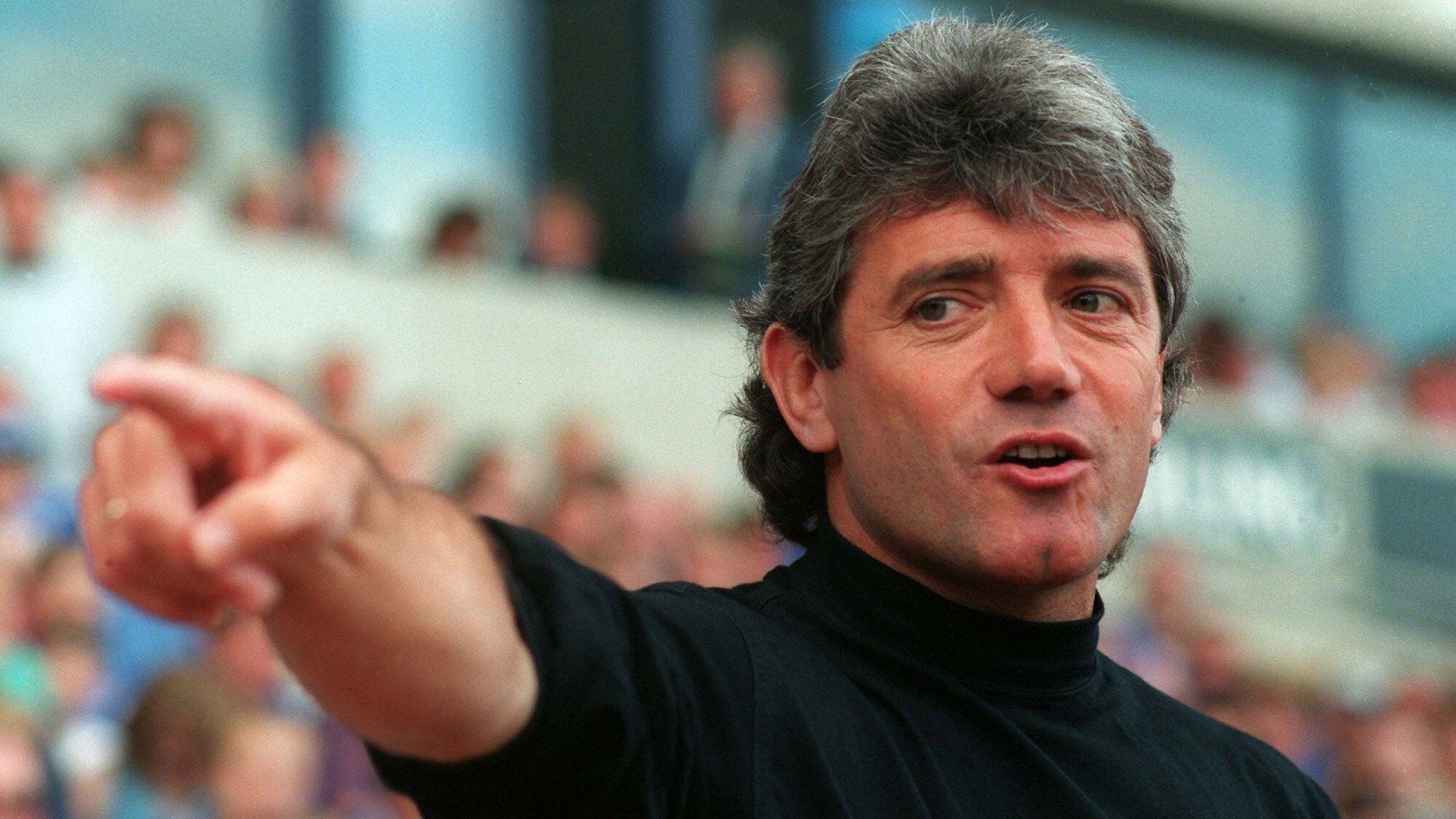
    Superstar is a word that is overused these days, said Oliver Holt in the Daily Mail; but if ever a man was worthy of it, it was Kevin Keegan. Back in the 1970s, the footballer – who died this week aged 75 – was a “riot of colour” in a grey world; and for a few years, said The Times, England’s hopes of becoming a great footballing nation again seemed to rest entirely on his “poodle perm”.

    As England captain, his success in elevating the team above mediocrity was only fleeting, but his impact crossed cultural boundaries. Not only was he charismatic and open-hearted, he was one of the first players to fully market his brand, deploying “his ready smile and dimpled chin with charm and professionalism”. He was ubiquitous on cereal boxes; he was a face of Brut on TV, splashing it “all over”; he even released a handful of singles.

    Keegan wasn’t the first “celebrity footballer”, said Jim White in The Telegraph: George Best had been that a decade earlier. But “King Kev” or “Special K”, as he was known, was not like Best. A clean-cut family man, he had neither Best’s destructive streak nor his natural brilliance. Having grown up “football-mad” in South Yorkshire, the son of a miner, Keegan had trained tirelessly to become a great, and disprove the selectors who’d told him that, with his slight and small frame (he was five foot seven), he’d do better as a jockey.

    His energy, tenacity and fighting spirit, which won him the nickname “Mighty Mouse” – and led him into a notorious on-pitch brawl in 1974 – became evident to the wider public in 1976, on the multi-sport TV show “Superstars”. In the cycle event, Keegan fell off his bike and landed very painfully. He was bloodied and bruised, yet he insisted on taking part in the re-run, which he then won. The public adored him for it.

    On the pitch, he had first achieved stardom at Liverpool in the early 1970s, said The Guardian. He moved to Hamburg in 1977 – where he twice won the Ballon d’Or – and ended his playing career at Newcastle, from 1982, where he achieved the status of a demigod by helping to return the Magpies to the First Division. When he retired – flying off the pitch in a helicopter after a testimonial – fans wept.

    Eight years later, he was back as manager. The club was facing relegation to the third tier; under his helm, it was promoted and became one of the most thrilling in the Premier League. And though his final stint at Newcastle was less successful, the fans still loved him. In January, after he revealed that he had terminal cancer, they unfurled a huge banner at St James’ Park reading: “Long Live King Kev – The Messiah”.


    It wasn’t all bad

    An 11-year-old girl whose leg became wedged between two boulders on Dartmoor was saved by a bottle of Fairy Liquid. Shannon Facey was on a school trip to Hound Tor on one of the hottest days of the year when she slipped. Rescuers soon arrived with specialist equipment to cut into the rock, but had no luck. Then team member Olly Rees arrived with a bottle of detergent he’d bought en route. He applied it “liberally” to Shannon’s leg – which finally slipped free.


    People

    Chris Hoy

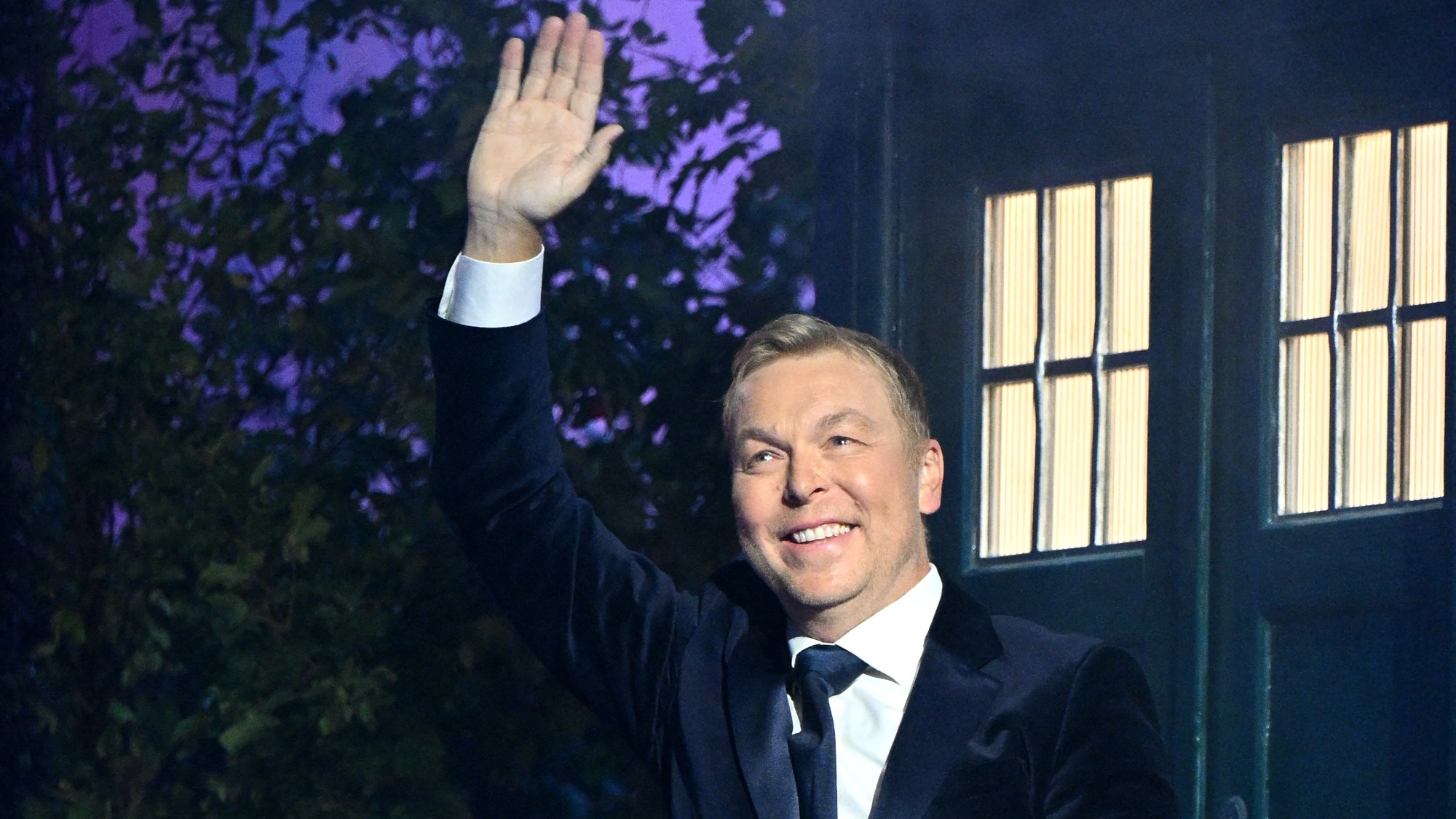
    It’s three years since Chris Hoy was diagnosed with terminal prostate cancer; yet the six-time Olympic gold medallist shows no sign of slowing down, says Decca Aitkenhead in The Sunday Times. He still exercises as hard as ever, raging against the prognosis that he had between three and four years to live; and he has “normalised” his illness for his two young children. But despite being an evangelist for the power of positive thinking, even he can’t pretend that the past nine months have been easy.

    In November, he suffered a “really, really bad” leg break in a mountain biking accident. Doctors told him he’d never be able to fully straighten or bend his leg again; and he had to come off some of his cancer drugs, because they inhibited wound healing. “I was, like, what have you done to yourself? You’ve smashed your leg up, you’re never going to be able to walk again properly and you've potentially set yourself back with your treatment.” But rather than accepting his fate, he ramped up his training, riding his stationary bike one-legged.

    It paid off: his leg has healed, and he recently completed a coast-to-coast cycle across Spain – which involved spending six-and-a-half hours a day in the saddle, and ascending the equivalent of one-and-a-half Everests. “It was a huge week,” he says. “I’m knackered!” So why does he do it? “It’s not an obsessional weird thing. It’s just – it’s served me well in my life to try and challenge myself, so if you’re going to do something, make the most of it.”
    Too many people, he says, fail to appreciate that even if you don’t have a terminal diagnosis, life is not for ever. We all have only a “set amount of time… It’s just that my deadline’s been brought forward a little bit, and therefore I’m a bit more aware of it.”


    Image credits, from top: Henry Nicholls / AFP / Getty Images; François Walschaerts / AFP / Getty Images; Mark Leech / Getty Images; Oli Scarff / Getty Images
     

    Recent editions

    • Evening Review

      Are Russia and China helping Iran?

    • Morning Report

      Trump expands tariffs on imports from scores of allies

    • Evening Review

      How should Burnham tackle Trump?

    VIEW ALL
    TheWeek
    • About Us
    • Contact Future's experts
    • Terms and Conditions
    • Privacy Policy
    • Cookie Policy
    • Advertise With Us
    • FAQ
    Add as a preferred source on Google Add as a preferred source on Google

    The Week UK is part of Future plc, an international media group and leading digital publisher. Visit our corporate site.

    © Future Publishing Limited Quay House, The Ambury, Bath BA1 1UA. All rights reserved. England and Wales company registration number 2008885.