The Week The Week
flag of US
US
flag of UK
UK
https://cdn.mos.cms.futurecdn.net/flexiimages/jzblygzdxr1769609154.gif

SUBSCRIBE

Try 6 weeks free

Sign in
  • View Profile
  • Sign out
  • The Explainer
  • Talking Points
  • The Week Recommends
  • Podcasts
  • Newsletters
  • From the Magazine
  • The Week Junior
  • More
    • Politics
    • World News
    • Business
    • Health
    • Science
    • Food & Drink
    • Travel
    • Culture
    • History
    • Personal Finance
    • Puzzles
    • Photos
    • The Blend
    • All Categories
  • Newsletter sign up Newsletter
  • Saturday Wrap, from The Week
    Portsmouth protests, the fall of Imran Khan, and Venezuelan oil

     
    controversy of the week

    The boat protests

    “Sadly, we’ve become used to far-right protests in recent years,” said Joe Mulhall in The Guardian. There have been angry crowds outside hotels housing asylum seekers across Britain, and Tommy Robinson has led vast “Unite the Kingdom” rallies in central London. 

    But what we saw in Dover and Portsmouth last weekend “feels different”. At around 7am on Saturday, “hundreds of balaclava-clad men, dressed all in black, began piling out of the backs of vans and blocked roads around Dover port”. Chanting “Stop the boats” and “Whose streets? Our streets!”, they shut down the UK’s biggest ferry port for hours. Then, on Sunday evening, a group of men gathered near a Portsmouth beach to try to prevent lifeboat crews from bringing ashore 140 asylum seekers. 

    “You can see them in the videos,” said Imogen West-Knights in The Independent: arms crossed, hoodies up, “like Oswald Mosley’s Cable Street blackshirts reimagined”. Some waded into the sea to film migrants arriving, before clashing with police. This is Britain today, where thugs can play out their “darkest fantasies of vigilante justice”. 

    It was unprecedented, said Brendan O’Neill in The Spectator, but it wasn’t surprising. The British state has abdicated responsibility for policing our borders: it appears either incapable or unwilling to stop the boats, or to swiftly deport these “intruders” from “heaven knows where”. It was only a matter of time before “ordinary people”, acting as volunteer “border wardens”, took matters into their own hands. 

    These weren’t ordinary citizens, said Kevin Rawlinson in The Guardian. Both protests last weekend were organised by Patriot Platform, a collective of far-right groups led by Daniel Thomas, aka “Danny Tommo”. They’re well-organised and disciplined, and able to mobilise at short notice. Patriot Platform claims to be “devoted to protecting British women and children, and to Christian values” (“Christ is King” is a favoured chant). In reality, many of its members are domestic abusers and violent criminals. “That includes Thomas”, who served time for a botched kidnapping. 

    “Concerns about illegal immigration are widespread, understandable and legitimate,” said The Telegraph. And people have every right to protest. But masked men closing roads and blockading ports is “chilling and unacceptable”. Disturbingly, it seems that anti-migrant protesters are copying the tactics of green radicals such as Extinction Rebellion and Just Stop Oil, targeting infrastructure and “bringing public highways to a standstill”. 

    It’s a sign that radicals on both right and left have given up on democratic politics, said Rachel Cunliffe in The New Statesman. Actually, politicians are listening on this issue: small boat crossings are down by more than 40% this year; yet anti-migrant agitation has only increased. To a growing minority, facts and arguments are no match for “the seductive power of being cast as a fearless crusader for the most important cause of our age”.


    Briefing of the week

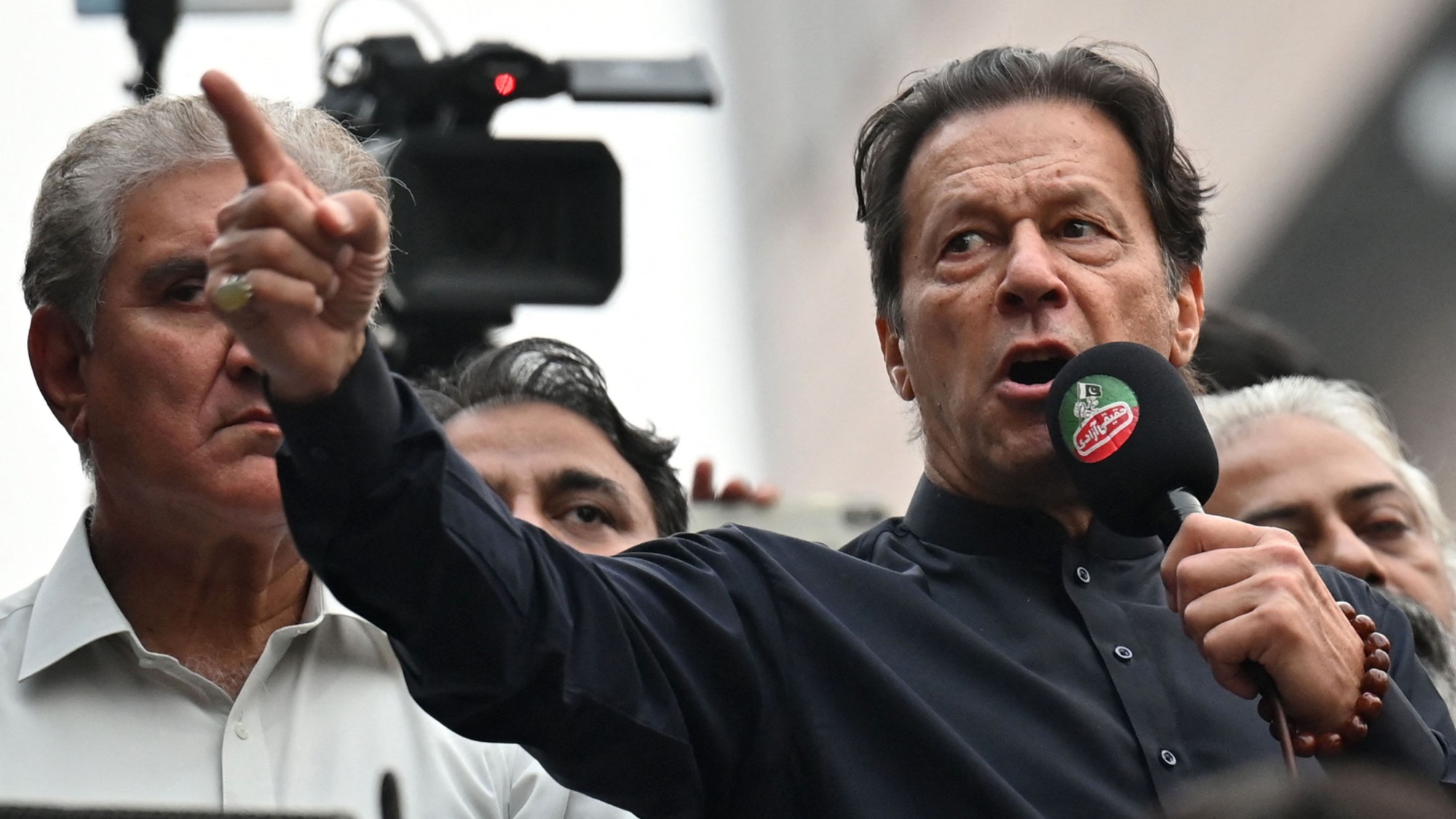
    The fall of Imran Khan

    How did Pakistan’s cricketing-great-turned-politician end up behind bars?

    Where is Imran Khan being held?
    He is in a 6ft-by-8ft prison cell in the Adiala prison in Rawalpindi, Pakistan’s fourth-largest city. According to his family, his conditions are dire: Khan, 73, Pakistan’s prime minister from 2018 to 2022, has been placed in indefinite solitary confinement for 23 hours a day, and is given dirty water to drink. He has lost 85% of his eyesight and his health is failing.

    In a recent interview, his sons Kasim and Sulaiman, who are British citizens, accused Pakistan’s authorities of “trying to kill” their father. Pakistani officials reacted with fury; it briefly appeared that they might order a Test match against England to be abandoned. Pakistan’s government issued a statement claiming, against all the evidence, that Khan is actually being held in a seven-cell compound with home-cooked food, a TV and regular visits.

    Why is the case so sensitive?
    Because Khan is, to many, a national hero, and probably Pakistan’s most popular politician. Born to an affluent Pashtun family in Lahore, Khan graduated from Keble College, Oxford, in 1975, and captained Pakistan’s cricket team to World Cup victory in 1992; in Britain, he is still best known as a sportsman and a playboy, who later married Jemima Goldsmith.

    But in Pakistan he became a prominent philanthropist, and then a very successful – and very divisive – populist politician. In 1996, he founded the Pakistan Tehreek-e-Insaf (Pakistan Movement for Justice, or PTI) party, railing against the corruption he views as endemic among the two political dynasties that have dominated Pakistani politics, the Bhutto and Sharif families. His supporters cast him as a brave challenger to a venal establishment, who fought for years to fix a broken system; his critics say he is irresponsible and has polarised Pakistani politics, by casting all opponents as crooks. 

    What did he do in office?
    Khan became PM by a slim majority, after winning the backing of Pakistan’s military – which has intermittently ruled the country and still wields great power – in a contest marred by allegations of vote-rigging and intimidation. In power, Khan proved erratic, and his record was at best mixed. He promised to end corruption within 90 days; but according to Transparency International, it actually worsened. 

    Pakistan’s economic woes continued on his watch: in 2019, he was forced to negotiate a $6 billion bailout from the IMF. Although he expanded the provision of healthcare, pledges to build an “Islamic welfare state” went unfulfilled. And his independent foreign policy (he was seen as pro-Taliban, and had close links to China and Russia) was criticised in the West. Meanwhile, he worked with Pakistan’s generals to control the media and crack down on opponents, some of whom were jailed. 

    How did he lose power?
    In April 2022, having apparently fallen out with key figures in the military, he became the first Pakistani PM to be ousted in a parliamentary confidence vote. Khan claimed that the US and Pakistan’s military had conspired to remove him, and launched street protests. Within days, news outlets in Pakistan began following an army diktat to stop referring to him by name (instead calling him “the founding chairman of the PTI”).

    In November 2022, he was shot in the leg at a rally, which he also blamed on the military. The new government, meanwhile, sought to bury Khan in dozens of legal cases; in May 2023, he was arrested by paramilitaries who smashed through the windows of Islamabad’s high court, where he was appearing on corruption charges. Fresh protests erupted. Although initially bailed, Khan has been in jail since that August. 

    What is he accused of?
    Khan has faced charges in more than 100 cases, including bribery, corruption and the leaking of state secrets. He is now serving a 14-year sentence following a corruption conviction in which prosecutors alleged that he and his third wife, Bushra Bibi, received land worth up to $25 million through a charitable trust, as a bribe from a real-estate tycoon. All Khan’s other convictions have been overturned or suspended; few were of exceptional gravity by the standards of Pakistani politics.

    Amnesty International, Human Rights Watch and the International Federation for Human Rights have criticised Khan’s incarceration; and, in July 2024, a UN working group said that his detention had “no legal basis” and was part of a “campaign of repression” against him and the PTI. 

    How has Khan responded?
    In October 2022, Pakistan’s Election Commission disqualified him from running for political office for five years. The PTI has also been prevented from using its cricket bat symbol on ballot papers – a setback in a country with low literacy rates. But Khan has been undeterred. He continues to protest his innocence from jail, attracting widespread support. Using AI-generated audio clips and images, he held virtual online rallies in the run-up to the February 2024 general election, in which candidates backed by his PTI party won an unexpected victory. However, it fell short of an outright majority, and has sat in opposition since; Shehbaz Sharif of the PML(N) took over as PM, at the helm of an eight-party coalition. 

    Could he be released?
    For the moment, his prospects appear bleak. Pakistan’s supreme court ruled in August that Khan should be transferred to hospital to undergo medical checks; instead, he was taken to a government facility for cursory checks, and was then sent straight back to 23-hour isolation. Given that some 48 Pakistani political leaders have been assassinated or executed, some observers fear the government plans to keep Khan in prison until he dies. Western governments, meanwhile, have remained largely silent about his treatment – apparently wary of angering a strategically important nuclear power.

    Khan and his healer 
    In 2015, as his second marriage (to the former BBC weather presenter Reham Khan) was breaking down, Khan turned to a Sufi faith healer called Bushra Bibi for advice. The pair had been introduced by Maryam, Bushra’s sister, a volunteer for the PTI. They had a consultation over the phone, and hit it off. More calls followed, often lasting long into the night; then Khan began visiting Bushra at home. She was married at the time, but in late 2017 she divorced her first husband, and in January 2018, she married Khan in a secret ceremony. 

    Khan speaks in glowing terms about Bushra. “Sufism is an order with many levels,” he said of the mythical strain of Islam they both follow, “but I have never met anyone who is as high as my wife.” He claims never to have seen her face until after they married. 

    Yet his reverence wasn’t shared by everyone in his government; ministers complained about Bushra’s interference in state matters. The legality of the pair’s marriage has also been called into question by Khan’s opponents; and Bushra, along with her husband, is now serving a prison sentence for corruption. Her role behind the scenes remains a topic of endless speculation in Pakistan, where the debate is often coloured by misogyny and misinformation.


    Spirit of the Age

    British retailers are scaling back on their plus-size range – a shift that has been attributed to the boom in GLP-1 weight-loss drugs such as Wegovy. According to analysts Edited, the proportion of M&S dresses offered in a “plus-size” (18 or above) fell from 34% in 2024 to 27% this year. At John Lewis, the proportion of new dresses available in plus-sizes fell from 22% to 19%, though the total number of plus-sized dresses increased. An estimated 8% of UK adults have tried Wegovy or another prescription weight-loss drug.


    VIEWPOINT

    Great, weird leaders

    “The new de Gaulle biopic is a welcome essay in an often neglected fact: the utter weirdness of many great leaders. Belief in one’s destiny implies considerable egotism, which can tip into absurdity. Churchill and de Gaulle shared a certainty that they were men of destiny. This seems normal to us; we know them from history textbooks. But why should an eccentric, unknown tank commander feel so confident he is the saviour of France? Churchill was derided by enemies as a bumptious egomaniac. The truth is that it takes ludicrous presumption to try to write yourself into the pages of history. Nobody normal would try.” 

    James Marriott in The Times


    talking point

    ‘To the victor the spoils’: Trump’s Venezuelan oil grab

    It was “a predatory move” that reeked of old-school colonialism, said Le Monde. Last week, in a typically grandiose social media post, Donald Trump announced that the US and Venezuela had struck “THE BIGGEST OIL DEAL IN WORLD HISTORY”. It would, he claimed, give America majority control over 65 billion barrels of oil found at 17 sites in Venezuela’s Orinoco Belt and Lake Maracaibo.

    Trump has been demanding this as a prize ever since US forces seized Venezuelan president Nicolás Maduro in a dawn raid on Caracas in early January, said Joseph Zeballos-Roig on MS Now. “To the victor belong the spoils, right?” he told a rally in Nevada back in August, boasting how, with Caracas, he wanted to do things “the old-fashioned way”. By strong-arming interim president Delcy Rodríguez, Maduro’s former deputy, into agreeing the deal, he has made Venezuela America’s “51st state in all but name”. 

    Venezuelans are horrified, said Luis Manuel Aguana in La Patilla. We are a “culturally patriotic and anti-imperialist” people who, like other Latin Americans, loathe “external oppression”. And Rodríguez’s flimsy promise that the deal will generate $209 billion in taxes over the next 25 years hardly makes this bitter pill any easier to swallow. But it is a deal that’s unlikely to hold, said Caracas Chronicles. It “looks, sounds and smells pretty unconstitutional”; any future government is more than likely to abrogate its terms.

    Legally speaking, the accord is a “complete monstrosity”, said Rafael Quiroz Serrano in Tal Cual. A leader with no electoral mandate, Rodríguez lacks the legitimacy to sign away our oil deposits; and under Venezuelan law the state oil company, PDVSA, must have a controlling stake in any oil production projects. 

    Be that as it may, Caracas has been persuaded under the deal to appoint a private company – North American Blue Energy Partners (NABEP) – to control the 17 oil fields, on the understanding that the Pentagon is given a 35% stake in the business and receives 20% of all output at cost price. And that’s a real cause for alarm, said Caracas Chronicles. NABEP’s Venezuelan owner, Alejandro Betancourt, is a byword for corruption. He made his fortune building power plants for Maduro’s predecessor Hugo Chávez, and “became synonymous with the vanishing of hundreds of millions of dollars” that Chávez had allocated to fixing Venezuela’s power grid. And he is now being investigated in Spain (where he lives) for alleged money laundering. 

    Betancourt would anyway have to work miracles for the deal to work out, said Catherine Bosley in Neue Zürcher Zeitung. Only 1% of global crude oil is currently produced in Venezuela, despite it having 17% of the world’s reserves. And given the dilapidated state of its oil infrastructure after decades of socialist misrule, that won’t change any time soon. Vast sums of investment are needed. True, Chevron, which already operates in Venezuela, promised to invest $7 billion over the next five years in a separate deal last week. But none of the other oil giants, some of whom lost billions when Chávez booted them out in 2007, are keen to engage.

    With good reason, said Keith Johnson in Foreign Policy. Trump’s numbers are “wildly optimistic”. Venezuela’s oil is very heavy and hard to process: only 20 billion barrels are likely to be recoverable from the 17 oil fields. And even that will take years to retrieve, a fact Trump conveniently overlooked when claiming the deal would drive down US energy prices that have spiked as a result of his war in Iran.

    The deal’s economic prospects may be in doubt, said The Daily Beast, but the political consequences are already being felt. By shoring up Rodríguez’s undemocratic regime, it has dashed any immediate hope of Venezuela turning to democracy. And it has given the green light to countries such as Russia to “attack and steal from weaker neighbours”.


    It wasn’t all bad

    A skydiver who was knocked unconscious before she could deploy her parachute survived with a broken leg and a fractured spine. Holly Wiffen, 35, was struck by a fellow jumper moments after leaving the plane, on her 425th jump. She hurtled some 10,000ft to the ground in just over a minute; in a moment of semi-consciousness, she deployed her main chute at 1,000ft; she thinks the reserve deployed at 500ft. This slowed her descent – but it was falling into a tree that saved her life. “Most people don’t survive accidents like that,” she said.


    People

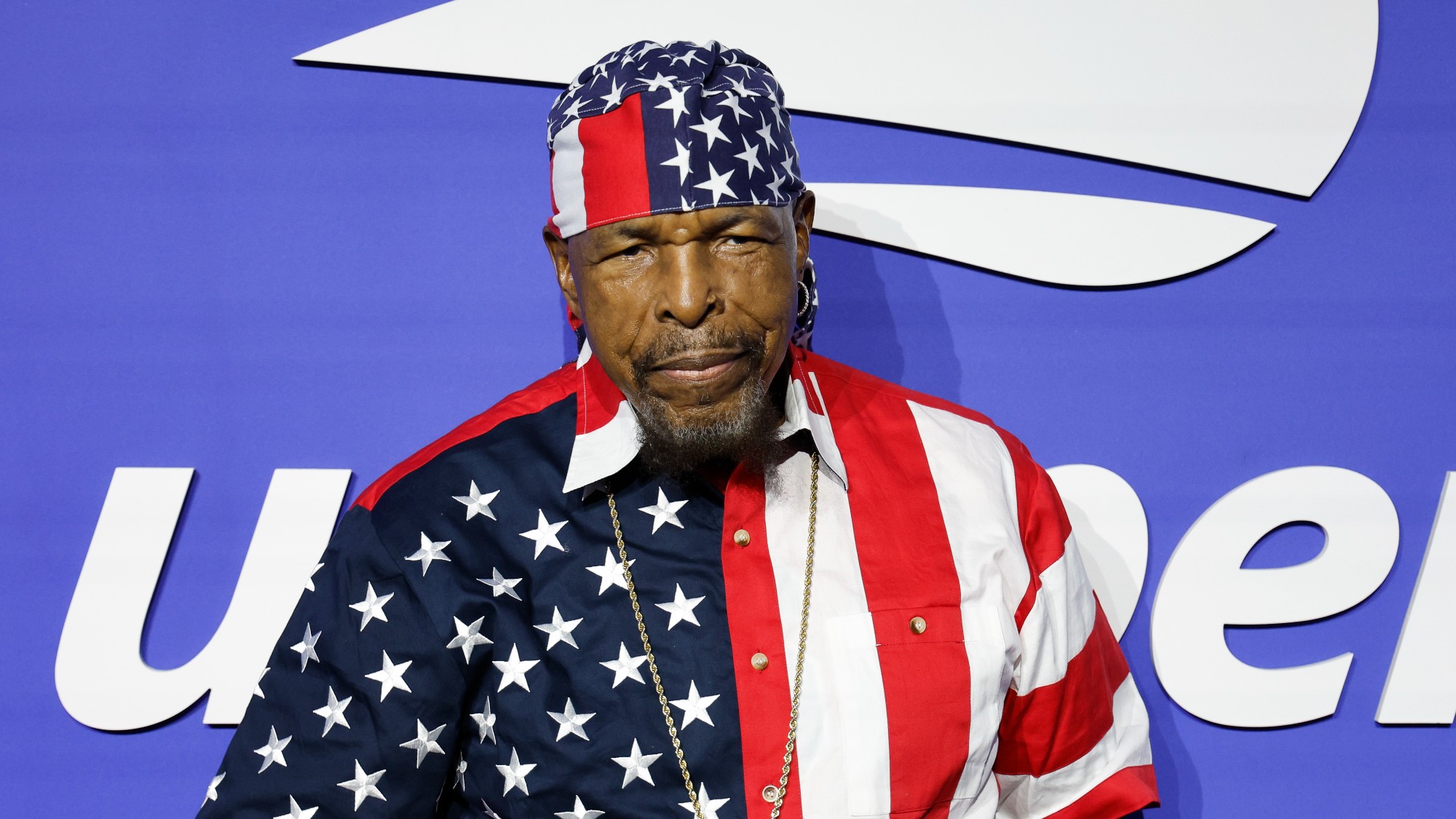
    Mr. T

    A former wrestler, Mr. T became a star in the 1980s when he played a boxer in “Rocky III” – which gave him his “Pity the fool!” catchphrase. He was then cast as B.A. Baracus, the gruff pugilist on TV’s “The A-Team”. As a result, says Simon Hattenstone in The Guardian, he has been portrayed as a musclebound meathead. 

    Yet he is anything but. Born Laurence Tureaud, he grew up in a housing project on the South Side of Chicago, where his mother used to tell him about Frederick Douglass, the abolitionist who, as a child, was taught to read by his slave master’s wife – until she was warned not to “because if you do, he won’t be a slave much longer”. Education, his mother told him, was the route to freedom. By the time he was 15, he was an athlete with the physique of an adult bodybuilder, yet the local “thugs” called him a sissy, because, he says, he devoted himself to his studies (philosophy and theology), and refused to join in their crimes. 

    But while he abhorred violence, he especially hated the racism that afflicted his family, and the disrespect shown to them by white people. He watched his father, a minister, being called Boy; his brother served in the marines, yet even when he came home from Vietnam in uniform, a group of white men called him Boy. It is why, he says, he years ago legally changed his name to Mr. T – “so the first word out of everyone’s mouth would be Mr”.


    Image credits, from top: Finnbarr Webster / Getty Images; Arif Ali / AFP / Getty Images; Federico Parra / AFP / Getty Images; Jean Catuffe / GC Images / Getty Images
     

    Recent editions

    • Evening Review

      Does AI herald the end of unsolvable maths problems?

    • Morning Report

      Mahmood takes action on anti-migrant protesters

    • Evening Review

      Is Ukraine’s hot streak cooling off?

    VIEW ALL
    TheWeek
    • About Us
    • Contact Future's experts
    • Terms and Conditions
    • Privacy Policy
    • Cookie Policy
    • Advertise With Us
    • FAQ
    Add as a preferred source on Google Add as a preferred source on Google

    The Week UK is part of Future plc, an international media group and leading digital publisher. Visit our corporate site.

    © Future Publishing Limited Quay House, The Ambury, Bath BA1 1UA. All rights reserved. England and Wales company registration number 2008885.