The Week UK
flag of US
US
flag of UK
UK
https://cdn.mos.cms.futurecdn.net/flexiimages/jzblygzdxr1769609154.gif

SUBSCRIBE

Start your trial today

Sign in
  • View Profile
  • Sign out
  • The Explainer
  • Talking Points
  • The Week Recommends
  • Podcasts
  • Newsletters
  • From the Magazine
  • The Week Junior
  • More
    • Politics
    • World News
    • Business
    • Health
    • Science
    • Food & Drink
    • Travel
    • Culture
    • History
    • Personal Finance
    • Puzzles
    • Photos
    • The Blend
    • All Categories
  • Newsletter sign up Newsletter
  • Saturday Wrap, from The Week
    Israeli elections, rising mental illness, and Germany’s spy scandal

     
    controversy of the week

    Mental illness: why is it on the rise?

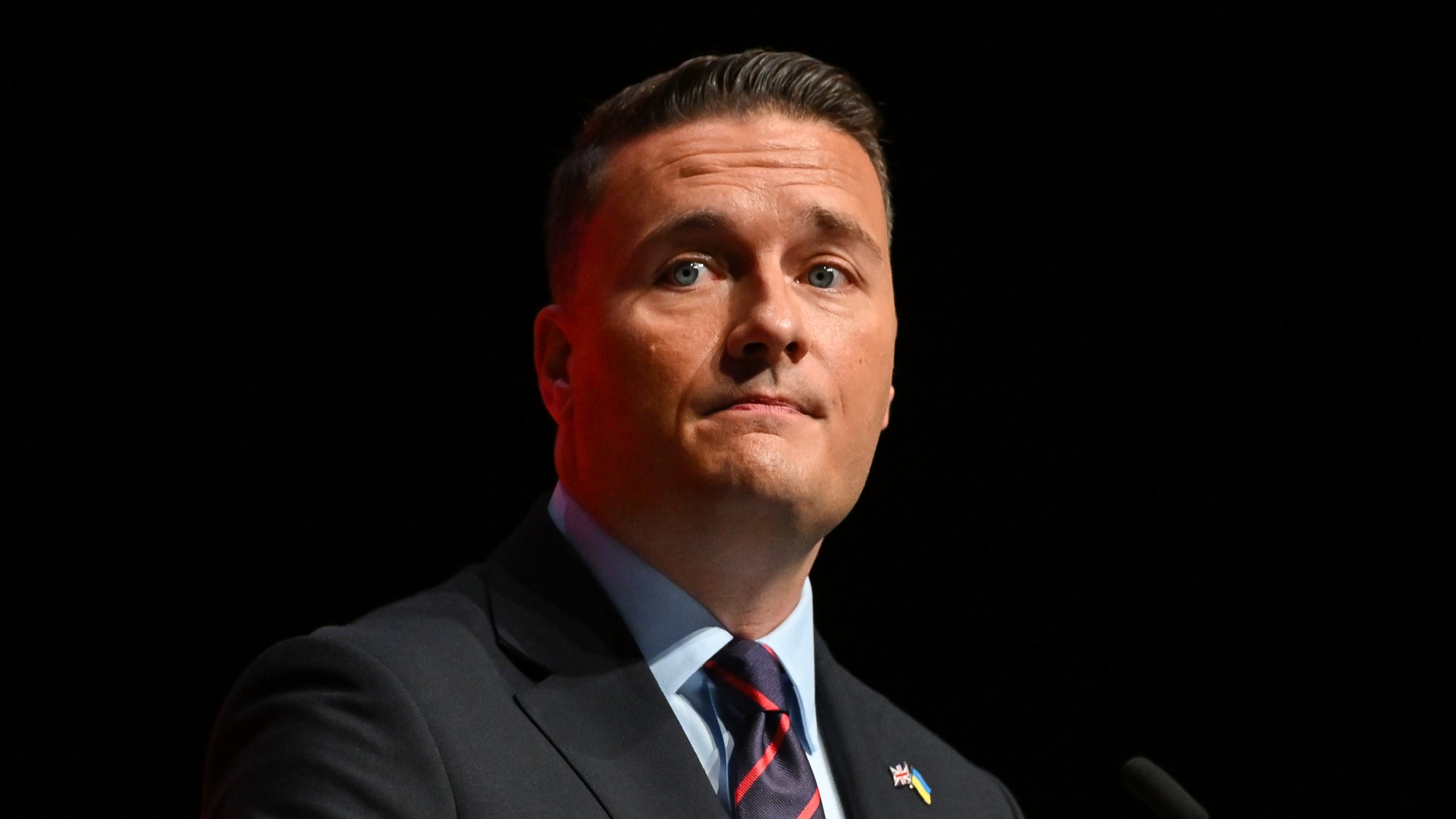
    In March last year Wes Streeting, then the health secretary, suggested that mental health and neurodevelopmental conditions were being “over-diagnosed”. In doing so, he rode “headlong into another culture war”, said Patrick Butler in The Guardian. 

    Although he later changed his mind on the subject, Streeting seemed to be endorsing the popular view that everyday stresses and disappointments are being too often medicalised, “resulting in a surge of bogus clinical diagnoses” – and creating a “snowflake generation” of fragile, work-avoidant young people. 

    Last week, a “mammoth review” of mental health, autism and ADHD in England, commissioned by Streeting and chaired by Professor Peter Fonagy, published its findings. It “has no truck with the snowflake generation caricature”: there has been a steep rise in mental health problems, it concludes, particularly among the young, and this is causing genuine distress. 

    The report cites insecure work, unaffordable housing and the growing influence of social media as major contributing factors to mental distress, said The Guardian. There is a “lack of hope among young people that their lives will be better than their parents’”. And stretched mental health services are clearly failing them. 

    The rise in mental distress is real, said The Times, but when it comes to diagnoses for ADHD and autism, the report suggests that the process is certainly in danger of “going awry”, and that there is an increasing risk of overdiagnosis. The report cites research estimating that about 1.2% of children in England are autistic. Yet by last year around 6% of boys aged six to 11 had been diagnosed with autism. 

    The overall surge is due, in part, to an explosion in the number of private clinics offering sometimes unreliable services. They should be prevented from direct advertising, as the report suggests. While sometimes necessary, diagnoses can also cause harm if they hold people back; children diagnosed with ADHD are four times more likely to end up as Neets – not in education, employment or training. Young people need “prompter psychological help”, not “a label for life”. 

    So what should be done, asked Sean O’Grady in The Independent. “It’s not that obvious.” The review backs government plans to help more people into work as a way of addressing underlying problems. It also recognises the dangers of over-medicalisation: many young people would benefit more from rebuilding social connections than from antidepressants. But Fonagy doesn’t offer any clear advice about the policy choices on, for instance, welfare. That will have to wait for Alan Milburn’s review into youth unemployment later in the year.


    Briefing of the week

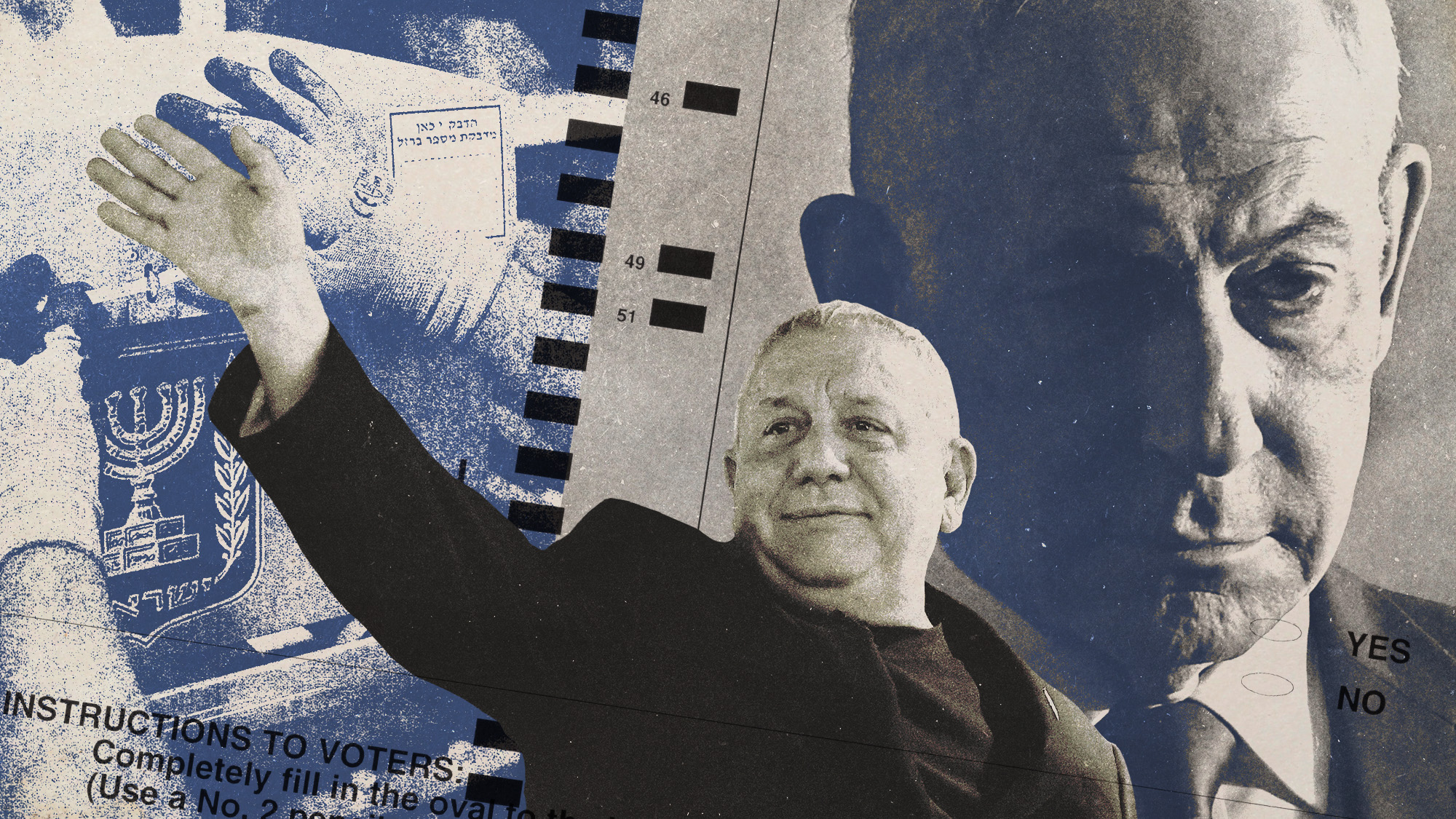
    Israel’s crucial election

    In what promises to be a closely fought general election on 27 October, Benjamin Netanyahu could finally lose his grip on power 

    Why is this election so important?
    The consensus is that Israel’s forthcoming election is one of the most consequential in the country’s 78-year history, and a defining moment for its political identity. It is the first since the 7 October attacks three years ago; and the first time voters have had a chance to pass judgement on the government’s failure to prevent that catastrophe, and on Israel’s prosecution of its subsequent wars on Gaza, Lebanon and Iran.

    It could herald a reset in relations between Israel and its international allies, many of whom have been critical of Benjamin Netanyahu’s hardline government, particularly over Gaza. Above all, the election could herald the political demise of Netanyahu, Israel’s longest-serving PM, who has led the nation for all but 18 months since 2009. 

    What is the current make-up of Israel’s parliament?
    The ruling party needs a majority of at least 61 seats out of 120 in the Knesset. Because of its proportional representation system – voters cast one vote for a national party-list – even the largest parties rarely win more than 35 seats, and Israel has always had coalition governments. At present, Netanyahu’s right-wing Likud has 32 seats. To govern, it relies on two ultra-orthodox Haredi parties, Shas and United Torah Judaism (with 18 seats together), the ultra-nationalist Religious Zionist and Otzma Yehudit (Jewish Power) parties (with 13 seats between them), and the centre-right New Hope party (with four seats).

    The government is widely regarded as the most extreme Israel has ever had. The main opposition bloc – ranging from the remnants of the once-mighty Labor Party to secular, liberal Yesh Atid to the centre-right Yisrael Beiteinu – has more than 40 seats, but has refused to govern with Netanyahu since 2019, partly because he was the defendant in three corruption cases. Hadash-Ta’al and Ra’am, representing the 20% of Israel’s population that is Arab, have 10 seats. 

    And how likely is Netanyahu to lose?
    The emergence of Gadi Eisenkot, a former general, and his newly formed centre-right Yashar party, has consolidated the anti-Netanyahu opposition. He is seen as the PM’s principal rival, and could replace him. However, according to most opinion polls, the election is too close to call. The Economist’s poll tracker suggests that Likud and Yashar are neck-and-neck, on 22 seats each; that Netanyahu’s coalition will fall short of the 61 seats needed for a majority; but that Eisenkot’s coalition is likely to fall short too. 

    What are Eisenkot’s credentials?
    A former IDF chief of staff, Eisenkot served in Netanyahu’s war cabinet until June 2024, when he resigned with a scathing criticism of the PM’s revanchist strategy in Gaza. He launched his party, Yashar (meaning “straight” or “honest”) just over a year later; since then, it has steadily risen in the polls. Although without Netanyahu’s charisma, Eisenkot, the son of Jewish immigrants from Morocco, is widely regarded by voters as a man of integrity. His son, Gal Meir, was killed in Gaza in December 2023, during an operation to recover the bodies of two Israeli hostages.

    Netanyahu’s allies have sought, somewhat unconvincingly, to cast him as too left-wing and squeamish to protect Israel’s security. In fact, as a general, he pioneered Israel’s “Dahiya doctrine”, named after Hezbollah’s stronghold in south Beirut, which calls for the overwhelming use of force against civilian infrastructure in areas from which attacks are launched; he also categorically opposes the creation of a Palestinian state. 

    Are there other contenders?
    Conceivably, there is Naftali Bennett, who served as PM in 2021/22 but could not keep his diverse coalition together. Another right-winger, and a former Netanyahu aide, he has merged his party with that of the centrist Yair Lapid, another former PM, under the banner “Yachad” (“Together”); but their party lags well behind leaders Yashar and Likud in the polls. Bennett also rejects a two-state solution. Lapid accepts it in theory, but thinks that it is not realistic for the foreseeable future. 

    How about the Arab parties?
    They are on course to win at least 10 seats in the Knesset. However, Eisenkot has ruled out a coalition with the Arab parties, only one of which (the conservative-Islamist Ra’am) has ever agreed to join an Israeli government (briefly in 2021). Their very participation has been the subject of controversy: on 2 October, Israel’s supreme court overturned a ban on them running in the contest at all. The ban had been imposed by the central elections committee, a political body dominated by Netanyahu allies, on the basis that the parties supported armed struggle against Israel.

    So what would the opposition do differently?
    In many respects, not much: the Israeli journalist Nadav Eyal has described Israeli politics as “50 shades of right-wing”. However, an Eisenkot coalition would establish a commission of inquiry into the 7 October attacks. It would seek to end the exemption of Haredi men from military service, an agreement dating back to 1948 that has become very controversial. It would roll back many of the judicial reforms introduced by Netanyahu, designed to give more control over the judiciary. It would also crack down on violent Israeli settlers in the West Bank – though it would retain settlements authorised in Israeli law. And it would try to reset troubled relations with Israel’s allies.

    And if Netanyahu wins again?
    It would mean more of the same. Many liberal Israelis fear that a new Netanyahu coalition, again likely backed by the far-right, would take the state in an increasingly autocratic direction: comparisons to Hungary and Turkey are often made. For the first time in Israeli history, emigration has begun to outpace immigration: in the period 2023-26, more than 200,000 Israelis left the country.


    Spirit of the Age

    A humanoid robot was confiscated by German police last week after it was alleged to have sexually molested a 16-year-old girl. The teenager was standing on a street in Cologne when the four-foot-tall robot came up behind her, and – it is claimed – groped her backside and made thrusting motions towards her. Two teenage boys, one of whom was livestreaming the encounter, were found loitering nearby. They are suspected of controlling the €5,000 robot.


    VIEWPOINT

    Pessimism fatigue

    “There is a 10% chance that AI will cause human extinction, according to some in the field. Off the record, spies quote similar odds on a pan-European war this decade. So why does no one look haunted? Pessimism fatigue, I fear. In recent times, too many boys have cried ‘wolf’ – or ‘crime wave’ or ‘loneliness epidemic’ or ‘civilisational erasure’ – and the townsfolk are numb to it now. Doom merchants are not just a drag to be around. They make it hard to distinguish the real threats from the neurotic slop. The ethical burden is on pessimists to tone things down. Even plausible warnings have to be rationed, to avoid becoming an ignorable white noise.”

    Janan Ganesh in the Financial Times


    talking point

    Germany’s spy scandal: a shocking episode

    Populist parties of the far-right and radical-left are on the rise; Germany’s once booming economy, built on an industrial base that was the envy of Europe, is flatlining; and its government – previously deemed a “grand coalition” – is weakened, said Ulf Poschardt in The Telegraph. Now, in yet another blow to national self-esteem, the ex-head of Germany’s foreign intelligence agency, the BND, has been arrested on charges of exploiting state secrets. 

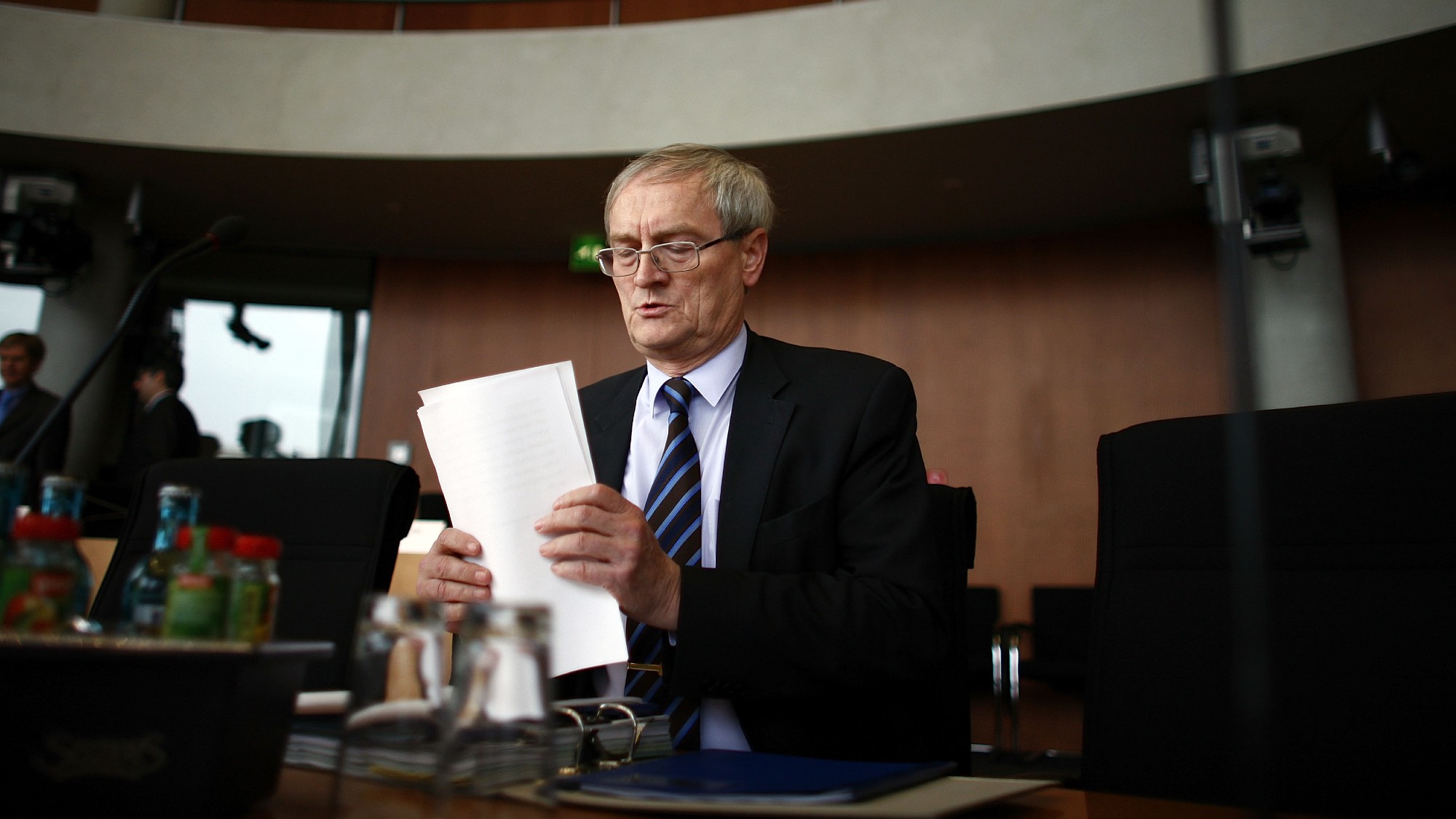
    Over 12 years from 2010, August Hanning, 80 (pictured above), is alleged to have paid his ex-chief of staff to pass him some 2,000 documents, many classified, and to have sold on the secrets they contained. Germany’s leaky, bureaucratic secret services have long had a credibility problem; what makes this case especially damaging is that the alleged crimes were uncovered only by accident. The evidence was found during a raid on Hanning’s house by police looking into an unrelated matter – his suspected role in the abduction of the children of a German steakhouse heiress from their father. 

    The intelligence world is full of “scandals and scandalettes”, said Der Spiegel, but this one is in a different class. The papers are said to have contained highly sensitive information, some likely supplied by Germany’s intelligence partners – so the affair could have serious international ramifications at a time when Europe is facing grave security threats. And the charges include treason. Having set himself up as a security consultant, to boost his €11,000-a-month state pension, Hanning (who denies wrongdoing) took on a host of “dubious” private clients, including Putin-aligned oligarchs; but he is also accused of selling secrets to a foreign intelligence agency. Reports suggest that it was Azerbaijan’s. 

    With hindsight, there were warning signs, said Constanze Stelzenmüller in the Financial Times. It was well known in Berlin, for instance, that Hanning had lost two-thirds of his pension as a result of his directorship of a Latvian bank that went bankrupt in 2019. Yet his alleged crimes went unnoticed for years. Where was the oversight? This scandal comes as an appalling blow to the BND, and Germany as a whole, at a time of great danger. People love spy stories, but there is nothing amusing, or romantic, about this one.


    It wasn’t all bad

    A three-year-old boy has become the youngest-known person to scale all the Lake District’s 214 peaks. Navy Moores climbed the first of the Wainwrights – with his parents and older siblings Oliver, six, and Jessica, 14 – on 10 May. The next day, he asked if they were going on another hike, and so the family, who live in Kendal, kept going. They completed the challenge last Sunday, by reaching the top of Scafell Pike – and, earlier in the day, Lingmell. In total, the family walked nearly 511 miles and climbed 224,883ft. “We are so unbelievably proud of all three of our children,” said Daniel Moores and Leanne Helm.


    People

    Luke Evans

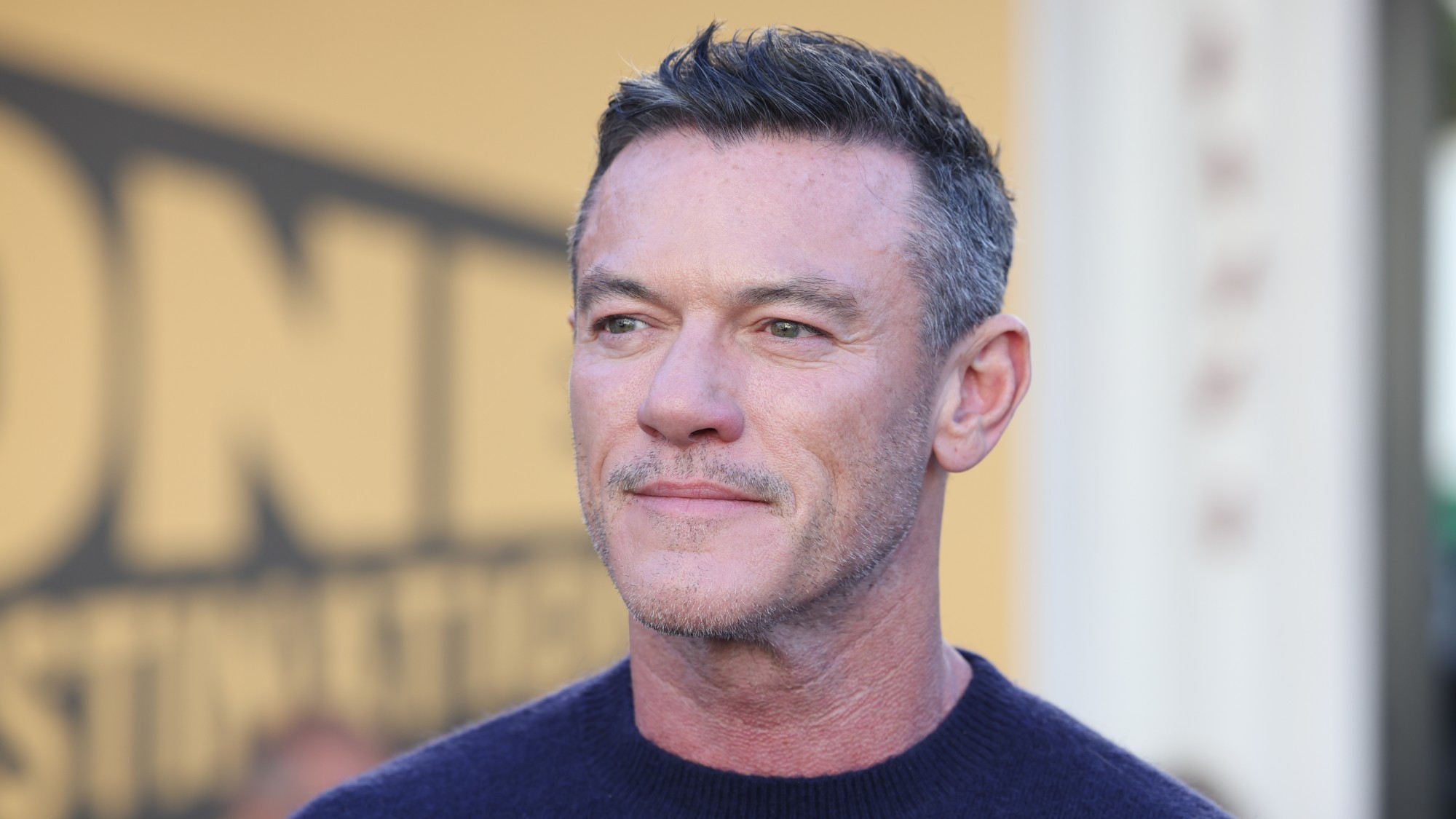
    Luke Evans has become a major star, known for playing “hypermasculine” roles in action franchises such as “Fast & Furious”, says Claire Allfree in The Telegraph. It’s all a far cry from his childhood, as a bullied only child in the former mining town of Aberbargoed, in south Wales. 

    His parents, a bricklayer and a cleaner, were Jehovah’s Witnesses. Their beliefs marked him out in the town – as did his sexuality. Even before he realised he was gay, his classmates spotted that he was “different”; they dubbed him “Jovey-Bender” and taunted him relentlessly. He loved his parents, but he couldn’t confide in them because homosexuality is strictly forbidden by Jehovah’s Witnesses. Desperately unhappy, he decided he had to leave. 

    His options seemed very limited. “But the thing about working-class life is that nothing is given to you,” he says. “There’s no insurance policy. There’s no inheritance. Everyone you know is struggling to get by day by day. So from very early on, it gives you this fight. You know that if you’re going to do anything, you’re going to have to do it yourself.” 

    At 16, he moved to Cardiff, and found his way to theatre school. Aged 19 he told his parents he was gay. They accepted it, though it angered some members of their church, and they remain very close, he says. “My mum and dad are lovely, lovely people, extremely kind and compassionate.”


    Image credits, from top: Julia Wytrazek / Getty Images; Wiktor Szymanowicz / Future Publishing / Getty Images; Carsten Koall / Getty Images; Yaro Roland / Getty Images
     

    Recent editions

    • Evening Review

      Why did the PM ‘gatecrash’ the SNP?

    • Morning Report

      Healey mulls £2bn tax on banks

    • Evening Review

      Can the Tories unite the right?

    VIEW ALL
    TheWeek
    • About Us
    • Contact Future's experts
    • Terms and Conditions
    • Privacy Policy
    • Cookie Policy
    • Advertise With Us
    • FAQ
    Add as a preferred source on Google Add as a preferred source on Google

    The Week UK is part of Future plc, an international media group and leading digital publisher. Visit our corporate site.

    © Future Publishing Limited Quay House, The Ambury, Bath BA1 1UA. All rights reserved. England and Wales company registration number 2008885.