The Week The Week
flag of US
US
flag of UK
UK
https://cdn.mos.cms.futurecdn.net/skoGBi9qKFoUtnNWkovjJQ.jpg

SUBSCRIBE

Try 6 Free Issues

Sign in
  • View Profile
  • Sign out
  • The Explainer
  • Talking Points
  • The Week Recommends
  • Podcasts
  • Newsletters
  • From the Magazine
  • The Week Junior
  • More
    • Politics
    • World News
    • Business
    • Health
    • Science
    • Food & Drink
    • Travel
    • Culture
    • History
    • Personal Finance
    • Puzzles
    • Photos
    • The Blend
    • All Categories
  • Newsletter sign up Newsletter
  • Sunday Shortlist, from The Week
    An ‘epic’ production, and a weird and wonderful ‘quirkfest’

     
    EXHIBITION REVIEW

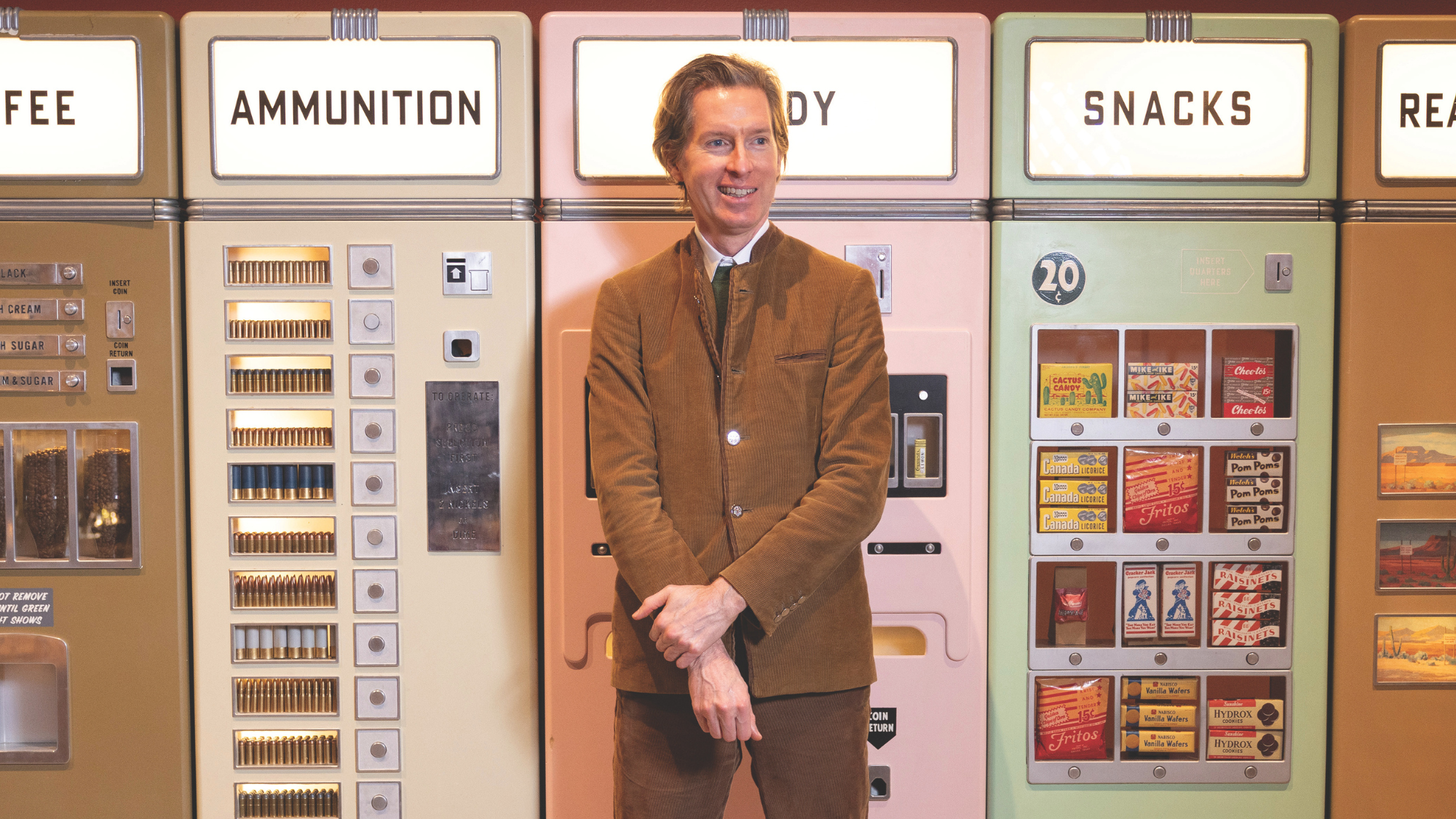
    Wes Anderson: The Archives 

    Retrospective at the Design Museum showcasing 700 props, costumes and set designs 

    There are few film directors who are as obsessed with attention to detail as Wes Anderson, said Tim Robey in The Telegraph. From his debut “Bottle Rocket” 29 years ago, to this year’s “The Phoenician Scheme”, via such hits as “The Royal Tenenbaums” (2001) and “The Grand Budapest Hotel” (2014), his films have been characterised by a “finicky perfectionism” not seen since the heyday of Stanley Kubrick. Every Anderson production has an “unmistakable”, highly stylised aesthetic – whimsical, pastel-hued, crammed with details that “cry out to be noticed”: his hallmarks include “an obsession for symmetry”, “ornate sets” and elaborate costumes.

    All this makes him a perfect subject for a retrospective at the Design Museum in London, an institution that has previously mounted blockbusters devoted to Kubrick and Tim Burton. Bringing together around 700 props, costumes, set designs and all manner of other ephemera, the exhibition traces the director’s three-decade career film by film. It’s full of marvellous things that will be familiar to any fan; and “having the time to pause and pore over them is in some instances an even greater pleasure than watching the films themselves”.

    “Wesophiles” will indeed be delighted, said Catherine Slessor in The Guardian. The museum’s galleries have all been appointed in shades of red, “starting with post-box and terminating in maroon”, and Anderson’s weird and wonderful “quirkfest fairly zings out from this incarnadine backdrop”. On display there are “wigs, sketches, models, fictional books, fictional art, a tent, a typewriter and dozens of stop-motion puppets”; an “implausibly intricate” model of the train from “The Darjeeling Limited” (2007); “the luxurious red velvet and mink number” sported by Tilda Swinton in “The Grand Budapest Hotel”; and maquettes of the “mutant sea creatures” from “The Life Aquatic with Steve Zissou” (2004). Less committed fans, however, may find it all a bit much – “like being trapped in a branch of Oliver Bonas crammed with hyper-twee gewgaws”. There’s something “disconcerting” about reducing the kinetic medium of film to a collection of static objects. More often than not, the show feels a little lifeless. 

    It’s often assumed that the director’s “obsession with style masks a lack of substance”, said Louis Chilton in The Independent. Yet for Anderson, the one is “inextricable” from the other. After all, most of his films can be read as “dryly comic character studies of damaged, emotionally dysfunctional men” whose inner turmoil is at odds with the neatly choreographed worlds they inhabit. Being “an assemblage of collected things”, the show can’t convey this crucial “human element”; nor do we learn much about Anderson himself. Still, even looking at the “actor-less costumes and inert puppets” here, you can’t help but come away with a renewed appreciation for his “impeccable craft”.

    Design Museum, London W8. Until 26 July


    THEATRE REVIEW

    All My Sons 

    Bryan Cranston is ‘magnificent’ in Ivo van Hove’s stunning revival

    The last time Bryan Cranston teamed up with Belgian theatre director Ivo van Hove – for “Network” at the National Theatre, then Broadway – it bagged the “Breaking Bad” star Olivier and Tony awards for best actor. “Only a fool would bet against a repeat triumph now,” said Fiona Mountford in The i Paper. I have never seen a better production of “All My Sons”, Arthur Miller’s 1947 classic about a toxic filial inheritance, and the rotten heart of the American dream. In this stunning new production, playing at just over two hours without an interval, the drama assumes the “grim yet towering momentum, inexorability and universality of a Greek tragedy”. Cranston, as Joe Keller, gives a “magnificent performance of craggy, rugged resilience tempered with affability”.

    Cranston and Marianne Jean-Baptiste, playing his wife Kate, are “pitch perfect” as a couple “shutting out unbearable wartime truths”, said Nick Curtis in London’s The Standard. Their son, Larry, a pilot, has been missing in action for three years, while Joe’s business partner has been convicted of supplying defective equipment that cost pilots’ lives. Hayley Squires lends a “quiet gravitas” to Ann, Larry’s former girlfriend. But for all the first-rate acting on show, the performance “you walk out talking about” is that of Paapa Essiedu as the Kellers’ surviving son Chris, said Dominic Maxwell in The Times. His “ascent from affable shrugs to righteous rants is plausible, compelling, freshly minted”.

    It’s rare to see a group of actors “this brilliant gel so completely”, said Arifa Akbar in The Guardian. And the symbolist sparseness of Jan Versweyveld’s set design “drives the production further into the realm of the epic and timeless”. An old felled tree lies across the stage in the opening scene, while the Kellers’ house has a strange circular window that also transforms into something more elemental – variously the Sun and the Moon. There is “so much alchemy” in this dazzling production. “Every scene is strong, no actor stealing the show, each raising the power of the ensemble as a whole.”

    Wyndham’s Theatre, London WC2. Until 7 March


    PODCAST review

    Adrift 

    “Swashbuckling” is the word that best encapsulates “Adrift”, said James Marriott in The Times. This new Apple podcast is about the Robertsons, a family from Devon who, in 1972, became stranded in a dinghy on the Pacific Ocean for 38 days, after their 50-year-old schooner was attacked and sunk by killer whales during a round-the-world sailing trip. It is the kind of yarn you might hear “from a grizzled old sea dog in the corner of a pub in a port town”. Hosted by journalist Becky Milligan, it contains vivid testimony – of the whale attacks themselves; of assuaging their hunger by gnawing the meat off passing sea turtles; of their raging thirst; of the horrifying impact of sea water on their skin – from the now-adult Robertson children. It also explores why their father, a gruff Merchant Navy sea captain turned dairy farmer, led them on this ill-fated adventure. “Highly recommended. Enjoy from the safety of dry land.”


    BOOK OF THE WEEK

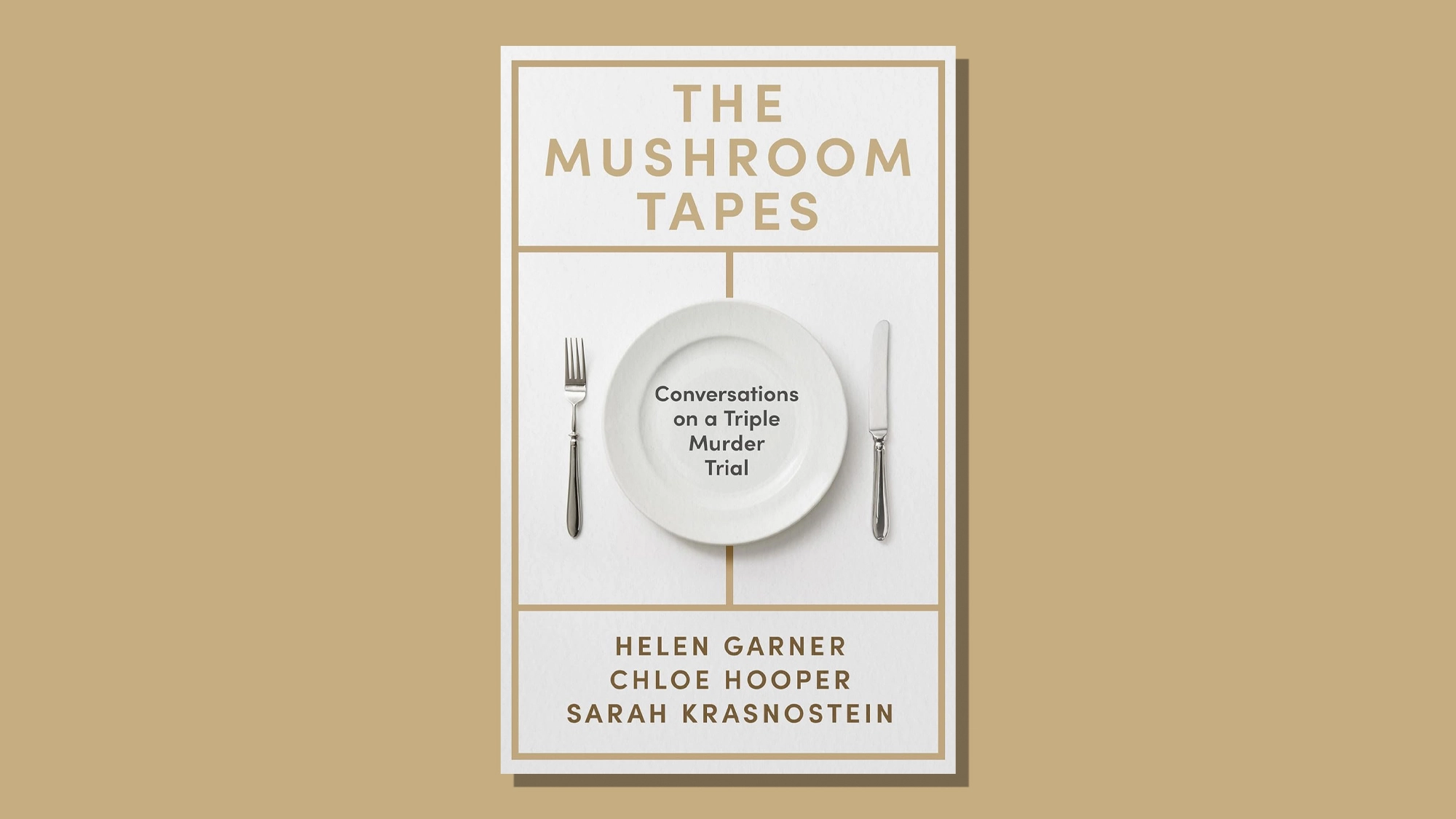
    The Mushroom Tapes 

    by Helen Garner, Chloe Hooper and Sarah Krasnostein

    “Between early May and early July of this year, much of Australia’s collective imagination was absorbed by the trial of Erin Patterson,” said Jason Steger in the Financial Times.

    The 51-year-old stood accused of murdering her estranged husband’s parents, along with one of his aunts, by serving them a beef wellington laced with death cap mushrooms. Patterson was also charged with the attempted murder of the aunt’s husband, who narrowly survived.

    Among those present throughout the trial, which ended in Patterson’s conviction, were the writers and long-time friends Helen Garner, Chloe Hooper and Sarah Krasnostein. Thinking they might make a podcast, they recorded their conversations on their drives to and from the courthouse near Leongatha, the small town in Victoria where “the deadly dish was served”. The podcast didn’t materialise. Instead, what we have is this “hybrid”, which splices their transcribed conversations with passages written in their collective voice. While many might have preferred a “full account” written by any one of the three, this is a compelling book with “pace and staying power”.

    In a media ecosystem glutted with “murdertainment”, there are precious few works of true crime that don’t “make you feel scummy”, said Sarah Ditum in The Times. But “The Mushroom Tapes”, with its “self-questioning about the ethics of its own project”, proves an exception.

    The “fascination” the authors feel stems largely from Patterson’s “seeming normalcy”. What led this apparently unremarkable woman to “poison four people, none of whom she had any obvious reason to want dead”? A “true-crime buff” whose closest friendships were with a group of fellow murder obsessives, Patterson planned her crime meticulously, “from foraging for the death caps to the recipe for beef wellington to the fatal dose required”. But in other ways she was “ludicrously sloppy” – failing, for instance, to come up with a “convincing story about where the mushrooms came from”.

    “‘The Mushroom Tapes’ offers two spectacles in one,” said Owen Richardson in The Sydney Morning Herald: “the Patterson trial, and famous writers hanging out together”. Although at times there is too much “self-conscious significance hunting” – “the mushroom metaphors sprout like mushrooms” – the authors are “sensitive and insightful” observers. But in the end, they’re defeated by the “black box that is Erin Patterson”. “I felt that the joke was on us,” said Hooper. “We thought we were going to get Medea and it was actually Karen.”


    OBITUARY

    Baroness Newlove  

    The ‘ordinary woman’ who became Victims Commissioner

    Baroness Newlove was, in her own words, just an “ordinary woman” from Warrington when she was propelled into the public eye by the savage murder of her husband Garry in 2007. A central heating engineer turned salesman, Garry had been at home on a summer evening when some local youths, high on drink and drugs, started vandalising their car. He rushed outside, in his bare feet, only to be surrounded, knocked to the floor and kicked in the head “like a football”, in front of their three daughters. He died 36 hours later. The Newloves and their neighbours had been very worried by the growing menace of antisocial behaviour in their once tranquil neighbourhood, said The Telegraph; but meetings with police had got nowhere. Helen Newlove recalled predicting that nothing would be done until someone was killed. Following the conviction of three teenagers for murder, she gave a powerful speech in which she urged parents and politicians to do more to combat youth violence. 

    A few months later, she founded an organisation, Newlove Warrington, to provide activities for youngsters; she also campaigned for measures to tackle antisocial behaviour. She had a meeting with Jack Straw, then the justice minister; but she got on better with David Cameron, who made her a life peer shortly after the Tories took office in 2010. On her first day in the House of Lords, she felt like “Hilda Ogden”, she said. Born in Salford, she had been a studious pupil at school, but had left at 16 to work in a chip shop, and had later worked as a court typist and court assistant.

    She didn’t think she’d fit in in the Lords. She wanted to say to her fellow peers: “I’m Helen from the North and I live in a council house.” In fact, she fitted in very well; and in 2018 she was made deputy speaker. “Women are like teabags,” she would say. “You never know how strong it is until it’s in hot water.” Before that, though, Cameron had suggested she apply for the vacant role of Victims Commissioner. She duly did so – only to find that she had no staff, and no office. She accused the PM of making the role up on the “back of a cigarette packet”, and fought for it to be properly resourced. In the next few years, she worked hard to produce reports that would lead to action, not just sit gathering dust on the shelves, said The Guardian. Her achievements include the help and safeguards for crime victims contained in the Victims and Prisoners Act 2024. 

    She was appointed pro-vice-chancellor of the University of Bolton in 2019; on “Desert Island Discs”, she asked for “War and Peace” as her book, and lipstick as her luxury. She was appointed to serve a third term as Victims Commissioner in 2019; it was due to run until this year. She is survived by her second husband, whom she’d married in 2012, and her three daughters with Garry.


    Image credits, from top: Matt Alexander; Jan Versweyveld; Orion Publishing; Allstar Picture Library Ltd / Alamy
     

    Recent editions

    • Saturday Wrap

      Was Farage a teenage racist?

    • Evening Review

      What does the net migration drop mean?

    • Morning Report

      Government U-turn on ‘day one’ dismissal rights

    VIEW ALL
    TheWeek
    • About Us
    • Contact Future's experts
    • Terms and Conditions
    • Privacy Policy
    • Cookie Policy
    • Advertise With Us
    • FAQ
    Add as a preferred source on Google

    The Week UK is part of Future plc, an international media group and leading digital publisher. Visit our corporate site.

    © Future Publishing Limited Quay House, The Ambury, Bath BA1 1UA. All rights reserved. England and Wales company registration number 2008885.