Country musician who became an international icon
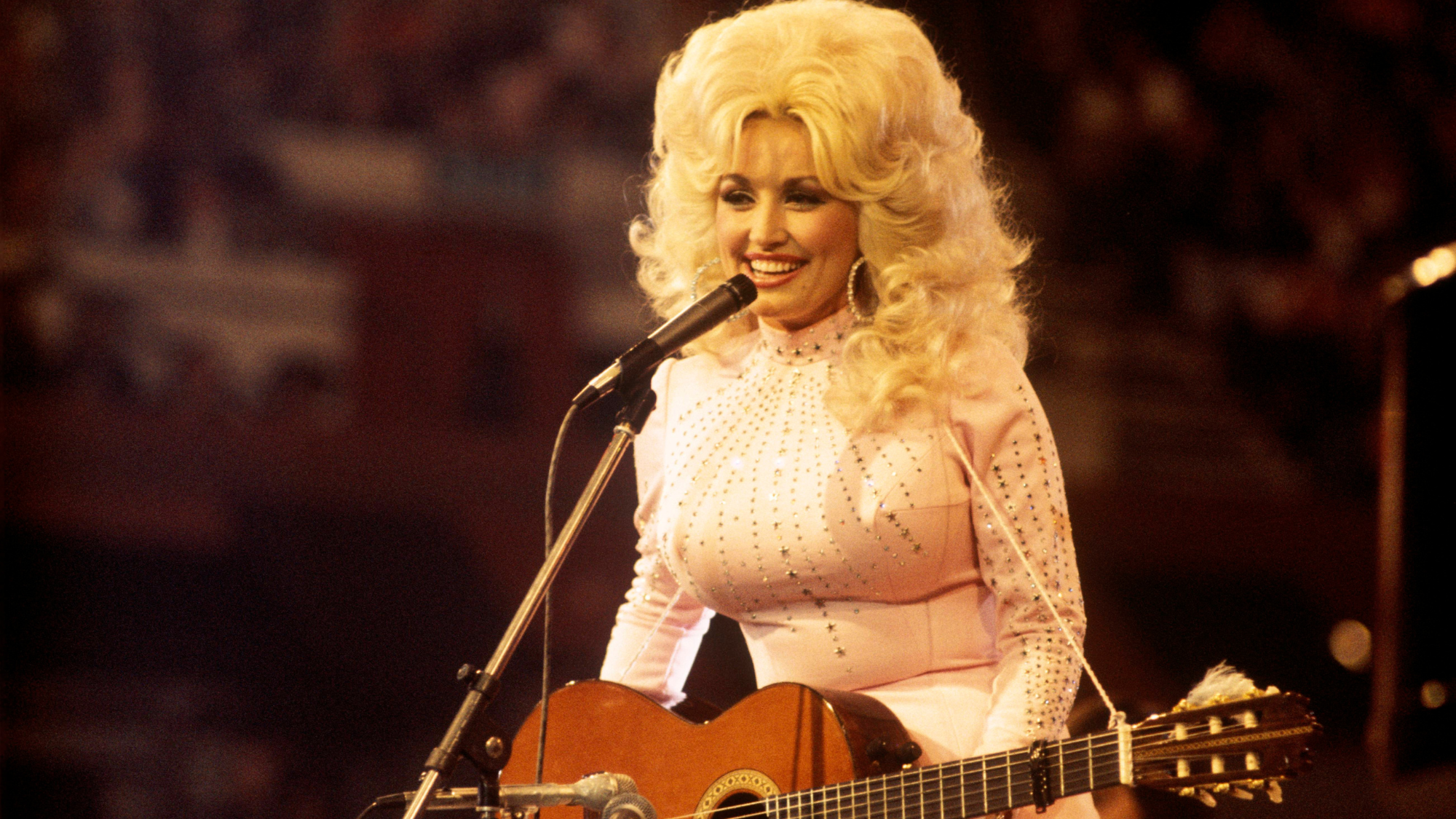
Dolly Parton “used her talent, intelligence and extraordinary looks to escape first poverty, and then the restrictive, sexist world of American country music”, said The Telegraph. She went on to become not just a vastly successful recording artist and an actress, but an “entrepreneur, philanthropist and international icon”. “I don’t look real,” Parton once said, but her taste for glitter and gilt “came from a very serious place”, she said: it was “a poor country girl’s idea of glamour”.
“Her childhood sounds like the plot of a country song,” said The Guardian. And indeed songs such as “My Tennessee Mountain Home” (1973) were based on her early years in the isolated Smoky Mountains hamlet of Locust Ridge. She was raised in a log cabin on the banks of the Little Pigeon River, the fourth of 12 children of Avie Lee (née Owens) and Robert Lee Parton. Parton’s part-Cherokee mother kept house. Her father, an illiterate tobacco farmer, was so cash-strapped that he paid the doctor who helped deliver her with a sack of cornflour. Even so, it was, she said, a childhood full of love. Her uncle Bill Owens, a professional musician, helped her to get a regular gig performing on a local radio and TV station, for which she was paid $5 (£3.70) a week. In 1959, when she was 13, he took her to Nashville, where she met Johnny Cash and played at the Grand Ole Opry, one of country music’s biggest stages. She returned to graduate from high school – the first in the family to do so – then boarded a Greyhound bus to Nashville.
On her first day in the city, Parton met her future husband, Carl Dean, a building contractor, outside a launderette. Recalling how they met, she said she was struck by how he looked her in the face – “a rare thing for me”. On their first date, Dean, who later avoided the limelight and stayed in Tennessee while Parton toured the world, took her to his family’s home, telling his mother: “Fix this girl a plate. She’s the one I’m going to marry.” The pair, who duly married two years later, remained together until Dean’s death last year. “He gives me freedom”, was her explanation for their marriage’s longevity. They didn’t have children, but they raised several of Parton’s younger siblings.
Before her career took off, Parton initially struggled to make ends meet. But aged 19, she was signed by Monument Records, which released her 1966 single “Dumb Blonde” (“this dumb blonde ain’t nobody’s fool”). It caught the attention of the singer Porter Wagoner, who invited her onto his popular TV show from 1967. Over the next seven years, they released 21 hit duets together. She also pursued a solo career, and had a series of hits, of which the biggest was “Jolene” (1973). (The inspiration for the song came from a red-headed bank clerk who allegedly used to flirt with Dean.) Wishing to escape Wagoner’s controlling influence, she left the partnership, writing “I Will Always Love You” as a parting tribute to him. The song ended up making her $10 million (£7.4 million) in royalties from Whitney Houston’s 1992 cover alone. In 1979, Wagoner sued Parton, arguing that he had been the springboard for her success; not wanting the case to go to court, she settled for $1 million (£739,000).
By the late 1970s, Parton “was the biggest star in country music and decided to turn her attention to achieving a similar dominance in the pop world”, said The Times. Crossover hits such as “Here You Come Again” (1977) followed; while “9 to 5” topped the charts in the US in 1981. The record’s success was assisted by her movie debut in the film, in which she played a secretary who stands up to her sexist boss, alongside Lily Tomlin and Jane Fonda.
“Yet by the middle of the decade, as she approached 40, a younger generation of female country stars was emerging and her pre-eminence waned.” Parton was dropped by her label in 1986. She invested much of her songwriting royalties in the Dollywood theme park in Pigeon Forge, Tennessee, near her birthplace. It opened in 1986, featuring a replica of her childhood cabin. It was soon a great commercial triumph – swelling her fortune to around $500 million (£369 million) – and an important employer in the area. Her singing career had a renaissance from the late 1990s: she returned to her country roots, finding critical acclaim once more with albums such as “The Grass is Blue”. Fans, including a strong LGBTQ+ base, kept her albums in the charts, and her tours sold out. In 2014, aged 68, she donned a white rhinestone-studded trouser suit to perform to 180,000 people at Glastonbury in the “legends” slot.
When she died, Parton was “an international superstar and an unlikely feminist heroine”, said The Washington Post. She was also a celebrated philanthropist, having founded the Imagination Library, which has given out more than 300 million books to children – among many other acts of charity. She insisted she didn’t “do politics”, saying “I have too many fans on both sides of the fence”, and remained a rare unifying figure in a polarised US. Above all, Parton wanted to be remembered as a songwriter: she wrote more than 3,000 songs. “You’re putting something in the world that wasn’t there yesterday,” she said, “and which you hope people are still going to be singing after you’ve gone.”