The Week The Week
flag of US
US
flag of UK
UK
https://cdn.mos.cms.futurecdn.net/flexiimages/jzblygzdxr1769609154.gif

SUBSCRIBE

Try 6 weeks free

Sign in
  • View Profile
  • Sign out
  • The Explainer
  • Talking Points
  • The Week Recommends
  • Podcasts
  • Newsletters
  • From the Magazine
  • The Week Junior
  • More
    • Politics
    • World News
    • Business
    • Health
    • Science
    • Food & Drink
    • Travel
    • Culture
    • History
    • Personal Finance
    • Puzzles
    • Photos
    • The Blend
    • All Categories
  • Newsletter sign up Newsletter
  • The Week Evening Review
    Democrats vs. the SOTU, AI and productivity, and changing avalanches

     
    In The Spotlight

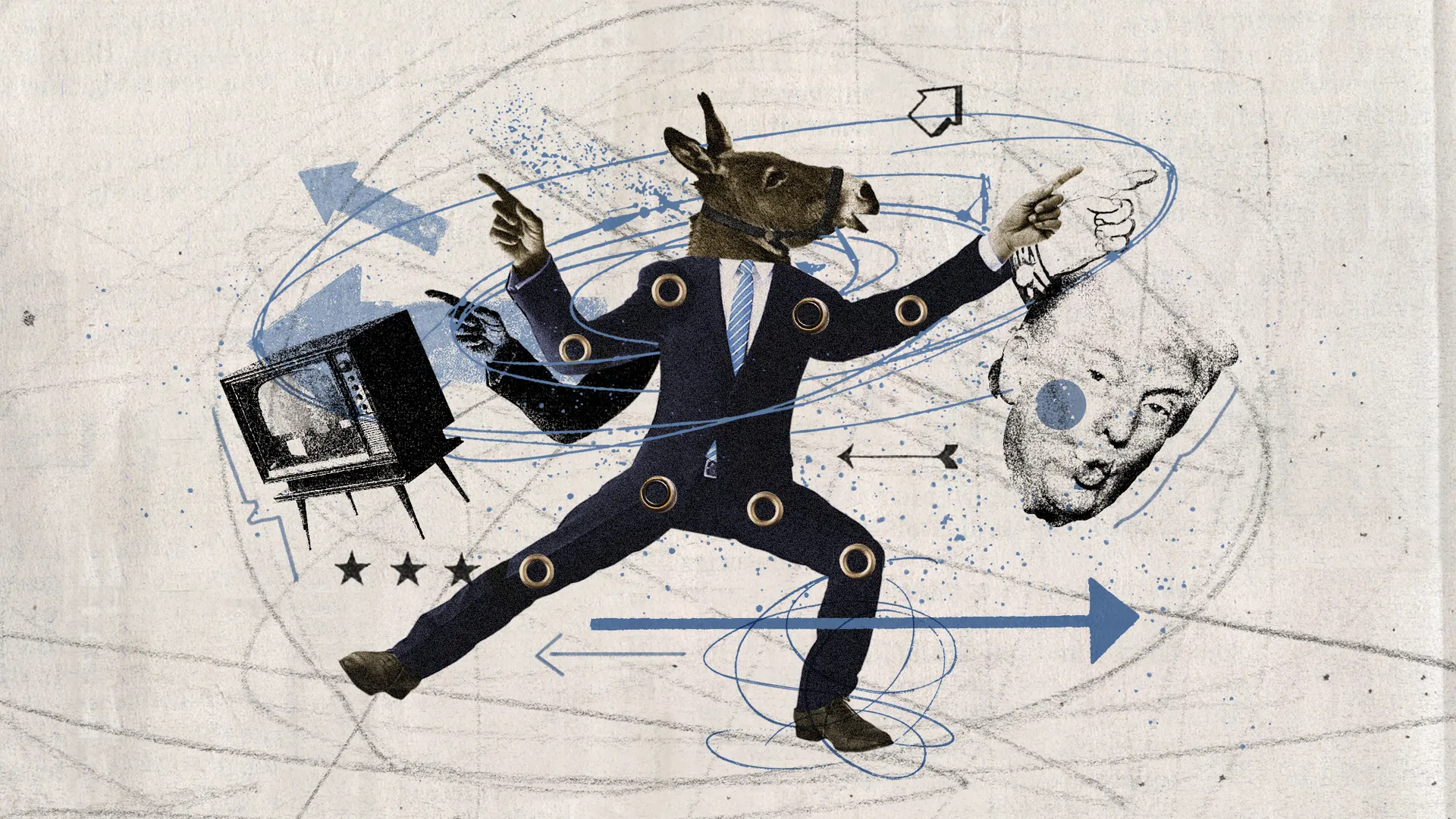
    Dems seek calm and dissent before State of the Union

    Perhaps the second-biggest question of President Donald Trump’s State of the Union address tomorrow (behind “what will he actually say?”) is what, if anything, will Democrats do to mark the president’s first SOTU of his uniquely authoritarian second term? Addresses of the recent past have contended with disruptive outbursts, coordinated shows of respectful disapproval, and a growing cottage industry of rebuttals. But with tensions running high and decorum to consider, Democrats now find themselves torn between calls for calm and for more visible forms of resistance.

    Call for 'silent defiance'
    Democratic Party leaders are “encouraging their troops to protest” the president’s State of the Union speech tomorrow evening, but “how it’s done” remains a “sensitive topic,” said The Hill. After party members “churned headlines” last year with a “series of in-your-face demonstrations” at the president’s joint address to Congress, leaders are eager to “avoid a repeat of those theatrics.” 

    Democrats should attend in “silent defiance” or skip the speech entirely, said House Minority Leader Hakeem Jeffries (D-N.Y.). Those skipping will have an opportunity to participate in a “variety of different alternate programming.”

    Debate among Democrats over whether to disrupt, skip or sit quietly through the State of the Union reflects “broader, ongoing divisions in party strategy,” said MS NOW. With an eye toward the upcoming midterm elections, party leaders are aware that “symbolic decisions” on interrupting or avoiding the speech could “resonate with voters back home.” 

    “Central” to the Democrats’ intended “show of force” in standing up to the administration will be “victims of the late sex offender Jeffrey Epstein,” said Roll Call. Jeffries and Sen. Chuck Schumer (D-N.Y.) are expected to bring Epstein survivors as their guests. Lawmakers participating in an alternative advocacy-group-sponsored “People’s State of the Union” event on the National Mall will also be sharing letters on behalf of Epstein survivors.

    Risking a diluted impact
    Barred by party leadership from interrupting Trump’s speech, Democrats are instead planning “individualized responses” to “show opposition to his agenda,” said Axios. But by trying to mobilize “every faction of their coalition before the midterms,” the party risks a “range of messages could dilute their impact.” Still, while it may complicate efforts to present a “fully unified front,” it has nevertheless become “common for factions within both parties to deliver separate rebuttals aimed at different constituencies.”


    TODAY’S BIG QUESTION

    Is AI actually enabling productivity gains? 

    More work in less time with fewer workers — productivity gains are supposed to be one of the big benefits of artificial intelligence. But those promises have not yet come to fruition, according to a new survey of corporate executives around the world.

    More than 80% of the 6,000 executives surveyed by the National Bureau of Economic Research “detect no discernible impact from AI on either employment or productivity,” said The Register. It’s not for lack of trying: 69% of businesses say they use AI in the workplace, three-quarters “expect to use it over the next three years,” and more than 90% say it has “no impact on employment” at their businesses. The survey is the latest addition to a “growing body of evidence” that AI’s advocates are “just not living up to their promises, at least not yet.”

    What did the commentators say?
    The link between AI and productivity is “murky at best,” said Marketplace. That’s because any productivity improvements are “going to be really hard to measure,” said Erika McEntarfer, of the Stanford Institute for Economic Policy Research, to the outlet. There are other factors increasing business productivity, including new investments in research and the “loosening labor market,” said Marketplace. 

    The NBER survey is “damning,” said Frank Landymore at Futurism. While most firms are using AI in some fashion, the “vast majority” say the technology “hasn’t budged the needle for them yet.” 

    Other surveys have found that AI can “slow down rather than speed up human programmers” and ends up “accelerating burnout” among human workers, said Landymore. And there’s precedent for this. The adoption of computers was “obviously transformative,” but they “didn’t immediately translate to economic gains.” This is why executives will keep “clinging to the hope that the tech’s promises will be borne out in the long run.”

    What next?
    AI’s economic impact is “just beginning,” said the Columbia Business School. But the gap between the promises and the measurable outputs is creating a “growing tension in public discourse.” Artificial intelligence already “feels transformative” in many users’ daily lives, but the “effects are not fully visible in traditional macroeconomic statistics.” 

    What seems certain is that work will evolve as the technology changes. Workers have adapted to new technologies throughout history, said Aaron Chatterji, OpenAI’s chief economist. “I’m bullish on humans.”


    QUOTE OF THE DAY

    ‘People talk about how much energy it takes to train an AI model. But it also takes a lot of energy to train a human.’

    OpenAI CEO Sam Altman, on The Indian Express Adda podcast during the India AI Impact Summit, equating technology with human beings. It takes “about 20 years of life, and all the food you consume during that time, before you become smart,” he added.


    Statistic of the day

    40%: The percentage of new cancer cases worldwide that are potentially preventable, according to a study published in Nature Medicine. Dozens of cancer types across almost 200 countries were analyzed, and in 2022, roughly 7 million cancer diagnoses were linked to modifiable risk factors that could be changed to reduce the likelihood of developing the disease.


    the explainer

    Climate change is creating more dangerous avalanches

    While 2026 is less than three months old, this year has already seen its fair share of avalanches. This includes one that slammed into a train in the Swiss Alps, injuring five people, and a recent occurrence near Lake Tahoe that killed nine skiers — the deadliest in California’s history. And a major factor is contributing to how hazardous these avalanches are, according to scientists: climate change.

    Why are avalanches getting worse?
    A decrease in snow caused by a warmer planet may be making avalanches worse. People “might assume that increasing global temperatures would lead to fewer avalanches,” said The Independent. But rising temperatures can “increase the risk of avalanches,” especially at altitudes of 6,500 feet or higher.

    Scientists investigating the Lake Tahoe disaster are “pointing to a combination of heavy snow on top of an unstable snow pack as conditions that led to the avalanche,” said The New York Times. The snow pack’s unstable crystals function like “standing up a deck of cards on their end,” Craig Sheppard, the program manager for the Mountain Safety Collective, said to The Sydney Morning Herald. When the next snowfall arrives, it creates a “recipe for avalanches because you have snow sitting on a really weak grain.”

    What can be done?
    Many experts say the best solution is proper avalanche safety. About “90% of slides that cause an injury or death are triggered by the victim or a companion,” said The Associated Press. Avalanches travel fast and can’t be outrun, so the best plan is to “make sure you are not in a place where one is at risk of occurring.” 

    Despite avalanches happening less often these days, when they do, they are increasingly likely to be deadly. Over the “last 10 winters, an average of 27 people died in avalanches each winter” in the U.S., said the Colorado Avalanche Information Center. Still, there’s no way to determine the exact number of people in such avalanches, as “most nonfatal avalanche incidents are not reported.”


    Good day 🫙

    … for cheap toys. Handing your toddler a whisk or potato masher could help boost their brain development, according to a study from Arizona State University. Children ages 2 to nearly 4 spend more time engaging with household items than their usual toys. Novel objects encourage attentional shifts and exploration, supporting learning and cognitive development, said researcher Delaney Witmer.


    Bad day 🐢

    … for female tortoises. Male tortoises outnumber their female counterparts by 19 to 1 on Golem Grad, a Macedonian island, driving the latter to take drastic measures to escape “relentless courtship,” including jumping off cliffs, said The Times. The last female will die sometime in the 2080s, becoming a rare example of a “sex-biased extinction vortex,” according to scientists.


    Picture of the day

    Stormy weather

    Pedestrians walk through Central Park during New York City’s first blizzard since 2016. So far, more than 500,000 homes and businesses across the Northeast are without power, and more than 10,000 flights have been canceled.
    Chris J. Ratcliffe / Bloomberg / Getty Images


    Puzzles

    Daily sudoku

    Challenge yourself with The Week’s daily sudoku, part of our puzzles section, which also includes guess the number

    Play here


    The Week recommends

    Where to see the 2027 total solar eclipse

    On Aug. 2, 2027, the skies above parts of southern Spain, Northern Africa, the Middle East and the Horn of Africa will plunge into complete darkness as a total solar eclipse blocks all direct sunlight. The temperature drops, wild animals transition to their nocturnal routines, and stillness fills the air. Experience it for yourself at one of these destinations in the path of totality.

    Jeddah, Saudi Arabia (totality time: 5 min., 54 sec.)
    The city is going through an “exciting wave of regeneration,” with a fresh crop of “museums, cafes, galleries and cultural festivals” giving it an “unmistakably modern edge,” said Condé Nast Traveler Middle East. And not everything is shiny and new. The “beguiling” old town, Al Balad, still draws crowds for its souks, ancient buildings and lively street scene. 

    Tangier, Morocco (totality time: 4 min., 51 sec.)
    This “laid-back coastal city” has a “distinctly Mediterranean feel” with “whitewashed walls and candy-colored wooden shutters,” said Lonely Planet. The city is also home to thriving botanical gardens and the Rmilat Forest, where eucalyptus trees brought to Morocco from Australia “now stand alongside palms, pines, poplars, willows and oaks.”

    Tarifa, Spain (totality time: 4 min., 39 sec.)
    This city earns its nickname, the City of Wind, honestly. Tarifa is continental Europe’s southernmost point, and the strong gusts off the Atlantic make it a “mecca” for activities like kitesurfing and windsurfing, said Travel and Leisure. If you prefer your toes in the sand, lounge on the beach for the afternoon, then take a stroll around the breezy beach town.

    Read more


    Poll watch

    Trump’s approval rating has sunk to a new low in four polls, ranging from 19 points to 26 points underwater in surveys from Quinnipiac University, NBC News, Yahoo/YouGov and AP-NORC. The numbers suggest that there may not be a floor for the president’s support among voters, according to CNN data analyst Harry Enten. 


    INSTANT OPINION

    Today’s best commentary

    ‘How tech turned against women’
    Laura Bates at the Financial Times
    The Big Tech lobby, “well-oiled by money and unprecedented proximity to those in positions of power, has done an overwhelmingly successful job of convincing us that regulation in their sector is a near-impossible task,” says Laura Bates. We are “sleepwalking into a new age of gender inequality, propelled at breathtaking speed by the implementation of untested AI.” Existing forms of “inequality and discrimination are being repeated and intensified by tools that have been trained on biased or misleading data.”

    ‘The protein bar delusion’
    Nicholas Florko at The Atlantic
    Protein bars have “come a long way from the chalky monstrosities that lined shelves not long ago,” says Nicholas Florko. For anyone with a “sweet tooth, it can feel like food companies have developed guilt-free candy. But that’s where things get disorienting.” Some protein products are “seemingly nutritionally benign, whereas others are nothing more than junk food trying to cash in on protein’s good reputation.” The “line between protein bar and candy bar has never been blurrier.”

    ‘How George Harrison transformed the music business’
    Josh Harlan at The Wall Street Journal
    Spotify recently announced that it paid “more than $11 billion in streaming royalties and other payments to the music industry in 2025,” and it’s a “fitting occasion to recall how George Harrison, railing against Britain’s confiscatory tax regime, unwittingly helped create the template” for this market, says Josh Harlan. The Beatles’ attempt to “protect their income stream would backfire twice, costing them control of their own songs, but it also helped shape one of today’s most coveted asset classes.”


    WORD OF THE DAY

    kartoffel-flut

    German for “potato flood,” which Germany, the EU’s top spud producer, is now facing following a bumper harvest. Tons of potatoes are being given away to food banks, schools and homeless shelters across the country, as the kartoffel-flut leaves farmers struggling with the cost and logistics of storing their surplus produce.


    Evening Review was written and edited by Theara Coleman, Nadia Croes, Catherine Garcia, Scott Hocker, Justin Klawans, Joel Mathis, Summer Meza and Rafi Schwartz, with illustrations by Stephen Kelly and Julia Wytrazek.

    Image credits, from top: Illustration by Julia Wytrazek / Getty Images; Illustration by Julia Wytrazek / Getty Images; Smith Collection / Gado / Getty Images; Aaron McCoy / Getty Images
     

    Recent editions

    • Morning Report

      Officers kill armed intruder at Mar-a-Lago

    • Sunday Shortlist

      A ‘first-class’ Lord of the Flies adaptation

    • Saturday Wrap

      Labour’s local elections own goal

    VIEW ALL
    TheWeek
    • About Us
    • Contact Future's experts
    • Terms and Conditions
    • Privacy Policy
    • Cookie Policy
    • Advertise With Us
    • FAQ
    Add as a preferred source on Google

    The Week UK is part of Future plc, an international media group and leading digital publisher. Visit our corporate site.

    © Future Publishing Limited Quay House, The Ambury, Bath BA1 1UA. All rights reserved. England and Wales company registration number 2008885.