The Week The Week
flag of US
US
flag of UK
UK
https://cdn.mos.cms.futurecdn.net/flexiimages/jzblygzdxr1769609154.gif

SUBSCRIBE

Try 6 weeks free

Sign in
  • View Profile
  • Sign out
  • The Explainer
  • Talking Points
  • The Week Recommends
  • Podcasts
  • Newsletters
  • From the Magazine
  • The Week Junior
  • More
    • Politics
    • World News
    • Business
    • Health
    • Science
    • Food & Drink
    • Travel
    • Culture
    • History
    • Personal Finance
    • Puzzles
    • Photos
    • The Blend
    • All Categories
  • Newsletter sign up Newsletter
  • The Week Evening Review
    The veep’s 2028 hopes, controversy at the Venice Biennale, and a likeness lawsuit

     
    TODAY’S BIG QUESTION

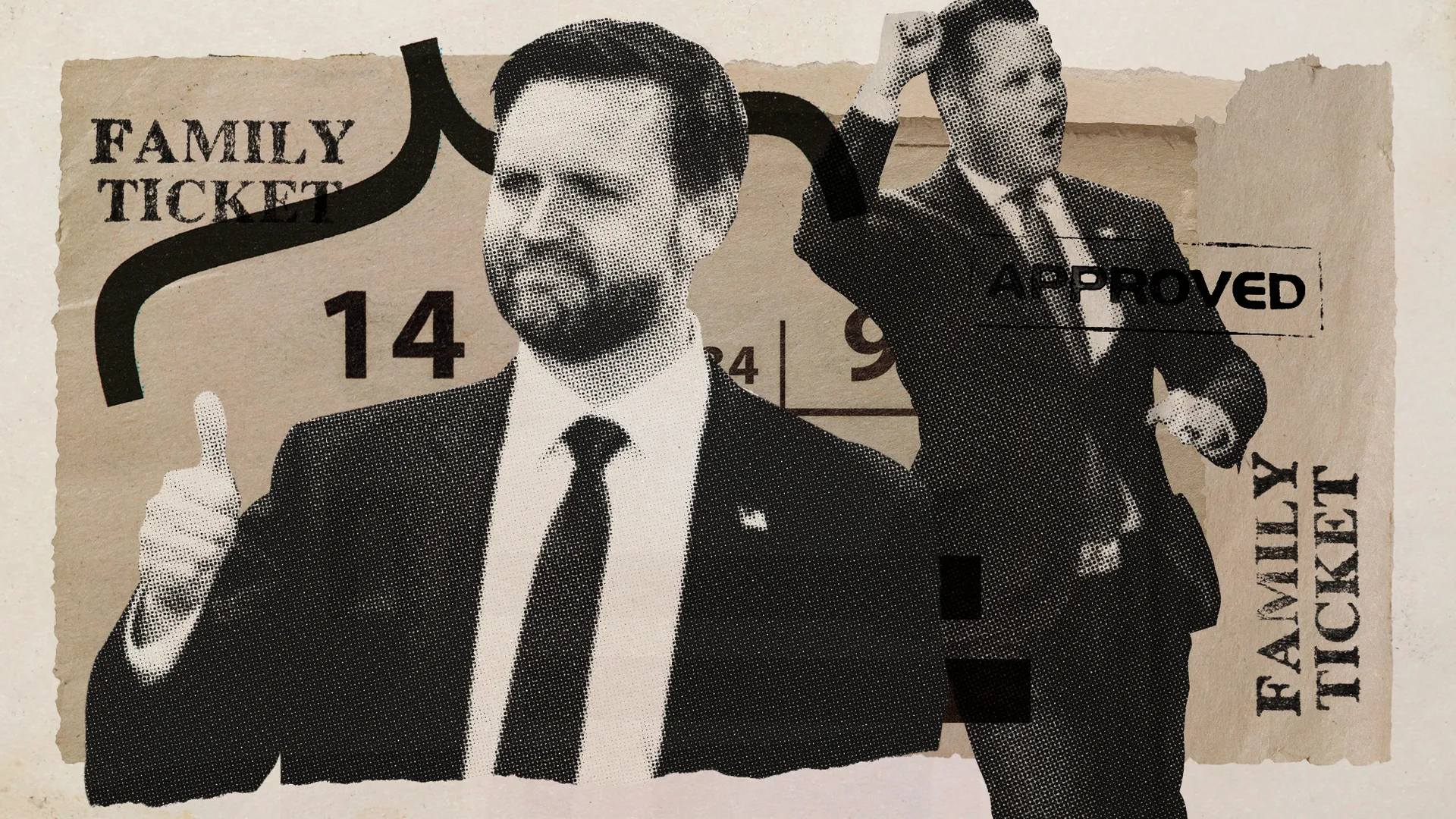
    Was Vance’s Iowa excursion a presidential test balloon?

    Fresh off a world tour, Vice President JD Vance was in Iowa this week to boost GOP Rep. Zach Nunn in his reelection bid, as Republicans scramble to defend their congressional majorities by November. But no political visit there can escape speculation stemming from Iowa’s role as the nation’s first presidential caucus state. Vance’s Iowa trip may have been an example of a vice president dutifully doing what the party requires of him. It might also have served as a soft launch of a much bigger effort from the veep’s camp.

    What did the commentators say?
    Vance’s tour was “billed as a White House message to American workers” on top of being an “effort to promote Nunn,” said NBC News. But the appearance, his “first to the state as vice president,” had “added political weight.” Although Vance’s remarks in Iowa “traced back to the midterm elections and, specifically, Nunn’s race,” he also “carefully recognized each of the high-ranking Republicans in the room” in a speech “loaded with personal touches.”

    Not only do Iowan Republicans see a “high-profile” visit like Vance’s as helping “build momentum” for Republicans ahead of the midterms, but also Iowans are “constantly gauging national figures as potential presidential candidates,” said Iowa Public Radio. Iowa Republicans see someone who comes to help in the midterms as a “team player,” said State GOP Chair Jeff Kaufmann to the outlet. Vance used his time there to “woo influential Iowans,” including “Kaufmann, evangelical leader Bob Vander Plaats and conservative talk show host Steve Deace,” said The New York Times. 

    Vance’s “association” with Trump’s agenda could “make or break his political future,” said Politico. With Trump not on the ballot this year, Vance “keeping his supporters engaged” in November could be “critical” for holding Nunn’s seat, said Iowa’s KTIV. But Trump himself is “underwater in districts that he won in 2024,” including in Nunn’s, said Puck. 

    What next?
    Vance is currently the “overwhelming front-runner” for the GOP presidential nomination in 2028, even as he “remains unpopular with the broader electorate,” said the Times. He can campaign for the future while “keeping his day job.”


    QUOTE OF THE DAY

    ‘It was impossible for her to live, let alone with anybody. You couldn’t go on with that intensity of life, and those drugs, and manage to survive.’

    ​​Arthur Miller, in newly released recordings of conversations between the playwright and his biographer Christopher Bigsby, on his marriage to Marilyn Monroe. She was a “very smart woman” and “delightful to be with,” he added, but “death was always on her shoulder — always.”


    the explainer

    The tensions overshadowing the Venice Biennale

    One of the world’s biggest and most prestigious art events is facing a storm of controversy, resignations and boycotts over the ongoing wars in Europe and the Middle East. The 61st edition of the Venice Biennale, held every two years, begins tomorrow in an atmosphere dominated by “political tension, parties and protest,” said Lanre Bakare at The Guardian. 

    Who’s angry and why? 
    The entire five-person Biennale jury resigned last week over the decision to allow Russia to participate. Russia did not take part in the past two editions because of the outcry over its war in Ukraine but was allowed to reopen its pavilion this year as a “soft-power opportunity” for the Kremlin, said The New York Times. Defending the decision, the Biennale described itself as an “open institution” that “rejects any form of exclusion or censorship of art.” 

    But Italy’s Culture Minister Alessandro Giuli boycotted the opening in protest, and the European Commission has threatened to terminate or suspend its $2.36 million grant for the exhibition. In letters seen by the Financial Times, the commission warned that Russia’s participation would violate a ban on “providing services” to the Kremlin, as Vladimir Putin’s government owns the pavilion. Faced with the threat of further protests and boycotts, organizers have bowed to pressure and agreed to close the Russian pavilion to the public. 

    What about Israel? 
    After shuttering its Biennale pavilion in 2024 amid growing condemnation of its Gaza occupation, Israel is back this year. But the jury’s decision not to award artists from countries whose leaders are facing charges of crimes against humanity by the International Criminal Court includes Israel’s Benjamin Netanyahu, as well as Putin. 

    Their decision “discriminated against me on a racial basis,” said Romanian-born Israeli sculptor Belu-Simion Fainaru, who’s representing Israel. “I’m an artist and have equal rights, and I can’t be judged by belonging to a country or a race. I should just be judged on the quality and message of my art.”


    Statistic of the day

    13,000: The number of scheduled flights airlines have canceled this month — the equivalent of 2 million seats — due to jet fuel shortages and rising prices resulting from the disruption of the Iran war, according to aviation analytics company Cirium. The most affected routes are in Germany, as “Munich, Frankfurt and Stuttgart airports all face cancellations,” said The Times.


    in the spotlight

    Lawsuit underscores questions over actor’s likeness

    While “Avatar” remains one of director James Cameron’s most celebrated works, a new lawsuit involving the film series could have widespread implications. The case, which accuses him of using a performer’s image without permission, comes amid concerns about the legal ownership of actors’ faces.

    ‘Without credit or compensation’
    The actor Q’orianka Kilcher filed a lawsuit alleging that in 2005, when she was 14, Cameron “extracted her facial features” from a movie about Pocahontas, then “directed his design team to use it as the foundation for the character of Neytiri” in 2009’s “Avatar,” said a release about the suit, per NBC News. Kilcher’s likeness “went on to appear in the films, on movie posters and on merchandise, without her knowledge or consent.” Kilcher is of Native Peruvian heritage, and the case “exposes how one of Hollywood’s most powerful filmmakers” used her “cultural heritage to create a record-breaking film franchise without credit or compensation to her,” said the lawsuit.

    ‘Our likeness is no longer safe’
    The suit raises broader concerns about who truly owns actors’ likenesses: the actors themselves or the studios they work for. It’s possible that lawyers for Cameron and Disney will be able to “make some kind of fair use argument here, claiming that Neytiri is enough of a transformation of Kilcher’s original appearance as to be cleared of any of her claims,” said the AV Club.

    This case revolves around a “complex area of the law that has taken on a new immediacy in the age of generative AI,” where “anyone with an internet connection” can “easily create images that replicate existing art, photographs and human likenesses,” said The New York Times. Laws attempt to balance First Amendment rights by “distinguishing between commercial exploitation” and artistic works, but the line can be blurry.

    The lawsuit “reflects a core fear among Hollywood performers in the artificial intelligence age: losing control of their own faces,” said the Times. Such a problem could seep into the general public, as well. New pushes against AI are “less about the technology than who owns your image, voice and likeness,” said Forbes. Celebrities are simply an “early test case.”


    Good day 🍄‍🟫

    … for magic mushroom promotion. Whether psychedelics affect cognitive function and long-term behavior is still largely unknown, but a study published in Nature Communications has found robust effects. Subjects given 25 milligrams of psilocybin for the first time experience increases in cognitive flexibility, psychological insight and well-being after one month.


    Bad day ☀️

    … for skin cancer prevention. Health Secretary Robert F. Kennedy Jr. is clearing the way for minors to access tanning beds after withdrawing a proposed FDA rule that would have banned children from using devices like indoor tanning lamps that mimic sunlight. The rule will also require users of indoor tanning facilities to sign a form acknowledging potential health risks.


    Picture of the day

    Helping paws

    Luang Por Chamnan, the abbot of Buddhist temple Wat Chin Wararam, rides on a boat with his pack of dogs during his morning alms routine on the Chao Phraya River in Pathum Thani, Thailand. Monks rely on boats to reach riverside communities where they collect daily offerings from locals.
    Athit Perawongmetha / Reuters


    Puzzles

    Daily sudoku

    Challenge yourself with The Week’s daily sudoku, part of our puzzles section, which also includes guess the number

    Play here


    The Week recommends

    How to engage in the ‘fifth pillar of happiness’ 

    Integrating art and creativity into your life, even for a few minutes a day, can have positive effects, including slowing cognitive decline, reducing heart disease risk and improving well-being as you age, according to scientific studies. Engaging in the arts is the “forgotten fifth pillar of health,” alongside diet, sleep, exercise and nature, said Daisy Fancourt, a professor studying the effect of the arts on people’s health, in her new book, “Art Cure: The Science of How the Arts Save Lives.” There are plenty of ways to integrate creativity into your life, even if you aren’t a particularly artistic person.

    Check out local resources
    Spending time indulging in creative pastimes doesn’t have to be expensive to reap health benefits. For example, if you have museums or other cultural institutions nearby, “see if they offer any hours free of charge,” said The New York Times.

    Infuse creativity in your social life
    Try swapping drinks or dinner with your friends and family for more creative activities. When Fancourt meets up with her sister, they “often do mindful coloring,” she said. It doesn’t have to be a formal endeavor. You can just get together with people and discuss your latest creative projects. Making it a group activity may motivate you to continue injecting creativity into your daily life.

    Spend time in nature
    Immersing yourself in the natural world can help you link to your brain’s creative side. In a study titled “Creativity in the Wild: Improving Creative Reasoning Through Immersion in Natural Settings,” a group of hikers who spent four days in nature without devices increased performance on a creativity and problem-solving task by 50%.

    Read more


    Poll watch

    Most Americans believe the U.S. is no longer a great place for immigrants, with 61% thinking it used to be, according to an AP-NORC survey of 2,596 adults. Almost 3 in 10 Americans (27%) still feel the U.S. is a great place for immigrants, while about 1 in 10 say it never was. 


    INSTANT OPINION

    Today’s best commentary

    ‘When children’s rights become revenue for profiteers’
    Jim Sandman and Michael Lukens at The Philadelphia Inquirer
    For-profit companies have “already turned immigrant detention into a profit center despite public outrage,” say Jim Sandman and Michael Lukens. Now, they are “setting their sights on a new way to fatten their wallets: immigrant children.” Companies are “eyeing this” as a “source of enrichment for themselves. If we allow the ‘profitization’ of legal aid, the outcome is clear: Children will be harmed.” The “implications of letting profit drive how legal services are delivered to kids will ripple for many years.”

    ‘Israel never stopped killing in Gaza — allies must reject any escalation’
    The Guardian editorial board
    In Gaza, the Israeli military has “killed more than 800 people since the truce there was declared in October,” so this is “not a true ceasefire but a de-escalation,” says The Guardian editorial board. There’s a “bizarre and chilling contrast between Israel’s swift investigation and punishment of soldiers who showed disrespect to statues of Jesus in Lebanon and the lack of even basic accountability, never mind justice, when Palestinians are abused, are killed or disappear.”

    ‘Will Planned Parenthood stay defunded?’ 
    John Gerardi at the National Review
    On July 4, the “one-year provision that defunded Planned Parenthood and other abortion providers via the One Big Beautiful Bill Act is set to expire.” Republicans will “need to answer some difficult questions about their political and policy priorities as they face a stark choice: fight to extend this defunding or abandon the issue for the foreseeable future,” says John Gerardi. But “continuing to defund abortion providers might be stuck behind other GOP legislative priorities.”


    WORD OF THE DAY

    ichneumonid

    A type of parasitoid wasp that lays its eggs on the bodies of others. In honor of his 100th birthday today, beloved British naturalist and broadcaster Sir David Attenborough has had a new genus of ichneumonid wasp named in his honor, the Attenboroughnculus tau wasp, discovered in Chile’s Valdivia Province. 


    Evening Review was written and edited by Theara Coleman, Nadia Croes, Scott Hocker, Anya Jaremko-Greenwold, Justin Klawans, Joel Mathis and Rafi Schwartz, with illustrations by Julia Wytrazek.

    Image credits, from top: Illustration by Julia Wytrazek / Getty Images; Simone Padovani / Getty Images; Eamonn M. McCormack / Getty Images for Paramount Pictures; We Are / Getty Images
     

    Recent editions

    • Morning Report

      Labour loses first councils as Reform surges

    • Evening Review

      Do the Greens have an antisemitism problem?

    • Morning Report

      Judge releases purported Epstein suicide note

    VIEW ALL
    TheWeek
    • About Us
    • Contact Future's experts
    • Terms and Conditions
    • Privacy Policy
    • Cookie Policy
    • Advertise With Us
    • FAQ
    Add as a preferred source on Google Add as a preferred source on Google

    The Week UK is part of Future plc, an international media group and leading digital publisher. Visit our corporate site.

    © Future Publishing Limited Quay House, The Ambury, Bath BA1 1UA. All rights reserved. England and Wales company registration number 2008885.