The Week The Week
flag of US
US
flag of UK
UK
https://cdn.mos.cms.futurecdn.net/flexiimages/jzblygzdxr1769609154.gif

SUBSCRIBE

Try 6 weeks free

Sign in
  • View Profile
  • Sign out
  • The Explainer
  • Talking Points
  • The Week Recommends
  • Podcasts
  • Newsletters
  • From the Magazine
  • The Week Junior
  • More
    • Politics
    • World News
    • Business
    • Health
    • Science
    • Food & Drink
    • Travel
    • Culture
    • History
    • Personal Finance
    • Puzzles
    • Photos
    • The Blend
    • All Categories
  • Newsletter sign up Newsletter
  • The Week Evening Review
    Trump’s Texas endorsement, the end of Google Search, and MAHA vs. SSRIs

     
    TODAY’S BIG QUESTION

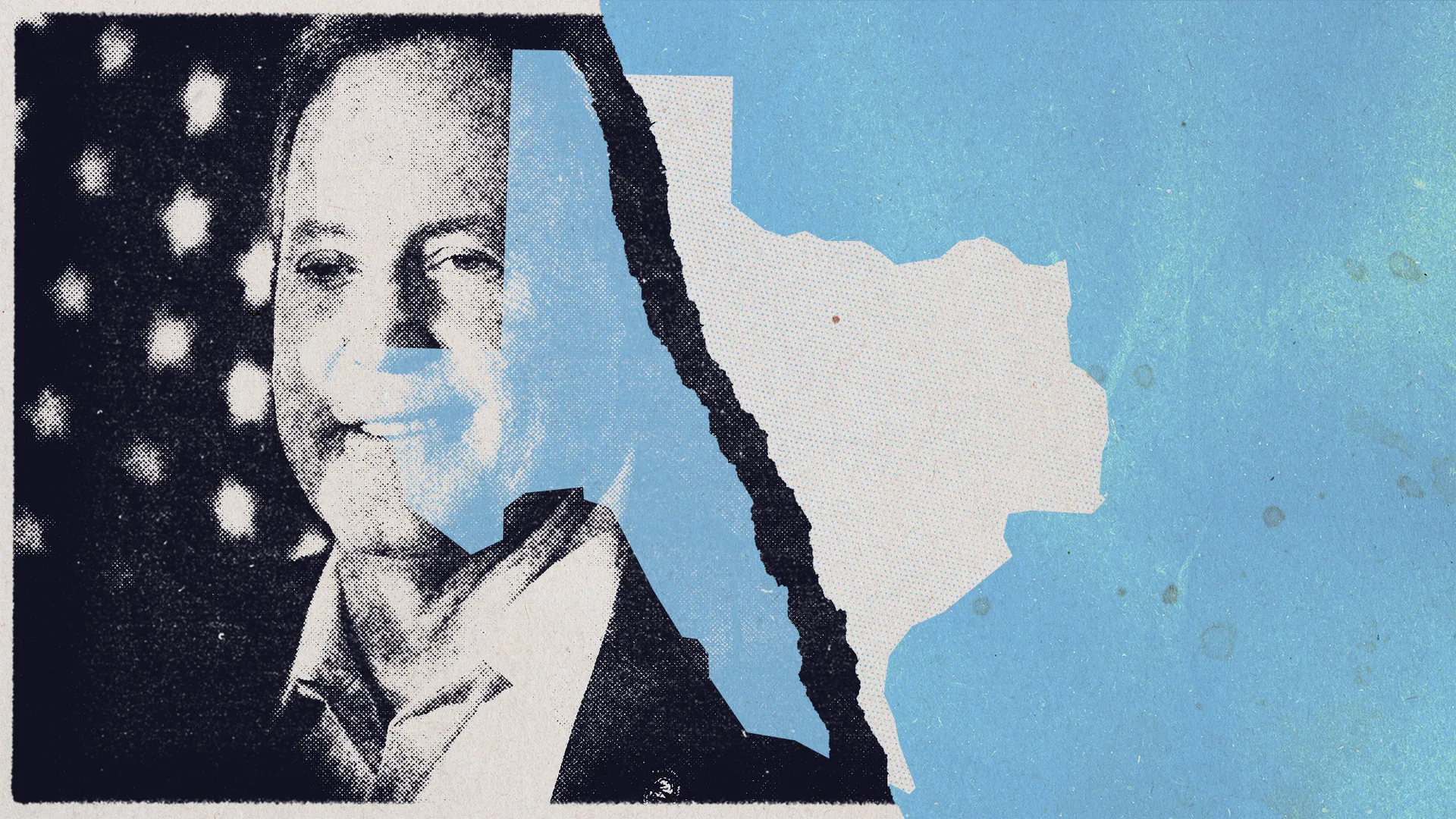
    Could Trump’s Paxton endorsement turn Texas blue?

    After months of stoking speculation over which Republican he would endorse in the contentious Texas Senate primary runoff race, President Donald Trump on Wednesday finally made his choice between Attorney General Ken Paxton and incumbent Sen. John Cornyn. But by throwing his political heft behind Paxton, Trump may have instigated a major GOP schism in a reliably red state.

    What did the commentators say?
    Trump’s “eleventh-hour decision” to endorse Paxton, a “longtime MAGA ally,” gives the embattled attorney general a “late boost over establishment Republicans’ preferred candidate,” said Politico. Cornyn’s camp, however, fears that nominating the “scandal-plagued Paxton” could “put control of the Senate at risk and cost the party hundreds of millions of dollars to defend the seat this fall.” 

    Paxton would be an “albatross around the neck of our candidates,” said Cornyn at a campaign event just hours after Trump’s endorsement. If nominated, Paxton would “likely lose” to Democrat James Talarico in November.

    Republican senators “appeared stunned and livid” following Trump’s endorsement, said The New York Times. Many in the caucus had been urging the White House to back Cornyn, whom they saw as a “stronger candidate in a general election.” Trump’s decision to do otherwise “amounted to a slap” at Senate Majority Leader John Thune (R-S.D.), who’s an “institutionalist” like Cornyn.

    Trump picking Paxton “isn’t a shock given their history,” said The Houston Chronicle. Paxton attended Trump’s 2021 “Stop the Steal” rally that preceded the Jan. 6 insurrection and had “filed a petition with the Supreme Court to challenge the 2020 presidential election results” in swing states for Trump.

    “Already the most expensive primary in history,” the Paxton-Cornyn race is also the “most expensive runoff ever,” said MS NOW. Some Republicans worry that it will now “cost the GOP even more to keep the Senate seat red.”

    What next?
    “Prolonged Republican infighting,” coupled with “growing anti-Trump sentiment,” has created a Texas race “more competitive than anyone would have predicted a year ago,” said The New Yorker. Democrats, “wary after years of predictions” that statewide wins are “just around the corner,” are now “allowing themselves to hope again, cautiously.”


    Statistic of the day

    19 feet: The distance between two Russian jets and a Royal Air Force plane as the jets “repeatedly and dangerously” intercepted the British surveillance aircraft over the Black Sea last month, according to a statement from the U.K.’s defense ministry this week. Relations between the countries “remain at a historic low over the Ukraine war and longstanding spying allegations,” said CBS News.


    IN THE SPOTLIGHT

    The end of Google Search as we know it 

    Google is so synonymous with online search that its name has become a verb in its own right. But now, as the company seeks to “revamp its decades-old business model to fit the era of artificial intelligence,” said CNN, Google “wants to help you Google less.”

    ‘New era’ 
    Rather than simply typing keywords or short phrases, users of Google’s new Gemini 3.5 Flash model that launched on Tuesday can ask conversational questions and even interact with agentic AI through live video. Instead of generating only the familiar list of blue links, Google Search gives a customized AI-written summary of the topic being researched. Users can also open a conversational interface by clicking on AI mode on the main search page, allowing them to ask follow-up questions more naturally.

    This marks a “new era for AI search,” said a Google blog post. The update allows users to deploy AI agents “just by asking a question.” The company has also introduced a new intelligent AI-powered search box described as Google’s “biggest upgrade in over 25 years.” Crucially, the shift moves away from the need to click through to web pages for information. So Google will increasingly function more like an assistant than a traditional index.

    ‘Vital information literacy skills’
    For many people, Google’s search box is the “lobby of the internet,” so this “radical transformation” signals a major shift in how people use the web, said Time magazine. It could “disrupt many industries” that rely on search traffic to attract customers, with news publishers and small businesses particularly vulnerable. Referrals from Google to publishers have “already been suffering from declining referrals” because of AI Overviews, said TechCrunch. And now things will “likely get worse.”

    Using AI-based search could also erode important skills, said Riley MacLeod at internet news site Aftermath. Google Search is one of the “first and primary places that people experiment with and grow their information-searching skills.” So “spoon-feeding” users AI summaries and “obscuring or bypassing the source of the information” risks depriving people of the opportunity to apply critical thinking and build the “vital information literacy skills” that they “need more than ever in an AI-obsessed world.”


    QUOTE OF THE DAY

    ‘We were here to feel the news with you. And I don’t know about you, but I sure have felt it.’

    Stephen Colbert to the audience during the final taping of “The Late Show” yesterday, comparing his experience on the CBS program to how he kicked off the first episode of Comedy Central’s “Colbert Report” in 2005: “Anyone can read the news to you. I promise to feel the news at you.”


    talking points

    What MAHA gets right and wrong about SSRIs

    Among the many crusades in his quest to “Make America Healthy Again,” one target of Health Secretary Robert F. Kennedy Jr. is antidepressants. He has long said that psychiatric drugs like SSRIs (selective serotonin reuptake inhibitors) are harmful, including claiming they cause mass shootings.

    Kennedy recently announced at a MAHA Institute mental health summit an initiative to help wean Americans off antidepressants. The announcement sparked a debate among experts over the campaign’s pros and cons.

    Stigmatization and lack of access
    Kennedy’s perspective on deprescribing SSRIs “really is an oversimplification,” said Theresa Miskimen Rivera, the president of the American Psychiatric Association, to NPR. The health secretary has “no real interest in fixing structural problems,” said Amanda Marcotte at Salon. On the contrary, Kennedy has a “long history of talking about people on SSRIs in dehumanizing, often racist language” that implies their “actual problem is they are lazy and need to just work harder or even work for free.” It’s the “same old Republican playbook, just dressed up in a phony mask of compassion.”

    There’s a “legitimate clinical problem” at the center of Kennedy’s initiative, said Jonathan Slater, a clinical professor of psychiatry at Columbia University Irving Medical Center, at Stat News. Deprescribing is indeed “understudied, undertaught and under-reimbursed.”

    But the health secretary’s campaign “conflates that genuine clinical need with claims unsupported by evidence, and some that are actively dangerous,” said Slater. Redirecting patients away from medications is “only clinically responsible if the alternatives are accessible. They are not.” 

    Blind eye to weaning difficulties
    In diagnosing “overmedicalization as a major problem,” the MAHA movement “gets something right,” said Khameer Kidia, a physician and anthropologist at Harvard Medical School, at The Boston Globe. However, the issue “doesn’t begin with physicians and our prescription pads.” As the opioid epidemic has shown, the “problem starts higher up.”

    The problem with MAHA’s approach to mental health is the “overarching placement of responsibility with individuals” rather than the “exploitative systems that create poor mental health,” said Kidia. MAHA is “half right with the diagnosis,” but its “prescription conveniently ignores the root causes of the problems it has identified.”


    Good day 🥇

    … for English wine. With the highest percentage per entry of all the competing countries, wine from England has won 25 gold medals at this year’s International Wine Challenge. Supermarket brands including Aldi have done particularly well, claiming top prizes at the blind-tasting event in London.


    Bad day 🐍

    … for snake safety. The risk of snakebites is increasing around the world as the reptiles change their habitats to adapt to rising temperatures and human encroachment, according to a study by the World Health Organization. This trend will become “more pronounced in the coming decades as snakes adjust their range to escape hotter conditions,” said The Guardian.


    Picture of the day

    Moving backward

    A girl plays between tents set up by the Lebanese government for displaced people. More than a million residents have been forced to flee their homes in Beirut and southern Lebanon to escape Israel’s ongoing military strikes, despite the official ceasefire announced a month ago.
    Anwar Amro / AFP / Getty Images


    Puzzles

    Daily sudoku

    Challenge yourself with The Week’s daily sudoku, part of our puzzles section, which also includes guess the number

    Play here


    The Week recommends

    The best animated series for adults 

    While there are still some holdouts against the idea that animated entertainment can be perfectly suitable for adults, even hardened skeptics would be moved to open their minds to these tremendous series. Though many fully grown adults enjoy shows like “SpongeBob SquarePants,” our list includes only shows explicitly designed for them.

    ‘Family Guy’ (1999-)
    As historically significant as “The Simpsons” in making animated series appeal to grown-ups, creator Seth MacFarlane’s pointed farce is about the misadventures of a dysfunctional family. The show has “laughs and lots of them, poking fun at targets as diverse as prison perversion, Hitler’s inferiority and football announcers,” said Barry Garron at The Hollywood Reporter. (Hulu)

    ‘The Boondocks’ (2005-14)
    Adapted from Aaron McGruder’s popular comic strip, this is one of the few animated series to make a serious effort to tackle issues of race and privilege in contemporary America, albeit in an often intentionally crass fashion. The writing is “funny and pungent from the start,” and the “Asian-influenced animation” makes it the “American show truest to the look and feel of serious Japanese anime,” said Mike Hale at The New York Times. (HBO Max)

    ‘Arcane’ (2021-24)
    It’s not easy to make something that feels genuinely fresh and that looks like nothing else on TV, but that’s exactly what showrunners Christian Linke and Alex Yee deliver with “Arcane” (pictured above). Easily “one of the most lavishly acclaimed animated series of the past decade,” it is carried out with a “fascinating collision of style,” said Kambole Campbell at Empire. (Netflix)

    Read more


    Poll watch

    One-third of Japanese companies are already using or considering deploying AI-powered robots, with automakers and transportation equipment manufacturers ​leading the trend, according to a Reuters survey of 492 companies. The government expects AI robots to be the “key in coping with the country’s chronic labor shortage and cementing its position as a leading industrial robot supplier,” said Reuters.


    INSTANT OPINION

    Today’s best commentary

    ‘India is being left to die in the heat’
    Vidya Krishnan at Al Jazeera
    India is “experiencing an extraordinary summer,” as extreme heat is “causing not just heart attacks but also kidney injury, affecting sleep quality and exacerbating numerous chronic conditions,” says Vidya Krishnan. The “majority of heat-related deaths go unrecorded” in India. These temperatures are “reinforcing longstanding inequalities of caste, class and gender in poor and marginalized communities.” A prime minister who “does not believe in climate change will not be an ally in the fight against extreme weather events.”

    ‘Aboriginal violence is Australia’s blind spot’
    Julie Szego at UnHerd
    An Aboriginal Australian girl’s murder has “reignited” the “fraught argument about Aboriginal disadvantage and collective guilt,” says Julie Szego. But it’s “apparently the hardest thing in the world to speak plainly about violence in Aboriginal communities and how that violence too often endures under the cover of preserving Indigenous ‘culture.’” More “frustrating still is that these debates are increasingly engulfed in meta debates about the moral legitimacy of Australia and indeed Western civilization more generally.”

    ‘Here’s the easy way to tax the rich’
    Zachary Liscow at The New York Times
    The U.S. is “seeing an increasing concentration of wealth,” and “for many Americans, taxing the rich more is an obvious move,” says Zachary Liscow. Ask “tax policy experts how to do this, and you will often hear novel proposals,” but Congress has a “simpler tried-and-true tax policy to choose from: raising the rates.” The ultra-rich “mostly aren’t escaping the tax system through exotic loopholes,” so increasing rates would “generate hundreds of billions of dollars over a decade.”


    WORD OF THE DAY

    encyclical

    A high-level pastoral letter written by the pope for the Catholic Church. Pope Leo XIV’s first Encyclical Letter, on “safeguarding the human person in the time of artificial intelligence,” will be published on Monday. The challenge we face is “not technological but anthropological,” he said in an X post, and the letter intends to “contribute to answering this challenge.”


    Evening Review was written and edited by Theara Coleman, Nadia Croes, David Faris, Scott Hocker, Anya Jaremko-Greenwold, Justin Klawans, Chas Newkey-Burden and Rafi Schwartz, with illustrations by Julia Wytrazek.

    Image credits, from top: Illustration by Julia Wytrazek / Getty Images; Malte Mueller / Getty Images; Grace Cary / Getty Images; Courtesy of Netflix
     

    Recent editions

    • Morning Report

      Watchdog releases single-sex space guidance

    • Evening Review

      Migration is down. Voters don’t believe it

    • Morning Report

      Raúl Castro indicted in US

    VIEW ALL
    TheWeek
    • About Us
    • Contact Future's experts
    • Terms and Conditions
    • Privacy Policy
    • Cookie Policy
    • Advertise With Us
    • FAQ
    Add as a preferred source on Google Add as a preferred source on Google

    The Week UK is part of Future plc, an international media group and leading digital publisher. Visit our corporate site.

    © Future Publishing Limited Quay House, The Ambury, Bath BA1 1UA. All rights reserved. England and Wales company registration number 2008885.