The Week The Week
flag of US
US
flag of UK
UK
https://cdn.mos.cms.futurecdn.net/flexiimages/jzblygzdxr1769609154.gif

SUBSCRIBE

Try 6 weeks free

Sign in
  • View Profile
  • Sign out
  • The Explainer
  • Talking Points
  • The Week Recommends
  • Podcasts
  • Newsletters
  • From the Magazine
  • The Week Junior
  • More
    • Politics
    • World News
    • Business
    • Health
    • Science
    • Food & Drink
    • Travel
    • Culture
    • History
    • Personal Finance
    • Puzzles
    • Photos
    • The Blend
    • All Categories
  • Newsletter sign up Newsletter
  • The Week Evening Review
    Russia’s war plans, DHS’s airline block, and Spencer Pratt’s mayoral run

     
    TODAY’S BIG QUESTION

    Will Russia expand its war to Europe?

    Even before a Russian drone hit a Romanian apartment complex last week, European leaders were worried that Vladimir Putin is preparing to amplify his war beyond the Ukrainian territory he has failed to conquer. There’s “growing fear” that Putin will undo the current stalemate by “expanding the conflict to Europe,” said The Wall Street Journal. The Kremlin has made “increasingly bellicose threats” against neighboring Baltic states, and Russian drones approached Lithuanian airspace last month. 

    Putin broadly aims to “threaten the whole European security architecture,” said Benjamin Haddad, France’s minister for European affairs, to the Journal. European authorities have “unilaterally entered into a war” with Russia by supporting Ukraine, said former Russian President Dmitry Medvedev on X after the Romanian incident. The “peaceful sleep is over.“

    What did the commentators say?
    Putin might be “starting to think about the next war,” said David Ignatius at The Washington Post. He might see the opportunity to strike “before European nations fully rearm” and while President Donald Trump is “treating NATO like a punching bag.” A continent-wide war is a “chilling prospect.“

    A new Russian attack is “plausible,” and NATO is “vulnerable” unless member countries “get their act together,” said Alexander Gabuev, the director of the Carnegie Russia Eurasia Center, at The New York Times. Putin sees NATO as a “major threat to Russia’s security.” 

    Europe “needs to be united to fend off Russian aggression,” said Tom Clifford at the Kyiv Post. Ukraine’s defense against invasion is “protecting Europe,” but that doesn’t mean Europe’s leaders have “secured the continent” from Russia’s war-making. Putin knows European opposition is “less than it should be.” 

    What next?
    The Russian drone that hit Romania on Friday has “only added to the wariness Europeans feel” as the war in Ukraine persists, said The New York Times. Moscow’s ongoing “campaign of cyberattacks and sabotage against critical infrastructure” is a warning to NATO countries and an attempt to force a conclusion to the war in Ukraine. Putin is attempting to “reestablish some form of dominance” to settle the war “from a position of strength,” said Ivo Dalder, a former U.S. ambassador to NATO, to the outlet.


    QUOTE OF THE DAY

    ‘Some regrettably consider negotiation to be surrender. It is not that, nor is it a concession. It is a solution to stop wars with the least possible harm.’

    Lebanese President Joseph Aoun in a statement on why his country’s government plans to continue negotiating with Israel despite strikes on Beirut and its suburbs. Both nations have continued to launch attacks even after the U.S.-brokered ceasefire announced in April.


    IN THE SPOTLIGHT

    DHS’s plan to block airlines from landing in sanctuary cities

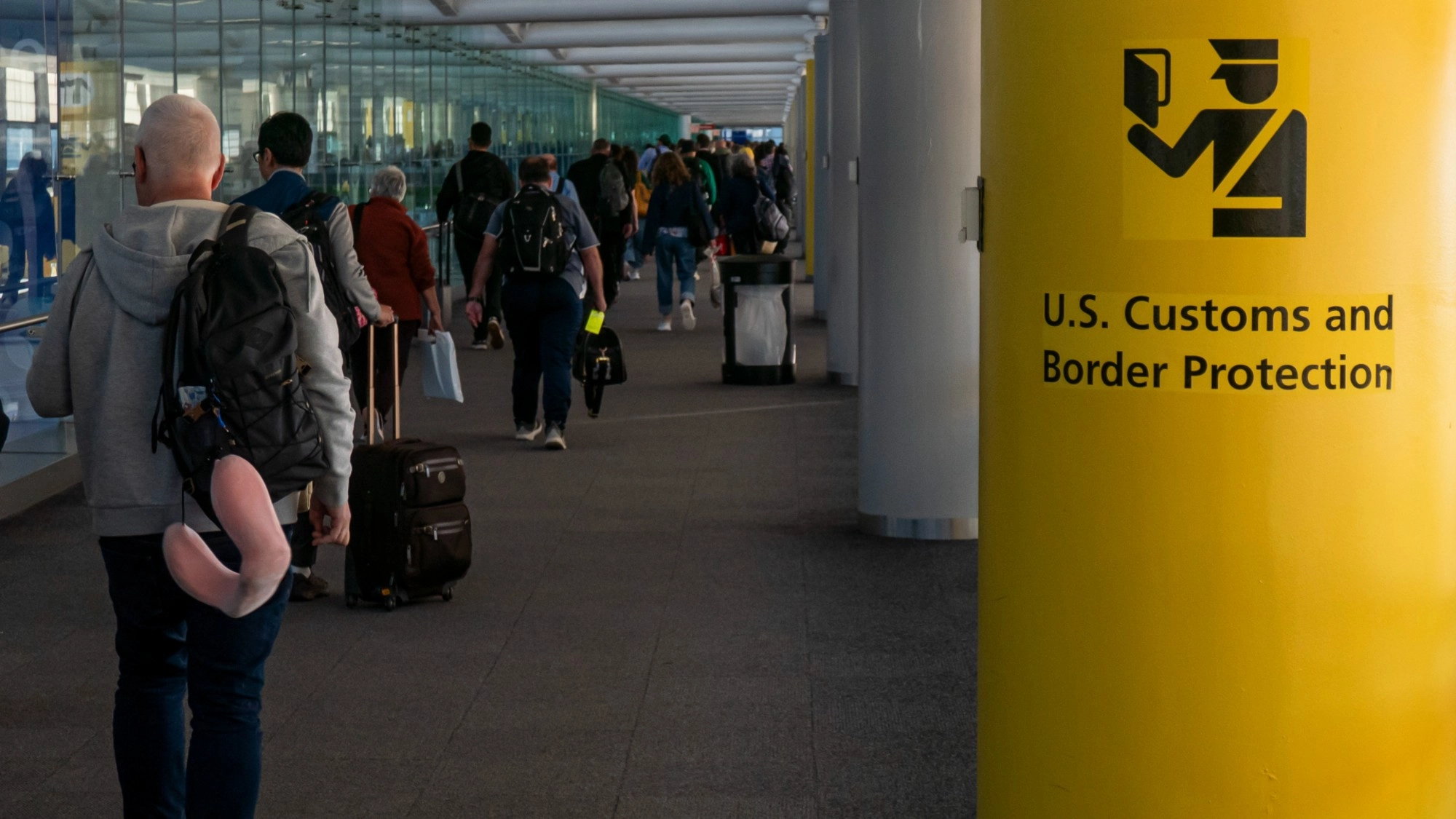
    When Homeland Security Secretary Markwayne Mullin first suggested blocking international flights from cities that didn’t cooperate with federal immigration enforcement during an April Fox News appearance, it “seemed more like a wild swing than a real plan,” said The Atlantic. Now, Mullin’s seemingly farfetched pitch to remove immigration agents from certain airports and reroute flights to Republican-led cities feels increasingly plausible. If the plan is enacted, experts warn the impact could be catastrophic.

    ‘Devastating effect’
    Removing Customs and Border Protection (CBP) agents from international airports would have a “devastating effect on the airline and tourism industries,” said trade association Airlines for America in a statement to CNN. It will cause “significant operational disruption to carriers, travelers and the flow of international cargo.”

    The travel industry is “on edge,” said The Associated Press. Major airlines “quickly condemned the idea,” and “even Transportation Secretary Sean Duffy said it doesn’t make sense.” The government “shouldn’t shut down air travel in a state that doesn’t agree with our politics,” said Duffy at a congressional hearing last month. 

    The Justice Department last month published a list of states and cities it claimed were “impeding U.S. immigration policies,” said CNBC. These included “major international air hubs” like Boston, Los Angeles, Newark and San Francisco.

    ‘Thin grasp of global travel logistics’
    Mullin is “pushing forward anyway” with his plan, said The Atlantic. He convened a “small group of airline- and travel-industry executives at DHS headquarters in Washington” and reportedly discussed reductions in CBP staffing at “major airports that serve sanctuary jurisdictions,” such as JFK in New York and Dulles in Washington, D.C. The secretary’s plans seem to “reflect a thin grasp of global-travel logistics” and show an “inflated sense of the government’s ability to impose economic pain on specific cities.”

    It’s “not clear” how Mullin’s plan to block international travel to certain cities would “work in practice,” said Time. The proposal is “actively insane,” said Aaron Reichlin-Melnick, a senior fellow at the American Immigration Council, on X. Airlines would be forced to “cancel flights en masse,” which would cause “enormous economic damage” that extends “waaaaay beyond a few big cities that were the target.”


    Statistic of the day

    $67 million: The amount in park entrance fees the National Park Service is spending to help fund Trump’s beautification projects in Washington, according to a New York Times analysis of federal records. Almost $60 million is funding repairs to nine of the capital’s ornamental fountains, while another $7 million is going toward the renovation of the Lincoln Memorial Reflecting Pool.


    TALKING POINTS

    Reality star Spencer Pratt is upending LA's mayoral race

    Pratt is the latest entrant in the reality-TV-to-politics pipeline. He made his name as the villain on MTV’s “The Hills” during the late aughts and is now a contender to be the next mayor of Los Angeles.

    Polls show him “within striking distance” of incumbent Mayor Karen Bass in tomorrow’s primary election, said CNN. Pratt, who waded into politics after losing his home in last year’s Palisades fire, betrays little such uncertainty about his chances. “I’m for sure going to be mayor,” he said to Vanity Fair. The message and the messenger both remind observers of President Donald Trump, who last week endorsed Pratt’s campaign.

    ‘Shining a light’ on city failures
    The novice candidate has “captivated a frustrated Los Angeles,” said Susan Shelley at The Orange County Register. Rather than running a vacuous vanity campaign, Pratt has been “shining a light on the visible failures” of Los Angeles government. He could be a mayor who “solves problems instead of preserving them to justify more funding.”

    The star is in a line of mostly Republican celebrities who have “leveraged their reality TV fame into political careers,” said Lorraine Ali at The Los Angeles Times. Pratt and Trump can “push conflict, drama and personality” so far in the social media era that “no one will ask what exactly it is that you do beyond posting.” The reality star is “betting that infamy can be political currency,” said Louis Staples at The Atlantic.

    ‘Almost certainly toast’
    Pratt’s strong polling probably represents a “consolidation of the small but very real conservative minority” of Los Angeles voters who see him as a MAGA candidate, said Ed Kilgore at New York magazine. The city’s broader left-leaning electorate puts a “pretty firm ceiling on Pratt’s vote” that will make it difficult for him to win the mayor’s office in November. Instead, his candidacy may be the “best thing that could have happened to Karen Bass.” Pratt may well survive tomorrow’s nonpartisan primary election, but he’s “almost certainly toast” against a Democrat in a general election.


    Good day 🎾

    … for returning legends. Four years after retiring, Serena Williams is making a comeback to tennis in the HSBC Championships at The Queen’s Club in London. The 23-time Grand Slam singles winner will play in the doubles tournament next week, but it’s “not yet clear who her partner will be,” said CNN.


    Bad day 🦟

    … for repelling mosquitoes.  Deet, the chemical widely used in insect repellants, can become attractive to mosquitoes if they associate it with feeding, according to a study published in the Journal of Experimental Biology. More than half of the small flies that fed on skin exposed to the spray “subsequently showed biting attempts when exposed to Deet alone,” said The Guardian.


    Picture of the day

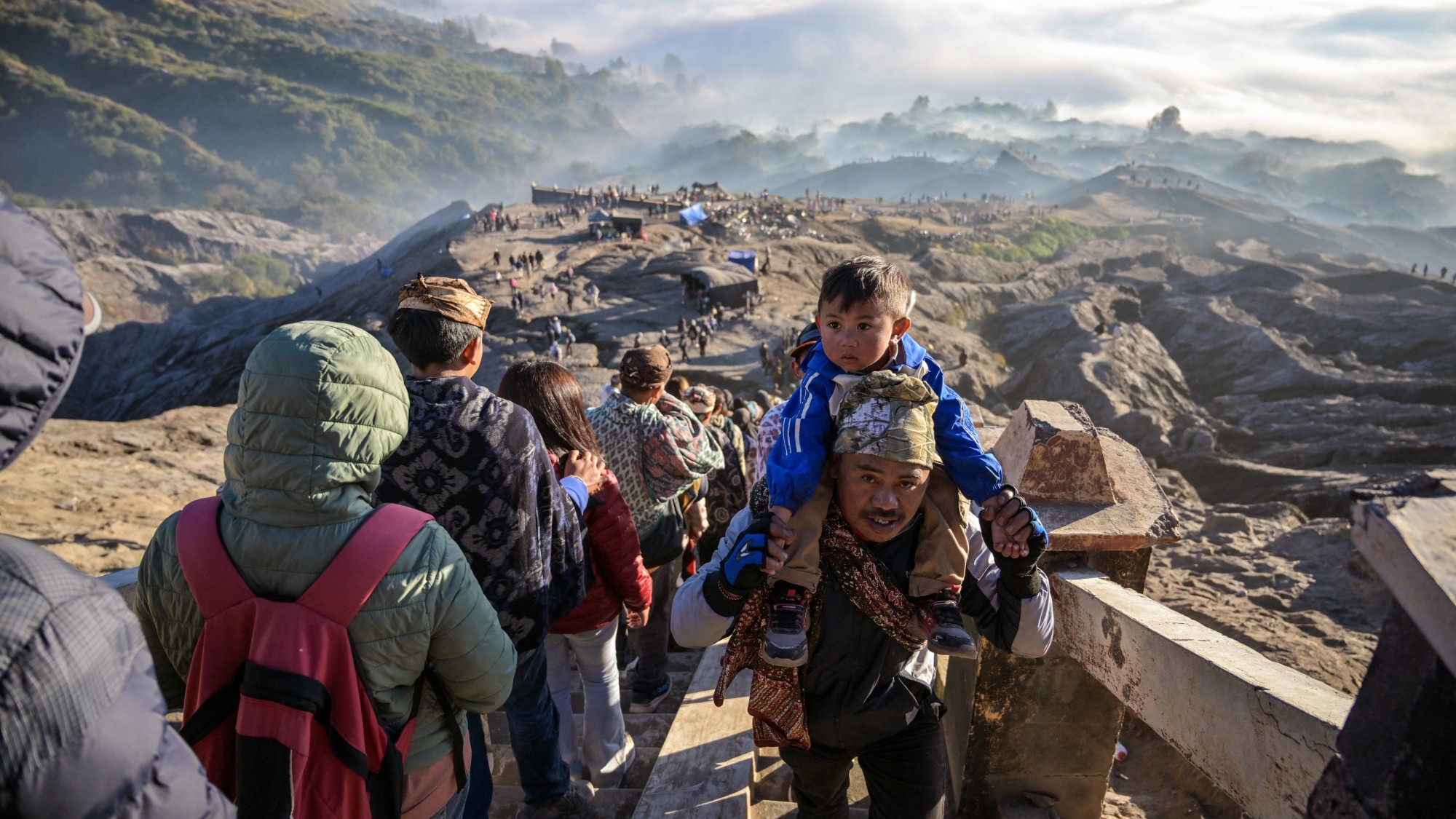
    Peak of faith

    Hindus ascend the active Mount Bromo volcano in Indonesia to present offerings as part of the Yadnya Kasada festival. During the annual celebration, members of East Java’s indigenous Tengger community throw food, livestock and other gifts into the crater as tributes to the gods.
    Juni Kriswanto / AFP / Getty Images


    Puzzles

    Daily sudoku

    Challenge yourself with The Week’s daily sudoku, part of our puzzles section, which also includes guess the number

    Play here


    The Week recommends

    So many kinds of new fiction all in one month

    It’s not too early to start picking out your summer reading list, because a slew of new releases promise to keep this month interesting. Standouts for a perfect summer beach read include a highly anticipated debut of a speculative fiction rising star and several historical fiction options.

    ‘Sublimation’
    Across Isabel J. Kim’s debut novel, immigration is explored through a science-fiction lens in a world where emigrating creates a second “instance” of the person who stays behind in their home country. Kim’s “pulls in historical, cultural and literary examples of ‘instancing’” before “recasting them all in the brilliant light of her imagination,” said The New York Times. (June 2, $29, Macmillan)

    ‘Land’
    The bestselling author of “Hamnet” and “The Marriage Portrait,” Maggie O’Farrell returns with a novel about Ireland in the 1860s. In her latest work, the “facts ground the fiction, the fiction enlivens the facts,” and both “work together to suggest that the pursuit of resurrecting the past and the pursuit of telling a good story can, in some cases, be one and the same.” (June 2, $32, Penguin Random House, Amazon)

    ‘Daughters of the Sun and Moon’
    Bestselling author Lisa See returns with a story that focuses on the real-life “Night of Horrors” massacre of 18 Chinese immigrant men and boys in post-Civil War Los Angeles in 1871. See offers a “stunning piece of historical fiction based in truth,” said Library Journal. And her book will “touch readers with the characters’ resilience, heroism and devoted friendship.” (June 9, $29, Simon & Schuster)

    Read more


    Poll watch

    One in four Latinos who supported Trump in the 2024 election would not vote for him again, according to a UnidosUS survey of 3,000 registered Latino voters. This is significantly higher than the 13% in November 2025 and 9% in April 2025 who said the same in previous surveys by the civil rights group.


    INSTANT OPINION

    Today’s best commentary

    ‘Kash Patel wrongly takes credit for falling crime rates’
    John Pfaff at MS NOW 
    Falling crime rates are “unequivocally good news,” says John Pfaff. But FBI Director Kash Patel “found it necessary to include the overwrought self-aggrandizing commentary that characterizes announcements from this administration.” Still, the agency, no “matter its director or the presidential administration, has never been a major driver of crime trends.” The FBI has “never been large enough to exert a significant effect on crime rates, and under Trump and Patel, it has become smaller still and less focused on crime.”

    ‘The White House is the new Green Zone’
    Matt Viser at The Atlantic
    The White House “can be thought of as the new Green Zone,” says Matt Viser, referring to Baghdad’s protected governmental area. The American capital’s centerpiece is “laced with fencing, sensors, jammers, cameras, armed guards, bunkers, drone interceptors and surface-to-air missiles.” Iraq’s Green Zone “created a false sense of tranquility,” while the White House “still has a modicum of openness” but “only because of all the security protections that a visiting tourist can’t necessarily see.”

    ‘Rideshare win could bring big changes’
    David Madland at The Progressive
    Uber and Lyft drivers in Massachusetts recently “secured a major breakthrough in the struggle for union representation of rideshare drivers,” says David Madland. Similar laws have “spread to California and could soon be adopted in Illinois,” and these laws would “create a model of unionization that could improve other kinds of jobs and revive the labor movement.” While rideshare companies have “developed an industry in which it’s particularly difficult to create good jobs, the new laws hold promise.”


    WORD OF THE DAY

    nekonomics

    A portmanteau of “neko” (Japanese for “cat”) and “economics,” describing cat-related spending in Japan. The influence of felines is “evident across every corner of Japanese society,” said The Guardian, with a recent report “crediting them with generating an expected $18.8 billion in value to the Japanese economy this year.”


    Evening Review was written and edited by Theara Coleman, Nadia Croes, Catherine Garcia, Scott Hocker, Justin Klawans, Joel Mathis, and Rafi Schwartz, with illustration by Stephen Kelly.

    Image credits, from top: Illustration by Stephen P. Kelly / Getty Images,  Nicolas Economou / NurPhoto / Getty Images, HIGHFIVE / Bauer-Griffin / Getty Images, Tor / Simon & Schuster / Penguin Random House
     

    Recent editions

    • Morning Report

      Israel seizes strategic castle in Lebanon

    • Sunday Shortlist

      An ‘acid’ comic-thriller

    • Saturday Wrap

      Has the Don gone too far?

    VIEW ALL
    TheWeek
    • About Us
    • Contact Future's experts
    • Terms and Conditions
    • Privacy Policy
    • Cookie Policy
    • Advertise With Us
    • FAQ
    Add as a preferred source on Google Add as a preferred source on Google

    The Week UK is part of Future plc, an international media group and leading digital publisher. Visit our corporate site.

    © Future Publishing Limited Quay House, The Ambury, Bath BA1 1UA. All rights reserved. England and Wales company registration number 2008885.