The Week The Week
flag of US
US
flag of UK
UK
https://cdn.mos.cms.futurecdn.net/flexiimages/jzblygzdxr1769609154.gif

SUBSCRIBE

Try 6 weeks free

Sign in
  • View Profile
  • Sign out
  • The Explainer
  • Talking Points
  • The Week Recommends
  • Podcasts
  • Newsletters
  • From the Magazine
  • The Week Junior
  • More
    • Politics
    • World News
    • Business
    • Health
    • Science
    • Food & Drink
    • Travel
    • Culture
    • History
    • Personal Finance
    • Puzzles
    • Photos
    • The Blend
    • All Categories
  • Newsletter sign up Newsletter
  • The Week Evening Review
    Farmers’ GOP defection, Israel’s water crisis, and an LGBTQ+ federal protection reversal

     
    talking points

    Will farmland troubles deliver the midterms to Democrats? 

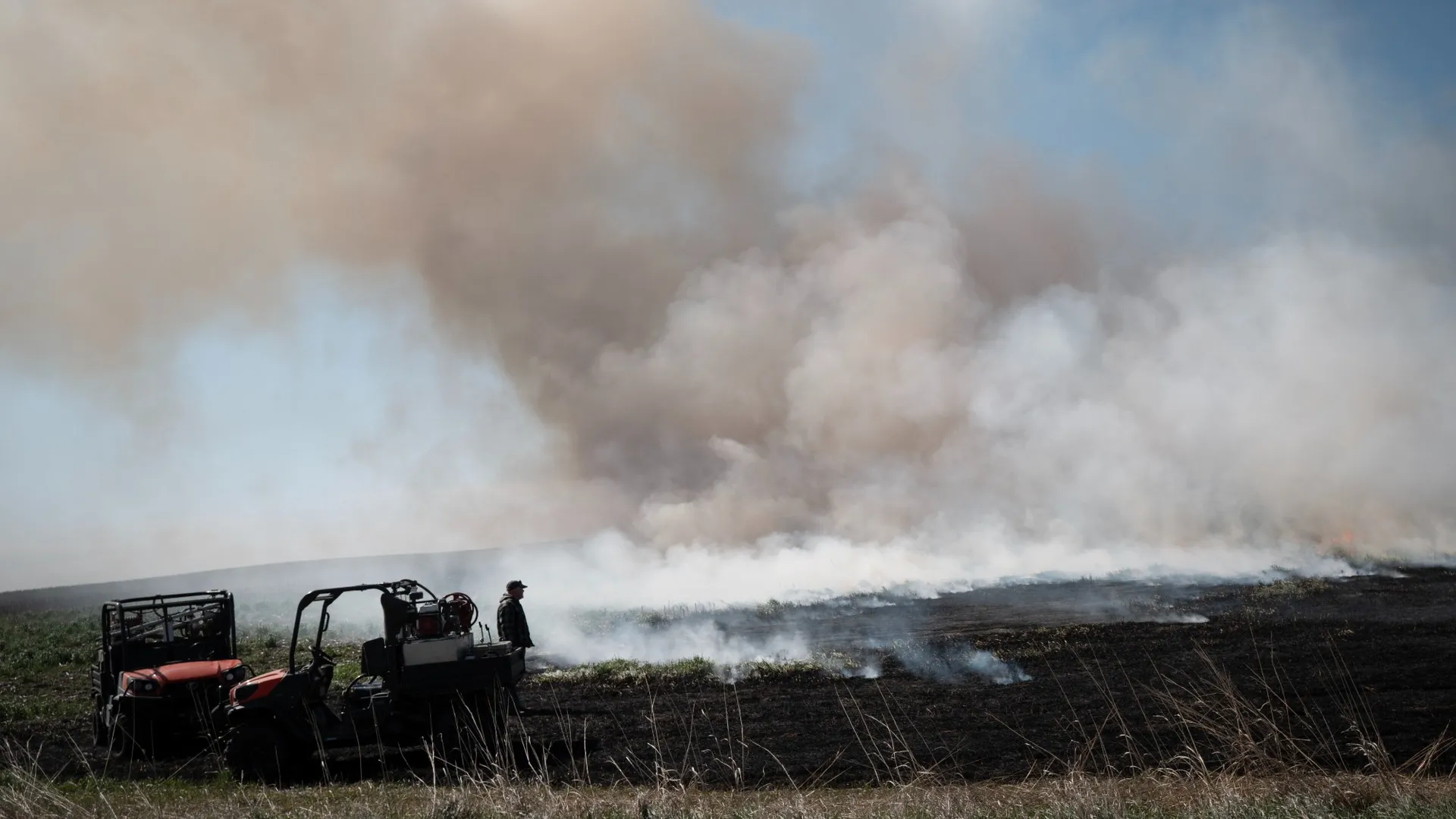
    It’s a bad year for U.S. farmers. President Donald Trump’s trade wars were already taking a toll, but the Iran war compounded problems by raising fuel and fertilizer costs. So while rural regions reliably vote Republican, Democrats hope for a midterm backlash.

    ‘Farmers voted for this’
    The farm crisis that “threatens to wreck the agricultural heart” of Iowa also threatens to “hurt the fortunes” of Hawkeye State GOP candidates, said Axios. Trump’s policies have “caused such severe financial problems” for corn growers that a state Trump won by 13 points in 2024 now has toss-up races for governor and U.S. Senate. Iowa Republicans “should brace for losing everything," said a GOP consultant to the outlet.

    “Farmers voted for this,” said Kevin D. Williamson at The Dispatch. U.S. farmers “rely on imports” for “fertilizer, chemicals” and “machinery,” but they also “keep voting roughly two-to-one” for Trump and his trade wars. The pressing issue is “how much pain it is going to take” for them to change course.

    Trump has gone to “surprising” lengths to “infuriate his backers,” said Matt K. Lewis at The Washington Sun. Farmers are an “integral part of his coalition.” His tariffs and stalemated war have created the possibility that voters in solidly red “heartland” states such as Iowa, Kansas and Nebraska will “vote blue this year.” It’s “difficult to explain” why the president has gone this route.

    ‘Formula for revolt’
    Democrats are trying to “make a play” for the farm vote, said MS NOW. Trump won 69% of rural voters during his last campaign. Now, 57% of those same voters “disapprove of Trump’s handling of the economy.”

    The Midwest is a “trouble spot” for Republicans in the midterms because of Trump’s tariffs, said Rich Lowry at the National Review. Agricultural exports to China “fell by 66%,” as Beijing “cut its purchases of U.S. farm products in retaliation” for the president’s trade war. Add war-driven increases in fuel and fertilizer prices, and it’s a “formula for a revolt.”


    QUOTE OF THE DAY

    ‘The best Ozempic for the economy is deporting illegal immigrants out of this country.’

    Former Trump administration staffer Caroline Sunshine on CNN about immigration. The economy is “like a fat person,” she added. Mass deportations are actually costing Americans jobs, according to a study by The New York Times. 


    today’s big question

    How is the water crisis impacting the Israel-Gaza conflict?

    As the Israel-Hamas war nears its three-year mark, an outbreak of algae throughout Israel’s desalination plants is threatening the country’s water supplies, which could affect the sewage systems in Gaza. And experts say the ongoing war is likely to exacerbate the problem.

    What did the commentators say?
    The issue began after a microalgae bloom in the Mediterranean Sea forced five out of six desalination plants on the Israeli coast to shut down, according to Israel’s national water company Mekorot, per CNN. These plants remove salt from seawater, and their closures caused a ripple effect due to the country’s “heavy dependence on desalination for drinking water,” said the outlet. Israel is “arid and has neither big rivers nor abundant rainfall, but its mastery of this technology has made it a water superpower.”

    While Israel itself is unlikely to see a shortage of water, it could lead to a compounding crisis in Gaza, which has already seen “many of its pipelines and water infrastructure destroyed during the devastating war” with Israel, said NBC News. The algae currently attacking Israel’s water supplies may actually be caused by the situation in Gaza.

    The “discharge of untreated sewage from the Gaza Strip into the sea is contributing to the worsening crisis affecting the Israeli desalination facilities,” said the Zalul Environmental Association, an Israeli environmental NGO, to The Guardian. The wastewater “contains nutrients such as nitrogen and phosphorus, which feed microalgae.”

    Scientists are “trying to assess possible environmental fallout from Gaza’s destroyed wastewater infrastructure” and determine how much of a role it may have played in the algae bloom, said Middle East Eye. Regardless of the cause, it’s a “reminder of the dire humanitarian conditions facing 2 million Gazans,” said The Washington Post. Gazans have “faced severe water shortages and have often resorted to using makeshift latrines.”

    What next?
    This kind of event will probably keep happening thanks to the steadily warming planet. It’s a “fair estimation that this will not be a once-in-a-lifetime” thing, said Edo Bar-Zeev, an associate professor of water research at Israel’s Ben-Gurion University, to CNN. People “can assume that this will occur more and more through climate change.”


    Statistic of the day

    35: The number of consecutive days it has rained in Tokyo as of today, setting a record for the Japanese capital. The city has seen 24.8 inches of rain from the beginning of September through this week, nearly three times the normal level, according to the Japan Meteorological Agency, per The Guardian.


    THE EXPLAINER

    Trump’s Title IX reversal upends protection for LGBTQ+ students

    The Department of Education has formally rescinded the 2024 Title IX regulations, a Biden-era policy that extended the federal ban on sex discrimination in schools to also protect LGBTQ+ people. And the change prompted pushback from advocates.

    What has the White House done instead?
    In the regulations’ place, the department reinstated 2020 regulations from President Donald Trump’s first administration, which took immediate effect “without a notice-and-comment period,” said EducationWeek. Trump’s regulations outline how schools “must handle reports of sexual misconduct,” including setting a “stricter definition for what constitutes sexual harassment and giving more due process rights to those accused,” said The Washington Post.

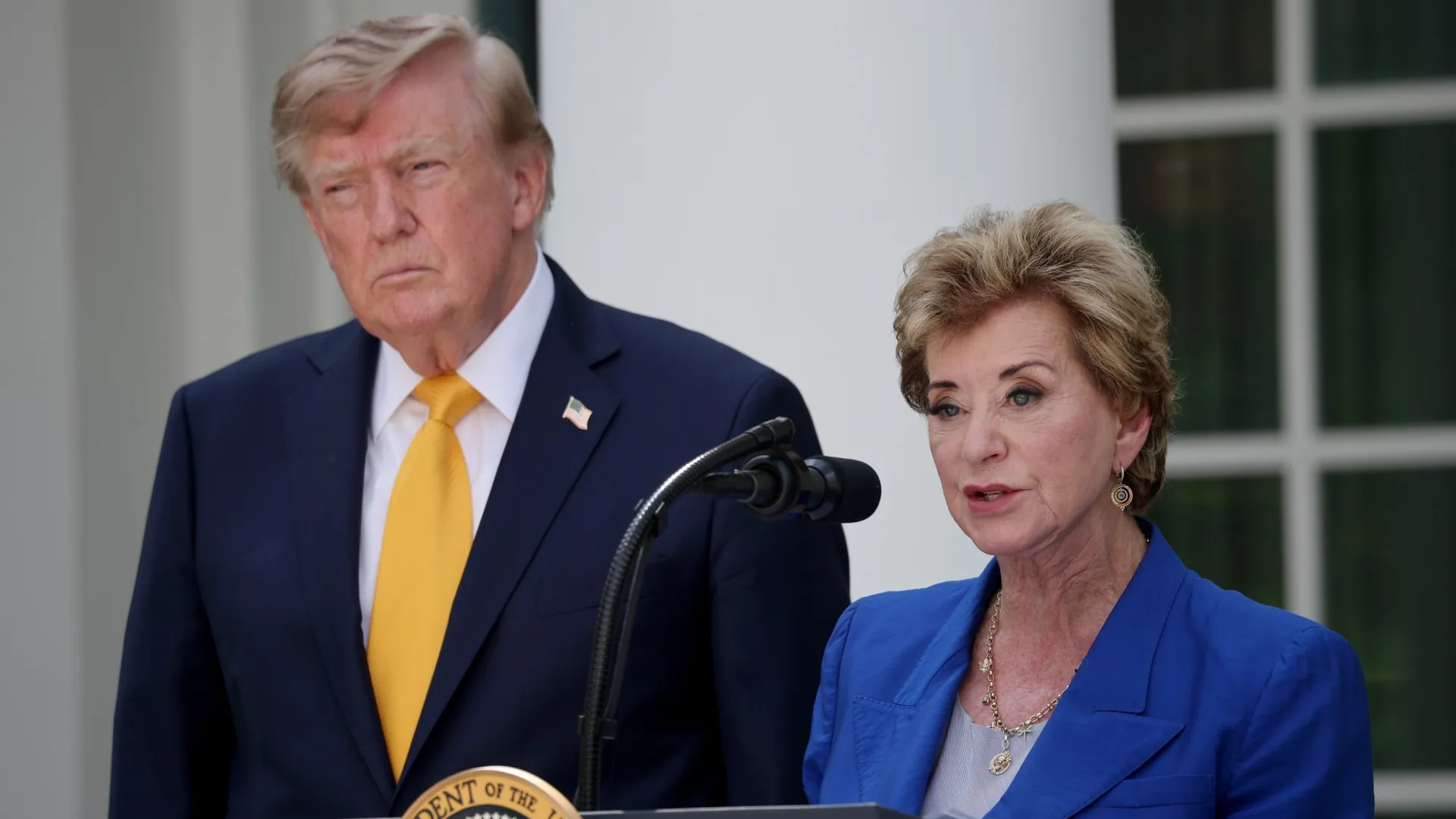
    The change formalizes how the Trump administration has enforced Title IX since January 2025 and will “faithfully reflect court orders and congressional intent” while “reducing confusion for parents, students and educational institutions,” said Education Secretary Linda McMahon (pictured above) in a press release. The department will continue to “hold accountable any school or college that violates the rights, privacy or athletic opportunities of our women and girls.”

    McMahon has “led the administration’s push to restrict civil rights protections based on gender identity,” said The New York Times. The Biden-era Title IX rule was “already struck down in the court system” after challenges from Republican states, said The Hill.

    Who will the change affect?
    Critics of the move say it will harm transgender athletes and weaken protections for sexual assault victims. Sexual harassment and assault “continue to be pervasive in schools,” said Shiwali Patel, the senior director of education justice at the National Women’s Law Center, in a statement. Yet, McMahon and the Trump administration have “decided to ignore what survivors need,” instead “weaponizing Title IX to attack trans students.”

    Title IX is supposed to be about protecting students and “ensuring that they are safe from abuse, harassment and discrimination while they pursue their education,” said Kelley Robinson, the president of the Human Rights Campaign, in a press release. But Trump and his “cronies aren’t interested in any of that.” 

    Rather than “enforcing protections for students,” they are “rescinding them,” said Robinson. They don’t care if “sexual harassment and assault go unaddressed.” We know who will be hurt: “women, girls and others who are vulnerable to sexual harassment, assault and abuse, including LGBTQ+ students.”


    Good day 🕶️

    … for musical surprises. The legendary singer has dropped an EP of four previously unreleased songs from his 1976 double LP “Songs in the Key of Life” to celebrate the 50th anniversary of the Grammy-winning masterpiece. The tracks are “part of what I was feeling and discovering as we made” the album, said Wonder in a statement. 


    Bad day ✋

    … for AI safety. OpenAI is pausing the release of its latest ChatGPT model over concerns that it did not “meet the company’s safety and alignment standards,” said Reuters. The tech conglomerate had previously warned that the artificial intelligence model could operate outside the proper constraints. 


    Picture of the day

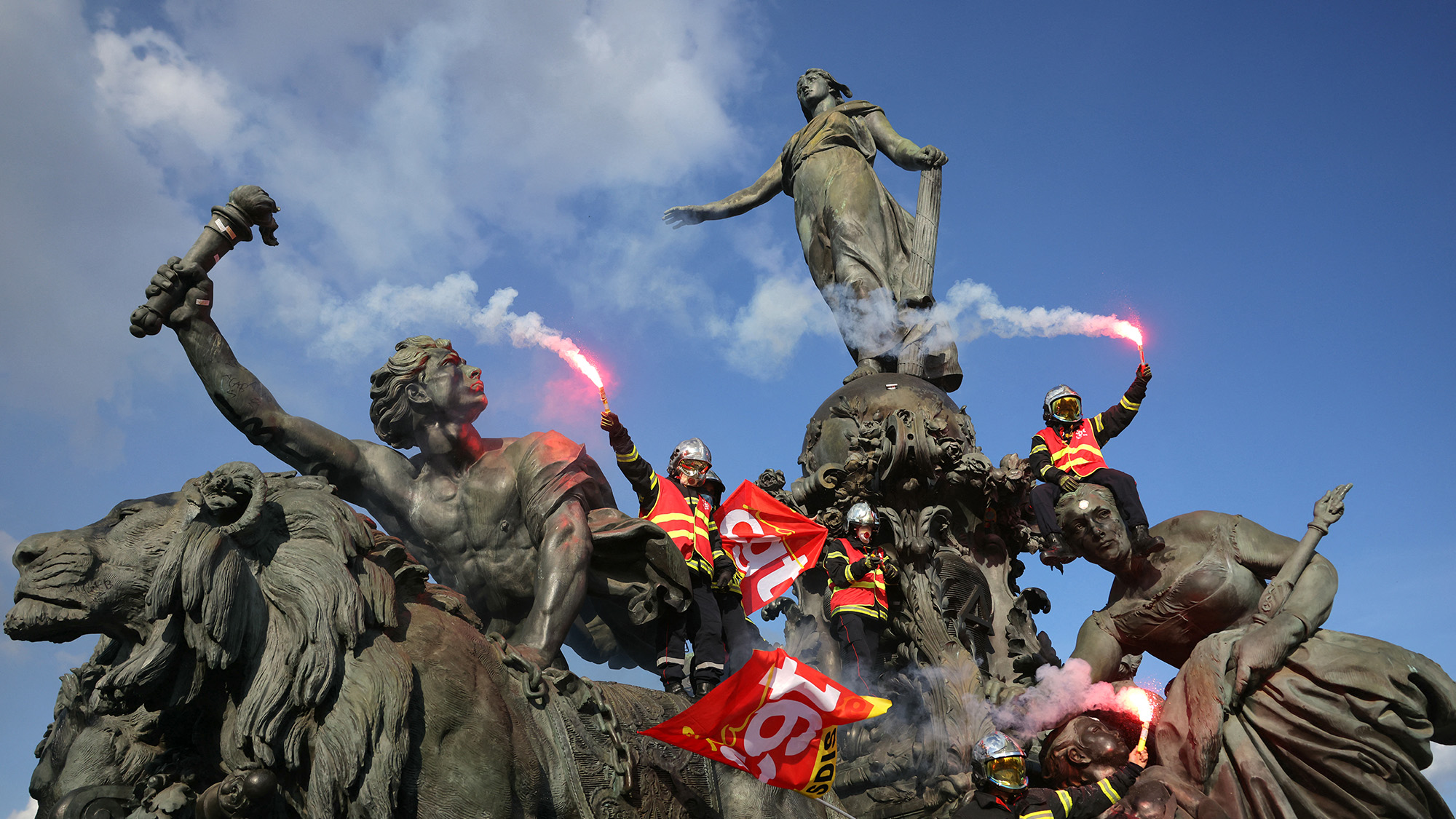
    Liberté, égalité, fraternité

    French firefighters wave flares and trade union flags as they climb the Triumph of the Republic sculpture at the Place de la Nation during a rally in Paris. Tens of thousands of public sector workers, fed up with low wages, joined the demonstration.
    Thomas Samson / AFP / Getty Images


    Puzzles

    Daily sudoku

    Challenge yourself with The Week’s daily sudoku, part of our puzzles section, which also includes guess the number

    Play here


    The Week recommends

    The season’s brand-new touring theater productions

    Fall is when a new batch of shows take to the road. This year, you can island-hop to Cuba, live forever, see the future or rewrite 19th-century America through guffaws. It’s going to be a good theatrical autumn.

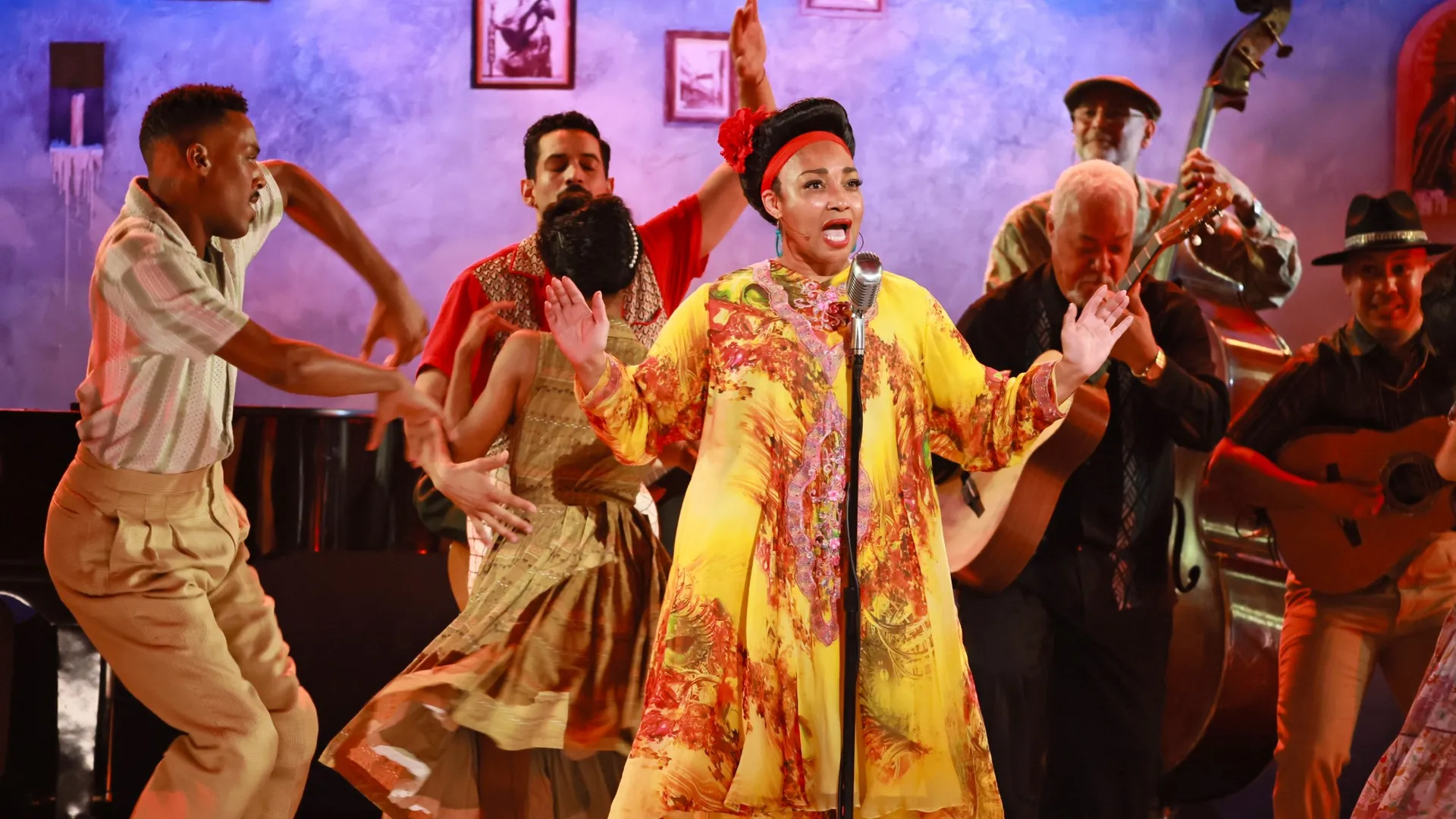
    ‘Buena Vista Social Club’
    This musical (pictured above) is a tale of four intertwined lives as much as it is a partial story of Cuban history from the 1950s through the 1990s. The “interconnections between musicians, songs and a society have rarely been evoked as vividly and as lovingly,” said The New York Times. (through Sept. 12, 2027)

    ‘Death Becomes Her’
    This musical adaptation is based on the 1992 cult film but aims not to mimic it other than with a whole lot of how-did-they-do-it stage magic. It’s a self-aware beast, mocking both itself and our culture’s obsession with staying forever young and employing side-splitting comedy. (through Sept. 5, 2027)

    ‘Maybe Happy Ending’
    Equal parts technical marvel and emotional heart-render, this show is difficult to explain. It goes something like this: A soon-to-be obsolete humanoid robot model of the future meets a newer humanoid robot model, and the two embark on a transformative road trip. The musical is intimate, futuristic and profound. (through Aug. 29, 2027)

    ‘Oh, Mary!’
    The smutty brainchild of Cole Escola began its life far from Broadway in 2024 and was an instant hit with in-the-know culture fiends. It moved to Broadway a few months later. And a newly launched tour brings the historically inaccurate tale of an alcoholic, wannabe cabaret-singer Mary Todd Lincoln to the nation’s theaters. (through May 16, 2027)


    Poll watch

    A third of Americans (33%) have a “great deal” or “fair amount” of confidence in newspapers, television and radio media, according to a Gallup survey of 1,000 adults. While this is a five-point boost from last year, an equal 33% say they have “not much confidence,” and another 33% have “none at all.”


    INSTANT OPINION

    Today’s best commentary

    ‘Religion is the Roberts court’s unfinished business’
    Linda Greenhouse at The New York Times
    A series of decisions, “most of which bear” Chief Justice John Roberts’ name, has established “without precedent in constitutional history” that “whatever public benefit secular institutions get, religious institutions are entitled to as well,” says Linda Greenhouse. In its new term, the court will decide whether the “equality principle these cases have established is enough” or whether religion is “entitled not just to equality but to preference.” The choice is “stark,” and Roberts’ project, “for now, remains unfinished.”

    ‘The case for legal weed and sports betting has fallen apart’
    Dace Potas at USA Today
    Legalization hasn’t “squashed the black market” for cannabis or sports betting, and it has “exposed far more Americans to the harm,” says Dace Potas. Most states have “gone too far,” and now that they are “hooked on the tax revenue,” putting the “genie back in the bottle won’t be easy.” Still, states that “voted themselves into depravity” can “vote their way back out.” Public opinion on both has “started to sour,” so here’s “hoping the states take the hint.”

    ‘A grim prognosis for the post-literate future’
    George F. Will at The Washington Post
    The invention of writing “emancipated humanity from enslavement to memory,” says George Will. Societies without “vibrant writing cultures” are “timid, hidebound, uncurious.” Print culture, a “still brief and perhaps ending chapter” in the human story, “democratized information” that had previously been “controlled by the powerful.” But imagine how “augmented their power will be” when they no longer need to “bother rationing information to an uninterested, nonreading public.”


    WORD OF THE DAY

    jishin

    “True watcher” in Japanese to describe a Buddhist monk who cares for the tomb of the Tendai sect’s founder, Saicho. Sogaku Taguchi, 31, has become the 118th jishin since 1699 after entering the mausoleum at Enryakuji Temple on Mount Hiei. He will remain completely isolated for 12 years while following a strict daily schedule of spiritual practice. 


    Evening Review was written and edited by Theara Coleman, Nadia Croes, Scott Hocker, Anya Jaremko-Greenwold, Justin Klawans and Joel Mathis, with illustrations by Julia Wytrazek.

    Image credits, from top: Scott Olson / Getty Images; Illustration by Julia Wytrazek / Getty Images; Win McNamee / Staff / Getty Images; Theo Wargo/ Getty Images for Tony Awards Productions
     

    Recent editions

    • Morning Report

      Man City guilty of ‘sham’ contracts and accounts

    • Evening Review

      Labour’s ‘hope’ agenda

    • Morning Report

      Union boss warns Burnham over pension triple lock plans

    VIEW ALL
    TheWeek
    • About Us
    • Contact Future's experts
    • Terms and Conditions
    • Privacy Policy
    • Cookie Policy
    • Advertise With Us
    • FAQ
    Add as a preferred source on Google Add as a preferred source on Google

    The Week UK is part of Future plc, an international media group and leading digital publisher. Visit our corporate site.

    © Future Publishing Limited Quay House, The Ambury, Bath BA1 1UA. All rights reserved. England and Wales company registration number 2008885.