The Week UK
flag of US
US
flag of UK
UK
https://cdn.mos.cms.futurecdn.net/flexiimages/jzblygzdxr1769609154.gif

SUBSCRIBE

Start your trial today

Sign in
  • View Profile
  • Sign out
  • The Explainer
  • Talking Points
  • The Week Recommends
  • Podcasts
  • Newsletters
  • From the Magazine
  • The Week Junior
  • More
    • Politics
    • World News
    • Business
    • Health
    • Science
    • Food & Drink
    • Travel
    • Culture
    • History
    • Personal Finance
    • Puzzles
    • Photos
    • The Blend
    • All Categories
  • Newsletter sign up Newsletter
  • The Week Evening Review
    Gaza’s future, the rise of South Asian hate, and a sexually spread stomach bug

     
    TODAY’S BIG QUESTION

    What happens to Gaza if Netanyahu loses?

    With four political factions working together to defeat Israel’s right-wing Likud Party in this Tuesday’s elections, there’s a real possibility that Prime Minister Benjamin Netanyahu may lose power for the first time since the Gaza war began. But this doesn’t necessarily mean conditions in the region will improve for Palestinians.

    What did the commentators say?
    Israelis consider the Oct. 27 election to be important, but for “Palestinians in Gaza and the Israeli-occupied West Bank, the stakes are just as high — even though they do not have a vote,” said The New York Times. Netanyahu has long vowed to “prevent the creation of a Palestinian state, and his government has built Israeli settlements in the West Bank at a breakneck pace.” Many Palestinians are “desperate to avoid another four years” of his government.

    Still, even a victory that ousts Likud from power “may bring only marginal change for Palestinians suffering record levels of settler violence and mass displacement,” said Al Jazeera. While the opposition coalition of the Yashar party, the Democrats, the Yisrael Beytenu party and the Together alliance have joined forces against Netanyahu, there is “little daylight between them when it comes to Israel’s foundational policies in Gaza.”

    Yashar party leader Gadi Eisenkot, who could potentially become Israel’s next prime minister, also opposes an independent Palestinian nation. The election is “unlikely to produce a sweeping shift in policies that have hampered a decades-old peace process,” said Reuters. Even if Netanyahu is ousted, the new coalition “effectively repudiates the ‘two-state solution’ that underpinned international peace negotiations for generations.”

    What next?
    Whether Netanyahu stays or goes, he has left an indelible mark on Israel. The “security doctrine he champions — opposition to a Palestinian state, stifling Iran’s nuclear ambitions, stationing troops in neighboring countries to neutralize perceived threats and the insistence that peace comes from strength, not the other way around — is now utterly mainstream,” said Bloomberg.

    With no end in sight to the destruction in Gaza, no “matter who wins, there will be no fundamental shift in our policy,” Michael Oren, Israel’s former ambassador to the U.S., said to Bloomberg. “It may even be a more aggressive policy.”


    IN THE SPOTLIGHT

    Threats rise against South Asians in the US

    South Asian Americans report facing rhetorical and physical attacks, egged on by right-wing politicians and intellectuals. The latter are debating the so-called Indian question of whether ethnic minorities can truly assimilate into the American community. And the conversation, critics say, has dark echoes.

    ‘Scourge of hate’
    Indian Americans and South Asian migrants have become a “conspicuous target of online conservative anger,” said Vox. People of Indian heritage are not being “stereotyped as antisocial, criminal, coming here illegally,” said journalist Zaid Jilani to the outlet. Instead, their growing prominence in business and academic “positions that I think a lot of people have typically associated with white folks” have made them a “status threat” to middle-class Americans.

    The result is a growing “scourge of anti-Indian American, anti-South Asian hate,” said Rep. Raja Krishnamoorthi (D-Ill.) to The New York Times, after a Hindu temple in Illinois (pictured above) was targeted in an alleged mass shooting plot. Critics point to rhetoric such as that used by Bo French, a Texas Republican who sparked controversy last month when he posted an image of South Asians at a college football game. The “problem” of migration is “now obviously far worse than anyone imagined,” said French on X.

    Other observers cite The Indian Question, a podcast episode recorded last month by conservative commentators Jonathan Keeperman and Christopher Rufo. Many Americans “prefer to live in a homogenous [sic] society,” said Keeperman on X. Critics of Indian migration are pushing back against progressive attempts to “subdue any explicit political effort to maintain a white majority.”

    ‘Nativists have prevailed’
    Talk of an “Indian question” amounts to the “mainstreaming of anti-Indian bigotry,” said Jonathan Chait at The Atlantic. A “historical rule of thumb” is that bad things happen when “your social identity is being made the name of a ‘question.’”

    “Playing by America’s rules is no longer enough” for Indian immigrants, said Anang Mittal at Firstpost. The U.S. “told immigrants to come legally on the basis of merit, and Indians did.” But it seems the “nativists have prevailed for now.”


    QUOTE OF THE DAY

    ‘Thank God you are getting rid of those awful bike lanes. By the way, we don’t ride bicycles in Iowa. We ride Harley-Davidsons.’

    House of Representatives candidate Joe Mitchell (R-Iowa) to Trump at a rally in Sioux City. The White House has railed against bikes despite Iowa hosting RAGBRAI, one of the largest and most notable bicycle tours in the world, every year.


    Statistic of the day

    50 million: The number of AI-generated tracks that Spotify has purged from its algorithms as part of a push to remove “slop and spam” in favor of “music made by authentic human artists,” said the music streaming platform in a statement. The songs will remain on Spotify but will no longer be featured in playlists.


    THE EXPLAINER

    The sexually transmitted stomach bug that’s spreading

    Antibiotic-resistant shigellosis infections have been spreading in the U.S. Many are sexually transmitted and can affect the most vulnerable communities.

    What are the symptoms and transmission methods?
    Shigellosis is a gastrointestinal illness caused by a group of bacteria called Shigella. Associated symptoms include acute diarrhea, vomiting, stomach pain and fever lasting up to seven days. In most instances, those with shigellosis can recover on their own, but patients with more severe cases may require antibiotics and hospitalization.

    The primary way shigellosis spreads is via the fecal-oral route, usually from contaminated food and water. However, another transmission method has become increasingly prevalent: There’s a “distinct and intensifying sexual transmission of shigellosis,” said a study published in The Lancet. Typical preventative measures, like handwashing and food safety, are “not likely” to help with this type of spread. 

    The infection is most commonly passed between men who sleep with other men. “Many men who have sex with men are unaware of the serious and increasing risk posed by sexually transmitted Shigella,” said senior study author Kate Baker in a statement.

    How common is it?
    Despite public concern about the illness’ spread, there hasn’t been a major outbreak. Almost 15,000 people have been diagnosed with shigellosis in the U.S. in 2026, and it has been found in 47 states, according to the most recent CDC data. These numbers are similar to last year’s count, but the number of antibiotic-resistant cases has risen.

    Among nearly 17,000 Shigella species isolates with resistance data, extensively drug-resistant (XDR) isolates increased between 2011 and 2023, according to a CDC analysis. Most U.S. outbreaks “involved drug-susceptible strains and primarily affected children,” but “national surveillance data indicate that most XDR cases occurred among adult men.”

    XDR shigellosis is risky for children and disadvantaged populations like the unhoused. The infection has “gone from being relatively treatable with off-the-shelf drugs” to being “close to untreatable over the course of the last decade or so,” said Baker.


    Good day 🏝️

    … for history fans. Nevis has received $245,000 from the U.S. government to restore the home of Founding Father Alexander Hamilton, who was born on the small Caribbean island. Operating as a museum, the house is in need of repairs due to its age.


    Bad day ⚾

    … for baseball fans. The World Series starts tonight between the Milwaukee Brewers and Tampa Bay Rays, but there may not be many more games for a long while. Negotiations over a Major League Baseball salary cap could lead to a lockout beginning in December, potentially canceling games in 2027.


    Picture of the day

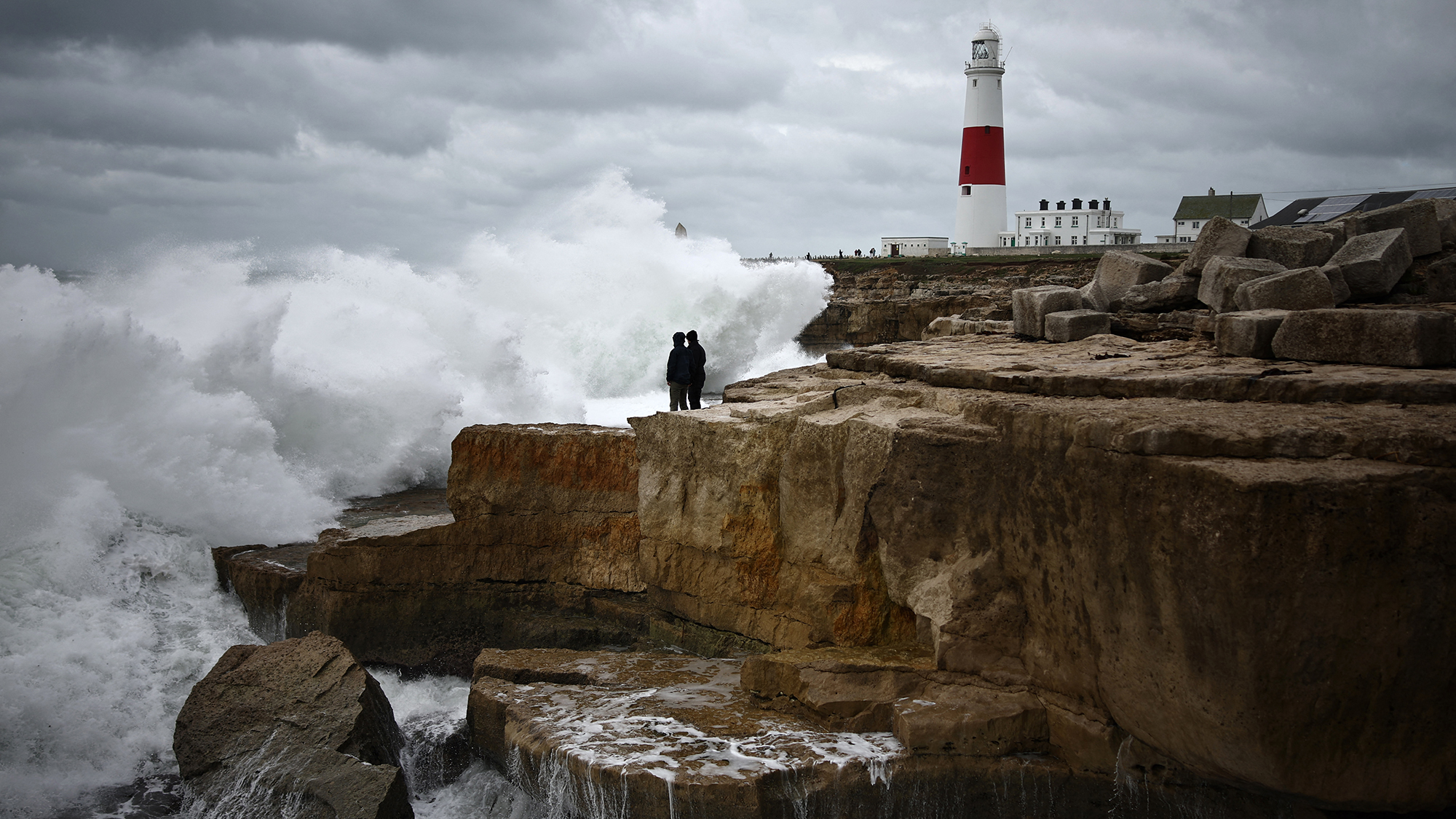
    Storming in

    Spectators watch waves breaking near Portland Bill Lighthouse on the Isle of Portland in Dorset, England. Storm Austen is bringing strong winds and heavy rain to the country’s southern coast, leaving thousands without power. People are “urged to avoid” flooded roads, as well as “seafronts and harbors due to waves overtopping,” said the BBC.
    Henry Nicholls / AFP / Getty Images


    Puzzles

    Daily sudoku

    Challenge yourself with The Week’s daily sudoku, part of our puzzles section, which also includes guess the number

    Play here


    The Week recommends

    The greatest horror books of all time

    Because a handful of authors dominate mainstream horror fiction, it can be easy to miss how rich and diverse literary horror is, including, of course, the work of Stephen King. These four novels combine sharp prose with well-crafted terror.

    ‘The Haunting of Hill House’ (1959)
    An enormously influential work of dread, Shirley Jackson’s classic haunted house tale remains one of the rare horror books to receive literary awards. It’s one of the “20th century’s finest horror novels and maybe the definitive haunted house story,” said Lara Zarum at The New York Times.

    ‘The Stand’ (1978)
    Among King’s dozens of books, “The Stand” remains his epic masterwork. The story details a flu named Captain Trips that wipes out 99.4% of the world’s population and forces survivors to choose between the forces of good and evil. King’s “most sweeping horror novel” is also a “kind of inventory of American culture,” said Kirkus Reviews.

    ‘Come Closer’ (2003)
    Short enough to read in a single sitting, Sara Gran’s chilling story of an architect succumbing to demonic possession will leave readers stunned and unsettled. A book that “could damage the unwary psyche,” its “genius is in making the strange details so commonplace and incidental that ambiguity survives,” said Neil McRobert at Esquire.

    ‘The Grip of It’ (2017)
    A troubled young couple moves from the big city and buys a small haunted house in a familiar setup made terrifying by the way the reader is plunged into nonlinearity and fear alongside the characters. In “prose that’s poetic and bereft of consolation,” author Jac Jemc “unsettles our notions of the boundaries between ourselves, our partners and anything else that may hurt us,” said Ahsan Butt at The Rumpus.


    Poll watch

    France’s first poll results since riots broke out suggest voting intentions for next year’s presidential election remain unchanged, according to an Ifop-Fiducial survey of 1,928 adults. Far-right candidate Marine Le Pen is still the front-runner, with 34% to 38% support based on different scenarios. Jean-Luc Mélenchon is in second place, with 15% to 20%.


    INSTANT OPINION

    Today’s best commentary

    ‘Fear‑based campaign ads can grab attention, but whether they win votes is less clear’
    Monique Mitchell Turner at The Conversation
    President Lyndon B. Johnson’s iconic “Daisy” ad “shows why political campaigns to this day continue to reach for fear, and it hints at why the payoff is less predictable than you might think,” says Monique Mitchell Turner. Fear “knocks people off autopilot, sharpens attention and sends them looking for new information,” and that “heightened attentiveness may be exactly what a struggling campaign wants.” But sometimes this kind of ad also “lowers positive feelings toward the candidate who sponsors it.”

    ‘US universities are failing to protect victims of sexual assault’
    M. Neelika Jayawardane at Al Jazeera
    Cornell University’s “internal processes for responding to sexual assault reports failed Jane Doe,” says M. Neelika Jayawardane. Her experience “reveals the ways in which confidential procedures at universities are intended to make ‘problems’ go away, rather than work toward any form of justice for victims.” It also “reveals how those in positions of authority — deans, provosts and presidents, alongside Title IX and Affirmative Action officers and university lawyers — are primarily invested in protecting their institutions.”

    ‘San Quentin residents concerned about Newsom’s successor and the future of the prison’
    Edwin E. Chavez at the San Francisco Chronicle
    As California Gov. Gavin Newsom “leaves office, rumors and fears circulate about what a new administration could reverse, dismantle or abandon,” says Edwin E. Chavez. Election season “means tough-on-crime rhetoric gets wielded like a weapon of blunt-force trauma,” and “all this discussion and uncertainty” presents the opportunity to “think more seriously about what people inside San Quentin want from California’s next governor.” Many in San Quentin “fear the worst, regardless of their politics.”


    WORD OF THE DAY

    terramation

    A process, also known as human composting, in which deceased bodies are put in a specialized decomposition chamber where they turn into nutrient-rich soil. New South Wales has become the first Australian state to legalize terramation as an alternative to burial or cremation, with several lawmakers expressing personal interest in the new eco-friendly option.


    Evening Review was written and edited by Nadia Croes, David Faris, Scott Hocker, Anya Jaremko-Greenwold, Justin Klawans, Joel Mathis and Devika Rao, with illustrations by Stephen Kelly.

    Image credits, from top: Illustration by Stephen P. Kelly / Getty Images; Arthur Maiorella / Chicago Tribune / TNS / Sipa USA / Alamy; quantic69 / Getty Images; Penguin / Atlantic Books / Bloomsbury / Doubleday
     

    Recent editions

    • Morning Report

      Government tells Britons to stockpile food and water

    • Evening Review

      The furore over the ‘Palestine poppy’

    • Morning Report

      Russian attack hits Kyiv amid renewed peace push

    VIEW ALL
    TheWeek
    • About Us
    • Contact Future's experts
    • Terms and Conditions
    • Privacy Policy
    • Cookie Policy
    • Advertise With Us
    • FAQ
    Add as a preferred source on Google Add as a preferred source on Google

    The Week UK is part of Future plc, an international media group and leading digital publisher. Visit our corporate site.

    © Future Publishing Limited Quay House, The Ambury, Bath BA1 1UA. All rights reserved. England and Wales company registration number 2008885.