The Week The Week
flag of US
US
flag of UK
UK
https://cdn.mos.cms.futurecdn.net/skoGBi9qKFoUtnNWkovjJQ.jpg

SUBSCRIBE

Try 6 Free Issues

Sign in
  • View Profile
  • Sign out
  • The Explainer
  • Talking Points
  • The Week Recommends
  • Podcasts
  • Newsletters
  • From the Magazine
  • The Week Junior
  • More
    • Politics
    • World News
    • Business
    • Health
    • Science
    • Food & Drink
    • Travel
    • Culture
    • History
    • Personal Finance
    • Puzzles
    • Photos
    • The Blend
    • All Categories
  • Newsletter sign up Newsletter
  • Brand Logo
    ‘Kill everybody’ claims, Honduran pardon and deadly Asian storms

     
    TODAY’S MILITARY story

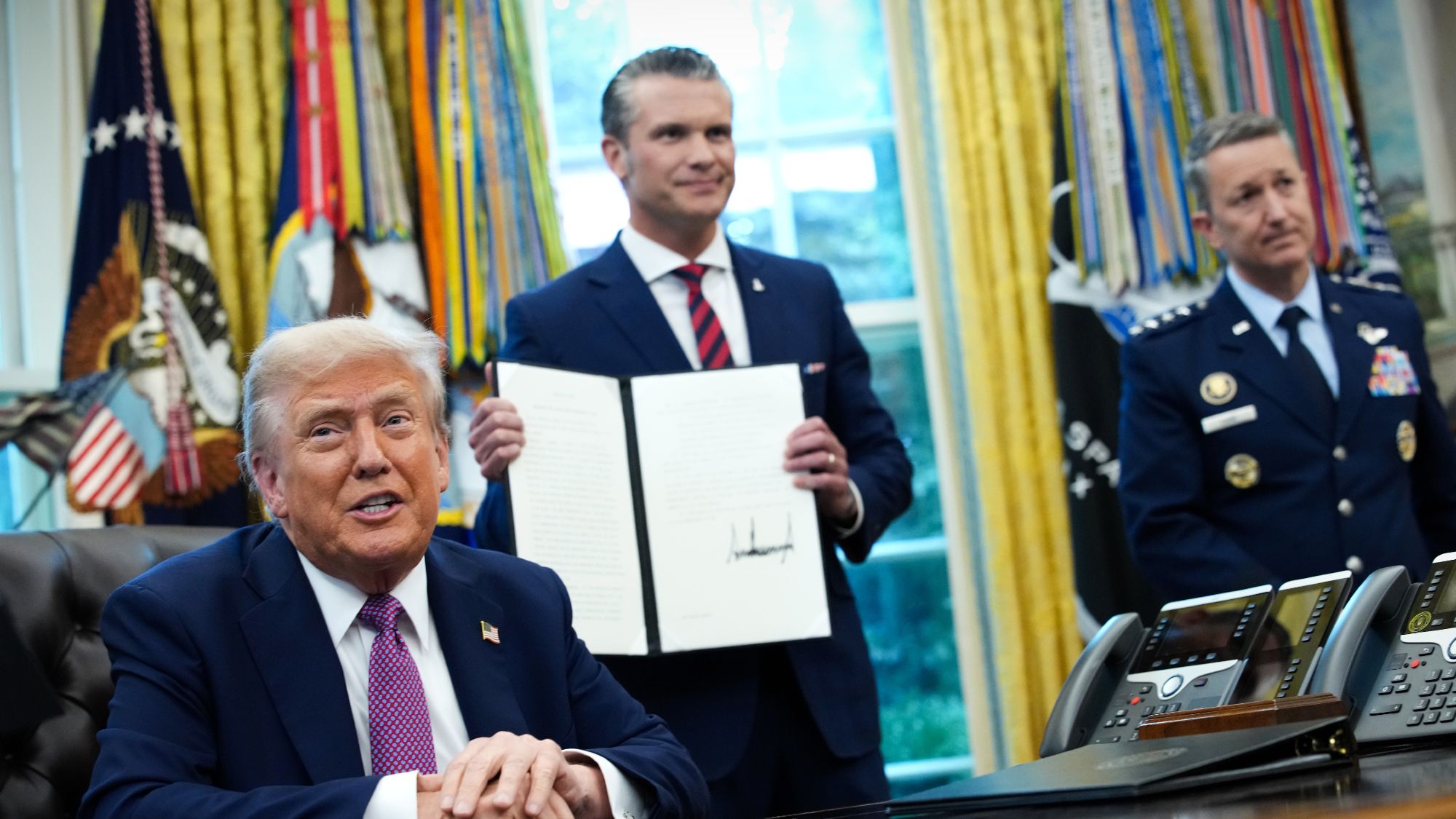
    Congress seeks answers in ‘kill everybody’ strike report

    What happened
    Lawmakers with oversight of the Pentagon yesterday voiced concerns about reports that the U.S. military killed two survivors of the Trump administration’s first lethal strike on suspected drug-trafficking boats, saying such a follow-up attack would be illegal if not a war crime. The Special Operations commander overseeing the Sept. 2 attack ordered the second strike to comply with Defense Secretary Pete Hegseth’s spoken directive “to kill everybody,” The Washington Post reported on Friday, citing two people with direct knowledge of the operation. 

    Who said what
    Hegseth did not deny giving the “kill everybody” order. But in a social media post Friday, he called the Post’s report  “fabricated, inflammatory and derogatory,” said the boat attacks were “designed to be ‘lethal, kinetic strikes,’” and insisted America’s “current operations in the Caribbean are lawful under both U.S. and international law.” 

    Law-of-war experts say Trump’s broader drug boat campaign is “unlawful and may expose those most directly involved to prosecution because the alleged traffickers pose no imminent threat of attack against the United States and are not in an ’armed conflict’ with the U.S.,” the Post said. But even if traffickers were at war with the U.S., killing survivors of a boat strike amounts to “war crimes, murder or both,” a group of former military lawyers and senior leaders said Saturday. “There are no other options.” 

    The top Republicans and Democrats on the House and Senate armed services committees said they would ramp up oversight of the boat strikes in light of the new reporting. “Obviously, if that occurred, that would be very serious and I agree that that would be an illegal act,” House Armed Services Committee chair Rep. Mike Turner (R-Ohio) said yesterday on CBS’s “Face the Nation.” Sen. Tim Kaine (D-Va.) said it “rises to the level of a war crime if it’s true.” Rep. Don Bacon (R-Neb.) told NBC’s “Meet the Press” he did not think Hegseth “would be foolish enough” to commit such  a “clear violation of the law of war.”

    What next?
    President Donald Trump last night told reporters that his administration “will look into” the matter, but “Pete said he did not order the death of those two men,” and “I believe him, 100%.” Sen. Mark Kelly (D-Ariz.) said on “Meet the Press” that the Senate Armed Services Committee would “put these people under oath and we’re going to find out what happened.” 


    TODAY’S INTERNTATIONAL story

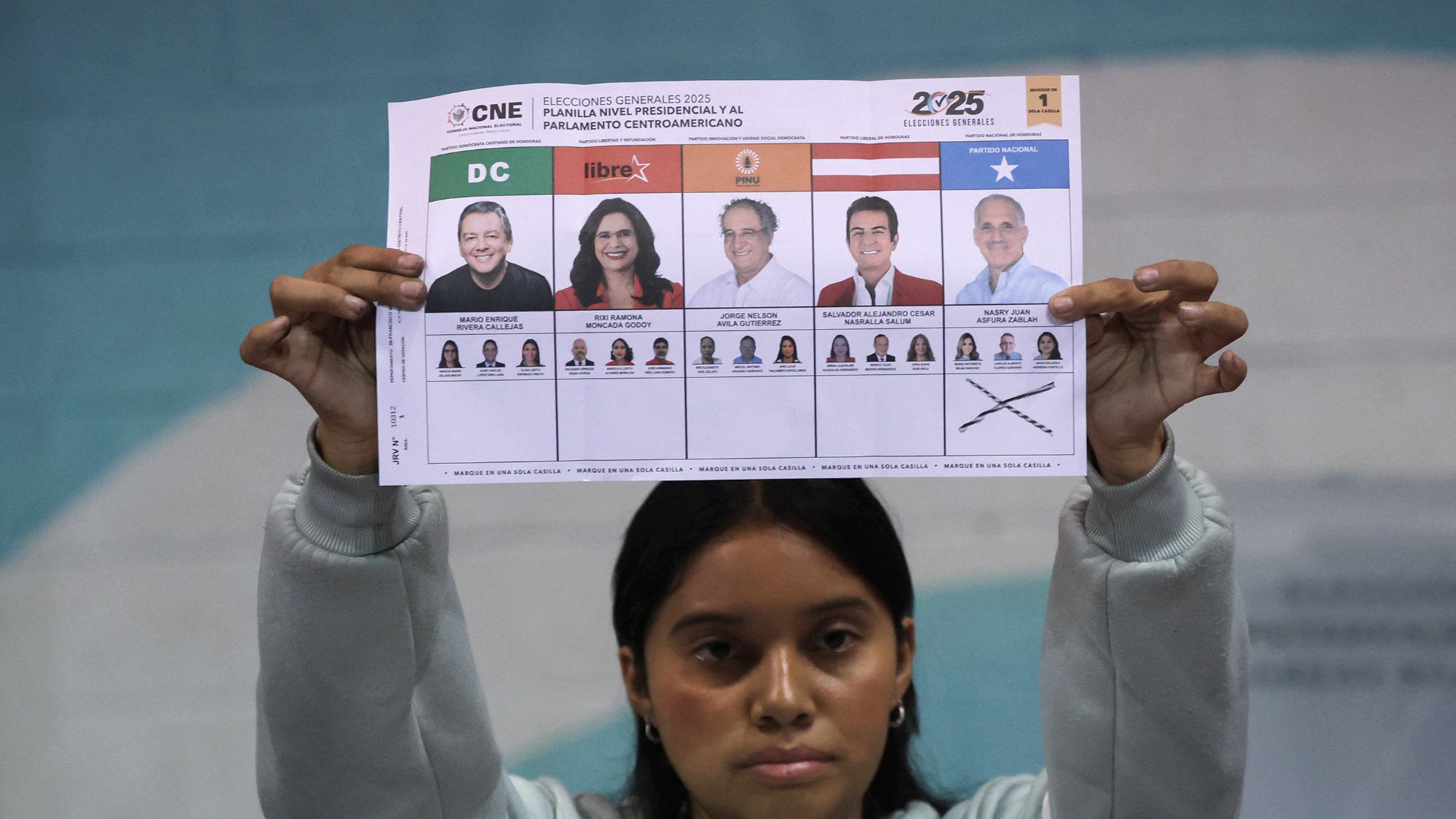
    Honduras votes amid Trump endorsement, pardon vow

    What happened
    Honduran presidential candidate Nasry “Tito” Asfura of the conservative National Party took a narrow early lead in yesterday’s national elections, days after President Donald Trump endorsed him and criticized his two main rivals. On Friday, Trump said he would pardon the last Honduran president from the National Party, Juan Orlando Hernández, who is serving 45 years in U.S. prison for facilitating the trafficking of 500 tons of cocaine through Honduras to the U.S.

    Who said what
    “Tito and I can work together to fight the narco-communists and provide the necessary aid to the Honduran people,” Trump said last Wednesday on social media. “If he doesn’t win, the United States will not be throwing good money after bad.” With 43% of polling stations reporting early today, Asfura had 41% of the votes, versus 40% for Salvador Nasralla of the conservative Liberal Party and 19% for Rixi Moncada of the ruling democratic socialist LIBRE party. 

    Trump told reporters last night that he would pardon Hernández, convicted in New York last year after a trial that exposed bribes and the use of the Honduran military to protect traffickers, because “many of the people of Honduras, they said it was a Biden setup.” He told The New York Times on Saturday that “many friends” had asked him to pardon Hernández, and if his conviction stood, “you could do this to any president.” Hernández was “the leader of one of the largest criminal enterprises that has ever been subject to a conviction in U.S. courts,” Sen. Tim Kaine (D-Va.) said yesterday, and Trump’s “shocking” pardon suggests he “cares nothing about narcotrafficking.”

    What next?
    Honduras’ National Electoral Council was expected to announce an election winner today. Trump did not say when he would pardon Hernández. 


    TODAY’S NATURAL DISASTER Story

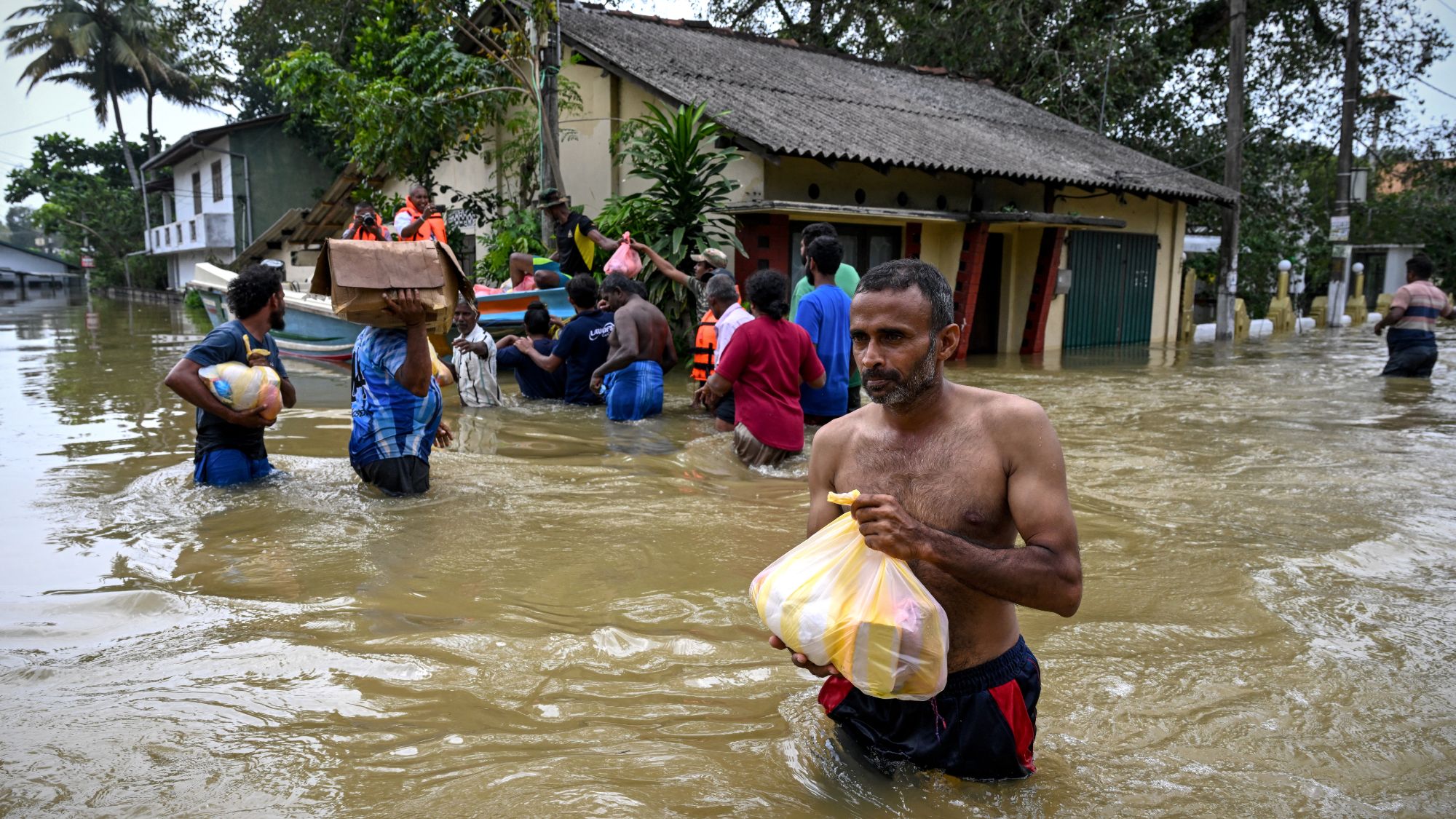
    Death toll from Southeast Asia storms tops 1,000

    What happened
    More than 1,000 people have died and hundreds remain missing after catastrophic floods and landslides from tropical storms struck Southeast Asia, according to the latest death tolls. Sri Lanka reported 355 deaths from mudslides and flooding triggered by Cyclone Ditwah. A separate cyclone, Senyar, caused at least 502 deaths in Indonesia, 170 in Thailand and three in Malaysia. 

    Who said what
    Much of the Indonesian island of Sumatra remains “cut off due to blocked roads, while damage to telecommunications infrastructure has hampered communication,” Reuters said. Hat Yai, the biggest city in Thailand’s hard-hit Songkhla Province, recorded 13 inches of rain on Friday, “its highest single-day tally in 300 years, amid days of heavy downpours.” Sri Lankan President Anura Kumara Dissanayake yesterday declared a state of emergency to manage what he called the “largest and most challenging natural disaster in our history,” and the first to strike the entire country. 

    “Persistent bouts of the La Niña climate pattern are at least partially to blame for the flooding across the region,” as unusually warm oceans increase the moisture in the air, The Washington Post said. But “rising global temperatures have also made the atmosphere more waterlogged, fueling wetter and more dangerous storms.” Southeast Asia is “one of the areas most vulnerable to climate change,” said CNN.

    What next?
    As emergency response crews work to clear roads and get aid to people stuck without food or shelter, “a separate tropical storm, Koto, is expected to hit western Vietnam,” the latest in the “near-continuous string of storms” that have lashed Southeast Asia since mid-September, the Post said. 


    It’s not all bad

    Through a musical project called Raise Your Voice, people living with dementia and their caregivers wrote nine original songs and sang them onstage at the Glyndebourne Opera House in England. Over the last year, the group has met for weekly workshops led by different artists, and this “musical creativity” triggered “original words and tunes based on present and future thinking,” Raise Your Voice events manager Hazel Gaydon told The Guardian. The Glyndebourne performance was recorded for a CD, “Murmuration.”


    Under the radar

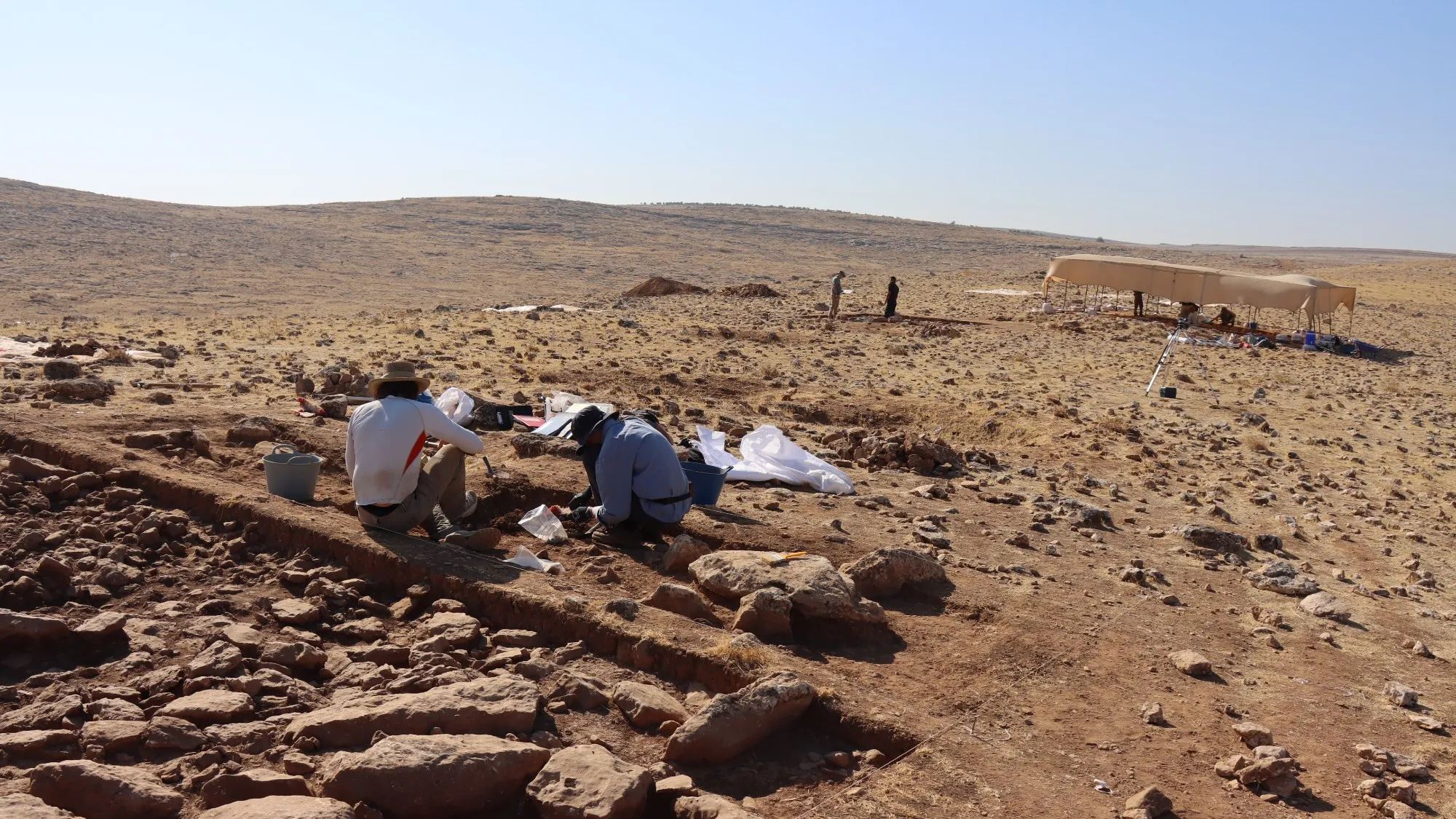
    Mendik Tepe: the ancient site rewriting human history

    The 12,000-year-old Göbekli Tepe site in Turkey is often called the “zero point of history,” said The Archaeologist. But recent excavations at the nearby Mendik Tepe site suggest that it dates back even further and could offer “newer insights into humanity’s earliest steps toward settled life.” 

    Mendik Tepe (Mendik Hill or Peak) is in a rural area of southeastern Anatolia, about 130 miles east of the city of Sanliurfa. It is in this region that the first permanent human settlements are thought to have been established in the early Neolithic period. 

    Excavation at Mendik Tepe got underway last year, led by University of Liverpool archaeology professor Douglas Baird. The “site seems to capture the very beginnings of that transformation” from mobile foraging to a more “settled down” lifestyle, and possibly experimentation with agriculture, Baird told The Archaeologist. He dated the site to as much as 2,000 years before Göbekli Tepe. The excavations have already unearthed several buildings of various sizes, and as-yet-unknown function and significance. 

    While structures excavated at Göbekli Tepe have massive T-shaped stone pillars, decorated with carvings of people and animals, the pillars on the buildings at Mendik Tepe are smaller and not T-shaped. This suggests that the two communities “possessed a different ideology” or that Mendik Tepe “was constructed for different purposes,” said science site The Debrief. 

    The whole Tas Tepeler region is “particularly exciting” for archaeologists, Baird told Turkey’s Anadolu news agency. It allows for the study of “a network” of Neolithic settlements and their development “on a larger, regional scale.”


    On this day

    December 1, 1959

    The Antarctic Treaty was signed by 12 countries: Argentina, Australia, Britain, Belgium, Chile, France, Japan, New Zealand, Norway, South Africa, the Soviet Union and the U.S. The treaty banned military activity in Antarctica and classified the continent for scientific research. Much research is still conducted there, and the list of treaty signatories has risen to 58.


    TODAY’S newspaperS

    ‘Russia dangles business ties’

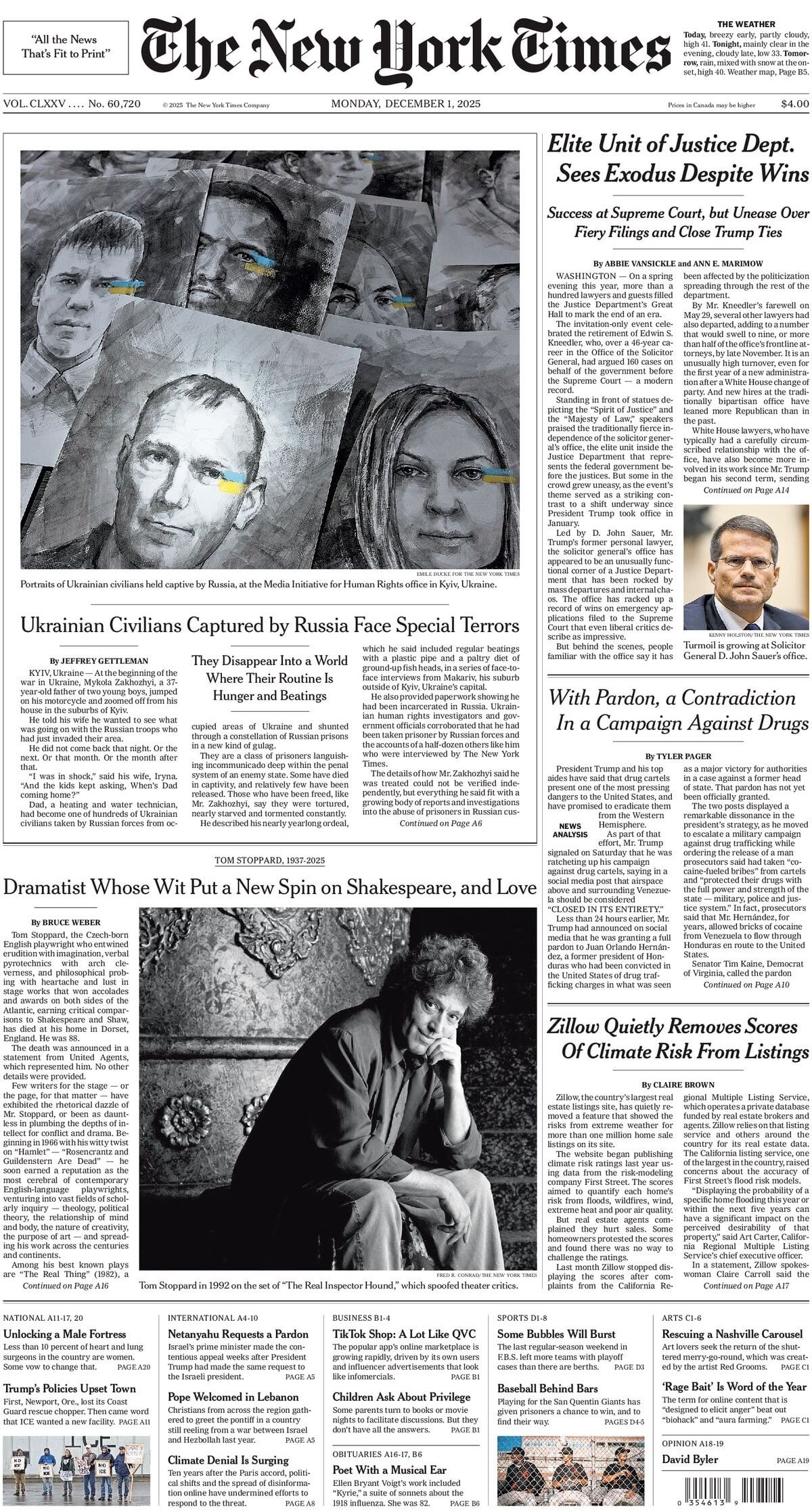
    “Peace pact in Ukraine elusive as talks end,” The Boston Globe says on Monday’s front page. “Russia dangles business ties at Europe’s expense,” The Wall Street Journal says. “Hegseth targets foes of Trump,” The Washington Post says. “White House gives Maduro ultimatum as U.S. moves toward land operations” in Venezuela, the Miami Herald says. “Bipartisan demands for legal scrutiny of U.S. boat strikes,” the Los Angeles Times says. “Elite unit of Justice Department sees exodus despite wins” at Supreme Court, The New York Times says. “Music piracy heads to high court,” USA Today says. “Carnage at children’s birthday party in Stockton,” says The Sacramento Bee. 

    ► See the newspaper front pages


    Tall tale

    Coffee beak

    An endangered parrot recently swooped into a Seoul cafe, where it posed for photos, ate from customers’ hands and stuck its beak into someone’s drink. After mingling with the crowd at Cafe the Merge, the bird was taken to an animal rescue shelter. There, officials identified it as a yellow-headed amazon, a parrot typically found in Mexico and parts of Central America. An estimated 4,000 of these birds live in the wild.


    Morning Report was written and edited by Nadia Croes, Catherine Garcia, Scott Hocker, Anya Jaremko-Greenwold, Alex Kerr, Justin Klawans, Rafi Schwartz, Peter Weber and Kari Wilkin, with illustrations by Stephen Kelly and Julia Wytrazek.

    Image credits, from top: Kevin Dietsch / Getty Images; Lucas Aguayo / AFP via Getty Images; Ishara S. Kodikara / AFP via Getty Images; Cebrail Caymaz / Anadolu / Getty Images
     

    Recent editions

    • Sunday Shortlist

      A retrospective to delight ‘Wesophiles’

    • Saturday Wrap

      Was Farage a teenage racist?

    • Evening Review

      What does the net migration drop mean?

    VIEW ALL
    TheWeek
    • About Us
    • Contact Future's experts
    • Terms and Conditions
    • Privacy Policy
    • Cookie Policy
    • Advertise With Us
    • FAQ
    Add as a preferred source on Google

    The Week UK is part of Future plc, an international media group and leading digital publisher. Visit our corporate site.

    © Future Publishing Limited Quay House, The Ambury, Bath BA1 1UA. All rights reserved. England and Wales company registration number 2008885.