What happened
The chief federal judge in Minnesota yesterday sharply criticized ICE for violating at least 96 court orders this month during its operations in Minneapolis. “ICE is not a law unto itself,” U.S. District Judge Patrick Schiltz wrote. Shortly after this rebuke, U.S. District Judge John Tunheim ordered federal agents to stop detaining lawful refugees in Minnesota, release those currently in custody and return any transported out of state.
Who said what
Schiltz, a George W. Bush appointee, said his list of nearly 100 violations “certainly substantially understated” the number. “This list should give pause to anyone — no matter his or her political beliefs — who cares about the rule of law,” he said. “ICE has likely violated more court orders in January 2026 than some federal agencies have violated in their entire existence.”
“Many of Schiltz’s colleagues” have “similarly vented about ICE’s recalcitrance in recent orders,” Politico said. Still, despite the chief judge’s “fury, his order amounted to a reprieve of sorts for ICE’s acting director Todd Lyons,” canceling a contempt hearing because ICE belatedly complied with his order to release an Ecuadorian man. “Much of the conflict with the judges in Minnesota” is driven by the Trump administration’s precedent-defying “mandatory detention for all immigrants facing deportation,” The Washington Post said. Nationally, an “overwhelming majority of judges — including many Trump appointees — have ruled” it “unlawful” to detain migrants without a bond hearing, and the Minnesota judges “have repeatedly expressed exasperation” over the administration’s flouting of their orders to remedy such violations.
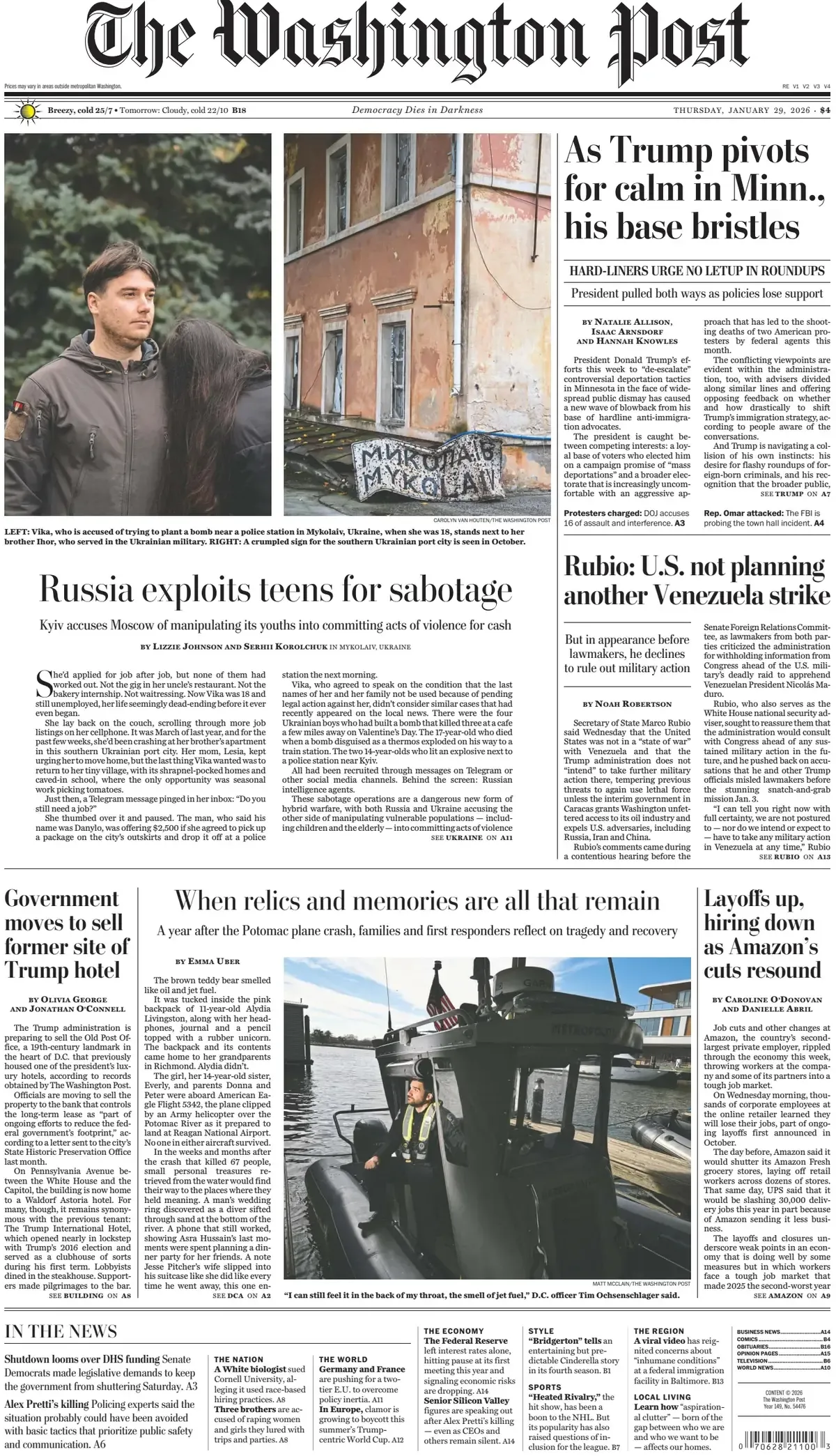
Meanwhile, the “fierce backlash” against Trump’s deportation agenda “has begun to break out across American culture,” sparking a “broad cultural revolt” spanning business, sports and entertainment, The Associated Press said. Bruce Springsteen yesterday released a new song, “Streets of Minneapolis,” valorizing the city’s stand against “Trump’s federal thugs” and mourning their killing of Alex Pretti and Renee Good. Martha Stewart lamented on social media that “we can be attacked and even killed by federal troops.”
What next?
The Justice Department is “bracing for a new wave of resignations” at the U.S. Attorney’s office in Minnesota amid “concerns within the office that the administration is taking potentially unlawful steps” in its Minneapolis raids, CNN said. Such an exodus could “decimate” the office as it pursues “cases against immigrants and protesters.” |