What happened
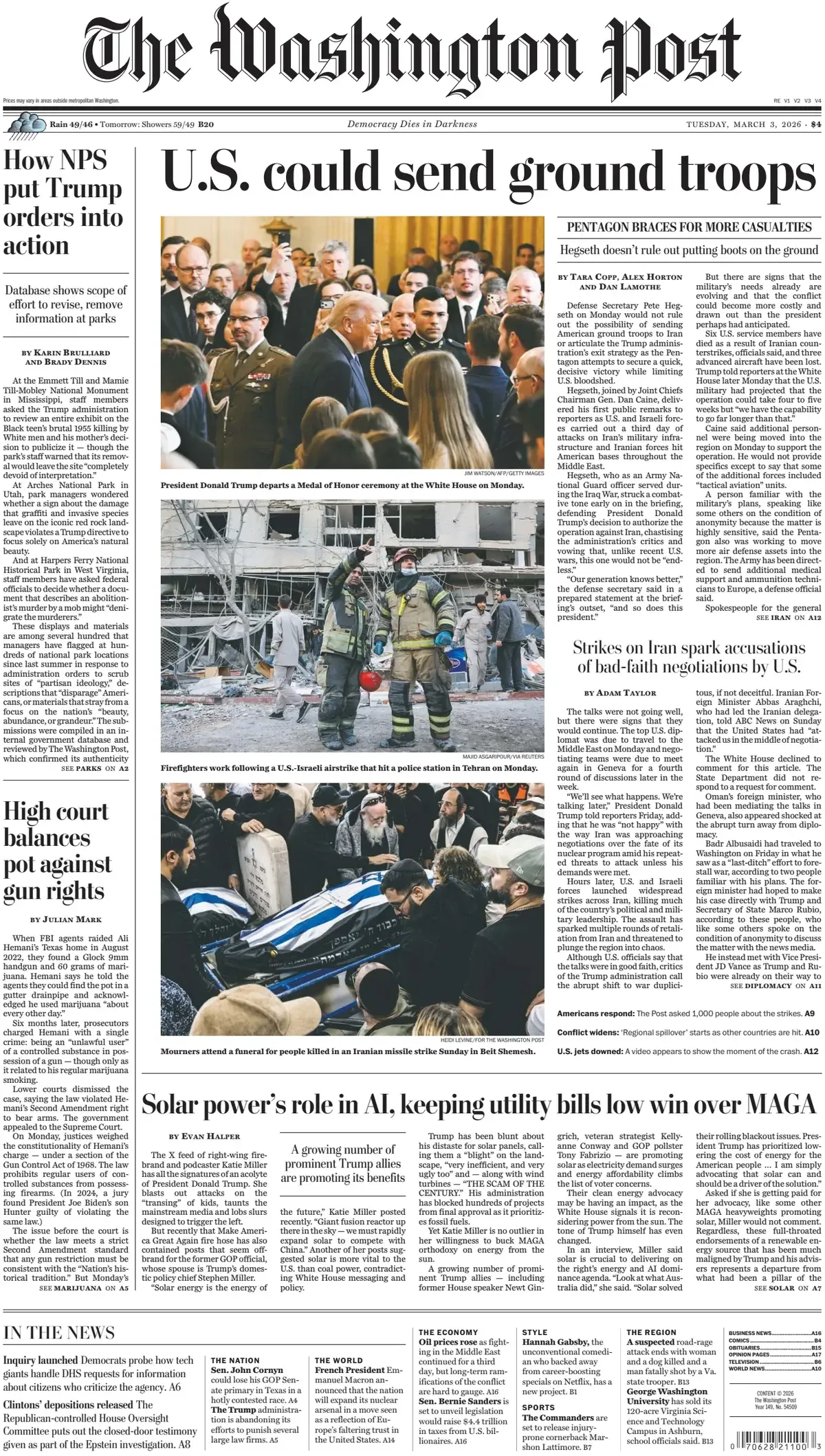
President Donald Trump yesterday said his military operation in Iran was projected to last “four to five weeks” but could “go far longer than that.” In the Trump administration’s first press conference on the war, Joint Chiefs Chair Gen. Dan Caine said the U.S. was sending more troops and fighter jets to the Middle East. Amid Iranian drone strikes that damaged the U.S. embassies in Kuwait and Saudi Arabia, the State Department urged Americans to immediately leave 14 Middle East countries due to “serious safety risks.” The Pentagon said two more U.S. service members had been killed, bringing the U.S. death toll to six. Caine said he expected “additional losses.”
Who said what
In the 72 hours since the U.S. and Israel began bombing Iran, “the war has already consumed nearly the entire Middle East, reached the gates of Europe and raised new fears of attacks on American soil,” Axios said. With at least 11 countries now directly involved, the “sheer geographic scope of the war is staggering.”
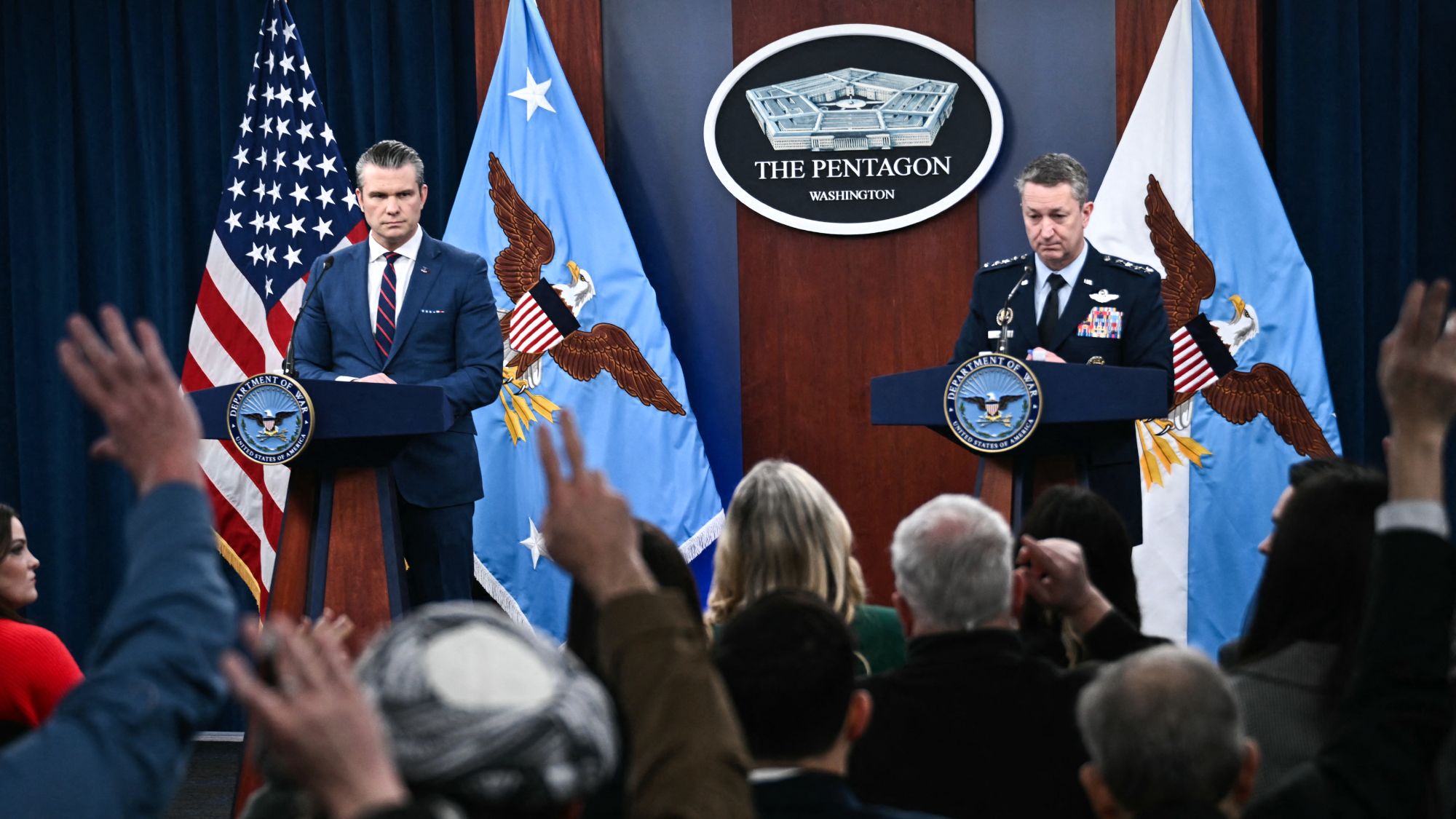
“This is not Iraq,” Defense Secretary Pete Hegseth (pictured above left, with Caine) said at yesterday’s press conference. “This is not endless.” But the “intensity” of the strikes and counterstrikes and “the lack of any apparent exit plan set the stage for a prolonged conflict with far-reaching consequences,” The Associated Press said. “Places deemed safe havens in the Mideast like Dubai have seen incoming fire,” energy prices have “shot up” and, highlighting the “chaos of the conflict,” the Pentagon said Kuwait had “mistakenly shot down” three U.S. F-15 fighter jets.
In just over a year, Trump has “authorized military action in seven nations,” Tyler Pager said in a New York Times analysis. But authorizing war against Iran is the “biggest gamble of his presidency.” Trump and his aides have “come up with an astonishing array of different, even contradictory, rationales” for the war, Susan Glasser said at The New Yorker. So “perhaps the most urgent question thus far” is whether the U.S. can “win a war of its choosing when it cannot explain why it chose to fight or what, exactly, victory would mean?”
What next?
The U.S. and Israel are causing extensive damage in Iran, but Tehran’s “waves of missile and drone attacks” are testing America’s ability to defend U.S. bases, embassies and allies “across a huge swath of the Middle East,” said The Wall Street Journal. The “depth of Iran’s stockpiles,” including cheap drones, “point to one area where it could try to outlast the U.S., which is facing a shortage of munitions” for its missile defense systems. |