The Week The Week
flag of US
US
flag of UK
UK
https://cdn.mos.cms.futurecdn.net/flexiimages/jzblygzdxr1769609154.gif

SUBSCRIBE

Try 6 weeks free

Sign in
  • View Profile
  • Sign out
  • The Explainer
  • Talking Points
  • The Week Recommends
  • Podcasts
  • Newsletters
  • From the Magazine
  • The Week Junior
  • More
    • Politics
    • World News
    • Business
    • Health
    • Science
    • Food & Drink
    • Travel
    • Culture
    • History
    • Personal Finance
    • Puzzles
    • Photos
    • The Blend
    • All Categories
  • Newsletter sign up Newsletter
  • Brand Logo
    Primary lessons, Assad verdict and mail-in voting ruling

     
    TODAY’S ELECTIONS story

    Left loses key Wisconsin race, wins in Minnesota

    What happened
    Primaries yesterday in Minnesota and Wisconsin offered mixed verdicts for the progressive and establishment wings of the Democratic Party and for candidates endorsed by President Donald Trump. In yesterday’s most-watched contest, establishment-backed David Crowley eked out a projected win in Wisconsin’s Democratic gubernatorial primary, beating democratic socialist Francesca Hong by less than 1%. He will face Rep. Tom Tiffany (R). Michael Alfonso, the Trump-backed son-in-law of Transportation Secretary Sean Duffy, won the GOP primary for Tiffany’s seat. 

    Trump-endorsed “MyPillow Guy” Mike Lindell lost Minnesota’s GOP gubernatorial primary to state House Speaker Lisa Demuth. She will face Sen. Amy Klobuchar (D). Minnesota Lt. Gov. Peggy Flanagan (D), the more progressive candidate in the primary to replace retiring Sen. Tina Smith (D), beat Rep. Angie Craig and will face GOP former sports broadcaster Michele Tafoya.

    Who said what
    Crowley (pictured above, with Hong), the Milwaukee County executive, dropped out of the “chaotic race” in July but “reactivated his campaign” after the “implosion” of two top establishment rivals, CNN said. His “stunningly narrow, surprise win” over Hong “seemed to settle little in the party’s national battle” between establishment and “insurgent, populist” left, The Associated Press said. A week after progressive Abdul El-Sayed “edged” his moderate rival by a similarly “razor-thin” margin in Michigan’s Democratic Senate primary, “neither side” appears to be “winning the argument convincingly.”

    What next?
    In South Carolina, Trump-endorsed Sen. Darline Graham (R) advanced to an Aug. 25 runoff in yesterday’s special GOP primary to replace her brother, the late Sen. Lindsey Graham, on November’s ballot. She will face hardline conservative Rep. Ralph Norman.


    TODAY’S INTERNATIONAL story

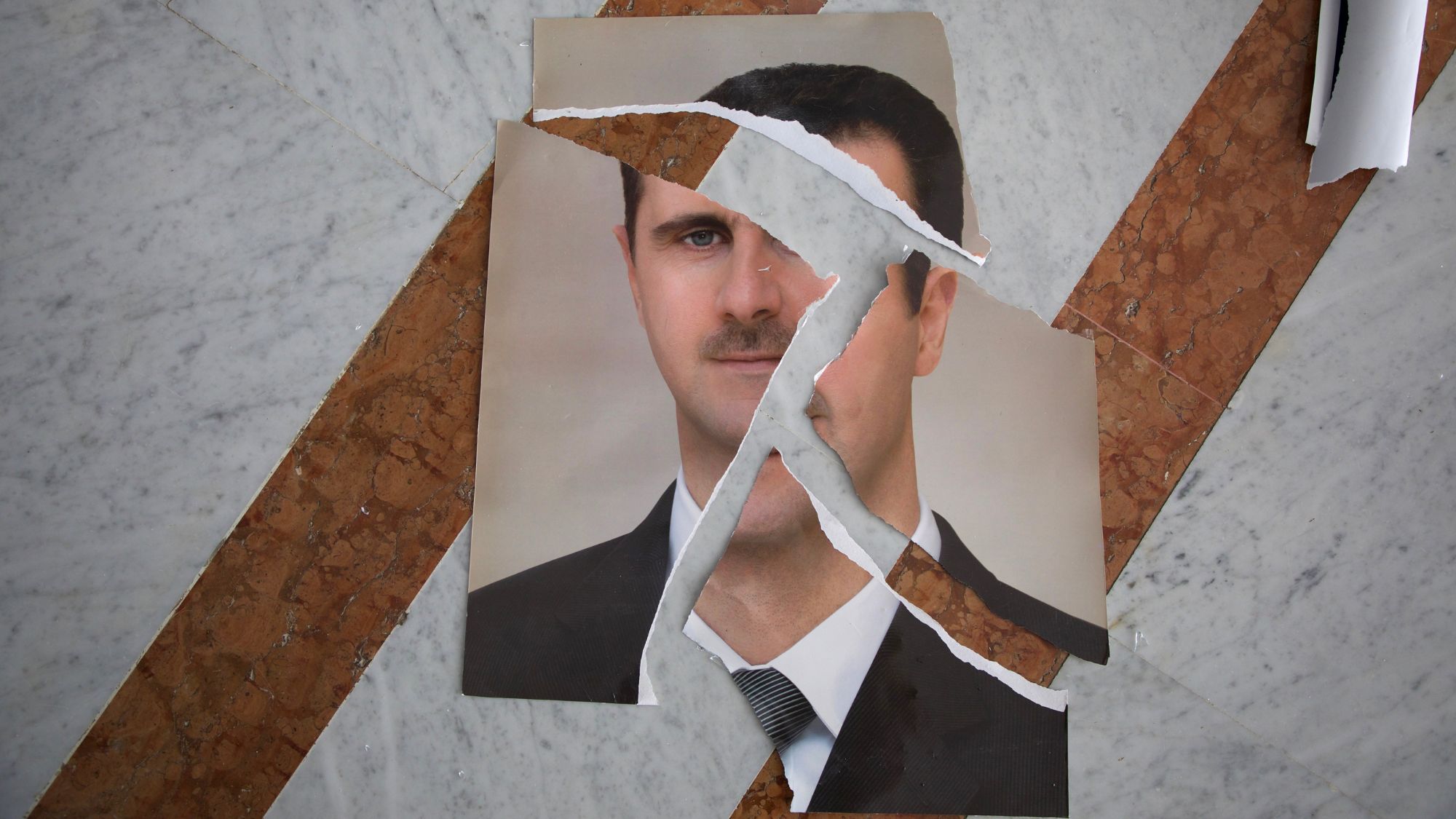
    Syria sentences Assad to death in absentia

    What happened
    A Syrian court yesterday sentenced ousted President Bashar al-Assad to death, finding him guilty of murder, torture and crimes against humanity committed before and during Syria’s bloody 14-year civil war. Assad, his younger brother Maher and six of the seven other former officials handed death sentences by the Damascus court were tried in absentia. Assad’s cousin Atef Najib stood in a cage in the courtroom for the verdicts.

    Who said what
    Yesterday’s verdicts were the “first against Assad or any members of his inner circle since his family’s five decades in power came to an end 20 months ago,” The Associated Press said. They are “mostly symbolic” for Assad and his brother, who both fled to exile in Russia after their government’s “stunning collapse.” The sentences were nonetheless “met with celebrations” across the country, The New York Times said. Many Syrians have become “increasingly resentful and impatient at the lack of accountability” and the “pace of trials,” even as legal experts “cautioned that transitional justice takes time.” 

    What next?
    The verdicts handed down by Syria’s “transitional authorities” should “set a strong legal precedent for others accused of crimes” under the previous regime, said Al Jazeera. Syria’s National Commission for Transitional Justice said Najib can appeal his verdict but the absent defendants forfeited that right.


    TODAY’S VOTING RIGHTS Story

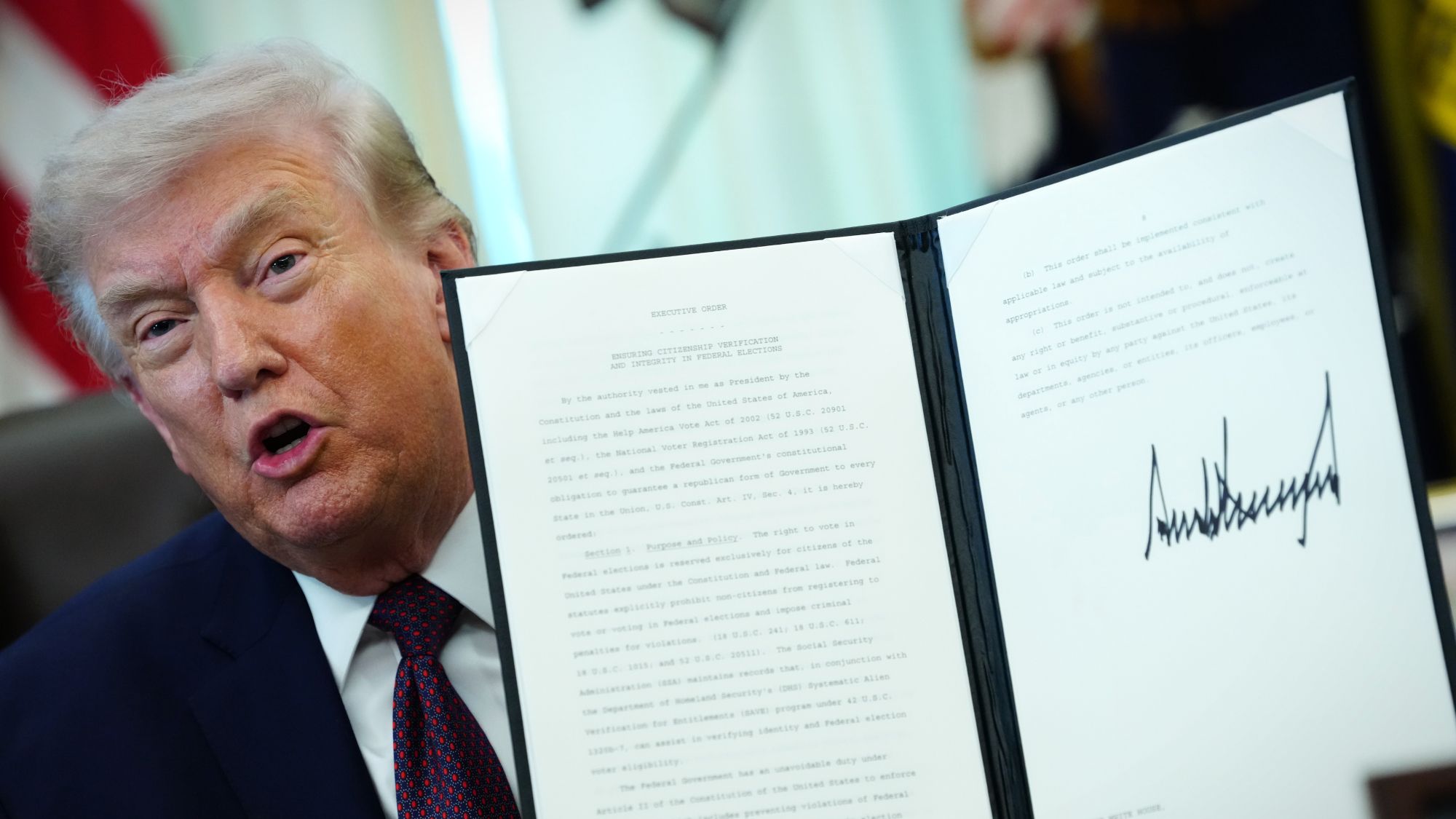
    Judge blocks Trump’s mail-in voting limits nationwide

    What happened
    A federal judge in Boston yesterday issued a second preliminary injunction, this one nationwide, barring the U.S. Postal Service from carrying out President Donald Trump’s executive order to limit mail-in voting before the November midterms. The president “has no authority to regulate elections,” U.S. District Judge Indira Talwani ruled, and protecting voters from “chaos” and confusion “heavily outweighs the executive’s attempt to unconstitutionally insert itself into the domain of election regulation.”

    Who said what
    Under Trump’s order, “USPS is supposed to compile lists of eligible voters from states and deliver absentee ballots only to people on those lists,” NPR said. Talwani initially blocked the order in the 23 Democratic states that had sued, and Trump appealed that ruling last month. Her expanded injunction “creates another legal hurdle”, should Trump “get the initial injunction lifted by the U.S. Supreme Court,” The Associated Press said. 

    What next?
    Trump has pushed Congress to limit mail-in ballots and other voting rules, but the Senate “bowed to political reality” early Saturday and adjourned for five weeks “without any concrete steps toward passing the voting restriction bill,” The New York Times said. Right-wing broadcaster Wayne Allyn Root yesterday urged Trump to enact his voting limits by declaring a “national security emergency for elections.” Trump, calling in, replied that “stranger things have happened.”


    It’s not all bad

    Researchers have recreated in a lab the “toxic-yet-promising” chemicals found in larkspur and wolfsbane, potentially leading to “improved, naturally sourced therapeutics,” said Michigan State University. The chemicals, called diterpenoid alkaloids, have “mind-bendingly complex structures,” and teams from Michigan State and the Czech Academy of Sciences worked together to painstakingly identify pathways to producing them. Diterpenoid alkaloids can cause paralysis in the “tiniest doses,” but can also be “leveraged for the greater good” to treat pain, malaria and cancer.


    Under the radar

    Today’s eclipse could reveal more about the sun

    The total solar eclipse in parts of Europe today is bringing out all the scientists. During a total eclipse, the moon completely covers the face of the sun, darkening the sky and revealing just the sun’s outer atmosphere, the corona. This astronomical ring provides a unique opportunity to learn more about the sun and its effect on Earth.

    Researchers around the world are investigating the eclipse in different ways. NASA is taking its WB-57 research aircraft to the skies with the mission of “chasing an eclipse,” said The Guardian, though “in reality the eclipse is chasing them.”

    The aircraft’s cameras will “capture at least 20 images per second” to “learn more about the formation of prominences (solar material that gets suspended above the sun’s surface), better understand the corona and how it gets heated,” and “investigate how material in the corona and the solar wind are related,” said NASA. Scientists at the European Space Agency will be studying the eclipse to learn more about solar winds.

    We are “incredibly lucky” that the moon is “400 times smaller than the sun,” as well as “400 times closer to us,” Allan Sacha Brun, an astrophysicist at France’s Atomic Energy Commission, said to Agence France-Presse. “Our work aims to understand the physical mechanisms underlying the sun’s activity” and “put the sun back into context within its evolutionary timeline, from its birth to its death.”


    On this day

    August 12, 1990

    Sue, the best-preserved Tyrannosaurus rex fossil found to date, was discovered near the city of Faith, South Dakota, by explorer Sue Hendrickson. It is still the most complete T. rex discovered, but not the most expensive; that record goes to Gus, a T. rex fossil that sold for $50.1 million last month. 


    TODAY’S newspaperS

    ‘Gone too far’

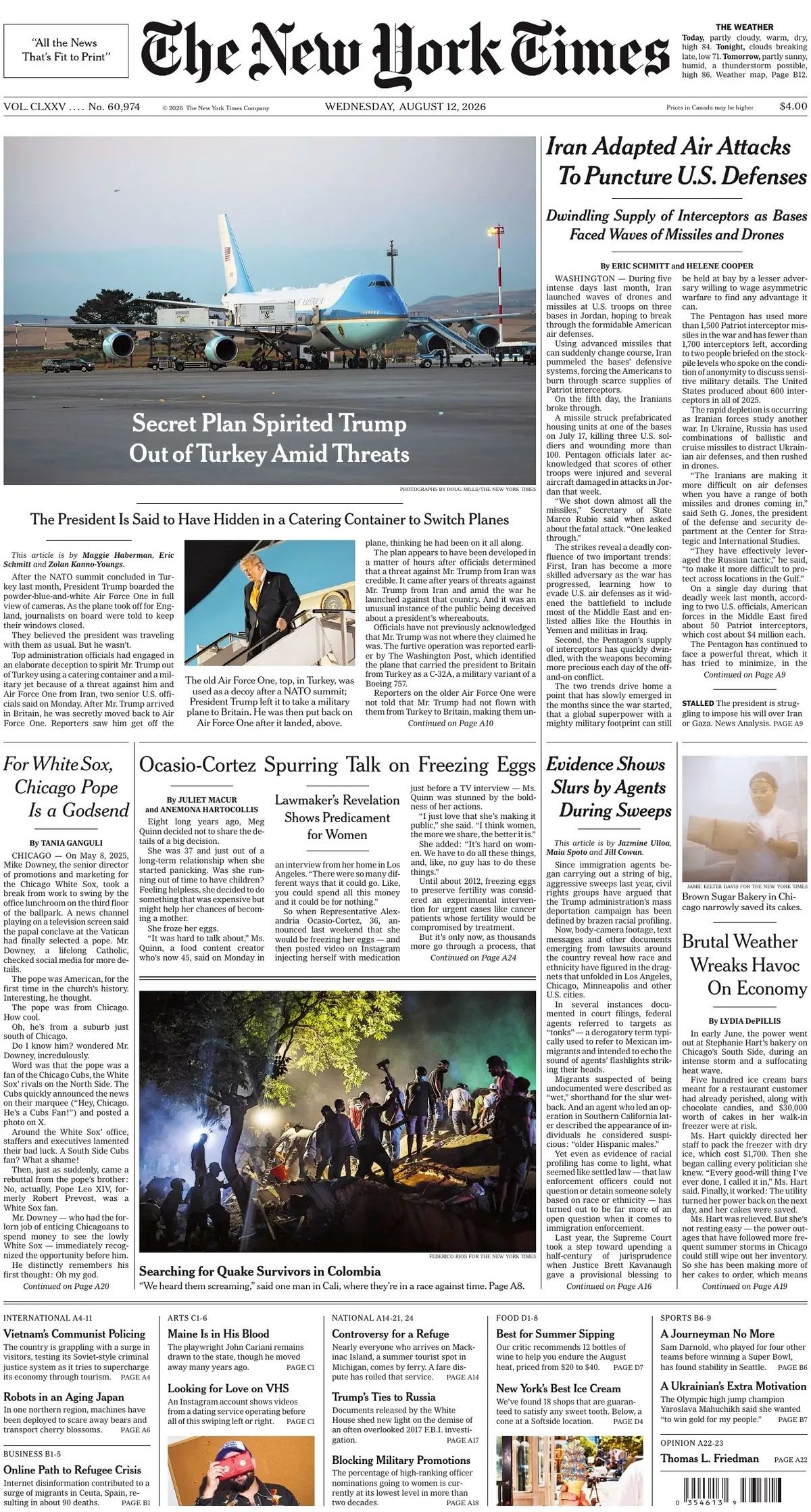
    “ICE arrests witness in probe of shooting,” the Houston Chronicle says on Wednesday’s front page. “Poll finds big shift on force by ICE,” with “more independents” saying “it’s gone too far,” says USA Today. “Evidence shows slurs by agents during sweeps,” The New York Times says. “Trump’s plane ruse put press, his staff in danger,” says The Philadelphia Inquirer. “Trump digs in as high court blocks policies,” The Washington Post says. Prediction markets “a new threat to trust in elections,” says the Los Angeles Times. “Vet freed from jail in Russia after long ordeal,” says The Boston Globe. “Rural county, suburb unplug Flock cameras,” The Minnesota Star Tribune says. “Protesters heckle Flock official,” says The Columbus Dispatch.

    ► See the newspaper front pages


    Tall tale

    Fake it till you unmake it

    Even after being jailed for building a fraudulent Roman amphitheater in Italy’s Vicenza province, Franco Malosso is refusing to comply with a government order to clear the site. Malosso claimed he discovered the purportedly ancient ruin after a 2005 landslide. But a 2016 investigation declared his tourist attraction an obvious hoax, made with modern materials. Many of Malosso’s claims were also impossible “due to dating discrepancies” and other errors, said Popular Mechanics. For example, he said Shakespeare’s fictional Juliet had lived there, having “confused Vicenza with Verona.”


    Morning Report was written and edited by Helen Brown, Nadia Croes, Catherine Garcia, Scott Hocker, Anya Jaremko-Greenwold, Justin Klawans, Rafi Schwartz and Peter Weber, with illustrations by Stephen Kelly and Julia Wytrazek.

    Image credits, from top: Nam Y. Huh / AP Photo; Ali Haj Suleiman / Getty Images; Aaron Schwartz / CNP / Bloomberg via Getty Images; Illustration by Julia Wytrazek / Getty Images
     

    Recent editions

    • Evening Review

      Behind the Wildberries attacks

    • Morning Report

      England faces drought crisis as heatwave bears down

    • Evening Review

      Has the world given up on Afghanistan?

    VIEW ALL
    TheWeek
    • About Us
    • Contact Future's experts
    • Terms and Conditions
    • Privacy Policy
    • Cookie Policy
    • Advertise With Us
    • FAQ
    Add as a preferred source on Google Add as a preferred source on Google

    The Week UK is part of Future plc, an international media group and leading digital publisher. Visit our corporate site.

    © Future Publishing Limited Quay House, The Ambury, Bath BA1 1UA. All rights reserved. England and Wales company registration number 2008885.