President Trump has revived the 19th-century Monroe Doctrine to justify his aggressive foreign policy.
What is the Monroe Doctrine?
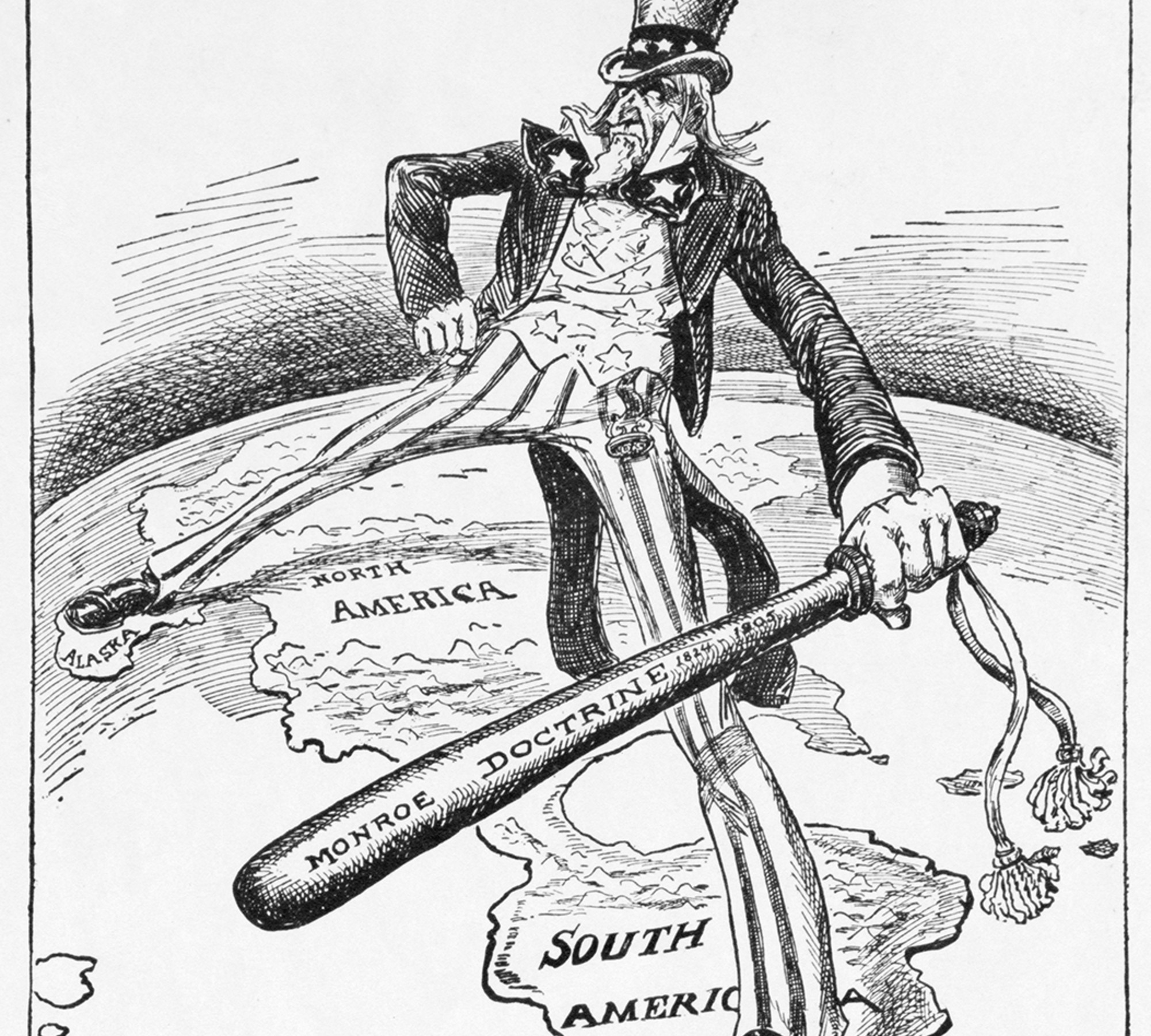
It’s a foreign policy vision that was first articulated by President James Monroe in 1823. Monroe declared that the Western Hemisphere was offlimits to European colonization, and that political meddling in the Americas by Old World powers would be considered a threat to U.S. “peace and safety.” This policy—which in the 1850s became known as the Monroe Doctrine—landed after a decade-long stretch in which Venezuela, Mexico, Guatemala, and a dozen other former Spanish colonies in the Americas had won independence and opened their once-closed ports to American and British trade. With rumors circulating that Spain might try to reconquer its New World possessions, and with Russia claiming control of the Pacific Coast from Alaska to Oregon, both Washington and London were keen to protect their hemispheric interests. The two powers discussed a joint declaration opposing further European intervention in the Americas, but Secretary of State John Quincy Adams objected, saying the U.S. should act unilaterally rather than “come in as a cockboat in the wake of the British man-of-war.” And so, in December 1823, Monroe told Congress that the Americas “are henceforth not to be considered as subjects for future colonization by any European powers.”
Did other countries take that warning seriously?
Not initially. The young U.S. was not yet a major military power, making Monroe’s policy “much more of an aspirational goal than a declaration of capacity,” said Britta Crandall, a political scientist at Davidson College. It didn’t stop the French and British navies from blockading Argentina’s La Plata River from 1838 to 1850, or the French from invading Mexico and installing a puppet monarch, the Austrian-born Maximilian I, while the U.S. was distracted by the American Civil War. It was only as the century came to an end that the U.S. started to meaningfully enforce the doctrine. It was invoked in the 1898 Spanish-American War, when the U.S. helped liberate Cuba from Spanish rule—and secured control of Madrid’s former possessions of Puerto Rico, Guam, and the Philippines. Emboldened by that victory, President Theodore Roosevelt would radically expand the doctrine after taking office in 1901.
How did he change it?
When British, German, and Italian gunboats blockaded Venezuelan ports in 1902 to collect debts, Roosevelt told the Europeans to quickly strike a deal with the dictatorship in Caracas or else see an American fleet dispatched against their ships. The Europeans heeded the warning. But Roosevelt didn’t want the U.S. to become a shield for the region’s corrupt rulers, who, he said, deserved a “spank.” So in 1904, he laid out what became known as the Roosevelt Corollary to the Monroe Doctrine. The U.S., he said, must act as “an international police power” to keep America’s backyard “stable, orderly, and prosperous.” It was the start of a new era of American interventionism.
What happened?
From 1903 to 1934, the U.S. Marines were deployed to a half-dozen countries in the hemisphere. They included Honduras, where American troops were sent seven times to quell revolutions; Nicaragua, which was occupied nearly continuously from 1912 to 1933; and the Dominican Republic, where Marines installed a pro-American president in 1916 and occupied the country for the next eight years. A primary goal was to protect the interests of U.S. companies such as United Fruit, which controlled the trade in bananas, sugarcane, and other goods. A powerhouse in Washington, the company backed coups against elected governments and the installation of accommodating puppet governments, or “banana republics.” These occupations became military quagmires, in which hundreds of U.S. soldiers and tens of thousands of civilians were killed. “These are the Forever Wars of their era,” said historian Jay Sexton. “They begin to become very, very unpopular” in the U.S. In 1933, President Franklin Delano Roosevelt put an end to the Banana Wars era with his Good Neighbor Policy, which stressed regional cooperation over military force.
Did that policy last?
For a while. But the Monroe Doctrine was resurrected with the start of the Cold War, and invoked to combat the spread of Soviet-style communism across Latin America. In 1954, shortly after CIAbacked insurgents toppled Guatemala’s leftist government, Secretary of State John F. Dulles said the “intrusion of Soviet despotism” into the country was “a direct challenge to our Monroe Doctrine, the first and most fundamental of our foreign policies.” Over the following decades, the U.S. would covertly support the overthrow of leftist governments in Bolivia, Cuba, Chile, and Nicaragua. Such meddling fell out of favor with the collapse of the Soviet Union, and in 2013, then–Secretary of State John Kerry won applause when he told an audience of Latin American officials, “The era of the Monroe Doctrine is over.” But President Trump, who keeps a portrait of Monroe near his Oval Office desk, has brought it back to life, calling his approach to foreign policy the “Donroe Doctrine.”
What does Trump’s doctrine involve?
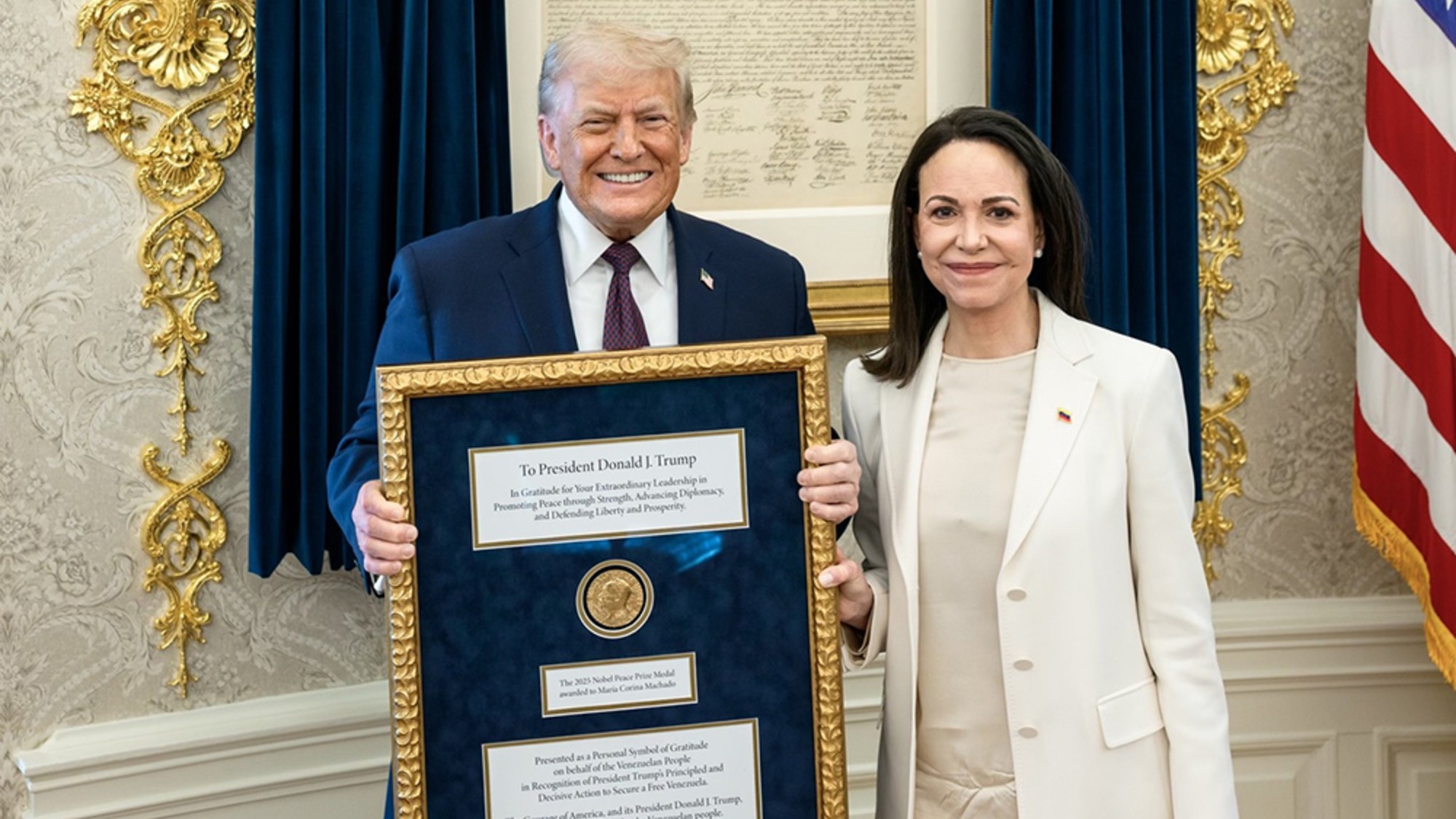
In its recent National Security Strategy document, his administration laid out a “Trump Corollary,” declaring its intent to combat mass migration, drug trafficking, and “hostile foreign incursion or ownership of key assets” in the hemisphere. The administration soon followed through with the removal of Venezuelan President Nicolás Maduro— whom it accused of shipping drugs to the U.S. and hosting “foreign adversaries”— and Trump’s subsequent assertion that the U.S. would “run” Venezuela. Trump is now threatening to use military force in Mexico and Colombia, to “take back” control of the U.S.-built Panama Canal, and to buy or forcibly annex Greenland. The Monroe Doctrine “was very important, but we forgot about it,” Trump said this month. “We don’t forget about it anymore.”