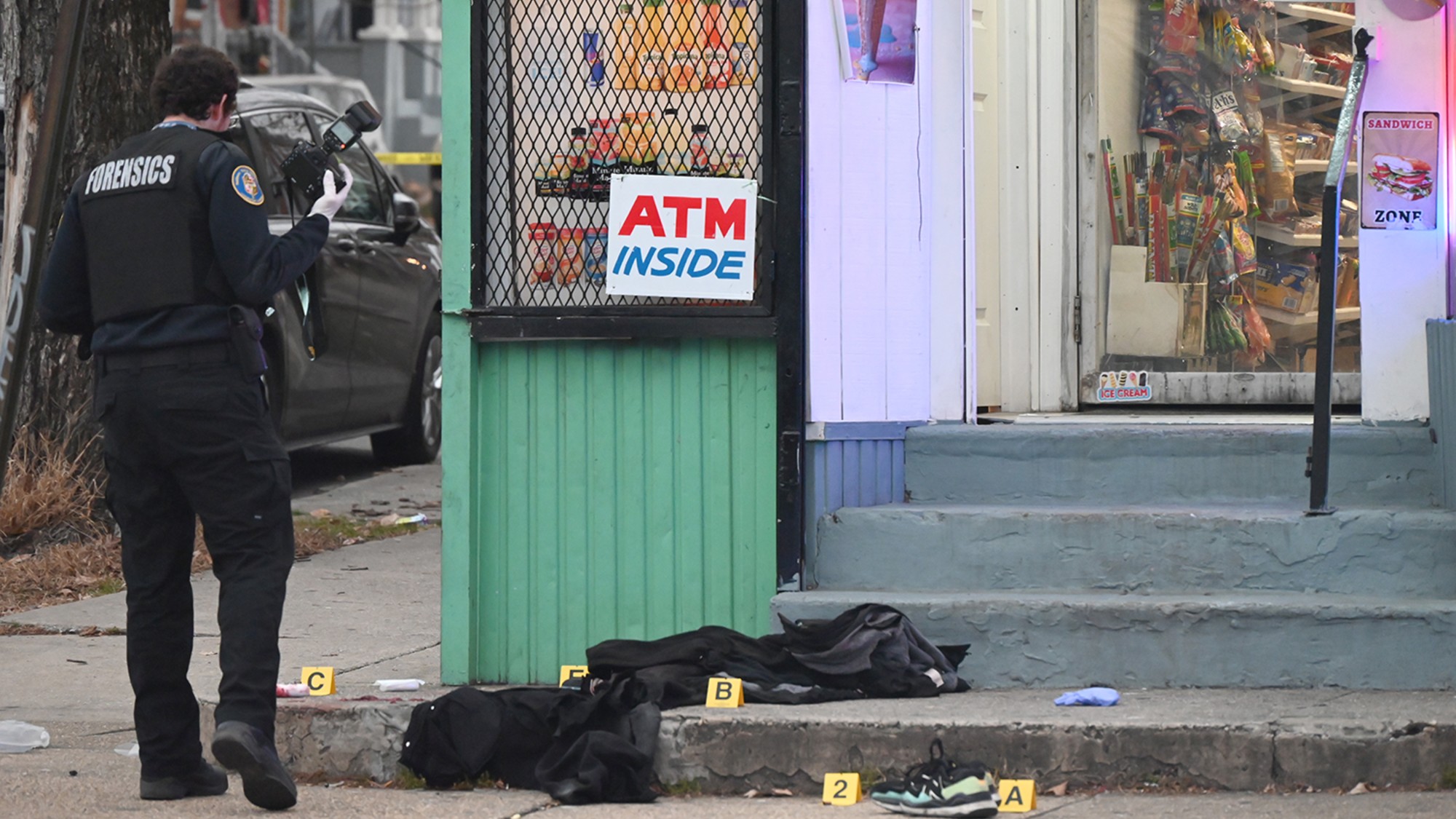
Homicides have hit historic lows in cities across the nation. Criminologists are trying to puzzle out why.
What do the statistics show?
That the U.S. is experiencing the largest and most sustained drop in homicides on record. After spiking sharply at the start of the pandemic, peaking at 6.8 murders per 100,000 people in 2021, the homicide rate started to come down in 2022. Since then, murders have dropped by an average of 16% a year; they fell 21% across 35 large cities from 2024 to 2025, according to the nonpartisan Council on Criminal Justice. Killings declined in cities in blue and red states: Chicago and Baltimore both recorded a 31% drop (to 416 and 133 homicides, respectively), Salt Lake City 27% (to 8), and St. Louis 11% (to 121). If a similar decline is reflected in national data, the homicide rate will drop to 4 per 100,000, the lowest since 1900. Early figures for this year suggest the downward trend is continuing: New York City registered 102 murders from January to May, the lowest number on record for the period and down 21% from the same months in 2025. Such numbers are “absolutely astonishing,” said CCJ president Adam Gelb. “It’s a historic collapse in the homicide rate.” Other violent crimes are also down. From 2019 to 2025, the robbery rate fell 36% in major cities, carjackings 29%, and domestic violence incidents 19%.
What’s driving this drop?
Some of it is a reversal of the pandemic effect. The factors that sent the murder rate soaring 30% in 2020—social disruption, workplace and school closures that put young men on the street, stay-home recommendations that trapped people with abusers— faded as normal life returned. But murders have since dropped well below pre-pandemic levels. The Trump administration has a simple explanation: It says President Trump “turned the tide” by “removing savage criminal illegals” and flooding blue cities with federal agents. Experts give that claim no credibility, noting that murders started dipping years before Trump returned to office. Instead, it seems as though multiple factors are behind the decline, including important shifts in policing.
How has policing changed?
After temporarily retreating from many communities following the May 2020 killing of George Floyd by a Minneapolis police officer, which led to Black Lives Matter protests and calls to defund the police, “cops got back to work,” said former New York Police Department chief Kenneth Corey. They also became “much more focused on gun violence.” Part of that involved zeroing in on the small number of repeat violent offenders responsible for an outsize share of crimes. Advances in DNA technology and the spread of surveillance cameras also helped catch killers. “There’s nowhere in this city where you can walk without being on video,” said Frank Simpson, chief homicide prosecutor in Camden, N.J., which recorded 12 murders last year, down from 67 in 2012. But some experts question the role of law enforcement in the homicide drop, noting murders have fallen as police departments across the nation have lost manpower. Philadelphia, for example, has the fewest officers per capita in 40 years and just posted its lowest annual homicide total—222—since 1966.
What else could explain the decline?
Crime experts and local leaders point to the $1.9 trillion American Rescue Plan Act (ARPA), which then-president Joe Biden signed in March 2021 to combat the pandemic’s impacts. It sent hundreds of billions of dollars to state and local governments, which in many locales funded community violence intervention (CVI) programs. Indianapolis Mayor Joe Hogsett credits his city’s plunging murder rate in large part to Indy Peace, a CVI program that offers support to gunshot victims and their families in the hope of preventing retaliatory shootings. “It saves lives,” said Hogsett. The federal windfall also went to other community investments that may have made a difference: summer jobs programs for teens, after-school programs, community centers, and mental health services. “I think it has gone unrecognized how incredibly effective it was in stabilizing communities,” Princeton University sociologist Patrick Sharkey says of ARPA. Other changes in American habits could also be curbing violence.
What kind of changes?
A decline in drunkenness —54% of U.S. adults now say they drink alcohol, the lowest in nearly 90 years — has likely helped shrink the number of murders. “You get drunk, you do something stupid,” said Rafael Mangual, a fellow at the conservative Manhattan Institute. Experts also nod to the effects of social media — many young people now socialize online rather than in person — the way the 2020–22 homicide spike took potential killers off the street, and even the possible influence of GLP-1 weight loss drugs, which may diminish impulsive behaviors. But none of these factors can explain the sheer scale of the murder drop, said crime analyst and former CIA agent Jeff Asher, and neither can changes in poverty or the availability of guns. “We didn’t fix any of those things,” Asher said. “So, what you’re left with is a bunch of explanations, none of which explains all of it.”
How low will the murder rate go?
Experts don’t know that either—and point to two factors that could nudge it back up. One is that the Biden stimulus money is running out, and its effect “will wane substantially this year,” said John Roman, a University of Chicago criminal justice researcher. Then there are the steep cuts to community funding by the Trump administration. As part of its offensive against “DEI and cultural Marxism,” it terminated at least 373 grants from the Department of Justice’s Office of Justice Programs last year, wiping out some $500 million in funding for efforts including CVI programs, victim services, and programs to aid ex-offenders. Some experts call that a tragic miscalculation after such historic gains. “Don’t take our foot off the gas,” said criminal justice researcher Jennifer Doleac. “We do have control over our destiny here.”