The Week The Week
flag of US
US
flag of UK
UK
https://cdn.mos.cms.futurecdn.net/flexiimages/jzblygzdxr1769609154.gif

SUBSCRIBE

Try 6 weeks free

Sign in
  • View Profile
  • Sign out
  • The Explainer
  • Talking Points
  • The Week Recommends
  • Podcasts
  • Newsletters
  • From the Magazine
  • The Week Junior
  • More
    • Politics
    • World News
    • Business
    • Health
    • Science
    • Food & Drink
    • Travel
    • Culture
    • History
    • Personal Finance
    • Puzzles
    • Photos
    • The Blend
    • All Categories
  • Newsletter sign up Newsletter
  • The Week’s Saturday Wrap
    The real threat to election security, the sailors stuck in the Persian Gulf, and Mick Jagger’s lost wisdom

     
    controversy of the week

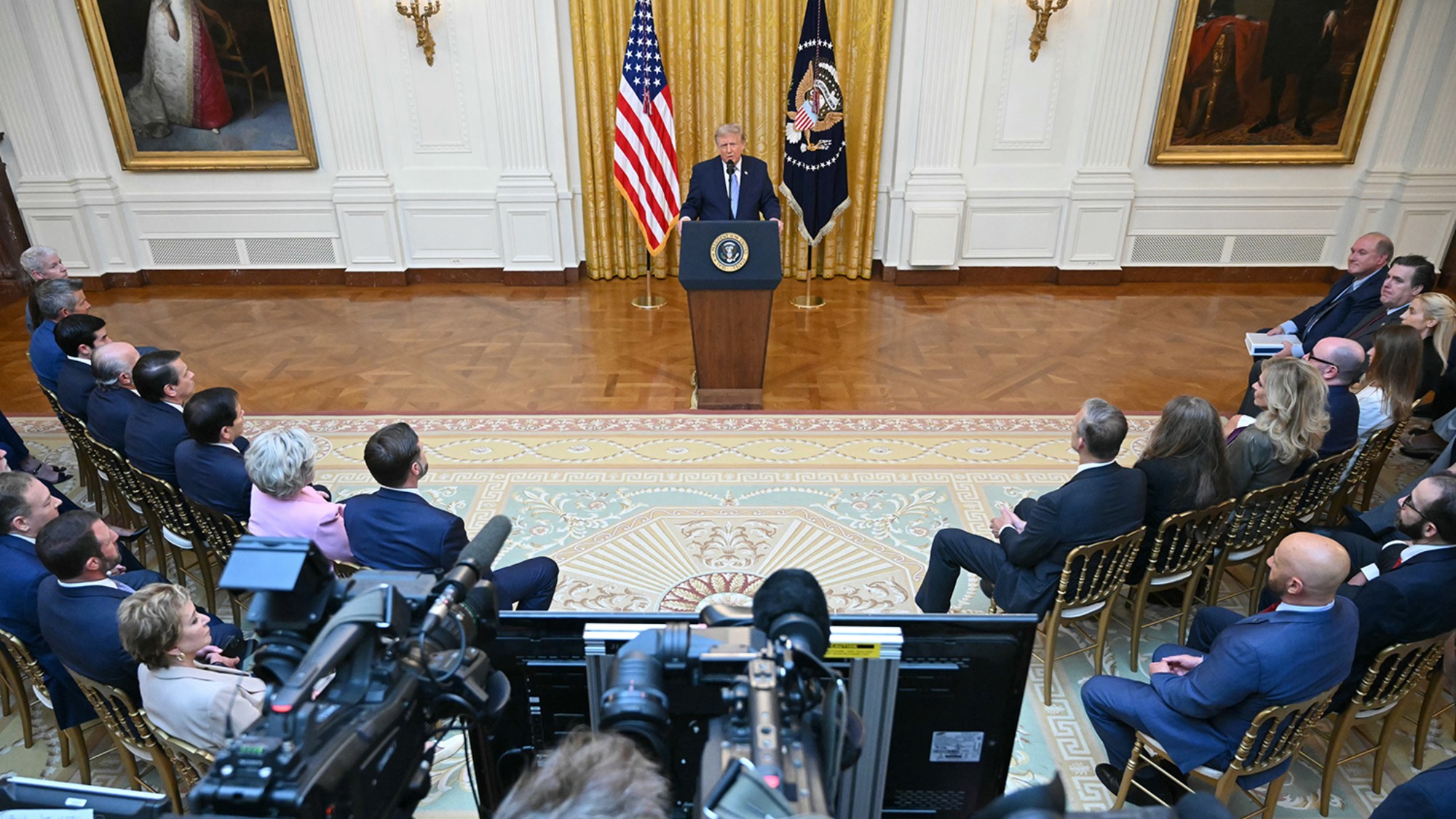
    Trump: The real meaning of his election security speech

    If there’s anything Donald Trump enjoys more than “relitigating the 2020 election,” said Peter Baker in The New York Times, it’s “finding ways to cast doubt on the 2026 election.” The president did both last week, giving a primetime address to the nation in which he called the U.S. electoral system “so broken and vulnerable that no one can possibly defend it.” Debuting a new conspiracy theory of how his 2020 loss was “rigged,” Trump accused China of having “bought, stolen, or hacked” millions of voter registration files in the run-up to that election. As for the validity of this November’s midterms—a likely “drubbing” for Republicans—Trump offered a grab bag of predicates for disputing the results, including the claim that at least 278,000 noncitizens are registered to vote in federal elections. In a curious move, said The Wall Street Journal in an editorial, the White House released a trove of intelligence documents that actually undermine Trump’s claims. The reports showed that the data China acquired was publicly available, and that Beijing largely stayed on the sidelines in 2020. As for the foreigners registered to vote, that claim relies on a dataset that’s plagued with errors. So why give this speech at all? It’s too late to enact Trump’s SAVE America Act package of voting restrictions in time for the midterms, and his supporters may now be wondering whether they should bother going to the polls in November, if our elections are as “catastrophically” broken as Trump claims.

    In fairness, said Tom Nichols in The Atlantic, Trump’s documents do prove that one hostile foreign power “engaged in operations against the 2020 election.” That nation is Russia, which the declassified reports state used a “range of measures” to boost Trump’s chances in 2020, from spreading rumors about Joe Biden’s supposed “criminal activity” in Ukraine to flooding social media with Trump-loving bots. Of course, our Putin-fan president didn’t mention the Russian autocrat in his speech. But he did emulate him, said Nick Catoggio in The Dispatch, issuing “fascist threats” to revoke the broadcast licenses of “fake news” networks ABC and NBC for the crime of declining to carry his lie-filled speech live.

    We know why Trump gave this speech, said Brian Tyler Cohen in The Bulwark. In February, The Washington Post reported that Trump allies had drafted a 17-page executive order that would let him use the “pretext” of foreign interference to declare a “national emergency.” Trump could then dispatch troops or ICE agents to polling places, and even seize voting machines. If Democrats rush to block the order in court, Trump could point to last week’s speech—its “nonsensical” content notwithstanding—as proof that he was warning of foreign meddling as far back as July.

    Trump’s attempted theft of the midterms is already underway, said Zolan Kanno-Youngs in The New York Times, and he’s using “the full arsenal of the federal government.” Led by “election deniers and loyalists,” the FBI and CIA are hunting for pretexts to discredit state election officials, while Justice Department lawyers craft legal arguments to prosecute them. Even the Postal Service is floating a Trump-approved plan to roll back mail-in voting. These are perilous times, said David A. Graham in The Atlantic, but “a close election is easier to steal than a decisive one.” Trump’s speech removed any doubt that he intends to sow “chaos” in November. Instead of discouraging Americans, that should inspire us to turn out in overwhelming numbers, and vote like our democracy depends on it.


    VIEWPOINT

    America’s original virtue

    “Only America was created by the force of the individual. Everywhere else in the world, the question that defines people is: Where do you come from? In America, it is: Where are you going? Americans are people who crossed oceans, fought the waves, reached the shore, and then burned the ship to make certain there was no going back. The country may be known for building strong communities around churches and sports teams, but the story of each individual American begins with the abandonment of what Thoreau called ‘quiet desperation.’ Someone stood alone, stripped of illusions, and understood that the only way to truly live is to set out.”

    Yair Lapid in The Atlantic


    briefing

    Stranded at sea

    The Iran war has trapped hundreds of ships in the Persian Gulf for months. What’s life like for their crews?

    How many sailors are in the Gulf? 
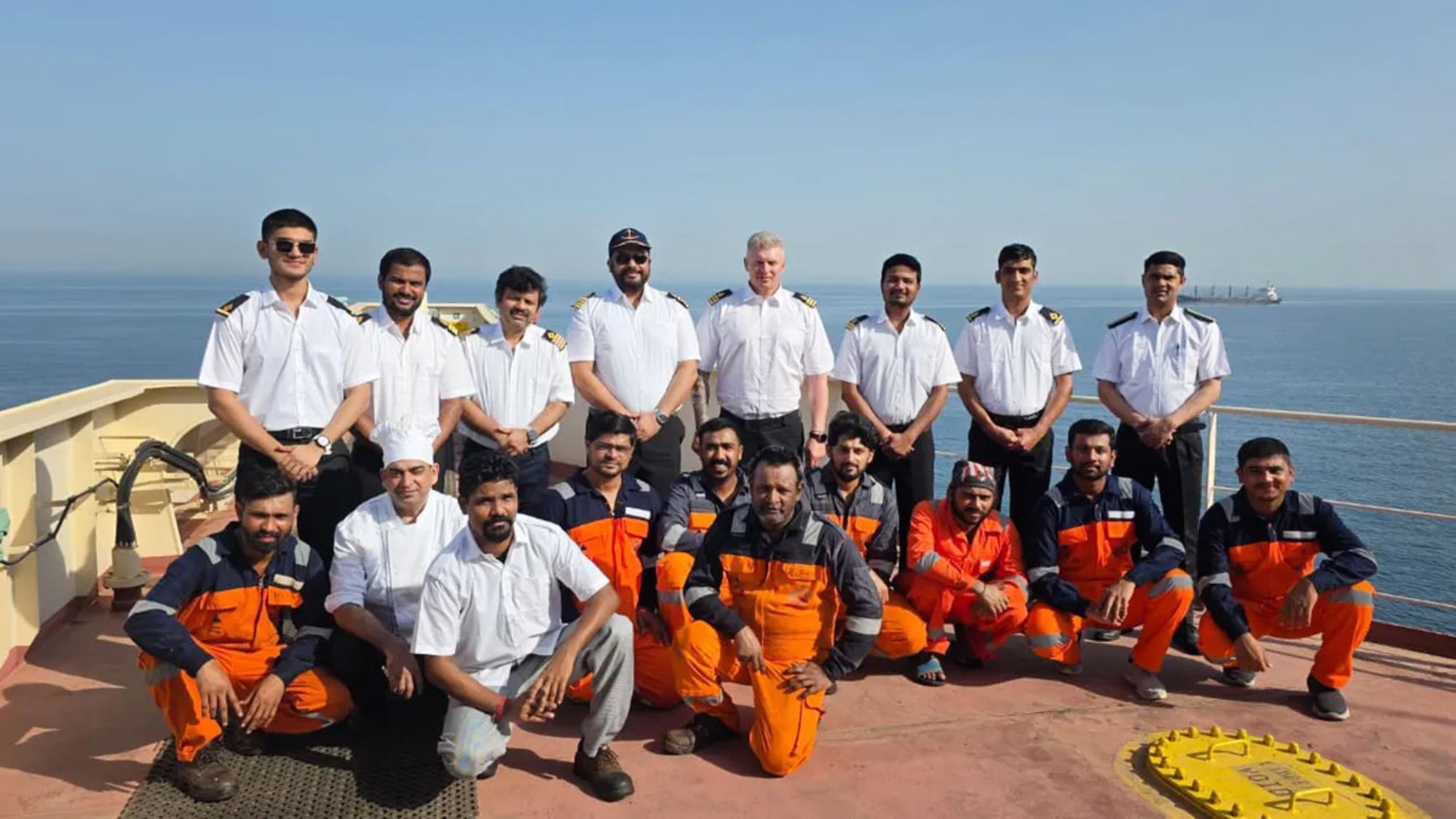
    About 6,000 seafarers are stuck onboard several hundred tankers and cargo ships, many of which have been stranded in the Gulf since the U.S.-Israeli war with Iran erupted in late February. “It’s as if we are trapped in a pond,” Shafiqul Islam, captain of a ship carrying some 37,000 tons of fertilizer bound for South Africa, told the BBC last month. “There’s only one way out.” That’s via the Strait of Hormuz, the narrow waterway between Iran and Oman through which 20% of the world’s oil and liquefied natural gas—as well as shipments of crucial commodities including fertilizer, aluminum, and helium—once flowed from Saudi Arabia, Kuwait, Bahrain, Qatar, Iraq, and Iran to global markets. Before the war, more than 100 ships a day transited the strait, which is 21 miles wide at its tightest point. After hostilities began, Iran declared the waterway closed and launched missiles and drones at vessels trying to sail through, grinding traffic to a halt. At one point, up to 20,000 mariners and 2,000 ships were stuck in the Gulf, with only a few vessels squeezing through the strait each day.

    How were they able to get out? 
    India, China, Pakistan, and other countries negotiated with Tehran for safe passage for their flagged vessels, and some tanker operators paid Iran up to $2 million for transit rights for individual ships. The logjam in the Gulf eased in June after Washington and Tehran struck a preliminary peace deal, after which about 30 ships a day were able to move through the strait. But that number dropped back to single digits last week after the war restarted. For the sailors stuck in this war zone—many of whom hail from the Philippines, India, Bangladesh, Pakistan, and Ukraine—the fear of death or injury is a constant. “Everyone is just exhausted,” said captain Hassan Khan, “both physically and mentally.” While standing on ships often loaded with highly explosive substances, the crews have watched missiles and drones streak overhead, and more than a dozen mariners have been killed in Iranian and U.S. strikes. Raman Kapoor, a tanker captain who had 10 days left on his tour when war erupted, watched helplessly in March as a nearby tanker exploded in flames after being hit by an unmanned craft. One crew member died. “Everyone was so scared,” Kapoor said. “We are just seafarers. We are not trained for any war.”

    What are days like onboard? 
    Long, monotonous, and hot. While the crews work to ensure their ships remain seaworthy, and movies and ping-pong serve as distractions, staving off boredom and depression is a struggle. “We do our best to keep [up] morale,” Abhijit Chopra, the captain of a tanker that’s been stuck for more than 120 days, told Bloomberg. “But there is definitely a sense of strain and uncertainty.” To entertain themselves and add some diversity to onboard meals, some crews are catching and cooking fish; they report that dried ribbonfish is surprisingly delicious. Calls home are a boon, but infrequent, because satellite phone time is limited and expensive. To protect sailors’ mental health, captains encourage crews to do everything together and to never leave anyone alone—even when they dine or relax. Sailors report that access to knives and other sharp objects is more tightly controlled than normal, to prevent people from harming themselves or others. Meanwhile, food, water, and medicine on many vessels is running low.

    Is anything being done about that? 
    Boats from nearby ports are delivering supplies, but prices keep going up. One Korean sailor told the BBC that it feels like suppliers “are trying to take advantage of the situation to make excessive profits.” The engineer of one ship said the cost of 180 tons of water has spiked in recent months from about $2,000 to $11,000. Price gouging isn’t the only way people are taking advantage of the stranded vessels. Scammers claiming to belong to Iran’s Revolutionary Guard have also tricked shipping firms into sending hefty payments to their cryptocurrency wallets in exchange for safe passage.

    Have there been any evacuation attempts? 
    A short-lived one. While a ceasefire was in effect in late June, the U.N.’s International Maritime Organization began ushering ships through the strait’s southern and northern corridors—avoiding the central lanes where Iran had laid mines. Some 130 ships and 3,000 sailors made it out, but the U.S.-backed initiative was scrapped within days after Iran attacked a tanker that was not taking part in the evacuation off Oman’s coast. Some sailors have taken matters into their own hands. Stuck at an Iranian port, Santosh Kumar borrowed nearly $7,000 to pay an agent to drive him to neighboring Armenia, where he boarded a flight to Dubai and then on to his native India. “My family just wanted me home alive,” he said. But such escapes have become increasingly difficult: Some Gulf Arab states have restricted short-term shore passes for sailors over security concerns. Many merchant sailors are now wondering if the profession has become too dangerous, because the Iran war is only the latest crisis to ensnare the shipping industry.

    What were the other crises?
    Mariners were stranded at sea during the pandemic, and drone attacks on vessels in the Black Sea have become routine since Russia’s 2022 invasion of Ukraine. Iran’s Houthi allies in Yemen—who attacked more than 100 vessels during the Hamas-Israel war—this week declared an embargo of Saudi Arabian shipping in the Red Sea, putting more commercial vessels in the line of fire. Merchant sailors seem increasingly wary of going to sea: Companies have struggled to secure replacement crews to relieve sailors in the Gulf whose contracts have expired, despite offering monthly salaries of up to $30,000. The war, said IMO Secretary-General Arsenio Dominguez, has shown that “people take seafarers for granted, they don’t value them.”



    Only in America

    A pro-Trump Christian group is fundraising to erect a cross on the moon. Justin Park, Iowa-based founder of the Cross on the Moon Coalition, said the plan is for the 8-foot metal cross to leave Earth on a commercial spaceflight, then complete its journey on a purpose-built lunar lander. Park says the group has already raised $250,000, but that “ideally, we would want to convert someone like Elon Musk” who might singlehandedly fund the project.


    talking points

    World Cup: A triumph despite Trump

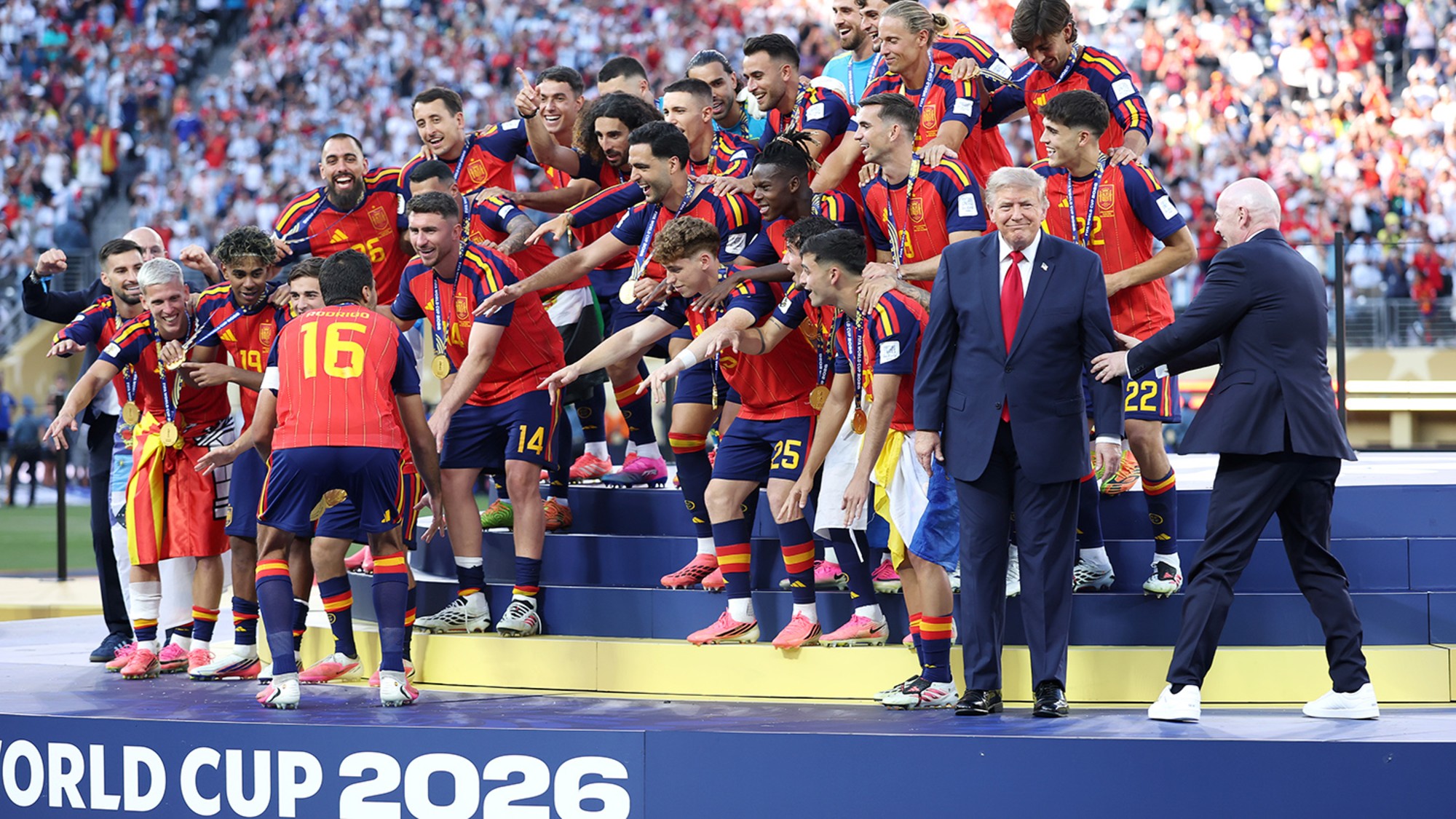
    President Trump couldn’t help but try to make last week’s World Cup final “all about him,” said Nancy Armour in USA Today. After Spain beat Argentina 1-0 at New Jersey’s MetLife Stadium, Trump walked onto the field to greet the champions and then—despite being booed by the 80,000-strong crowd—hung around “like one of those dorks in high school you couldn’t shake.” He glommed on to the Spanish team as they lifted the trophy and cannons shot out gold confetti. FIFA boss Gianni Infantino tried to move him off the dais for Spain’s victory photos, but Trump refused to budge for several seconds. To end on this pathetic display of egotism was a shame, because this World Cup— co-hosted by the U.S., Mexico, and Canada—had “so much wonderfulness.” There was Argentina’s Lionel Messi, that “ageless marvel.” Scotland’s Tartan Army drinking Boston dry. Norway’s Vikinglike striker Erling Haaland smashing in goals. Americans rallying behind the U.S. men’s team and “falling in love with soccer for the first time.” Those moments, not Trump hogging the spotlight, should be our lasting memory of this World Cup.

    This was the second time that Trump almost ruined the five-week tournament, said Tariq Panja in The New York Times. After star U.S. striker Folarin Balogun received a red card and one-game ban in the round of 32, the president rang his pal Infantino and asked him to let Balogun play in the next game against Belgium. Infantino obliged. Belgium still cruised to a 4-1 victory over the U.S., but Trump’s foul play sparked “outrage from the soccer world and beyond.” Having received an “American makeover,” the beautiful game is now “facing a battle for its soul,” said Julien Pretot in Reuters. Purists bristled at World Cup “hydration” breaks that “effectively split matches into four quarters,” allowing for more ad time, as well as the final’s Super Bowl–style halftime show, featuring Madonna and the Muppets. Will a cash-hungry FIFA turn these “novelties” into permanent World Cup fixtures?

    The World Cup wasn’t “without faults,” said Jason Gay in The Wall Street Journal, but it was still a “magical, mega tournament.” More than 15 million people filled stadiums and fan festival areas over five weeks, sometimes spending tens of thousands of dollars on tickets. Those soccer-loving crowds gave this nation a “badly needed civic boost.” Foreign fans reminded us “how good we have it” as they basked in air conditioning and raved about “truck stops, free refills, and bottomless bowls of tortilla chips.” Americans, even the soccer-hating “cranks,” are going to “really miss the World Cup.”


    people

    How Jagger fights his ego

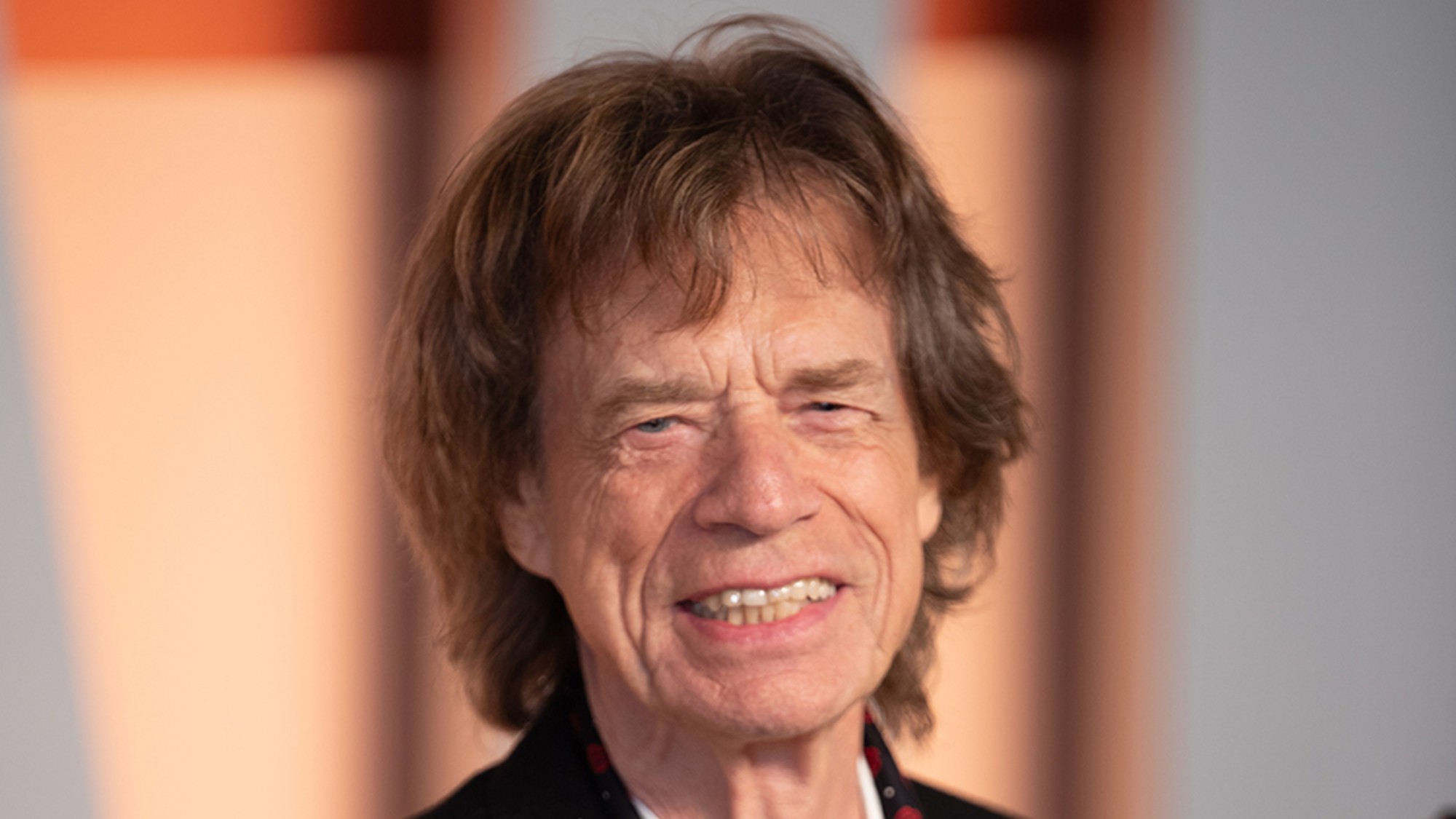
    Mick Jagger is not your average octogenarian, said David Marchese in The New York Times. The Rolling Stones frontman has spent six decades performing for adoring crowds. “Obviously, it’s not normal,” says Jagger, 82. “You can become disassociated.” He fights that by spending time around people who aren’t in show business. “You go out and walk on the street on your own and do normal things.” But there’s only so long he can escape the reality of being Mick Jagger. “Psychologically your actual state of mind is permanently damaged. Your late 20s and early 30s is a very tough time for people in this business because it’s a big ego trip, and you have to have a huge ego to do this.” As the years have passed, he’s gotten better at switching off his swaggering onstage persona, though it’s hard to know what his “true” character really is. “This is the show business dichotomy, and you always hope that you’re a so-called normal person underneath.” Otherwise, he sees little good in growing older. “Physically you’ve got to be more careful. You know, when you’re playing [soccer], they put you in goal a lot.” He doesn’t even feel any wiser. “I forgot all my wisdom. I might have had a couple of pearls drop, but I’ve already forgotten what they are.”


    Saturday Wrap was written and edited by Theunis Bates, Bill Falk, Allan Kew, Bruno Maddox, Rebecca Nathanson, and Tim O’Donnell.

    Image credits, from top:  Getty, Fleet Management Limited, Getty (2).
     

    Recent editions

    • Evening Review

      Are Russia and China helping Iran?

    • Morning Report

      Trump expands tariffs on imports from scores of allies

    • Evening Review

      How should Burnham tackle Trump?

    VIEW ALL
    TheWeek
    • About Us
    • Contact Future's experts
    • Terms and Conditions
    • Privacy Policy
    • Cookie Policy
    • Advertise With Us
    • FAQ
    Add as a preferred source on Google Add as a preferred source on Google

    The Week UK is part of Future plc, an international media group and leading digital publisher. Visit our corporate site.

    © Future Publishing Limited Quay House, The Ambury, Bath BA1 1UA. All rights reserved. England and Wales company registration number 2008885.